
Our readers keep the lights on and my morning glass full of iced black tea. As an Amazon Associate, I earn from qualifying purchases.
Specs are compiled from manufacturer listings and verified buyer reviews and can change over time — please confirm the key details on the product page before buying.
You know the feeling — you toss all night on hard ground, and your camping trip is ruined by a sore back. The right camp bedding transforms your tent, cot, or truck bed into a restful sleep zone. This guide digs into nine options, comparing foam padding, self-inflating hybrids, and ultralight air mats, so you pick the one that matches how you actually camp.
I’m Min — the founder and writer behind Gadgets Feed. This guide is built by comparing the manufacturers’ published specifications and the patterns across verified customer reviews, so you get each pick’s real strengths and trade-offs instead of marketing spin.
Camp bedding is the single upgrade that changes your whole trip, whether you drive to a site, carry everything on your back, or sleep in your vehicle. We break down every option with real-world evidence.
Our Picks at a Glance
How To Choose The Best Camp Bedding
Choosing camp bedding means matching your sleep style to your camping style. Balance comfort, warmth (R-value), packed size, and weight. Here are the three specs that matter most.
R-Value: The Real Warmth Number
R-value measures how well a pad insulates you from the cold ground. A higher number means better warmth. For summer-only camping, an R-value around 2 or 3 is fine. For three-season use, look for 4 to 7. For winter camping in freezing conditions, you need 7 or above. Ignore marketing about “4-season” without the R-value to back it up.
Foam vs Air: The Big Trade-Off
Foam pads (solid or self-inflating with foam inside) are heavier and bulkier, but they cannot leak. Air-only pads pack tiny and light, but a single puncture can ruin your night. Self-inflating hybrids (a foam core inside an airtight shell) give you comfort and insulation, with the foam as a fail-safe if the air leaks. They cost more and pack larger than ultralight air pads.
Thickness and Width: Real Comfort
A narrow pad forces you to hug the ground with every roll. Look for at least 25 inches wide if you are a back or side sleeper. For thickness, aim for 3 to 4 inches minimum if you want to stay off the ground and avoid feeling rocks and roots.
Quick Comparison
| Model | Best For | Thickness | R-Value | Weight | Amazon |
|---|---|---|---|---|---|
| CYMULA 3″ Memory Foam★ Best Overall | Car/Cot Camping | 3″ | Not listed | 6.4 lbs | Amazon |
| VALEHOWL UltralightMost Portable | Backpacking | 2.7″ | 3.0 | 1.8 lbs | Amazon |
| Pretyw DoubleBest for Couples | Couples/Two-Person | 4″ | Not listed | 3 lbs | Amazon |
| Lxotvae Memory Foam | Vehicle/Cot Use | 3″ | Not listed | 4 kg (8.8 lbs) | Amazon |
| OGERY Self-Inflating | Car Camping | 3.15″ | Not listed | 6 lbs | Amazon |
| TREKOLOGY UL R7 | Cold-Weather Backpacking | 4″ | 7.2 | 2 lbs (900 g) | Amazon |
| Hikenture 4″ | 4-Season Car Camping | 4″ | 9.5 | Not listed | Amazon |
| Lost Horizon Option3 | Luxury Car/Rooftop Tent | 4.5″ | 13 | 7.65 kg (16.9 lbs) | Amazon |
| Therm-a-Rest MondoKing 3D | Ultimate Comfort Camping | 4.25″ | 7.0 | 5.5 lbs | Amazon |
In‑Depth Reviews
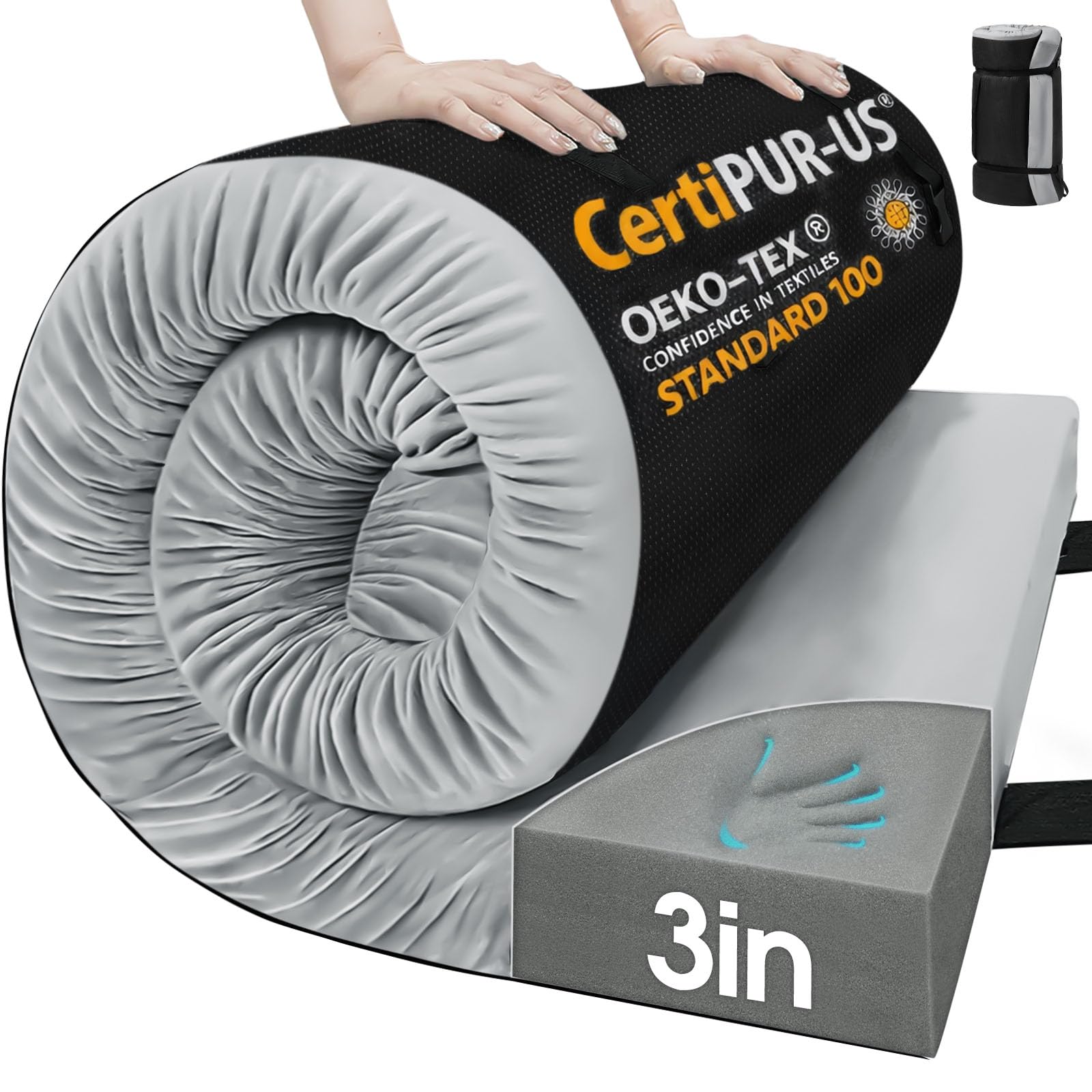
1. CYMULA 3 Inch Memory Foam Camping Pad
Our pick — 4.5★ from 850+ verified ratings; the strongest balance of quality and price.
Thick, quiet foam that delivers the most comfortable car-camp nights on a cot or tent floor.
With a carbon-fiber high-elasticity memory foam top layer and a high-density base foam beneath, this 3-inch-thick pad cushions you from hard ground, cot slats, or truck bed ridges. At 6.4 pounds, it is the heaviest foam pick here, but that weight translates directly into plush comfort. One buyer reports it delivered “excellent warmth in 30°F temps on cots over a wooden platform.” The waterproof, non-slip bottom uses rubberized anti-slip dots to keep it from sliding around. Built-in straps help secure it to a cot or pad beneath.
You can unzip the removable cover and machine-wash it after a muddy trip. The pad rolls up with attached straps, though a few owners note the rolled size is surprisingly large compared to its compressed shipping size. Comfort is the most-praised feature by a wide margin, followed closely by build quality. Some buyers mention a strong chemical odor right out of the packaging that requires airing out, so plan to open it a day or two before your trip. At 72 inches long and 24 inches wide, it fits standard cots, but several owners say it feels narrow for sprawling sleepers.
Unlike air pads, this foam mat makes zero noise when you shift — no crinkling, no squeaking. It is essentially a portable bed slice for your tent. It earned one of the highest overall ratings in this guide from a large number of owners. If you drive to the campsite and value silent, cloud-like sleep over minimal pack size, this is your pad.
Real-world verdict: The comfort king for car camping — pick it if you drive to camp and want a hotel-like night. skip it if you need ultralight gear for a hike-in site.
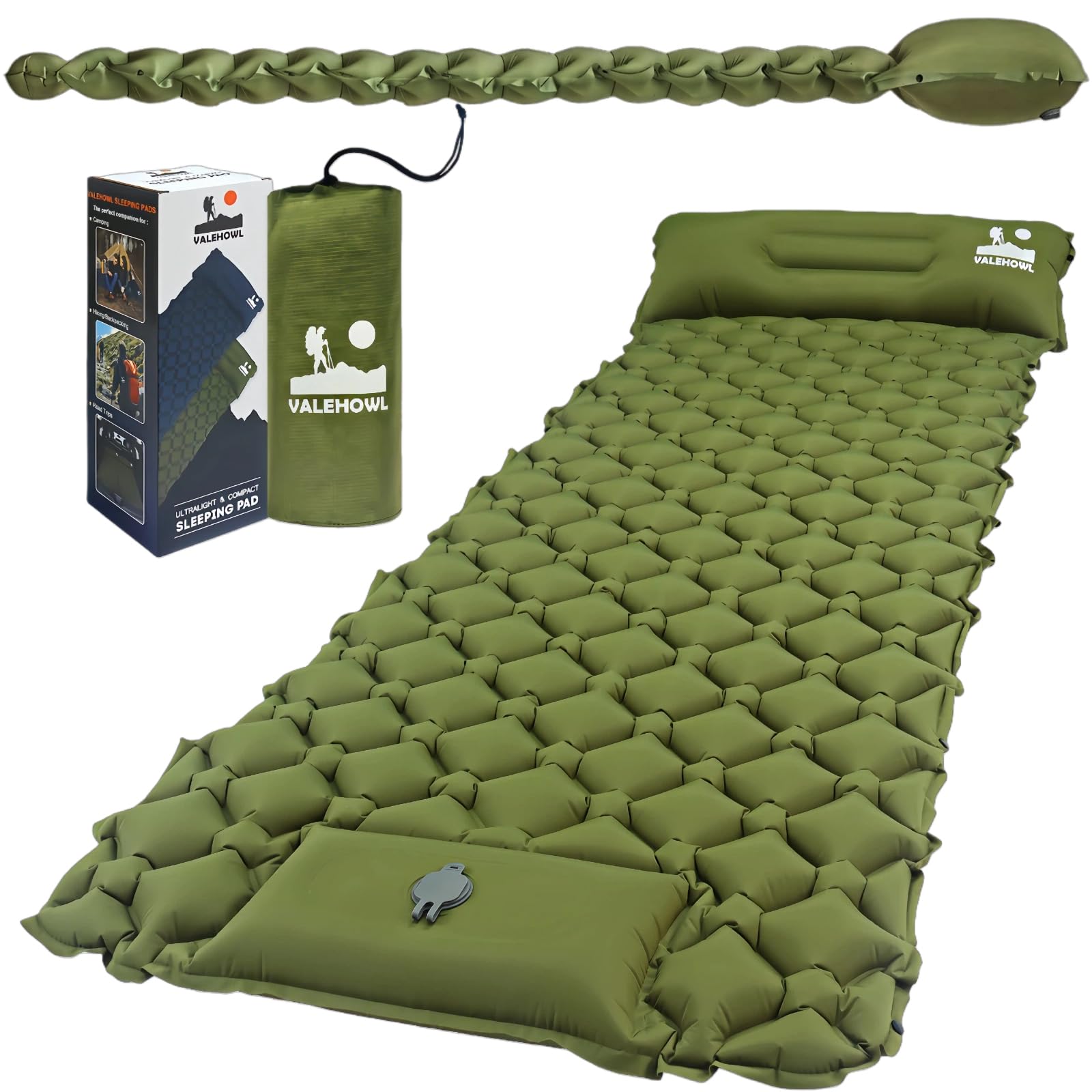
2. 1.8 Pounds Ultralight Camping Sleeping Pad – R-Value 3.0
An air-thin pack that goes anywhere, with a built-in pump so you never blow up your pad by mouth.
At just 1.8 pounds and packing down to 10 by 5 inches, this is the go-to pick for backpackers and hikers who count every ounce. Compare it to the CYMULA foam pad’s 6.4 pounds — the weight difference decides whether this pad rides in your pack or stays in the car. The built-in foot pump inflates the pad in about 40 seconds with simple stepping. A one-way valve prevents air from escaping while you work. The honeycomb air chamber design is 2.7 inches thick. An integrated ergonomic pillow supports sleepers up to 6’3″ and 400 pounds.
The R-value (warmth rating) of 3.0 makes this a true three-season pad for spring-to-fall trips in temperatures between 35°F and 95°F. The outer layer is heavy-duty 40D nylon (a fabric weight/durability grade) with a TPU coating (a waterproof thermoplastic polyurethane layer) that resists tears from rocks and branches. Buyers report it kept them comfortable after “20 days of use in 0°C conditions with a liner and sleeping bag.”
The biggest trade-off is air retention — some owners must double-check valves are fully seated to avoid losing air by morning. The integrated pillow also gets mixed reactions, with some preferring their own separate pillow. Side snap buttons let you attach two pads to make a double-wide sleep surface. If you hike to camp, this pad’s tiny pack size and low weight are tough to top.
For hikers only: This pad is for you if you carry your gear on your back. Look elsewhere if you prioritize plush, low-maintenance sleep over weight savings — the CYMULA is quieter and thicker but weighs 6.4 pounds versus 1.8 pounds.
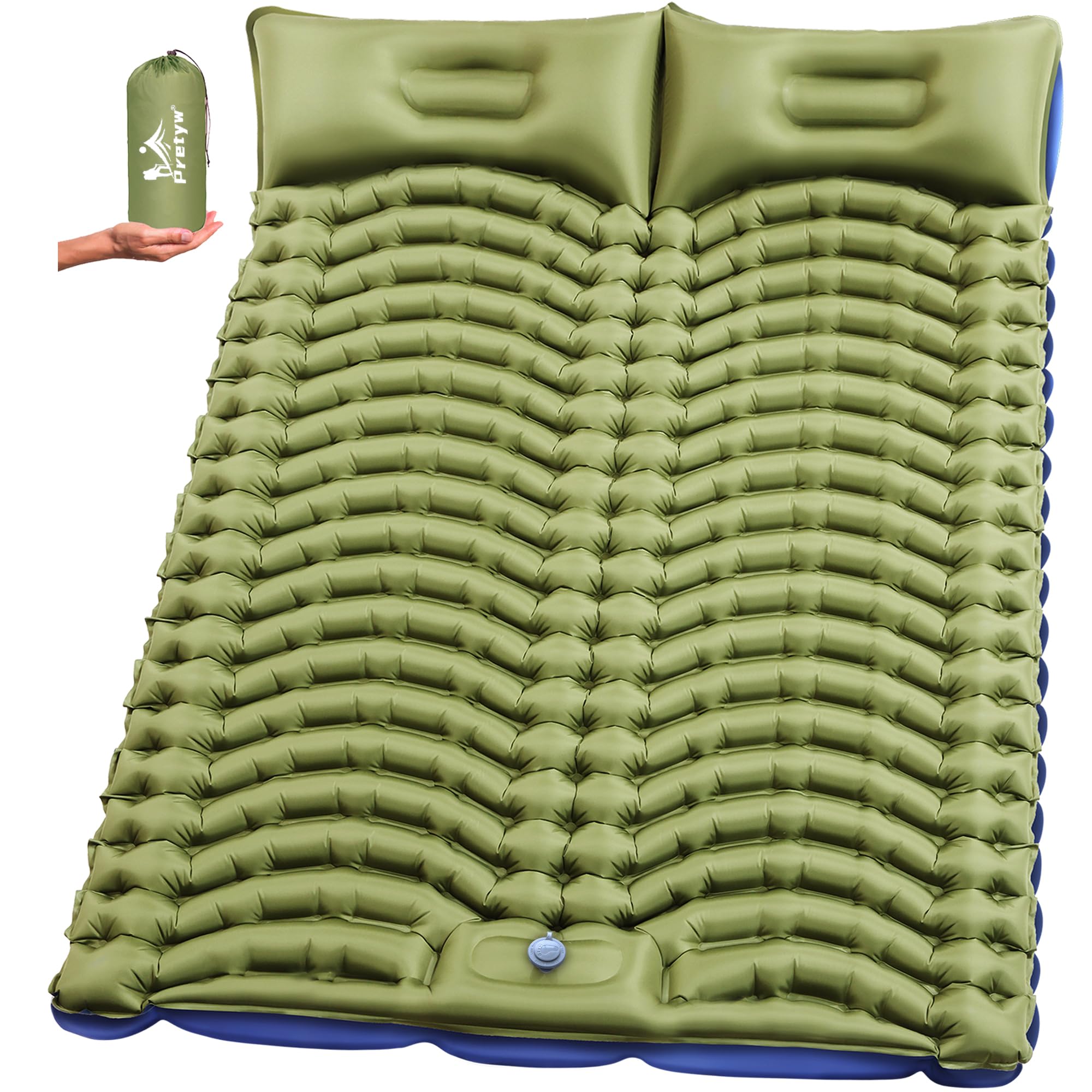
3. Pretyw Double Camping Sleeping Pad with Pillow & Built-in Foot Pump
A full double-wide sleeping pad that fits two people without the dreaded middle valley or partner tilt.
Measuring 78 by 54 inches and inflating to 4 inches thick, this pad provides a large, unified sleep surface for two adults. It weighs just 3 pounds thanks to lightweight 40D nylon and TPU coating, and packs down to 10 by 5.9 inches, making it far more portable than foam rivals. The built-in foot pump inflates the entire double pad in 1-3 minutes with no extra gear needed. Attached pillows at the head eliminate one more item to pack.
The ergonomic wave-pattern design distributes pressure evenly. The 4-inch thickness keeps both sleepers completely off the ground. In total surface area, this pad dwarfs the single CYMULA pad (78×54 inches vs 72×24 inches), offering 78 inches of length versus 72 inches, and 54 inches of width versus 24 inches for two. Owners consistently praise the fast inflation and comfortable support, noting it is “easy to pack and comfortable” with “excellent quality for the price.”
Because there is no foam inside, this is a purely air-based pad. Ground insulation comes from the air layer and the TPU coating, so warmth is moderate — think three-season use. The deflation valves need to be pressed down firmly before inflating to ensure a good seal. It is not a winter pad, but for couples’ trips in mild to cool weather, this is the most practical double option.
Perfect for pairs: Ideal for couples or parent-child tent sleep. Not the best choice for freezing weather or solo backpackers — those should look at the VALEHOWL or TREKOLOGY instead.
4. Lxotvae Memory Foam Camping Mattress Pad
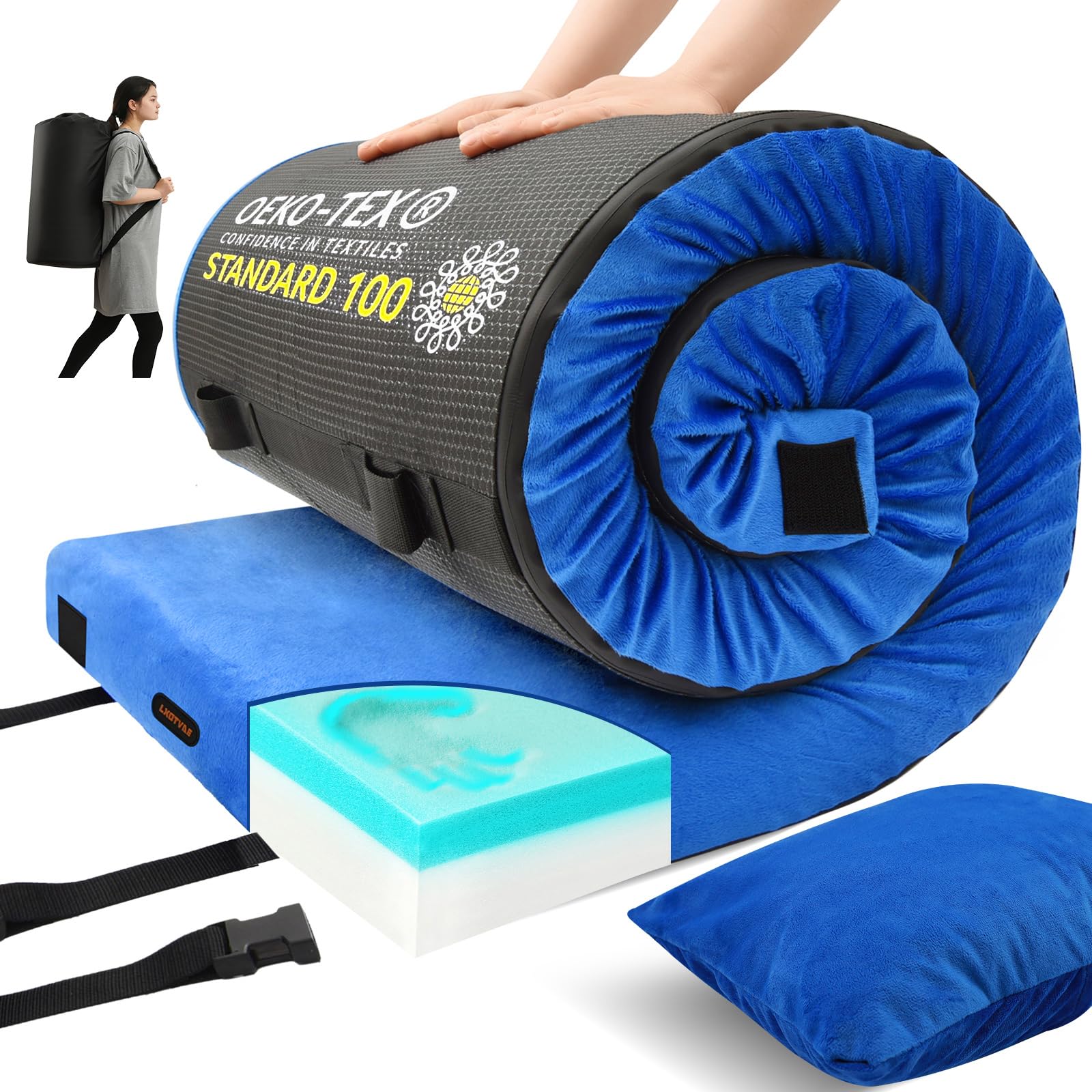
Memory foam with a double-layer design that molds to your shape while keeping the ground out.
This 3-inch-thick pad uses dual-layer construction: gel memory foam on top for softness and 30D high-density foam underneath for support. The cover is a super-soft velvet fabric that is detachable and machine-washable. A TPU waterproof membrane seals both top and bottom to protect the foam from rain or damp ground. The honeycomb-shaped anti-slip bottom does an excellent job keeping the pad steady on a tent floor or cot.
At 72 by 24 inches, it matches the CYMULA pad in dimensions but feels slightly softer due to the gel foam layer on top. Owners say it is “super comfortable on a cot” and “better than an air mattress.” The pad carries OEKO-TEX certification (a third-party label verifying the fabrics are tested for harmful substances), which is a nice assurance if you sleep directly on it without a cover sheet. It requires patience right from the start — the foam needs up to 48 hours to fully expand to its intended shape and lose its compressed-foam smell. Some owners find the included pillow lumpy, and the rolled size is quite large (compared to a laundry basket, one owner notes), making it a car-camp-only option.
Plush comfort: Best for car campers who want a soft, certified-foam pad. The 8.8-pound weight and large rolled size rule out backpacking — stick with the VALEHOWL or TREKOLOGY for hiking.
5. OGERY Self-Inflating Sleeping Pad, 3″ Memory Foam
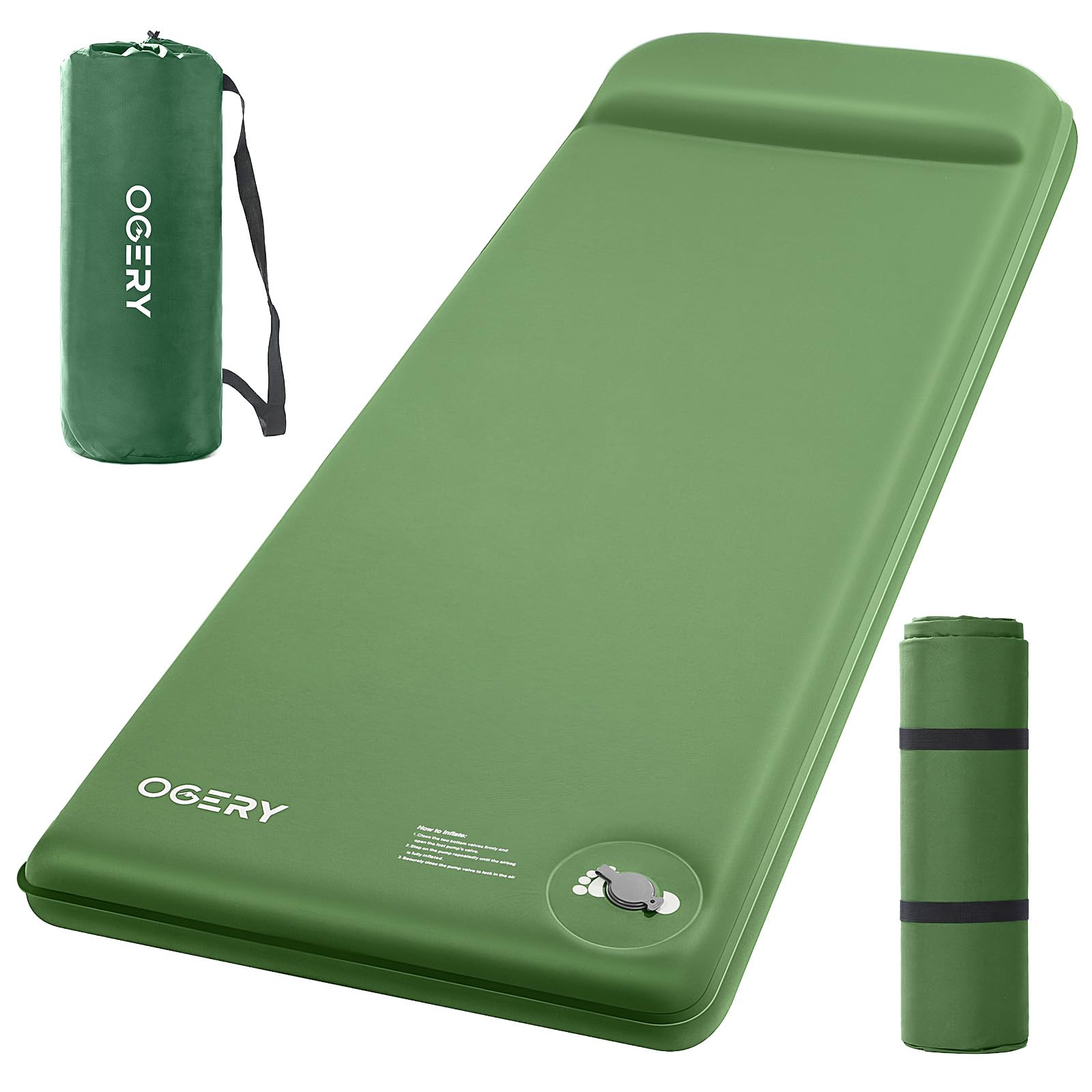
A self-inflating foam-air hybrid that stays silent and packs smaller than solid foam for car camping.
Open the valve on the OGERY pad and the internal memory foam naturally expands, drawing air in to create a 3.15-inch-thick sleep surface. If you want it firmer, a built-in foot pump lets you fine-tune the pressure. At 6 pounds and 76.77 by 27.17 inches, it offers more width than many rivals while remaining packable for car and tent camping. The construction uses abrasion-resistant nylon with a textured bottom to stop sliding.
The biggest advantage is quiet — the foam interior eliminates the crinkling noises of pure air pads like the VALEHOWL. The foam layer also provides ground insulation that air-only pads lack, helping you stay warm on cooler nights without overheating in warm weather. Owners call the adjustable firmness “perfect” and report it retains air consistently for multiple nights. The foot pump takes about a minute to reach full firmness. The pad rolls up smaller than a traditional foam pad would.
A few owners mention it stores larger after its first use than it appeared when vacuum-packed, which is typical of foam products. The 1-year manufacturer warranty provides a safety net. This is a strong middle ground for campers who want foam comfort without the bulk of a solid foam pad.
Quiet hybrid: Great if you hate the crinkle of air pads and want adjustable firmness. Still too heavy at 6 pounds for serious backpacking — that is where the 1.8-pound VALEHOWL wins.
6. TREKOLOGY Sleeping Pad for Camping – 4″ Thick, 7.2 R-Value
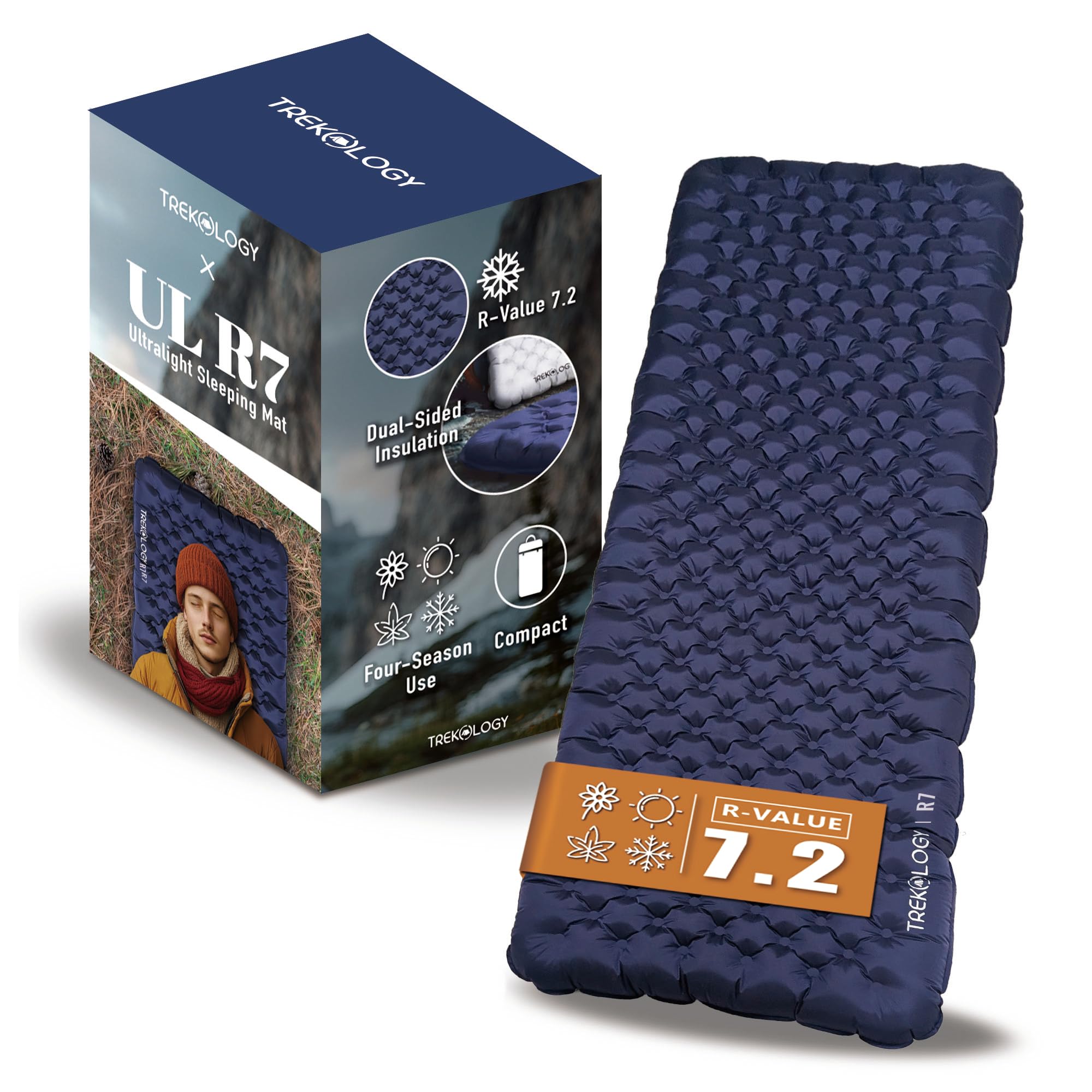
A 7.2 R-value keeps the cold ground out, packed into a 2-pound air pad that fits a side pocket.
The TREKOLOGY UL R7 packs serious insulation. With an SGS-certified R-value of 7.2 (tested by SGS, an independent inspection and verification company), it is built for all-season use, from summer nights to early-winter freezes. It measures 70.8 by 24 inches and inflates to 4 inches thick, keeping you well off the ground. At just 2 pounds (900 grams) and compressing to the size of a water bottle, it weighs a fraction of the foam pads here while offering more cold-weather protection than most of them. It uses advanced insulating air chambers and a 40D ripstop nylon shell with TPU coating for durability.
Customers note the pad “kept me warm in 22°F with a synthetic bag” and “stayed inflated all night.” The surface is slightly slippery against a sleeping bag, so some owners add a thin shelf liner to keep their bag in place. The pad does not have a built-in pump — you inflate it by mouth or with a separate pump sack (sold separately), which saves weight but adds a step. The anti-leak valve holds air reliably, and the pad supports up to 330 pounds.
The main caveat is that the listed R-value may be optimistic for extreme conditions — some owners found it chilly on snow in single-digit temps. For three-season and most winter backpacking trips, though, this is the lightest and warmest combo in the group.
Warm and light: The best pick for cold-weather backpackers who need maximum warmth for minimum weight. pass on it if you want a built-in pump — the VALEHOWL has one but a lower 3.0 R-value.
7. Hikenture 4 Inch Thick Self Inflating Sleeping Pad, 9.5 R-Value

A massive 80-by-28-inch sleeping pad with a 9.5 R-value that makes winter car camping feel like a motel.
Hikenture’s pad combines a 4-inch-thick memory foam core with an airtight shell and a patented two-way valve. The design self-inflates over several minutes. You then add a few bags of air with the included pump sack to reach your preferred firmness. The dimensions — 80 by 28 inches — are among the largest here, giving tall and wide sleepers room to stretch. The 9.5 R-value is the second-highest in this guide, making this pad suitable for true four-season camping, including winter snow trips.
The polyester surface is quiet and feels soft against bare skin. The foam core eliminates the crinkle noise of pure air pads. Owners consistently rate ease of inflation and comfort as standout features, calling it “the best pad ever” and noting it fits a 6’1″ person easily. The pad is bulky when deflated, so it is better suited to car camping than backpacking. A few owners mention it needs a top-up of air on the third night, which is common for air-hybrid pads.
Winter-ready: Perfect for car campers who camp in all seasons and want near-bed-like comfort. Not for backpacking due to its packed size compared to the TREKOLOGY or VALEHOWL.
8. Lost Horizon Option3 Self-Inflating Foam Camping Mattress, Full, 4.5″

A 4.5-inch-thick, full-size mattress with an R-value of 13 that turns your tent into a bedroom suite.
The Lost Horizon Option3 is a hybrid of foam and air, stuffed with 12 pounds of foam filling and inflating to a total thickness of 4.5 inches. It is sized at 80 by 52 inches, making it a true full mattress that fits two people or one person who wants absurd amounts of space. It supports up to 440 pounds, the highest weight capacity here. The R-value of 13 is the highest in this lineup, providing class-leading insulation against the ground even in deep winter conditions. The included electric pump inflates and deflates the mattress in about a minute.
Owners describe this as “basically a portable foam mattress” and “insanely comfortable.” The foam-on-top layer absorbs movement so your partner is not disturbed when you roll over. The main drawback is size and weight — at 16.9 pounds and a packed volume closer to a duffel bag, it is strictly for car camping, rooftop tents, or RV use. The pump has received mixed reliability reviews, with some units failing over time.
Glamping standard: For the camper who refuses to compromise on sleep and can throw a duffel in the car. Just do not attempt to carry it — the 2-pound TREKOLOGY is the opposite for hikers.
9. Therm-a-Rest MondoKing 3D Self-Inflating Camping Sleeping Pad

The proven camping pad from a legendary brand, with a 7.0 R-value and vertical sidewalls for real bed-like edges.
The Therm-a-Rest MondoKing 3D uses StrataCore construction (a continuous layer of thermal foam sandwiched between alternating ridges of air and foam) to achieve a 7.0 R-value in a 4.25-inch-thick pad. The 3D vertical sidewalls turn the pad into an actual bed shape with raised edges, keeping you centered and comfortable. It measures a generous 80 by 30 inches and packs down to 26 by 10.3 inches in the included PFAS-free storage sack. The TwinLock valve system gives you separate one-way valves for inflation and deflation, making setup and breakdown fast.
This pad has a massive following among serious campers for its consistent quality. The stretch knit fabric layer on top is soft and quiet. The pad supports up to 1440 pounds in total across its surface. The included pump sack lets you inflate it without blowing into the valve. One 300-pound buyer called it “the best camping air mattress” and a “standout,” saying “I slept better on this than on my own bed.”
The main trade-off is the price — it is among the most expensive pads here. A small but notable number of reviewers point out the thin nylon outer layer developing punctures after heavy use, requiring patches. The self-inflating feature is also slower than claimed, so you will want to give it time or use the pump sack. For the majority of buyers, though, the MondoKing 3D delivers the most comfortable, reliable sleep experience you can buy, backed by a limited lifetime warranty and made in the USA.
Premium choice: For the dedicated car camper who wants a pad that will last for years and sleep like a real bed. The price is high, but the reputation is earned. It is wider and longer than the CYMULA, with a 30-inch width vs 24 inches.
Understanding the Specs
R-Value (Thermal Insulation)
R-value is the standard measure of how well a sleeping pad blocks the cold ground. The higher the number, the better the insulation. A value of 1 to 3 is fine for summer. For three-season spring-to-fall use, look for 3 to 7. For winter camping below freezing, you need 7 or higher. Foam pads naturally provide more insulation than air-only pads, which is why high-R-value pads often use foam cores or layers inside an airtight shell.
Packed Size (Volume)
This is the compressed size of the pad when rolled or folded, usually given in inches or liters. For backpackers, packed size matters almost as much as weight — a pad that compresses to the size of a water bottle (like the TREKOLOGY at 2 pounds or VALEHOWL at 1.8 pounds) fits inside a pack. For car campers, packed size matters less because the gear rides in the vehicle. Foam pads that do not self-inflate or deflate tend to be bulkier when rolled than air pads.
FAQ
What is the difference between self-inflating and air-only sleeping pads?
How do I know what R-value I need for my sleeping pad?
Can I use a camping sleeping pad on a cot?
How do I clean and store my camping sleeping pad?
Is a 2-inch-thick sleeping pad thick enough?
What does a built-in foot pump do?
Can I attach two single sleeping pads together?
How long does a self-inflating pad take to inflate fully?
Why does my new foam sleeping pad smell bad?
Can I use an inflatable sleeping pad for backpacking?
Final Thoughts: The Verdict
The camp bedding pick that serves the widest range of campers is the CYMULA 3 Inch Memory Foam Pad because it sets a new standard for quiet, supportive comfort that works on cots, tents, and truck beds alike. If you need to hike your gear in, grab the VALEHOWL Ultralight Sleeping Pad for its 1.8-pound carry weight and built-in foot pump. For campers who face real cold, the TREKOLOGY UL R7 with its 7.2 R-value and 2-pound weight is the one to reach for when the forecast drops below freezing.
How We Picked
We do not accept paid placement. Every pick is matched to a real buyer and a real use-case; we do not hands-on test units.
Sources & Methodology
Specifications: manufacturer listings and product documentation. Review insights: verified customer reviews, as of July 2026. Pricing: not shown on this page (it changes often); check the current price via the retailer link.
As an Amazon Associate, Gadgets Feed earns from qualifying purchases. This does not affect which products we feature.