
Waking up on cold, hard ground with a sore hip or a numb shoulder is the fastest way to ruin a camping trip. A proper camping bedding roll bridges the gap between the rocky tent floor and a restorative night’s sleep, but the market is flooded with thin foam sheets, leak-prone air mattresses, and bulky pads that defeat the purpose of packing light. The real challenge lies in finding a roll that balances warmth, portability, and genuine comfort without breaking your back or your budget.
I’m Min — the co-founder and writer behind Gadgets Feed. To build this guide, I spent hours cross-referencing R-values, material densities, packed dimensions, and real-world user feedback across dozens of models, filtering for the builds that actually deliver on their claims of insulation and durability.
Whether you are a weekend car camper or a thru-hiker counting every ounce, this analysis will help you identify the best camping bedding roll for your specific sleep style and outdoor conditions.
How To Choose The Best Camping Bedding Roll
Selecting the right camping bedding roll comes down to three interconnected factors: how you plan to carry it, the temperatures you will face, and your personal comfort threshold. A roll that excels for a car camper in summer will feel miserably thin for a winter backpacker, so matching the pad to your specific use case is critical.
R-Value and Insulation Needs
The R-value measures a pad’s resistance to conductive heat loss to the ground. For three-season camping (spring through fall), an R-value of 2.0 to 4.0 is generally sufficient. For shoulder-season or winter trips, look for an R-value of 5.0 or higher. Closed-cell foam pads typically have a lower R-value (around 2.0) but are bombproof, while self-inflating memory foam models can reach R-values of 9.5, offering serious cold-weather protection.
Packed Size and Weight vs. Comfort
Ultralight backpackers often sacrifice thickness for a smaller pack volume and lower weight — a thin closed-cell foam pad weighing under one pound fits easily into a pack’s side pocket. Car campers and overlanders have more leeway to choose thick, plush memory foam rolls that weigh six to eight pounds but offer a mattress-like sleeping experience. Decide early whether you are hiking miles to camp or driving directly to your site, as that choice dictates the acceptable trade-off between cush and portability.
Material and Durability
The outer fabric determines how well your pad resists punctures, abrasion, and moisture. Nylon and polyester fabrics with a waterproof coating or TPU lamination are standard for inflatable and self-inflating pads, while closed-cell foam is inherently waterproof and nearly indestructible. For memory foam roll-up pads, a removable, machine-washable cover with a non-slip, waterproof bottom extends the lifespan and keeps your sleeping area clean.
Quick Comparison
On smaller screens, swipe sideways to see the full table.
| Model | Category | Best For | Key Spec | Amazon |
|---|---|---|---|---|
| Wevelel Memory Sleeping Pad | Self-Inflating | Cold-weather car camping | R-Value 9.5, 3.1″ thick | Amazon |
| CYMULA 3 Inch Memory Foam Pad | Memory Foam Roll | Cot and tent comfort | 3″ thick, washable cover | Amazon |
| HomeMate CertiPUR-US Memory Foam Pad | Memory Foam Roll | Cot pad upgrade | 3″ thick, removable cover | Amazon |
| MLILY Memory Foam Camping Mattress | Memory Foam Roll | Premium car camping | 2.5″ AeroFusion foam | Amazon |
| iClimb 3M Thinsulate Blanket | Insulated Blanket | Ultralight layering | 16 oz, packs to 10”x7.5” | Amazon |
| VALEHOWL Ultralight Sleeping Pad | Inflatable | Budget backpacking | 1.8 lbs, R-Value 3.0 | Amazon |
| THINTON Closed Cell Foam Pad | Closed-Cell Foam | Ultralight backpacking | 0.7″ thick, 396 grams | Amazon |
In‑Depth Reviews
1. Wevelel Memory Sleeping Pad

This self-inflating pad uses a 50D high-density memory foam core that is significantly more resilient than the 19D foam found in most competitors. At 3.1 inches thick and 77 inches long, it provides a true mattress-like feel that keeps your hips and shoulders off the cold ground. The R-value of 9.5, tested to the ASTM standard, makes it one of the warmest options available — verified by users camping in temperatures down to the high 30s Fahrenheit who reported no cold seeping through.
Inflation is straightforward: open the three valves, let the foam self-expand for ten seconds, then close the rear valves and use the foot pump on the front valve for about twenty seconds to top it off. Deflation is equally controlled thanks to a dual-layer valve design that prevents air from re-entering as you roll. The 50D stretch knit outer fabric is quiet, breathable, and soft against the skin, eliminating the crinkly noise that plagues many nylon pads.
The tradeoff is packed size — at 6.59 pounds and a roll roughly the size of a small sleeping bag, this is a car camping or RV pad rather than a backpacking companion. The built-in pillow sits low for some sleepers, but the overall plush support and exceptional insulation make it the absolute best choice for anyone prioritizing warmth and comfort over ultralight packing.
Why it’s great
- Industry-leading R-Value 9.5 for serious cold-weather protection
- Thick 3.1″ memory foam core is quiet and pressure-relieving
- Self-inflates in seconds with easy dual-valve deflation
Good to know
- Bulky and heavy for backpacking — best for car/RV/tent camping
- Built-in pillow sits too low for some side sleepers
2. CYMULA 3 Inch Memory Foam Camping Pad
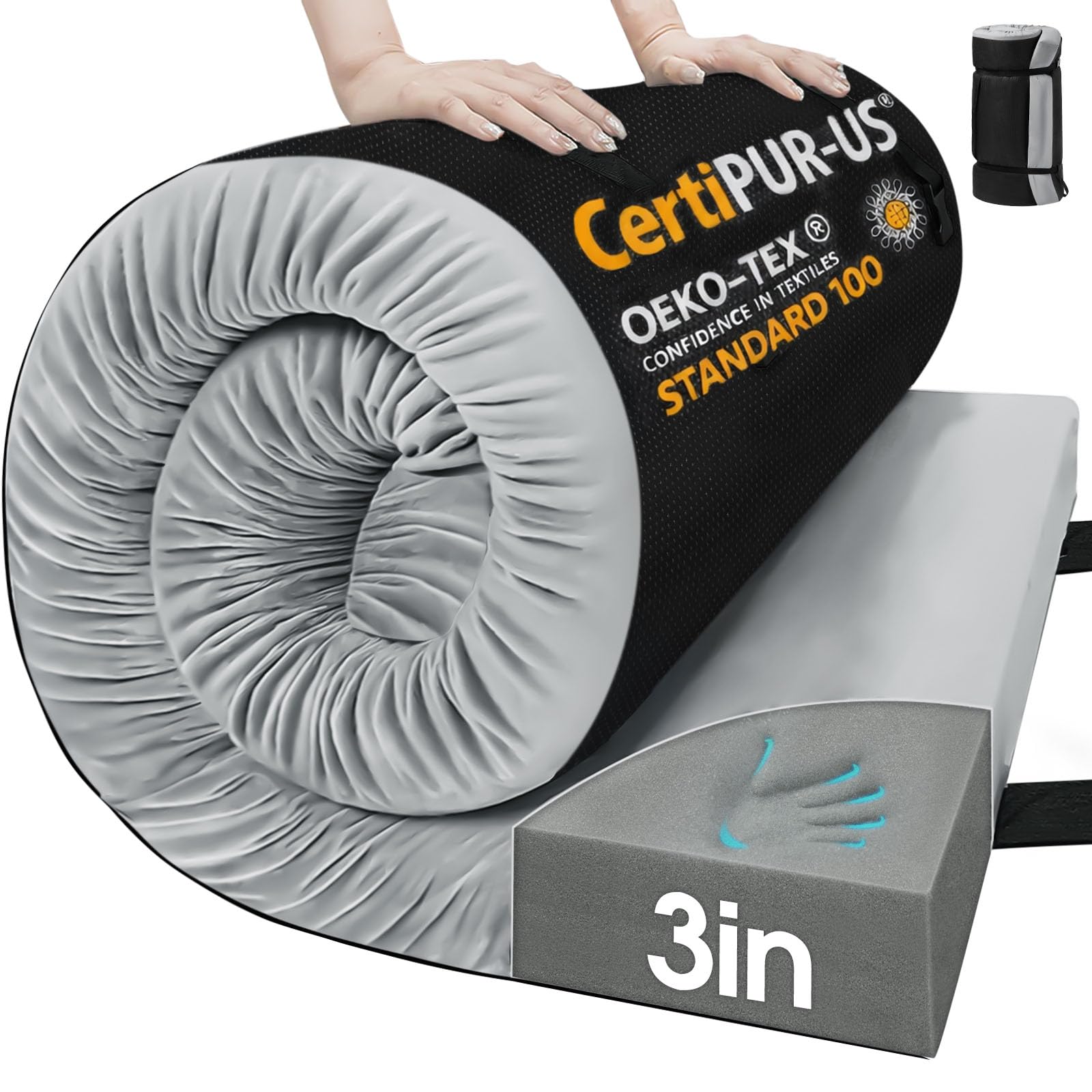
The CYMULA builds its comfort on a carbon-fiber-infused high-elasticity memory foam top layer bonded to a high-density base foam. This dual-layer construction delivers a plush, contouring feel that reviewers consistently describe as better than an air mattress, especially when placed on a cot or a wooden platform tent floor. The 3-inch thickness provides ample cushion to prevent pressure points on hard surfaces.
A standout feature is the removable, machine-washable cover with a full-length zipper. After a dusty weekend of car camping, unzipping and tossing the cover in the wash keeps your sleeping gear fresh. The bottom is coated with rubberized anti-slip dots and a waterproof layer, which prevents the pad from shifting on a cot or absorbing ground moisture. Built-in securing straps add extra stability on uneven surfaces.
Where this pad falls short is portability. Rolled up, it is bulky and heavy enough at 6.4 pounds that it is best suited for car camping, RV use, or a guest room floor rather than a backpack. Some users noted a strong initial off-gassing smell that required a few days of airing out, and the included straps felt a bit flimsy for the weight of the compressed roll. For warmth, though, users have praised its performance in temperatures dipping into the 30s.
Why it’s great
- Plush 3″ memory foam with excellent pressure relief
- Removable, machine-washable cover for easy cleaning
- Waterproof, non-slip bottom with anti-skid dots
Good to know
- Bulky and heavy — not suitable for backpacking
- Initial strong odor may require airing out for several days
3. HomeMate CertiPUR-US Memory Foam Camping Mattress
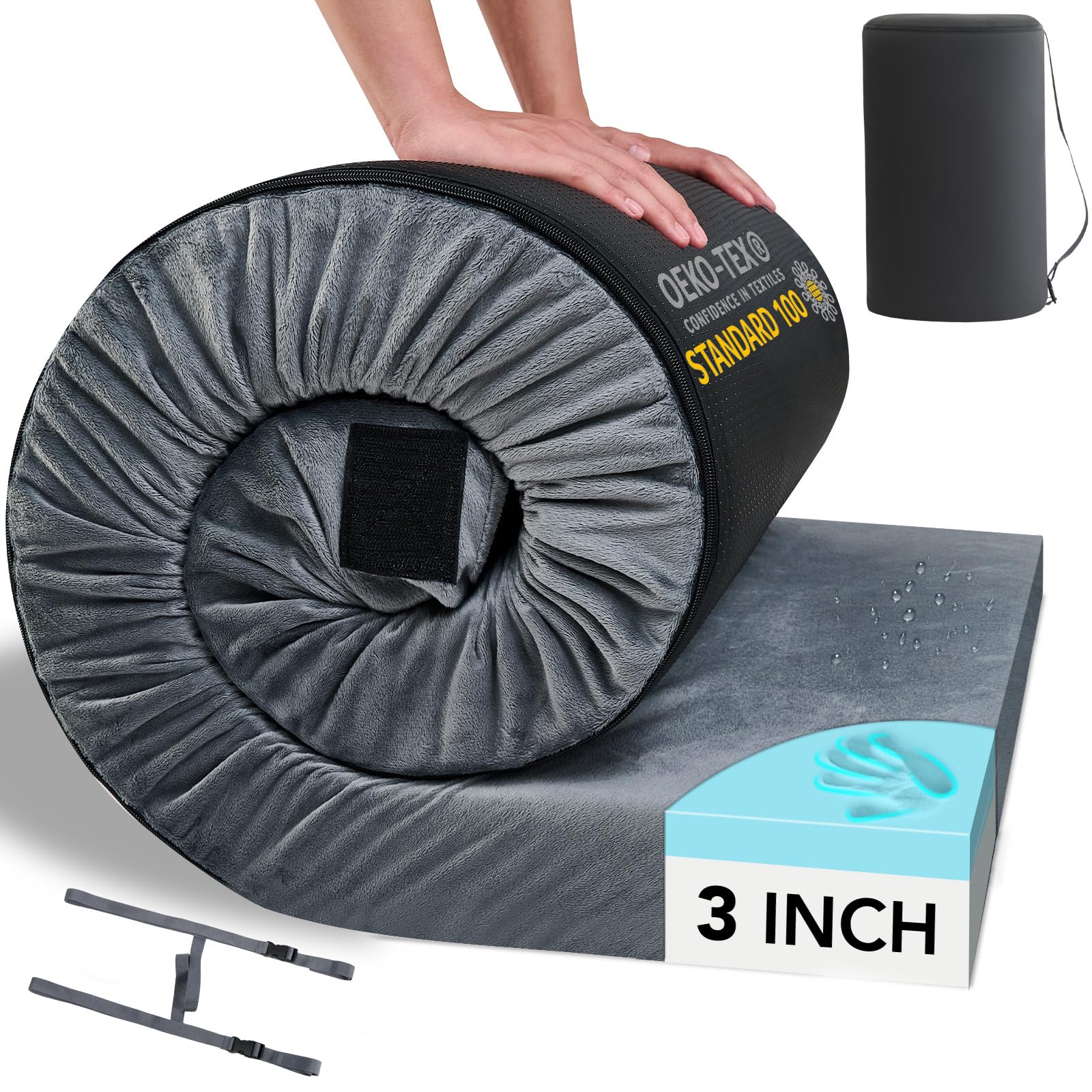
The HomeMate pad combines a top layer of temperature-regulating memory foam with a high-density support foam base, resulting in a 3-inch profile that mimics the feel of a home mattress. The CertiPUR-US certification ensures the foam is free from heavy metals and formaldehyde, a meaningful detail for anyone sensitive to VOCs. The pad is available in multiple sizes, including a 72×24-inch cot size and a 75×30-inch single, making it adaptable to different sleeping platforms.
Velcro connectors on the sides allow you to link multiple pads together, creating a larger sleeping surface for two people or a family setup — a feature that is rare at this thickness level in a roll-up foam pad. The outer cover is removable via a durable zipper and is machine washable, while the waterproof bottom keeps the foam dry on damp tent floors. The included compression straps and storage bag make rolling and transporting the pad manageable, even at 7.81 pounds.
Reviewers consistently praise its ability to transform a hard cot into a genuinely comfortable sleeping surface. The primary downside is the same as any thick foam roll-up: bulk. It occupies significant trunk space in a car and is not practical for carrying on foot. Additionally, the memory foam requires up to 72 hours to fully expand after being unpacked, so planning ahead is necessary for the first use.
Why it’s great
- CertiPUR-US memory foam for safe, comfortable sleep
- Velcro side connectors for pairing multiple pads
- Removable, washable cover with waterproof bottom
Good to know
- Heavy and bulky — designed for car camping and RV use
- Needs up to 72 hours to fully expand after unboxing
4. MLILY Memory Foam Camping Mattress
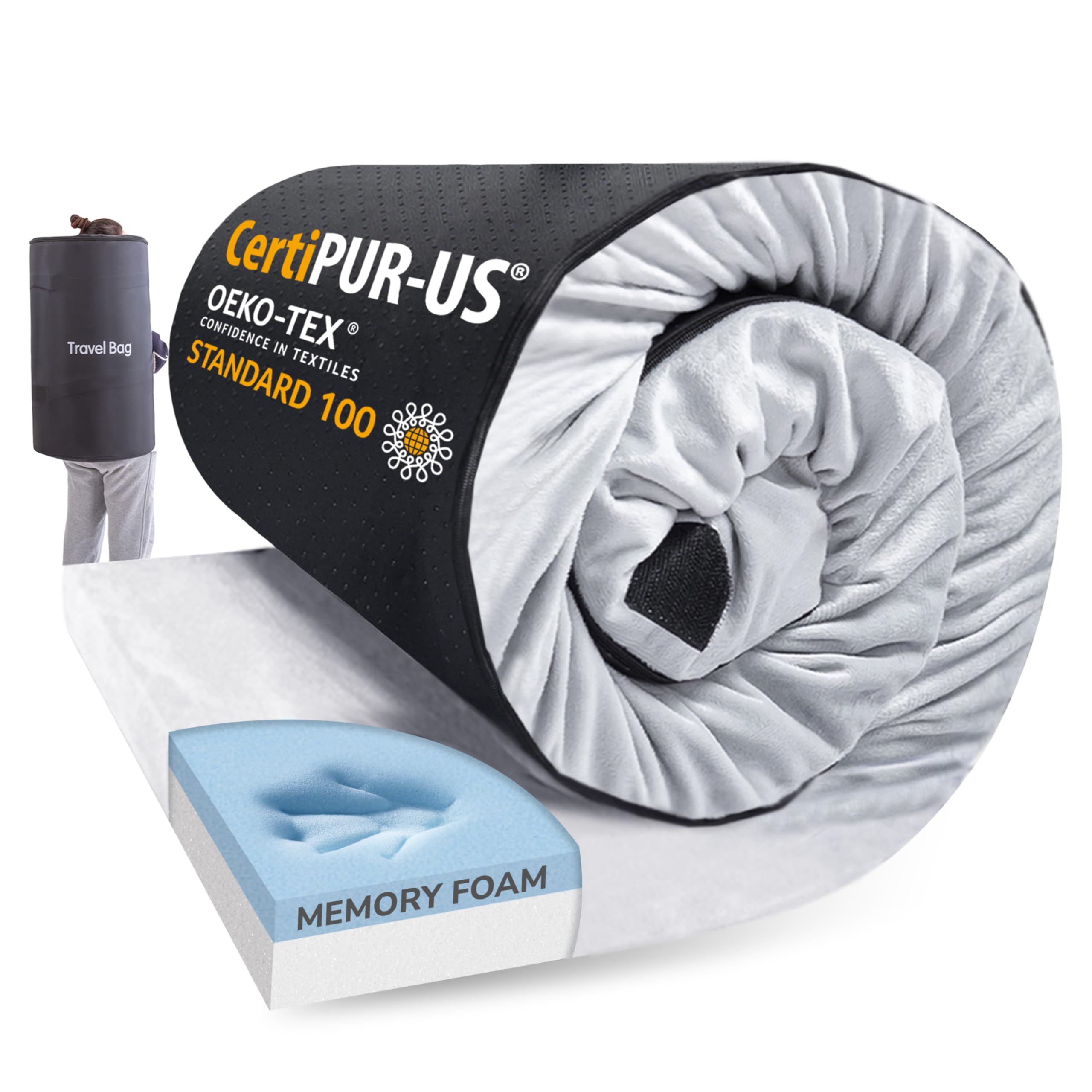
MLILY’s offering uses a proprietary AeroFusion memory foam top layer paired with a Flex Support Foam base. At 2.5 inches thick, it is slightly slimmer than the 3-inch models above, but it strikes an effective balance between cushion and packability. The foam structure is designed to distribute body stress evenly, and users recovering from back pain or joint stiffness have reported noticeably better sleep on this pad compared to standard air mattresses or closed-cell foam.
The pad includes a non-slip, waterproof bottom that works well on grass, tent floors, and even the slick surface of a camping trailer. The outer cover is 100% polyester with a smooth touch that resists sticking to skin on hot nights. Rolling it up is straightforward thanks to attached compression straps, and the included travel bag keeps everything contained. At 3.52 kilograms (about 7.8 pounds), it is still a car-camping-first product, but the slightly thinner profile makes it a bit easier to handle than the 3-inch competitors.
Some car campers have noted that while it is comfortable for one person on a cot or the floor, sharing it as a double is not practical. The 24-inch width is snug for a single adult, and the pad does not include side connectors for pairing. For a dedicated solo car camper or guest bed, however, the quality of the memory foam and the 3-year warranty provide strong peace of mind.
Why it’s great
- AeroFusion memory foam relieves pressure and supports joints
- Waterproof, non-slip bottom for versatile placement
- 3-year warranty from a reputable foam manufacturer
Good to know
- 2.5″ thickness may feel thin for side sleepers on hard ground
- No connectors for pairing two pads together
5. iClimb 3M Thinsulate Insulation Warm Camping Blanket

This is not a traditional mattress pad — it is a 3M Thinsulate-insulated blanket that functions as a layering piece in a camping bedding roll system. Weighing just 16 ounces and packing down to 10.2 x 7.5 x 3.1 inches, it fits into a backpack side pocket with room to spare. The M80 Thinsulate fill (80 g/m²) traps body heat effectively while allowing moisture vapor to escape, preventing the clammy feeling that plagues synthetic sleeping bag liners.
The 20D nylon outer fabric is soft to the touch and wind-resistant, and the blanket can be converted into a poncho, a shawl, or a makeshift sleeping bag using the integrated buttons and elastic straps. Two blankets can be snapped together to form a two-person sleeping bag, making it a versatile system piece for couples who backpack. The attached stuff sack is sewn directly into the blanket, so you cannot lose it.
Where this product falls short as a standalone bedding roll is ground insulation. It provides no cushioning against rocks or roots, and it is not intended to replace a sleeping pad — it is a warmth layer to be used in combination with a foam or inflatable pad. Some tall users have also noted that the blanket’s 6’1″ length leaves their feet exposed when used in sleeping bag mode. For ultralight backpackers and hammock campers, though, this is a brilliant way to add 10-15°F of warmth without adding meaningful weight.
Why it’s great
- Ultralight 16 oz with excellent warmth-to-weight ratio
- Multifunctional: blanket, poncho, or temporary sleeping bag
- Packs into its own attached stuff sack
Good to know
- Provides no ground cushioning — must pair with a sleeping pad
- Length may be short for taller users in sleeping bag mode
6. VALEHOWL Ultralight Camping Sleeping Pad
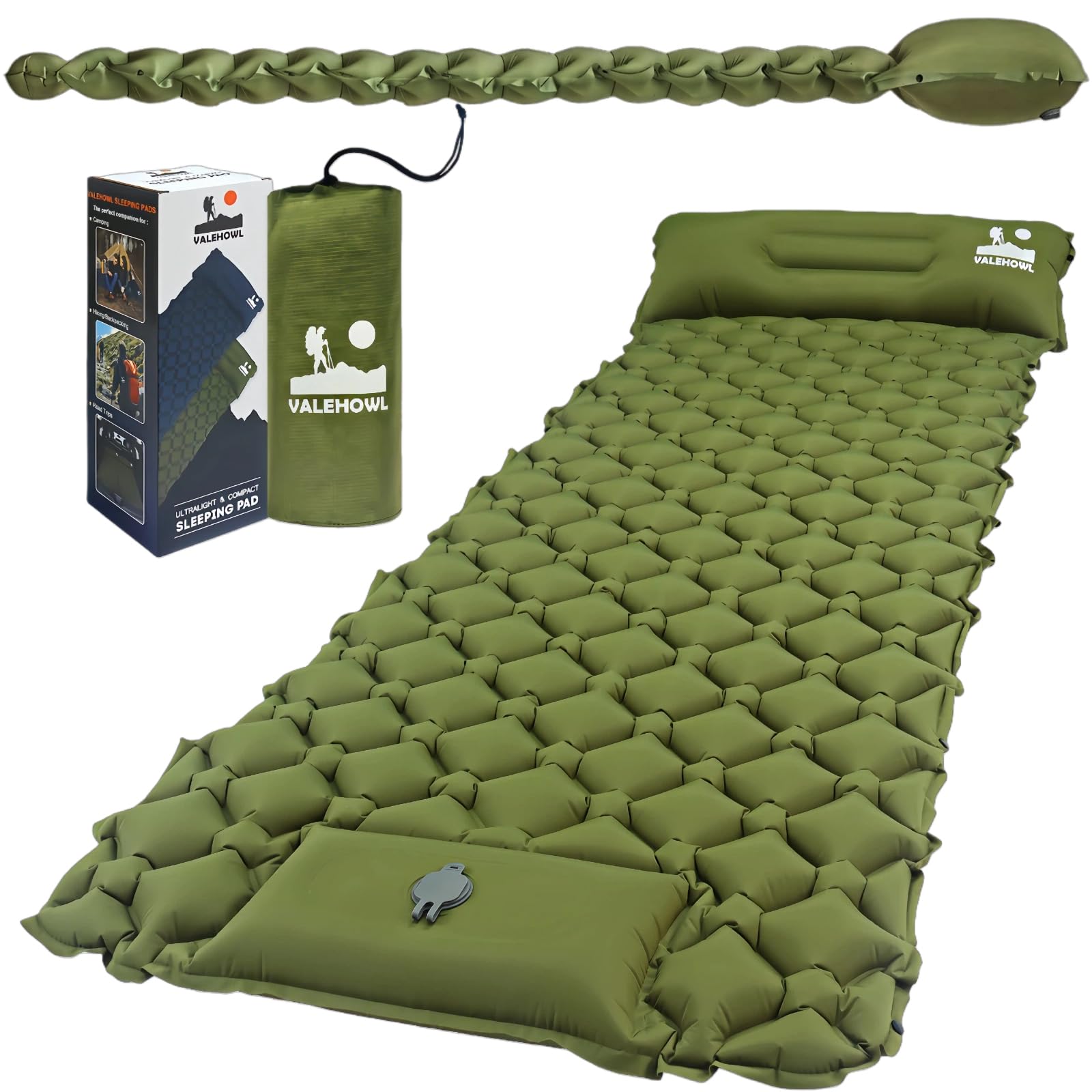
The VALEHOWL pad bridges the gap between closed-cell foam and thick memory foam with an inflatable air chamber design that packs down to the size of a Nalgene bottle. Weighing just 1.8 pounds and rolling to 10 x 5 inches, this is a genuine backpacking option that does not sacrifice comfort entirely. The built-in foot pump inflates the 2.7-inch-thick pad in about 40 seconds, and the integrated pillow provides neck support without requiring a separate inflatable pillow.
The 40D nylon outer layer with a TPU inner coating delivers a 100% waterproof seal and good puncture resistance for its weight class. The R-value of 3.0 makes it suitable for spring, summer, and fall camping in temperatures down to around 35°F. The honeycomb air chamber design evenly distributes body pressure, and reviewers weighing up to 200 pounds have reported no bottoming out. Side snap buttons let you connect two pads for a double sleeping surface.
The downsides are typical of inflatable pads: potential for punctures and the need to properly seal the valves before sleep. Several users reported waking up partially deflated because the plugs were not fully seated — a habit that becomes second-degree after a few trips. Additionally, the 25-inch width is generous for a backpacking pad, but the integrated pillow is positioned awkwardly for some side sleepers. For the weight-conscious hiker on a budget, however, this is a solid compromise.
Why it’s great
- Ultra-compact 10×5″ pack size at only 1.8 lbs
- Built-in foot pump inflates in under a minute
- R-Value 3.0 covers three-season use
Good to know
- Valves must be manually sealed to prevent air loss
- Integrated pillow position may not suit all sleepers
7. THINTON Closed Cell Foam Pad

The THINTON pad is the purest expression of the ultralight, minimalist camping bedding roll philosophy. Made from IXPE closed-cell foam with a reflective aluminum film on the back, this pad weighs only 396 grams (0.87 pounds) and folds into a compact 23.6 x 5.5 x 5.5-inch package that straps easily to the outside of a backpack. The R-value of 2.1 provides a meaningful barrier between your sleeping bag and the cold ground, particularly when used as a base layer under an inflatable pad for extra insulation.
At just 0.7 inches thick, it will not offer the plushness of a memory foam mattress, but closed-cell foam has distinct advantages: it is fully waterproof, completely silent, and immune to punctures. You can lay it directly on wet grass, snow, or rocky ground without worrying about damage. The ergonomic surface texture with small bumps is designed to support pressure points, though some users find the bumps uncomfortable without a sleeping bag between them and the pad.
For backpackers counting every gram, the THINTON is a no-brainer — it is lighter than almost any inflatable pad and costs a fraction of the price. As a standalone sleeping surface, it is best suited for summer use or for campers who prefer a firm, yoga-mat-like feel. It also shines as a sit pad around camp, a gear protector, or an emergency backup. The limited thickness means side sleepers will want to combine it with a softer top layer or an inflatable pad for real comfort.
Why it’s great
- Extremely lightweight at 396 grams for easy backpacking
- Durable, waterproof, and puncture-proof closed-cell foam
- Reflective aluminum film boosts thermal efficiency
Good to know
- Very thin at 0.7″ — minimal cushion for side sleepers
- Textured bumps are uncomfortable for some users
FAQ
Can I use a camping bedding roll directly on the tent floor?
What R-value do I need for winter camping?
How do I clean a memory foam camping pad?
Is a closed-cell foam pad better than an inflatable for backpacking?
Final Thoughts: The Verdict
For most users, the best camping bedding roll winner is the Wevelel Memory Sleeping Pad because its exceptional R-Value 9.5 insulation and plush 3.1-inch memory foam core deliver unmatched warmth and comfort for car campers and RV users who refuse to compromise on sleep quality. If you want a premium cot pad that is easy to clean and built for frequent use, grab the CYMULA 3 Inch Memory Foam Pad. And for ultralight backpackers counting every gram, nothing beats the THINTON Closed Cell Foam Pad for its bombproof durability and absurdly low weight.