
A camping mattress pad is the single piece of gear that determines whether you wake up refreshed or spend the next day nursing a sore hip and a stiff back. The gap between a cheap, under-inflated pool toy and a properly engineered sleeping surface is measured not just in inches of foam, but in R-value, packed volume, and the quietness of the fabric against your cheek at 2 AM. This guide breaks down the nine best options on the market, from ultralight backpacking slivers to four-inch-thick car-camping monsters.
I’m Min — the co-founder and writer behind Gadgets Feed. I’ve spent hundreds of hours cross-referencing R-value claims, measured packed dimensions against manufacturer specs, and analyzed customer feedback across dozens of camping pad models to separate the truly supportive from the marketing fluff.
Whether you are a side sleeper who needs extra loft or a winter camper fighting conductive heat loss, this roundup of the best camping mattress pad choices will help you match the right foam density, thickness, and insulation to your specific sleep style and trip type.
How To Choose The Best Camping Mattress Pad
Picking the right pad involves balancing insulation (R-value), thickness, packed size, and weight. A 2-inch pad packs smaller but leaves your hip digging into the dirt; a 4-inch pad feels like home but swallows trunk space. Know your primary terrain and season before you commit to a design.
R-Value and Seasonal Insulation
R-value measures a pad’s resistance to conductive heat loss into the ground. A summer pad typically has an R-value between 1.0 and 2.0, three-season pads sit around 3.0 to 4.5, and winter pads climb above 5.0. If you camp below freezing, a pad with an R-value of 7 or higher — like the Therm-a-Rest MondoKing 3D at 7.0 — prevents the cold earth from sapping your body heat through the night.
Thickness, Loft, and Sleeping Position
Thickness directly affects pressure-point relief. Side sleepers generally need at least 3.5 inches to prevent their shoulder or hip from bottoming out against the ground. Back sleepers can get away with 2.5 to 3 inches. Self-inflating pads with open-cell foam inside offer a plush, supportive feel, while pure air pads require higher internal pressure to achieve the same stability.
Weight and Packability for Your Trip Type
Backpackers need pads that weigh under 20 ounces and pack down to the size of a water bottle — look at the Therm-a-Rest NeoAir Xlite NXT or the NEMO Tensor All-Season. Car campers and overlanders can prioritize comfort and insulation density over weight, making the Exped MegaMat or the Hikenture 4 Inch Thick pad the better fit despite their bulk.
Quick Comparison
On smaller screens, swipe sideways to see the full table.
| Model | Category | Best For | Key Spec | Amazon |
|---|---|---|---|---|
| Therm-a-Rest MondoKing 3D | Self-Inflating | Maximum comfort car camping | 7.0 R-Value / 4.25″ thick | Amazon |
| Exped MegaMat Long X-Wide | Self-Inflating | Tent and SUV dual-use | 8.1 R-Value / 4″ thick | Amazon |
| Hikenture 4 Inch Thick | Self-Inflating | 4-season car camping value | 9.5 R-Value / 4″ thick | Amazon |
| Acacia 4.3″ Self Inflating | Self-Inflating | Couples/family camping | 6.0 R-Value / 4.3″ thick | Amazon |
| Sea to Summit Camp Plus | Self-Inflating | Durable car camping / cots | 4.3 R-Value / 2.6″ thick | Amazon |
| Big Agnes Rapide SL | Air-Insulated | Three-season backpacking | 4.8 R-Value / 3.5″ thick | Amazon |
| Big Agnes Divide | Air-Insulated | Budget-conscious backpacking | 4.0 R-Value / 3.25″ thick | Amazon |
| Therm-a-Rest NeoAir Xlite NXT | Air-Insulated | Ultralight backpacking | 4.5 R-Value / 13 oz (Reg) | Amazon |
| NEMO Tensor All-Season | Air-Insulated | Lightweight four-season sleep | 3.5″ thick / 660g LW | Amazon |
In‑Depth Reviews
1. Therm-a-Rest MondoKing 3D Self-Inflating Camping Sleeping Pad

The MondoKing 3D delivers a 4.25-inch loft using StrataCore construction — a continuous layer of thermal foam sandwiched between alternating ridges of air and foam. That architecture gives it a 7.0 R-value, meaning you can sleep directly on frozen ground without feeling the cold leach through. The TwinLock valve system uses two one-way valves (one in, one out) to simplify inflation and deflation, and the 3D vertical sidewalls maximize the usable sleep surface so you don’t roll off the edge.
At 80 by 30 inches and 5.5 pounds, this is a car-camping or rooftop-tent pad, not a backpacking tool. The stretch knit fabric surface feels closer to a bed sheet than the crinkly nylon found on budget pads, and owners consistently report that it supports 300-pound users without bottoming out. The included pump sack doubles as a stuff sack, though the pad’s rolled size of 26 by 10.3 inches still demands noticeable trunk space.
User reviews highlight the near-total absence of noise — no crinkling, no foam squeak — and the fact that it self-inflates to roughly 80% fullness before you top it off. A small number of users reported valve defects on initial units, but Therm-a-Rest’s limited lifetime warranty covers manufacturing issues. If your priority is home-bed comfort under the stars and you drive to camp, this is the benchmark.
Why it’s great
- Exceptional 7.0 R-value for extreme cold
- Stretch knit fabric is quiet and soft
- 3D sidewalls prevent roll-off
Good to know
- Too heavy and bulky for backpacking
- Valve defects reported in early production
2. Exped MegaMat Long X-Wide Self Inflating Car Sleeping Mat
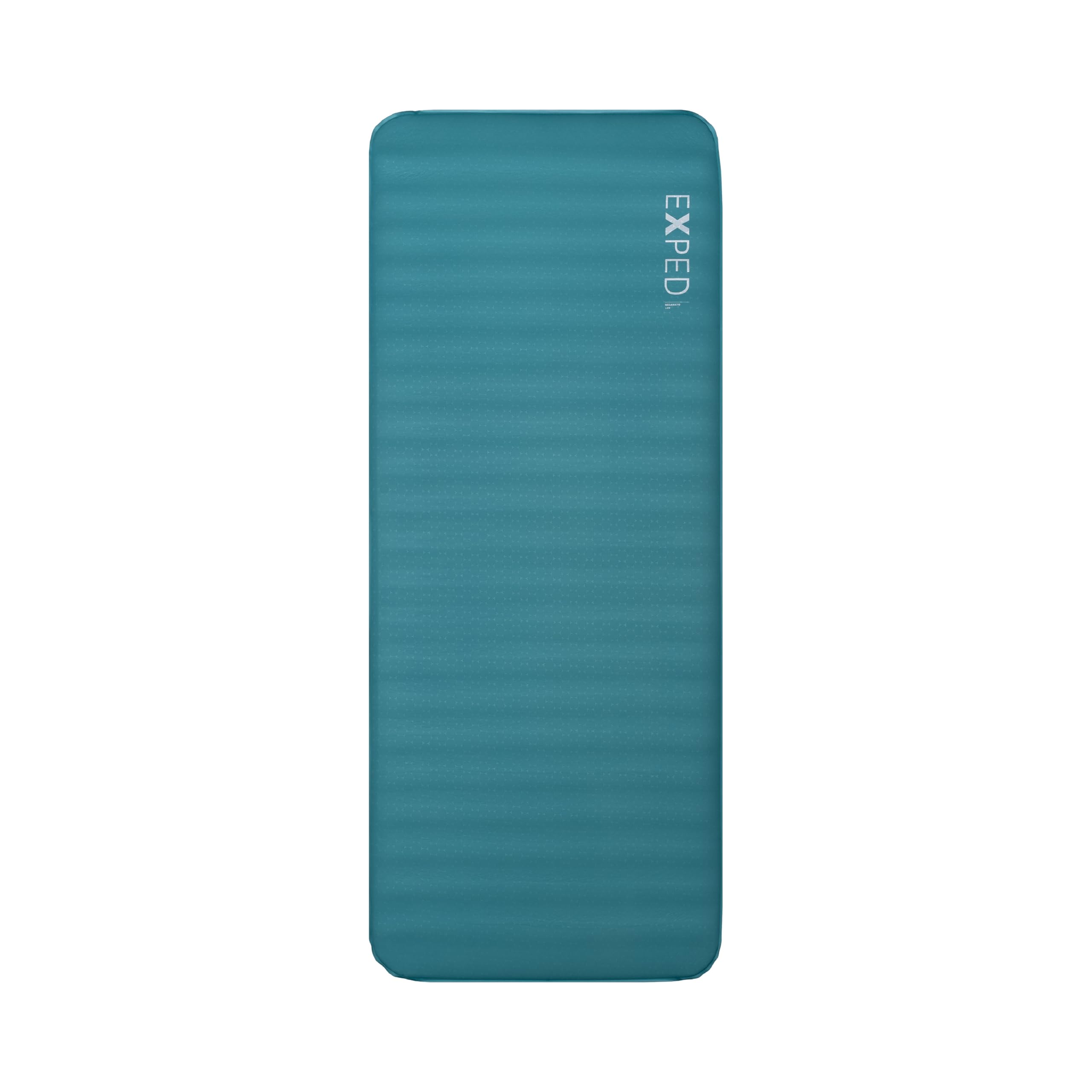
The MegaMat Long X-Wide combines 4 inches of open-cell foam with a 30.3-inch width, making it one of the roomiest self-inflating pads available. Its 8.1 R-value is the highest in this roundup, achieved through air-core-channeled insulation and 3D vertical sidewalls that prevent the foam from compressing at the edges. The 100% recycled 50-denier tricot polyester surface provides a soft, stretchy feel that closely mimics a mattress topper.
The included Top-Up Pump lets you dial in firmness from plush to rigid, and the pad holds air pressure for a full week without noticeable drop — a claim backed by numerous owners who use it as a permanent pop-up trailer mattress replacement. At 5.7 pounds and packing down to roughly 28 by 9 inches, it is strictly for car camping, SUV sleepouts, and rooftop tents. The four-season insulation means it works equally well in summer heat and winter snow.
Customer feedback is overwhelmingly positive, with special mention of how well it resists stains and odors even after dog accidents. The main trade-off is that the first-time self-inflation takes patience — the foam needs a few hours to fully expand after vacuum packing. A small subset of users felt the included pump can overinflate if you are not careful, but the adjustable valve makes fine-tuning simple. For the widest sleeping surface and highest insulation numbers, this pad is the gold standard.
Why it’s great
- Industry-leading 8.1 R-value
- 30-inch width fits broad-shouldered sleepers
- Pump allows custom firmness adjustment
Good to know
- Heavy and bulky — not for backpacking
- Foam takes hours to fully expand initially
3. Hikenture 4 Inch Thick Self Inflating Sleeping Pad

The Hikenture pad delivers a stunning 9.5 R-value and 4 inches of memory-foam-and-air hybrid construction at a price that undercuts most comparable 4-season competitors by a wide margin. The 80-by-28-inch surface fits 6-foot-3 users comfortably, and the combination of polyester fabric and low-noise foam means you do not wake yourself up with every shift. The 2-way patented valve handles self-inflation with minimal effort, and the included pump sack lets you add the last few bags of air for a customized firmness.
Packed size is a relative 26 by 9 inches at 6.5 pounds — still a car-camping piece, but respectably compact given the extreme R-value. Owners report that the foam core does not develop pressure leaks even after months of use, and the soft top material eliminates the need for a separate sleeping pad cover. The deflation valve also stops air from re-entering during roll-up, which makes morning pack-out faster than many foam-based competitors.
Some users noted that the pump sack’s fabric feels thin and requires careful handling, and a single review mentioned an initial defect that was replaced without hassle. The pad is wider than typical backpacking pads (28 inches versus 20-25), which helps side sleepers but adds bulk. If you want four-season insulation without four-figure spending, the Hikenture is the smartest buy in this segment.
Why it’s great
- Sky-high 9.5 R-value at a budget-friendly price
- Silent memory foam surface
- Wide 28-inch platform for all sleep positions
Good to know
- Pump sack is thin and delicate
- Too heavy for backpacking use
4. Acacia 4.3 Inch Thick Self Inflating Sleeping Pad

Acacia’s entry features a Y-shaped telescopic foam core that reduces packed volume by up to 60% compared to traditional solid-foam mats, bringing the rolled size down to 7 by 7 by 27 inches at 5.3 pounds. The 4.3-inch thickness and 6.0 R-value make it suitable for three-season use with enough margin for shoulder-season cold snaps. The 30-denier fabric with TPU reinforcement adds genuine puncture resistance, and the side buckles let you connect two pads together for a couple’s sleeping surface.
The self-inflation process works through a 2-way valve, but users report a learning curve with the pump sack method — once mastered, you can dial in softness from plush to firm. Electric pump compatibility is an option for those who want fully hands-off setup. Owners praise the comfort level, often comparing it favorably to pads costing three times as much, and customer service responsiveness is noted for addressing occasional leak issues.
The main drawbacks are that the pad must be stored partially inflated to maintain foam memory, and the packed shape is roughly the size of a laundry basket, limiting its appeal for hikers. A few users found the carrying bag’s inflation function less effective than expected. For car campers who want 4-inch loft at a mid-range price point, the Acacia delivers a compelling mix of comfort and portability.
Why it’s great
- Y-shaped foam reduces packed bulk
- Side buckles for pairing two pads
- Rugged TPU-coated fabric resists punctures
Good to know
- Pump sack inflation has a learning curve
- Must be stored inflated to maintain shape
5. Sea to Summit Camp Plus Self-Inflating Foam Sleeping Mat
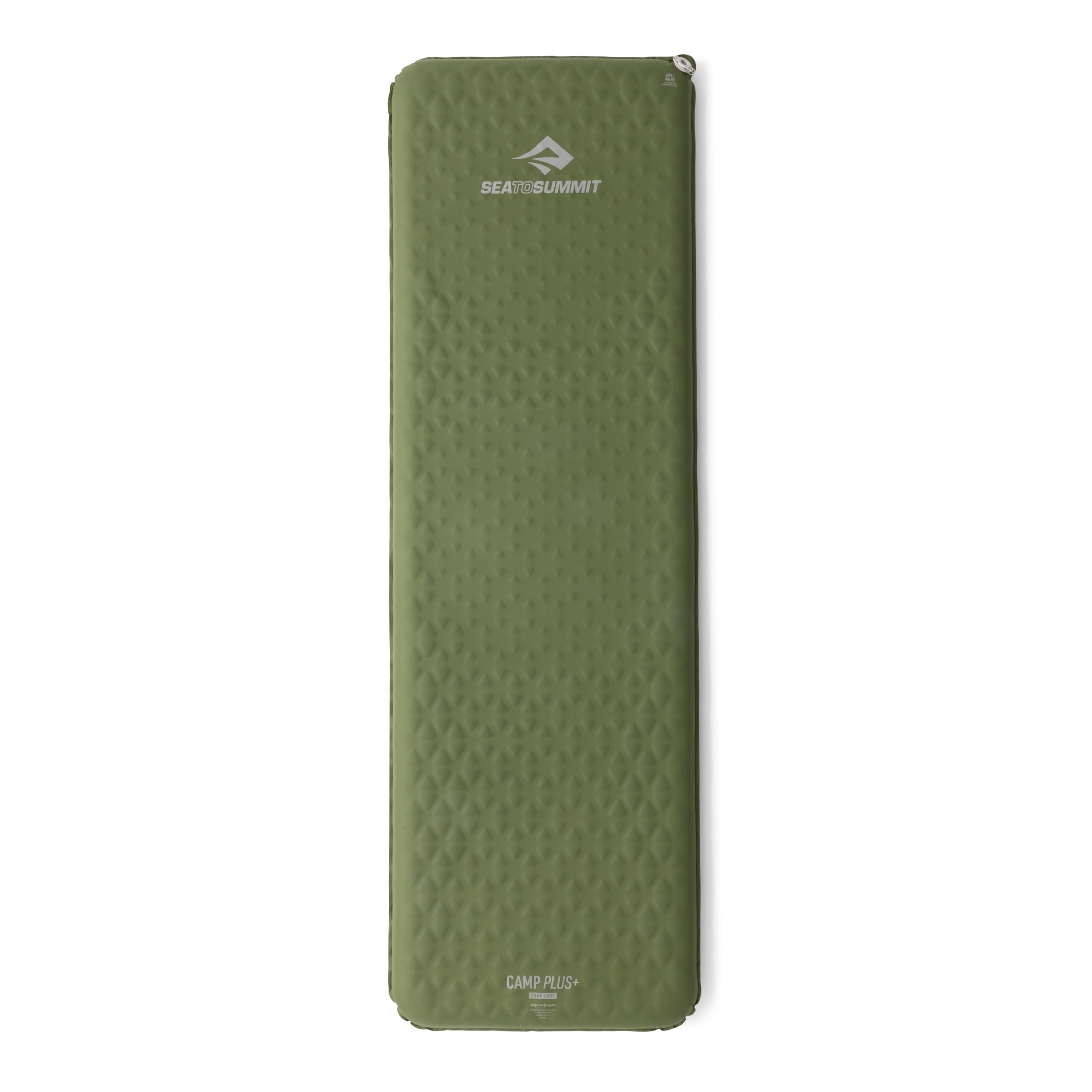
Sea to Summit’s Camp Plus uses an innovative coring technique that keeps body contact areas warm and supported while cutting bulk from less critical zones. The result is a 2.6-inch thick rectangular pad that packs to 13 by 7.5 inches and weighs just 3.4 pounds — a strong middle ground between backpacking and car camping. The 75-denier polyester face fabric is noticeably more durable than the ultralight materials used on premium backpacking pads, surviving direct sun exposure and rocky ground without issue.
The multi-function reversible valve allows fast inflation, one-way deflation for quick packing, and fine pressure tuning. The updated xPEL valve system helps achieve a tighter roll for space-saving storage. PillowLock patches are included to secure a Sea to Summit pillow to the pad surface, preventing mid-sleep migration. The rectangular shape provides generous 78-by-25-inch dimensions, which users find comfortable for side sleeping on cots or directly on the tent floor.
Reviews consistently praise the mat’s durability — one owner reported it survived a Death Valley summer without damage — but note that the self-inflation function is not instant; the foam needs time to expand after vacuum packing, and topping off with 10-15 breaths or a pump is usually necessary. Some users also found that the pad does not re-compress to its original packed size after the first use, requiring a slightly larger stuff sack. For campers who prioritize toughness and a moderate pack size over extreme ultralight weight, this is a reliable choice.
Why it’s great
- Extremely durable 75D fabric
- Good balance of weight and insulation
- PillowLock system keeps pillow in place
Good to know
- Self-inflation is slow initially
- Does not fully re-compress to original size
6. Big Agnes Rapide SL Insulated Sleeping Pad

The Rapide SL uses two layers of heat-reflective film inside a quilted top construction to achieve an R-value of 4.8 while weighing just over 1 pound in the regular size. The proprietary offset I-Beam construction reduces overall weight while maintaining stability, and the 4.25-inch outer chambers are larger than the center chambers, creating a cradle effect that keeps you centered on the pad. The superlight double ripstop nylon with aviation-grade TPU lamination provides impressive weld strength for a pad that packs smaller than a one-liter bottle.
The high-volume valve with micro-adjustment capability allows fast inflation via the included Pumphouse sack — users report full inflation in about four minutes with no moisture introduction from breath. The pad deflates and folds faster than many competitors, which matters when you are breaking camp in the rain. The 20-by-72-inch regular size is narrow for broad-shouldered sleepers, so the 25-inch wide version is recommended for anyone over 180 pounds or who moves during sleep.
Owners consistently cite the quietness of the fabric — no crinkling — and the comfortable 3.5-inch loft as top selling points. A handful of reviews mention that the pad feels slightly warmer than its R-value suggests, making it a legitimate three-season option with cold-weather margin. The main drawback is that the lightweight nylon requires careful ground sheet management to avoid punctures, and the price sits solidly in the premium tier. For backpackers who refuse to compromise on comfort per ounce, the Rapide SL is a standout.
Why it’s great
- Excellent warmth-to-weight ratio at R-value 4.8
- Quiet quilted top surface
- Pumphouse inflates in under 5 minutes
Good to know
- Regular width is narrow for side sleepers
- Lightweight fabric needs careful handling
7. Big Agnes Divide Insulated Sleeping Pad

The Divide uses vertical baffle construction with THERMOLITE insulation and a heat-reflective film to deliver an R-value of 4.0 at a weight of 33 ounces for the wide-long version. The 3.25-inch thickness and 3.5-inch outer chambers keep you cradled in place, while the recycled nylon ripstop fabric with TPU lamination provides good durability for the weight class. The high-volume valve with micro-adjustment enables fast inflation via the included pump sack, and the deflation is similarly quick thanks to the one-way release.
At 25 by 78 inches, the wide version offers generous shoulder and hip room without pushing the packed size beyond 5.5 by 9 inches. Users note that the vertical baffles create a stable platform with minimal air shift — you do not feel like you are sleeping on a waterbed. The insulation is noticeably effective down to around freezing, though pairing with a closed-cell foam pad extends the range for winter use.
The main trade-off is that the insulated version is heavier and bulkier than the uninsulated model, and some users find the 20-inch regular width too restrictive. The price sits below comparable premium pads, making it an attractive option for hikers who want four-season capability without the premium markup. A few owners note that the inflation sack lacks printed instructions, but the valve system is intuitive enough after one use. For a solid three-season pad with winter margin, the Divide delivers reliable performance at a reasonable cost.
Why it’s great
- Stable vertical baffle design prevents air shift
- Good 4.0 R-value for three-season use
- Available in generous 25-inch width
Good to know
- Insulated version adds weight and bulk
- 20-inch regular version is narrow
8. Therm-a-Rest NeoAir Xlite NXT Ultralight Sleeping Pad

The NeoAir Xlite NXT is the benchmark ultralight pad, weighing just 13 ounces in size Regular while delivering a 4.5 R-value through Therm-a-Rest’s Triangular Core Matrix construction and reflective ThermaCapture technology. The foam-free NeoAir design allows it to roll up to the size of a one-liter bottle — roughly 8 by 10 inches — making it the most packable option here. The WingLock valve provides easy inflation and lightning-fast deflation, and the 3-inch thickness with baffled internal structure offers surprising stability for a pad this light.
The NXT generation addressed the major complaint of the previous version: crinkle noise. The updated material reduces sound significantly, and most users report it is now comparable to other premium pads. The 25-by-72-inch regular wide version adds shoulder room without much weight penalty. Owners regularly use it for long-distance backpacking, hammock camping, and even as a lie-flat pad for international business-class flights, thanks to its small packed size.
The most significant concern is fabric fragility. The 30-denier ripstop nylon requires a ground sheet or careful site selection to avoid punctures, and a small number of users received pads with non-functional valves — likely a quality control issue that Therm-a-Rest’s warranty covers. The price is undeniably premium, but the weight savings translate to real energy savings on the trail. If you count every gram in your pack, the NeoAir Xlite NXT is the definitive choice for three-season backpacking.
Why it’s great
- Incredible 13-ounce weight with 4.5 R-value
- Packs down to one-liter bottle size
- Drastically reduced crinkle noise from previous model
Good to know
- Thin 30D fabric requires careful ground handling
- Premium price per ounce of weight saved
9. NEMO Equipment Tensor All-Season Ultralight Insulated Sleeping Pad
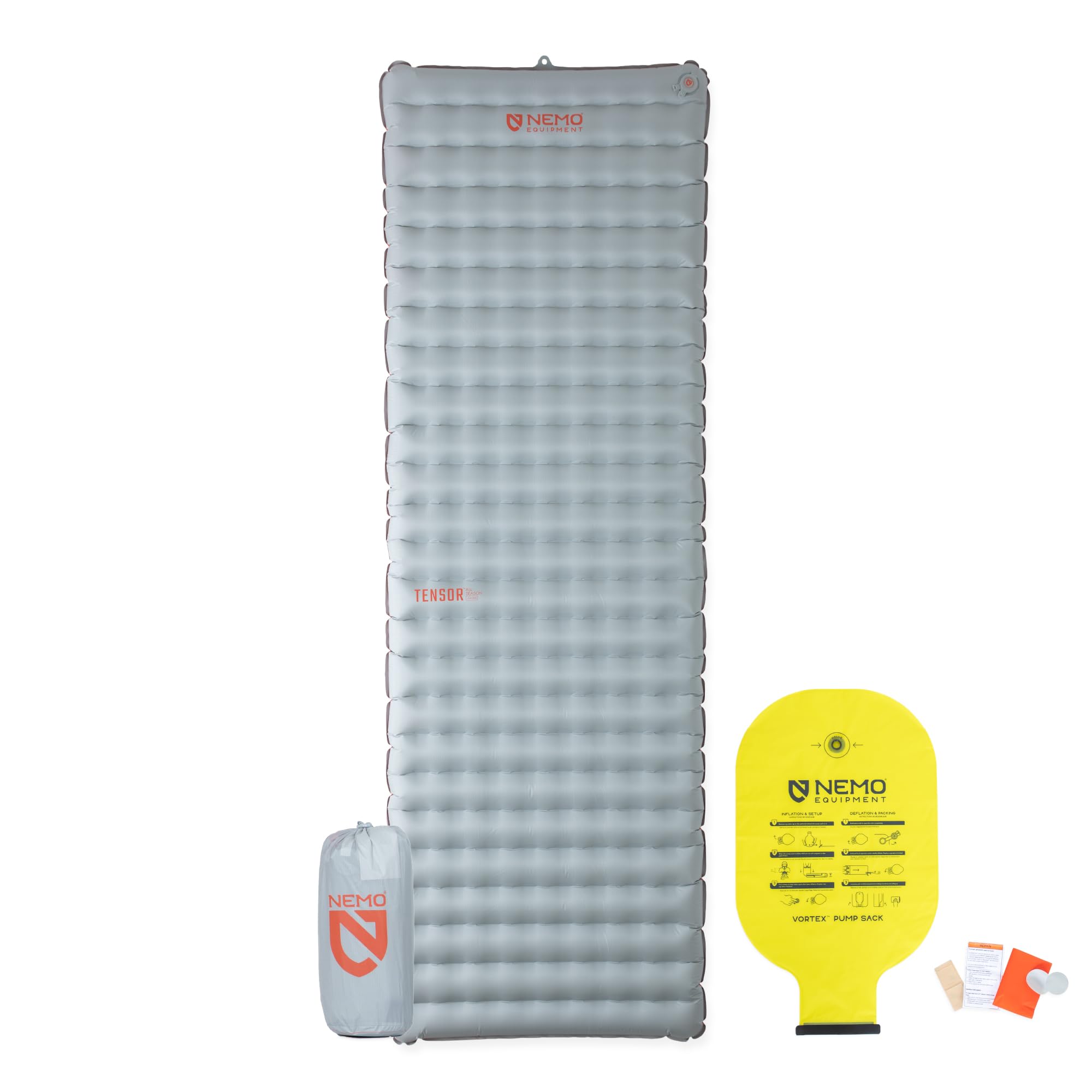
The Tensor All-Season uses two layers of floating Thermal Mirror metallized film suspended within Spaceframe baffles to achieve an exceptional warmth-to-weight ratio without the crinkle noise that plagued earlier reflective pads. At 3.5 inches thick and weighing 660 grams in the long-wide version, it offers 25-by-76 inches of stable, cushioned loft that distributes weight evenly across the die-cut trusses, eliminating the springiness common in baffled air pads. The bluesign-approved premium nylon fabric resists punctures better than typical ultralight materials.
The pad is impressively quiet — owners switching from older reflective pads frequently mention the silence as a revelation. The Vortex pump sack inflates the pad in two to three fills, and the valve design includes a one-way deflation port for fast pack-down. Users report surviving 18-degree nights in hammock setups without cold spots, and the pad maintains its shape with minimal pressure loss from temperature changes. The wide version is strongly recommended for side sleepers and larger users, as the standard width feels narrow in the shoulders.
The main downside is price — the Tensor All-Season sits at the top of the premium tier. A small number of users found that the pad, while comfortable, did not feel appreciably warmer than three-season competitors. For backpackers who sleep cold and prioritize a silent, stable platform at ultralight weight, the Tensor All-Season offers a compelling four-season solution that does not sound like a potato chip bag every time you roll over.
Why it’s great
- Exceptionally quiet for a reflective pad
- Spaceframe baffles eliminate springiness
- Light enough for ultralight four-season trips
Good to know
- Premium price point
- Standard width may feel narrow
FAQ
Can I use a self-inflating pad for backpacking?
How do I clean and store my camping mattress pad?
What is the difference between open-cell foam and closed-cell foam in pads?
Final Thoughts: The Verdict
For most users, the best camping mattress pad winner is the Therm-a-Rest MondoKing 3D because it combines a luxurious 4.25-inch foam loft with a 7.0 R-value in a package that feels like a real bed. If you want the highest insulation numbers and the widest sleeping surface for car camping or rooftop tents, grab the Exped MegaMat Long X-Wide. And for budget-conscious campers who still need four-season capability, nothing beats the Hikenture 4 Inch Thick pad for the extreme 9.5 R-value it delivers at a mid-range price point.