
The fundamental problem with a mummy bag is that it traps you inside a fabric tube. You can’t stick a leg out to vent heat, you can’t unzip just the footbox to cool down, and every middle-of-the-night adjustment feels like wrestling a zipper. A camping quilt replaces that claustrophobic coffin with a flat, open blanket that you tuck around yourself — wrapping warmth around you instead of zipping it above you. The trade-off is draft management, which separates a well-designed quilt from a sheet that fails you at 3 a.m.
I’m Min — the co-founder and writer behind Gadgets Feed. I’ve spent countless hours cross-referencing insulation materials, temperature ratings, and pad-attachment systems across hundreds of reviews to isolate the quilts that actually perform on cold ground or inside a swaying hammock.
This guide works through seven top contenders that cover everything from ultralight backpacking to campfire lounging, giving you a complete picture of what a camping quilt can really do once you leave the sleeping bag behind.
How To Choose The Best Camping Quilt
A camping quilt lives at the intersection of weight, warmth, and drape. You need insulation that actually traps body heat, a cut that seals against drafts, and a system that stays put when you shift positions. These three factors determine whether you sleep warm or wake up with a cold shoulder at 4 a.m.
Down Fill Power vs. Synthetic Insulation
Fill power (FP) is the number of cubic inches one ounce of down occupies. A 600 FP down compresses less and traps less air per gram than an 850 FP down. Higher FP means you get the same warmth from a lighter, smaller pack. But down is worthless when wet. Synthetic fills (like Klymalite or SEE polyester) retain loft when damp, dry faster, and cost less — but they weigh more and lose insulating efficiency over repeated compressions. Choose down for ultralight, dry-weather backpacking. Choose synthetic for wet coastal trips or if you plan to launder the quilt often.
Pad Attachment and Draft Management
A quilt only keeps you warm if it stays draped over your body. Elastic shock-cord loops or nylon straps that wrap around the sides of your sleeping pad create a sealed envelope. Without some form of attachment, a side sleeper who rotates will pull the quilt off their back, creating a gap that drains heat instantly. Look for quilts that include removable straps or built-in webbing loops — you can always disconnect them on warm nights when you want the quilt loose.
Footbox Configuration
Three footbox styles dominate this category: sewn-shut, cinch-and-snap, and convertible. A sewn-shut footbox traps heat best but kills ventilation — you can’t stick your feet out to cool down. A cinch-and-snap footbox uses a drawcord and a single button to close the bottom, giving you the option to open it flat like a blanket. Convertible designs include a zipper that splits the quilt in half or a hidden slit that lets you wear the quilt as a poncho. Your choice depends on whether you prioritize maximum warmth or ventilation flexibility.
Quick Comparison
On smaller screens, swipe sideways to see the full table.
| Model | Category | Best For | Key Spec | Amazon |
|---|---|---|---|---|
| WIND HARD Tiny Pro | Premium Down | Ultralight backpacking | 800 FP down, 835g total weight | Amazon |
| SENSORY4U Ultralight Top Quilt | Premium Down | Budget lightweight down | 850 FP down, 1.9 lbs | Amazon |
| ENO Ember UnderQuilt | Premium Synthetic | Hammock cold-weather insulation | Recycled synthetic insulation, 1.63 lbs | Amazon |
| Klymit Versa Blanket | Mid-Range Synthetic | Car camping and travel versatility | High-loft fleece interior, packs to pillow | Amazon |
| Horizon Hound Down Blanket | Mid-Range Down | Budget down for fair-weather camping | 650 FP down, 1.1 lb | Amazon |
| OneTigris Featherlite | Entry-Level Synthetic | First-time quilt buyers, hammock users | SEE polyester fill, 35 oz, 41°F rating | Amazon |
| Wise Owl Outfitters Underquilt | Budget Synthetic | Hammock insulation on a tight budget | Poly-fill, 1.8 lbs, 40°F rated | Amazon |
In‑Depth Reviews
1. WIND HARD Tiny PRO Series 10D Lightweight 800FP Down Sleeping Bag Quilt

The Tiny Pro achieves the best warmth-to-weight ratio in this lineup by pairing 800-fill-power down with a 10D nylon shell that shaves every possible gram. At 835g total (including the stuff sack), this quilt weighs less than most ultralight sleeping bags while offering a comfort rating of 28°F and a limit rating of 18°F. The 10D fabric has a distinct crinkle feel — some call it trash-bag texture — but that frictionless surface lets the quilt slide over your sleeping pad without snagging.
What separates the Tiny Pro from cheaper down quilts is the multi-function design. A hidden zipper runs down the center of the quilt, allowing you to wear it as a wearable down top for camp chores. The footbox uses an adjustable drawstring, though reviewers note it doesn’t cinch tight enough to fully block drafts below 30°F. Pad-attachment straps are included, but they rely on a proprietary snap system that may not fit every pad width.
The 10D shell is whisper-thin — durability against bushwhacking is not its strength. You need to treat this quilt like precision gear: store it in the mesh bag to maintain loft, never compress it for weeks at a time, and avoid contact with sharp backpack buckles. For gram-conscious backpackers who sleep warm and stay on trails, this quilt delivers premium insulation at a weight that disappears in your pack.
Why it’s great
- Sub-1.9 lb total weight with 800 FP down makes it ideal for multi-day carries
- Wearable mode replaces a camp puffy in shoulder-season conditions
- Compresses to 30×18 cm, easily fitting in a 40-liter pack
Good to know
- 10D fabric feels fragile and crinkles loudly during movement
- Proprietary snap system limits pad compatibility without modding
- Slight chemical odor reported on first use — needs airing before trip
2. SENSORY4U Ultralight 850 Down Top Quilt

SENSORY4U packs 850-fill-power down into a 1.9 lb package that wraps around a 30°F comfort rating. That fill power is genuinely premium — you usually pay double for 850 FP from cottage brands like Enlightened Equipment or Hammock Gear. The baffle construction is adequate, with even down distribution across the torso and footbox sections. Side sleepers report zero twisting issues because the rectangular cut allows a full 180-degree roll inside the quilt.
The included pad-attachment straps use standard webbing loops that clip together under the pad, working with inflatable pads between 20 and 25 inches wide. The footbox is sewn shut, which locks in heat but eliminates the option to vent feet on warmer nights. Reviewers who pushed this quilt below 35°F reported cold spots around the shoulders, primarily because of the sewn-through construction near the neck opening. Using a liner adds roughly 5°F of effective warmth.
The shell fabric is a basic 20D ripstop nylon with a DWR coating that beads light rain but won’t survive a downpour. The included stuff sack is thin — several users reported it tearing after a few compression cycles. For the price, you get 850 FP down that performs like quilts costing twice as much, but you trade refined finishing details like premium hardware and silky fabric. It’s a fantastic choice for hikers who prioritize thermal performance over tactile luxury.
Why it’s great
- 850 FP down provides warmth rivaling boutique quilts at a fraction of the cost
- Roomy rectangular cut prevents the claustrophobic feel of tapered mummy bags
- Includes functional pad straps that work with standard inflatable pads
Good to know
- Sewn-shut footbox prevents ventilation on warmer nights
- Stuff sack is fragile and prone to seam failure after repeated packing
- Some down leakage through fabric reported after multiple uses
3. ENO Ember UnderQuilt

The ENO Ember is built specifically as an underquilt — it hangs below your hammock to eliminate the cold back syndrome that makes hammock camping miserable below 60°F. The dual-layer offset-quilted construction prevents down migration and cold spots, even when you shift your weight aggressively in an asymmetrical lay. The 40–60°F comfort zone is conservative; verified reviews confirm reliable warmth down to 33°F with proper layering underneath.
Setup is quick: the adjustable shock-cord suspension clips onto the end channels of most ENO hammocks without needing modification. The Ember also fits non-ENO hammocks up to 11 feet long, though you may need small carabiners to bridge the suspension loops. The 20D ripstop nylon outer shell carries a water-repellent finish that handles condensation and light mist, but sustained rain requires a tarp overhead. At 1.63 lbs, it’s heavier than dedicated cottage underquilts, but the price reflects the accessible suspension system.
The recycled synthetic insulation is a genuine eco-friendly choice — ENO uses 100% post-consumer materials for the fill. The trade-off is bulk: the Ember packs to about the size of a football, which eats significant volume in a backpack. For car-campers and weekend hammockers who don’t need sub-30°F warmth, this underquilt delivers a no-fuss, comfortable sleep system that transforms a summer hammock into a three-season shelter.
Why it’s great
- Tool-free clip suspension mates instantly with any ENO hammock
- Dual-layer construction eliminates cold spots across the full length
- Sustainable recycled fill without sacrificing warmth performance
Good to know
- Packs larger than down underquilts — takes up significant backpack volume
- Rated to 40°F but requires base layers and a top quilt below that
- Not designed for ground sleeping; hammock-only form factor
4. Klymit Versa Packable Camping Blanket

The Klymit Versa throws out the ultralight playbook and leans hard into versatility. It’s a 58×80-inch blanket with a high-loft fleece inner face and a soft-touch polyester ripstop shell, stuffed with Klymalite synthetic insulation. Four corner pockets and an integrated footbox keep the blanket anchored when you sleep, but the real party trick is the sleeve system: fold the blanket into itself and it becomes a usable pillow. That dual-mode design makes it one of the most functional pieces of gear for car camping, RV travel, and even home use.
Warmth is decent for a fleece-lined synthetic — the Versa holds steady around 55–60°F as a standalone blanket. Below that, it works best as a top layer over a sleeping bag or paired with a pad for extra insulation. The 25 oz weight is heavy compared to down quilts, but the absence of fragile nylon and the presence of a tough outer shell make it nearly indestructible around campfires, picnic tables, and stadium seats. Reviewers consistently praise how well it handles abuse that would shred a 10D down quilt.
The integrated hand mitts built into the sides are a clever touch: you can tuck your hands in without losing the edge seal. The stuff sack is built into the blanket itself via a zippered pocket, so you can’t lose it. For backpackers who chase ounces, this is too heavy. For everyone else who wants a camp blanket that transitions to a picnic comforter to a travel pillow to a stadium throw, the Versa is the Swiss Army knife of the list.
Why it’s great
- Converts from blanket to pillow without losing any components
- Rugged outer shell withstands campfire sparks and rough surfaces
- Integrated hand mitts and footbox seal warmth effectively
Good to know
- Heavy at 25 oz for backpacking — better suited to car camping
- Fleece interior holds odors and takes longer to air out between trips
- Lacks a true draft collar; shoulder gaps when used as a standalone quilt
5. Horizon Hound Down Camping Blanket 650 Fill Power
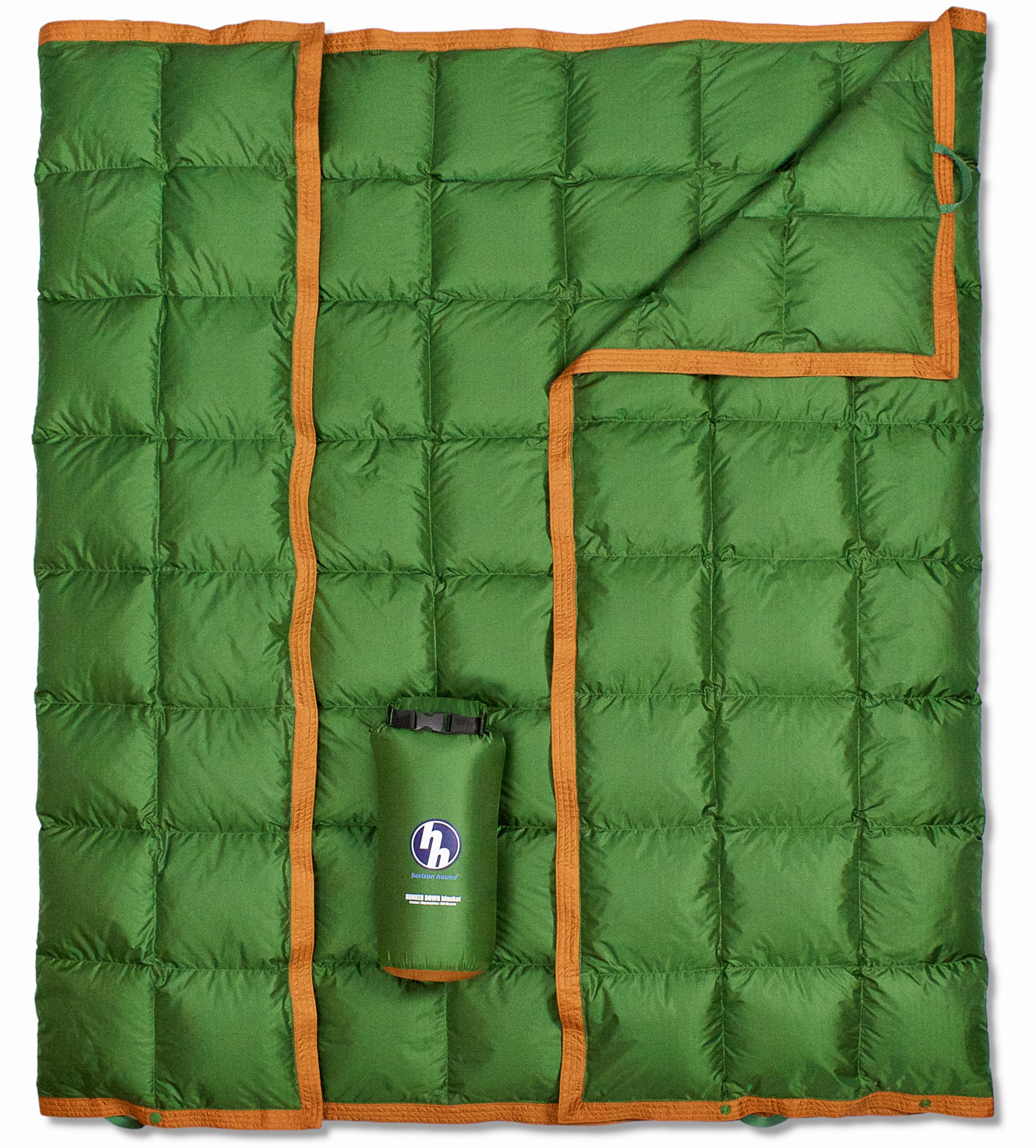
The Horizon Hound is a 77×50-inch down blanket that weighs just over a pound and packs down to the size of a loaf of bread. The 650 FP down fill is a step below the premium 850 FP quilts, but it still provides solid warmth retention to about 45–50°F with a base layer. The nylon shell includes a DWR finish that beads light rain and resists ground moisture. For fair-weather backpackers and car campers who want down’s compressibility without the premium price, this blanket punches well above its weight class.
The standout feature is the snap-together poncho mode. Snaps along the center seam turn the blanket into a wearable wrap that replaces a camp jacket during morning coffee or evening lounging. The plastic snap buttons feel less durable than metal alternatives, but they haven’t reported breakage in extended use. There’s no footbox — you sleep with the blanket flat, which means cold air can sneak in at the bottom unless you tuck the edges under your legs or use tarp clips to rig your own closure.
Reviewers who own this blanket for 3–4 years report the down maintains loft without significant loss. The 20D nylon shell is noticeably noisier than 10D fabrics from premium quilts, but it’s far more durable against abrasion from tent floors and tree bark. If you’re looking for an entry-level down blanket that doubles as a camp poncho and fits a budget, the Horizon Hound is a genuinely versatile starting point without major compromises.
Why it’s great
- Snap-in poncho mode replaces a separate camp jacket for shoulder season
- Light at 1.1 lb for a down blanket with 77 inches of length
- Durable 20D shell resists abrasion better than ultralight alternatives
Good to know
- Open foot design lets drafts through below 45°F without modification
- Plastic snap buttons feel less secure than metal or webbing attachments
- 650 FP down requires more loft time than 850 FP to reach full warmth
6. OneTigris Featherlite Ultralight Sleeping Quilt

The OneTigris Featherlite is a synthetic quilt built around a straightforward mission: deliver a 41°F temperature rating at 35 oz with a sub-70-dollar price. The shell uses 20D ripstop nylon with a 380T polyester taffeta interior, and the SEE polyester fill provides decent loft with no down-leakage concerns. The dimensions at 6.6 x 2.8 feet offer enough width for average-shoulder sleeping without feeling restrictive.
The hollowed back design is the key engineering choice — the quilt has less insulation in the center panel, assuming you’ll pair it with a sleeping pad that provides ground insulation. This works well with an inflatable pad that has its own R-value; without one, you’ll feel cold through the hollowed section. The convertible footbox uses hook-and-loop closures to switch between open blanket mode and enclosed foot pocket mode, giving you ventilation control that sewn-shut footboxes can’t match. Reviewers report the Velcro stays secure through normal tossing but can pop loose during aggressive repositioning.
Synthetic quilts compress about half as well as down, so expect the Featherlite to fill about a gallon-jug volume in your pack. That bulk is the trade-off for moisture resistance — this quilt can handle condensation inside a tent or a light drizzle without losing insulation. For first-time quilt buyers who want to test the format without a major investment, the Featherlite is a low-risk entry point that performs reliably in the 45–55°F range where most three-season camping happens.
Why it’s great
- Convertible hook-and-loop footbox switches between enclosed and open modes
- Synthetic fill retains warmth even when damp from condensation
- Hollowed back design integrates well with sleeping pad insulation
Good to know
- Packs larger than down — expect gallon-jug volume in your bag
- Hook-and-loop closure can detach during active movement at night
- Hollowed back provides no insulation on its own without a pad
7. Wise Owl Outfitters Hammock Underquilt
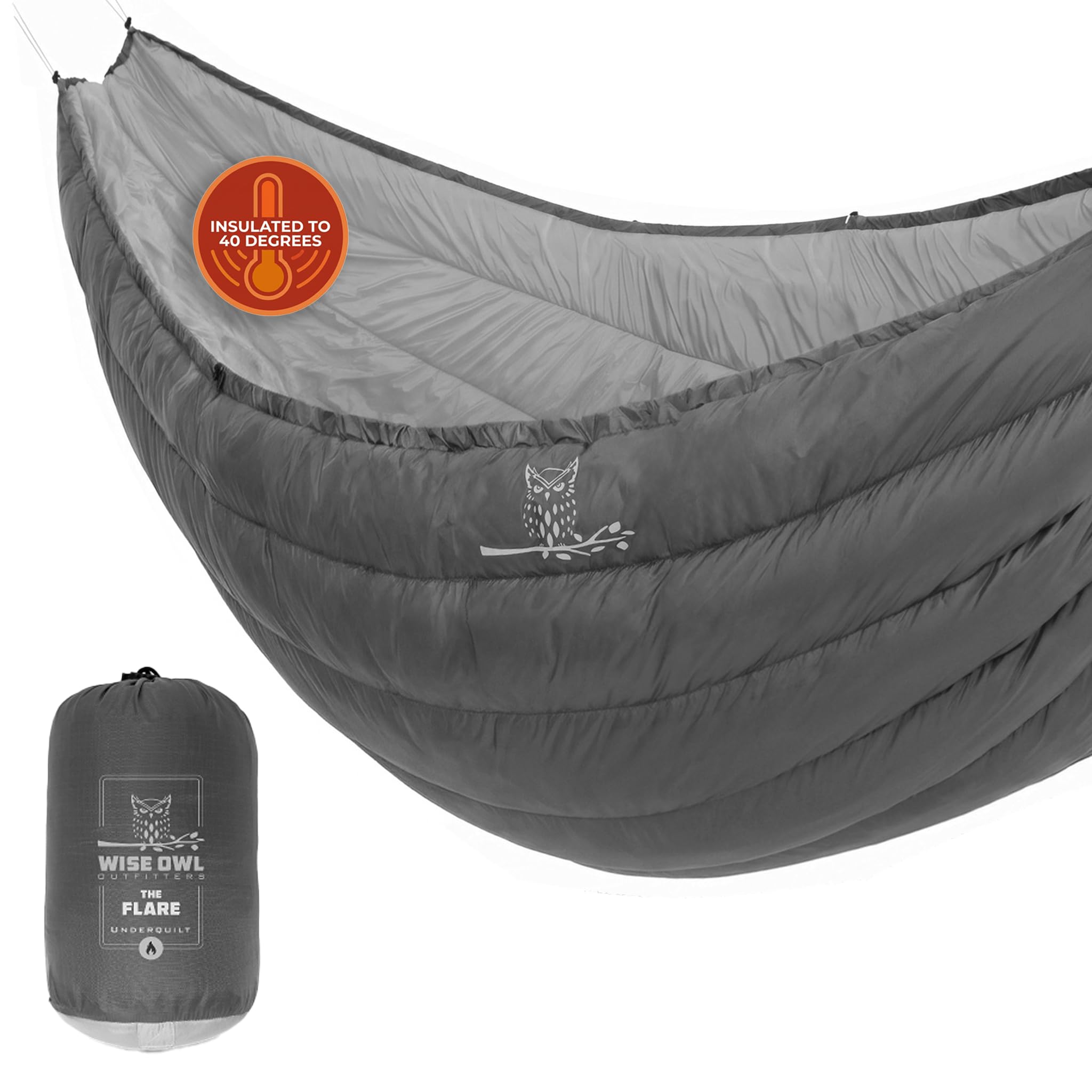
The Wise Owl Outfitters Underquilt is the most budget-friendly path to solving the cold-back problem in a hammock. It uses a poly-fill synthetic insulation wrapped in 20D ripstop nylon, weighing 1.8 lbs with a 40°F temperature rating. The design includes adjustable shock-cord tighteners at each corner that cinch the quilt snug against the hammock bottom, creating a dead air space that blocks convective heat loss from your back. Reviewers confirm reliable performance down to the mid-30s when paired with a top quilt or sleeping bag.
Fit versatility is a strong point — the quilt adjusts to fit both single and double hammocks up to 11 feet long. The asymmetrical lay that hammockers use for a flatter sleeping position works well here because the suspension lines create enough slack to accommodate diagonal sleeping without pulling the quilt tight. For Hennessy and Warbonnet hammocks, some users report needing small s-biners or extra shock cord to bridge the connection, but no modifications are required for most standard gathered-end hammocks.
The poly-fill insulation compresses to about the size of a small camping pillow, but it doesn’t compress as tightly as down, so pack volume is moderate. The included stuff sack is functional but thin, and the 20D nylon shell is mid-range in durability — it resists punctures from tree bark but won’t survive a scrape against sharp rocks. For hammock campers on a tight budget who need reliable three-season warmth, this underquilt delivers the essential function without the premium pricing of cottage brands.
Why it’s great
- Cinch-tight suspension eliminates drafts across diagonal sleeping positions
- Fits both single and double hammocks with adjustable corner lines
- Poly-fill insulation maintains warmth in damp conditions
Good to know
- Shorter than premium underquilts — tall users may need to extend with extra cord
- Thin stuff sack needs careful handling to avoid tearing
- Limited to hammock use; not designed for ground sleeping
FAQ
Can I use a camping quilt on the ground instead of in a hammock?
What is the lowest temperature a camping quilt can handle?
How do I choose between down and synthetic fill for a camping quilt?
How do I attach a camping quilt to my sleeping pad?
Is a camping quilt warmer than a sleeping bag?
Final Thoughts: The Verdict
For most users, the camping quilt winner is the WIND HARD Tiny Pro because it combines genuine 800 FP down insulation with a sub-1.9 lb total weight and a wearable mode that replaces an extra layer in your pack. If you want the best warmth-per-dollar in a down quilt, grab the SENSORY4U Ultralight Top Quilt. And for hammock campers who need reliable back insulation without breaking the bank, nothing beats the ENO Ember UnderQuilt for its tool-free setup and tested cold-weather performance.