
A goose call that sticks shut in the cold or sounds like a squeaky toy is the fastest way to blow a morning hunt. The waterfowl market is flooded with cheap plastic tubes, but a solid Canada goose call needs to deliver deep, guttural tones that actually fool a wary honker, not just annoy the guy in the next blind. You want a call that responds to soft clucks for close birds and rolls into a commanding hail call when they are working the horizon.
I’m Min — the co-founder and writer behind Gadgets Feed. I spent dozens of hours cross-referencing customer reviews, comparing reed designs, and dissecting the technical specs of short-reed calls, polycarbonate flutes, and long-honker models to separate the gear that performs from the plastic that disappoints.
Whether you are a first-timer gripping your first short reed or a veteran guide needing a call that refuses to freeze up, this guide to the best canada goose call will point you to the model that fits your skill level and hunting conditions.
How To Choose The Best Canada Goose Call
The wrong call will frustrate you in the field. You need to match the call type to your experience level and the specific vocalizations you need to produce. Do not just grab the cheapest tube — understand the three core factors that separate a finisher from a toy.
Short Reed vs. Flute vs. Long Honker
Short-reed calls dominate the market because they offer the widest vocal range — clucks, moans, honks, and the critical comeback call — with moderate air pressure. A flute or long honker, like the Flambeau, is easier to blow but sacrifices the rapid-fire double clucks that pros use to turn passing birds. Beginners often start with a short reed and stay there; guides carry both.
Material and Cold-Weather Performance
Polycarbonate bodies are lighter and warmer to the touch than acrylic, but they can warp under extreme heat or pressure. Acrylic produces a sharper, clearer tone but can feel brittle in sub-zero temps. The real enemy is moisture freezing the reed to the tone board — a call with patented ditches (like the Primos Honky Tonk) or dual O-rings (like the Buck Gardner) gives you a fighting chance when your breath turns to ice.
Ease of Blow vs. Sound Quality
A call that takes a massive lungful to break over will tire you out before the geese even show. Look for calls described as “easy-blow” or requiring “low air pressure” — the Zink Power Clucker and Haydel’s H-81 are famous for this. But be careful: extremely easy-blowing calls sometimes lack the raspy edge that experienced hunters prefer. The sweet spot is a call that breaks cleanly on a gentle exhale but still lets you push it into a loud, aggressive hail call when the flock is a quarter-mile out.
Quick Comparison
On smaller screens, swipe sideways to see the full table.
| Model | Category | Best For | Key Spec | Amazon |
|---|---|---|---|---|
| Flambeau Outdoors Long Honker | Long Honker Flute | Easiest blowing; voluminous honks | Hand-tuned flute design | Amazon |
| Buck Gardner Canada Hammer 2 | Short Reed Poly | Easiest short reed; double O-rings | Hand-shaved reed for easy blow | Amazon |
| Duck Commander Goose Call | Short Reed | Deep raspy sounds; secure grip | Finger groove for grip | Amazon |
| Primos Honky Tonk 866 | Short Reed Poly | Non-stick ditches; easy clean | Patented non-stick ditches | Amazon |
| Buck Gardner Canada Hammer | Short Reed Poly | Loud, clear sound; affordable | Double O-rings for air seal | Amazon |
| Zink Power Clucker PC-1 | Short Reed Poly | Powerful clucks; beginner-friendly | Hand-tuned; straight bore mouthpiece | Amazon |
| Haydel’s H-81 AMZ Canada Honker | Short Reed | Moisture-proof; deep guttural tones | Impervious to moisture | Amazon |
In‑Depth Reviews
1. Flambeau Outdoors Long Honker Goose Flute

The Flambeau Long Honker is the easiest-blowing call on this list because it uses a traditional flute design rather than a short reed. The long tone channel mimics the anatomy of a goose neck, enriching the sound into a deep, hollow honk that requires the least air pressure of any style. At 13.5 inches, it is the largest call here — you cannot hide it in a pocket, but you do not need to puff hard to fill a field with sound.
Every unit is hand-tuned at the factory, so the pitch is consistent out of the box. The Mossy Oak Shadow Grass Blades finish helps it blend into a camo coat, and the 1-year warranty against manufacturer defects gives peace of mind for a premium price. It specializes in voluminous honks and rich single or triple clucks, but it does not produce the rapid-fire double clucks that a short-reed call can deliver.
Veteran hunters who have used it for multiple seasons report it holds up well and sounds mellow compared to aggressive short reeds. If you are after a call that works immediately without practice and brings in geese with a natural tone, this flute is the simplest path to success. It is the top dog for sheer ease of use.
Why it’s great
- Lowest air pressure requirement of any style — extremely beginner-friendly
- Deep, natural goose tone that sounds authentic in the field
Good to know
- Larger size (13.5 inches) is harder to pack in a small blind bag
2. Buck Gardner Canada Hammer 2 Performance Series

The Canada Hammer 2 is marketed as the easiest-operating short-reed Canada goose call ever made, and the customer feedback backs that up. The hand-shaved reed and double O-rings create an airtight seal that prevents air leaks, so you get a clean break without forcing it. The Mallard Green/Smoke colorway blends into any field or marsh setting without glare.
The gunmetal band adds a touch of durability beyond the standard polycarbonate body, and the Quick-Tune guts system lets you adjust the reed tension in the field — a feature you normally find on calls costing twice as much. Users report it is easy to learn on, with one reviewer noting “this call is better than I am at using it.” The tone is clear and loud enough to reach distant flocks.
The only trade-off is that it takes a small amount of practice to master the short-reed technique compared to a flute, but the learning curve is the shortest among short reeds. If you want a compact call that gives you the full vocal range without a steep learning curve, the Canada Hammer 2 is your best mid-range pick.
Why it’s great
- Hand-shaved reed for exceptionally easy blowing
- Double O-rings prevent air leaks and improve sound consistency
Good to know
- Some users find the barrel fit tight initially, requiring a break-in period
3. Duck Commander Canada Goose Call

The Duck Commander call uses a short reed with a “worn in guts” style, meaning the reed is pre-broken-in at the factory for immediate responsiveness. It produces deep, raspy tones that match the vocal range of Canada geese — particularly good for the guttural moans that signal a feeding flock. The finger groove on the barrel gives you a textured grip when your hands are cold or wet.
This call lands in the premium tier. It is durable enough to survive a season of field abuse, and multiple users have reported calling in geese and even goslings on their first outing. One experienced hunter noted the call requires more air to “break over” than softer-blowing models, so beginners may need to build lung capacity before they can hit the full range of tones.
The finish is a multi-color camo that does not reflect light, and the overall weight is light enough to live on your lanyard all season. It is a solid choice for a hunter who wants a no-nonsense short reed that produces the right sound without gimmicks.
Why it’s great
- Pre-worn reed provides instant raspy tone out of the box
- Ergonomic finger groove for secure grip in wet conditions
Good to know
- Requires a stronger breath to break over compared to beginner-oriented calls
4. Primos Honky Tonk 866 Goose Call

The Primos Honky Tonk 866 is built around a patented reed system that prevents sticking — the single biggest frustration with short-reed calls in cold weather. The ditches on the tone board physically stop the reed from adhering to the surface when moisture freezes, so you do not have to blow warm breath through it mid-morning to unstick the reed. The entire call disassembles for cleaning and reassembles perfectly every time thanks to the patented system.
This is a mid-range polycarbonate call that balances cost with reliability. It is easy enough for a beginner to get a good honk, but experienced hunters can push it into aggressive double clucks and moans. The gloss black and chrome finish is the main aesthetic complaint — some users paint over the chrome to reduce glare — but the sound quality is proven to fool geese.
Multiple reviewers have used this call for years and replaced it only after losing it in the field. The non-stick design makes it a standout for hunting in freezing conditions where other calls lock up. If you hunt when temperatures drop below freezing, this feature alone is worth the price.
Why it’s great
- Patented ditches prevent reed sticking in cold weather
- Full disassembly for cleaning without losing tuning
Good to know
- Glossy finish may glint in sunlight, requiring a paint touch-up
5. Buck Gardner Canada Hammer BGC Goose Call (Clear Bourbon)

The standard Buck Gardner Canada Hammer shares the same polycarbonate body and Quick-Tune guts system as the Hammer 2 but arrives at a lower price point. It is designed for fast, responsive reed pick-up, meaning the reed reacts instantly to changes in air pressure for crisp clucks and moans. The Clear Bourbon color shows off the guts, making it easy to see if dirt or moisture is affecting the reed.
The gunmetal band adds a subtle premium touch, and the double O-rings create a reliable seal. It is noticeably louder than some competitors in the same tier — reviewers consistently call it “loud” and “clear.” However, the learning curve is a bit steeper than the Hammer 2 because the standard reed requires more precise air control. One buyer noted it is “one of the harder calls to learn, but really good” once mastered.
The quick-tune system is a major plus: you can adjust the reed tension by turning the barrel, which is helpful when you need a softer tone for close birds or a louder hail call for distant flocks. For hunters willing to practice, this call rewards with a big, loud sound that covers a wide area.
Why it’s great
- Extremely loud and clear sound for long-distance calling
- Quick-Tune guts let you adjust reed tension in the field
Good to know
- Learning curve is steeper than more beginner-focused models
6. Zink Power Clucker PC-1 Polycarbonate Goose Call
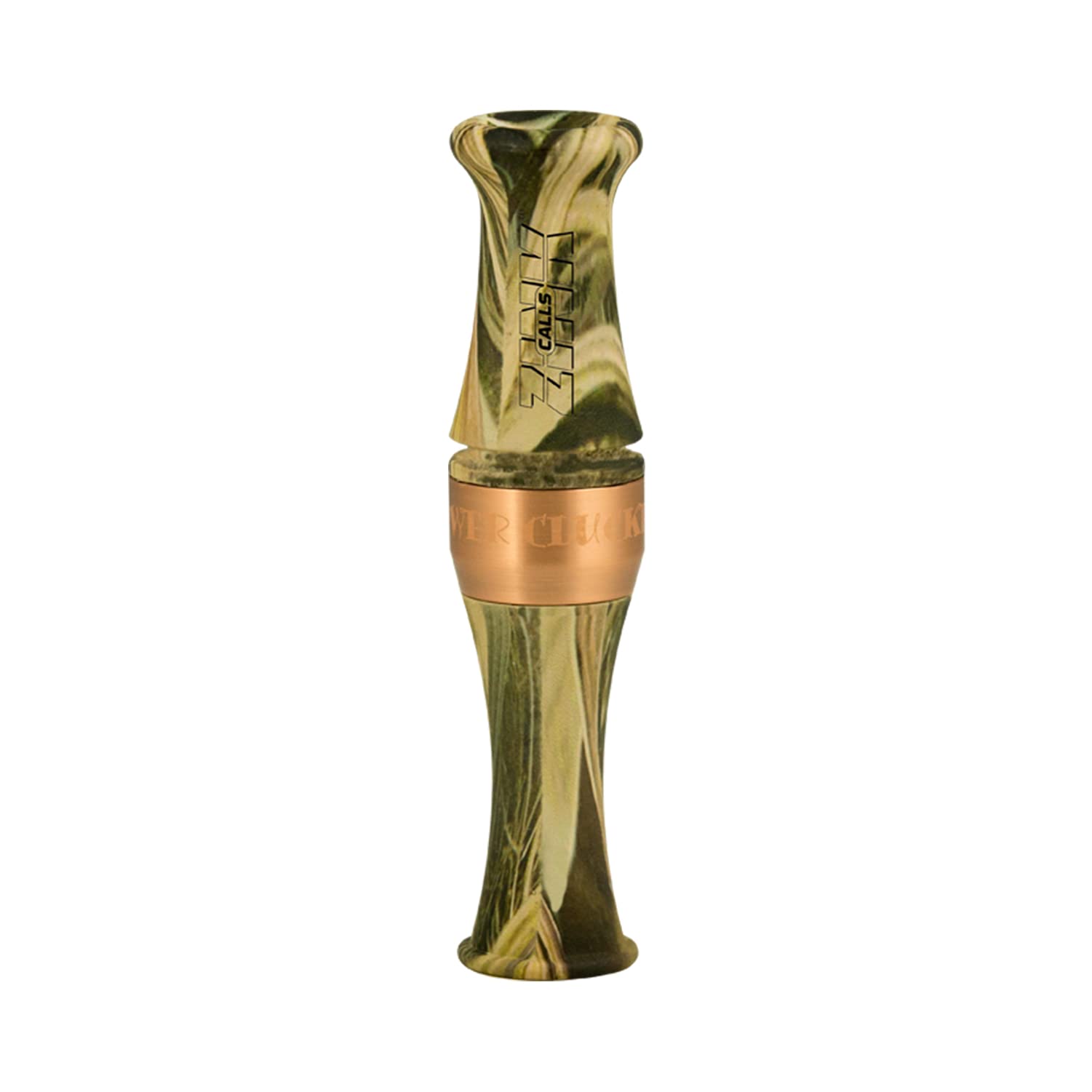
The Zink PC-1 is molded after its custom acrylic namesake but costs a fraction of the price. The polycarbonate body is paired with a unique straight bore mouthpiece that reduces back pressure, making it one of the easiest short reeds to blow — it effortlessly produces powerful clucks and double clucks without requiring a huge breath. The hand-tuned guts are assembled by a waterfowl expert who secures the reeds and places the finished pieces together for consistent performance.
This call is specifically marketed as a great introductory goose call, and the customer feedback confirms it: “easiest call to use” and “great for beginners as well as veteran hunters.” The worn-in tone channel gives it a natural, broken-in sound right out of the package. It is also lightweight at just 9.07 grams, so it disappears on a lanyard.
Some users note it may need minor tweaking to reach its full potential — one reviewer said it is “not bad for the money” but requires adjustment to become great. The Mossy Oak/Shadowgrass Blades pattern blends well with the environment. If you want a no-stress entry into short-reed calling, the Zink PC-1 is a proven starting point.
Why it’s great
- Extremely easy to blow — ideal for novice callers
- Hand-tuned by a waterfowl specialist for consistent sound
Good to know
- Some examples may require minor tuning to achieve optimal sound
7. Haydel’s Game Calls H-81 AMZ Canada Honker

The Haydel’s H-81 was designed with the input of Maryland’s eastern shore guides who needed a call that could survive wet, foggy mornings without the reed sticking. It is advertised as impervious to moisture, and the guttural tones it produces have made it a regional favorite for working big Canada honkers. It is a standard short reed, but the moisture resistance sets it apart from cheaper models that degrade in damp conditions.
This is one of the lowest-priced calls on the list, yet it punches above its weight in sound quality. The cluck and crying comeback call are both excellent, and the low air requirement makes it laughably easy to use — one reviewer said “literally just blow into it.” Multiple users have called in dozens of geese over multiple seasons with this call. It is also proudly made in the USA.
The only downside reported is that in extreme cold, the call can occasionally stick — ironic given its moisture-proofing, but it is still less prone to freezing than basic plastic calls. The 30-day warranty is short compared to premium models, but the track record of reliability makes it a solid budget-friendly choice for any hunter.
Why it’s great
- Exceptional moisture resistance — performs well in fog and rain
- Extremely easy to blow; beginners can produce good sounds immediately
Good to know
- Occasional sticking in extreme cold, despite moisture resistance
FAQ
What is the difference between a short-reed and a long-honker Canada goose call?
Why does my goose call stick shut in cold weather?
Final Thoughts: The Verdict
For most users, the best canada goose call winner is the Buck Gardner Canada Hammer 2 because it combines the easiest short-reed operation with field-tunable guts and an airtight seal, all at a manageable price. If you want the absolute easiest blowing experience with the deepest tone, grab the Flambeau Long Honker. And for a budget-friendly call that laughs at wet weather and is dead simple to blow, nothing beats the Haydel’s H-81 Canada Honker.