
A canvas work jacket is not a fashion statement first—it is armor. The good ones shrug off barbed wire, sawdust, rain, and the repeated abuse of a day that starts before dawn and ends in the dark. The difference between a jacket that lasts one season and one that outlives your favorite pair of boots comes down to a few non-negotiable specs: the weight of the duck canvas, the density of the stitching, and the pocket layout that saves you from digging for a tape measure every five minutes.
I’m Min — the co-founder and writer behind Gadgets Feed. I’ve spent hundreds of hours cross-referencing the grain of 12-ounce versus 14-ounce duck canvas, mapping out pocket configurations from ranch hands to roofers, and parsing the thermal performance of blanket liners versus quilted polyester so this guide holds nothing back.
Whether you need something that breathes under a hard hat or a shell that shrugs off single-digit windchill, the best canvas work jacket balances durable fabric weight, smart pocket access, and a liner matched to your climate.
How To Choose The Best Canvas Work Jacket
A canvas work jacket must resist abrasion, block wind, and allow freedom of movement. Before you compare brand names, lock in the fabric weight, liner type, and pocket layout that match your actual work environment. A jacket built for a utility lineman is overkill for a weekend woodworker, and a lightweight chore coat won’t survive a winter on a ranch.
Fabric Weight and Material
Duck canvas is measured in ounces per square yard. A 10-ounce jacket is entry-level—fine for mild days and light duty, but it will tear on a nail or a fence post. A 12-ounce canvas offers the best trade-off between durability and flexibility, requiring one or two washes to soften without losing structural integrity. A 14-ounce or heavier shell is nearly bulletproof but demands a genuine break-in period. Always check whether the canvas is 100% cotton or a cotton-polyester blend; pure cotton breathes better but holds moisture longer in wet conditions.
Liner Type and Insulation
The liner dictates the jacket’s usable temperature range. Blanket lining, usually an acrylic or wool-blend plaid, traps heat efficiently and breathes moderately, making it ideal for stationary work in sub-freezing temperatures. Quilted polyester liners are lighter and wick moisture away from the body, suiting active work where you generate constant body heat. Unlined jackets give you maximum layering flexibility but sacrifice immediate warmth. Do not rely on a thin mesh lining for genuine winter protection.
Pocket Layout and Access
Work jackets fail fastest at their pockets. Look for deep double-entry hand pockets that can hold a smartphone, a notepad, or a pair of gloves without dumping contents when you crouch. Welted chest pockets with snap closures secure small tools and a lighter. Some chore coats add a hidden internal drop pocket for documents or a tablet. Reinforced stitching at the top corners of every pocket is a sign that the manufacturer expects the pocket to be loaded—not just for show.
Reinforcement and Hardware
Stitching density along the shoulder yoke, the elbow panels, and the hem determines whether the jacket splits after a season of heavy use. A good jacket uses double-needle or triple-stitched seams at stress points. The zipper should be a metal YKK or equivalent brass zipper—plastic zippers save weight but fail under tension. Corduroy collars reduce neck chafing, and hidden snap closures prevent the collar from flopping into your line of sight. Watch for bartack reinforcement at the corners of pocket openings and at the waistband adjustment points.
Quick Comparison
On smaller screens, swipe sideways to see the full table.
| Model | Category | Best For | Key Spec | Amazon |
|---|---|---|---|---|
| Carhartt Washed Duck Ridge Coat | Premium | Extreme cold, stationary outdoor work | 14-oz washed duck canvas, blanket lining | Amazon |
| Berne Heartland Washed Chore Coat | Mid-Range | Heavy-duty warmth, budget-friendly | 12-oz duck canvas, thick thermal liner | Amazon |
| Carhartt Rugged Flex Duck Berwick | Premium | Lightweight, flexible work and casual wear | 10.5-oz duck canvas with stretch | Amazon |
| Levi’s Hooded Bomber Jacket | Premium | Heavy canvas, hooded coverage | Heavy canvas with sherpa lining | Amazon |
| ARIAT Rebar Duracanvas Jacket | Mid-Range | Water-resistant ranch and barn work | 11-oz Duracanvas, water-resistant finish | Amazon |
| Dickies Blanket Lined Denim Chore Coat | Mid-Range | Warm chore coat, classic denim look | Heavy denim, horse blanket lining | Amazon |
| Levi’s Depot Jacket | Entry-Level | Affordable, classic workwear styling | Cotton canvas, corduroy collar | Amazon |
In‑Depth Reviews
1. Carhartt Men’s Washed Duck Ridge Coat

The Ridge Coat is Carhartt’s most substantial layering shell built around 14-ounce washed duck canvas. That fabric weight is thick enough to deflect briars and wind without the board-stiff feel of raw duck, and the blanket lining adds trapped-air warmth that holds the line against single-digit winds. The cut runs deliberately large—a medium fits closer to an XL in most brands—which gives you room for a thermal undershirt and a hoodie underneath without compressing the insulation layer.
Chest pockets sit wide enough to access with gloved hands, but the zipper flaps require a second look to grab. Several users noted that the zipper flap on the left chest pocket is especially difficult to catch without a pull charm or a keyring tied to the tab. The full 5-star customer consensus praises the craftsmanship and warmth retention, with one reviewer reporting effective performance in 20°F with only a thin base layer underneath.
The main trade-off is weight—this coat is heavy. At nearly four pounds, it is not a jacket you throw on for a quick trip to the truck. It earns its place on a hook near the door for the days when you need to stand still in a frozen worksite and stay warm for hours. Buy it for stationary cold work, not for active, high-movement jobs.
Why it’s great
- 14-ounce duck canvas is the thickest shell in this lineup, providing genuine puncture resistance
- Blanket lining delivers proven warmth in sub-20°F conditions without electric heating
- Generous cut allows heavy layering without restricting shoulder range of motion
Good to know
- Weighs nearly four pounds, making it impractical for active or moving work
- Chest pocket zipper flaps are difficult to grip, particularly with gloves or cold fingers
- Order one full size down from your normal jacket size due to the roomy cut
2. Berne Men’s Heartland Washed Chore Coat

Berne’s Heartland Chore Coat competes directly with Carhartt’s offerings at a lower outlay, and the customer reviews consistently place it ahead in warmth and build quality. The 12-ounce washed duck canvas hits the durable-weight sweet spot—stiff enough to resist abrasion from tool belts and tailgate edges, yet soft enough out of the bag that it does not require a month of wear to break in. The thick thermal liner is the distinguishing feature here; reviewers working in the Rockies and Southern Louisiana reported unzipping after ten minutes of work in sub-20°F conditions because the coat was too warm for sustained activity.
At approximately ten pounds, the Berne is a heavy coat. That weight is a direct result of the heavy-duty liner and the tank-like stitching throughout. The coat includes a detachable hood, deep fleece-lined hand pockets, and a full-length zipper covered by a snap storm flap. Buyers should note that the Velcro tabs on the pocket flaps and zipper edge are aggressive—one reviewer removed them with a seam ripper to streamline the coat.
The fit is true to size but generous, and tall sizes (XLT) accommodate larger frames without the sleeves riding up. This is the smart choice for anyone needing Carhartt-level warmth without the Carhartt price tag, but the weight makes it unsuitable for warm-weather work or jobs requiring constant bending and climbing. Buy it for around-the-farm winter chores, not for roofing or framing.
Why it’s great
- Thermal liner is thick enough to overheat in sub-20°F conditions during active work
- 12-ounce duck canvas is pre-washed for immediate flexibility without sacrificing durability
- True-to-size fit with available tall sizes for taller builders and ranchers
Good to know
- Extremely heavy at roughly ten pounds—fatiguing to wear for extended periods
- Velcro tabs on pockets and zipper flap are excessively strong and can catch on tools
- Too warm for active work above 15°F; best suited for stationary cold-weather tasks
3. Carhartt Men’s Rugged Flex® Duck Berwick Jacket
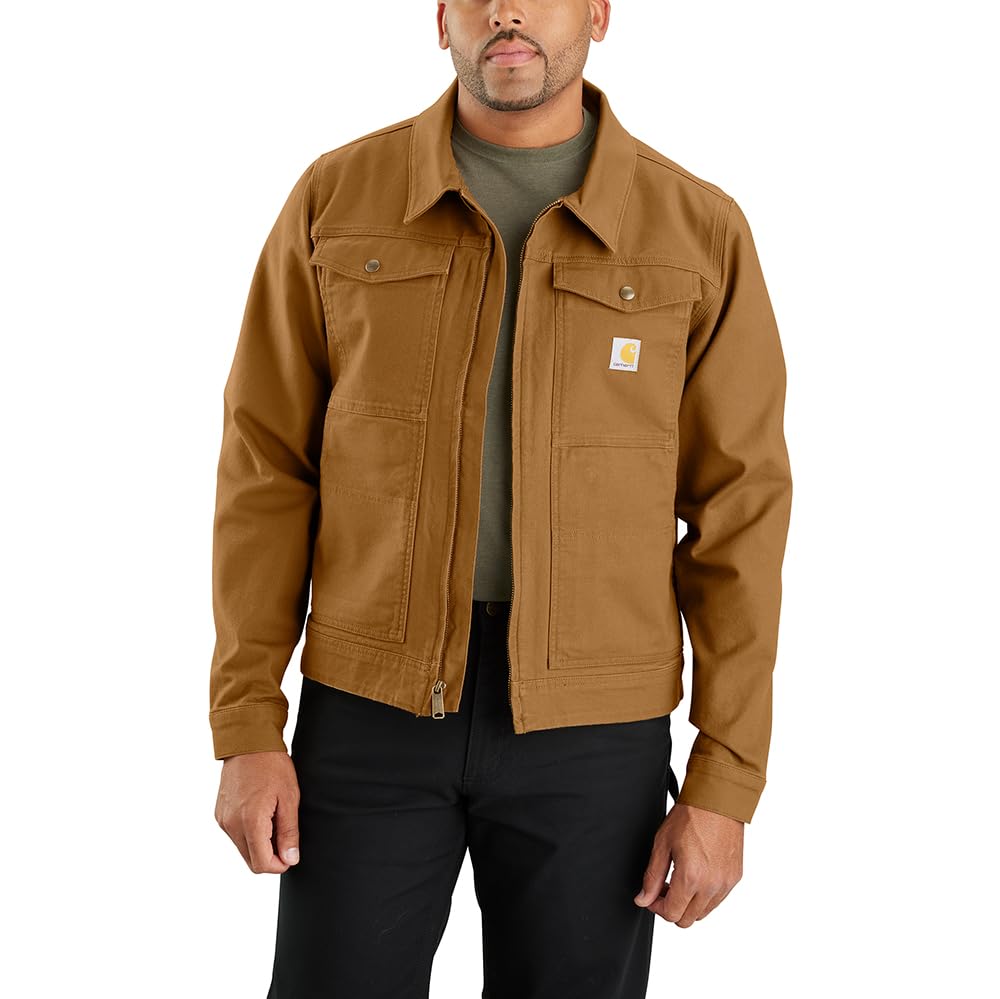
The Berwick Jacket is Carhartt’s answer to the worker who needs canvas durability without the bulk of a full winter coat. The 10.5-ounce duck canvas incorporates Rugged Flex stretch technology, meaning the fabric gives during overhead reaching and crouching without distorting the jacket’s shape. This makes it the best option in this guide for jobs that demand a full range of motion—framing, electrical work, or any role where you climb ladders repeatedly.
The jacket is unlined, which is either a feature or a drawback depending on your climate and layering strategy. For mild fall days or layered winter use under a bib, the lack of a liner is an advantage because you control the insulation layer yourself. The regular collar and elastic-free cuffs give it a cleaner silhouette, and the brass zipper glides smoothly. Several reviewers mentioned receiving compliments on the look, which is a fringe benefit of Carhartt’s design evolution toward workwear that crosses into casual wear.
The trade-off is that the 10.5-ounce canvas is lighter than traditional 12-ounce or 14-ounce duck. It will not resist a sharp nail or a barbed-wire fence pull as well as the Ridge Coat or the Berne. Buy it as a lightweight jacket for cool-weather work and casual weekends, not as a primary cold-weather barrier. The stretch canvas is a genuine innovation for mobility, but the reduced fabric weight limits its role on rough sites.
Why it’s great
- Rugged Flex stretch canvas delivers exceptional mobility for overhead and crouching work positions
- Unlined design gives you full control over your insulation layer for seasonal versatility
- Brass zipper and clean silhouette allow the jacket to transition seamlessly into casual wear
Good to know
- 10.5-ounce canvas is lighter than traditional work duck; less resistant to sharp abrasion
- Lack of lining means the jacket provides minimal standalone warmth in sub-40°F conditions
- Canvas includes stretch fibers, so it is not 100% cotton if that is a requirement for your worksite
4. Levi’s Men’s Workwear Cotton Canvas Hooded Bomber Jacket
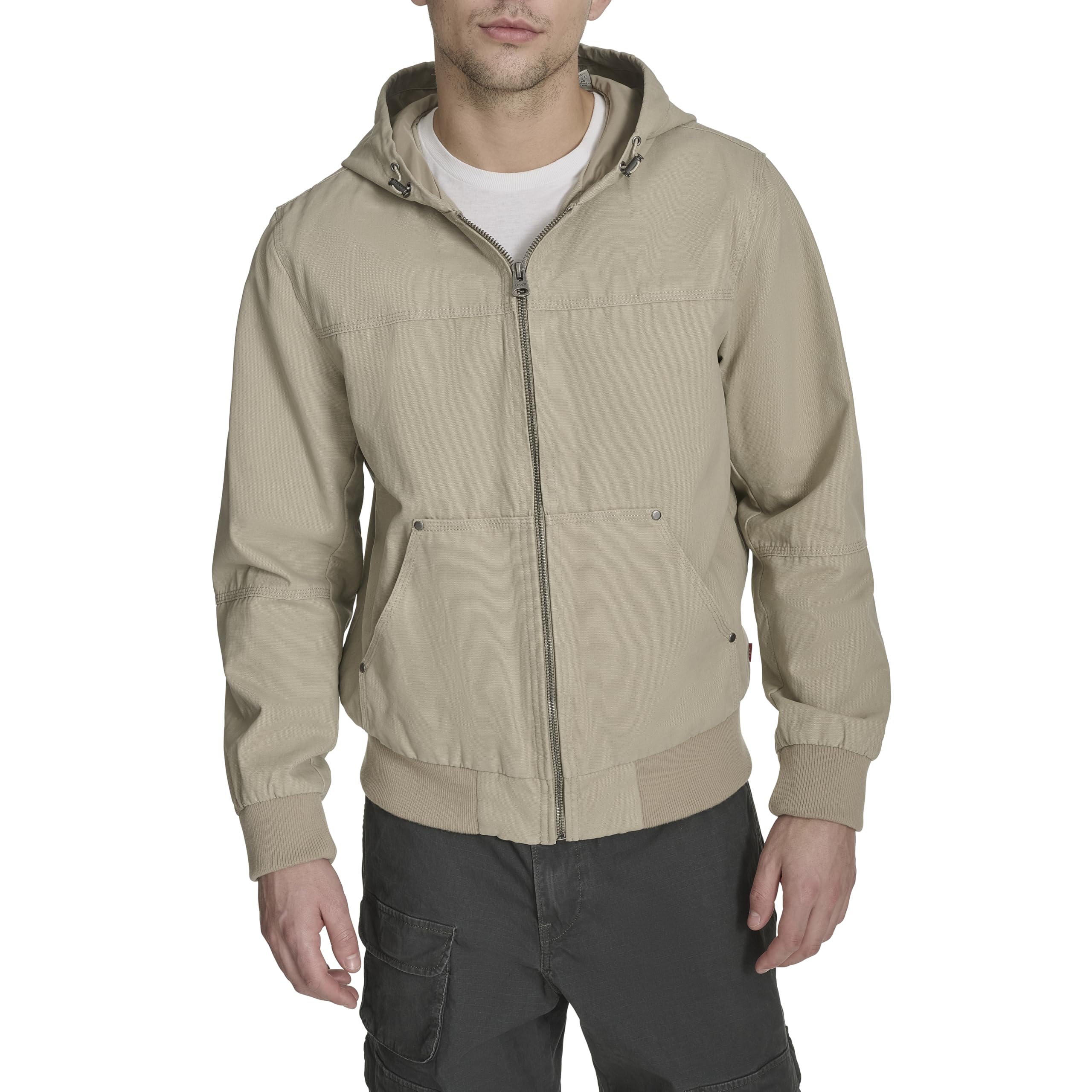
Levi’s enters the heavy-canvas arena with a hooded bomber that pairs a dense outer shell with a thick sherpa lining. The fabric weight here is substantial—comparable to Carhartt’s 12-ounce duck—with double and triple stitching at the stress points and rivet-reinforced pocket corners. The hood adds coverage that most chore coats lack, and the sherpa lining provides immediate plush warmth against the skin without the scratchy feel of some blanket liners.
One early adopter at 6’1″ and 190 pounds reported that a size Large fits well and registers as a legitimate Carhartt alternative at a lower price point. The jacket holds warmth in 45°F conditions, and the weight of the canvas helps it feel substantial on the shoulders. The primary complaint across multiple verified purchases concerns the zipper—several reviewers noted that the main zipper is stiff and occasionally catches, raising questions about long-term reliability.
The hooded design differentiates this jacket from the traditional chore-coat silhouette, making it a stronger pick for those who work outdoors without a hard hat. The bomber cut is slightly shorter in the torso, which improves mobility when bending and sitting in a vehicle cab. Buy it if you need a hooded canvas shell with genuine cold-weather lining, but inspect the zipper action on arrival and be prepared to lubricate it if necessary.
Why it’s great
- Heavy canvas with sherpa lining provides immediate warmth without the stiffness of unlined duck
- Hood adds weather coverage that traditional chore coats lack
- Reinforced stitching and rivets at pocket corners indicate genuine workwear construction
Good to know
- Main zipper is stiff and may catch during regular use; wax or silicone spray helps
- Sherpa lining adds bulk that limits layering underneath in extreme cold
- Bomber cut is shorter than a chore coat, which may not suit taller torsos
5. ARIAT Rebar Duracanvas Jacket
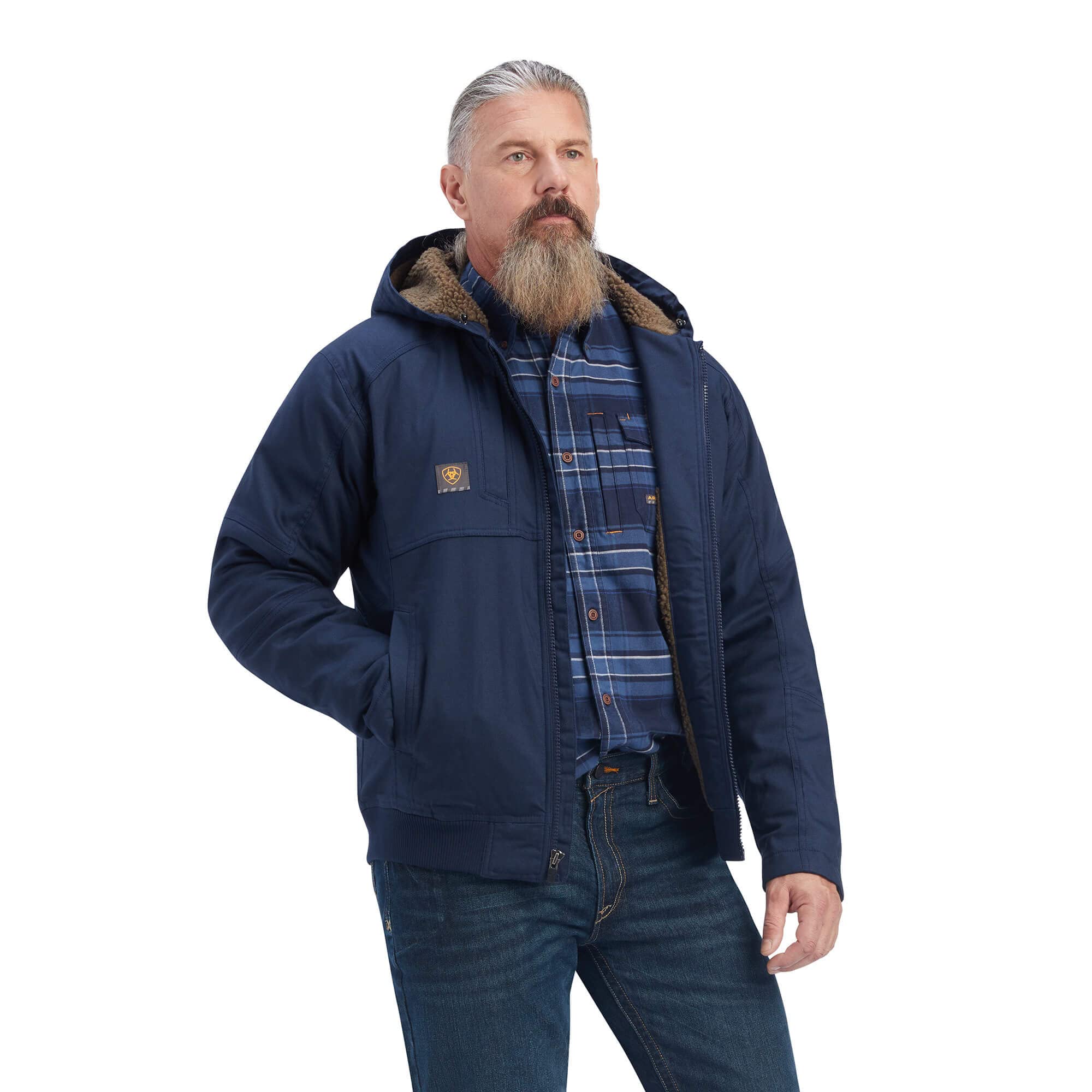
ARIAT’s Duracanvas fabric is a polyester-cotton blend engineered for moisture resistance, making this jacket the best choice in the lineup for wet barn work, dewy morning chores, and light rain exposure. The 11-ounce weight is more supple than pure cotton duck, and the factory-applied DWR finish sheds water well enough that several verified reviewers reported staying dry in heavy rain. The plastic zipper is a deliberate design choice—it will not scratch vehicle paint when you lean against a truck or a tractor fender.
The cut is tailored for mobility rather than bulky layering, which suits the active ranch and farm environment ARIAT targets. One long-term user reported that the jacket lasted many winters before the sleeves became threadbare, and they rated it 10/10 for durability over that span. The jacket lacks a dedicated liner, so the warmth comes from the fabric itself and whatever you layer underneath—a good thing for temperature regulation during fast-moving work.
The trade-off is that the Duracanvas fabric does not breathe as well as pure cotton, so on warm, humid days the jacket can trap heat against the body. Additionally, the water-resistant finish will degrade over time and requires reapplication. Buy it if your work environment involves rain, mud, and vehicle access where scratching paint is a genuine concern. It is not the best pick for static cold-weather work, but it excels in active wet conditions.
Why it’s great
- Poly-cotton Duracanvas offers genuine water resistance without the weight of waxed canvas
- Plastic zipper avoids scratching vehicle paint and equipment finishes
- Supple fabric requires zero break-in and allows full range of motion from day one
Good to know
- Polyester blend does not breathe as well as pure cotton in humid conditions
- Water-resistant finish is temporary and will need reapplication with a DWR spray
- Unlined shell provides minimal insulation; requires active movement or layering for warmth
6. Dickies Men’s Blanket Lined Denim Chore Coat
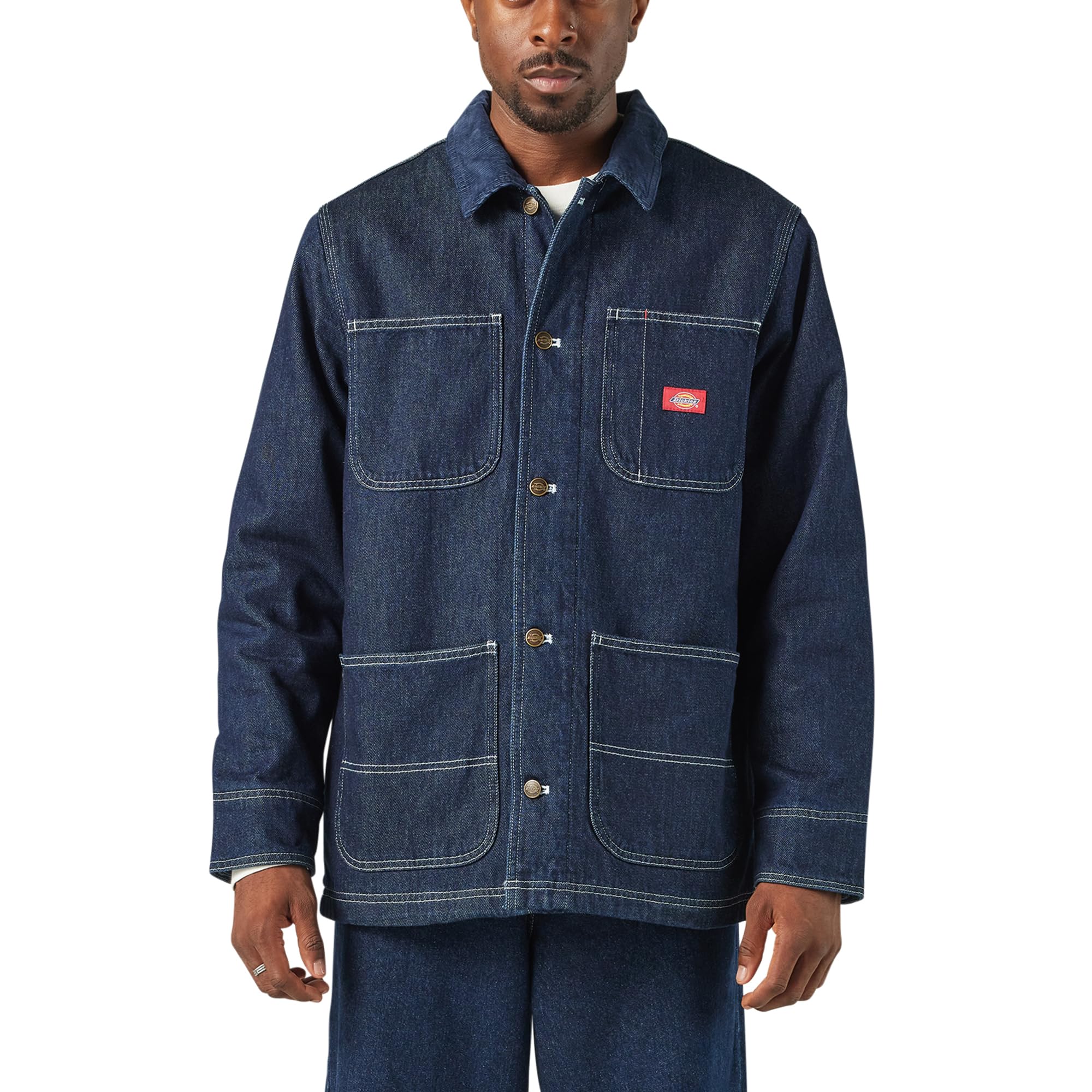
Dickies applies a blanket-lined approach to a heavy unwashed indigo denim shell, creating a chore coat that feels more substantial than the typical fashion denim jacket. The horse blanket lining—a thick acrylic plaid—traps warmth effectively, and the quilted sleeves reduce the cold-spot sensation when you raise your arms. Several users reported that the coat kept them warm in single-digit temperatures when paired with a scarf and a bib.
The unwashed denim is stiff out of the package and will shrink noticeably after the first wash. Buyers consistently recommend sizing down to account for this, with one reviewer noting that a size Large was roomy at 5’11” and 195 pounds but fit perfectly after washing and drying. The hidden button cuffs and the blanket lining give the coat a classic railroad-era aesthetic that translates well to both work and casual settings.
The main drawbacks are the button closure and the pocket configuration. The large patch pockets lack snaps or flaps, which means small items like a lighter or a box cutter can fall out when bending. The button-holes are tight—one reviewer with arthritis mentioned they were difficult to fasten. The denim shell also lacks the abrasion resistance of a thick duck canvas, so it is better suited for light outdoor work, shop duty, or casual wear than for heavy ranch or construction environments.
Why it’s great
- Horse blanket lining and quilted sleeves deliver genuine warmth in single-digit temperatures
- Unwashed indigo denim develops a personalized fade pattern with wear and washing
- Classic chore-coat silhouette works equally well on the job site and in town
Good to know
- Denim shell lacks the abrasion resistance of duck canvas; not ideal for heavy rough work
- Open patch pockets without closures can drop small tools and pocket items when crouching
- Shrinks considerably after the first wash; order one full size down from your usual size
7. Levi’s Men’s Workwear Cotton Canvas Corduroy Collar Depot Jacket
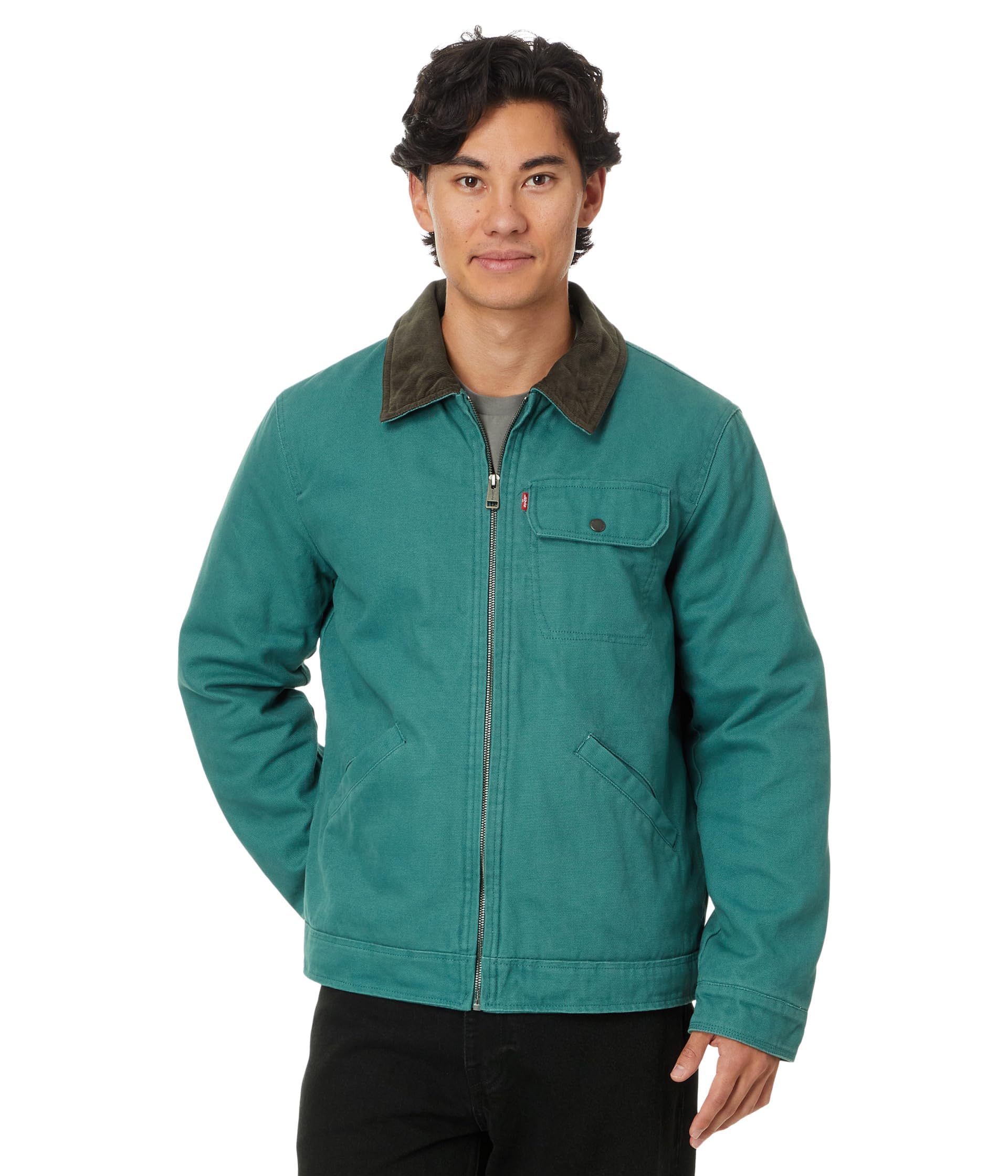
Levi’s Depot Jacket is the entry-level canvas work jacket that prioritizes style and affordability over maximum ruggedness. The cotton canvas shell is lighter than the dedicated work brands, and the corduroy collar adds a retro visual touch that works well for casual outings. The fit is regular rather than relaxed, which means you will need to size up if you plan to layer a hoodie or a sweater underneath—the quilt lining on some versions adds warmth but reduces interior space.
Multiple verified buyers praised the jacket’s authentic cotton look and the construction quality, with several noting that the corduroy collar back is a genuine heavy cotton canvas that is not apparent in the product photos. The jacket arrives with a noticeable chemical odor that dissipates after a cold-water wash with mild detergent. Buyers hoping for a natural fade over time (the Wabi-Sabi aesthetic) should expect the jacket to hold its color well rather than patina quickly.
This is not a jacket for barbed wire, concrete scraping, or daily construction abuse. The canvas is not as thick as the 12-ounce to 14-ounce duck used by Carhartt or Berne, making it more suitable for light-duty work, a commute, or a day at the jobsite where the jacket stays clean. It is the best pick for buyers who want the workwear look without the workwear weight and are willing to accept lower abrasion resistance in exchange for a lower entry price.
Why it’s great
- Authentic cotton canvas and corduroy collar offer a classic workwear look straight out of the box
- Lightweight enough for everyday casual wear without the stiffness of heavy duck canvas
- Quilt-lined version provides added warmth for cool days without excessive bulk
Good to know
- Canvas is lighter than dedicated work brands; limited abrasion resistance for rough job sites
- Regular fit runs slim; size up if you plan to layer thick mid-layers underneath
- Arrives with a chemical smell that requires a cold-water wash before first wear
FAQ
What weight of duck canvas should I look for in a work jacket?
Should I buy a blanket-lined or unlined canvas work jacket?
How do I wash a duck canvas jacket without ruining it?
What is the difference between a chore coat and a work jacket?
Can a canvas work jacket be worn in heavy rain?
Final Thoughts: The Verdict
For most users, the best canvas work jacket is the Carhartt Washed Duck Ridge Coat because its 14-ounce shell and blanket lining provide the highest warmth-to-durability ratio for cold-weather outdoor work. If you need a jacket that breathes during active jobs and transitions to casual wear, grab the Carhartt Rugged Flex Berwick. And for maximum warmth at a lower price point, nothing beats the Berne Heartland Chore Coat.