
Our readers keep the lights on and my morning glass full of iced black tea. As an Amazon Associate, I earn from qualifying purchases.
Specs are compiled from manufacturer listings and verified buyer reviews and can change over time — please confirm the key details on the product page before buying.
Choosing the right car adhesive starts with one question: what are you bonding? A wobbly bumper trim needs a different product than a leaky roof seam, and the wrong tube can mean a failed repair, creeping rust, or a ruined paint job. Here are seven top performers, each matched to a specific job, so you can pick the right chemistry without paying for extras you will not use.
I’m Min — the founder and writer behind Gadgets Feed. This guide is built by comparing the manufacturers’ published specifications and the patterns across verified customer reviews, so you get each pick’s real strengths and trade-offs instead of marketing spin.
The best car adhesive choices here are ranked by real-world owner feedback, so you can shop with confidence.
Our Picks at a Glance

How To Choose The Best Car Adhesive
Your first decision is the job type. Seam sealers fill gaps and stop leaks on body panels, while panel bond adhesives actually join large metal sections together. Instant glues handle small trim and plastic parts, and double-sided tape mounts lightweight accessories without any drilling. Knowing which one your repair needs is half the battle.
Match the chemistry to the material
Epoxy and polyurethane formulas grip bare or painted metal strongly, which makes them the right call for structural repairs. Cyanoacrylate gel, the fancy name for super glue, excels on plastic and rubber trim. Foam tape is only for light parts like emblems or LED strips. Using a metal-grade epoxy on a flexible plastic bumper will fail quickly because the part flexes and the rigid bond cracks.
Read the cure time before you start
Cure time dictates how long you hold the part in place and when you can paint. Some polyurethane sealers are ready for paint in just 30 minutes, while two-part epoxies need several hours and panel bond adhesives take a full 24 hours to reach full strength. Plan your garage time around the product’s schedule, not the other way around.
Quick Comparison
| Model | Best For | Type | Cure Time | Size | Amazon |
|---|---|---|---|---|---|
| 3M Heavy-Bodied Seam Sealer★ Best Overall | Vertical seams & rain gutters | Two-Part Epoxy | 8 hours | 6.75 fl oz | Amazon |
| Tylove Auto Seam SealerBudget Champion | Budget leak sealing | Polyurethane | 30 minutes | Tube | Amazon |
| FORTIVO Seam Sealer | Value & easy application | Polyurethane | 30 minutes | 9.2 inches | Amazon |
| KRAFTPROTZ Super Glue Gel | Trim & bumper repairs | Cyanoacrylate Gel | Fast | 1.75 oz | Amazon |
| Tapsi Mounting Tape | Trim & LED strips | Acrylic Foam Tape | Instant | 0.4 in x 36 ft | Amazon |
| Berkland Seam Sealer 2-Pack | Full panel restoration | Polyurethane | 30 minutes | 21 fl oz | Amazon |
| Polymix Metal Bond 60 | Structural panel bonding | Two-Part Urethane | 24 hours | 200ml | Amazon |
In‑Depth Reviews
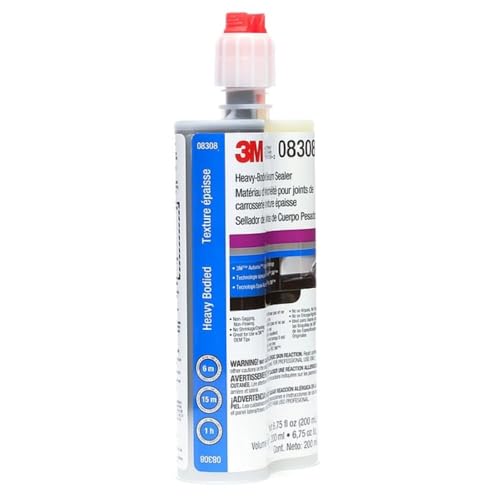
1. 3M Heavy-Bodied Seam Sealer
Our pick — over 4.5★ from 500+ verified ratings; the strongest balance of quality and price.
The shop-grade standard that self-mixes a perfect epoxy bead every single time.
For a factory-style seal on vertical seams and rain gutters, this is the adhesive collision-repair pros reach for. The dual syringe cartridge mixes the two-part epoxy in a 1:1 ratio through a mixing tip as you squeeze, so you skip manual blending and guesswork. Its heavy-bodied, non-sag formula stays put on vertical panels instead of running, so you can apply it without drips.
The honey-like consistency is a real point of praise among owners, and the key to that perfect finish is that it self-levels beautifully once applied. A 200 ml cartridge gives you enough material to reseal a set of rain gutters or a roof ditch, and it cures hard in roughly 8 hours. Compared to the thinner tubes, this 8-ounce cartridge holds a 10% weight advantage over the slimmer FORTIVO option, which matters for bigger jobs.
There is one honest warning from the garage floor: the stated 8-minute work time is optimistic, so you need to move fast once the epoxy starts setting. The mixing tip is clever, but you will need a separate chalk-type gun to push the cartridge. Owners also stress never applying it over acid-etching primer, since it will not bond to that surface.
What the pros love
- Self-mixing cartridge eliminates the mess and error of manual mixing
- Non-sag formula holds its shape perfectly on vertical panels
- Self-leveling finish matches the look of OEM seam sealer
Keep in mind
- Work time is shorter than the label suggests, so speed matters
- Needs a separate chalk-type gun to dispense the cartridge
- Will not bond over acid-etching primer
Reach for it if: you are resealing rain gutters, roof ditches, or any vertical seam and want a tough, self-leveling, factory-style result.
Look elsewhere if: you want a quick-skip touch-up — this epoxy demands a steady hand and a fast pace during application.
2. Tylove Auto Seam Sealer
A fast-drying polyurethane that beats the weather without straining your wallet.
This white tube is for the person who needs a waterproof seal today without a big cash outlay. It bonds to primed, painted, or bare metal, and it is ready for paint in just 30 minutes with no sanding required. The low-VOC, solvent-free formula keeps the fumes down, which is a real comfort if you are working inside a garage.
Owners have put it through the worst of it — one used it to seal vehicle roof cable holes and reported zero water intrusion even in heavy rain. The trick to getting a professional finish is in the prep: sand and prime the area first, then smooth the bead with a wet finger. For large gaps, the tube’s open end delivers a wider fill. It hardens like the original seam and pairs naturally with any standard urethane caulk gun.
This is a lighter-duty fix than the 3M epoxy above, so treat it as a sealing and waterproofing tool rather than a structural bond. It works across cars, boats, trucks, and RVs, which is a lot of versatility for a tube at this tier. The drying speed is what wins people over — quick enough that you can paint and be done the same day.
Best for the casual DIYer: a weatherproof, fast-drying seam repair that respects your time and your budget.
The honest limit: it is a sealant, not a structural adhesive, so heavy load-bearing repairs are outside its job description.
3. FORTIVO Professional Seam Sealer
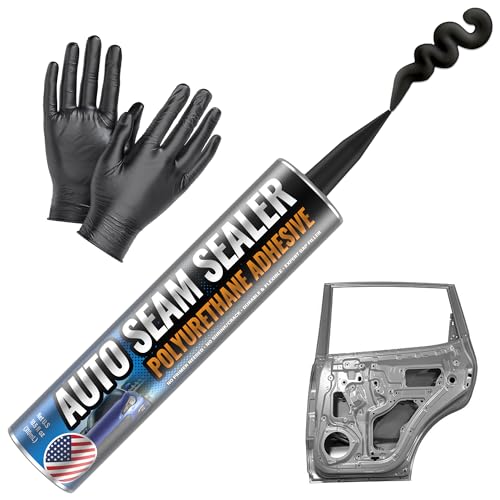
The crowd-pleasing polyurethane that holds a thick bead and stops leaks cold.
This black cartridge wins the value crown because it delivers a thickset, workable bead that holds its shape while you spread it smooth with a finger or brush. It fits a standard caulk gun and comes with a tip plus thin gloves to keep your hands clean. In real use it is tack-free in just 1-2 hours and fully cured at 16 hours, which is a tight turnaround for a body seam repair.
The people who bought it had a simple problem — water coming into the cab of a truck — and this sealer ended it. It fills cracks and small holes cleanly, and one owner who seals truck seams reports it holds up to the elements without failing. Take the “no prep needed” claim with a grain of salt: the best results come after cleaning with a VOC solvent and sanding the surface first.
This cartridge is slimmer than the 3M one — 1.6 x 1.6 x 9.2 inches versus 3.8 x 2.2 x 7.7 inches — so it fits in tighter storage spots, though it weighs 8.8 ounces versus 3M’s 8 ounces. Buyers report it cures best when applied thinly and used in one session; an open cartridge can lose its inner cure after a few days.
What makes it a steal
- Thick bead holds shape and spreads easily by finger or brush
- Tack-free in 1-2 hours and well-cured at 16 hours
- Stops water leaks in the cab and roof seams
Watch for
- Included gloves are thin and tear easily
- Best applied thinly and in one session to ensure a full cure
- Prep with solvent and sanding still gives the strongest hold
Grab this when: you want a leak-proof seam repair with professional results at a friendly price point.
Think twice if: you need a structural metal-to-metal bond — this is a sealing tool, not a panel-bonding adhesive.
4. KRAFTPROTZ Super Glue Gel
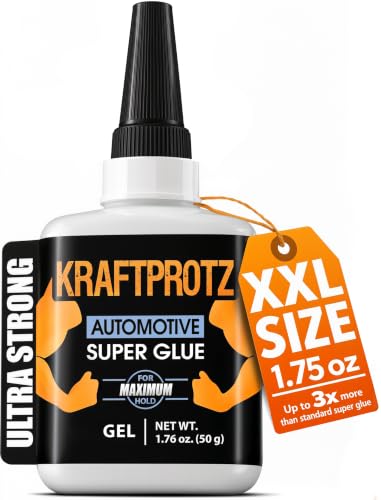
The no-drip gel that keeps bumpers and trim locked tight under brutal vibration.
When a bumper corner refuses to snap back or a trim piece keeps rattling loose, this is the glue you want. It is a precision gel, which means it stays put on vertical surfaces instead of dripping down the panel and making a mess. The cyanoacrylate formula is built for the road — it stands up to engine vibration, temperature swings, and road shocks that would crack a brittle super glue.
One owner in sweltering, humid conditions glued a loose Nissan Pathfinder bumper corner once and it held for months. The gel works across plastic, rubber, metal, ABS, PVC, and fiberglass, making it a flexible one-tube arsenal for interior trim, mirror housings, and fender clips. It is also heat-resistant up to 230°F (110°C), so underhood parts stay bonded when the engine bay gets hot.
The big draw here is quantity: at 1.75 oz, this tube delivers roughly three times the glue of a typical automotive adhesive tube, so it suits mechanics and fleet crews who burn through adhesive fast. The anti-clog tip keeps the nozzle flowing clean even after weeks between uses. Just be aware that the packaging may arrive with a German label — the glue works the same, but the instructions are not in English.
Built for repeated small repairs: a generous, heat-tolerant gel that handles trim, bumpers, and brackets.
The little catch: you might get German packaging, and it demands a steady hand since it grabs fast.
5. Tapsi Automotive Mounting Tape
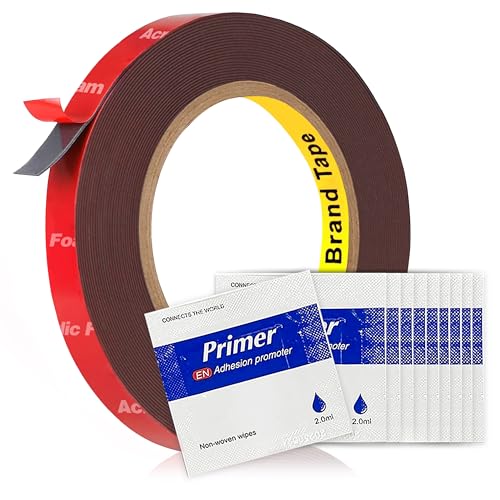
The drill-free fix for trim and LED strips that holds through heat and rain.
If you want to mount car trim, moldings, emblems, or LED strip lights without drilling a single hole, this tape is the cleanest route. It is a high-bond acrylic foam tape, 0.4 inches wide and 36 feet long, with a slim 0.03-inch profile that keeps the install looking flush rather than bulky. The viscoelastic foam core absorbs vibration, which stops trim pieces and LED channels from slowly working loose over time.
A standout feature is the box of 10 adhesion promoters. These little wipes boost grip on low-energy materials like ABS, rubber, and matte plastics — the exact surfaces where ordinary tape fails. Owners have used it to hold a Subaru bumper step pad cover and to hang motion-sensor lights under cabinets, and it has held strong through both. The tape resists summer heat, winter cold, rain, and repeated car washes on both interior and exterior surfaces.
The honest fit note: stickiness gets mixed feedback. Some owners call the adhesive strong and effective, while others find it less sticky than they expected. For the most reliable hold, clean the surface thoroughly and use an adhesion promoter before applying. When you need to remove it, heat helps it peel away cleanly without damaging a properly prepared surface.
Why it is handy
- 10 adhesion promoters included for tricky plastic surfaces
- Vibration-absorbing foam keeps parts from loosening
- Weather and car-wash resistant for interior or exterior use
Before you stick
- Some owners mention it is less sticky than expected without prep
- Best on clean, properly prepared surfaces
- Not a substitute for adhesive on heavy or load-bearing parts
Choose this for: fast, clean, drill-free mounting of trim, emblems, and LED lighting on interior or exterior panels.
skip it if: you need to bond heavy parts — foam tape is for light accessories, not structural loads.
6. Berkland Seam Sealer 2-Pack

Two big cartridges of paintable polyurethane that handle a full panel restoration.
This is the kit for a job with a lot of seams — a floor pan, a full set of rocker panels, or a truck bed. You get two 10-ounce cartridges, for a total of 21 fluid ounces, plus nitrile gloves and a nozzle, which is enough material for a whole panel restoration in one session. The polyurethane formula is designed to stay flexible through temperature swings and road vibration without shrinking or cracking, which is exactly what you want on a body that flexes.
You can paint over it in just 30 minutes, so you prime and topcoat the same day without waiting overnight. Owners describe the cured result as a firm yet flexible seal that takes paint perfectly — one used it on a steel horse trailer and called it the best sealant they had ever used, and another filled a sheet metal patch on a transmission tunnel without any dripping or running. It bonds to bare steel, primed and painted metal, fiberglass, and composite panels.
The main trade-off: once this stuff cures, it is not easy to remove, so you need to apply it where you want it to stay. It is a sealing and gap-filling product rather than a structural adhesive, so pair it with proper welding or panel bonding for load-bearing work. The flexibility that makes it weatherproof is also what keeps it slightly soft to the touch even after curing.
Why it earns its place
- 21 fluid ounces across two cartridges for full-panel jobs
- Flexible, non-cracking seal that accepts paint in 30 minutes
- Bonds to bare, primed, and painted metal plus fiberglass
The trade-off
- Very difficult to remove once fully cured
- Flexible rubber feel, not a hard structural bond
- For sealing and gap filling, not load-bearing joins
Best for: a weekend restoration with many seams to seal, where you want a paintable, flexible, weatherproof result.
Not for: anyone who needs a structural metal bond or an easily removable temporary seal.
7. Polymix Metal Bond 60
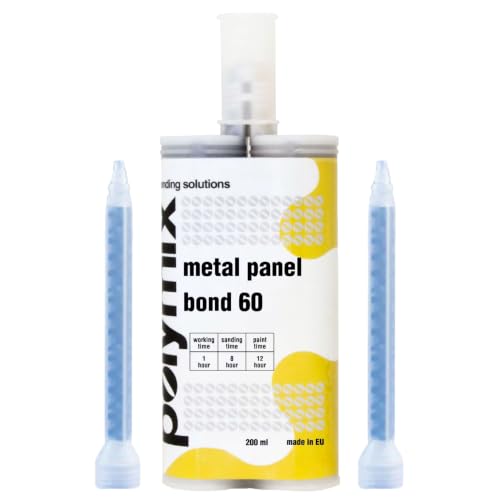
The two-part urethane that replaces welding for quarter panels and door skins.
This is the serious structural tool in the lineup, built for the job of bonding steel and aluminum body panels — quarter panels, roofs, box sides, van sides, and door skins. It is a two-part urethane that comes in a 200ml cartridge with two mixing nozzles, and it is designed to replace traditional welding in many panel replacement jobs. Owners who have used panel bonding since it first came out call it as good as the big brands at a fairer price.
Compared to welding, this adhesive saves you work: no removing internal panels or rubber gaskets, no reshaping heat distortion, no grinding weld spots, no disconnecting the car’s electronics, and no rust-protection primer because it is self-sealing. That means a cleaner, faster, and often stronger repair than a row of spot welds. It reaches full cure in 24 hours, and owners describe the bond as tough as nails.
It has proven itself on fiberglass too, and one owner used it to skim coat over rusty pitted floor panels with great results. The one recurring note is thickness — it is a high-build product, so it flows thick and some users find it needs deliberate spreading. This is professional-grade equipment, so it fits the enthusiast or shop doing real bodywork rather than a quick trim fix.
The structural advantage
- Bonds steel and aluminum panels without welding heat
- Self-sealing, so no extra seam sealer or rust primer needed
- Tough-as-nails cure in 24 hours with two nozzles included
Know before you bond
- High-build thickness takes deliberate spreading
- Full 24-hour cure demands patience before the car moves
- Professional-grade, so it is overkill for minor trim repairs
Reach for this when: you are replacing a quarter panel or door skin and want a strong, clean bond without the heat and grind of welding.
Look elsewhere if: your repair is a small seal or trim fix — this is a heavyweight tool for serious bodywork.
Understanding the Specs
Cure Time
Cure time tells you how long before the adhesive reaches full strength and when you can paint over it. A 30-minute cure lets you prime and topcoat the same day, while a 24-hour cure means the panel must stay undisturbed overnight. Pick your product based on how long you can realistically keep the car off the road.
Chemistry Type
The chemistry decides what the adhesive can bond. Epoxy and two-part urethane grip bare metal for structural work, polyurethane seals seams and stays flexible, cyanoacrylate gel handles small plastic and rubber parts, and acrylic foam tape mounts light accessories. Choosing the wrong chemistry for your material is the most common reason a repair fails.
FAQ
Will a seam sealer work for structural panel bonding?
How long does car adhesive take to cure?
Can I paint directly over a seam sealer?
Will super glue gel hold my bumper trim?
Does double-sided foam tape work on car exteriors?
What is the difference between a seam sealer and a panel bond adhesive?
Which car adhesive resists heat best?
Do I need a caulk gun to apply automotive seam sealer?
Final Thoughts: The Verdict
For most people, the car adhesive winner is the 3M Heavy-Bodied Seam Sealer because it pairs the self-mixing convenience of a dual syringe with the non-sag, self-leveling finish that matches factory seams. If you want a full panel restoration with a paintable, flexible seal, grab the Berkland 2-Pack. And for serious structural bodywork where you want to skip the welder, the Polymix Metal Bond 60 is the one to reach for.
How We Picked
We do not accept paid placement. Every pick is matched to a real buyer and a real use-case; we do not hands-on test units.
Sources & Methodology
Specifications: manufacturer listings and product documentation. Review insights: verified customer reviews, as of August 2026. Pricing: not shown on this page (it changes often); check the current price via the retailer link.
As an Amazon Associate, Gadgets Feed earns from qualifying purchases. This does not affect which products we feature.