
Driving through a dead zone where your favorite AM talk show dissolves into static, or your cell signal drops to zero just as you need GPS directions, is a uniquely frustrating experience. A small gap in reception turns a routine commute into a guessing game, and the solution often feels hidden behind a wall of confusing specs and empty promises. This guide cuts through the noise to focus on the hardware that actually bridges that gap between your antenna and a clear signal.
I’m Min — the co-founder and writer behind Gadgets Feed. I’ve spent countless hours analyzing technical specifications and customer data on signal boosters to separate the amplifiers that deliver measurable gain from the ones that only light up a blue LED.
Whether you drive a classic truck with a corroded mast or a modern SUV with a finicky windshield antenna, finding the right best car antenna booster requires understanding the specific frequency bands your vehicle needs and the actual installation steps that make or break performance.
How To Choose The Best Car Antenna Booster
Before you buy, you must diagnose the culprit. A booster cannot fix a broken antenna cable, a corroded mast, or a poorly grounded radio chassis. If your reception is dead on all bands, the problem likely lies upstream of a simple amplifier.
Identify Your Signal Type
A booster designed for FM/AM radio frequencies (88–108 MHz and 530–1700 kHz) uses completely different circuitry than a cellular signal booster that amplifies LTE/5G bands (700–2100 MHz). Buying a WeBoost for your car radio will do nothing, and an Mr. Ho inline amplifier will not improve your data connection. Know which band you need to salvage.
Check Your Antenna Impedance
Most aftermarket car radios and antennas run at 50 ohms impedance, while some older or factory-specific setups use 75 ohms. A mismatch here causes signal reflection and power loss, effectively negating the boost. The Bingfu and KSaAuto units both specify 50 ohms; the Mr. Ho specifies 75 ohms. Verify your own setup before ordering.
Evaluate Installation Complexity
An inline amplifier like the Mr. Ho requires splicing into a 12V source and placing the unit between the antenna and the radio coax. A hidden antenna kit like the Bingfu requires mounting the antenna on a non-metallic surface inside the dash or windshield. A GM-specific module like the 84693389 might demand headliner removal. Choose a booster you can actually install without a professional.
Quick Comparison
On smaller screens, swipe sideways to see the full table.
| Model | Category | Best For | Key Spec | Amazon |
|---|---|---|---|---|
| ZORIDA Ace 5S | Cellular Booster | Full vehicle cellular coverage | 72 dB max gain, up to 2000 sq ft | Amazon |
| GM Genuine Parts 84693389 | OE Amplifier | GM key fob & radio range | Factory metal construction | Amazon |
| weBoost Drive Magnetic 311216 | Cellular Antenna | Magnetic roof mount for weBoost | Shark-fin design, 10 ft LMR100 | Amazon |
| weBoost 314401 Slim | Cellular Antenna | Low-profile in-vehicle antenna | 5 dBi gain, 10 ft LMR100 cable | Amazon |
| KSaAuto FM/AM Booster | Inline Amplifier | Broad FM/AM improvement | Includes replacement antenna | Amazon |
| Bingfu Hidden Antenna Kit | Hidden Antenna + Amp | Aftermarket stereo replacement | 6 ft DIN plug cable | Amazon |
| Mr.Ho Inline Amplifier | Inline Amplifier | Budget-friendly signal lift | 75 ohm impedance | Amazon |
In‑Depth Reviews
1. ZORIDA Ace 5S

The ZORIDA Ace 5S is the most comprehensive solution in this roundup because it targets cellular dead zones rather than just AM/FM static. With a maximum gain of 72 dB and support for 5G LTE bands across all major US carriers (Verizon, AT&T, T-Mobile, US Cellular), this unit is designed to pull a usable signal from the outside and rebroadcast it inside a vehicle or cabin up to 2,000 square feet. The kit includes a 49.2-foot outdoor cable, a directional outdoor antenna, and a compact indoor whip antenna, providing the separation needed to avoid oscillation.
Customer reviews consistently report jumps from 1-2 bars to a solid 5 bars, with many noting the elimination of dropped calls and buffering during HD streaming. The app-assisted installation guides you through aiming the outdoor antenna at the nearest tower using the FindTower suggestion, which is a practical touch for non-professionals. The unit supports multiple devices simultaneously, meaning everyone in the car benefits from the same boost.
The main caveat is that it requires at least one bar of usable signal outside the vehicle to amplify — it cannot create a signal from nothing. Outdoor antenna placement is critical; reviewers emphasize a 25-30 foot vertical separation between the outdoor and indoor antennas. For anyone frequently driving through remote areas where cellular data is essential, this is the only product here that addresses that specific pain point comprehensively.
Why it’s great
- 72 dB gain provides a drastic signal lift from marginal to strong.
- Works with all major US carriers and supports 5G on existing 4G bands.
- App-assisted setup helps find the best antenna placement.
Good to know
- Requires an outside signal of at least 1 bar to amplify.
- Installation requires careful 25-30 ft antenna separation to prevent feedback.
2. GM Genuine Parts 84693389
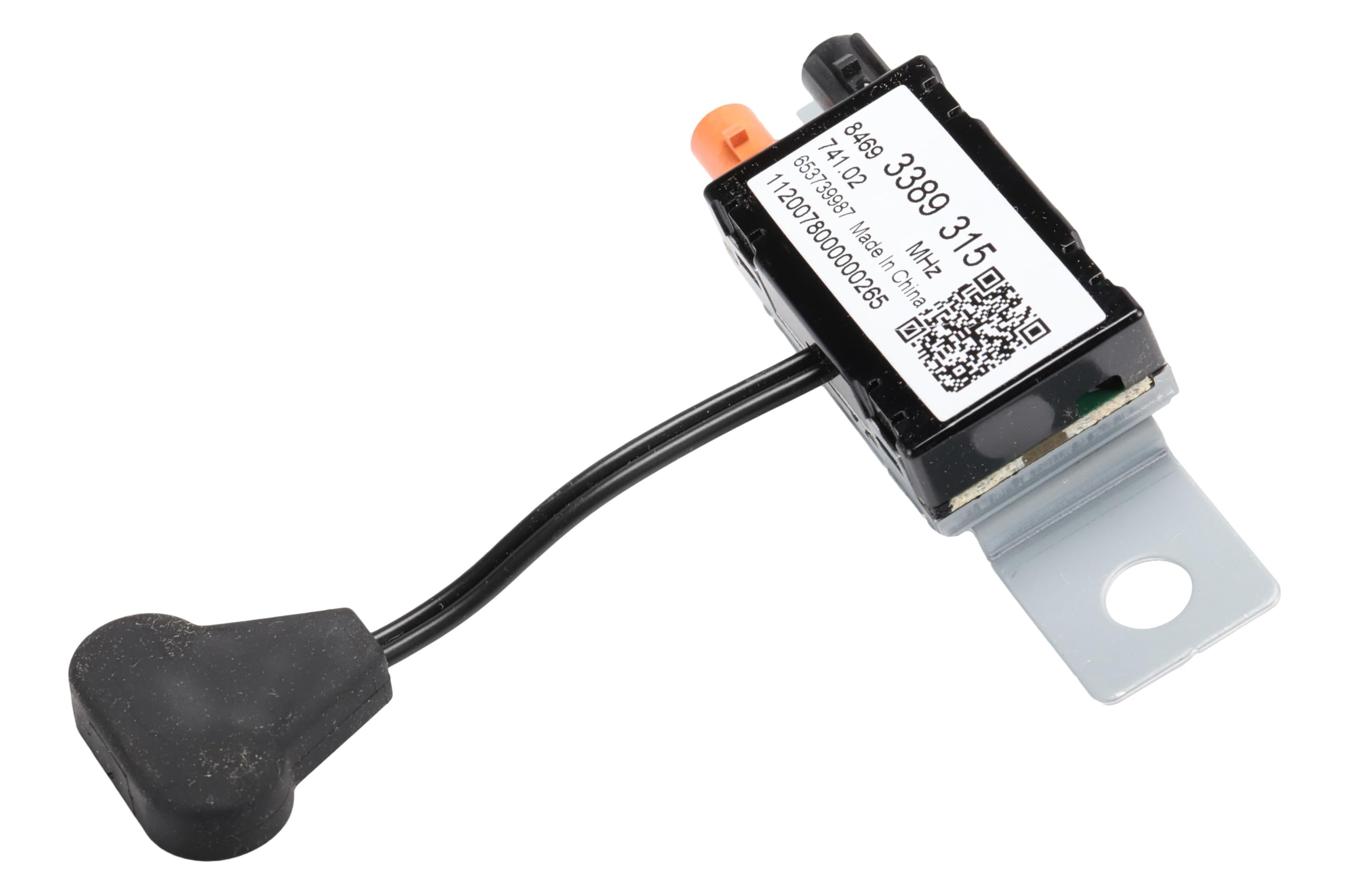
This is a very different beast from the other boosters here: it is a direct factory-replacement amplifier for GM vehicles (Chevrolet, Buick, GMC, Cadillac) that primarily improves the remote keyless entry and key fob range, though it also handles radio signal amplification. The unit is built from metal with GM-validated tolerances, meaning it matches the electrical characteristics of the original part exactly. Customers report dramatic improvements in key fob range — going from 10-30 feet to 50-200 feet — and resolution of door handle button lag.
The installation is not a simple inline splice. It requires removing the headliner and rear pillar trim to access the antenna module, which is typically located above the passenger-side rear window. One reviewer noted it took 20 minutes on a 2019 GMC Yukon XL using trim removal tools. Despite the manual stating programming may be needed, multiple verified buyers on Tahoe and Yukon models confirmed it was plug-and-play with no additional programming required.
Do not buy this if you drive a non-GM vehicle or if you only want to improve FM radio reception in an aftermarket stereo. This module is purpose-built for the specific RF circuit of GM’s integrated antenna system. Its primary value is restoring OEM-level performance to a degraded factory system, especially the remote entry function that many owners assume needs a new key fob battery.
Why it’s great
- Restores key fob range from 10 ft to over 200 ft.
- True OEM-grade metal construction with validated specs.
- Plug-and-play installation for most 2018-2020 GM full-size SUVs.
Good to know
- Only fits GM vehicles; not universal.
- Requires headliner removal and potentially 20-30 minutes of trim work.
3. weBoost Drive Magnetic 311216

The weBoost Drive Magnetic 311216 is an outside antenna designed specifically to pair with weBoost in-vehicle signal boosters like the Drive X and Drive 4G-X. Its defining feature is the aggressive magnetic base that stays firmly attached at 70+ mph, combined with a sleek shark-fin aesthetic that looks far less obtrusive than a traditional whip antenna. The unit includes four cable-exit points for flexible routing, making it easier to route the 10-foot low-loss cable into the vehicle cabin without kinking.
Reviewers consistently note that this antenna performs just as well as much larger, bulkier overland-style antennas, and it is even car-wash safe due to its low profile. The SMA connector ensures compatibility with weBoost systems, and the weather-resistant build manages rain, snow, and direct sun exposure without degradation. One clever use case mentioned involves using a splitter with a second antenna to blanket a larger work truck cabin with better signal.
The limitation is that it is only an antenna, not a complete booster system — you must already own a weBoost amplifier for this to function. The cable length can feel short for full-size trucks where the ideal roof placement is far from the cab. For anyone already invested in the weBoost ecosystem or buying one, this magnetic outside antenna is the single best upgrade for mobile cellular reception.
Why it’s great
- Strong magnet holds at highway speeds without shifting.
- Shark-fin design is both aerodynamic and discreet.
- Four cable-exit points simplify routing around vehicle contours.
Good to know
- Requires a weBoost booster base unit; not a standalone amplifier.
- 10 ft cable may be insufficient for full-size trucks with long cabs.
4. weBoost 314401 4G Slim Low-Profile Antenna

This low-profile antenna from weBoost serves as an indoor vehicle antenna, designed to be adhered to the windshield or a similarly clear surface inside the car. Unlike the magnetic outside unit above, this one is meant for placement inside the glass plane, offering a completely flush installation with the included adhesive strip and alcohol wipe. The 5 dBi gain is modest compared to external antennas, but it is sufficient for improving signal reception when paired with a weBoost amplifier.
Several reviewers report a noticeable improvement in signal bars and data speed when using this slim antenna as a replacement for the standard puck-style antenna that ships with the Drive 4G-X system. The versatility of being able to stick it on a window or even a non-metallic dashboard means installation is quick and avoids exterior cable routing. One user even taped it to the headliner for a more permanent but invisible setup.
The trade-off is that being inside the vehicle inherently limits its performance compared to an outside magnetic antenna. The vehicle’s metal body and tinted windows with metallic coatings can attenuate the signal before it reaches the antenna. For users who cannot or will not mount an antenna on the roof (e.g., lease vehicles, convertibles, or those wanting a zero-profile solution), this is the correct alternative.
Why it’s great
- Ultra-low profile with adhesive mounting; no roof holes or magnets.
- Improves cellular signal noticeably when paired with weBoost amplifiers.
- Versatile placement options on glass or non-metallic interior surfaces.
Good to know
- Indoor placement limits gain compared to an external antenna.
- Metallic window tints can block signal before it reaches the antenna.
5. KSaAuto 12V Car Antenna Booster

The KSaAuto booster is an inline FM/AM amplifier that operates at the standard 50 ohm impedance, making it a direct fit for most aftermarket radios and vehicles without a factory amplifier. The kit distinguishes itself by including a separate electric replacement antenna alongside the booster amplifier. The booster itself is the star, however, with a verified buyer reporting a jump from 4 clear channels to over a dozen in a 2005 Subaru after 2 years of poor reception. Another review from a Jeep owner with a stubby antenna and a new double-DIN radio confirmed a dramatic improvement in station count and clarity.
Installation is straightforward: find a 12V source (such as the antenna power wire from the radio harness), splice the inline amplifier between the existing antenna coax and the radio, and mount the unit where it has decent airflow. The included electric antenna is reportedly much weaker and less effective than the stock antenna for most buyers, so many choose to discard it and use only the booster with their existing mast.
The primary flaw is inconsistency: one reviewer reported no improvement on AM whatsoever, and another saw weaker performance on some stations while boosting others. This is typical of inline amplifiers, which can also amplify noise and interference if the existing antenna cable is damaged or poorly shielded. For the price, it is an affordable first step before replacing an entire antenna system, but expectations should be calibrated to the quality of the existing vehicle wiring.
Why it’s great
- Significantly boosted FM reception in multiple verified installs.
- Runs at standard 50 ohm impedance for broad compatibility.
- Low investment for a potentially large improvement.
Good to know
- Included replacement antenna is universally considered poor.
- Results vary based on existing cable quality and ground connection.
6. Bingfu Universal Car Stereo Amplified FM Radio Hidden Antenna

The Bingfu combines an amplified hidden antenna and a signal booster into one package, designed for situations where the factory antenna is missing, broken, or when you want to install a new aftermarket stereo without running an external mast. The 6-foot DIN plug cable connects directly to most compatible head units (Sony, Pioneer, Alpine, Pyle, Jensen), and the adhesive mount lets you attach the antenna to any non-metallic surface under the dash or inside the windshield. The built-in amplifier uses a 12V power supply from the radio’s antenna wire.
A verified buyer reported that this kit fixed the weak radio issue on an aftermarket Android head unit, with strong signal returning once a proper 12V connection was secured. Another user specifically noted that powering the booster alone — without also powering the antenna’s internal amplifier — yielded better results, which is a useful installation nuance. The overall build includes a copper signal wire for reduced interference, addressing the common problem of engine and alternator noise bleeding into the audio.
The biggest risk is that this is a hidden antenna — it must be mounted on a non-metallic surface because metal acts as a shield. In vehicles with extensive metal framing or heavy window tint, finding a location that passes a reasonable signal is hit-or-miss. The multi-reviewer warning about overheating after 10 minutes of use on some units suggests that thermal management is a weak point. For a quick fix on a project car with a missing antenna, it is a pragmatic solution.
Why it’s great
- All-in-one hidden antenna and amplifier for clean installations.
- Direct-fit DIN plug compatible with major aftermarket stereo brands.
- Copper signal wire helps reduce electrical interference.
Good to know
- Must be mounted on non-metallic surface to function.
- Some units reported overheating during extended use.
7. Mr.Ho Car Radio Antenna FM AM Signal Amplifier Booster

The Mr.Ho inline amplifier is the entry-level option in this category, targeting the budget-conscious buyer who just wants a quick fix for weak radio reception. It operates at 75 ohms impedance, making it suitable for older vehicles and some factory stereo systems that do not use the 50 ohm standard. The thickened tinplate metal shielding cover is a genuine design plus — it protects the circuitry from interference generated by the vehicle’s own electronics, such as the alternator and ignition system. The compact dimensions (3 x 1.5 x 0.5 inches) allow it to hide easily behind the radio or inside the dash.
The real-world results reported by buyers are split. One dramatic success story showed a jump from 2-3 spotty FM stations and zero AM to 12 strong FM stations and 2 AM stations after installing the booster following an FM modulator installation. Another reviewer simply stated the blue LED indicates power but the booster produced no measurable change in reception. This split suggests that the Mr.Ho works best as a corrective measure for signal loss introduced by an aftermarket component (like a modulator) rather than as a fix for a fundamentally weak factory antenna.
The main strengths — low cost and compact size — are also its limitations. The 75 ohm impedance mismatch with most modern aftermarket radios can actually degrade signal quality. The “maximum range” of 860 meters listed in the specs is likely theoretical and not a guarantee of real-world distance. This unit serves as a low-risk test: if it works, great; if not, you are out very little and you can move on to a more robust solution.
Why it’s great
- Extremely compact size fits behind almost any radio.
- Metal shielding cover reduces interference from vehicle electronics.
- Low investment makes it a low-risk first step.
Good to know
- 75 ohm impedance may not match modern 50 ohm aftermarket radios.
- Performance is inconsistent; works best as a corrective amplifier.
FAQ
Can a car antenna booster fix a dead AM/FM band entirely?
Will a 50 ohm booster work with my 75 ohm factory antenna?
Does a cellular signal booster require a monthly subscription?
Why did my FM reception get worse after installing a booster?
Final Thoughts: The Verdict
For most users, the best car antenna booster winner is the ZORIDA Ace 5S because it tackles the hardest problem in this category — cellular dead zones — with a legitimate 72 dB of gain and carrier-agnostic support. If you need a factory-perfect solution for a GM vehicle with a degrading key fob range, grab the GM Genuine Parts 84693389. And for a low-cost, low-risk upgrade to your car radio that actually might work, nothing beats the Mr.Ho Inline Amplifier.