
Swirl marks, holograms, and burned-through clear coat keep most car owners away from a buffer. The real barrier isn’t skill—it’s choosing a machine that forgives mistakes. A dual-action polisher with random orbital motion lets you correct paint without the risk that comes with a high-speed rotary tool.
I’m Min — the co-founder and writer behind Gadgets Feed. I’ve spent countless hours analyzing motor torque curves, orbit throw distances, and pad compatibility across dozens of models to separate the true beginner-friendly tools from the rest.
This guide is built around the best car buffer for beginners, focusing on machines that provide safe paint correction, easy speed control, and reliable results straight out of the box.
How To Choose The Best Car Buffer For Beginners
New detailers often grab the cheapest rotary buffer, only to burn through paint on their first panel. The right choice depends on understanding a few core specs that separate a safe learning tool from a hazard.
Dual-Action vs. Rotary: The Safety Decision
A dual-action (DA) polisher moves the pad in a random orbital pattern. This means the pad never spins in the same spot repeatedly, which virtually eliminates the risk of burning paint. Rotary buffers spin in a fixed circle and generate intense heat—great for pros, dangerous for beginners. Every model on this list uses DA technology.
Orbit Throw: The Cutting Power Metric
The orbit throw is the distance the pad moves in its orbital path, measured in millimeters. A 8mm or 10mm throw is gentle and ideal for applying wax or light polish. A 15mm or 21mm throw delivers more aggressive cutting power for removing deeper scratches. Beginners should start with an 8mm–12mm throw machine until they build muscle memory.
Variable Speed and Torque
A buffer with 6 variable speeds gives you fine control for different jobs. Lower speeds (1500–2500 OPM) are for spreading wax. Medium speeds (2500–4000 OPM) handle polish and light correction. High speeds (4000–6500 OPM) are for heavy defect removal. Look for a motor that maintains torque at low speeds so the pad doesn’t stall on curved panels.
Quick Comparison
On smaller screens, swipe sideways to see the full table.
| Model | Category | Best For | Key Spec | Amazon |
|---|---|---|---|---|
| BATOCA 6 Inch DA | Premium DA | All-in-one kit for learning | 700W Motor, 1000–3800 OPM | Amazon |
| BATOCA 2026 15mm DA | Premium DA | Faster correction for beginners | 1100W Motor, 15mm Throw | Amazon |
| SPTA Mini 3 Inch | Specialty DA | Tight spots & motorcycles | 780W Motor, 10mm Throw | Amazon |
| VERVEWAVE Cordless | Mid-Range DA | Cordless freedom with M18 batts | Brushless Motor, 1800–5500 RPM | Amazon |
| AVID POWER DA 5/6 Inch | Mid-Range DA | Budget-friendly starter kit | 6 Speed, 2700–6500 OPM | Amazon |
| AVID POWER Rotary 7 Inch | Mid-Range Rotary | Heavy oxidation removal | 1200W Motor, 1600–3500 RPM | Amazon |
| CRAFTSMAN V20 Cordless | Budget DA | Quick waxing with V20 batts | 2800 RPM, 10 Inch Pad | Amazon |
In‑Depth Reviews
1. BATOCA 6 Inch Dual Action Random Orbital Car Polisher (700W)
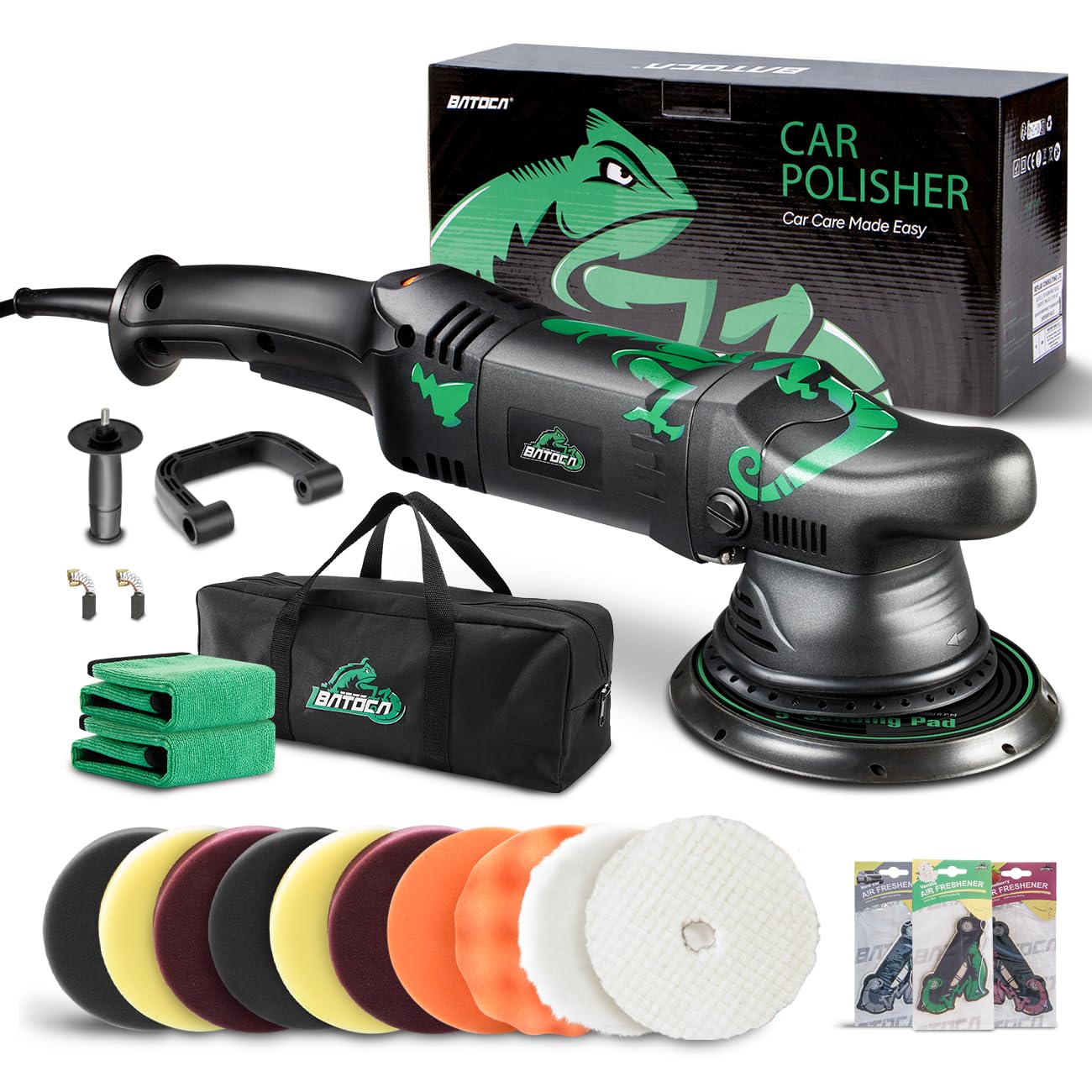
The BATOCA 6 Inch DA polisher combines a 700W pure copper motor with a 1000–3800 OPM variable speed range, making it one of the most forgiving machines for a first-time user. The eccentric shaft design delivers random orbital motion that prevents paint burning while still providing enough cut to remove light swirl marks and oxidation.
This kit arrives with a full set of flat foam pads, wool pads, sanding papers, a microfiber towel, and a tool bag. You won’t need to buy extra accessories to get started. The included carbon brushes are rated for roughly six months of regular use, and the motor maintains steady torque even at the lowest speed setting for spreading wax evenly.
The 6-inch pad size covers large panels efficiently without being too heavy to control. Users report using it for eight continuous hours across multiple cars without overheating. The only compromise is the included pads, which some detailers describe as stiff and requiring a break-in period before they perform at their best.
Why it’s great
- Safe random orbit motion protects clear coat
- Complete kit with pads, towels, and bag
- Consistent low-speed torque for waxing
Good to know
- Stock pads need break-in time
- 9.15 lb weight may fatigue arms over long sessions
2. BATOCA 2026 New Dual Action Polisher (15mm Throw)
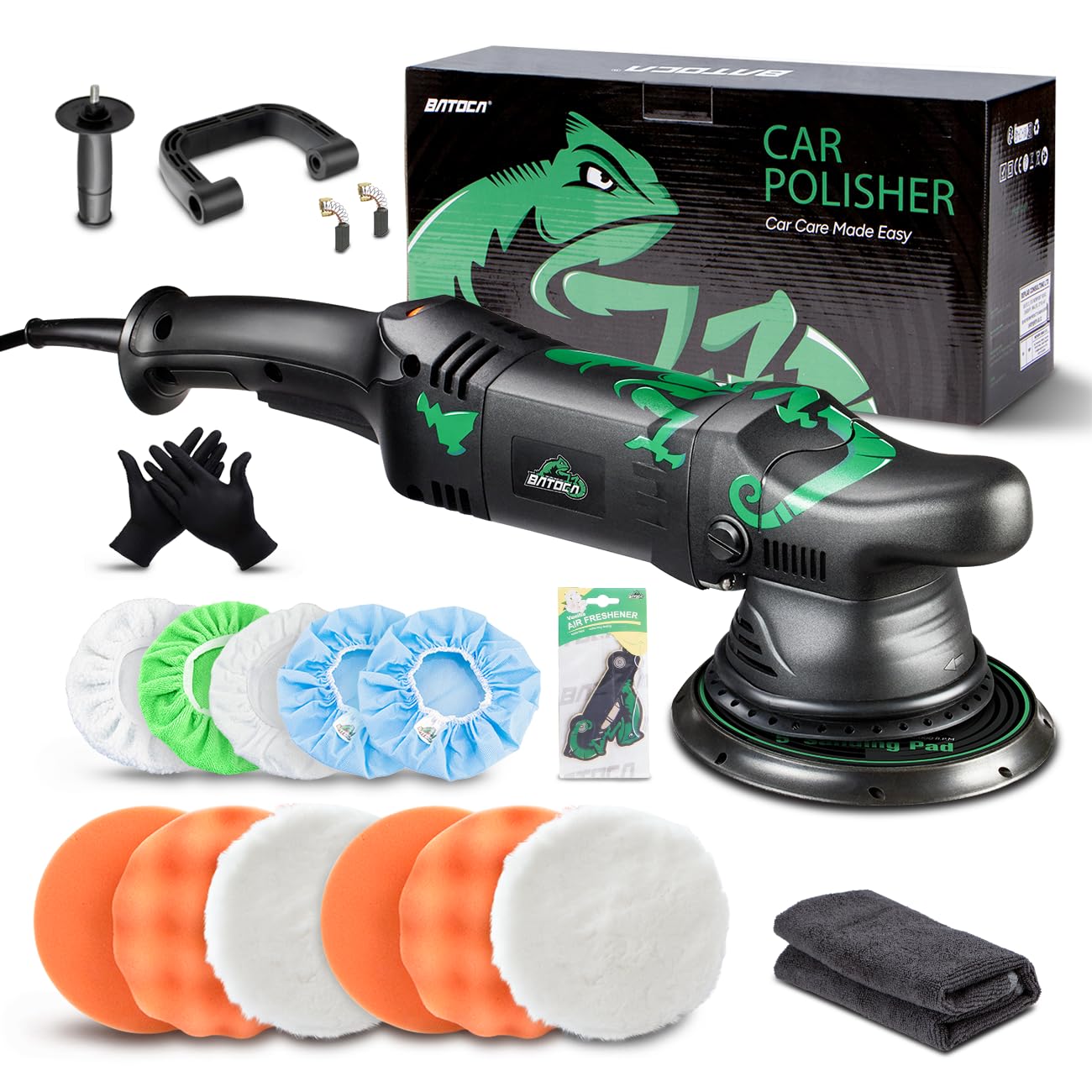
The BATOCA 2026 model steps up to a 15mm orbit throw, which significantly increases cutting speed compared to standard 8mm machines. For a beginner who wants to tackle deeper scratches without stepping up to a rotary buffer, this DA provides a balanced middle ground between safety and correction power.
The 1100W motor delivers six speeds from 2500 to 5500 RPM. At the higher end, the long throw removes oxidation and swirl marks in fewer passes, reducing arm fatigue. The machine comes with foam pads, wool pads, a microfiber towel, straight handle, and D-handle. The green chameleon grip texture looks unconventional but provides solid traction even with sweaty hands.
Reviewers consistently note that the included pads degrade after two or three uses, so you’ll want to budget for aftermarket pads like Lake Country HDO or Chemical Guys Hexlogic. The unit itself runs smoothly and has enough mass (8 pounds) to stay planted on the panel, but the weight can cause fatigue on vertical surfaces over a full detail.
Why it’s great
- 15mm throw cuts correction time significantly
- Powerful 1100W motor maintains speed under load
- Comfortable contoured grip reduces hand fatigue
Good to know
- Stock foam pads lack long-term durability
- Heavy at 8 lbs for overhead or vertical work
3. SPTA Mini Orbital Polisher (3 Inch)

The SPTA Mini 3 Inch DA polisher is built for precision. With a 780W motor in a compact body and a 10mm orbit throw, it handles tight areas like door jambs, pillars, bumpers, and motorcycle fairings. Speed ranges from 2000 to 5500 OPM, giving you the same control as a full-size machine in a much smaller package.
This kit includes 3-inch and 4-inch foam pads, wool pads, a pad conditioning brush, sanding discs, and a tool apron. The extended front handle and centrally located speed dial make one-handed operation easy. The soft-start motor prevents pad sling when you pull the trigger, which is a huge plus for beginners learning pressure control.
The machine has a 8–10mm orbit throw, slightly less than some long-throw models, but it’s more than enough for spot correction and finishing work. The unit runs quietly for a DA polisher and includes a locking switch that keeps the speed constant. The only real downside is the lock button placement, which some users find awkward to engage while gripping the handle.
Why it’s great
- Compact size reaches tight spaces full-size units can’t
- Soft-start motor reduces pad sling and splatter
- Generous accessory kit with sanding discs and brush
Good to know
- Lock switch button is hard to reach during use
- Smaller pads slow down coverage on large flat panels
4. VERVEWAVE Cordless Buffer Polisher Kit (Milwaukee M18 Compatible)
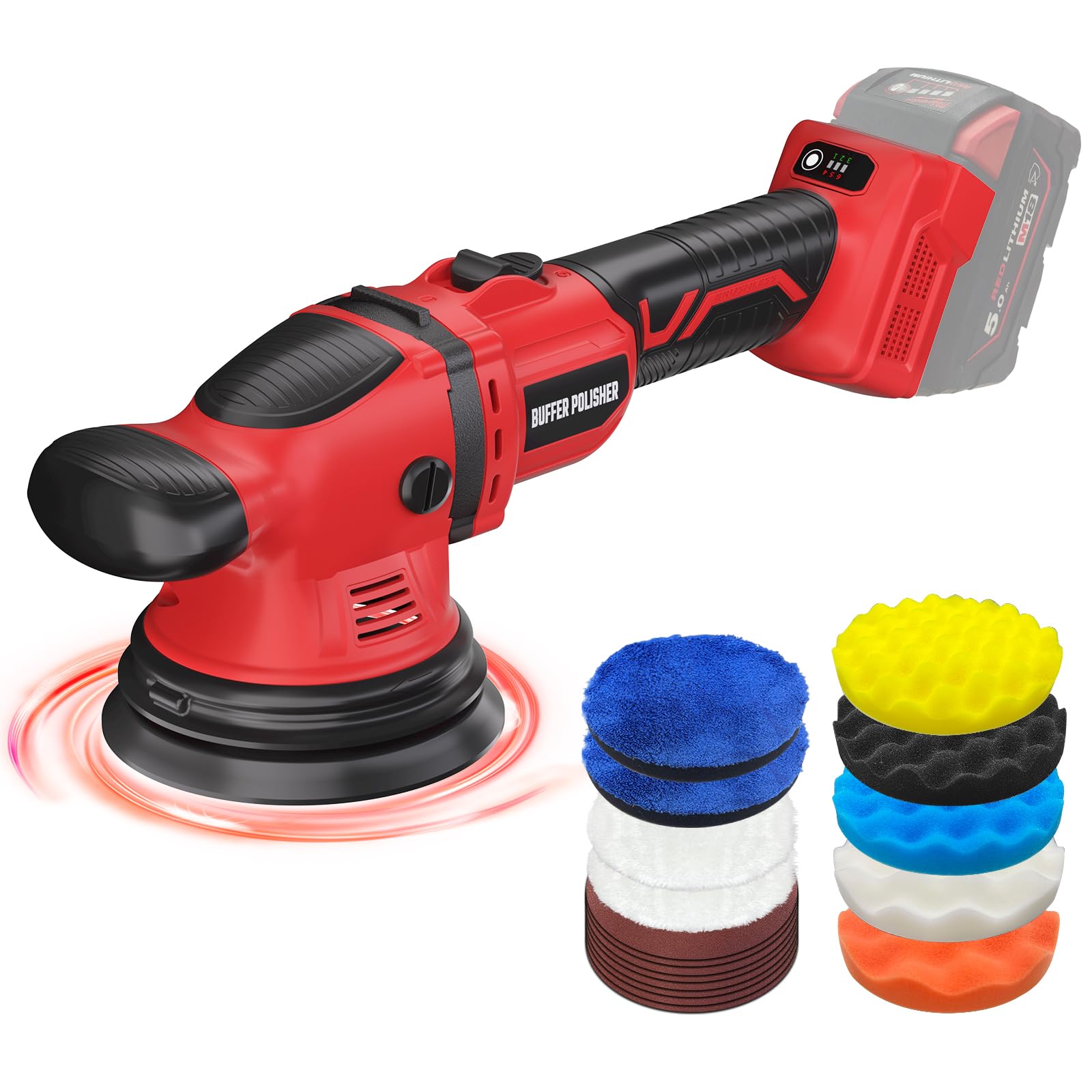
The VERVEWAVE cordless buffer runs on Milwaukee 18V M18 batteries (sold separately) and uses a brushless DC motor for improved efficiency and longer runtime. With six speeds ranging from 1800 to 5500 RPM, it offers the same variable speed control as a corded machine without the hassle of dragging an extension cord around the car.
The eccentric polishing design delivers random orbital motion for uniform finish without swirls or holograms. The extended handle and soft rubber front grip provide better ergonomics than many cordless tools in this class. An upgraded lock switch prevents accidental startups when you swap batteries. The kit includes five foam pads, two wool pads, two waxing pads, and sandpapers.
Using a 6Ah M18 battery, users report finishing an entire car on a single charge. The brushless motor runs quietly and the tool stays balanced even with a heavy battery mounted. The only tradeoff is that you must already own Milwaukee batteries, or you’ll need to buy a compatible charger and battery separately, which adds to the upfront cost if you’re not already in that ecosystem.
Why it’s great
- Brushless motor delivers long runtime and quiet operation
- Lock switch prevents accidental startup on battery swaps
- Balanced ergonomics with extended handle design
Good to know
- Battery and charger sold separately
- Only works with Milwaukee M18 platform
5. AVID POWER Dual Action Polisher (5/6 Inch)

The AVID POWER Dual Action Polisher packs a 5-amp motor with a 6-level variable speed dial that ranges from 2700 to 6500 OPM. It includes both 5-inch and 6-inch backing plates and foam pads, giving you flexibility to switch between correction work and final waxing without buying extra hardware.
The random orbital action makes this machine safe for clear coats, and the adjustable D-handle offers five different positions for comfortable gripping. The rubberized body prevents the tool from rolling off your workbench or the car roof. It’s also light enough for a first-time user to hold steady for extended periods without arm fatigue.
Reviewers have used this polisher to restore 10-year-old boat gel coats and oxidized car paint with excellent results. The kit includes a spanner, hex wrench, and four foam pads to get started immediately. The main limitation is the 5-amp motor, which can bog down under heavy pressure on deep scratches—so let the tool’s orbit do the work rather than pushing down.
Why it’s great
- Comes with both 5-inch and 6-inch backing plates
- Adjustable D-handle for custom grip positioning
- Random orbit prevents paint burn for beginners
Good to know
- 5-amp motor may stall under heavy pressure
- Foam pads wear quicker than premium alternatives
6. AVID POWER Rotary Buffer Polisher (7 Inch, 1200W)
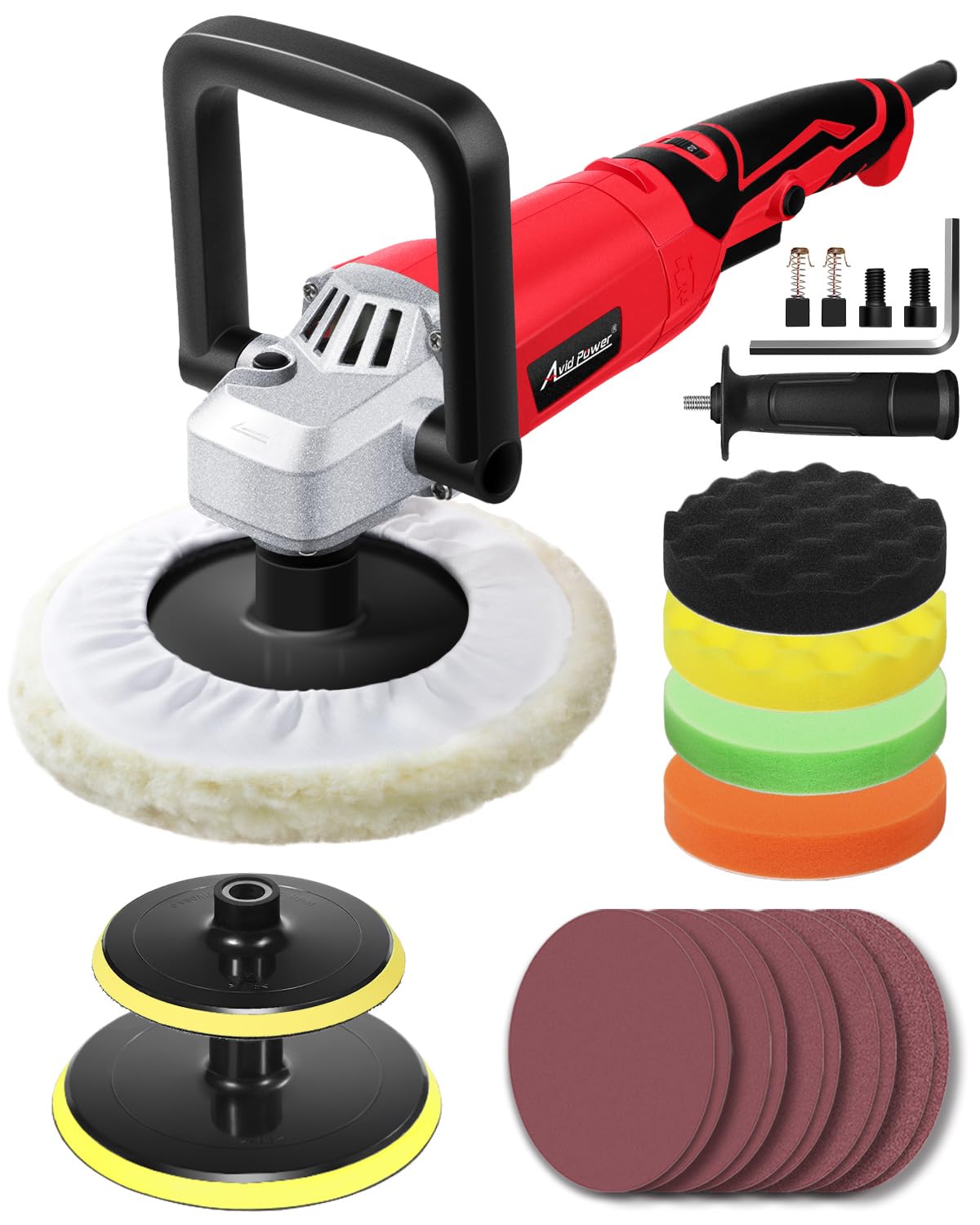
The AVID POWER Rotary Buffer uses a 1200W motor that spins from 1600 to 3500 RPM. This is a rotary machine, not a dual-action, so it spins in a fixed circular motion. It’s the most aggressive tool on this list and should be approached with caution—one moment of hesitation on a body line can burn through clear coat.
For beginners willing to learn proper technique and practice on a scrap panel first, this rotary buffer offers unmatched speed for removing heavy oxidation, sanding scratches, and wet-sanding defects. The constant power and constant speed function keeps the RPM steady even under load. The porous heat dissipation design prevents the motor from overheating during extended use.
The kit includes a detachable D-handle, a side handle, sandpapers, foam pads, a 7-inch wool bonnet, and two backing plates. Users have restored heavily oxidized boat gel coats that would have cost over a thousand dollars at a shop. The tradeoff is clear: incredible cutting power comes with a steep learning curve. The tool weighs 5.5 pounds, so it’s lighter than many rotary machines, but the risk profile is higher than any DA on this list.
Why it’s great
- 1200W motor delivers maximum cutting power
- Constant speed function keeps RPM stable under load
- Porous heat dissipation extends motor life
Good to know
- Rotary action can burn paint without careful technique
- Not recommended for beginners without practice first
7. CRAFTSMAN V20 Cordless Buffer Polisher (10 Inch)

The CRAFTSMAN V20 Cordless Buffer is a bare tool (battery and charger sold separately) that runs on Craftsman’s V20 lithium-ion platform. It spins at a fixed 2800 RPM via a variable speed dial with three settings. The generous 10-inch orbital pad covers large surfaces quickly, making it ideal for applying wax to an SUV or boat in minimal time.
The contoured overmold grip provides solid comfort, and the tool is lightweight enough for one-handed use on hoods and roofs. Users report that a single 2Ah V20 battery can wax an entire SUV without the battery level dropping significantly. The cordless design eliminates the need for extension cords, which is a major convenience for driveway detailers without a garage outlet nearby.
The 10-inch pad size is the standout feature here, but it also creates a drawback: finding replacement 10-inch pads is more difficult than the standard 5-6 inch sizes. The machine’s light weight makes it less effective for heavy paint correction—it tends to bounce rather than cut into swirl marks. For a pure wax applicator and light polish tool, it’s an affordable entry point for Craftsman battery owners.
Why it’s great
- 10-inch pad covers large areas fast
- Lightweight design reduces arm fatigue
- Excellent battery life on a single 2Ah pack
Good to know
- Replacement 10-inch pads are harder to source
- Too light for serious paint correction work
FAQ
Can I burn through paint with a dual-action polisher?
What is the difference between a compound and a polish?
Should I buy a corded or cordless buffer as a beginner?
How many polishing pads do I need for a full car detail?
Final Thoughts: The Verdict
For most users, the best car buffer for beginners winner is the BATOCA 6 Inch DA Polisher because it combines a safe random orbit motion, a complete starter kit, and consistent low-speed torque that forgives beginner mistakes. If you want faster correction without stepping up to a rotary, grab the BATOCA 2026 15mm Throw DA. And for tight spots and detailed finishing work, nothing beats the SPTA Mini 3 Inch Polisher.