
Our readers keep the lights on and my morning glass full of iced black tea. As an Amazon Associate, I earn from qualifying purchases.
Specs are compiled from manufacturer listings and verified buyer reviews and can change over time — please confirm the key details on the product page before buying.
If your car stereo sounds flat or muddy no matter how you fiddle with the head unit, the fix isn’t a bigger amp — it’s a digital signal processor (a small computer that shapes the audio signal before it reaches your speakers). A car DSP lets you adjust each speaker’s timing, volume, and frequency response individually, which is the only way to make a factory or upgraded system sound crisp and balanced.
I’m Min — the founder and writer behind Gadgets Feed. This guide is built by comparing the manufacturers’ published specifications and the patterns across verified customer reviews, so you get each pick’s real strengths and trade-offs instead of marketing spin.
Whether you keep the factory radio or run aftermarket amps, a strong car dsp is what separates decent volume from genuinely clear, stage-like sound in your daily drive.
Our Picks at a Glance


How To Choose The Best Car DSP
A DSP is the brain of a serious car audio build. It takes the signal from your radio, separates it into multiple channels, and lets you tune each one so the soundstage feels like the band is performing on your dashboard. The trick is matching the processor’s features to the size of your system and how deep you want to get into tuning.
Channel Count and System Size
Start by counting how many speakers and subwoofers you plan to power individually. A 2-channel-in and 8-channel-out processor like the PRV handles a full front stage, rear fill, and a sub — the most common serious setup. If you only need to fix a factory system with a single amp, a 4-channel model is simpler to configure.
EQ Bands and Filter Types
Equalizer bands let you boost or cut specific frequencies. More bands give you finer control: a 15-band graphic EQ is a solid start, while advanced units offer 28 or even 79 bands per channel plus parametric EQ (adjustable frequency, gain, and width). Crossover filters split the signal so tweeters, mids, and subs only receive the frequencies they handle best.
Factory Radio Integration
Keeping your stock head unit is the whole point for many buyers. You need either high-level inputs (speaker wire in) to accept the amplified signal from the factory radio, or a unit that can connect to your car’s factory amp directly. A dedicated processor with an iDatalink Maestro module even retains factory controls and chimes.
Quick Comparison
| Model | Best For | Channels | EQ Bands | Weight | Amazon |
|---|---|---|---|---|---|
| PRV Audio 2.8X★ Best Overall | Best Overall / Value | 8 Out | 15-Band Graphic | 1 lb | Amazon |
| Taramps Pro 2.8SBudget Champion | Budget Champion | 8 Out | 15-Band Graphic | 15.8 oz | Amazon |
| Stetsom STX 2436Compact Bluetooth Pick | Compact Bluetooth Pick | 6 Out | 12-Band Graphic | 4.6 oz | Amazon |
| Stetsom STX 2848 | LCD Screen Control | 8 Out | 15-Band Graphic | 1 lb | Amazon |
| Banda Audiopart X8AiR | Fine EQ Detail | 8 Out | 79-Band | 10.56 oz | Amazon |
| Expert PX2R | Advanced Parametric EQ | 6 Out | 28-Band Input EQ | 1.32 lb | Amazon |
| Expert PX8.2 Connect | 8-Channel Tuning Power | 8 Out | 15-Band Input EQ | 0.42 kg | Amazon |
| Kicker KEY 2004 | Auto-Tune Simplicity | 4 | 40-Band | 2.2 lb | Amazon |
| Rockford Fosgate DSR1 | Factory Amp Replacement | 8 Out | 245-Band | 8 oz | Amazon |
In‑Depth Reviews
1. PRV Audio Car Audio DSP 2.8X
Our pick — over 4.5★ from 600+ verified ratings; the strongest balance of quality and price.
The crowd-pleasing 8-channel tuner that cleans up factory sound without the high-end price tag.
Buyers report this DSP flattened the baseline and let them tune each channel independently. One owner specifically praised how the time alignment dramatically improved their sub’s sound — in plain terms, the bass finally hits in sync with the rest of the music instead of lagging behind. It runs warm tucked in a glove box but has stayed trouble-free for months.
The real win is the feature set for the price. You get 2 audio inputs (A and B) feeding 8 channel crossover outputs, a 15-band graphic equalizer, and 12 presets (Flat, Loudness, Bass Boost, Rock, Hip Hop, and more). Owners mention it’s a budget-friendly alternative to high-end DSPs like Helix — a fraction of the cost with similar core functions.
The LCD display (16×2 characters) makes real-time adjustments straightforward, and a sequencer feature lets you trigger other gear through the remote connection. The honest caveat: the menu has a learning curve, and the packaging is basic—just plastic and cardboard, no padded case.
versatile signal processor
- Quality is the top reason owners choose it — well over 40 buyers single out the build
- Value for money is the second-biggest praise — 26 owners call it a bargain
- Easy to install and cleans up noise issues on factory and aftermarket systems
needs tuning time
- The interface has a learning curve before you feel fluent
- Arrives in minimal packaging without protective padding
best for flexibility: you want full 8-channel tuning control without emptying your wallet.
skip for novices: you need Bluetooth app control — this one tunes from its front-panel LCD, not your phone.
2. Taramps Pro 2.8S
A featherweight spec-wise at 15.8 oz with serious tuning depth for DIY installs.
Customers note this is a budget DSP at a fraction of high-end pricing with similar features to far pricier units — and the sound improvement is dramatic. The catch is the learning curve: owners say tuning takes time but is worth it, especially for those keeping a factory radio instead of adding a line output converter.
It brings 15 bands of equalization with up to 12dB of boost or cut, a 1-band input parametric EQ that works on both inputs at once, and high-pass/low-pass filters adjustable from 10Hz to 22kHz with Butterworth, Bessel, and Linkwitz-Riley filter types in slopes up to -48dB/octave. That means you get genuinely precise control over where each speaker’s sound begins and ends.
Owner setups show both strengths and limitations. One runs a custom multi-way build with channel mapping, cloning, saved memory slots, and an installer password — all working. Another notes the terminals are tight (14 AWG wire max) and there’s no Bluetooth or analog input, so you’ll tune from the unit itself.
powerful budget option: the tools are deep — phase inversion, limiters, and an integrated audio generator for calibration — but beginners should expect a real setup session before it sings.
limited tuning depth: owners call it an easy install that clearly cleans up sound from a cheaper head unit, even if the programming guide leaves some figuring out to you.
pick for value: you’re on a budget but want pro-grade crossover and EQ depth.
skip for pros: you want phone-based tuning — this unit has no Bluetooth.
3. Stetsom STX 2436 Bluetooth DSP PRO
The featherweight tuner at 4.6 oz that rides shotgun with your phone for control.
If hiding the processor is your goal, this is the one to beat — at 4.6 oz it’s the lightest pick here, even lighter than the Taramps above at 15.8 oz. Reviewers point out it fits in tight spots and still delivers full control from the driver’s seat through a dedicated app for Android 5.0+ and iOS 12+.
The Bluetooth reaches up to 49 feet in an unobstructed area, plenty for sitting in the driver’s seat while you tune. It brings a 12-band graphic equalizer, a 6-digit password to lock your setup, and both RCA and high-level inputs so it works with factory original stereos without extra adapters. Owners summarize it simply: lots of control, everything sounds really good, and the equalization is excellent for the price.
The trade-off versus the bigger 8-channel units is scope — this is a 6-output design, so it suits a solid front stage plus sub setup rather than a full multi-amp build. For a cleaner, well-controlled daily system, that’s rarely a problem.
choose for ease: you want app-based EQ tuning in the smallest, lightest package available.
avoid for advanced: you need independent control of more than six output channels.
4. Stetsom STX 2848 PRO

An 8-channel workhorse with a lockable LCD that owners call a must-have for audiophiles.
This one skips app control in favor of a straightforward LCD interface with a screensaver and password lock — a setup that keeps casual passengers out and your carefully tuned curve intact. Owners describe it as a great unit that’s easy to operate and simple to install, with functionality and quality as the two most-praised traits.
The spec list reads like a checklist for a serious build: 15-band graphic equalizer, crossover with variable frequency slopes of 12/18/24/36/48 dB per octave, delay adjustment for time alignment, 8 independent outputs, and 2 audio inputs (A and B). A limiter with dynamic attack-release protects your speakers from harsh peaks — the kind of built-in safety net that matters when you push volume.
Shoppers say it works reliably and offers dollar-for-dollar value that’s hard to match when upgrading an existing system. The occasional unit arrives with a bent mounting tab from shipping — check the mount hardware before you bolt it in, though the unit itself stays intact.
best for big builds: you want pro-level 8-channel tuning from the front panel with no phone required.
not for simple: inspect the mounting ears on arrival since one side can arrive bent.
5. Banda Audiopart X8AiR
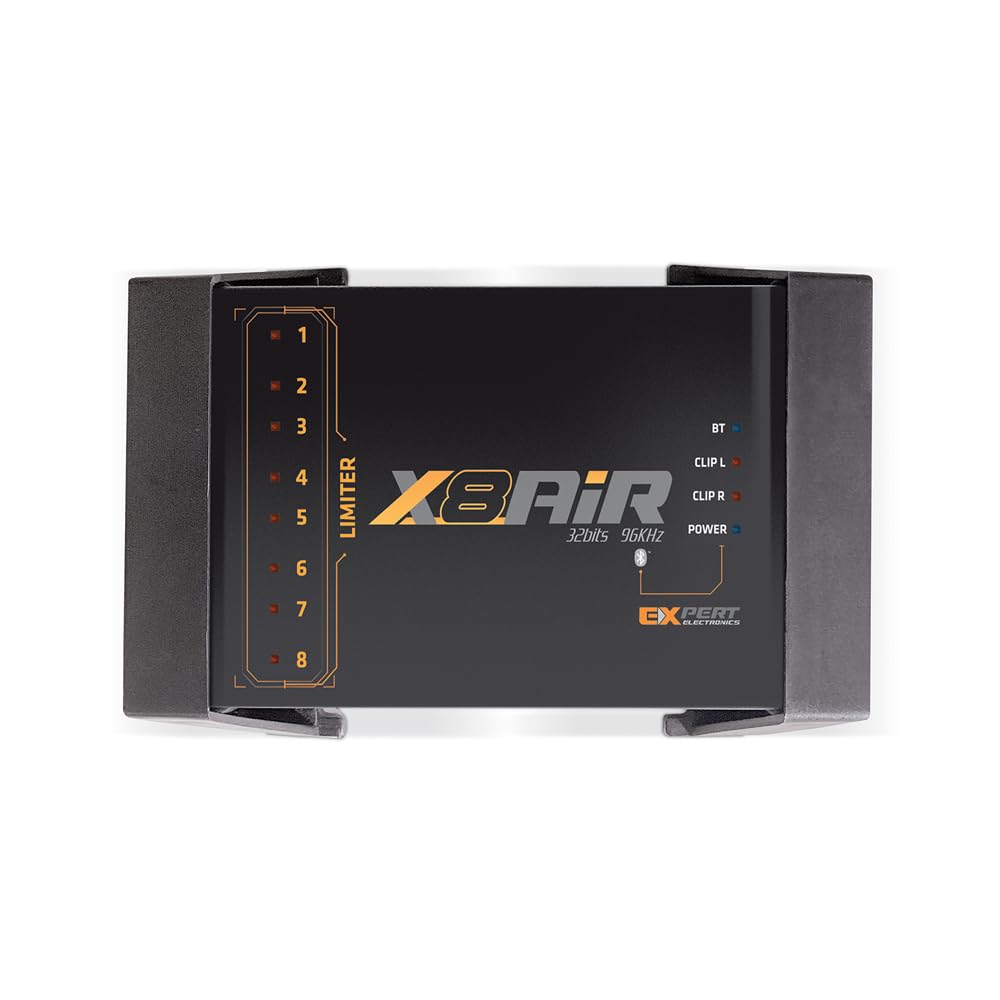
A 32-bit/96kHz brain with 79 EQ bands per channel for hair-splitting precision.
The defining spec here is processing resolution: a 32-bit/96kHz DSP engine delivers cleaner, lower-distortion sound than 24-bit units, and owners confirm the output is a clean signal with no noise-floor problems. The menus are self-explanatory, making this a surprisingly beginner-friendly route into serious tuning.
With 4 inputs and 8 output channels, it handles multi-amplifier setups, component speakers, and subs. The 79-band equalizer per channel is the deepest graphic EQ on this list — a massive step up from the 15-band units — plus adjustable crossovers, time alignment, phase control, and a peak limiter for protection. Owner builds use it to center vocals and tighten bass with real success.
Bluetooth app control is the main convenience, though the pairing can take a few tries on some phones and the app adds noise if you run gains too high — keep levels sensible and it stays quiet. One owner’s advice frames it well: if you know why you need a DSP, this is a great choice; if you don’t, no processor will do the thinking for you.
crisp highs quality
- Performance is the top praise — 27 owners flag it as a strong performer
- Functionality follows at 17 mentions, with complete EQ and crossover features
- Compact and easy to mount with a 6″ x 6″ footprint and 10.56 oz weight
limited low end
- Bluetooth pairing can take a few attempts
- No onboard controls — the phone app is your only interface
pick for clarity: you want the deepest graphic EQ control available at this tier.
avoid for bass: you’d rather not depend on a phone app for every adjustment.
6. Expert PX2R Double Limiter DSP BT

An aluminum-chassis tuner with twin limiters and microsecond-fast 1.08ms processing.
Owners running the PX2R in real builds report a nice, loud, clear result whether it’s chained after a head unit and Epicenter or paired with a 5-channel amp and Alpine speakers. The Bluetooth app is essential — owners say it makes phone tuning from the driver’s seat genuinely easy, and on a large factory screen truck it open up advanced adjustments you simply can’t reach otherwise.
The spec sheet is dense and impressive. It has 28 bands of input EQ spaced 1/4 octave apart, 3 bands of parametric EQ per channel, a double limiter (RMS and peak) with configurable threshold, attack, and decay, plus independent gain, delay, phase, and mute per channel. A 100dB signal-to-noise ratio and 0.02% THD+N keep the signal clean, and it runs on 10 to 15V DC with a 2A internal fuse.
The aluminum chassis measures 154 x 104 x 46mm and weighs 0.42kg. With 2 inputs and 6 outputs, you can feed up to three amplifiers — a flexible middle ground between the compact 6-channel units and the full 8-channel processors above.
choose for control: experienced tuners who want parametric EQ depth and dual-limit protection on a 6-output build.
skip for casual: the Android app is a far smoother experience than the iOS one, per owner reports.
7. Expert PX8.2 Connect

The 8-channel DSP that owners have trusted across every build they’ve done.
Owner loyalty here is striking — one calls it the only DSP they’ve used for all the builds they’ve done, with build quality on par with bigger names and a feature list that speaks for itself. It cleans the music significantly, and Bluetooth tuning from a phone works at 20+ feet, letting you sit in the driver’s seat and dial in each channel.
The PX8.2 delivers 8 output channels with channel routing, 15 bands of input EQ, and 3 bands of parametric EQ per channel. Per-channel volume, crossover, gain, EQ, phase, limiter, delay, and mute all function reliably, and three physical knobs on the unit give you quick highs/mids/lows tweaks without opening the app. Buyers report zero issues after a full year of use, with tuning that rivals processors at several times the price.
The honest caveat is Bluetooth connectivity with some Android phones — a real minority of owners hit pairing trouble. If you’re on Android and this matters, budget for patience or a second tuning device; iOS users report fewer hiccups.
reliable performance: per-channel mute is the feature owners single out for focused tuning sessions.
dated interface: Android Bluetooth pairing is the most common complaint — iOS is smoother.
best for reliability: you’re building an 8-channel system and want a proven, reliable processor.
not for modern: you rely on Android-only Bluetooth — test compatibility early.
8. Kicker KEY 2004 4-Channel DSP Amplifier
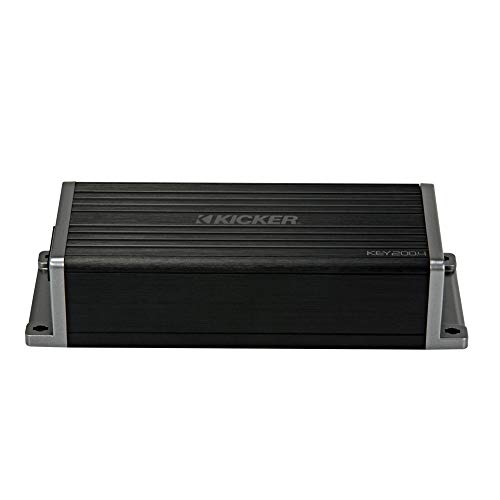
A 4-channel DSP and 200-watt amp in one box that tunes itself in minutes.
This is the pick for anyone who wants dramatic sound improvement without becoming a DSP tuning expert. Press the selector, the included microphone goes to work, and the internal computer measures your car’s acoustics and corrects them automatically — owners confirm the auto-tuning actually works, and you only do it once. In a 2025 Ford F150 or Kia K5 GT, the upgrade over the factory system is vast and immediate.
The KEY pushes 50W per channel across 4 channels for 200W of maximum output power, and the compact 2.2 lb chassis hides almost anywhere — owners tuck it out of sight with ease. A massive 40-band equalizer improves tonality, and a 24dB crossover redefines what each speaker can do. The result, per owners, is hearing actual words in vocals at decent volume and new detail in all kinds of music.
The honest trade-off is that auto turn-on can fail on some vehicles, requiring a remote wire connection. It’s a common-enough hiccup that DIY-installers should plan for it, and the amp is powerful enough that at max volume it’s genuinely too loud — which most owners consider a good problem.
compact easy install
- Sound quality is the top praise — 26 owners mention clearer, fuller music
- Auto-tuning is the easiest path to fixed frequency response
- Compact, powerful, and DIY-friendly installation
limited power output
- Auto turn-on can fail — a remote wire fixes it
- Only 4 channels, so full multi-amp builds need more power
pick for small cars: you want self-tuning clarity with zero learning curve — the auto-calibration does the work.
skip for loud: you need more than 4 channels or already run separate amplifiers.
9. Rockford Fosgate DSR1

The first real fix for replacing factory amps in Ford and Chrysler vehicles.
If you drive a modern Ford or Chrysler with an integrated factory amp, this is the processor purpose-built for your situation. It uses the processor found in Rockford’s 3Sixty.3 but adds an interactive Apple iOS and Android app for real-time tuning. Customers note huge sound upgrades on vehicles like a 2014 Ford Explorer Limited with the Sony system — replacing the factory amp entirely and feeding a JBL DSP4086 downstream.
The numbers here are staggering on paper: 245 bands of equalization for precise in-vehicle tuning, adjustable crossovers with selectable slope, and up to 10ms of delay for time alignment. It takes 4 channel high-level inputs with signal-sense turn-on, 4 channel balanced differential inputs, plus auxiliary RCA and SPDIF coaxial inputs, with Bluetooth 4.0 for wireless setup. The integrated iDatalink Maestro module retains factory controls and chimes.
Reviewers point out the sound quality is excellent after tuning, and the setup process works — but it demands patience. The Perfect Tune app has a steep learning curve, three firmware updates must run in order, and some users report lockups during crossover adjustments that need an unplug to reboot. The app itself is notably better on iOS than Android.
choose for factory: you drive a Ford or Chrysler and want to bypass the factory amp cleanly with full control.
avoid if no app: a steep setup curve — plan an afternoon and keep iOS handy for the smoothest app experience.
Understanding the Specs
Channel Count and Inputs
Channel count is the single most important spec because it decides how much independent control you get. A 2-in/8-out processor feeds a tweeter, mid, and sub setup with room to spare, while a 6-output unit suits a simpler front-stage-plus-sub build. Inputs matter too: high-level inputs accept speaker wire from a factory radio, while low-level RCA inputs expect a clean pre-amp signal — some units offer both.
EQ Bands and Parametric EQ
EQ bands let you boost or cut specific frequencies to fix your car’s natural sound flaws. A 15-band graphic EQ splits the audio into 15 fixed frequency slices — solid for most builds. Advanced processors add parametric EQ, where you can move the frequency, adjust the width (Q), and set the gain independently for surgical corrections. The more bands and the more parametric control, the more precisely you can shape the sound.
Crossover Filters and Time Alignment
Crossover filters split the signal so tweeters only get high frequencies and subs only get lows, protecting your speakers and reducing distortion. Slope steepness — measured in dB per octave — determines how aggressively the filter cuts. Time alignment adds tiny delays to each channel so sound from distant speakers arrives at your ears at the same moment, dramatically improving the soundstage and imaging.
Control Method and Tuning Interface
How you tune matters as much as what you can tune. Front-panel LCD units like the PRV and Stetsom work without extra gear and are great for one-off setups. Bluetooth app-controlled units let you adjust from the driver’s seat repeatedly — essential if you tweak often or want to show off. Some premium units like the Kicker KEY automate the whole process with a microphone and internal computer.
FAQ
What does a Car DSP actually do for my sound?
Do I need a DSP if I already upgraded my speakers?
What is the difference between graphic EQ and parametric EQ?
Can I keep my factory radio with a DSP?
How many channels do I need in a DSP?
What does time alignment do and why does it matter?
Is a self-tuning DSP amplifier better than a manual DSP?
Can I control the DSP from my phone?
What is a line output converter and do I still need one with a DSP?
Will a DSP work with aftermarket amplifiers?
Final Thoughts: The Verdict
For the majority of shoppers, the car dsp winner is the PRV Audio 2.8X because it pairs a 15-band graphic EQ with 8 channels of independent output at a price that undercuts high-end names while delivering the same core control — quality is the reason owners single it out most. If you want easy setup with zero tuning knowledge, grab the Kicker KEY 2004, whose auto-calibration fixes your sound in minutes. And for a full custom multi-amp build, the Banda Audiopart X8AiR with 79 EQ bands per channel is the one to reach for.
How We Picked
We do not accept paid placement. Every pick is matched to a real buyer and a real use-case; we do not hands-on test units.
Sources & Methodology
Specifications: manufacturer listings and product documentation. Review insights: verified customer reviews, as of September 2026. Pricing: not shown on this page (it changes often); check the current price via the retailer link.
As an Amazon Associate, Gadgets Feed earns from qualifying purchases. This does not affect which products we feature.