
Winter engine wear is not a myth — it is a measurable result of oil thickening as temperatures drop. The wrong viscosity turns your morning crank into metal-on-metal contact, accelerating wear before the engine reaches operating temperature. Selecting the right fluid for sub-freezing conditions is the single most effective maintenance decision a driver can make between October and March.
I’m Min — the co-founder and writer behind Gadgets Feed. My approach to motor oil is data-driven and spec-first, focusing on cold-cranking viscosity, pumpability, and thermal stability across the most punishing winter environments.
After sorting through hundreds of verified reviews and technical data sheets, the research points to a clear set of winners. Here is the definitive guide to the best car oil for winter.
How To Choose The Best Car Oil For Winter
Choosing winter oil is not about brand loyalty — it is about understanding viscosity at low temperatures. Every grade behaves differently when the mercury drops, and the “W” number tells you exactly how well the oil will flow during a cold start.
Understanding the SAE Winter Grade
The SAE J300 standard defines the winter rating (the number before the “W”) through a Cold Cranking Simulator test that measures the oil’s apparent viscosity at specific low temperatures. A 0W oil is tested at -35°C, a 5W at -30°C, and a 10W at -25°C. Lower numbers mean thinner oil at freezing temperatures, which translates directly to faster oil pressure build and less wear during the first seconds of ignition. If your region sees sustained temperatures below -20°F, 0W is the safest choice for any engine.
Pour Point and Pumpability
Beyond the CCS test, pour point is the temperature at which oil stops flowing entirely. A good winter oil should have a pour point at least 10°C below your expected low. Pumpability is equally critical — the oil must flow through the pickup tube and into the oil pump before metal parts grind. Premium synthetics from brands like Mobil 1 and Liqui Moly formulate their base stocks to maintain pumpability far below their SAE grade minimum, giving you a safety margin during extreme cold snaps.
High-Temperature High-Shear Stability for Winter Driving
Winter oil must also protect at operating temperature. HTHS viscosity, measured at 150°C and high shear rates, tells you how well the oil film holds up under sustained highway loads. A lower HTHS value (under 2.9 cP) improves fuel economy but offers less film strength for turbocharged engines. For winter driving that includes long highway commutes, aim for an HTHS above 3.0 cP to prevent boundary lubrication failures during cold-engine warm-up cycles where condensation and fuel dilution are highest.
Quick Comparison
On smaller screens, swipe sideways to see the full table.
| Model | Category | Best For | Key Spec | Amazon |
|---|---|---|---|---|
| Red Line 11804 0W20 | Premium | Maximum Cold-Start Protection | Ester/PAO base, pour point -54°C | Amazon |
| Mobil 1 Extended Perf 5W-30 | Premium | Extended Drain Intervals | 20,000-mile protection, -40°F low-temp | Amazon |
| Liqui Moly Top Tec 6600 0W-20 | Premium | BMW/LSPI Protection | LL-17 FE+ approved, 5L jug | Amazon |
| Liqui Moly Special Tec LL 5W-30 | Premium | German Engine Specs | 5L, synthesis technology, Longlife | Amazon |
| Castrol GTX Full Synth HM 0W-20 | Mid-Range | High-Mileage Engines | 6X wear protection, 10,000-mile interval | Amazon |
| Havoline PRO-DS 0W-20 | Mid-Range | Eco-Friendly Packaging | 6-quart box, LSPI mitigation | Amazon |
| Valvoline Advanced 5W-30 | Mid-Range | Value & Cold Start Flow | 40% stronger wear protection, 5QT | Amazon |
In‑Depth Reviews
1. Red Line 11804 SAE 0W20 Fully Synthetic Motor Oil – 1 Quart (6 Pack)

Red Line builds its 0W20 around a polyol ester and PAO base stock that delivers natural multi-grade properties without relying heavily on viscosity index improvers. This chemical foundation gives it a pour point of -54°C, which is significantly lower than most 0W competitors. For drivers in northern climates where overnight temps drop below -30°C, that margin translates into real cranking speed improvements.
The high ZDDP and molybdenum content provide exceptional boundary layer protection during cold starts, though it also prevents Red Line from carrying an API licensing star. Magnuson-Moss warranty protections apply, but owners of vehicles under factory warranty should verify compatibility. Users report noticeably smoother idle and reduced valvetrain noise within the first few hundred miles of switching.
This 6-quart pack covers the typical modern engine sump with enough left for top-off. The ester formula resists volatilization better than Group III synthetics, meaning less oil consumption between changes in engines that run extended drain intervals. For towing and heavy-load winter driving, the stouter film strength provides a measurable safety margin over budget synthetics.
Why it’s great
- Extremely low pour point for arctic-level protection
- Ester base resists thermal breakdown and oxidation
- High moly content reduces friction on cold starts
Good to know
- Not API licensed, check warranty compatibility
- Premium pricing compared to standard synthetics
- May cause seal leaks in high-mileage engines on conventional oil
2. Mobil 1 Extended Performance Full Synthetic Motor Oil 5W-30, 6-pack of 1 quarts

Mobil 1 Extended Performance uses the Triple Action+ Formula to combine oxidation control, deposit prevention, and wear protection across a full 20,000-mile drain interval. The 5W-30 grade provides certified protection down to -40°F, making it a reliable choice for the majority of winter driving environments outside extreme polar conditions. The ILSAC GF-6 certification includes timing chain wear and low-speed pre-ignition protection for modern GDI engines.
Real-world testing shows this oil maintains viscosity well beyond the 5,000-mile mark, with users reporting minimal shear-down or fuel dilution even in severe winter stop-and-go driving. The extended drain rating is not just marketing — the additive package includes a higher concentration of anti-oxidants and detergents that keep sludge formation at bay during cold-soak condensation cycles.
The six-quart case format is ideal for vehicles requiring 5.5 to 6 quarts, like many modern trucks and SUVs. Each bottle has a precise pour spout that reduces spillage on cold hands in the garage. For drivers who want a widely available, warranty-safe winter oil that can stretch beyond the standard 5,000-mile change, this is the benchmark.
Why it’s great
- Industry-leading 20,000-mile drain interval
- ILSAC GF-6 certified for GDI engines
- Maintains viscosity under severe cold conditions
Good to know
- 5W-30 may not flow as fast as 0W in extreme cold
- Higher price per quart than basic synthetics
- Six separate bottles create more waste than a single jug
3. Liqui Moly Top Tec 6600 SAE 0W-20 | Fully synthetic engine oil | 5 Liter

Liqui Moly Top Tec 6600 carries the BMW Longlife-17 FE+ approval, a spec specifically designed to combat low-speed pre-ignition in turbocharged direct-injection engines. LSPI can destroy a piston in milliseconds during cold starts, and this oil’s formulation reduces the spontaneous combustion risk at low rpm. The 0W-20 grade ensures rapid oil pressure build in sub-zero weather, critical for European performance engines with tight oil passage tolerances.
The 5-liter canister is the standard sump volume for many BMW and Land Rover engines, meaning exactly one container per oil change. Users report noticeably quieter cold starts and slightly improved fuel economy after switching. The oil’s backwards compatibility with older Longlife specs makes it a one-stop choice for multi-car households with mixed BMW generations.
This is a vehicle-specific fit product — it is not designed for universal application across all makes. The additive chemistry is engineered around European OEM requirements, including lower ash content for long-life particulate filters. If you drive a domestic or Asian vehicle, cross-check the owner’s manual against the API and ACEA ratings before purchasing.
Why it’s great
- BMW LL-17 FE+ certified for LSPI defense
- 5-liter pack matches European sump sizes exactly
- Quieter cold starts and improved fuel efficiency
Good to know
- Vehicle-specific fit, not universal
- Premium price point per liter
- Limited availability compared to mass-market brands
4. Liqui Moly Special Tec LL SAE 5W-30 | 5 L | Synthesis Technology Motor Oil

Liqui Moly Special Tec LL is a synthesis technology oil designed for vehicles requiring Longlife (LL) specifications, particularly BMW, Mercedes-Benz, and VW/Audi groups. The 5W-30 viscosity strikes a proven balance for European winter conditions — thin enough at -30°C for reliable cold starts, yet thick enough at operating temperature to protect high-output turbochargers. The low-to-medium viscosity level delivers consistent oil pressure across the entire temperature range.
Long-term users with tuned or boosted BMW engines report that this oil maintains its shear stability even under sustained high-load driving. The 5-liter jug is proportioned to fill most German engine sumps without waste. The synthesis technology formulation reduces oil consumption between changes compared to conventional oils, particularly in older engines with looser piston ring clearances.
While primarily marketed to European makes, the viscosity grade and additive package also work well in many Asian and domestic vehicles specifying 5W-30. The 169.1 fluid ounce capacity gives a near-exact fill for engines requiring 5 quarts, with a small amount left over. Testers note the oil’s detergent action can gradually clean sludge from neglected engines over successive changes.
Why it’s great
- Makes engines run smoother and quieter over time
- 5-liter size is perfect for German engine sumps
- Strong shear stability for turbocharged applications
Good to know
- 5W-30 not as thin as 0W for extreme cold
- Highest per-liter cost among mid-range options
- Vehicle-specific fit for optimal certification
5. Castrol GTX Full Synthetic High Mileage 0W-20 Motor Oil, 5 Quart
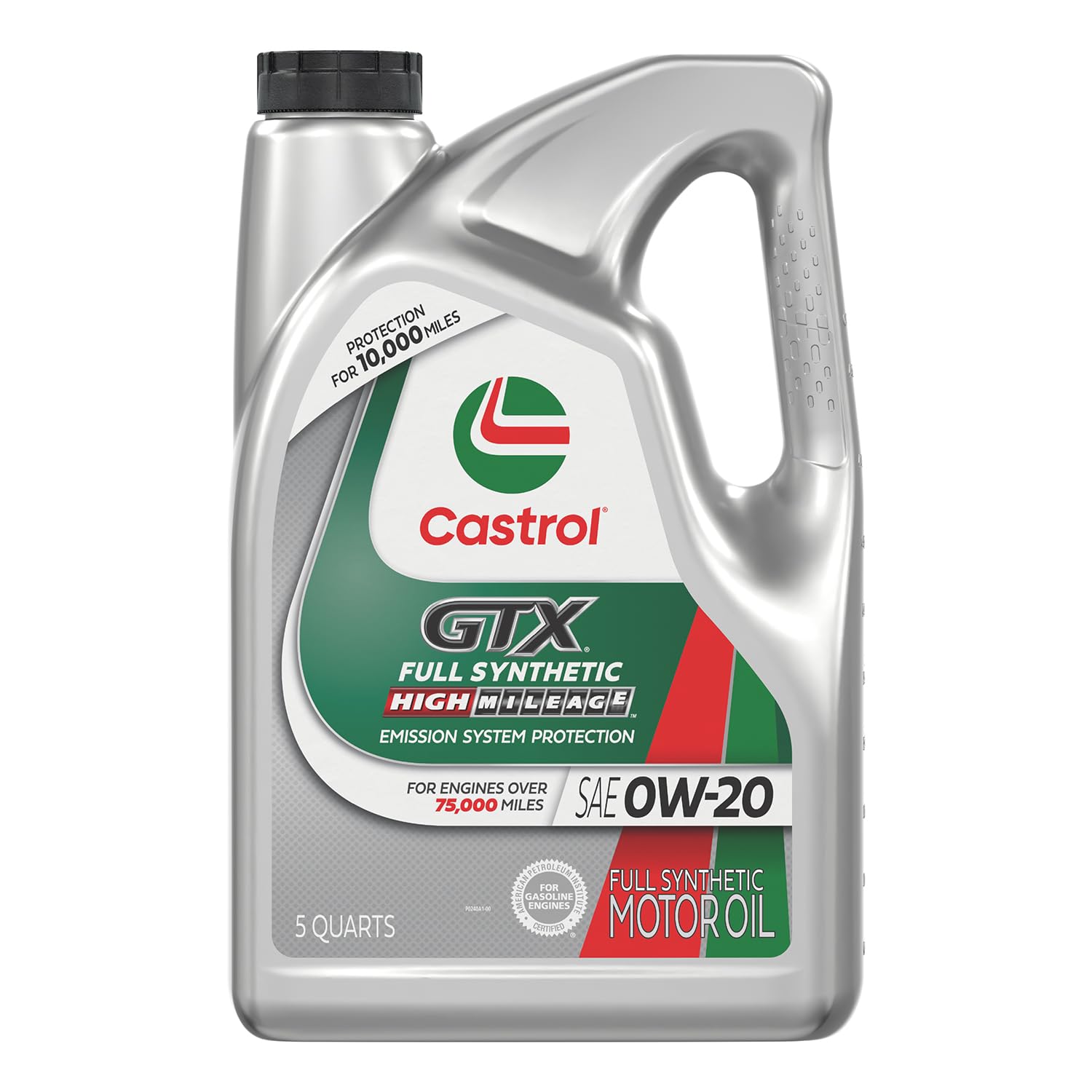
Castrol GTX Full Synthetic High Mileage uses Phosphorous Replacement Technology to prevent catalytic converter contamination, a common failure point when high-mileage seal conditioners release excess phosphorus. The 0W-20 grade provides the thinnest cold-start viscosity available, essential for engines with over 75,000 miles where oil pump wear has reduced pressure. The formula delivers 6x better wear protection than the industry standard, targeting the specific failure modes of aged valvetrains and piston rings.
The 10,000-mile change interval is realistic for a high-mileage full synthetic, covering typical winter driving seasons with one change. Users report smoother operation and reduced engine noise within the first 500 miles, particularly in engines previously running conventional oil. The formula is also compatible with hybrid engines, which often run cooler and accumulate moisture through shorter warm-up cycles.
The 5-quart jug is ergonomically designed with a built-in handle and anti-glug spout that minimizes mess during cold-weather changes. Castrol’s seal conditioning additives help reduce minor leaks from dried-out gaskets, but they should not be relied upon to fix significant external oil leaks. For drivers wanting to extend the life of a high-mileage engine through another winter, this oil addresses the specific failure points that cold weather accelerates.
Why it’s great
- Phosphorous Replacement Technology protects catalytic converters
- Excellent seal conditioning for high-mileage engines
- Significant reduction in engine noise and wear
Good to know
- Not ideal for engines under 75,000 miles
- 10,000-mile rating less than Mobil 1 Extended Perf
- Seal conditioners may cause leaks in some engines
6. Havoline Motor Oil 0w20 PRO-DS Lifelong Full Synthetic, 6 Quarts
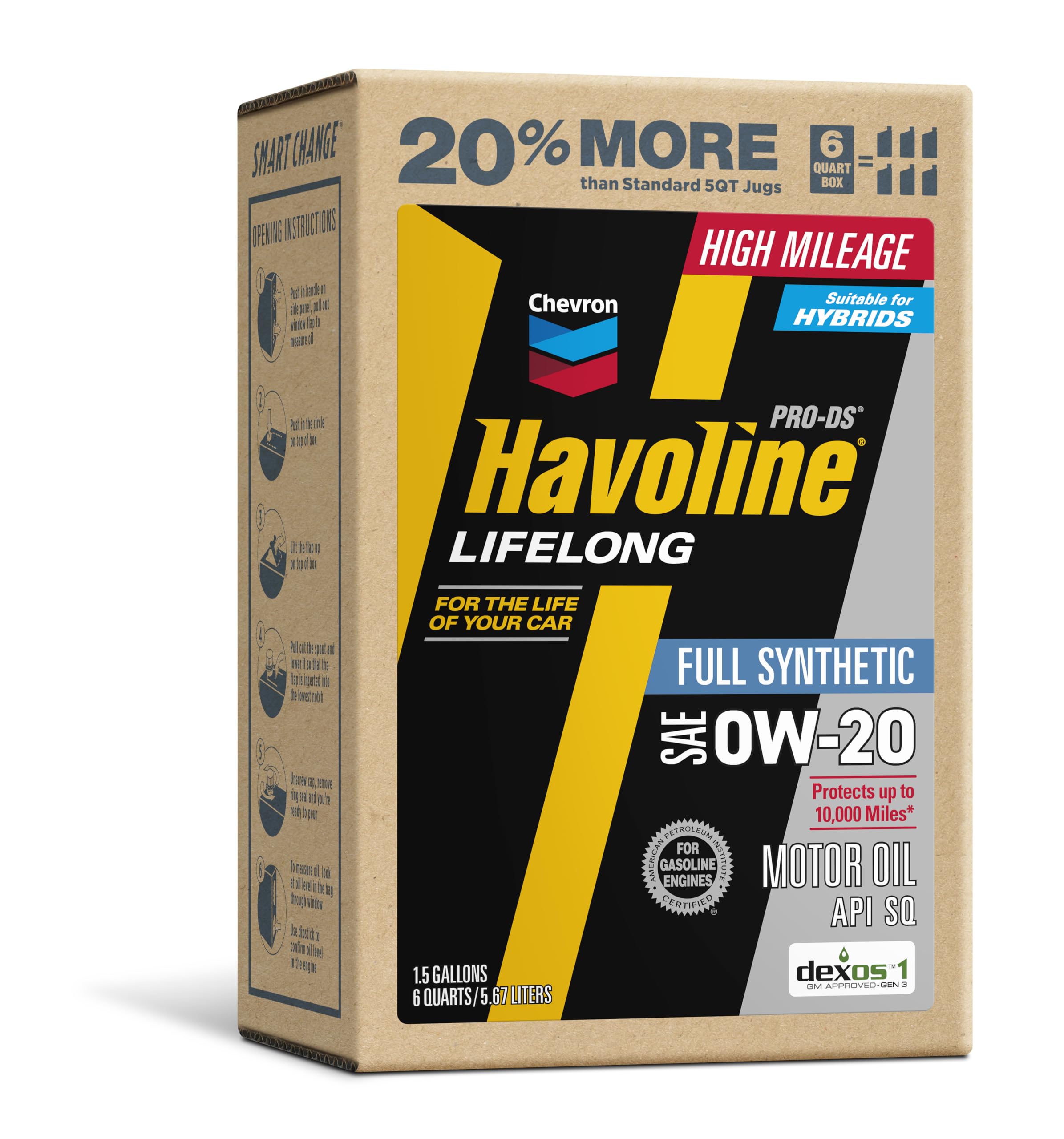
Havoline PRO-DS Lifelong delivers a 0W-20 full synthetic with an SQ API rating, meeting the highest current industry standards for gasoline engine protection. The 6-quart cardboard box packaging is a practical innovation — the internal bag allows fast, glug-free pouring while eliminating plastic waste. For winter oil changes where you are working in a cold garage, the bag-in-box design prevents the messy “oil volcano” that happens with rigid jugs.
The formula includes unsurpassed protection against sludge and varnish buildup, with specific additive chemistry targeting Low Speed Pre-Ignition in turbocharged direct injection engines. The 0W-20 grade ensures optimal flow at -35°C, matching the performance of more expensive boutique synthetics. Users with Toyota and Honda trucks report excellent results over extended drain intervals, with Blackstone oil analysis showing consistent wear metal readings.
This oil is universal fit and works across domestic and import conventional or hybrid passenger cars, SUVs, and pickup trucks. The 6-quart volume is ideal for engine sumps requiring 5.5 to 6 quarts, eliminating the need to buy an extra quart. For budget-conscious buyers who refuse to compromise on API SQ certification and LSPI protection, this Havoline formulation outperforms its price tier convincingly.
Why it’s great
- Best per-quart value for a 0W-20 full synthetic
- Cardboard box packaging is mess-free and recyclable
- SQ API rating matches top-tier standards
Good to know
- Box can tear if wet or stored improperly
- Less brand recognition than Mobil 1 or Castrol
- Not ideal for engines requiring 5W-30 or higher viscosity
7. Valvoline Advanced Full Synthetic SAE 5W-30 Motor Oil 5 QT
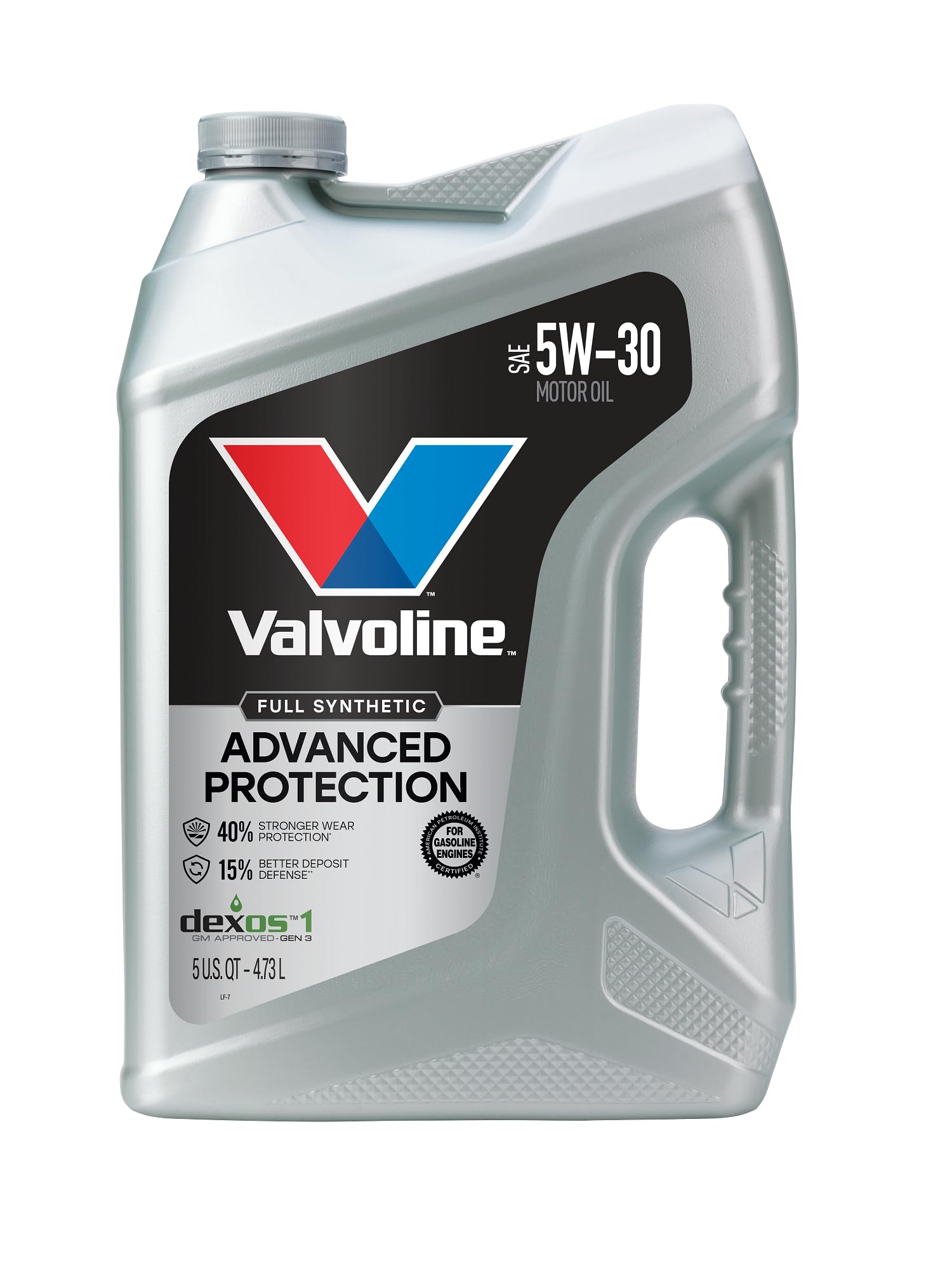
Valvoline Advanced Full Synthetic delivers 40% stronger wear protection than industry standards, specifically targeting the four main causes of engine breakdown: wear, friction, heat, and deposits. The 5W-30 grade is the most common winter viscosity for trucks and SUVs, and this oil’s low-temperature flow properties minimize metal-to-metal contact during cold starts — the period when 90% of engine wear occurs. The ILSAC GF-7A and API SQ compliance ensures full warranty compatibility for late-model vehicles.
The formula provides 15% better deposit defense and 2.5x better heat protection versus industry standards, which matters during winter warm-up cycles where incomplete combustion produces more soot and varnish. Users with Ford F-150s and Chevy trucks report consistent performance across change intervals, with the oil maintaining its amber color well past 5,000 miles. The Ford WSS-M2C961-A1 and GM dexos 1 Gen 3 approvals make it a direct OEM-spec choice for domestic fleets.
The 5-quart jug offers the lowest cost per quart in this comparison, making it the smartest choice for budget-maintenance drivers who change oil strictly at 5,000 miles. The wide viscosity acceptance from API SN with SN PLUS through to API SQ means it works across a broad range of model years. If you want proven winter protection without paying for extended miles you will not use, this is the oil to buy.
Why it’s great
- Best per-quart price among full synthetics tested
- ILSAC GF-7A certified for newest engine designs
- Excellent low-temperature flow for cold starts
Good to know
- 5W-30 not ideal for extreme sub-zero climates
- No extended drain rating beyond normal intervals
- Less detergent additive than high-mileage formulations
FAQ
Does 0W-20 provide better winter protection than 5W-30?
Can I use high-mileage winter oil in a new engine?
How often should I change winter-specific oil?
Final Thoughts: The Verdict
For most users, the best car oil for winter winner is the Red Line 11804 SAE 0W20 because its ester/PAO blend delivers the lowest pour point and highest film strength for maximum cold-start protection. If you want extended drain intervals and universal warranty compatibility, grab the Mobil 1 Extended Performance 5W-30. And for high-mileage engines needing seal conditioning and catalytic converter protection, nothing beats the Castrol GTX Full Synthetic High Mileage 0W-20.