
Our readers keep the lights on and my morning glass full of iced black tea. As an Amazon Associate, I earn from qualifying purchases.
Specs are compiled from manufacturer listings and verified buyer reviews and can change over time — please confirm the key details on the product page before buying.
A pool of oil under your car is a gut-drop moment, but it isn’t always a four-figure shop visit. These seal restorers work by softening and swelling the dried-out rubber gaskets in your engine, which is exactly where most small and medium leaks begin. The real question is matching the right formula to your specific leak — a rear main seal needs a different product than a weepy valve cover — and knowing which ones actually live up to the promises on the bottle.
I’m Min — the founder and writer behind Gadgets Feed. This guide is built by comparing the manufacturers’ published specifications and the patterns across verified customer reviews, so you get each pick’s real strengths and trade-offs instead of marketing spin.
The goal is simple: help you find the right car oil leak sealer without guessing, so you can stop the drip and keep the cash in your wallet.
Our Picks at a Glance


How To Choose The Best Car Oil Leak Sealer
Before you pour anything into your crankcase, you need to know what kind of leak you are dealing with, because no additive fixes a cracked oil pan. Seal conditioners are brilliant for dried, hardened, or shrunken rubber seals — the cause of most age-related drips. Figure out where the leak is coming from first, then pick the product built for that spot.
Match the Formula to the Leak Location
Your engine has many different seals. A product aimed at the rear main seal, like Bar’s Leaks Rear Main Seal Repair, uses a specific polymer blend designed to swell that big, critical seal. A general engine oil stop leak, however, works on multiple seals at once across the block. If you have a specific known leak — like a valve cover gasket — a universal formula will do the job. If you suspect the rear main seal, get the product named for it.
Check the Capacity Math
Bottles come in wildly different sizes, from a tiny 50 ml additive to a full 1-gallon jug. Read the label because each bottle treats a specific oil capacity. ATP’s 8 oz bottle, for example, treats a 6-quart system. If you drive a truck with a bigger sump, you may need more than one bottle, which changes the real cost of the fix.
Understand “Rejuvenate” vs “Block”
The best modern sealers don’t just clog the leak with sludge — they use chemistry to restore the elasticity of the rubber seal itself. That is why “rejuvenates rubber seals” is such a common phrase in the data. This is a longer-lasting fix than a thick goo that just plugs the hole, and it is safer for your engine’s oil passages.
Quick Comparison
| Model | Best For | Size | Best Use | Engine Type | Amazon |
|---|---|---|---|---|---|
| ATP AT-205 Re-Seal (2 Pack)★ Best Overall | All-around seal restoration | 8 oz per bottle | Engine, trans, power steering | Conventional & synthetic | Amazon |
| Liqui Moly Motor Oil Saver (2 Pack)Preventive Pick | Preventive & high-mileage care | 300 ml per bottle | Engine oil circuit seals | Gas & diesel | Amazon |
| XADO ATOMEX Stop LeakUniversal Fit | Universal vehicle coverage | 250 ml | Seals, valves, cylinders | Auto, motorcycle, marine | Amazon |
| Lucas Oil Engine Oil Stop Leak | High-mileage & heavy-duty | 1 gallon | Engine oil seals | Petroleum, semi, full synth | Amazon |
| Bar’s Leaks One Seal (5 Pack) | Small seep & multiple cars | 11 oz per bottle | Engine & power steering | Petroleum-based oils | Amazon |
| LM 1005 Oil Leak Stop | Engine & valve stem seals | 300 ml | Engine seals & piston rings | Universal fit | Amazon |
| Permatex 30302 Stop Leak | Small to moderate leaks | 12 fl oz | Engine oil system | Gas & diesel 4-stroke | Amazon |
| Liqui Moly Gear-Oil Leak Stop | Gearboxes & transmissions | 50 ml | Transmission seals | Compatible gear oils | Amazon |
| Bar’s Leaks Rear Main (6 Pack) | Rear main seal leaks | 16.9 fl oz total | Rear main, timing cover, cams | All incl. diesel & turbo | Amazon |
In‑Depth Reviews
1. ATP Automotive AT-205 Re-Seal Stops Leaks, 8 Ounce Bottle (2 Pack)
Our pick — over 4.5★ from 700+ verified ratings; the strongest balance of quality and price.
The crowd favorite that routinely stops drips in minutes, saving thousands in shop labor.
Mechanics and owners alike recommend this sealer for its fast action. Buyers report the drips stopping in 20 minutes — one owner poured in a bottle during an oil change and watched a rear main seal leak vanish, a fix that would have cost roughly in labor. That kind of result is why this is the most trusted name in the category.
It rejuvenates rubber seals and gaskets across engine, transmission, power steering, differentials, and hydraulic systems. Each 8 oz bottle treats a 6-quart capacity, so a standard car gets one full dose. It is compatible with conventional and synthetic oils, ATF, gear oil, power steering fluid, and hydraulic oil.
Owners praise that it works where other products failed. A 1993 Toyota 4Runner owner credits it with extending the life of a vehicle that had no business still running. Even better, it contains no petroleum distillates, so it won’t over-swell or break down your seals over time.
What wins people over
- Stops leaks fast — often within minutes to a full treatment
- Rejuvenates seals rather than just plugging the hole
- Works across engine, steering, and transmission systems
Who should think twice
- Severe mechanical damage needs a real repair, not a sealer
- Large systems over 6 quarts need more than one bottle
Reach for this if: you want the highest-probability fix for common seal leaks and save yourself a significant repair bill.
Look elsewhere if: your leak is from a cracked pan or obvious physical damage — no additive will weld metal.
2. Liqui Moly Motor Oil Saver (300 ML) – 2 Pack
A preventive-maintenance specialist that keeps hardened valve stem seals from burning oil.
Where this one shines is stopping oil consumption before it becomes a puddle. It maintains and regenerates the rubber and plastic seals in the engine oil circuit of gas and diesel engines, specifically targeting aged and hardened valve stem seals. That translates to no more blue exhaust smoke on startup and better emissions.
It’s a two-pack of 300 ml bottles, and the data shows owners leaning on it as a maintenance habit rather than an emergency fix. One VW Jetta owner found this is the only additive allowed in their picky 507 00 certified crankcase, and it significantly reduced oil consumption. Another reported their oil burning duration doubled — meaning the oil lasted twice as long before needing a top-up.
The best part is that it dampens engine noise and reduces repair costs by tackling the root cause. Owners call it great preventive care for daily drivers and turbo cars alike.
Smart maintenance buy: This is the sealer for drivers who want to keep a healthy engine healthy, not just stop an active drip. If you already have a serious leak, a dedicated stop-leak formula is the better first move.
Pick this for: high-mileage gas or diesel engines where you want to prevent oil burning and smoke before they start.
Consider alternatives if: you have a heavy, active leak that needs immediate stopping power.
3. XADO ATOMEX Oil Additive Stop Leak Engine (Bottle, 250 ml)
The industrial-grade option that spans cars, motorcycles, and even marine engines.
This 250 ml formula is built to restore the elasticity of rubber gaskets and seals across a huge range of machines. It is engineered for auto, motorcycle, and marine engines, making it the most versatile bottle here for a household with multiple vehicles. Owners mention it fixing leaking turbo cooling lines and O-rings on EcoBoost engines with no issues after two years.
The standout story is a Hyundai Santa Fe that was losing about a quart of oil every 200 miles. After treatment, it drove 1,400 miles without needing any oil added. Another owner saw a rear main seal leak improve within 180 miles and said they would buy it again.
It’s not the cheapest per ounce, but the value for money is what owners praise most — several note it saved them over a thousand dollars in repair costs. The main caveat is that results are not universal; some owners see incredible results, while a few report no change at all, which is typical for any seal treatment.
Efficiency booster: It reduces engine noise and oil consumption while rejuvenating seals, valves, and cylinders. This is the pick for the multi-vehicle garage or anyone with a stubborn rear main seal who wants a fighting chance.
Reach for it if: you need one product that works across a car, a bike, and a boat without buying three different bottles.
Skip if: you expect a guaranteed fix — no sealer is 100% reliable on every engine.
4. Lucas Oil 10279 Engine Oil Stop Leak – 1 Gallon

The giant jug for big rigs and high-mileage trucks with serious oil appetites.
This is a full gallon of treatment — a 3.56 kg jug vs a tiny 0.05 kg additive bottle — designed for vehicles that drink oil by the quart. It renews worn seals with no risk of damage or corrosion and works with petroleum, semi-synthetic, and full synthetic motor oils. The size makes it the economical choice for a truck fleet or a diesel pickup with a large sump.
The headline story is a 2016 International ProStar with 960,000 miles on the clock. One gallon at an oil change stopped a front engine seal leak in about two weeks. A certified tech adds that it stops or slows drying seals, not mechanical failures, and recommends it with high-mileage synthetic oil.
Owners note it reduces engine noise and oil consumption while raising oil pressure. The honest trade-off? It is a thick, sticky product — some owners note the thickness can be a mixed blessing depending on your engine. It works on minor leaks from hardened seals, but it won’t fix a cracked oil pan gasket.
Built for the long haul
- Enormous 1-gallon value for big engines
- Raises oil pressure and cuts noise
- Contains no harmful solvents
Not a miracle worker
- Sticky thickness may not suit every engine
- Major physical damage won’t be fixed by any additive
Choose this for: trucks, RVs, and high-mileage vehicles where a small bottle just won’t cut it.
Look past it if: you only need a one-time fix for a small car — the gallon is overkill.
5. Bar’s Leaks 1334-5PK One Seal Stop Leak – 11 oz, (Pack of 5)

A five-bottle stockpile that treats seeping gaskets across your whole driveway.
If you have more than one car with a minor weep, this pack of five 11 oz bottles means you are stocked up for years. It is compatible with metal, plastic, and rubber, and customers note it working on stubborn power steering leaks that other brands made worse. One owner dumped in three bottles and the leak was gone.
It helps with small oil leaks and seeping gaskets — a few reviewers point out it reducing valve gasket leaks by at least 50%. That is the honest reality: it slows and often stops small leaks, but a heavily worn seal may still need replacement. Owners praise its durability, with some reporting results lasting over two years.
The versatility is the real story here. You can keep one bottle in each vehicle’s trunk or treat your car, your partner’s car, and the weekend project all with one purchase. For the DIYer who hates buying a single bottle, this is the practical stock-up.
Starter kit approach: It’s a smart buy for small leaks across multiple vehicles. Just set expectations — it’s a strong slowdown agent, not a guaranteed permanent fix for badly worn seals.
Pick this if: you want a bulk supply for several cars or recurring small seeps.
Choose a single bottle if: you only need to treat one engine right now.
6. LM 1005 Oil Leak Stop 300 ml
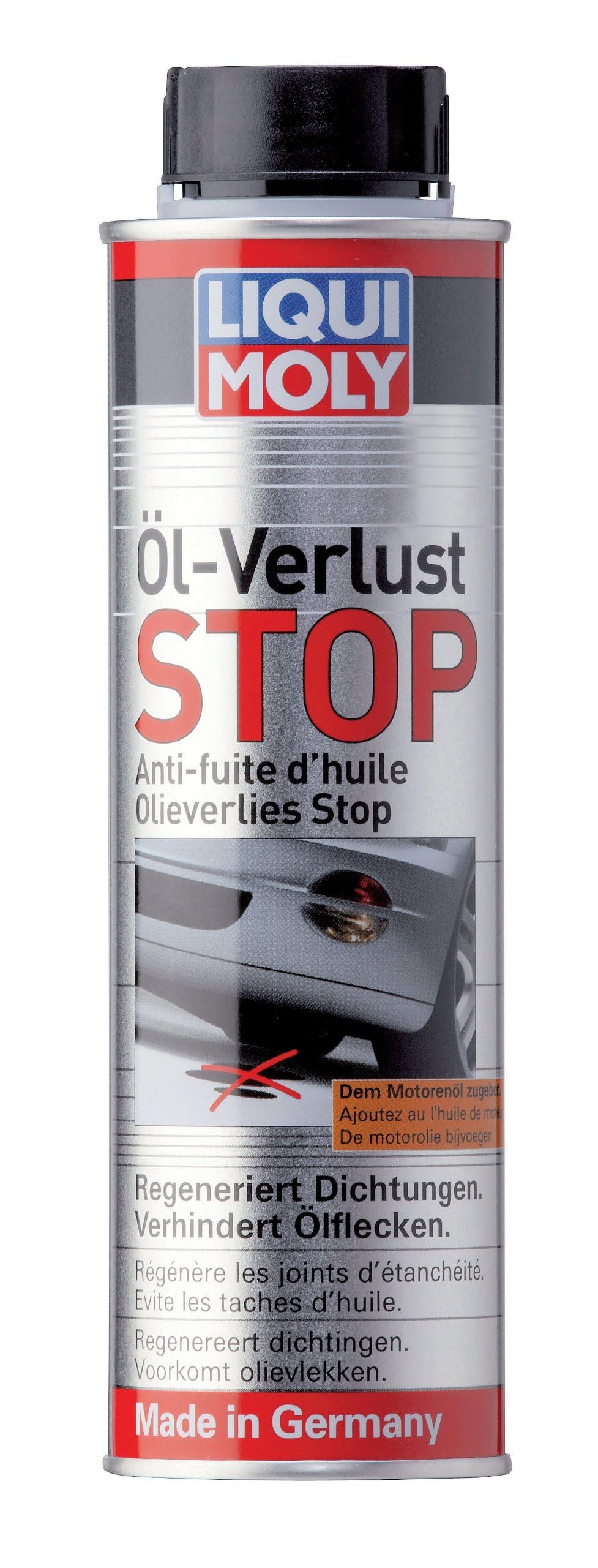
The German-engineered classic that regenerates seals and cuts oil consumption.
This 300 ml formula regenerates rubber and plastic engine seals, including shaft seals and valve stem seals, which is what makes it a favorite for oil-burning engines. It also counteracts oil dilution and reduces engine noise and oil consumption through piston rings and valve guides. The flash point is 76 °C, meaning it stays stable in normal engine operating temps.
The most dramatic story is a mechanic’s quote of for a substantial oil leak — this 300 ml bottle eliminated it entirely, a result owners describe as “zero oil leak” and a “charm.” Another owner with a 2013 Volvo XC60 had oil loss from piston rings or O-rings, and this took care of it.
The honest note is that effectiveness is mixed. Some owners say it worked incredibly for a couple of months on a BMW E66 but wasn’t permanent. If you have a small leak, this is absolutely worth a try; for a big, gushing leak, no additive will be enough.
Quality first: This is a well-built, respected formula recommended by mechanics for low oil consumption. The caveat is timing — it may be a months-long fix, not a forever fix, depending on your engine.
Choose this for: European cars and anyone dealing with valve stem seal oil burning.
Keep expectations real if: your leak is severe — this shines on small to moderate drips.
7. Permatex 30302 Engine Oil – Stop Leak, 12 fl oz

A wallet-friendly 12 oz bottle that works best on small to moderate engine leaks.
Permatex positions this as the cost-effective alternative for fixing leaks without dismantling the engine. It is suitable for all gasoline and diesel four-stroke engines and provides a long-lasting seal that reduces blow-by and revitalizes rubber and neoprene seals and O-rings. At 0.33 kg, it is a solid mid-weight bottle — but it’s about one-third the weight of the Lucas gallon jug, which frames the value difference.
The standout owner story is a 2002 2.4L LD9 engine that ran smoother and quieter immediately after treatment — other people noticed the change. That is the kind of bonus result that makes this a pleasant surprise. However, note that a few shoppers say little difference on leaks that were recent gasket replacements.
“Effectiveness” is the most-discussed aspect here, and opinions split: some say it worked, a few say it didn’t do the job on their specific engine. The consensus is that this is a “try it for small leaks” product, not a guaranteed fix for major ones.
Decent value play: The price is friendly and the quality is praised, but it is the least proven of the bunch. Best for a first attempt on a minor drip before you escalate to a pricier fix.
Reach for this if: you want a cheap, no-fuss first shot at a small to moderate leak.
Move up if: you have a known rear main seal or a big leak — you want a product with a stronger track record.
8. Liqui Moly Gear-Oil Leak Stop | 50 ml | Oil additive | SKU: 1042

The tiny 50 ml bottle built specifically for gearboxes, not engines.
This is a different animal — it is for your transmission and gearbox, not your crankcase. It reduces oil loss via leaky seals, prevents oil spots, and protects against deficient lubrication and transmission damage. It also prevents transmission oil leaking onto your clutch, which is a common and expensive failure. Its tiny 50 ml size (vs the 300 ml engine products) is intentional; it is a use-it-once treatment.
Buyers report it stopped a slow oil drip in a daily driver and that it’s “not thick like other stop leaks,” meaning it flows easily into the gear oil you already have. One owner fixed a 5-year power steering issue in an ’07 Honda Ridgeline, restoring near-new steering after 75-100 miles of driving.
The honesty note: it excels at small leaks and slow drips. For a major gushing seal, you need a rebuild. It is also a one-shot deal per the reviews — you use it once and it does its job, so don’t expect a bottle to last multiple services.
Right tool for the right job: If your leak is from a manual gearbox or transfer case, this is the correct product where an engine sealer would be wrong. It’s a precision fix, not a catch-all.
Grab this if: your transmission, differential, or power steering is the source of the drip.
Do not use if: the leak is from the engine block — you need an engine-specific formula.
9. Bar’s Leaks Rear Main Seal Repair (Pack of 6)

A dedicated rear main seal formula that turns a sieve into a few drops.
The rear main seal is the most labor-intensive leak to fix because the transmission has to come out — easily a multi-thousand-dollar job. This formula is specifically designed to seal it. It also seals the timing cover, cam seals, O-rings, and other gaskets, and it works with ALL vehicle types including gasoline, diesel, and turbocharged engines. The seal polymer is compatible with all petroleum-based engine oils, including high-mileage and synthetic.
One bottle treats 4 to 6 quarts of oil. Owners mention going “from leaking like a sieve to just a couple of drips,” with the effect lasting several months and across two oil changes. Others say it’s safe to run over 2 to 3 years, making it an incredibly economical alternative to an engine-out repair.
Owners praise its quality and solid value for money. The realistic view: it swells the seal enough to substantially slow or stop the leak, and for many it is a complete save. A few owners note it “didn’t” fully stop a badly worn seal, but even then, it was “not as bad.”
Why it’s the fix
- Purpose-built for the hardest-to-reach seal
- Lasts for months, often across multiple oil changes
- Works on gas, diesel, and turbo engines
The realistic limit
- A severely worn seal may only slow, not stop
- Physical crankshaft damage is beyond any additive
This is the pick if: you’ve confirmed a rear main seal leak and want to avoid an engine-out shop bill.
Think twice if: your “leak” is actually a faulty oil sensor plug — that needs a part, not a sealer.
Understanding the Specs
Seal Rejuvenation vs. Blocking
The key difference between a sealer that works and one that fails is the mechanism. True seal restorers, like ATP’s AT-205 and the Liqui Moly formulas, use chemistry to soften and swell dried rubber seals so they conform again. Cheaper products just clog the leak with thick sludge, which can wash out or, worse, block oil passages. Look for the words “rejuvenates,” “regenerates,” or “restores elasticity” — that’s the ingredient working for you, not against you.
Bottle Size vs. Oil Capacity
Every bottle treats a specific oil capacity, and this is where buyers get burned. A tiny 50 ml gear-oil additive is a one-shot for a transmission, while an 8 oz engine bottle treats a 6-quart sump. If you drive a truck with a 10-quart capacity, you may need two bottles of the smaller product. Always check the treatment ratio on the label against your vehicle’s oil capacity before you buy, or you will run out mid-fix.
FAQ
Will a car oil leak sealer fix my rear main seal leak?
How long does a car oil leak sealer take to work?
Is it safe to use an oil leak sealer in a synthetic oil engine?
Can I use an engine oil leak sealer in my transmission or gearbox?
What is the difference between a seal rejuvenator and a stop leak?
How often should I add a car oil leak sealer?
Will an oil leak sealer fix a cracked oil pan or gasket?
Is it better to use a 1-gallon bottle or a small 8 oz bottle?
Can I use a car oil leak sealer for preventive maintenance?
What should I do if the sealer doesn’t stop my leak?
Final Thoughts: The Verdict
For the majority of shoppers, the strongest car oil leak sealer is the ATP AT-205 Re-Seal because it has the best track record for actually stopping leaks across engine, steering, and transmission systems — the crowd favorite with 4.7 stars. If you drive a high-mileage truck and want preventive care, grab the Liqui Moly Motor Oil Saver. And if you’ve confirmed a rear main seal leak, the Bar’s Leaks Rear Main Seal Repair is the one to reach for to avoid the shop bill. Start with the ATP for a general drip — the value of skipping a repair is the single best argument in this category.
How We Picked
We do not accept paid placement. Every pick is matched to a real buyer and a real use-case; we do not hands-on test units.
Sources & Methodology
Specifications: manufacturer listings and product documentation. Review insights: verified customer reviews, as of August 2026. Pricing: not shown on this page (it changes often); check the current price via the retailer link.
As an Amazon Associate, Gadgets Feed earns from qualifying purchases. This does not affect which products we feature.