
Brake dust isn’t just an eyesore—it’s a corrosive mix of iron particles, carbon fibers, and adhesive resins that can etch into your wheel’s clear coat within weeks. A dedicated cleaner dissolves these contaminants on contact, restoring your rims without the elbow grease that soap-and-water routines demand.
I’m Min — the co-founder and writer behind Gadgets Feed. I’ve spent hundreds of hours cross-referencing pH levels, iron-reaction chemistries, and dwell-time performance to separate the formulas that genuinely protect wheel finishes from those that merely wet the surface.
This guide breaks down the sprays, waxes, and acid-based solutions that handle everything from light weekly maintenance to decade-old baked-on grime. Whether you prioritize safety for expensive alloy wheels or sheer dissolving power, you’ll find the right match in this analysis of the best car rim cleaner.
How To Choose The Best Car Rim Cleaner
Selecting a rim cleaner isn’t just about buying the strongest chemical on the shelf. The wrong pH level can strip your wheel’s protective coating, while a weak formula will leave you scrubbing for twenty minutes per wheel. Focus on three variables: your wheel’s finish type, the cleaning chemistry, and the product’s physical behavior during application.
Wheel Finish Compatibility
Clear-coated alloys, chrome, powder-coated surfaces, and bare aluminum each react differently. Acid-based cleaners (typically pH 2-4) dissolve iron fast but can etch uncoated or anodized metal. pH-neutral formulas (pH 6-8) are safe across all finishes but require more agitation. If your wheels have any exposed metal, prioritize a pH-neutral or acid-free label to avoid dulling the surface over repeated use.
Iron-Reacting vs. General Degreasing Chemistry
The most effective rim cleaners use iron-reacting agents that turn purple or red when they bind with ferrous particles. This color change isn’t a gimmick—it visually confirms the chemical is actively dissolving brake dust rather than just lubricating it. Degreaser-based products lack this reaction and rely on surfactant power, which works on oily grime but is less effective on sintered brake dust deposits.
Viscosity and Dwell Time
Thicker, gel-like formulas cling to vertical wheel surfaces longer, allowing the active chemistry more contact time. Watery sprays run off immediately, reducing effectiveness on heavy buildup. Look for a product that holds its position for at least 30 seconds without dripping. Longer dwell times mean less scrubbing—ideally, you should only need to agitate stubborn caked-on areas with a soft brush.
Quick Comparison
On smaller screens, swipe sideways to see the full table.
| Model | Category | Best For | Key Spec | Amazon |
|---|---|---|---|---|
| SONAX Beast Wheel Cleaner | Color-Changing Spray | Heavy brake dust removal | Color-change indicator | Amazon |
| KOCHCHEMIE Magic Wheel Cleaner | Viscous Gel | Long dwell-time cleaning | High-viscosity gel (500 ml) | Amazon |
| MAD Acid Heavy Duty Wheel Cleaner | Acid Spray | Caked-on chrome and alloy | Acid-based formula | Amazon |
| Griot’s Garage Wheel Cleaner | pH-Balanced Spray | Weekly maintenance for all finishes | pH-balanced (1 gallon) | Amazon |
| Chemical Guys Wheel Guard Wax | Protective Wax | Post-clean protection layer | Synthetic acrylic wax (8 oz) | Amazon |
| 3D Grand Blast Engine Degreaser | All-Purpose Degreaser | Wheel wells and heavy grease | Biodegradable (1 gallon) | Amazon |
| Clenzee Premium Microfiber Wheel Brush | Application Brush | Reaching barrel interiors | 15-inch handle, microfiber head | Amazon |
In‑Depth Reviews
1. SONAX Beast Wheel Cleaner

The SONAX Beast sits at the intersection of chemical aggression and finish safety. Its acid-free, pH-balanced formula sprays on clear, then turns deep red or purple on contact with iron particles—giving you real-time visual feedback that the cleaning reaction is active. Users report that even heavily caked winter brake dust melts off with minimal agitation, and the 1-liter bottle covers roughly four full wheel sets before needing a refill.
The chemistry relies on ferrous-ion chelation rather than acid etching, which means it won’t dull clear coats or anodized surfaces over repeated use. Reviewers consistently note that a single dwell cycle handles most of the work, with only stubborn deposits requiring a light brush pass. The product is ready-to-use with no dilution needed, so there’s no guesswork in achieving the correct concentration.
Some users note the strong chemical odor typical of iron-removing formulas, and the bottle’s relatively small size for its price point means it’s best reserved for deep cleans rather than every wash. Still, for anyone who wants to see the dirt dissolve in real time, this is the benchmark.
Why it’s great
- Color-changing action confirms active iron removal
- Acid-free formula is safe for clear-coated and painted wheels
- Minimal scrubbing required for heavy buildup
Good to know
- Strong chemical smell; use gloves and a mask
- Priced at a premium per ounce compared to pH-neutral alternatives
2. KOCHCHEMIE Magic Wheel Cleaner

KOCHCHEMIE’s Magic Wheel Cleaner differentiates itself through viscosity. The thick, gel-like formulation clings to vertical barrel walls and spoke faces without running off, giving the active chemistry up to several minutes of dwell time. This is especially valuable on heavily soiled rims where shorter-contact sprays would require multiple applications. The product turns red on iron contact, similar to SONAX, but its physical clinginess is the real differentiator.
The acid-free composition makes it safe for painted alloy, chromed, and steel rims, and users confirm it restores black factory finishes to a deep gloss after a single treatment. The scent is described as industrial-strength—reviewers consistently mention a rotten-egg odor, which is characteristic of effective iron removers. A 500-milliliter bottle is highly concentrated; some users dilute it 2:1 with water for routine maintenance without losing performance.
Because the gel stays put, you can treat all four wheels before rinsing without worrying about the product drying out. The small bottle size is a downside for volume-heavy users, and the price per ounce is among the highest in this list. But for those who value adhesion chemistry over spray-and-done formulas, this is a precision tool.
Why it’s great
- Gel consistency stays on vertical surfaces for long dwell times
- Deepens gloss on painted and black rims
- Can be diluted for cost-effective routine use
Good to know
- Strong, unpleasant iron-remover odor
- Small bottle size yields limited applications at full strength
3. MAD Acid Heavy Duty Wheel Cleaner

When nothing else cuts through years of neglect, MAD Acid brings the full chemical arsenal. This acid-based spray targets heavy brake dust, rust deposits, and hard water spots on chrome, clear-coated, and painted surfaces. Users report that a 15-to-20-second dwell followed by a hose rinse removes deposits that required previous scrubbing with abrasive pads. One review noted that 10 years of caked brake dust on chrome wheels dissolved in under a minute.
The trade-off is safety protocol. Acid-based chemistry demands gloves, a mask, and long sleeves—multiple reviewers emphasize the need for skin and respiratory protection. The formula is aggressive enough that testing on an inconspicuous area is recommended for anodized or uncoated wheels. A single bottle (roughly 32 oz) treated four wheels with about a quarter remaining, making it relatively economical for its dissolving power.
Shipping and tracking inconsistencies are the most common complaints, but the product itself outperforms retail-grade wheel cleaners across all customer reports. This is not a weekly maintenance spray—it’s a heavy artillery piece for restoring neglected rims to their original state.
Why it’s great
- Removes extreme brake dust and rust without scrubbing
- Effective on chrome, clear-coated, and painted wheels
- Economical per wheel compared to gel-based alternatives
Good to know
- Acid formula requires full PPE—gloves, mask, long sleeves
- Not recommended for anodized or uncoated finishes
4. Griot’s Garage Wheel Cleaner
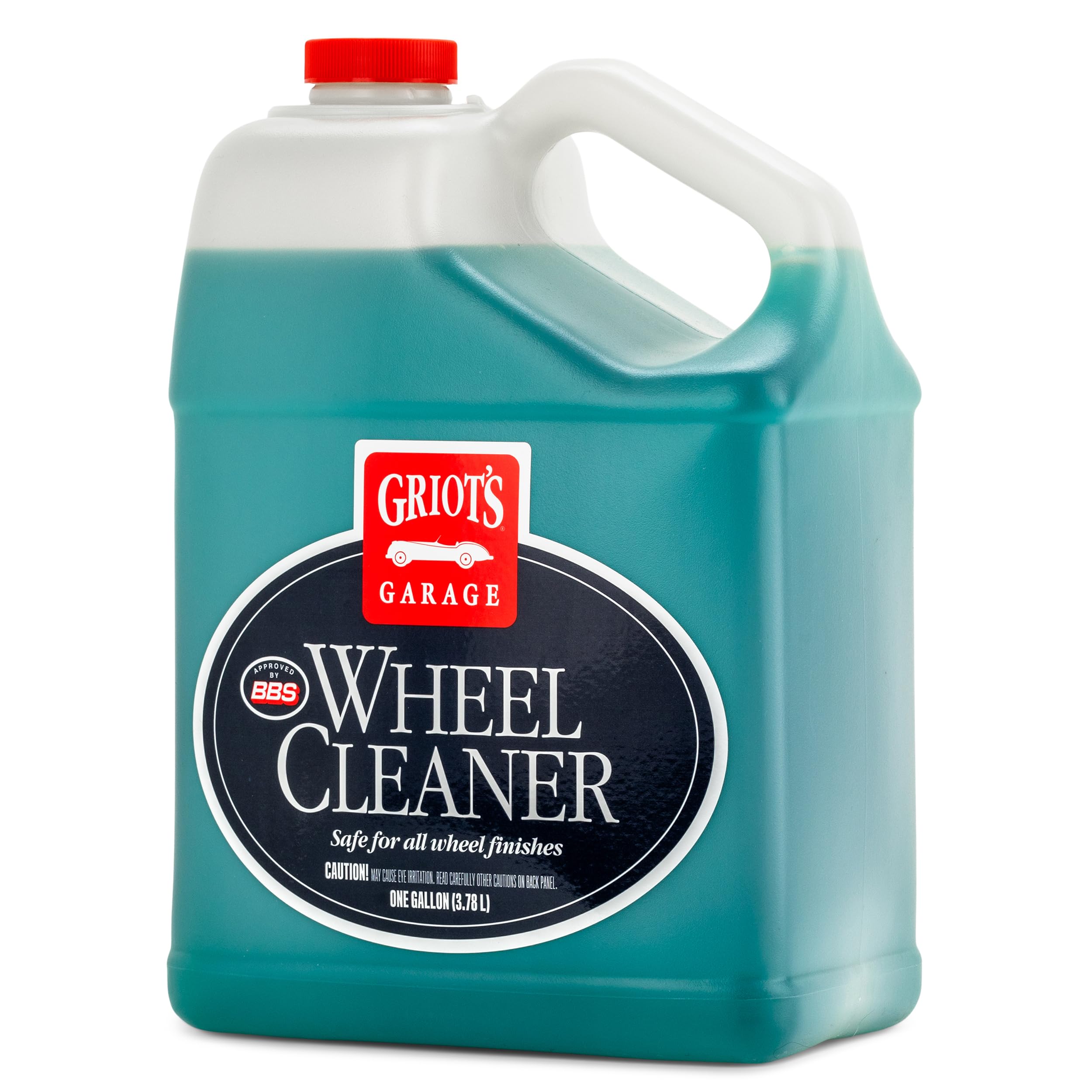
Griot’s Garage takes the opposite approach from MAD Acid: a pH-balanced formula that is chemically safe on every wheel finish—chrome, polished, powder-coated, aluminum, and steel. The gallon jug delivers exceptional value for regular maintenance, and its lack of iron-removing agents means it won’t strip ceramic coatings or protective wax layers. Users with Aston Martins and other high-end vehicles specifically trust this brand to avoid pitting or etching.
The trade-off is that this cleaner requires agitation. It is not a spray-on, rinse-off solution; customers consistently note that a sponge or brush is necessary to lift baked-on brake dust. Reviewers describe it as an effective weekly maintenance product that keeps wheels clean without degrading protective layers. The spray formula also rinses cleaner than many competitors—one user noted that the sponge came completely white after rinsing, unlike other brands that stained.
For those who ceramic-coat their wheels or rotate between multiple vehicles with different finish types, the universal safety profile of Griot’s makes it a reliable base-layer cleaner. It lacks the dramatic color-change feedback of iron-reacting brands, but it never surprises you with chemical damage.
Why it’s great
- pH-balanced and safe for all wheel finishes
- Large gallon size offers best cost per application
- Rinses clean without staining brushes or sponges
Good to know
- Requires agitation—not a no-scrub formula
- No iron-reacting color change for visual feedback
5. Chemical Guys Wheel Guard and Rim Wax

Wheel Guard is not a cleaner—it’s a protective sealant applied after a thorough wash. The synthetic acrylic formula bonds into the pores of painted and polished metal surfaces, creating a slick barrier that prevents brake dust and grime from adhering. Users report that a small amount covers an entire wheel, and the resulting gloss on black and chrome rims is noticeably deeper and wetter than standard car wax.
The protection layer typically lasts 4 to 6 weeks, significantly reducing the effort required during subsequent washes. Dirt slides off with less friction, and brake dust rinses away more easily. Several reviewers mention that it leaves a smooth surface comparable to a ceramic coating at a fraction of the cost. The application process is straightforward: clean the wheel thoroughly, apply the wax in a thin layer, let it haze, and buff off.
The primary downside is that applying it is labor-intensive—each wheel requires careful buffing to avoid residue streaks. It’s also a separate step in your routine, not a cleaner itself. But for anyone looking to stretch the interval between deep cleans and maintain a high-gloss finish, this is a worthwhile companion to any of the cleaners above.
Why it’s great
- Creates a slick barrier that repels brake dust for weeks
- Deepens gloss on black and chrome wheel finishes
- Small amount covers a full wheel set
Good to know
- Requires thorough cleaning and buffing for proper application
- Not a cleaner—must be used after washing
6. 3D Grand Blast Engine Degreaser

Grand Blast is technically an engine degreaser, but its formula is equally effective on wheel wells, exhaust tips, and heavily soiled rims where grease and oil are the primary contaminants rather than pure brake dust. The biodegradable composition breaks down caked-on grime instantly on contact and rinses off without residue, making it suitable for users who want a single product for multiple under-vehicle surfaces.
At 1 gallon, the value is substantial. Users report that it outperforms most “purple” and “green” degreaser brands on the market, with one reviewer calling it the best degreaser they’ve ever used across all categories. It’s safe on metal, plastic, paint, and rubber, so you can spray it into wheel barrels and rinse without worrying about damaging suspension components or brake lines.
The formula is UV-sensitive—customers note that it loses potency if the bottle is left in direct sunlight for days, so storage in a cool, dark place is essential. It also lacks the iron-reacting color change that dedicated wheel cleaners offer, so you won’t get visual confirmation of brake dust dissolution. For grease-heavy wheel wells and caked-on road film, however, it’s a bulk-purchase powerhouse.
Why it’s great
- Excellent on heavy grease and oil beyond just brake dust
- Gallon size provides dozens of applications
- Safe on metal, plastic, paint, and rubber surfaces
Good to know
- Not a dedicated iron-removing wheel cleaner
- Loses potency if stored in sunlight
7. Clenzee Premium Microfiber Wheel Brush

Even the most potent chemical cleaner benefits from physical agitation, and the Clenzee brush provides a safe, non-abrasive way to reach deep into wheel barrels without scratching. The 15-inch handle offers enough reach to access the inner barrel of 20-inch wheels, and the microfiber wool head is gentle enough for clear-coated and painted surfaces. The plastic core prevents metal-on-metal contact that could chip powder coatings.
Users note that the brush excels on larger wheels where fingers and standard sponges can’t reach between spokes or behind brake calipers. The microfiber material rinses clean easily and dries quickly, resisting the odor buildup common with foam brushes. For smaller wheels, the brush head may feel slightly oversized and require more elbow effort to maneuver into tight caliper gaps, but for trucks and SUVs with generous barrel space, it’s ideal.
This is a complementary tool rather than a standalone solution—pair it with SONAX or KOCHCHEMIE for maximum effect. The price point makes it an affordable upgrade to any cleaning kit, and its multi-surface compatibility means it can double for grills, engine bays, and exhaust tips.
Why it’s great
- Microfiber head prevents scratching on clear-coated wheels
- 15-inch handle reaches deep into wheel barrels
- Rinses clean and dries quickly without odor
Good to know
- Tight fit on smaller wheels with narrow caliper gaps
- Requires some elbow effort for thorough cleaning
FAQ
Can I use an acid-based wheel cleaner on chrome rims?
How often should I apply a protective rim wax like Chemical Guys Wheel Guard?
Final Thoughts: The Verdict
For most users, the best car rim cleaner winner is the SONAX Beast Wheel Cleaner because it combines acid-free safety with iron-reacting color-change chemistry that visibly confirms cleaning action. If you need a gel that clings to vertical surfaces for extended dwell time, grab the KOCHCHEMIE Magic Wheel Cleaner. And for heavily neglected rims that require brute chemical force, nothing beats the MAD Acid Heavy Duty Wheel Cleaner.