
Our readers keep the lights on and my morning glass full of iced black tea. As an Amazon Associate, I earn from qualifying purchases.
Specs are compiled from manufacturer listings and verified buyer reviews and can change over time — please confirm the key details on the product page before buying.
Your sub only sounds right if the head unit feeds it a dedicated low-frequency signal. That takes a real subwoofer preamp output — a dedicated RCA jack on the back that feeds low frequencies straight to your bass amp. Without a sub out, you tap speaker wires and feed your bass amp a full-range signal it was never designed for. Every stereo below has a dedicated sub out, so all five can genuinely drive bass. The differences come down to sub output count, DSP and EQ tuning depth, and screen size.
I’m Min — the founder and writer behind Gadgets Feed. This guide is built by comparing the manufacturers’ published specifications and the patterns across verified customer reviews, so you get each pick’s real strengths and trade-offs instead of marketing spin.
These five units split into three clear camps: two budget-friendly Kissound models, a mid-range PLZ with dual sub outputs, and two premium picks that add dash cams or a big 10.1-inch screen. Here are the five sub-ready head units worth shortlisting.
Our Picks at a Glance

How To Choose The Best Car Stereo For Subwoofers
The single most important thing to check is the subwoofer output — a dedicated RCA jack labeled “sub out” that feeds your bass amplifier a low-frequency signal on its own channel. Without a sub out, your bass amp shares a full-range door-speaker signal, and the low end turns muddy. Every unit on this list has one; the real differences show up in how many sub outputs you get and how much control you have over the sound.
Preamp outputs and why the count matters
A preamp output is the low-voltage RCA signal a head unit sends to an external amplifier, before any power is added. The more preamp channels a stereo has, the more amps you can feed cleanly — one for your door speakers and separate ones for your subs. A 4.2-channel output like the ones on the PLZ and SJOYBRING units means four speaker channels plus dedicated sub channels, which is what you want if you are running a separate bass amp.
DSP and the 10-band EQ
A DSP is a digital signal processor — a chip inside the stereo that shapes the sound before it reaches your amp. Paired with a 10-band EQ (ten separate sliders for different frequency ranges), it lets you pull down the door speakers and push the sub frequencies up without distortion. If you want tight, controlled bass instead of a boomy one-note thump, prioritize DSP and a 10-band EQ.
Touchscreen resolution and glare
Most units here run a 7-inch screen at 1024×600, while the QLED and upgraded options push to 1280×720. QLED is a panel type that stays readable in bright sun better than a standard LCD. Both resolutions handle maps and a backup camera, but the 1280×720 QLED panels stay sharper in daylight glare.
Double-DIN fitment and the wiring you will need
A double-DIN stereo is a standard dash size roughly two single slots tall, and most modern cars accept it — but not all. Measure your dash opening first, and expect some vehicles to need a dash kit, a wiring harness adapter, and an antenna adapter sold separately. These are normal install costs, not defects, which is why older-car buyers often budget for a pro install.
Quick Comparison
| Model | Best For | Sub Outputs | Preamp / Power | Screen | Amazon |
|---|---|---|---|---|---|
| Kissound Double Din 7″ HD★ Best Overall | Best overall first upgrade | 1 subwoofer RCA out | 4.1-channel, 240W max | 7″ IPS, 1024×600 | Amazon |
| Kissound 7″ Double Din (KS9701)Budget Value | Budget value with USB-C/AUX/TF | 1 subwoofer RCA out | 4-channel, 240W max | 7″ IPS, 1024×600 | Amazon |
| PLZ QLED 7″ (MP-926W) | Bass tuning on a mid-range budget | 2 subwoofer outputs | 4-channel RCA, 240W max | 7″ QLED, 1280×720 | Amazon |
| SJOYBRING QLED with Dash Cam | Premium look with built-in dash cam | 2 separate subwoofer outs | 4.2-channel, 240W max | 7″ QLED, 1280×720 | Amazon |
| PLZ 10.1″ Single/Double DIN | Big-screen showpiece with dual subs | 2 subwoofer outputs | 4.2-channel, 60W*4 (240W) | 10.1″ IPS touchscreen | Amazon |
In‑Depth Reviews
1. Kissound Double Din 7″ HD Touchscreen with Subwoofer Output
Our pick — 4.0+★ from 350+ verified ratings; the strongest balance of quality and price.
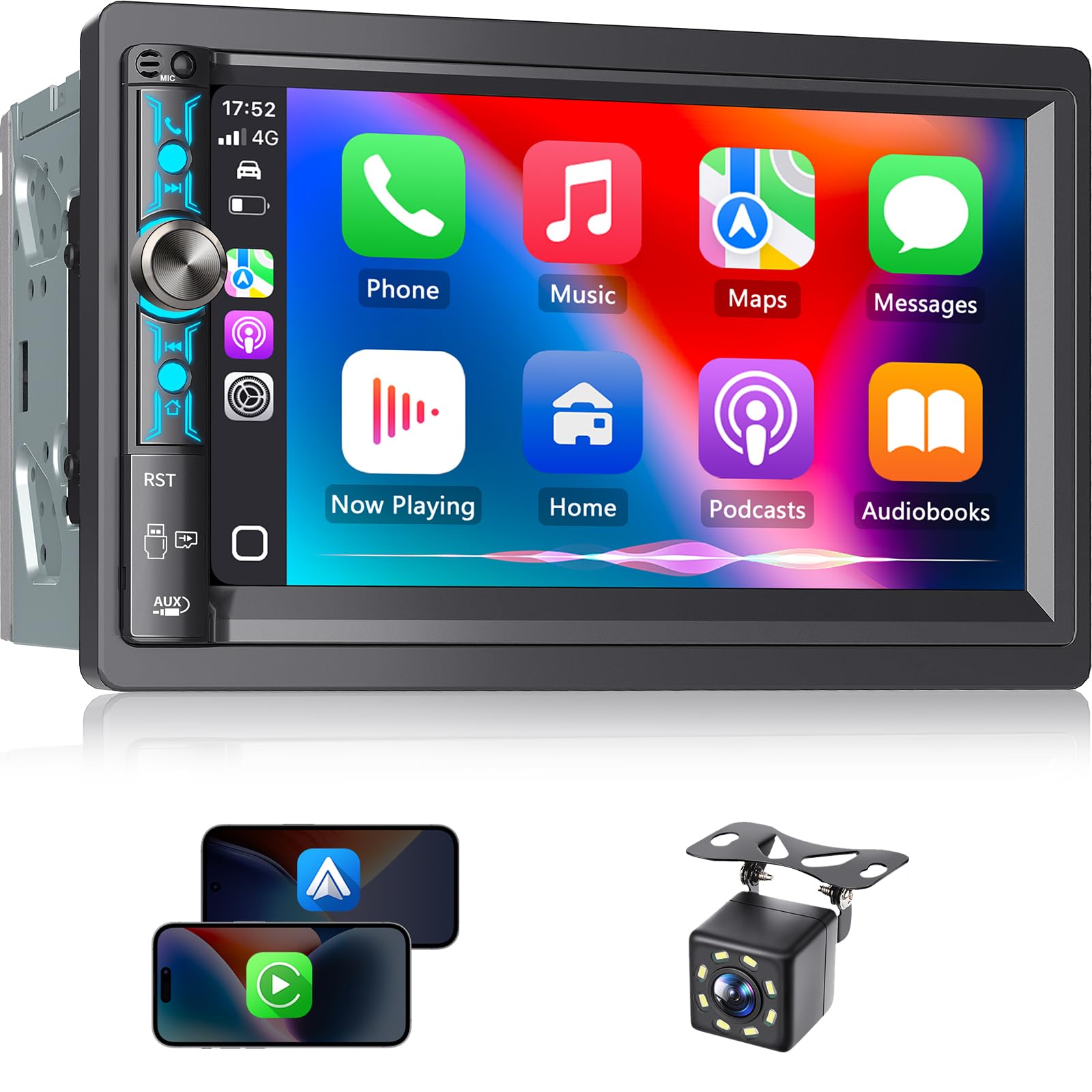
A 240W, 4.1-channel head unit that feeds your sub cleanly for entry-level money.
Your bass starts with one number: a single subwoofer RCA output, wired to a 4.1-channel amplifier rated at 240W max. That “max” figure is the stereo’s peak power rating (its short-burst ceiling), not a continuous output, so treat it as a ceiling rather than a promise. The sub output gives you a dedicated low-frequency signal path — the whole point of buying a stereo for subwoofers. Your bass amp gets a clean feed instead of a full-range signal bled off a door speaker.
Where this Kissound earns its spot is the sound-shaping toolkit. There is a built-in DSP chip that processes the audio digitally before it leaves the head unit, plus a 10-band EQ with ten separate frequency sliders. That combination lets you trim the door speakers and lift the sub frequencies to taste. The 7-inch IPS screen runs at 1024×600 — IPS is a panel type with wide viewing angles, so the map stays readable from the passenger seat. Add a large rear heat sink that the maker says prevents overheating during long playback, and this is a head unit built to keep working through a road trip.
The connectivity side is where most of the daily satisfaction lives. Wireless and wired CarPlay and Android Auto both work, and the phone pairs automatically when the car starts, so you are not plugging in every trip. There is a built-in mic plus an external mic port, and the maker bundles an extra microphone, which is useful because a mic in the dash picks up road noise. Mirror Link works wired for both Android and iOS. An 8-LED rear camera is included, with a 19.7ft cable — check that length before you buy, because a longer run needs an extension cord. The wired interface for steering wheel controls is sold separately, and the maker recommends the PAC SWI-CP2.
The recurring gripe in the review pages is volume control — some owners find the level adjust fussy, and a smaller group wants more customizability. Neither is a bass problem, and at 4.0+ stars across 350+ ratings the vast majority are clearly happy. What the crowd keeps returning to is build quality, which gets far more attention than anything else, with wireless CarPlay close behind as the second most-praised trait.
What earns the top spot
- Dedicated subwoofer RCA output plus a 4.1-channel 240W-max amp path
- DSP and 10-band EQ for trimming door speakers and lifting bass
- Wireless CarPlay and Android Auto that auto-connect on startup
- Built-in and external mic support for clearer hands-free calls
Worth knowing first
- Volume control draws mixed feedback from owners
- Steering wheel interface module sold separately
- 19.7ft rear camera cable — longer runs need an extension
Go for this if: you want the deepest feature set for a first subwoofer build — sub out, DSP, and 10-band EQ in one unit.
Look elsewhere if: you need dual sub outputs, since this unit gives you a single subwoofer RCA.
2. Kissound 7″ Double Din with USB-C/AUX/TF and Subwoofer Out
The sub-ready twin of the top pick, with more input ports and a four-channel amp path.
Here is the straight head-to-head buyers will want: this KS9701 runs 4 channels of amplification, while the Best Overall KS9702 runs 4.1 channels. In plain terms, the higher pick gives you one more channel specifically aimed at the low end, so if a car stereo for subwoofers is the brief, the.1 matters. Both offer a single subwoofer RCA output, both carry a 240W max rating, and both use the same 7-inch 1024×600 IPS screen.
Where this model wins is inputs. You get USB-C, AUX, and TF card support alongside the standard USB, plus the same wireless and wired CarPlay and Android Auto setup with Siri and Google Assistant voice control. Boot-up is quick — owners describe the screen being ready almost as soon as they turn the key, and wireless CarPlay coming up shortly after startup rather than after a long wait. The sound gets its bass help from the sub output, and buyers report the subwoofer genuinely adds low-end weight once it is wired in.
As a value proposition it leans on three things buyers actually reward: the connectivity, the ease of installation, and the price-to-feature ratio. On installation, the general shape is the same as any double-DIN swap — existing dash opening, harness adapter, and antenna adapter in many cars. The one point of friction in the review pages is fitment, which reads as mixed; that is the classic double-DIN story, where a dash kit solves it on some vehicles and not others. Measure your opening before ordering and the uncertainty drops away.
If you already own an amp and just need a clean sub feed plus modern phone mirroring on a budget-friendly budget, this is the leaner choice. The trade is one amp channel versus the top pick, and USB-C in exchange — a fair swap for a lot of older cars being dragged into the smartphone era.
The honest read: a 4.1-channel top pick vs a 4-channel sibling is not a night-and-day gap. Both deliver a dedicated sub out. If you can live without the extra channel, this one’s port selection is genuinely nicer for daily use.
Pick this one when: USB-C and TF card access matter to you and you want sub-ready sound without overpaying.
Leave it on the shelf if: you are planning a serious dual-sub build — this gives you one sub RCA.
3. PLZ QLED Double Din with 2 Subwoofer Outputs
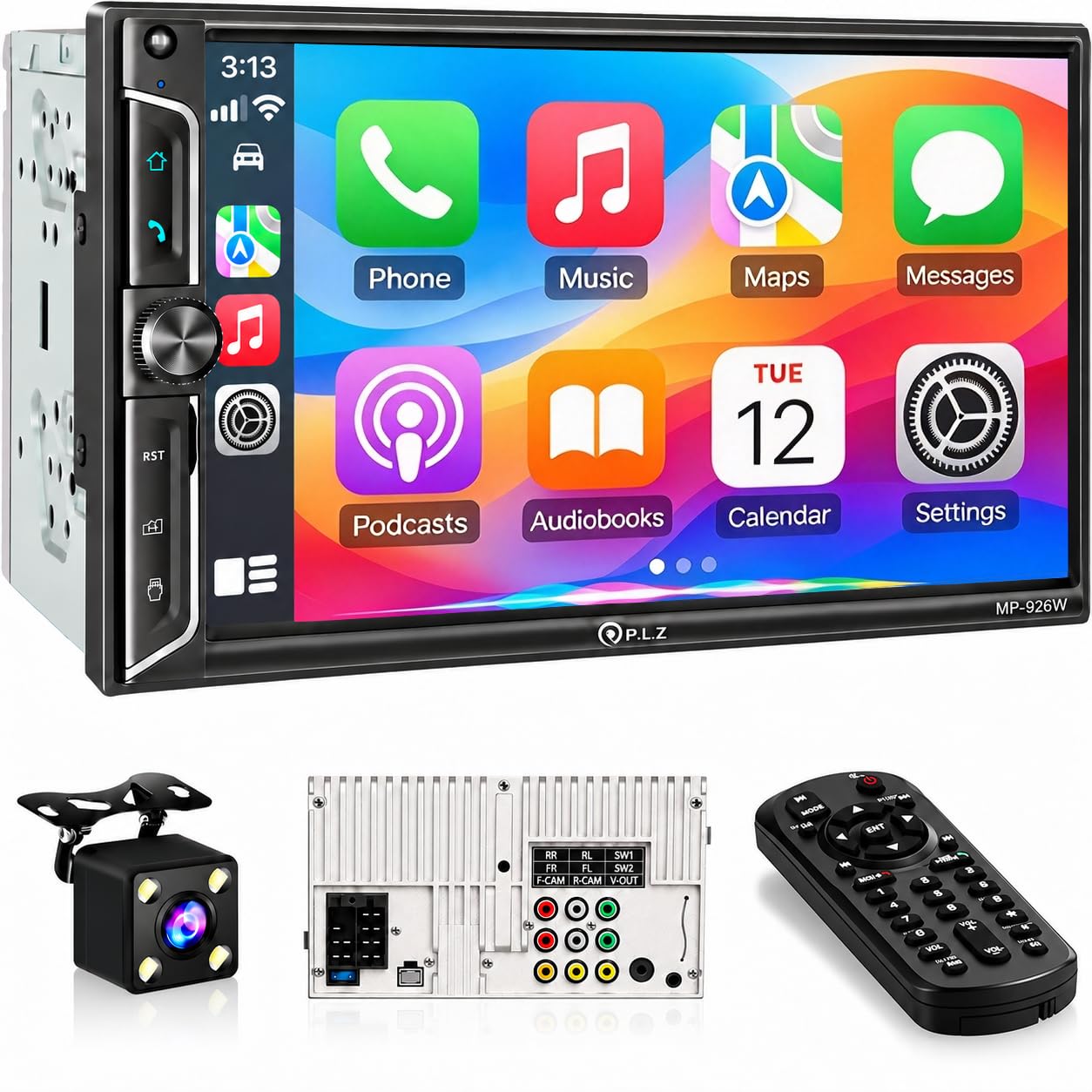
Two dedicated sub outputs and a QLED panel turn this mid-ranger into the bass tuner’s pick.
Two separate subwoofer outputs is the headline, and for anyone running a sub build this is a real step up from the single sub RCA on the Kissound models. Two outputs mean you can feed two amps or a stereo pair of subs, and the four-channel RCA preamp stage sits alongside them so your door speakers stay on their own clean lines. Add a built-in DSP and the same 10-band EQ, and this becomes the unit you buy when you want to dial bass in rather than just connect it.
The screen is the other visible upgrade: a 7-inch QLED panel at 1280×720, up from the 1024×600 on the budget picks. QLED panels hold their contrast better in direct sun, and the higher pixel count sharpens maps and video. Owners sum it up neatly — installation is straightforward and the display is crisp, with “excellent QLED quality” being how the review pages frame it. The maker’s own notes say some buyers had it up in about 15 minutes, though that figure depends entirely on your car’s wiring being ready to accept it.
Where this one asks you to be careful is fitment and extras. The listing is explicit that you must confirm your dashboard opening, mounting depth, wiring harness, and antenna connection before ordering — some cars need a dash kit and adapters on top. Bluetooth 5.3 is here for stable streaming, and wireless CarPlay and Android Auto both work. The recurring note in the review pages is connectivity, which reads as mixed; the usual fix is a clean install and a current phone firmware, but factor it into expectations. No Wi-Fi hotspot function, which the maker flags plainly.
For a sub build that is still growing — one amp today, a second sub next year — the dual sub outs make this the most future-proof of the mid-range group. The 1280×720 QLED screen just makes the whole dash feel newer.
Built for a bass builder
- Two dedicated subwoofer outputs for dual amps or a stereo sub pair
- 4-channel RCA preamp outputs keep door speakers separate
- 10-band EQ and DSP for real tuning control
- 1280×720 QLED panel that stays readable in daylight
The fine print
- Connectivity feedback is mixed — a clean install matters
- No Wi-Fi hotspot function
- Dash kit and adapters often sold separately
This is your unit if: you plan two subs or two amps and want the tuning control to make them behave.
Pass if: you are running a single sub and would rather save the mid-range spend for the amp itself.
4. SJOYBRING QLED 7″ with Dash Cam and 2 Subwoofer Outs

A dash cam, two sub outputs, and a QLED screen packed into one premium double-DIN unit.
The feature that sets this apart is the included dash cam, recording at 1280×720 with a 170-degree wide-angle lens. A 170-degree field of view is wide enough to catch both lanes at a junction, and loop recording automatically overwrites old footage so you are not managing cards by hand. Note the card is not included, and the maker recommends a Class 10 or above card, max 64GB, formatted to FAT32.
For bass, it carries a 4.2-channel audio output stage rated at 240W max, with two separate subwoofer outputs described by the maker as high-RMS-power sub outputs. That second sub out puts it level with the PLZ above and ahead of both Kissound units for anyone planning two subs. The screen is a 1280×720 QLED panel supporting 1920×1080 playback, and physical buttons including a rotating volume knob mean you can adjust without hunting the touchscreen mid-drive. Bluetooth runs on an independent module with its own antenna, which the maker says improves stability and call clarity.
Two things sell this to commuters who want it all in one box. First, the included HD night-vision rear camera runs a 170-degree ultra-wide lens with a fully waterproof design, so reversing in the rain is not a worry. Second, durability: reliability gets more owner attention than almost anything else here, and the recurring praise is a unit that works flawlessly with both front and rear cameras while looking far newer than the truck it sits in. Bluetooth connectivity draws mixed feedback, so expect to pair once and leave it paired.
This is the pick for someone who would otherwise buy a stereo, a dash cam, and a rear camera separately — bundling all three into one install saves dash space and wiring runs. The caveat is weight and dash depth: at 1.38 kg it is a heftier unit, so confirm mounting depth before you commit.
Why it stands out: very few double-DIN units ship with a front-facing dash cam built in. If you value recording your drive as much as you value bass, this one does both without a second gadget on the windshield.
Best match for: a driver who wants stereo, dash cam, and rear camera handled in a single purchase and install.
Think twice if: you only care about audio and would rather put the premium spend into a dedicated amplifier.
5. PLZ 10.1″ Single/Double DIN with 2 Subwoofers
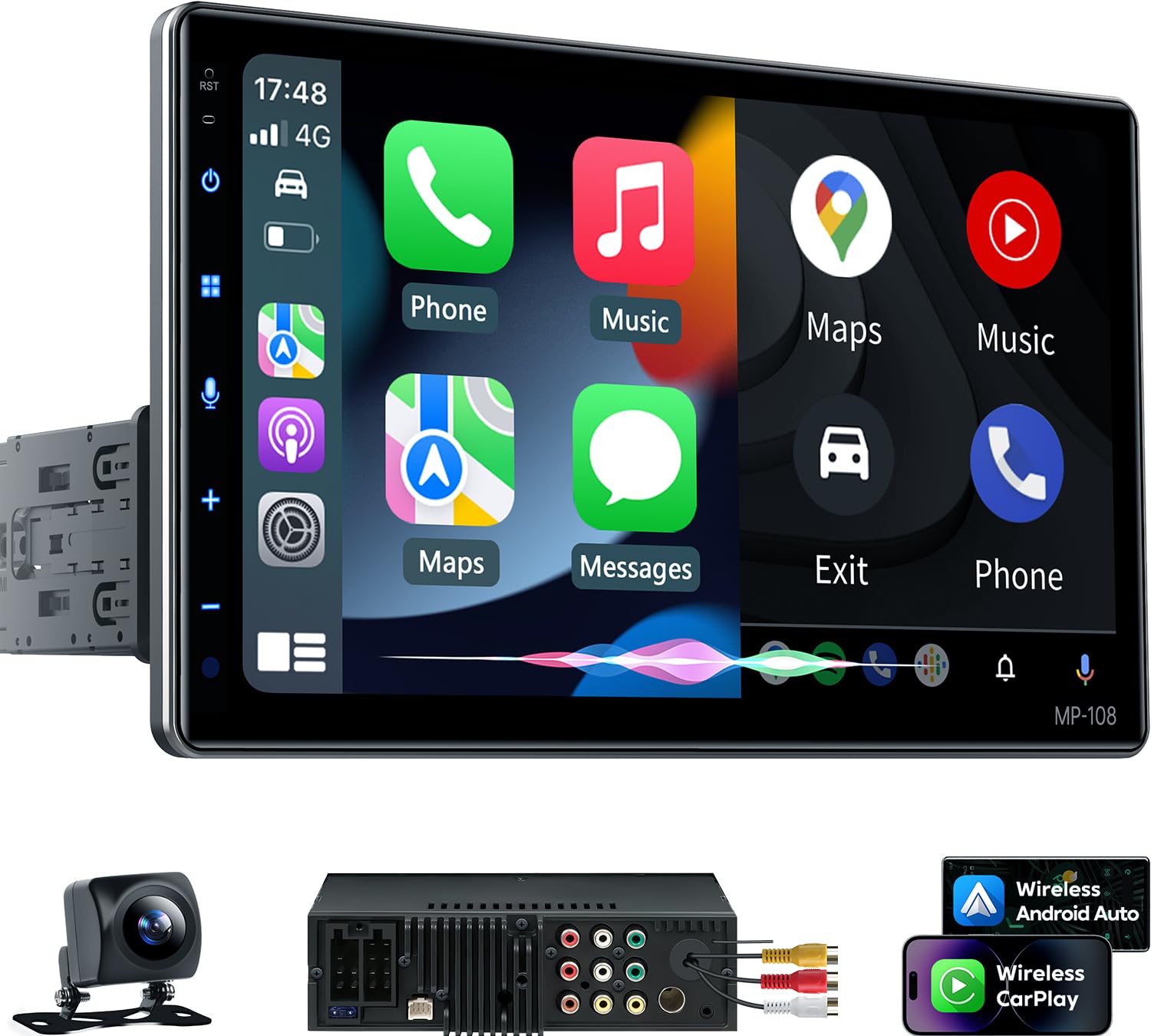
A floating 10.1-inch IPS screen with dual subwoofer outs for a dash that looks transformed.
Ten inches of screen does something no 7-inch unit can — it makes navigation and a backup camera feel like a modern car’s center console. The 10.1-inch IPS touchscreen supports multi-angle adjustment so you can tip it toward the driver, and MirrorLink works wired for iOS and Android. Compatible with most single-DIN and double-DIN openings, it is the most flexible of the five on fitment — a genuine option if your dash will not accept a standard double-DIN faceplate.
On the bass side this is a proper subwoofer head unit: two subwoofer outputs, a 4.2-channel preamp stage with a peak rating of 60W times 4 (240W total), and a built-in DSP with a 10-band EQ. Two sub outs means your bass amp (or amps) get dedicated low-frequency feeds, while the four additional channels cover your door speakers. Bluetooth runs on an independent 5.3 module with an extra antenna, which the maker says minimizes interference and electronic noise — the same design choice that keeps streaming stable in noisy environments.
Owners are drawn to two things: value and sound, followed by how the big display modernizes an older vehicle. The look-and-feel payoff is real — the screen and the price-to-feature spread are what the review pages reward most. Connectivity is the mixed note, with a handful calling out reliability concerns, so plan for a professional install if your car’s wiring is unfamiliar. A quicker boot and a crisp picture are the upsides owners consistently mention.
Weigh the bulk, though: this unit runs 2.73 kg, so the mounting needs a solid, secure fit. That extra size is the cost of the screen, and on a tight single-DIN space it is worth checking clearance before you buy. Get it mounted properly and the payoff is a dash that reads modern at a glance.
Screen and bass, together
- 10.1-inch IPS screen with multi-angle adjustment
- Two subwoofer outputs plus 4.2-channel preamp (240W peak)
- Bluetooth 5.3 with an independent module and extra antenna
- Fits most single-DIN and double-DIN openings
Before you commit
- At 2.73 kg, it needs a secure mount and clearance
- Connectivity draws mixed feedback — wiring and adapters matter
- Harness and antenna adapters may be separate purchases
The right call for: drivers who want maximum screen real estate, dual sub outs, and a modern-looking dash in one swap.
Not the one if: dash space is tight and the extra weight and size complicate the fit.
Understanding the Specs
Subwoofer Outputs
A subwoofer output is the RCA jack on the back of the stereo that sends a dedicated low-frequency signal to your bass amplifier. One output feeds one amp or one sub; two outputs let you run two amps or a stereo pair of subs without splitting a signal. Every unit on this list has at least one, and two models — the PLZ QLED and the SJOYBRING — offer two. If you are planning a two-sub build, prioritize the models with dual outs.
DSP and 10-Band EQ
A DSP (digital signal processor) shapes sound in the digital domain before it reaches the amp, and a 10-band EQ gives you ten frequency sliders to trim by ear. Together they let you pull down the door speakers while keeping sub frequencies strong. For bass-heavy listening, this is what separates a clean, punchy sub from a boomy one. If you plan to tune bass, look for both.
Preamp Channels and Power Ratings
A preamp output is the low-voltage RCA signal sent to an external amp, and the channel count tells you how many amp inputs the stereo can feed. A 4.1-channel layout means four speaker channels plus one sub channel; a 4.2-channel adds a second sub channel. The 240W figure is a peak max rating, not continuous power, so treat it as a ceiling for system planning rather than an RMS spec.
Screen Panel Types
IPS is a panel type with wide viewing angles; QLED adds a quantum-dot layer that holds contrast better in daylight. Resolution matters too: 1024×600 is standard, while 1280×720 (HD) is sharper for maps and video. A 10.1-inch screen at IPS spec is the largest on this list. None of this changes bass, but it changes how the unit feels every day.
FAQ
Do all these stereos have a subwoofer output?
Do I need a separate amplifier for my subwoofer?
What does a “subwoofer preamp output” actually do?
Will a double-DIN stereo fit my car?
Can I run one sub with a stereo that has two sub outputs?
What is the difference between a 4.1-channel and a 4.2-channel audio output?
Does a 240W rating mean it will power my sub directly?
Do I need to buy extra parts to install these stereos?
Is a bigger screen better for a subwoofer build?
What should I check on a stereo before wiring a subwoofer?
Final Thoughts: The Verdict
For most people building a subwoofer system, the car stereo for subwoofers to beat is the Kissound Double Din 7″ HD. It pairs a dedicated subwoofer output with a 4.1-channel amp path, a DSP (a chip that shapes your sound digitally), a 10-band EQ (ten sliders to tune the tone), and wireless CarPlay — the full toolkit for a first serious build. Planning two subs? Grab the PLZ QLED for its dual sub outputs and sharper 1280×720 panel (720 lines of vertical resolution, so text and maps look crisp). Want a built-in dash cam in the same install? That is the SJOYBRING. And for maximum screen presence with dual sub outs, reach for the PLZ 10.1″. Still weighing options? The top pick’s owner following around its build quality is the loudest signal on this list.
How We Picked
We do not accept paid placement. Every pick is matched to a real buyer and a real use-case; we do not hands-on test units.
Sources & Methodology
Specifications: manufacturer listings and product documentation. Review insights: verified customer reviews, as of November 2026. Pricing: not shown on this page (it changes often); check the current price via the retailer link.
As an Amazon Associate, Gadgets Feed earns from qualifying purchases. This does not affect which products we feature.