
Our readers keep the lights on and my morning glass full of iced black tea. As an Amazon Associate, I earn from qualifying purchases.
Specs are compiled from manufacturer listings and verified buyer reviews and can change over time — please confirm the key details on the product page before buying.
Choosing a window tint for heat reduction means balancing three things: how dark you can legally go, how much solar heat the film actually stops, and how easy it is to install. The right pick keeps your cabin cooler, blocks UV rays that fade your dashboard, and cuts glare—all without turning night driving into a guessing game. This guide uses the manufacturers’ heat-rejection specs and the real-world lessons from thousands of verified owner experiences to separate the films that perform from the ones that just look the part.
I’m Min — the founder and writer behind Gadgets Feed. This guide is built by comparing the manufacturers’ published specifications and the patterns across verified customer reviews, so you get each pick’s real strengths and trade-offs instead of marketing spin.
Before you buy, know that the film’s “VLT%” (how much visible light passes through) is regulated by state law, and its heat rejection is measured by figures like IRR or TSER. Finding the right car window tint for heat reduction means checking those two numbers against your local rules and your daily driving needs.
Our Picks at a Glance

How To Choose The Best Car Window Tint For Heat Reduction
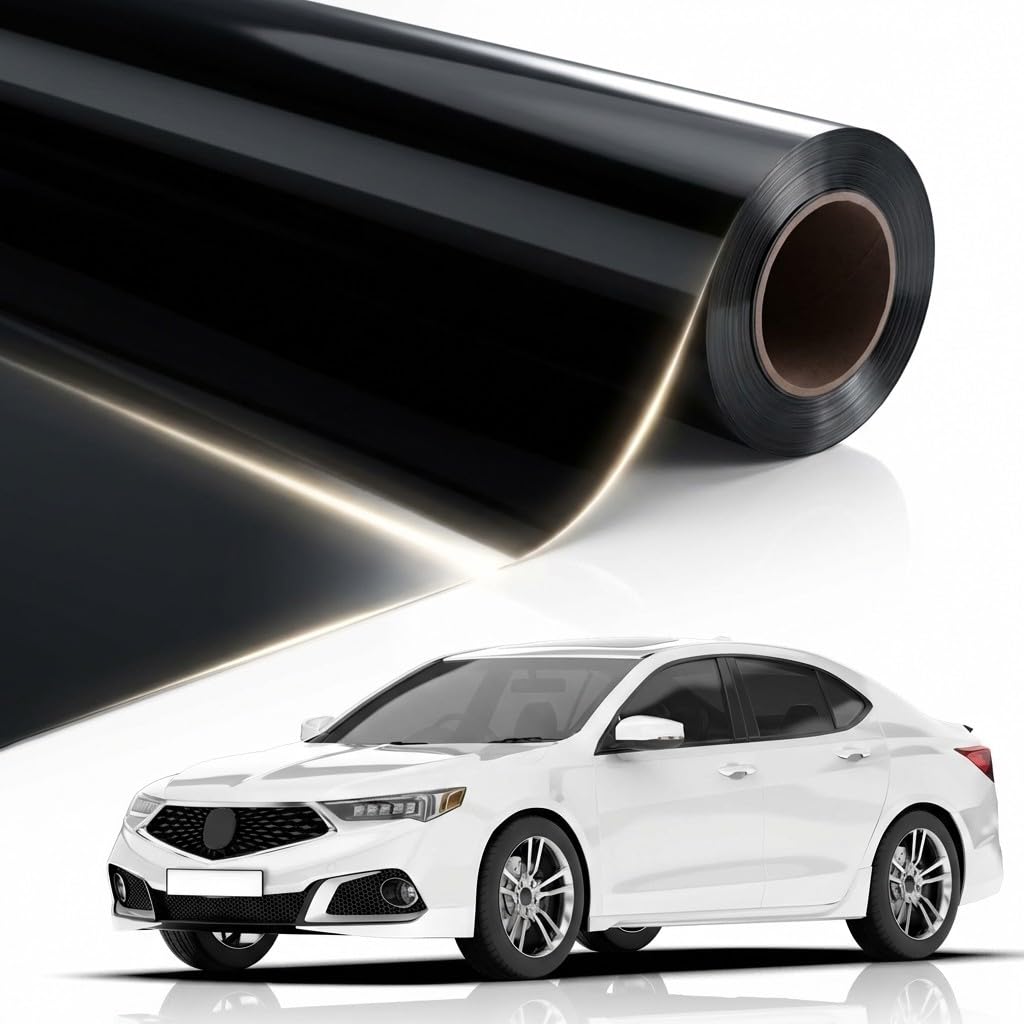
Picking the right film starts with understanding that not all dark tints block heat equally. A very dark dyed film might look private but can let in more solar heat than a lighter ceramic film, so you need to check the specific heat-rejection specs, not just the shade.
Check the VLT and Your State Law
The VLT percentage (the amount of visible light the film lets through) is the legal anchor. A 5% VLT film is “limo tint,” almost black from outside, while a 35% VLT is a medium smoke that still gives decent outward visibility. States set legal limits for front side windows, so verify your local VLT limit before installing, as darker films are often restricted to rear windows.
Prioritize IR and TSER Ratings
For heat, look for two numbers: IR rejection (infrared rays, the main source of solar heat) and TSER (the total solar energy the film rejects). An advanced film like nano ceramic can block up to 99% of IR rays without being extremely dark, which gives you heat protection and legal compliance at the same time.
Match Film Type to Your Skills
Dyed films are budget-friendly and easy to install but shrink poorly on curved glass. Carbon and ceramic films are thicker, handle heat-shrinking better, and last longer, but they are tougher to work with and need patience or a professional. If you are a first-timer, a thicker film is more forgiving, but a very thick one can crease easily if rushed.
Quick Comparison
| Model | Best For | Heat Rejection | UV Block | Roll Size | Amazon |
|---|---|---|---|---|---|
| United Universal (1Ply Dyed)★ Best Overall | Budget bulk coverage | Yes (spec not stated) | 99% | 20″ x 100ft | Amazon |
| BlackGlass IX (2-Ply)Easiest DIY | DIY-friendly medium smoke | Yes (spec not stated) | Yes | 20ft x 26in | Amazon |
| BDF S15 (Mirror Silver)Daytime Privacy | Daytime privacy & heat | Yes (spec not stated) | 99% | 24in x 14ft | Amazon |
| BDF S05 (Very Dark) | Max daytime privacy | Yes (spec not stated) | 99% | 36in x 12ft | Amazon |
| JNK Reflective (Green) | 80% heat reduction | 80% / 99% IR | 99% | 20″ x 10ft | Amazon |
| ASENDIWAY Chameleon | Style & signal-friendly | 50% / 99% IR | 99% | 29.52″ x 9.84ft | Amazon |
| RockRose Carbon (5%) | Pro-grade carbon value | 35% IR / 45% TSER | 99% | 24″ x 100ft | Amazon |
| MotoShield Pro Ceramic | Top-tier heat rejection | 99% IRR / 70% TSER | 99.9% | 36″ x 15ft | Amazon |
| United Nano Ceramic Pro | Max IR rejection | 95% IR / 50-60% TSER | 99% | 20″ x 100ft | Amazon |
In‑Depth Reviews
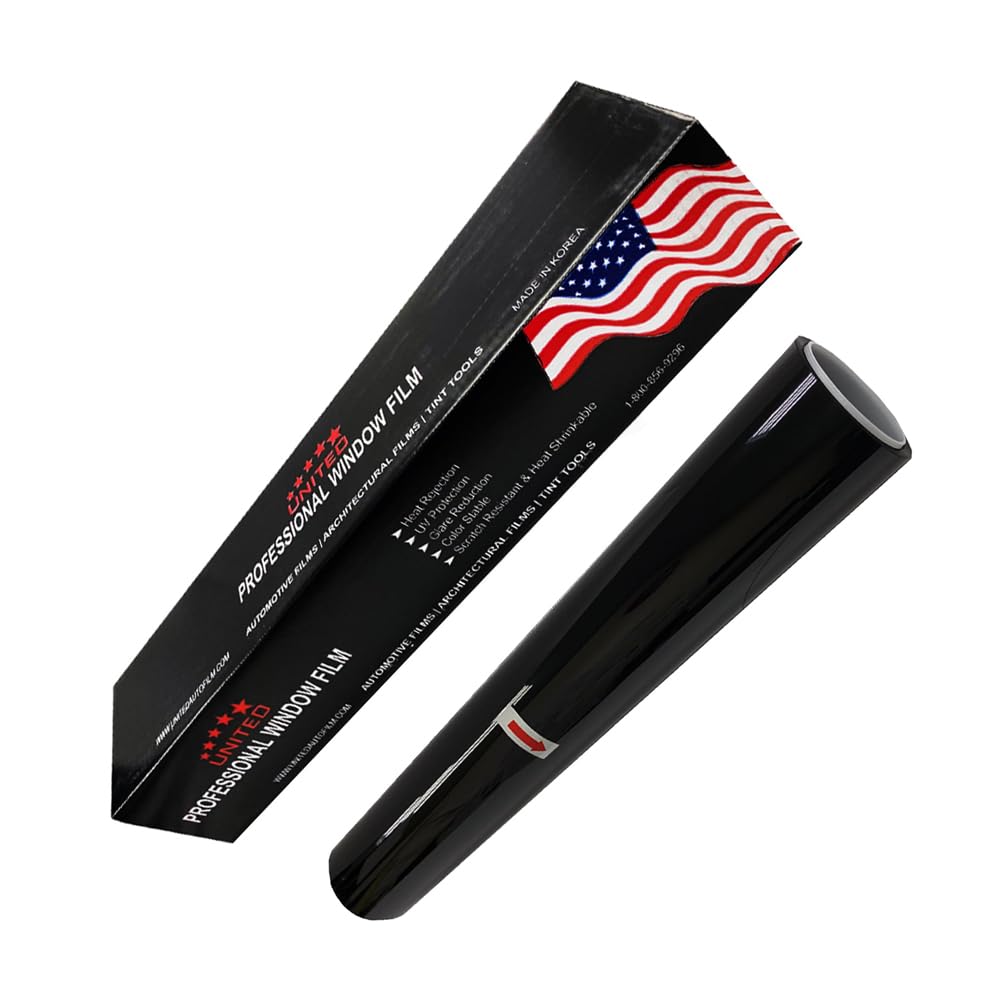
1. United Universal Black Window Tint Film
Our pick — over 4.5★ from 400+ verified ratings; the strongest balance of quality and price.
A 100-foot roll of deep-black privacy that can cover a whole fleet of vehicles on a budget.
This is the bulk bargain of the group, a single 20″ x 100ft roll of 5% VLT dyed film that gives you 167 square feet of material. That is enough to wrap a truck, an SUV, and still have leftovers for home windows, which is exactly what buyers report doing—one buyer covered six vehicles and had material left over. The film is a 1-ply dyed PET construction that blocks up to 99% of UV rays, so your dash and seats stay protected from sun fade.
The thickness here is a real plus for a first-time installer, as the film is thicker than expected and handles without tearing. A full-year owner reports the film has not faded after months of exposure. The catch with any dyed 5% film is that it is harder to shrink around curved rear glass, and the quality feedback is genuinely split—some call it great, others find it low-grade and hard to work with. The thing that wins people over is the sheer value: the cost per square foot is outstanding, and for privacy projects on trucks or work vehicles, that matters more than perfect optical clarity.
Owners mention the install went smoothly for someone who knows the process, and the deep black finish delivers the clean, professional look you want without a shop visit. If you are a hobbyist who tints multiple vehicles or you just want maximum coverage for the smallest outlay, this roll is the one.
budget pick: you need the largest possible coverage area and deep privacy, and you have the patience for a film that shrinks less easily than premium carbon or ceramic.
long-term use: you are tinting heavily curved rear glass for the first time and want a film that is forgiving during heat-shrinking.
2. BlackGlass IX 30% VLT 2-Ply Solar Film
A medium smoke 2-ply film that balances heat and glare control with a legal-friendly 30% VLT shade.
At 30% VLT, this is a popular all-rounder that cuts glare and heat while keeping more outward visibility than darker films, making it a smarter choice for front windows in most states. Each 20ft x 26in roll covers the rear windshield and rear side windows on most cars, with extra material for mistakes, so it is sized like a DIY starter kit. The 2-ply laminated structure is thicker and easier to heat-shrink than single-ply budget films, which is the difference between a smooth finish and a wrinkled one on curved glass.
Buyers who picked this to learn tinting say it cuts headlight glare and summer heat, and it has held up for over 2 years. The 2X pressure-sensitive adhesive (a sticky layer that bonds firmly on contact) grips well, and the scratch-resistant surface handles squeegee pressure without marking. The honest trade-off: this film rewards skill. Customers note it suits someone who already knows how to install, and one roll arrived with a puncture that ran through the last few wraps. Long-term sun durability is still unproven, as owners are watching how the color holds over time.
What wins people over is the balance—a mid-grade tint that does not look aftermarket-cheap and does not require limo-level darkness to feel effective. For a first tint job on rear windows, the forgiving 2-ply construction is worth the small premium over basic dyed film.
all-rounder: single-ply dyed films on ease of shrinking and a smoother finish on curved glass.
DIY beginners: buyers who want a quick peel-and-stick job with zero technique—this one needs a practiced hand.
3. BDF S15 Mirror Silver Heat Control Film
Dark and reflective, this silver film creates a mirror-like shield that cuts heat and prying eyes by day.
This 24in x 14ft mirror film is built for one job: daytime heat and privacy. The dark, reflective silver finish creates a mirror-like appearance that reduces cooling costs in summer and blocks 99% of UV rays, so your interior and furnishings avoid sun fade. Reviewers point out immediate heat and glare reduction and noticeably cooler rooms, with some describing it as cutting 80% of the heat right away—enough to make a real difference on a sunny afternoon.
The film comes with free tools and an installation guide, and the strong adhesive is protected by a release liner. For easier application, you want a heavy soap-and-water mix on both the adhesive side and the window. But this is a performance film that is sensitive by nature: the slightest fold creates a permanent wrinkle, and a buyer noted it really takes two people to handle large windows. One honest owner warns the film lasts about a year before looking foggy and needing replacement.
Privacy is daytime-only—the mirror effect reverses at night when your interior lights are on. What wins buyers over is the cooling: this is among the most heat-effective films in the lineup for the money, but only if you install it carefully.
style choice: home windows, sunrooms, and office glass where daytime privacy and heat rejection outweigh night-time visibility.
night drivers: you need night-time privacy or you are a first-timer—this film demands meticulous prep and a steady hand.
4. BDF S05 Very Dark Mirror Film

The extra-dark sibling of the S15, this 36-inch-wide roll is the crowd favorite for serious daytime heat control.
Step up to the S05 and you get the same mirror-silver technology in a very dark 5% shade, laid out on a wider 36in x 12ft roll. Buyers in desert climates report it cuts solar radiation and glare dramatically, with the mirror-like appearance providing reliable daytime privacy that even passed HOA scrutiny in one long-term home. The metalized reflective film blocks 99% of UV rays to keep heat out and reduce cooling costs, and it allows some light through so rooms do not go cave-dark.
This is the only film in the lineup that has earned a loyal following over multiple homes and years, with a repeat buyer calling it the only film they buy. The installation uses a static-cling approach with soapy water, so it is adjustable and reusable if you mess up the first position. But installation is tedious alone—owners say two people make it much easier, and the mirror effect reverses at night with interior lights on, so blinds are still needed after dark. A few buyers remain skeptical of the UV claims, and glass imperfections will show up as bubbles once the film is down.
What wins people over is dependability: massive heat reduction, a natural appearance, and daytime privacy that actually works. For a home or office where you want the strongest daytime sun-blocking without losing all natural light, this wide roll is the proven pick.
maximum darkness: heat reduction is the headline — owners across four homes report dramatically cooler interiors and a look that blends in rather than screaming “aftermarket.”
visibility drops sharply: night-time privacy does not exist with this film, and the installation is best done as a two-person job with plenty of soapy water.
5. JNK Reflective Car Window Tint

A 2-ply mirror film that puts exact numbers on the table—80% heat reduction and 99% IR blocking.
This reflective film from JNK NETWORKS is one of the few in the lineup that spells out its heat-blocking math: it claims 80% heat reduction and blocks 99% of infrared (IR) and UV rays at 12% VLT. The 2-ply, 2.5mil thickness makes it easier to install than thinner films, and it reflects heat in summer while retaining warmth in winter, giving it year-round utility. Made in Korea, it comes in a 20″ x 10ft roll that covers a pair of side windows or a single large pane.
Owners who got it applied professionally report a clean finish that is not too dark, with clear night-time visibility. The one-way reflective surface provides privacy while driving. But there is a serious caveat: adhesion issues surface in the reviews, with one buyer reporting the material had no sticky side at all and would not adhere even with a heat gun and vinyl wrap tools. Another found it does not like curved surfaces, lifting after heat treatment. The green color is also a point of disagreement—some call it a nice match for their trim, others say it is not the shade advertised.
This is a film for a buyer who wants a stated heat-rejection percentage and is prepared for a finicky install. The 2.5mil thickness helps, but the inconsistent adhesion means you should test a small piece before committing the whole roll.
cool factor: flat glass and simple windows where the 80% heat-reduction spec is the deciding factor.
tech users: you cannot tolerate a film that may lack reliable adhesion or struggle on curved glass—those are the two recurring owner complaints.
6. ASENDIWAY Chameleon Purple Blue Film

A chameleon-colored front-window film that makes a style statement while rejecting 50% of solar heat.
If you want your car to stand out, this purple-blue chameleon film shifts color depending on the light and is legal-friendly at 60% VLT, meaning it will not affect your driving view. The 1.8-mil, 1-ply PET construction blocks 99% of UV rays and rejects 50% of heat, which the maker says reduces air conditioner use and saves fuel. It is also non-metalized, so it will not interfere with mobile, GPS, or radio signals—a real advantage for daily commuters who rely on navigation.
The film is scratch-resistant and water-resistant, and it blocks the strong glare of oncoming headlights at night. Owners who had it professionally installed say it looks great and matches a new paint job perfectly, with the blue tint shifting beautifully in sunlight. The catch is consistency: one buyer describes the material as thick and not cheap, while another found it thin, prone to breaking during application, and lacking in adhesion. This is a film where the installer’s skill makes or breaks the result.
For a front windshield or sunroof where you want heat protection without going dark, the 60% VLT chameleon look is a distinctive middle ground between performance and show.
show car: drivers who want a unique color-shifting look with solid UV protection and signal-friendly, non-metalized construction.
daily driver: beginners doing a DIY install—the film’s thinness and adhesion are inconsistent in owner reports, so a professional hand is the safer route.
7. RockRose 5% Carbon Charcoal Film
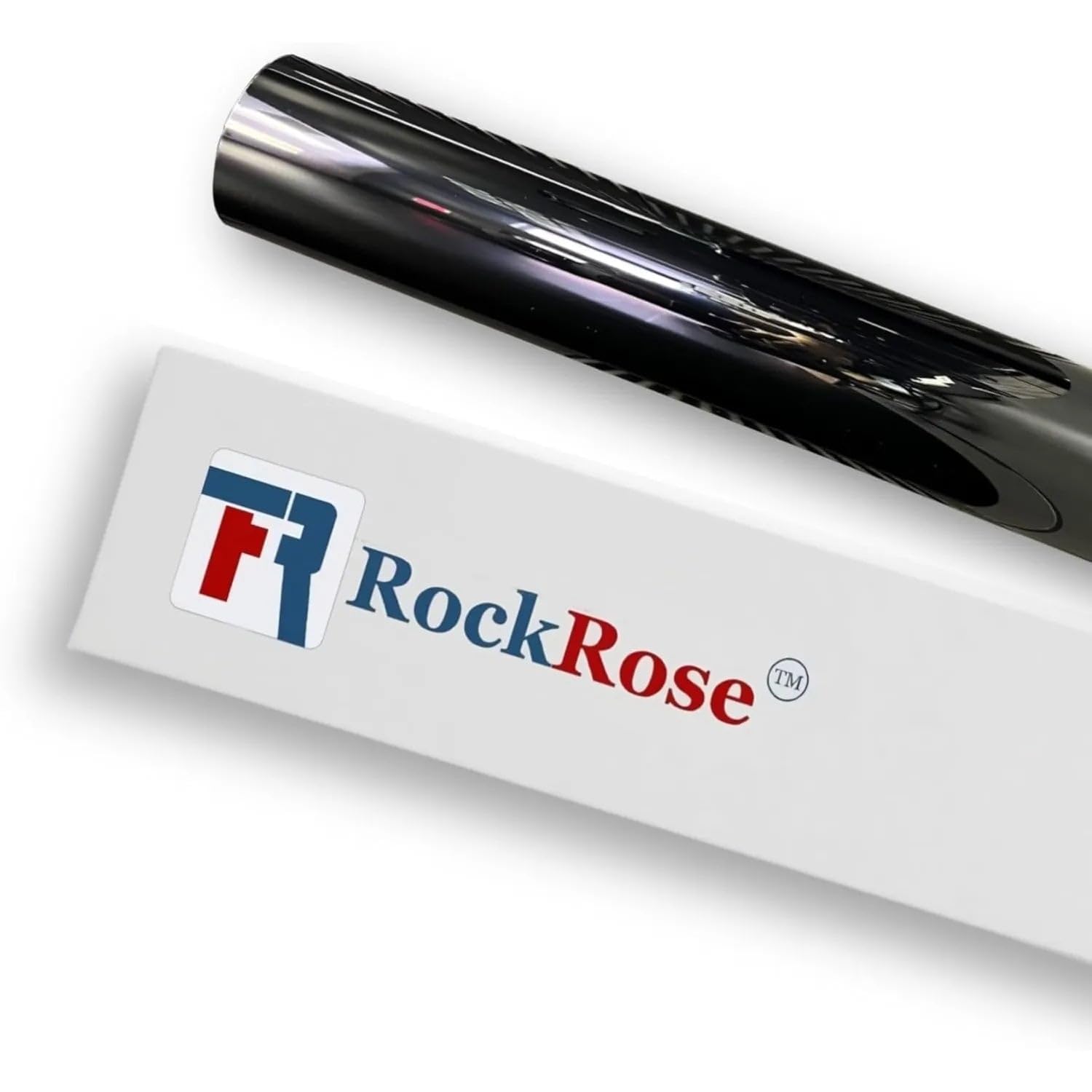
A pro-grade carbon film with a 100-foot roll that delivers honest heat specs—35% IR rejection and 45% TSER.
This RockRose roll is the carbon-tier standout, a 24″ x 100FT sheet of 5% VLT film that blocks up to 99% of UV rays while providing 35% infrared rejection and 45% TSER. Those numbers mean it stops a solid portion of solar heat without the mirror look of metalized films, making it a great choice for a clean, modern charcoal appearance. The high-quality PET film resists peeling, bubbling, and fading, and it can double as home window tint to reduce indoor glare and heat.
The 5% shade delivers true limo-level privacy, and the film is plotter-friendly, which is a bonus if you have access to a cutting machine. Owners describe it as great film at a reasonable price, with the right tackiness for a smooth application on side windows. The honest caveat is that it does not shrink as well as pricier tint, so curved rear glass takes an experienced hand. One owner hit a real snag: a windshield had a permanent warp that caused bubbles, and the company blamed the installer rather than helping—so quality control on individual rolls can vary.
What wins people over is the balance of carbon durability, honest heat specs, and a roll size that covers multiple vehicles. For the price per foot, this is the best carbon-value play in the lineup.
pro-grade durability
- 100-foot roll covers several vehicles at a pro-grade carbon price point
- Plotter-friendly for precision cutting
- Resists peeling, bubbling, and fading
limited heat control
- Shrinks less easily than higher-end films on curved glass
- Occasional roll defects and uneven customer service
workhorse: this is the carbon film to buy if you want 5% privacy with published heat specs and enough material to tint multiple windows.
hot climates: give the glass a clean, warp-free surface—installer skill and glass condition decide the finish.
8. MotoShield Pro 35% Nano Ceramic Film

The advanced ceramic film that blocks up to 99% of infrared heat—the strongest heat spec on this list.
If heat rejection is your top priority, this MotoShield Pro roll is the clear leader. It blocks up to 99% of infrared heat radiation (IRR) and rejects a maximum of 70% of total solar energy (TSER), with the maker claims it cools your interior by up to 25°F. At 35% VLT, it gives you that serious heat protection while keeping a legal, moderate shade that preserves outward visibility. The ceramic construction also blocks 99.9% of UV rays, so your seats and dash are shielded from cracking and fading.
At just 2 mils thick (about 0.002 inches), this film is easier to handle during installation, and each order includes a manual and an instruction video. Buyers who got it right report a high-end, haze-free look that blocks heat well—one notes you feel the temperature difference immediately, and haze clears after the film cures. But this is a serious install: a second owner found it hard to work with, citing ragged edges, creasing, and poor shrinking on curved glass. Worse, a plotter-measured 35% film actually read as 5% VLT (visible light transmission, the amount of light that passes through) on a tint meter, which could fail a state inspection.
The recurring tension is that this is a premium-performance film with budget-film consistency issues—some rolls arrive damaged or shorter than ordered. The heat-blocking is genuinely top-tier, but it demands an experienced installer and a roll that passes quality control.
tech upgrade: up to 99% IRR rejection and 70% TSER make this the strongest heat-blocker in the lineup, hands down.
tight budgets: verify the roll’s actual VLT after install and be ready for a challenging DIY—this one rewards professional hands more than any other pick here.
9. United 5% Nano Ceramic Pro Film
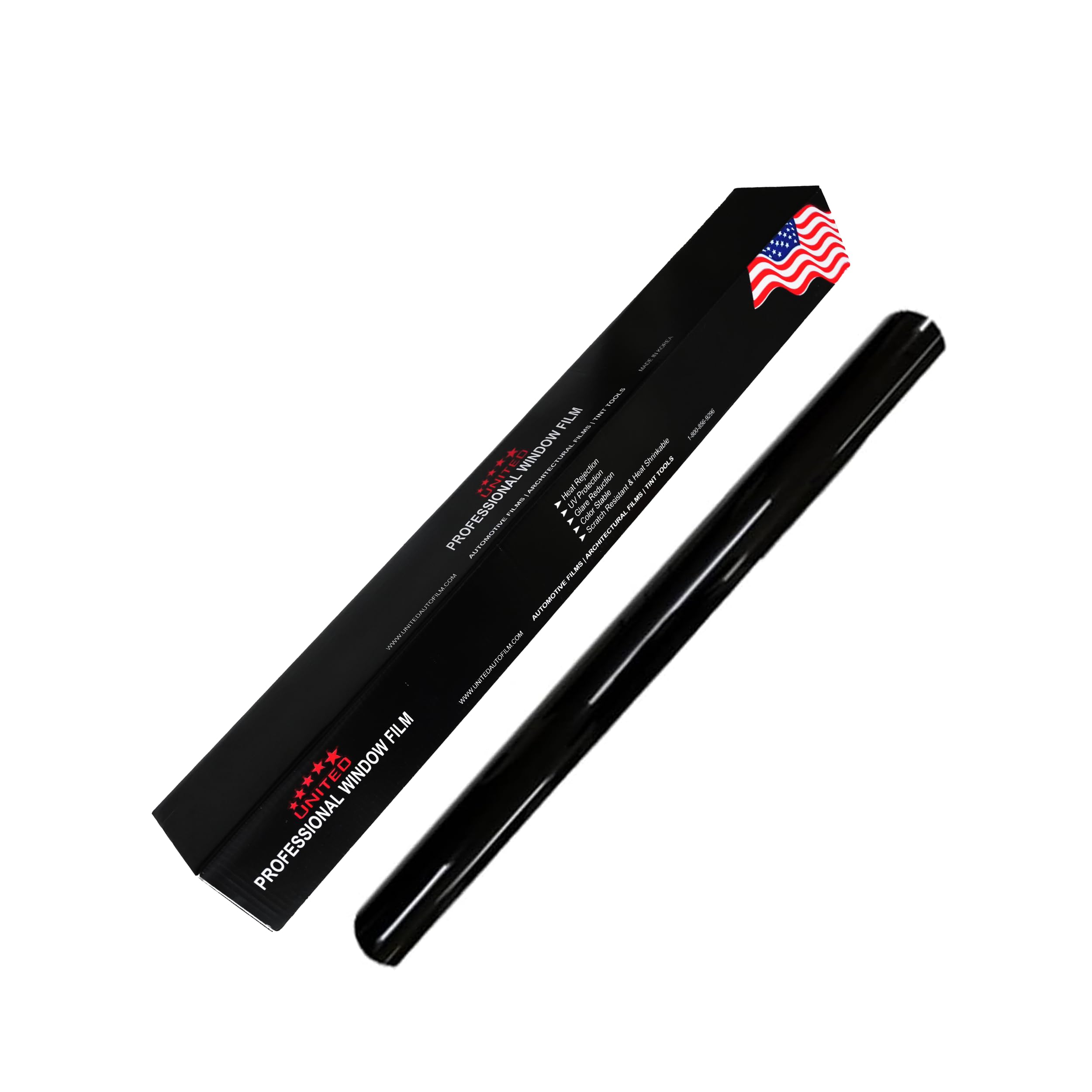
A 100-foot nano ceramic roll with 95% IR rejection and non-metalized construction for signal-friendly heat control.
This is the top-tier nano ceramic option from United Auto, a 20″ x 100FT roll of 5% VLT film engineered for up to 95% infrared rejection and 50–60% TSER. The advanced ceramic particles embedded in clear PET and laminate adhesive layers deliver reliable heat rejection plus color stability and reduced interior fading. A deep 5% VLT shade gives you maximum privacy while maintaining excellent optical clarity from inside.
What separates this from cheaper films is the non-metalized construction. Without metal, it provides glare control without interfering with mobile, GPS, or radio signals—a practical advantage if you rely on navigation or a toll transponder. It is designed for wet installation, so you can trim, spray, and smooth it onto wet glass for controlled placement, and it works on cars, trucks, SUVs, and residential windows. The 166.66 square feet of material gives you enough to cover a large vehicle and then some.
This is the film for a buyer who wants nano ceramic heat performance and the convenience of a long roll, without the signal-blocking downside of metalized films. The trade-off is price—this is the premium end of the spectrum—and with a newer listing, there are fewer owner experiences to draw on. If you want the best heat specs and a clean, non-reflective look, this roll delivers.
premium ceramic build: 95% IR rejection, signal-friendly ceramic construction, and 100 feet of coverage make this the most complete high-end roll here.
hard to cut: buyers who tint multiple vehicles or a large home and want ceramic performance in one bulk purchase, accepting a thinner review history.
Understanding the Specs
VLT Percentage (Visible Light Transmission)
This number tells you how much visible light passes through the film. A 5% VLT is very dark, giving maximum privacy, while a 60% VLT is light and nearly clear. Your state law sets a legal minimum VLT for front side windows, and darker films are usually restricted to rear windows. Always check your local limit before picking a shade.
IR Rejection and TSER (Heat Numbers)
IR rejection measures how much infrared radiation—the main source of solar heat—the film blocks. TSER is the total solar energy rejected, combining UV, visible, and infrared. A ceramic film can block up to 99% of IR rays without being extremely dark, which is why advanced films outperform darker dyed ones on heat. For the hottest climates, prioritize high IR and TSER over a dark shade.
FAQ
Does darker car window tint always block more heat?
What does VLT mean and why does it matter for my state?
What is the difference between IR rejection and TSER?
Is nano ceramic film worth the extra cost over dyed film?
Can a mirror or reflective film give me privacy at night?
How hard is it to install car window tint myself?
Will window tint block UV rays that damage my car interior?
What does 2-ply versus 1-ply film mean for durability?
Can I use automotive window tint on my home windows?
Why would a film interfere with my GPS or radio signal?
Final Thoughts: The Verdict
For most buyers, the car window tint for heat reduction winner is the MotoShield Pro 35% Nano Ceramic—its up-to-99% IRR rejection (infrared radiation, the heat you feel from the sun) and 70% TSER (total solar energy rejected) are the strongest heat specs here, beating every other film on this list. If you need a 100-foot bulk roll with top-tier heat specs that won’t block your phone or GPS signal, pick the United Nano Ceramic Pro. And for a budget-friendly value that covers multiple vehicles in one roll, the United Universal 5% tint is the one to grab.
How We Picked
We do not accept paid placement. Every pick is matched to a real buyer and a real use-case; we do not hands-on test units.
Sources & Methodology
Specifications: manufacturer listings and product documentation. Review insights: verified customer reviews, as of August 2026. Pricing: not shown on this page (it changes often); check the current price via the retailer link.
As an Amazon Associate, Gadgets Feed earns from qualifying purchases. This does not affect which products we feature.