
The right car window tint does more than darken your glass — it blocks infrared heat, rejects up to 99% of UV radiation, reduces glare from headlights, and protects your interior from fading. But the difference between a crisp, professional-looking finish and a bubbling, peeling mess comes down to the film’s layer construction, adhesive quality, and installation technique.
I’m Min — the co-founder and writer behind Gadgets Feed. I’ve spent hundreds of hours poring over technical spec sheets, analyzing customer installation reports, and cross-referencing VLT (Visible Light Transmission) data across dozens of ceramic, carbon, and dyed film formulations to build this guide for serious DIYers.
Whether you are tinting a sedan, SUV, or truck for privacy, heat rejection, or UV protection, selecting the right film means understanding ceramic vs. carbon construction, scratch-resistant coatings, and adhesive strength. This guide breaks down the top contenders for the best car window tint to help you make an informed decision.
How To Choose The Best Car Window Tint
Not all window films are built the same. The material type, VLT percentage, and layer construction directly impact heat rejection, UV protection, and how the film handles curved rear windows during installation.
Ceramic vs. Carbon vs. Dyed Film
Ceramic films use nano-particle technology to block infrared heat without interfering with GPS or cell signals — the current gold standard for heat rejection and clarity. Carbon films offer decent heat reduction and a matte finish but can fade over time. Dyed films are the cheapest option but absorb heat rather than rejecting it, which can cause the glass to crack and the dye to turn purple within a year.
VLT Percentage and State Laws
VLT (Visible Light Transmission) measures how much light passes through the film. A 5% VLT (limo tint) is extremely dark and illegal for front windows in most states. A 20% VLT balances privacy with reasonable night vision, while 35% VLT is the legal ceiling in many jurisdictions for front-side windows. Always check your local regulations before choosing a shade.
Film Thickness and Scratch Resistance
Premium ceramic films typically use a 5-layer construction with a hard-coated outer layer to resist scratches from window wipers and cleaning. Thicker films (around 4–5 mil) are easier to handle without tearing but require more heat shrinking around complex curves. Thinner films (around 2 mil) are more forgiving during installation but less durable over the long haul.
Quick Comparison
On smaller screens, swipe sideways to see the full table.
| Model | Category | Best For | Key Spec | Amazon |
|---|---|---|---|---|
| PAMAGOO 35% 20″x20′ | Ceramic | Everyday heat protection & clarity | 5-layer nano ceramic, 88% IR rejection | Amazon |
| IAQWE 20% 20″x20′ | Ceramic | Budget-friendly privacy & UV block | 5-layer safety film, 99% UV protection | Amazon |
| ARANA 20% 20″x20′ | Ceramic | Strong adhesion on curved windows | Nano-ceramic, 99% UV block | Amazon |
| DIYSELF 55-Piece Kit | Tool Kit | Complete DIY installation setup | 55 pieces: squeegees, knives, sprayer | Amazon |
| ARANA 20% 30″x15′ | Ceramic | Wider roll for SUV/van side windows | 30″ width, 99% UV block | Amazon |
| PAMAGOO 20% 20″x100′ | Ceramic | Bulk covering for multiple vehicles | 100-foot roll, 5-layer nano ceramic | Amazon |
| United Window Tint 42% 20″x100′ | Carbon | High-volume home & car projects | 2-ply carbon, 100-foot bulk roll | Amazon |
In‑Depth Reviews
1. PAMAGOO Ceramic 35% VLT 20″x20′

The PAMAGOO 35% VLT ceramic film uses a 5-layer construction that delivers a measured 88% infrared heat rejection and blocks over 95% of UV rays. Multiple verified buyers highlight the film’s thickness as a standout feature — it handles complex window curves without tearing during the wet-squeegee process, and the scratch-resistant coating survives repeated window wiper use without micro-marring.
At the 35% VLT level, this film provides a balanced compromise between daytime privacy and safe nighttime visibility, making it legally compliant for front-side windows in many states. The adhesive-free design (requiring a separate soapy water application) allows for repositioning during installation, which is critical for first-time DIYers. Some users noted a very slight bluish hue under direct sunlight, but this did not affect the outward clarity or the one-way privacy effect.
The included video instructions and 12+1 month support reduce the learning curve for beginners, though the thicker film does demand a proficient heat gun technique for shrinking around compound curves on rear quarter windows. Overall, this roll delivers professional-grade results at a price point that undercuts ceramic films from automotive specialty brands.
Why it’s great
- Thick 5-layer construction resists tearing and bubbles during installation
- 88% infrared rejection keeps cabin measurably cooler
- Scratch-resistant coating withstands daily cleaning
Good to know
- Minor bluish tint noted in direct sun
- Thicker film requires careful heat shrinking for curved glass
2. IAQWE Ceramic 20% VLT 20″x20′
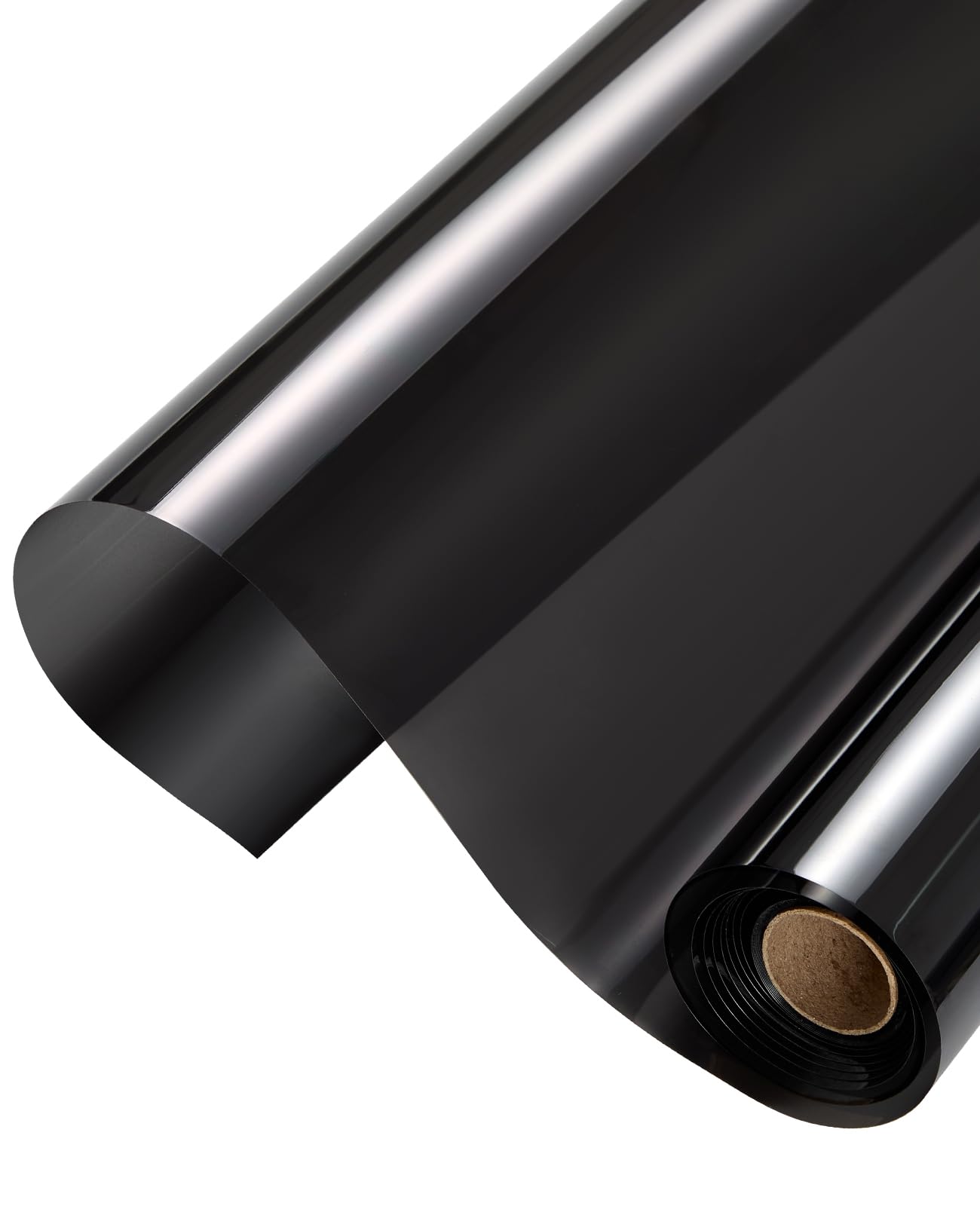
The IAQWE ceramic film offers 99% UV protection and a 5-layer safety construction that holds glass together on impact. At 20% VLT, it strikes a strong balance between privacy and outward visibility, and it is available in five additional shades (5%, 15%, 35%, 50%, 70%) if you need to match local legal limits precisely. The peel-and-stick adhesive is bubble-free when applied with a wet solution, and the heat-shrink capability helps the film conform to curved rear windows.
Customer feedback consistently praises the value proposition — users describe it as performing like higher-end films at a fraction of the cost. The film cuts cleanly with a sharp blade, and the adhesive has shown good color stability with no early fading or purpling reported. That said, some experienced tinters noted the adhesive is slightly less aggressive than premium brands, meaning careful edge tucking is required to prevent lifting during hot weather.
The roll size (20″ x 20′) is sufficient for two side windows on a sedan, making it an economical choice for partial vehicle wraps or beginners who want to practice before committing to a larger investment. The 24/7 customer support adds a safety net for first-timers who run into application trouble.
Why it’s great
- Exceptional UV protection at 99% for interior preservation
- Heat-shrink capability allows good fit on curved glass
- Multiple VLT options to match legal requirements
Good to know
- Adhesive can be less tacky than premium competitors
- Thinner film requires extra care to avoid tearing
3. ARANA Ceramic 20% VLT 20″x20′
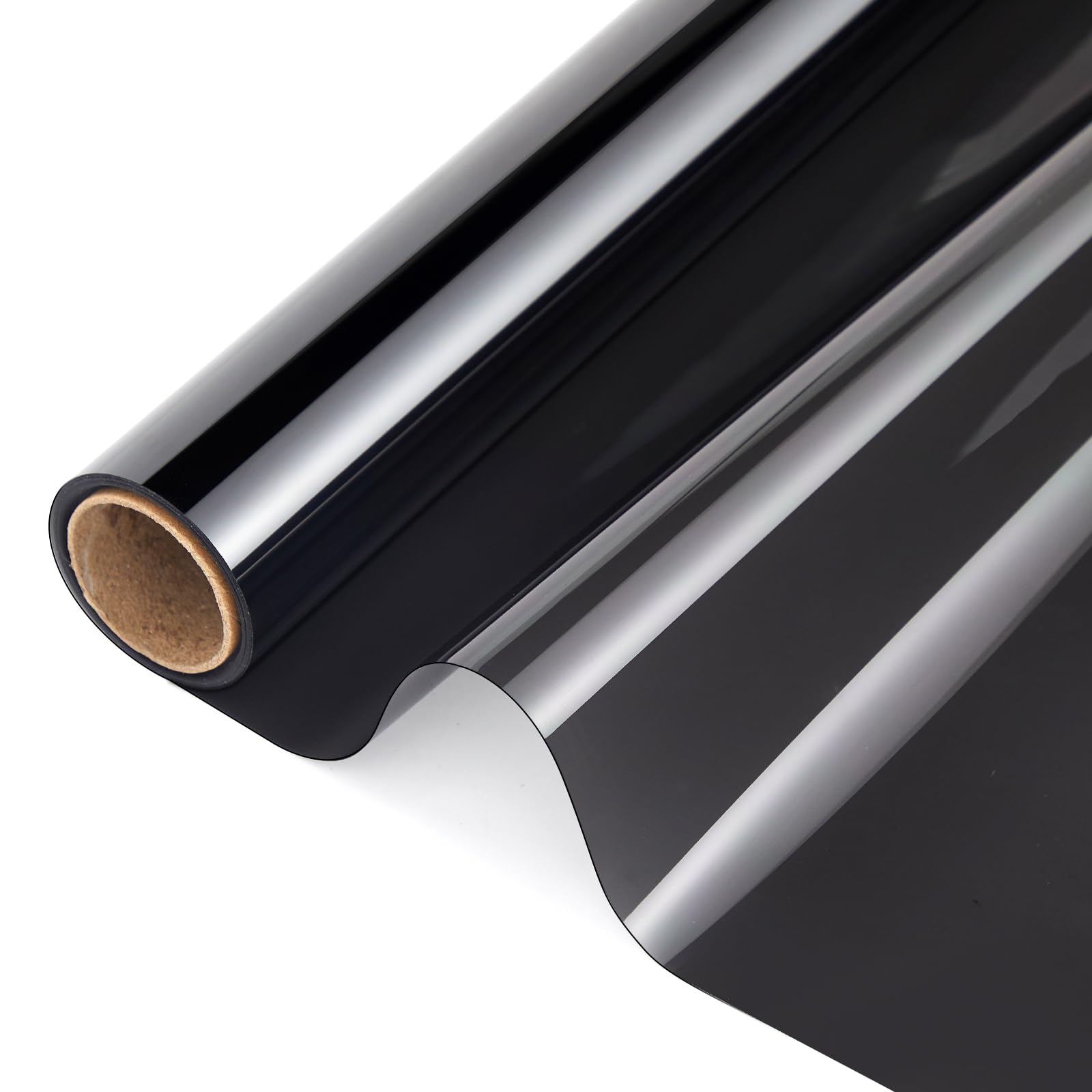
The ARANA nano-ceramic film blocks 99% of UVA and UVB radiation and uses a stable adhesive formulation that resists bubbling, peeling, and yellowing over time. Independent user reports confirm the film sticks firmly through car washes and daily use without edge lifting, and the scratch-resistant hard coating holds up against window wipers and minor abrasion. The 20% VLT variant offers good daytime privacy while maintaining clear outward vision at night.
Constructed with a peel-and-stick (no glue) backing, the film requires a heat gun for curved surfaces but is flexible enough to handle moderate compound bends without creasing. Several users successfully combined a 20% VLT application on the front windows with a darker 5% VLT on the rear windows for a staggered privacy look. The 18-month after-sales support is longer than most budget films, providing peace of mind for first-time installers.
One consistent observation is that the film is notably thick — which improves durability but makes installation more physically demanding. Beginners should expect to use generous amounts of slip solution and a high-quality squeegee to avoid trapping dust particles. Despite the learning curve, those who successfully install it report long-lasting satisfaction with the heat rejection performance.
Why it’s great
- Stable adhesive resists lifting and yellowing over long-term use
- Scratch-resistant coating protects against daily wear
- 18-month after-sales support exceeds industry standard
Good to know
- Thick film construction makes installation physically demanding
- Heat gun is mandatory for proper fit on curved glass
4. DIYSELF 55-Piece Tint Installation Kit
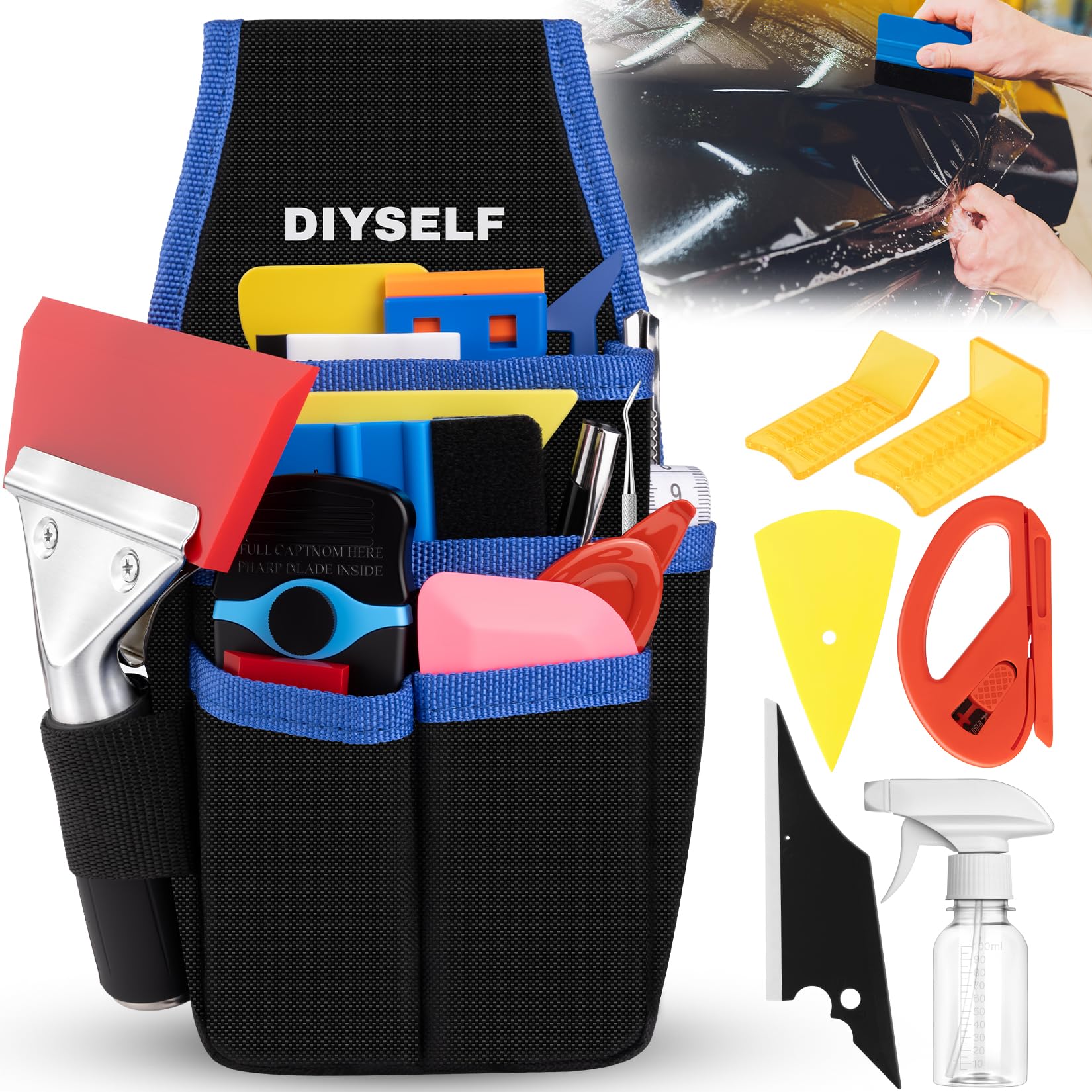
This 55-piece tool kit is not a window film itself, but it is the essential supporting kit for anyone tackling a DIY tint project. It includes multiple squeegees (hard felt, soft felt), a spray bottle, a 9mm utility knife, cutting groove tools, measuring tape, and edge tuck tools — everything needed to clean, cut, and apply tint film without professional equipment. The variety of squeegee sizes helps eliminate air bubbles on both flat side glass and curved rear windows.
The multi-functional cleaning scraper and spray bottle simplify the surface preparation step, which is the leading cause of failed tint jobs. Users report the squeegees are well-constructed — they do not crack under pressure — and the precision cutting tools allow for clean, straight cuts without nicking the film edge. The kit is lightweight and suitable for not only automotive tinting but also home window films and office privacy glass applications.
If you are buying a tint roll without existing tools, adding this kit effectively removes the single biggest variable that causes bubbling and peeling: improper surface cleaning and poor squeegee technique. For experienced users who already own tools, the kit serves as a convenient replacement set with all commonly used implements in one box.
Why it’s great
- Comprehensive kit covers every tool for professional-grade DIY installation
- Durable squeegees handle flat and curved surfaces without cracking
- Precision cutting groove tool ensures straight, clean film cuts
Good to know
- Does not include tint film — requires separate purchase
- Some users may have duplicate tools if they already own a basic set
5. ARANA Ceramic 20% VLT 30″x15′ (Premium Width)
This ARANA variant uses the same nano-ceramic formulation as the 20″x20′ roll but widens the film to 30 inches, making it the ideal choice for taller side windows on SUVs, vans, and trucks. Many standard 20-inch rolls leave a gap at the top of larger window frames, requiring piecing together — this 30-inch width eliminates that problem. The film retains the same 99% UV block rating and scratch-resistant hard coating found in the standard width.
User feedback mirrors the standard roll: strong adhesive that withstands car washes, no yellowing or bubbling reported over several months, and measurable cabin temperature reduction. The 15-foot length, however, means you get less total material than the standard 20-foot roll, so measure your window dimensions carefully before purchasing. For a full-size SUV requiring coverage on four side windows, you may need two rolls.
The wider width is also easier to cut down for home window projects, as less piecing is required for standard residential window sizes. As with the standard ARANA film, a heat gun is strongly recommended for shrinking around the sharp curves on SUV rear quarter glass. The 18-month support covers both variants.
Why it’s great
- 30-inch width eliminates the need for piecing on larger windows
- Same premium nano-ceramic heat rejection as the standard width
- Scratch-resistant coating maintains clarity long-term
Good to know
- 15-foot length means less total material than standard 20-foot rolls
- May require two rolls for full side coverage on large SUVs
6. PAMAGOO Ceramic 20% VLT 20″x100′
The PAMAGOO 100-foot bulk roll shares the same 5-layer nano-ceramic build and 88% infrared rejection as the shorter 20-foot version but at a scale that can cover an entire sedan or multiple vehicles. The 20% VLT shade provides strong privacy with still-usable outward visibility, blocking 93% of UV rays. The adhesive-free (wet application) design allows sliding the film into position before squeegeeing water out, which is the preferred method for professional installers.
Users confirm the thick film construction handles the curves of an Escalade rear window without tearing, and the cabin temperature reduction is noticeable even on sunny 90-degree days. The bulk format works out to a significant saving per square foot compared to buying multiple shorter rolls, making this the most cost-efficient choice for users who plan to tint more than one vehicle or need material for home windows. The scratch-resistant coating ensures the film does not haze over time from regular cleaning.
One caveat: the long roll length increases the risk of creasing if the film is not stored flat and rolled carefully. Some users found the initial pull from the tube tough without a second pair of hands. The 12+1 month support still applies, and the detailed manual covers proper unrolling and storage techniques.
Why it’s great
- Bulk 100-foot roll delivers best cost-per-foot for multi-vehicle projects
- Thick 5-layer film handles complex bends without tearing
- 88% infrared rejection provides significant cabin cooling
Good to know
- Long roll requires careful handling to avoid creasing
- Two-person unrolling recommended for easiest management
7. HIDNY United Window Tint 42% VLT 20″x100′ Carbon
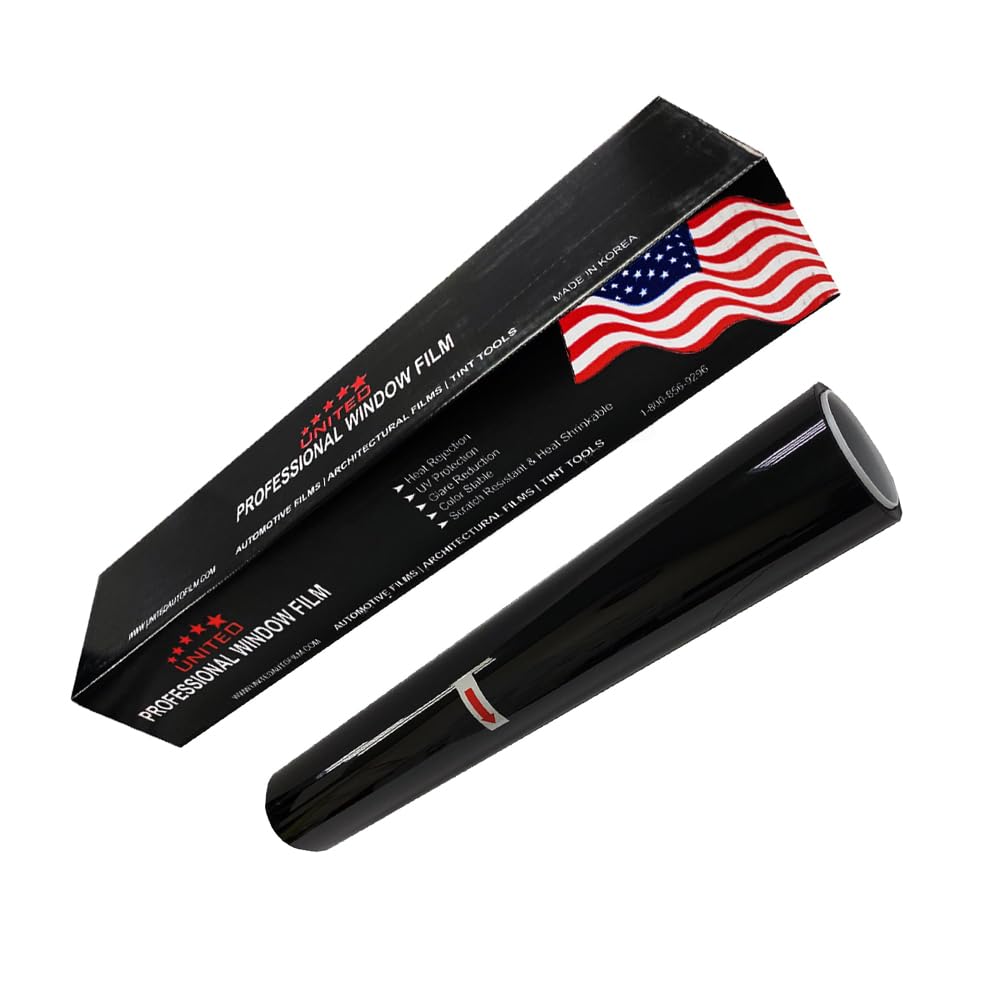
This carbon film from HIDNY (branded United Window Tint) is a 2-ply PET construction at 42% VLT, meaning it lets in more light than darker ceramic options but still blocks UV and infrared rays. The 42% VLT is generally legal for front windows nationwide and provides a subtle factory-tint look without reducing nighttime visibility. The 100-foot bulk roll is the largest in this guide by length, making it the most affordable option for covering many windows across multiple vehicles or home windows.
Users describe the film as slightly thinner than Gila-brand alternatives but less prone to creasing during installation. The wet/dry heat-shrink ability works well for flat windows and gentle curves, though the carbon construction does not offer the same infrared rejection as nano-ceramic films. The adhesive is strong enough for long-term hold, with one user reporting the film survived being repositioned after an initial misalignment with no sign of reduced tackiness.
Given its 42% VLT, this film is best suited for those who want light heat and glare reduction without darkening the cabin significantly. It works well as a practice material for beginners due to its forgiving nature and low cost per square foot. For maximum heat rejection and privacy, a ceramic film with a lower VLT percentage would be a better choice.
Why it’s great
- 100-foot bulk roll offers the most material for the investment
- 42% VLT is legal for front windows in most states
- Forgiving film is ideal for beginners learning installation
Good to know
- Carbon film provides less heat rejection than ceramic alternatives
- Higher VLT means less privacy and glare reduction
FAQ
What is the difference between ceramic and carbon window tint?
Can I install car window tint myself without professional help?
Does car window tint affect GPS or phone signal reception?
Final Thoughts: The Verdict
For most users, the best car window tint winner is the PAMAGOO 35% Ceramic 20″x20′ because its 5-layer construction, 88% IR rejection, and scratch-resistant coating deliver professional-grade heat protection and durability at a mid-range price point. If you want a wider roll for SUV windows, grab the ARANA Ceramic 30″x15′. And for bulk economy on multiple vehicles or home projects, nothing beats the United Window Tint 42% 100-foot roll.