
Our readers keep the lights on and my morning glass full of iced black tea. As an Amazon Associate, I earn from qualifying purchases.
Specs are compiled from manufacturer listings and verified buyer reviews and can change over time — please confirm the key details on the product page before buying.
Every engine slowly loses its edge as carbon deposits, varnish, and sludge build up inside. That sluggish throttle, the rough idle, and the drop in gas mileage are not just age — they are a layer of baked-on gunk choking your engine’s performance. A real carbon deposit remover works chemically to undo that buildup, restoring compression and efficiency without a costly mechanical tear-down.
I’m Min — the founder and writer behind Gadgets Feed. This guide is built by comparing the manufacturers’ published specifications and the patterns across verified customer reviews, so you get each pick’s real strengths and trade-offs instead of marketing spin.
The most effective products use aggressive solvents or detergents like PEA to tackle stubborn deposits, and after combing through the data, the best carbon build up cleaner for the widest range of engines is the Berryman 2611 for its powerful aerosol application and proven results in high-mileage vehicles.
Our Picks at a Glance

How To Choose The Best Carbon Build Up Cleaner
Carbon cleaners work in different ways — some are poured into the fuel tank, some are sprayed directly into the intake, and others are added to the engine oil before a change. Picking the right one depends on where the carbon lives in your engine and how accessible it is.
Fuel Additives vs. Intake Cleaners
A fuel additive treats the entire fuel system as the engine runs, which helps clean injectors and combustion chambers, but it cannot touch intake valves on modern Gasoline Direct Injection (GDI) engines — those valves never get washed by fuel. For GDI engines, you need an aerosol intake cleaner that is sprayed directly into the throttle body or vacuum line to physically dissolve carbon on the valves.
The Active Ingredient Matters
The most effective carbon cleaners use Polyetheramine (PEA), a high-strength detergent that breaks down stubborn baked-on deposits. Products without PEA may work for light maintenance but will struggle against thick carbon buildup on high-mileage engines. Check the label for “PEA” or “Polyetheramine” to know you are getting the serious stuff.
Application Method
Aerosol cans with an attached hose allow precise injection into intake ports, making them a one-person job. Pour-in fuel additives are simpler — just dump into a full gas tank — but they take longer to show results and cannot clean GDI intake valves. For heavy buildup, an aerosol cleaner directed at the valves delivers faster, more dramatic results.
Quick Comparison
| Model | Best For | Application | Active Agent | Engine Types | Amazon |
|---|---|---|---|---|---|
| Berryman 2611★ Best Overall | Intake Valve Cleaning (GDI) | Aerosol Spray | Polyetheramine (PEA) | PFI, TBI, GDI (no diesel) | Amazon |
| Sea Foam Combo PackFull Coverage | Full-System Cleaning | Aerosol + Pour-In | Solvents | Gas engines (GDI + conventional) | Amazon |
| Kroil Kreen | Oil & Fuel System Flush | Pour-In (oil + fuel) | Blended solvents | Gas & diesel | Amazon |
| XADO Engine Oil Cleaner | Oil System Sludge Removal | Pour-In (oil) | Revitalizant | All engine types (turbo included) | Amazon |
| Star Tron Ring Clean | Ethanol-Related Deposits | Pour-In (fuel) | Enzyme + deposit control | All gas engines (boats, cars, tools) | Amazon |
| HKS DDR | Performance Car Fuel System | Pour-In (fuel) | Solvent | Gasoline engines | Amazon |
In‑Depth Reviews
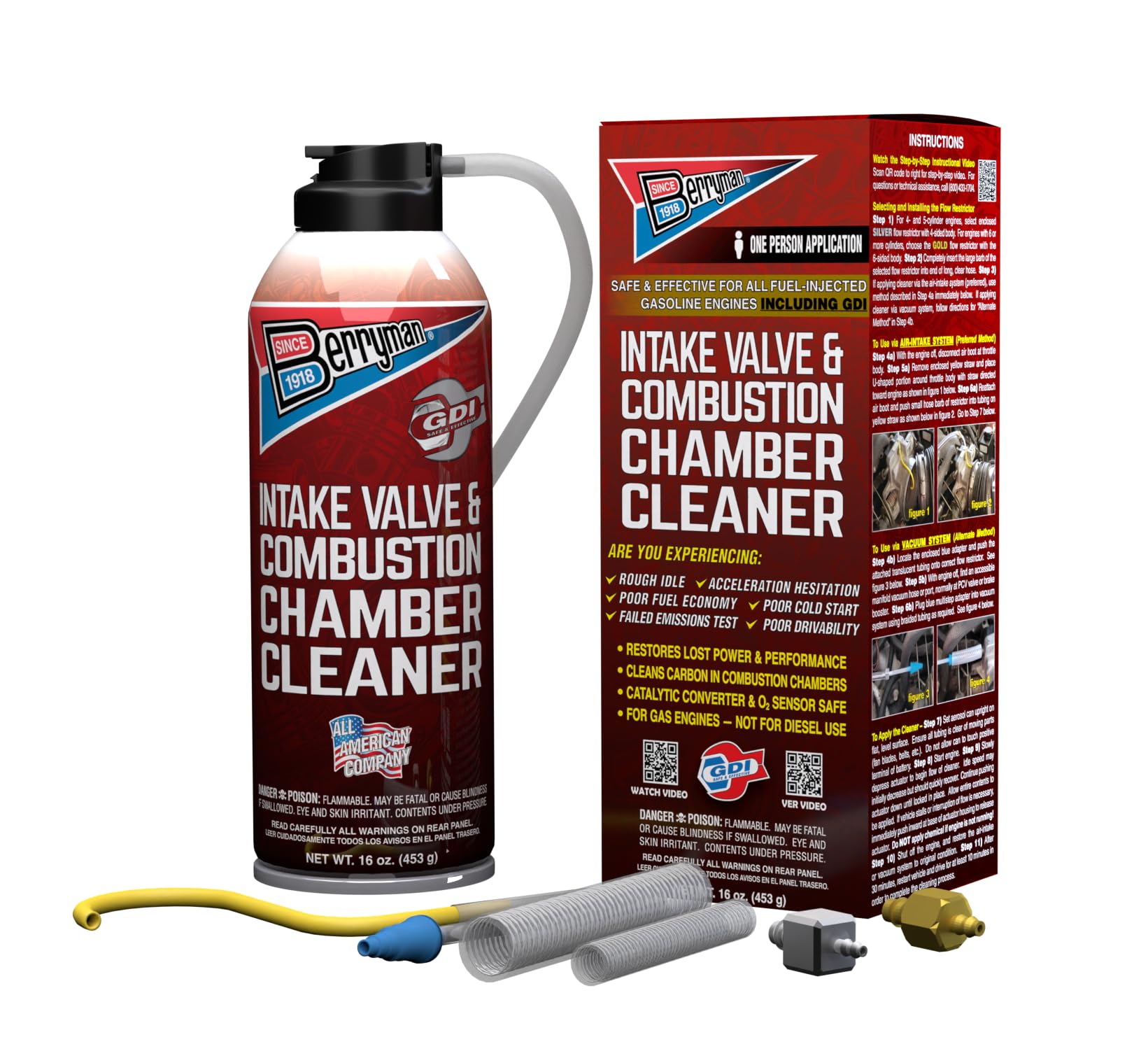
1. Berryman Products 2611 Intake Valve and Combustion Chamber Cleaner, 16-Ounce Aerosol
Our pick — over 4★ from 800+ verified ratings; the strongest balance of quality and price.
The spray that reaches the carbon your fuel cannot touch, especially on GDI engines.
This 16-ounce aerosol targets the one area most fuel additives miss — your intake valves. The active ingredient, Polyetheramine (PEA), is one of the strongest detergents you will find in any non-professional product, specifically designed to dissolve the hard carbon crust that forms inside combustion chambers and on valves. Unlike a pour-in additive that only reaches the fuel injectors and cylinders, Berryman’s hose-and-spray kit lets you inject the cleaner directly into the throttle body or vacuum line, so every drop hits the deposits on the back of the intake valves.
Buyers report dramatic real-world results. One owner of a 2012 Jeep Liberty V6 with 118,000 miles saw their MPG jump from 12-16 to 15-19 after a single can, and a second can delivered even more acceleration. A 2014 Chevy Sonic went from 26.6 to 29 MPG city. The caveat is the massive smoke cloud during treatment — it means the carbon is actively dissolving, but you need to be ready for a thick plume behind you. Also, this is strictly for gasoline engines; the label explicitly warns “Not For Use In Diesel Engines.”
At 1.33 pounds for the can, and with the included application kit that reviewers call a “well thought out one person job,” this cleaner bridges the gap between a professional media-blast service and a weekend driveway job. It is safe on catalytic converters and oxygen sensors, so you do not risk downstream damage while scrubbing out the top end.
What Solves the Problem
- PEA detergent tackles even heavy carbon on high-mileage GDI engines
- Intake-targeted aerosol cleans valves that fuel additives cannot reach
- Included hose kit allows easy single-person application
- Reports of 3-5 MPG improvement on older engines
What to Be Ready For
- Creates thick white smoke during cleaning, so expect to look like a steam engine for 10-15 minutes
- Not for diesel engines; gasoline only
- Heavy buildup may need a second can for full results
Reach for this if: you drive a GDI car with sluggish throttle or rough idle, especially a popular model like a Mazda CX-5, Mini Cooper, or Porsche Cayenne where owners mention clear improvements.
Look elsewhere if: your engine is a diesel, or if you want a no-fuss pour-and-forget additive that does not require opening the hood and following a multi-step spray procedure.
2. Sea Foam Motor Treatment and Intake Cleaner Combo Pack, SF-SS, 16 oz and 14 oz
Two cans, two routes into the engine — covers the fuel side and the intake side in one box.
The Sea Foam combo pack gives you the classic Motor Treatment (16 oz pour-in) for your fuel tank and the Spray (14 oz aerosol) for the intake, so you can hit carbon deposits from both directions. The pour-in bottle cleans the injectors, combustion chambers, and crankcase, while the aerosol spray is specifically for the upper engine areas that fuel never touches — exactly what you need for Gasoline Direct Injection engines. At 1 pound total weight, the kit is light enough to keep in the trunk for maintenance alongside every oil change.
A buyer with a 2010 Tacoma at 170,000 miles sprayed the entire can into a vacuum line over 10 minutes, let it soak for another 10, then drove it hard. The result was an immediate oil change full of “black crude” and an engine running “butter smooth” like a new Lexus. Another owner of a 2009 Escape Hybrid reported that spraying through the O2 sensor hole cleared up both engine performance and a battery module issue. The one honest limitation: Sea Foam is good for regular maintenance, but several customers note that if your engine has “years of neglect and heavy carbon,” you will need a stronger product first, then use Sea Foam to keep it clean.
Unlike some single-purpose cleaners, this combo handles the full range of engine cleaning jobs — fuel system, oil system, and intake valves — making it a versatile tool for a multi-car household. Just know that the Spray can requires a steady hand and a helper to hold the throttle at 2,000 RPM while you work the nozzle.
Two-Punch Approach
- Includes both a fuel-system pour-in and an intake aerosol for comprehensive cleaning
- Works on GDI engines where fuel additives alone fail
- Safe as both a cleaner and a preventive maintenance additive
- Trusted brand with 25+ years of user reports
Heads Up
- Not the strongest for severely neglected engines — heavy carbon may need a first pass with a more aggressive cleaner
- Spray application is a two-person job for best results
- Immediate oil change required after intake cleaning
Best suited for: the owner who wants a complete cleaning kit to tackle both the fuel and intake side, and who will use the pour-in regularly to keep new buildup from forming.
Pass on it if: you are facing a heavily caked engine over 150k miles with known carbon issues — you may need a stronger first pass before Sea Foam becomes your maintenance go-to.
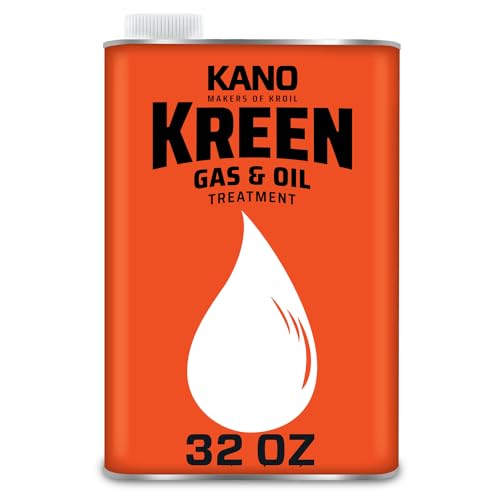
3. Kroil Kreen Gas & Oil Treatment, KR161 (1 Quart)
One quart that treats both the oil and the fuel, softening carbon everywhere it lives.
Kreen stands out because it works in two places at once: add it to your engine oil to clean the crankcase and piston rings before an oil change, and add it to your fuel tank to scrub the injectors and combustion system. At 2.2 pounds for a full quart, you get more liquid than any other cleaner on this list — compare that to the Star Tron at just 1 pound, a hefty 2.2x gap in weight. Kreen is also one of the few cleaners approved for both gas and diesel engines, making it a smart choice for households with multiple vehicles or a diesel truck.
Buyers with a 2009 Caravan at 174,000 miles reported that a 10-minute flush with a full container, followed by a double oil change, kept the oil cleaner much longer and noticeably improved engine smoothness. One reviewer noted the strong chemical smell during treatment but said the car ran great after 1,200 miles of driving with half the can in the oil and half in the gas. The biggest complaint is not about the product itself — the packaging tends to arrive dented and leaking, so inspect the can on arrival.
Kreen’s claim to fame is softening “excess carbon from around valve stems and piston grooves,” which directly improves compression. Unlike an intake spray that only hits valves, this formula works its way through the entire oil circulation system, opening clogged passages and reconditioning old seals. It is a broad-stroke treatment rather than a precision tool, but that broad coverage is exactly what a neglected engine needs.
Dual-Action Advantage
- Treats both engine oil and fuel system from a single can
- Works in gas and diesel engines — universal fit
- Full quart (1 quart) provides a lot of volume for the price
- Improves compression by cleaning valve stems and piston grooves
Watch For
- Strong chemical odor during and after treatment
- Frequent reports of dented cans from poor shipping packaging
- Not a precision intake valve cleaner — better as an overall system flush
Go with this if: you own a mix of gas and diesel vehicles and want one product that can clean both the oil and fuel systems, or if you are doing a heavy-duty pre-oil-change flush on a high-mileage engine.
skip it if: you need a targeted GDI intake valve cleaner, or if you cannot tolerate a strong chemical smell during the treatment process.
4. XADO Engine Oil System Cleaner with Anti-Carbon Effect, 250ml

A pre-oil-change flush that targets sludge and the anti-carbon layer in the crankcase.
XADO works differently from fuel-system cleaners — you pour this 250ml bottle directly into your old engine oil before a change, idle the engine for a while, then drain it all out. The “Revitalizant” in the formula is designed not just to remove existing deposits but to leave behind a protective barrier on engine internals. At 250 milliliters, it holds 11% more volume than the HKS DDR at 225 milliliters, giving you slightly more active cleaning agent per purchase.
One buyer mentioned flushing their 2018 Jeep Wrangler Rubicon V6 with 50,000 miles using XADO, driving for 50 miles with it mixed into the old oil. When they drained it, the oil came out “very black,” and after switching to fresh Royal Purple, the engine ran smooth with no valve tick and consistent 18-20 MPG. Note that this is an oil-system cleaner, not a fuel-system or intake valve cleaner — it cannot fix carbon on the back of intake valves.
It fits all engine types, including turbo-supercharged ones, and the “Clean” material type means it does not add fillers that could clog narrow oil passages. The trade-off is that you must plan for a dedicated cleaning session: add the product, drive it for some time (the label gives instructions based on mileage), then perform the oil change. It is not a quick fill-and-forget treatment.
Protective Flush
- Removes oil-system sludge and carbon deposits from the crankcase and pistons
- Revitalizant component leaves a protective layer on engine internals
- Compatible with all engines including turbo/supercharged
- Reviewers point out recovered MPG — one saw 38 to 51 MPG after treatment
Plan Around This
- Only cleans the oil system — does not clean fuel injectors or intake valves
- Requires a dedicated treatment drive and then an oil change, so you cannot just dump it in and forget it
- Results depend on driving the vehicle for the recommended distance with the product in the oil
Right for you if: you have experienced oil consumption, valve tick, or fuel economy loss that you suspect is caused by sludge or carbon in the crankcase, and you intend to do an oil change anyway.
Not the pick if: your main complaint is rough idle or poor throttle response from carbon on the intake valves — you need an aerosol cleaner for that job.
5. Star Brite Star Tron Ring Clean Plus Deposit Control, 16 OZ

A fuel additive that targets ethanol-related gum and varnish across all gas engines.
This Star Brite formula uses an enzyme-enhanced deposit-control compound specifically designed to handle the sticky residues that ethanol-blended fuel leaves behind. A single 16-ounce bottle treats up to 160 gallons of fuel, and the concentrated formula only needs 1 fluid ounce per 10 gallons — so it stretches much further than many competitors. It is also rated 4.6 out of 5 stars from 407 reviews, matching the XADO’s rating but with a larger review sample, suggesting consistent results across a wide range of equipment.
The versatility here is the standout feature. The product is marketed for boats, cars, motorcycles, ATVs, and outdoor power equipment, and buyers confirm it works across all of them. One reviewer shared that Star Tron Ring Clean improved a hard-starting Toro Workman UTV after just two tanks of treated fuel, making it “run like new.” The same owner now uses it in boats, mowers, and two-stroke tools. At just 1 pound for the bottle, it is lighter on the shelf than the Kroil Kreen at 2.2 pounds, but it is also a different kind of cleaner — a gentle maintenance additive rather than an aggressive carbon stripper. Several shoppers say it is a “precautionary additive” that keeps things running, not a rescue product for heavily caked engines.
It is proudly made in the USA and has been around since 1973, so the track record is long. The main limitation: this is a fuel system maintenance product, not an intake valve cleaner for GDI engines. If you have a direct-injection car with carbon on the valves, this additive will not fix it.
Broad Coverage
- Works in cars, boats, motorcycles, ATVs, and outdoor equipment — one bottle for your whole garage
- Treats 160 gallons per 16 oz bottle, stretches a long way
- Enzyme formula specifically targets ethanol-related deposits
- Trusted brand with a long track record and strong 4.6 rating at 407 reviews
Keep Expectations Real
- Maintenance-level cleaner — not strong enough to clear heavy carbon buildup on high-mileage engines
- Cannot clean GDI intake valves; fuel additives cannot do that job
- Results are gradual over multiple tanks, not instant
This is your pick if: you run ethanol-blended gas in a mix of vehicles and equipment, and you want a maintenance additive that keeps injectors and chambers clean over time with minimal effort.
Not for you if: you need to remove heavy baked-on carbon from a neglected engine or clean GDI intake valves — you would need a stronger aerosol product for that.
6. HKS DDR Direct Deposit Remover Carbon Removal Cleaner, 225ml

A Japanese brand fuel-system cleaner that enthusiasts trust for performance and direct-injection cars.
HKS is a well-known name in the performance aftermarket, and this 225-milliliter DDR (Direct Deposit Remover) is their carbon-fighting fuel additive. It is a pour-in treatment: you add half the bottle at half a tank of fuel, then the other half when the tank hits a quarter full, then fill up the rest. The goal is to dissolve carbon deposits on the pistons, injectors, and valves that the fuel touches, restoring smooth acceleration and idle quality.
Buyers report noticeable results quickly. One reviewer described adding the product to an 18-year-old car with over 100,000 km and feeling “slightly lighter throttle” within 1 km of driving, plus a measurable improvement in idle fuel economy. Another owner of a car with 200,000 km said they felt a “smoother acceleration” after treatment. However, the effect can be short-lived — one review noted that while the engine became very quiet and smooth after treatment, the results faded after two full tanks of fuel. At 225 milliliters, it is 11% less volume than the XADO at 250 milliliters, though the application method and target area are completely different (fuel system vs. oil system).
Where HKS DDR truly fits is with performance-oriented drivers who want a maintenance additive from a brand they already trust for tuning parts. It is not a heavy-duty rescue cleaner for severely sludged engines, and it will not clean the back of GDI intake valves since it is only added to the fuel. It is a straightforward fuel-system carbon remover for cars that are already fairly well maintained but could use a refresh.
Why Enthusiasts Like It
- Trusted Japanese performance brand name — many owners already use HKS parts
- Some owners mention smoother acceleration and better idle within the first tank
- Easy fuel-additive application: pour in at specific fuel levels, no tools required
Limitations
- Some users report effects fade after two tanks of fuel, requiring repeated use
- Cannot clean GDI intake valves; only the fuel-washed areas
- Label is primarily in Japanese, which can make dosing instructions hard to follow
Consider this if: you drive a Japanese performance car or a high-compression engine and want a brand-aligned fuel additive as a periodic tune-up.
Choose something else if: you need a one-shot heavy cleaner for a neglected engine or you require intake valve cleaning for a GDI vehicle — the HKS DDR does not reach that area.
Understanding the Specs
Polyetheramine (PEA)
PEA is a high-temperature detergent that literally melts carbon deposits off metal surfaces inside the combustion chamber and on valves. It is the most effective active ingredient you can buy in a consumer-level carbon cleaner. Products without PEA use a blend of petroleum solvents that work on light gum and varnish but struggle against the hard, baked-on carbon you find in high-mileage direct-injection engines. If the label says “PEA” or “Polyetheramine,” it means the manufacturer prioritized real cleaning power over cheap ingredients.
Application Method: Aerosol vs. Pour-In
An aerosol spray cleaner lets you aim the chemical directly at the intake valves and throttle body, which is essential for Gasoline Direct Injection (GDI) engines — in these engines, fuel is sprayed directly into the cylinder, so it never washes the intake valves. A pour-in additive that goes into the fuel tank can reach injectors, pistons, and combustion chambers but misses the intake valves entirely. If your car is GDI and you have rough idle or poor acceleration, you need an aerosol intake cleaner. If your car is an older port-injection engine, a fuel additive will do the job just fine.
FAQ
Will a fuel additive clean the intake valves on my GDI engine?
How often should I use a carbon build up cleaner?
Is it safe for my oxygen sensors and catalytic converter?
Can I use these cleaners in a diesel engine?
What is the difference between a carbon cleaner and a fuel system cleaner?
Will a carbon cleaner fix a misfire code?
How long does it take to see results after using a carbon cleaner?
Can I use an oil system cleaner like XADO in a turbocharged engine?
What does the smoke during an intake cleaning mean?
Can carbon buildup cause knocking or pinging under load?
Final Thoughts: The Verdict
For most drivers, the undisputed best carbon build up cleaner is the Berryman Products 2611 because its PEA-based aerosol formula reaches and dissolves deposits in the one place fuel additives cannot — your intake valves. If you want a two-can system that handles both the fuel and the intake side, grab the Sea Foam Combo Pack for comprehensive coverage. And for a deep oil-system flush on a gas or diesel engine, the Kroil Kreen gives you the most volume per can with dual fuel-plus-oil action.
How We Picked
We do not accept paid placement. Every pick is matched to a real buyer and a real use-case; we do not hands-on test units.
Sources & Methodology
Specifications: manufacturer listings and product documentation. Review insights: verified customer reviews, as of July 2026. Pricing: not shown on this page (it changes often); check the current price via the retailer link.
As an Amazon Associate, Gadgets Feed earns from qualifying purchases. This does not affect which products we feature.