
Our readers keep the lights on and my morning glass full of iced black tea. As an Amazon Associate, I earn from qualifying purchases.
Specs are compiled from manufacturer listings and verified buyer reviews and can change over time — please confirm the key details on the product page before buying.
The fastest way to ruin a laser print job is feeding it paper that’s too thick for the fuser, causing expensive jams and smeared toner. This guide narrows down cardstock that actually survives a laser printer’s heat and rolling path, so you can pick a pack that prints crisp without babysitting the feed tray. You will see exactly which weight works for which machine, how the finish changes your results, and the honest trade-offs of each pick.
I’m Min — the founder and writer behind Gadgets Feed. This guide is built by comparing the manufacturers’ published specifications and the patterns across verified customer reviews, so you get each pick’s real strengths and trade-offs instead of marketing spin.
For DIY invitations, business cards, and art prints that must feed clean and stay flat, here is the practical breakdown of the best cardstock for laser printer use, chosen for real-world reliability over raw specs.
Our Picks at a Glance
How To Choose The Best Cardstock For Laser Printer
Before you pick a pack, open your printer’s manual and find its maximum paper weight. Most home lasers top out around 80 to 110 lb cover, and feeding anything heavier can jam the fuser or wrap around the drum.
Match the weight to your machine’s limit
The “lb Cover” number tells you stiffness, not just thickness. A 120lb Cover sheet is dramatically more rigid than a 110lb Index sheet, so it demands a printer with a straight paper path. If your printer has a rear or manual feed slot, that is the one to use for heavy stock.
Finish drives toner and folds
A matte surface lets toner bond evenly and folds with minimal cracking when you score first. A glossy coating gives a premium, photo-like sheen but can mean toner sits on the surface and flakes at a crease. Choose your finish by what you print: menus love gloss, greeting cards prefer matte.
Quick Comparison
| Model | Best For | Weight | Finish | Sheets | Amazon |
|---|---|---|---|---|---|
| Desktop Publishing 120lb Cover★ Best Overall | Rigid card bases & signs | 120lb Cover (325 gsm) | Smooth matte | 50 | Amazon |
| Desktop Publishing 110lb Cover | Cards & Copic marker work | 110lb Cover (300 gsm) | Smooth bright white | 50 | Amazon |
| Hamilco Glossy 100lb Cover | Laser-only photo prints | 100lb Cover (270 GSM) | Gloss both sides | 50 | Amazon |
| Veritas 110lb Index | Everyday copy & flyers | 110lb Index (199 gsm) | Smooth | 100 | Amazon |
In‑Depth Reviews
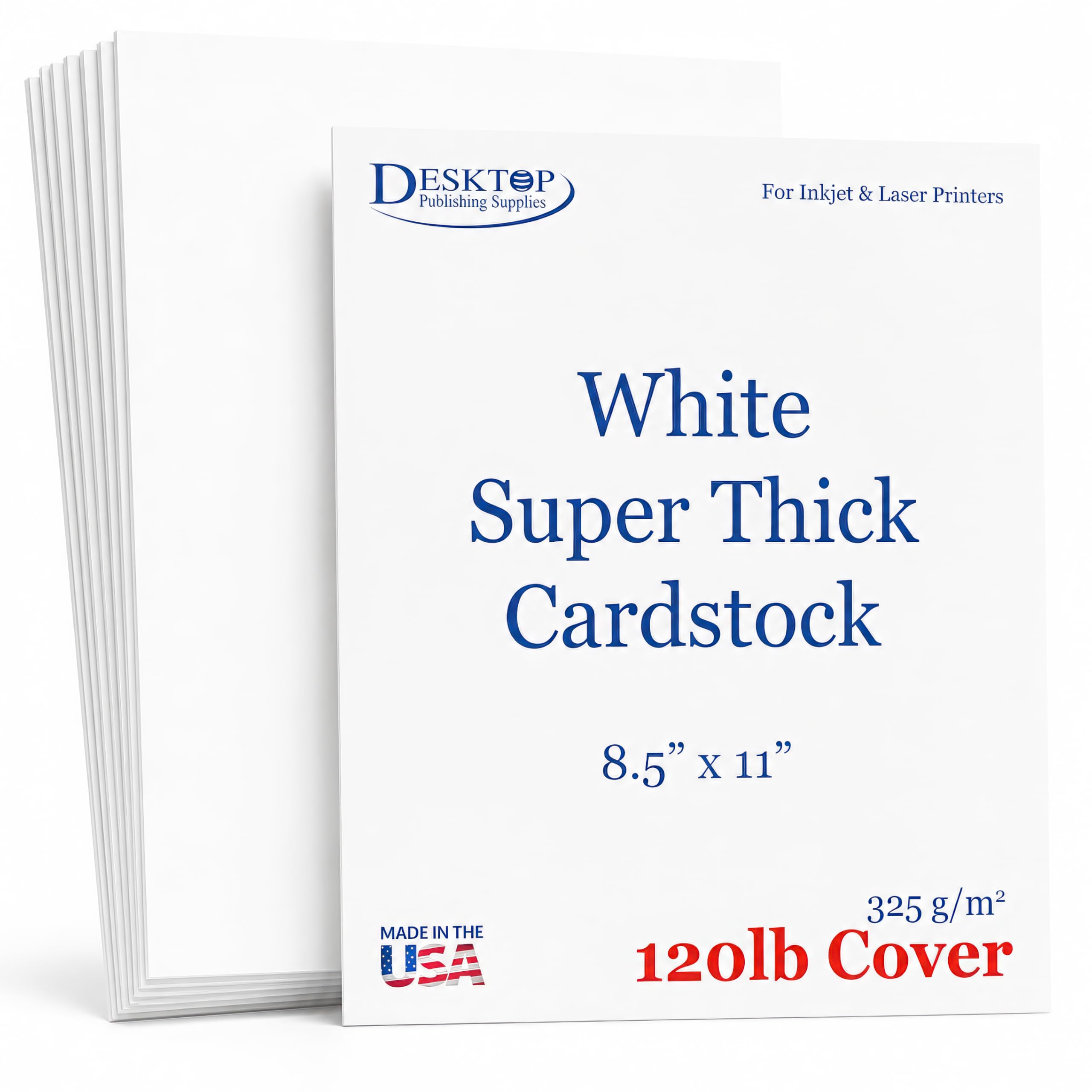
1. Desktop Publishing Supplies 120lb Cover Cardstock
Our pick — over 4.5★ from 650+ verified ratings; the strongest balance of quality and price.
The rigid heavyweight that feels like a real card base, not a flimsy sheet.
What wins people over here is the sheer heft: at 120lb Cover (325 gsm), this is 20% heavier than the 100lb Cover (270 GSM) glossy option in this lineup, so it stands up like a store-bought greeting card. That stiffness makes it the go-to for card bases, and the smooth matte finish lets ink blend well instead of pooling, as owners put it: “This is a wonderful weight for card bases, and ink blends well on it.”
The catch is printer compatibility, and the maker is upfront about it. This ultra-thick cardstock requires a printer that supports heavy media and may not work with many home printers, so check your machine’s maximum paper weight before ordering. If yours accepts it, people report excellent results — one project uses it for MTG proxies and praises it as the best value for beginners, while another glues two layers together to make solid custom playing card prototypes.
Folding needs a small trick: score sheets before folding to prevent cracking, and use “120lb Cover (325 gsm)” as your printer setting reference. The recurring gripe is packaging, with a thin cellophane wrap letting a dented corner reach the whole stack on some deliveries, so inspect the pack when it arrives. For rigid, professional-feeling projects where your printer can handle the load, this is the pick.
What Owners Praise
- True 120lb Cover rigidity for card bases
- Smooth matte surface takes ink and toner well
- Made in the USA by a family-owned company
- Cuts and glues cleanly for layered projects
What To Watch
- Too thick for many home inkjet printers
- Must score before folding to avoid cracks
- Thin packaging risks dented corners in transit
Reach for this if: your printer takes heavy media and you want a rigid, true-white card base for invitations or signs.
Look elsewhere if: you have a basic home inkjet with a tight feed path, because this sheet may simply refuse to load.
2. Desktop Publishing Supplies 110lb Cover Cardstock
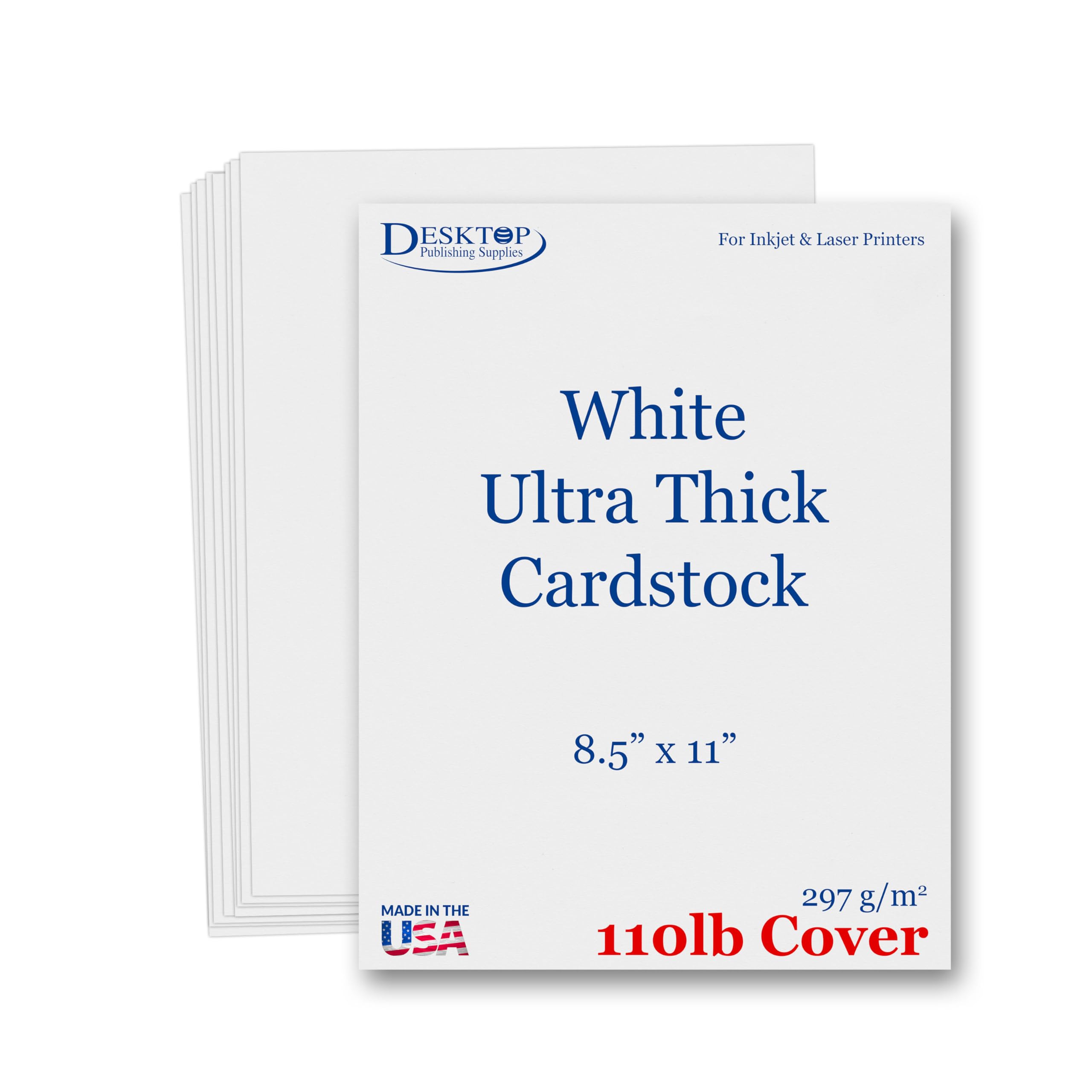
The smooth, bright sheet that takes Copic markers without bleeding through.
This is the cardstock crafters gravitate to because the surface holds up to serious artistic abuse. A high 98 brightness delivers a clean white for crisp text and bold graphics, and the smooth finish stands up admirably to Copic markers and even light watercolor washes, which is rare at this weight. One owner fed it through an HP laser despite an 80 lb limit and reported it printed fine, though dark colors came out spotty and less saturated.
At 110lb Cover (300 gsm), it is noticeably easier to work with than the 120lb sheet above, yet it still delivers that sturdy, professional feel for greeting cards and presentation covers. The fold leaves a fatter crease than lighter stock, but scoring first gives you a clean line, and owners say it die-cuts beautifully for layered craft work. It is inkjet and laser compatible, with the note that a manual feed tray or straight paper path works best.
The honest downside is shipping damage showing up in multiple reviews, with roughly the first ten to twenty sheets arriving with wrinkled corners when the thin bubble envelope takes a hit. One owner got lucky with a seller who sent a double replacement of 200 sheets, but that is not guaranteed. If you want a bright, smooth, marker-friendly cardstock that feeds through both laser and inkjet, this is the one — just budget for a few damaged corners and order a spare pack.
Standout Strengths
- 98 brightness gives a clean, bright white
- Ultra-smooth surface handles Copic markers
- Prints fine on HP laser past its rated limit
- Die-cuts and folds well with scoring
Fair Caveats
- Thin bubble packaging wrinkles edge sheets
- Dark print colors can look spotty
- Some basic inkjets find it too thick
Grab it for: handmade cards and any project that needs a smooth, bright surface for ink and markers.
skip it if: you only have a budget inkjet with no straight feed path, since the thickness can trip it up.
3. Hamilco White Glossy Cardstock 100lb Cover

The laser-only glossy sheet that gives photo prints a polished, premium sheen.
If your project demands that slick, photo-like finish, this is the only laser-compatible gloss in the lineup, coated on both sides at 100lb Cover (270 GSM). It is explicitly laser-printer-only, so inkjet owners should stop here, and the maker asks you to confirm your laser is rated for 270 GSM glossy stock before buying. Set your printer to “cardstock” or “heavy paper” mode and the fuser lays down crisp text without the ink bleeding you can get on rougher surfaces.
Versatility is the quiet strength here — owners use it for books and binding, art show display cards, and in-store printing through a Xerox with no issues. It resists cracking when folded better than other glossy companies, which is a common weak point for coated stock, and the acid-free construction keeps prints archival. Unlike the matte picks above, this one feeds cleanly through a straight-path laser without the thickness complaints.
The honest trade-off is that the gloss is polarizing: some want it slicker and call it “not super glossy,” while the ink resistance gets negative feedback in some reviews, and print quality splits opinion. An occasional buyer expected a heavier sheet than 100lb Cover delivers. For laser-only, high-impact prints like photo cards and brochures where you want that polished look, this delivers — just confirm your machine is rated for it first.
Gloss pros: coated both sides for a premium sheen, resists cracking on the fold better than most, acid-free for archival prints, and ships in a sturdy corrugated box that protects the corners.
Gloss cons: laser-only with no inkjet support, the gloss is lighter than some expect, and ink resistance draws mixed feedback. Firmly a finish-first choice.
Choose it when: you run a laser printer rated for heavy glossy stock and want photo-quality prints with a polished sheen.
Pass if: you use an inkjet or want a matte, marker-friendly surface, because this gloss is built strictly for laser toner.
4. Veritas White Cardstock 110lb Index
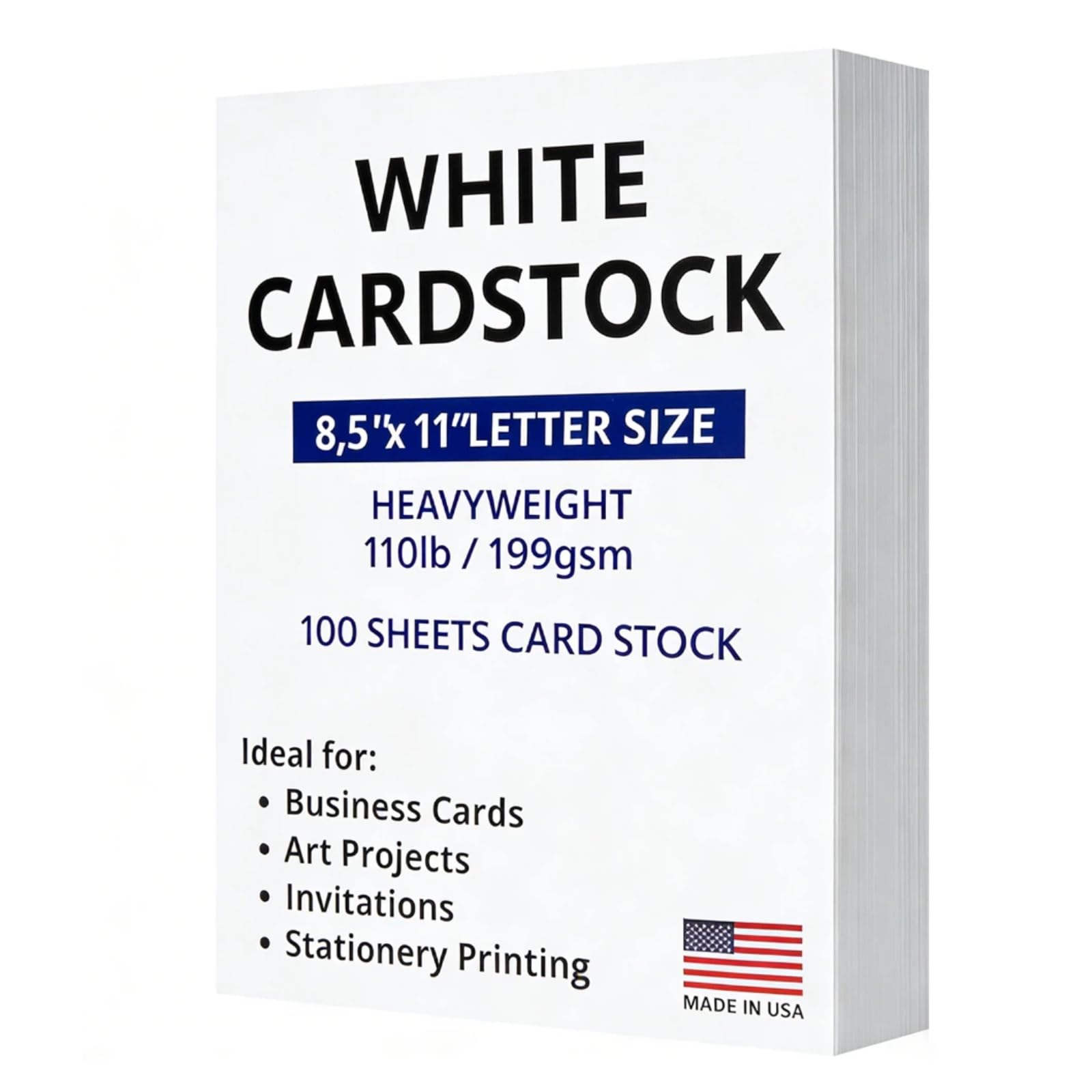
The budget-friendly workhorse that feeds reliably through both laser and inkjet.
This pack gives you double the sheets of the other picks — 100 versus 50 — and the lighter 110lb Index (199 gsm) weight is exactly why it feeds so easily. Because Index weight is less dense than Cover weight, this sheet runs through an HP inkjet with no jamming and no smudging, making it the least fussy option here for everyday printing, labels, and small signs. It is engineered to work with both laser and inkjet printers, which is the whole point for a general-use pack.
The quality holds up for crafting: owners use it for cards, coloring, and small signs and report it feels durable and professional. It is acid-free to resist yellowing over time, so it suits certificates and important documents. The texture is smooth with a nice weight that is not too bulky, hitting a middle ground that the heavier Cover-weight sheets above cannot match for sheer versatility.
The honest gripes are the color and the corners. Some owners note it is not the purest bright white they have seen, and a few question whether the weight truly hits 110 lb. The shrink plastic packaging can leave the first two and last two sheets with crumpled corners. If you want a large, low-fuss pack for mixed printing tasks that your printer will actually accept, this is the value pick.
Value verdict: twice the sheet count for the same shelf space as a 50-sheet pack, with a weight that feeds through home printers without drama.
Reality check: the white is bright but not the purest, and the end sheets can arrive with crumpled corners from the shrink wrap. A solid everyday choice, not a showpiece.
Best for: everyday printing, flyers, labels, and craft projects where you want reliability and quantity over extreme rigidity.
Not for: anyone needing a true 110lb Cover stiffness or a pure white for photo-critical work, since the lighter Index weight and off-pure tone show here.
Understanding the Specs
Cover Weight vs. Index Weight
“Cover” is a denser, stiffer paper grade than “Index” at the same number, so 110lb Cover (300 gsm) feels far more rigid than 110lb Index (199 gsm). The two numbers measure stiffness, not just thickness, and a higher gsm means a heavier, more card-like sheet that demands a printer with a straight feed path.
GSM and the Laser Fuser
GSM (grams per square meter) is the metric that tells you how heavy the sheet is, with 200+ gsm feeling like a real card. Laser printers fuse toner with heat and pressure, so an ultra-thick sheet can wrap around the fuser if it exceeds your machine’s limit. Check your printer’s max paper weight and use the manual feed tray for anything above standard copy weight.
FAQ
Will 120lb cover cardstock work in my home laser printer?
What is the safest cardstock weight for a standard laser printer?
Can I use glossy cardstock in a laser printer?
Why does my cardstock crack when I fold it?
What does 98 brightness mean for cardstock?
Is acid-free cardstock worth paying for?
How many sheets come in a typical cardstock pack?
Why did my dark colors print spotty on cardstock?
Final Thoughts: The Verdict
For most buyers, the cardstock for laser printer winner is the Desktop Publishing 120lb Cover because its true 325 gsm rigidity and smooth matte finish deliver the most professional, card-like result for invitations and signs — the crowd favorite with a 4.7 rating. If you want a marker-friendly, bright-white sheet that feeds through both laser and inkjet, grab the 110lb Cover. And for laser-only photo prints with a glossy, premium sheen, the Hamilco gloss is the one to reach for.
How We Picked
We do not accept paid placement. Every pick is matched to a real buyer and a real use-case; we do not hands-on test units.
Sources & Methodology
Specifications: manufacturer listings and product documentation. Review insights: verified customer reviews, as of August 2026. Pricing: not shown on this page (it changes often); check the current price via the retailer link.
As an Amazon Associate, Gadgets Feed earns from qualifying purchases. This does not affect which products we feature.