
Our readers keep the lights on and my morning glass full of iced black tea. As an Amazon Associate, I earn from qualifying purchases.
Specs are compiled from manufacturer listings and verified buyer reviews and can change over time — please confirm the key details on the product page before buying.
The real battle with carpenter bees is not about getting stung—it is about protecting your home’s wood from their drilling. These bees tunnel into untreated lumber, leaving dime-sized holes that attract woodpeckers and cause structural damage. The most effective solutions don’t just shoo bees away temporarily; they either spray on a protective barrier or actually mix into your paint or stain to keep wood off-limits for a whole season.
I’m Min — the founder and writer behind Gadgets Feed. This guide is built by comparing the manufacturers’ published specifications and the patterns across verified customer reviews, so you get each pick’s real strengths and trade-offs instead of marketing spin.
It explains the difference between instant sprays and long-term paint additives, and it identifies the strongest all-around carpenter bee repellent options available for homeowners.
Our Picks at a Glance


How To Choose The Best Carpenter Bee Repellent
Before you buy, decide what job you need done. A quick spray you apply this weekend gives you an immediate barrier, while a paint additive you mix into your next stain project protects for the whole season. These are not interchangeable: a 16 oz spray bottle handles a spot treatment, but a 16 oz paint additive works through the entire coating.
Spray vs. Paint Additive: The Main Fork in the Road
A spray-on repellent works for targeted areas like a visible drill hole, a specific section of your porch, or around nest-prone eaves. You apply it directly, and it deters bees from that spot. A paint additive, by contrast, is poured into your paint or stain (usually one pint to five gallons) before you coat the wood, so the repellent becomes part of the surface itself. This is the smarter route for entire decks, log homes, or sheds where you are already doing a coating job, because the protection does not wash off with the first rain.
Natural Ingredients and What They Actually Do
Nearly every safe repellent relies on essential oils that bees find unpleasant. Peppermint, citrus (usually citronella or lemongrass), and cinnamon oils are the most common active ingredients across these products. They work by scent rather than poison, which is why they are marketed as safe around kids and pets. The trade-off is that these scents fade over time, so a spray may need reapplication every few days, while a paint additive keeps releasing the scent for weeks or months.
The “Does It Really Work” Question
Review data shows carpenter bees are stubborn, so no single repellent guarantees instant results. A formula that successfully repels wasps in under an hour may not stop a determined carpenter bee that has already started drilling a tunnel. Your best strategy is often layered: seal existing holes with wood filler or caulk, hang a trap or two, and use a repellent as the ongoing deterrent on fresh wood. One strong performer in the data even recommends a full protocol—combining a paint additive with traps and caulking—to get lasting results.
Quick Comparison
| Model | Best For | Type | Size | Active Scent | Amazon |
|---|---|---|---|---|---|
| Outlast Paint Additive★ Best Overall | Whole-season wood protection | Paint/Stain Additive | 16 oz Bottle | Citronella & Cedar | Amazon |
| Exterminators Choice Bee SprayQuick-Action Pick | Quick aerosol treatment | Aerosol Spray | 32 oz Aerosol | Peppermint & Cinnamon | Amazon |
| Colton’s Naturals SprayFamily-Safe Option | Family-safe outdoor spraying | Trigger Spray | 32 oz Bottle | Peppermint & Cinnamon | Amazon |
| Donaldson Farms Spray | Direct drill-hole treatment | Trigger Spray | 8 oz Bottle | Citrus, Peppermint & Almond | Amazon |
| Exterminator’s Choice 125 oz | Huge yard coverage | Concentrate Spray | 125 fl oz | Cinnamon | Amazon |
| Best Bee Brothers Citrus Spray | Wood preservation dual-pack | Trigger Spray | 8 oz + 2 oz | Citronella & Lemongrass | Amazon |
| Eglagen 16 oz Spray | Budget plant-friendly option | Trigger Spray | 16 fl oz | Peppermint | Amazon |
| Motrapso 12-Pack | Hanging repellent sachets | Hanging Sachets | 12 Pack | Peppermint & Clove | Amazon |
In‑Depth Reviews
1. Outlast NBS30 Paint Additive
Our pick — over 4★ from 300+ verified ratings; the strongest balance of quality and price.
The season-long fix that rides along inside your paint or stain
This is the only pick that turns your coating project into a protective barrier. Add one pint of this 16 oz bottle to five gallons of paint, stain, or water, and the repellent bonds into the wood surface. Buyers report wasps gone in under an hour and carpenter bees deterred for 3+ weeks, with full paint jobs extending protection through the year. It works on both oil and water-based paints, plus stains, so it covers a log home with Q8 Log Oil just as easily as a deck with latex paint.
The ingredient line-up reads like a botanical list: 70% citronella with cedar, rosemary, eugenol, and lemongrass. That is why owners describe a citrus-herbal smell rather than a chemical one, and why it is safe for pets, people, and plants—extremely low toxicity means it repels instead of killing. One owner’s only caution was testing on a scrap piece of wood first because it can slightly shift the color of a stain (a Cabot jarrah Brown turned orange on white pine in one case).
The dedicated following here is telling: 4.3 stars across 300+ verified buyers, with effectiveness and bee reduction as the two most-discussed wins. Owners mention success on old and new wood alike, and several note that pairing it with traps and caulking is the complete solution for a heavy infestation.
long-lasting paint shield
- Effectiveness is the #1 praised aspect—53 buyers call it out specifically
- Bee reduction is the close second, with 51 owners noting fewer bees
- Lasts the whole year when mixed into a full paint or stain coat
needs surface prep
- Can slightly alter the tint of light-colored stains—always test first
- One owner found the bottle gelled after a month in a humid garage (it still worked)
- Its 1.12 lb bottle is noticeably lighter than the 1.54 lb sachet pack, but the labor is in the painting
the long-game pick: If you are painting or staining any outdoor wood this season, mixing this in is the smartest carpenter bee insurance you can buy.
skip-it note: If you need instant relief on a single drill hole this afternoon, a spray does that job faster than a paint additive ever will.
2. Exterminators Choice Bee Spray (32 oz Aerosol)
An aerosol that clears a nest fast, with a scent people actually like
When a wasp nest appears under your eave and you need it gone today, this 32 oz aerosol from a USA-based company is built for that moment. Its formula uses peppermint oil, white pepper oil, and cinnamon oil—a combination that customers note eliminates wasp nests in a single application. The pleasant cinnamon-forward scent is the most-praised aspect, with 11 owners mentioning it specifically, which is rare for any pest product.
It is designed as a deterrent rather than a killer, which fits the “repellent” mission of this guide. Owners describe bees and wasps being “run off” rather than killed, and the natural formula is positioned as safe around kids and pets when applied as directed. You shake the can, spritz the areas where bees or wasps are active, and repeat daily or as needed.
The catch is the delivery system. Several reviewers point out the sprayer nozzle is underwhelming, with one describing a narrow spray radius that forced them uncomfortably close to a live nest. Since the bottle does not always include the trigger sprayer shown in the listing photos, check the package before you need it in a hurry—or keep a spare sprayer on hand.
your nest-day ally: Reach for this when you need to clear an active wasp or bee gathering on a porch, deck, or gazebo without harsh chemicals.
worth noting: The nozzle complaints are consistent enough that buying a separate spray trigger is a smart backup plan.
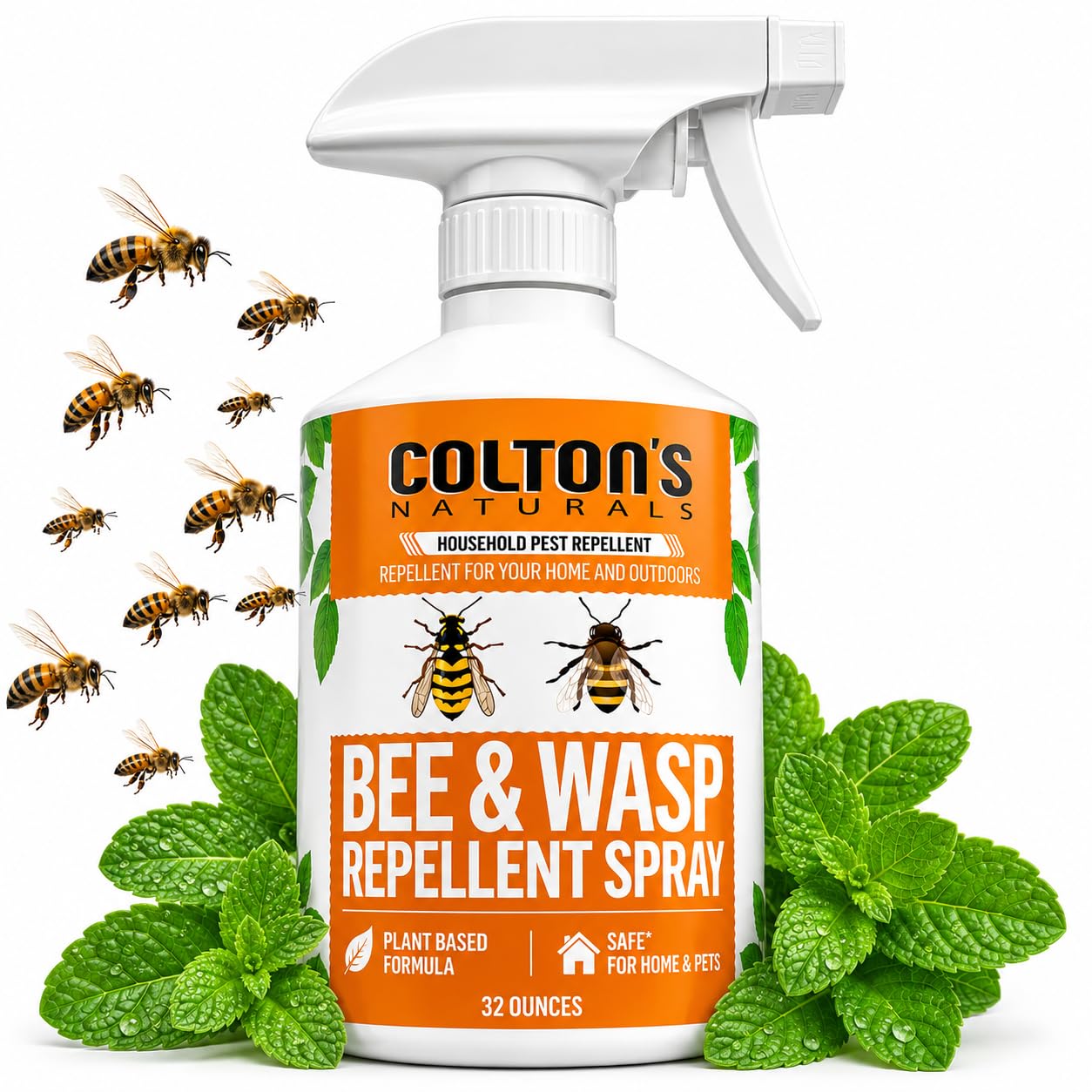
3. Colton’s Naturals Bee and Wasp Repellent Spray (32 oz)
The spray that dares to smell great while keeping bees out of your space
Made by actual exterminators, this 32 oz trigger spray leans into a cinnamon and peppermint essential-oil blend that owners consistently describe as pleasant. The scent is the single most-praised feature, with 26 buyers highlighting it, and the “safe for pets and children” angle earns 18 mentions as the second-biggest positive. It is positioned for indoor and outdoor use, even around kitchens where food is out, because the formula relies on natural oils rather than toxins.
The effectiveness story is more of a mixed bag, which is the honest reality of any natural repellent. Some shoppers say bees and wasps disappearing from an area after treatment, while others say determined bees eventually push through—one buyer described bees getting “frustrated and motored through it” when trying to bore into a house. For prevention and reduction, it works; for a full-blown invasion already underway, it needs patience and repeated spraying.
A useful practical note from the reviews: this spray holds off swarming bees long enough to perform an exclusion, which is exactly the right way to use a natural repellent. And if you are weighing it against a cheaper spray, know that its 32 oz size gives you roughly double the coverage of an 8 oz bottle at a mid-range price.
prevention-first formula: Use this to keep bees and wasps from settling on your deck or patio in the first place, and you will rarely deal with a nest at all.
reapply after rain: Serious outbreaks need daily or twice-daily spraying, and it should be reapplied after a rainstorm.
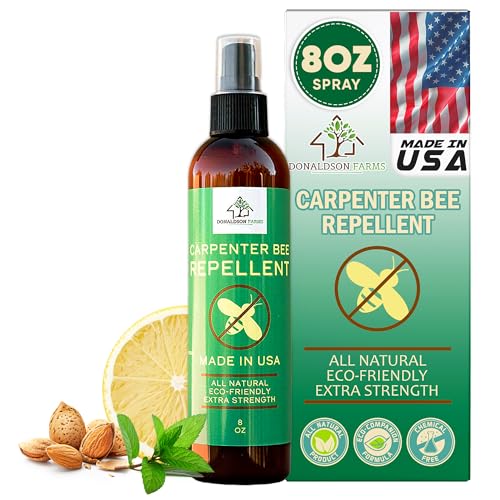
4. Donaldson Farms Carpenter Bee Repellent Spray (8 oz)
The small spray built for hitting visible drill holes head-on
This 8 oz USA-made bottle is explicitly designed for one job: direct application to the drill holes and active areas where carpenter bees are boring into decks, fences, and garden furniture. Its nature-derived blend of citrus, peppermint, and almond oils gives it a very light scent to humans, but buyers report the bees absolutely hate it—one buyer described carpenter bees scattering the moment the spray went out.
The practical reality from the data is a short but real protection window. Multiple owners mention it keeps bees away for about 5 days after spraying, which is why the makers recommend reapplying every few days. It is not a one-and-done product, but for someone who wants to treat a specific fence post without committing to a full paint job, the routine is simple and the results are there.
Two honest caveats stand out. The spray mechanism struggles when aimed sideways or upside-down, which makes reaching low or overhead spots awkward. And at an 8 oz size, you get a fraction of the volume of a 32 oz competitor, so the per-use cost runs higher—a fact the reviews call out when measuring value.
precision spot treatment: An ideal tool for spot-treating active tunnels on your deck or shed between larger maintenance projects.
plan for reapplying: The ~5-day window means a quick weekend routine beats a single heroic spray session.
5. Exterminator’s Choice Bee Exterminator (125 fl oz)

A gallon-sized arsenal for yards that need constant coverage
When your property is large enough that a 16 oz bottle feels like a squirt gun, this 125 fl oz jug (about a gallon) from Exterminator’s Choice is the answer. Made in the USA with an essential-oil and water formula, it comes with an adjustable sprayer, and customers note the nozzle can hit surfaces at a long distance—useful for treating high eaves and the underside of roof lines. The cinnamon-forward scent is described by repeat buyers as “not unpleasant.”
You get roughly eight times the liquid of a standard 16 oz spray, justifying the premium price for large-area coverage. For someone managing a large yard, garden, pool area, or garage, that volume means you can spray generously and often without rationing. It is explicitly positioned to discourage bees and wasps from settling in and nesting.
The reviews are divided on whether the formulation itself is the hero. Some reviewers point out it works really well at preventing wasp and yellow jacket nests, while others say it did not help their specific bee issue and found the value lacking. The most consistent technical complaint is the sprayer: one owner says it leaked and lost roughly three-quarters of the contents while sitting on a shelf, so testing the sprayer immediately—or swapping in your own—is the smart move.
built for acreage: Choose this when you need to cover a lot of ground and want the flexibility to reapply without running out.
check the hardware: The liquid is fine, but the included sprayer is the weak link—verify it works right after delivery.
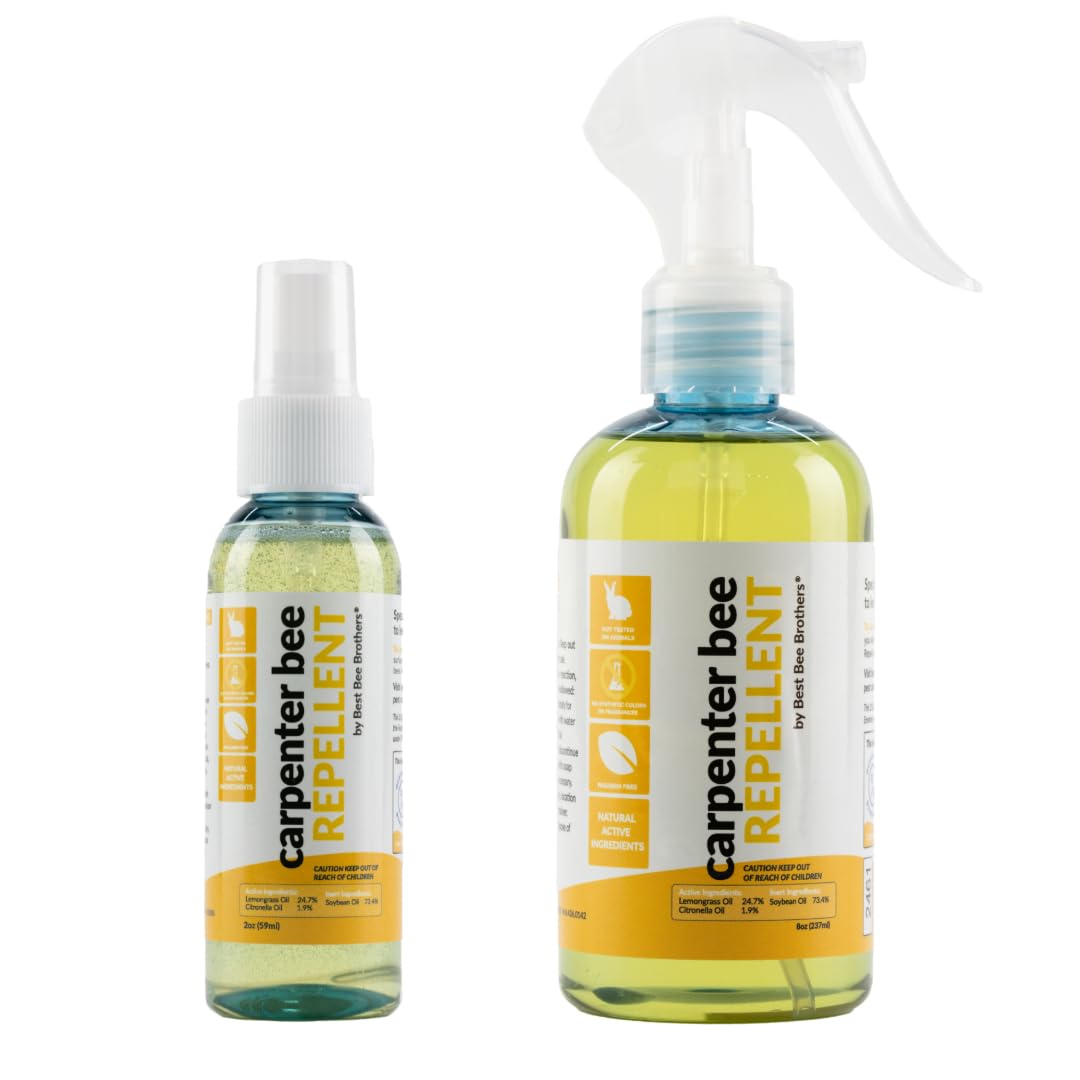
6. Best Bee Brothers Citrus Carpenter Bee Repellent (8 oz + 2 oz)
A citrus formula that treats your wood and keeps bees from ever boring in
This dual-pack from Best Bee Brothers pairs a full 8 oz spray with a portable 2 oz bottle, and it is the only pick here formulated specifically around the citrus scents carpenter bees naturally avoid. The active ingredients are citronella and lemongrass essential oils, which gives the spray a bright, citrusy character rather than a heavy chemical smell. It is marketed as a wood-preservation tool, not just a bee chaser: a few sprays keep your wooden surfaces intact by stopping the bees before they start drilling.
The company leans into convenience with its “Easy Mist and Trigger Spray” bottles—shake, point, and spray on vulnerable wood surfaces. That simple application is the appeal, and it is why the product gets credit for being effective when applied correctly. One practical owner found the pump a bit weak for overhead work and used a cheap sponge mop to reach high areas, which worked beautifully once applied.
A word on the “natural” label from the data: one owner reports needing a mask, eye protection, and a shower after spraying, describing lung irritation and nausea despite the pleasant smell. If you have chemical sensitivities, treat this as you would any essential-oil concentrate and wear protection while applying. The 2 oz bonus bottle is genuinely useful for touch-ups or travel, which softens the premium price for the pair.
preserve-and-protect: Reach for this to keep beautiful wooden furniture, gazebos, and fencing drill-free with a pleasant citrus scent.
apply with care: The spray is safe on wood, but gearing up with a mask and gloves during application is the smart play for sensitive users.
7. Eglagen 16 oz Wasp & Bee Spray

An entry-level spray that hits a 30-foot reach for a modest price
This 16 oz trigger spray from Eglagen is the most accessible entry point in the lineup, powered by a plant-based peppermint oil formula that is friendly to kids, pets, and the plants you spray directly. Its standout physical spec is reach: the manufacturer says the spray can hit bees up to 30 feet from the ground, making it useful for nests tucked high under eaves or around carports and doorways. It is positioned for both indoor and outdoor use.
The real-world results split sharply, which is typical at the budget tier. Some owners found it genuinely effective, describing it as odorless and good at keeping bees off a screen door with regular use. Others hit the fundamental limit of any natural repellent: the effect is temporary, with bees returning in under an hour unless you spray constantly. One blunt review notes it would be just as economical to use dish soap in a sprayer. A few weeks in, some owners also saw the sprayer nozzle pop off mid-use.
This works best as a low-cost trial or a backup to your main plan. If you are not ready to buy a premium spray or start a full paint-additive project, the 16 fluid ounces let you test whether peppermint-based repellents actually deter the bees around your home, without spending much upfront.
try-before-you-invest: A cheap way to test peppermint oil repellency on your property before spending more on a serious solution.
keep expectations real: This is a temporary deterrent, not a season-long fix—expect to spray often if bees are persistent.
8. Motrapso 12-Pack Natural Bee Repellent

A zero-spray approach that hangs a scent barrier anywhere outdoors
This 12-pack of hanging sachets is the only product in the guide that requires no spraying at all. Each is individually sealed with a blend of peppermint oil, lemongrass oil, geraniol, and clove oil, and you simply drop one into the provided mesh bag and hang it on a tree, porch, or in the vegetable patch. Each sachet stays effective for 60-90 days and withstands rain, snow, and sun, making it a set-and-forget option for gardens, orchards, campsites, or sheds.
The effectiveness data is genuinely split. Some shoppers say it worked where professional pest control failed, clearing wasps around a house perimeter after about a week, and one praises it for restoring safety to a child’s play area. Others report the opposite problem: rather than deterring wasps, the sachets attracted them, with one nest built directly above a hanging sachet. This is the most polarizing product in the lineup, and it is likely because scent-based repellents behave differently across bee species and locations.
The bigger and more consistent complaint is the smell. Multiple owners describe it as resembling mothballs rather than peppermint, with one writing that it “STINKS like old man breath” and does not match the listed ingredients. While the odor does fade after a day or two in open air, anyone with a sensitive nose will want to avoid hanging these in enclosed spaces like a screened porch. At 1.54 lb for the 12-pack, it is the heaviest option, but the budget price delivers value by covering many locations simultaneously.
the no-spray convenience: Choose this to blanket a large outdoor area with scent-based repellent and forget about it for up to 90 days.
consider the nose: The strong initial odor is the biggest drawback—keep these in open air, not enclosed porches.
Understanding the Specs
Oil vs. Water Based Mixing
This only matters for paint-additive repellents like the Outlast pick. If you are coating a deck with a water-based latex paint, you need an additive that mixes with water. If you are treating a log home with an oil-based product like Q8 Log Oil, you need one that blends into oils. The Outlast 16 oz bottle mixes one pint into five gallons of oil- or water-based coatings, or plain water for a quick spray.
Coverage Volume and Reapplication
Carpenter bee repellents come in wildly different sizes for very different jobs. A small 8 oz bottle like the Donaldson Farms is meant for spot treatment of specific drill holes, while a 32 oz bottle (Colton’s Naturals, Exterminators Choice) gives you enough for repeated sprays across a whole deck. The 125 fl oz jug from Exterminator’s Choice is the bulk option for large yards. Spray-on barriers fade with weather and time—expect to reapply every few days, whereas a paint additive lasts as long as the coating itself.
FAQ
How is a paint additive different from a regular repellent spray?
Is the Outlast paint additive effective on wood that already has carpenter bee holes?
Will natural essential-oil repellents kill carpenter bees?
How long does a single spray application keep carpenter bees away?
Can I use these repellents around my kids and pets?
Will a peppermint oil repellent work on wasps and yellow jackets too?
Do I need to paint an entire structure for the paint additive to work?
Can a repellent stain or discolor my wood?
Is a spray or a hanging sachet better for a screened porch?
What should I do if bees ignore the repellent entirely?
Final Thoughts: The Verdict
The strongest carpenter bee repellent choice overall is the Outlast Paint Additive because it delivers season-long protection by riding inside your paint or stain, and its effectiveness is the #1 thing owners praise across hundreds of reviews. If you need a quick, family-safe spray for a deck or patio this weekend, the Exterminators Choice Aerosol clears nests fast with a pleasant cinnamon scent. And for a no-spray, hands-off approach across a large garden or property, the Motrapso 12-Pack Sachets hang a scent barrier for up to 90 days at a time.
How We Picked
We do not accept paid placement. Every pick is matched to a real buyer and a real use-case; we do not hands-on test units.
Sources & Methodology
Specifications: manufacturer listings and product documentation. Review insights: verified customer reviews, as of August 2026. Pricing: not shown on this page (it changes often); check the current price via the retailer link.
As an Amazon Associate, Gadgets Feed earns from qualifying purchases. This does not affect which products we feature.