
That rhythmic scraping sound from inside your wooden fascia or deck railing means carpenter bees are already tunneling their successful nursery. Spotting the perfectly round half-inch entrance hole triggers a unique homeowner annoyance—these solitary wood borers don’t eat the wood but excavate long galleries for their brood, leaving cosmetic damage and inviting secondary pests like woodpeckers that will tear your siding apart trying to reach the larvae inside. The difference between a quick fix and recurring seasonal damage starts with the application method you choose.
I’m Min — the co-founder and writer behind Gadgets Feed. I spend my time comparing the chemical formulations, residual timelines, and delivery mechanisms of the most effective wood-destroying insect treatments on the market to help homeowners make confident purchasing decisions.
Whether you’re treating a single drilled hole or managing a full wrap-around porch infestation, selecting the right carpenter bee spray comes down to matching the active ingredient and foam or dust delivery system to the specific depth and angle of the tunnels you’re trying to eradicate.
How To Choose The Best Carpenter Bee Spray
Carpenter bees require a specific approach because they do not share nests or return to a single point of entry like social wasps. The product must reach the queen deep inside the tunnel, kill the eggs and larvae, and leave a residual barrier that deters re-drilling in the same wood grain. The three factors below separate an effective treatment from a superficial fix.
Delivery Method: Aerosol, Foam, or Dust
Standard liquid aerosols spray up to 27 feet but stay on the surface and evaporate quickly inside a dry tunnel. Foam products expand into the lateral galleries where females lay their eggs, forcing the active ingredient into every branch of the nesting system. Dust insecticides like cyfluthrin or fipronil cling to the inner walls of the wood and stay active for weeks, working as the bees crawl over it.
Active Ingredient and Residual Timeline
Pyrethroids like cyfluthrin and permethrin deliver fast knockdown on direct contact and maintain residual activity for two to four weeks depending on temperature and moisture. Fipronil, found in professional-grade foams, travels through the insect’s nervous system and can pass to the colony through contact with treated surfaces. Imidacloprid paired with fipronil offers a broader kill window for mixed infestations.
Application Reach and Precision
The nozzle design determines whether the payload reaches the rear of the tunnel. Snorkel tubes on aerosol cans allow you to direct spray upward into the hole, but the liquid can pool at the entrance instead of traveling inward. Foam products with extension hoses fill the void under pressure, while bellows dusters or puffer bottles push dry powder deep into the crevice without caking at the rim.
Quick Comparison
On smaller screens, swipe sideways to see the full table.
| Model | Category | Best For | Key Spec | Amazon |
|---|---|---|---|---|
| Atticus Tirade 1% Cyfluthrin Dust | Dust Insecticide | Deep gallery residual control | 1% Cyfluthrin | Amazon |
| Control Solutions Fuse Foam | Foam Insecticide | Expanding void fill | Fipronil 0.005% + Imidacloprid 0.02% | Amazon |
| Spectracide Carpenter Bee Foam (3-Pack) | Foam Aerosol | Hard-to-reach overhead holes | Expanding foam formula | Amazon |
| Revenge Termite & Carpenter Ant Killer | Aerosol Spray | Immediate contact kill | 15 oz aerosol | Amazon |
| Spectracide Wasp & Hornet (3-Pack) | Aerosol Spray | Long-distance spotting | 27 ft spray range | Amazon |
| GORDON’S Permethrin 10 | Concentrate | Perimeter barrier treatment | 10% Permethrin | Amazon |
| Spectracide Wasp & Hornet (12-Pack) | Aerosol Spray | Large property bulk supply | 12 count case | Amazon |
In‑Depth Reviews
1. Atticus Tirade 1% Cyfluthrin Dust Insecticide
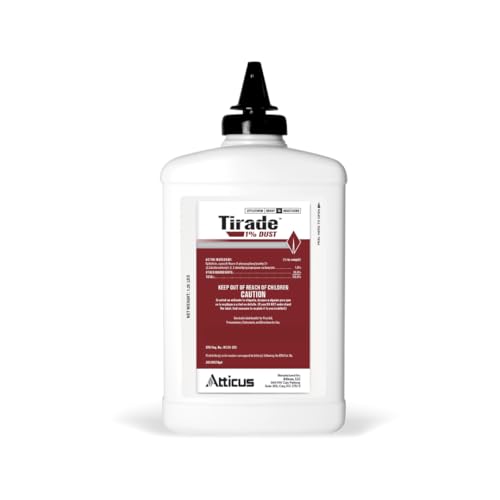
Atticus Tirade shares its cyfluthrin active ingredient with the leading brand-name dust, delivering the same knockdown power at a per-ounce cost that favors the buyer who needs to treat multiple fascia boards or shed roofs. The 1% concentration stays suspended on vertical tunnel walls—liquid runs out, but dry dust clings to the roughened interior of the excavation and kills returning bees as they crawl through the treated zone.
Hobbyist pest controllers and homeowners alike note that this product works best when applied with a bellows duster designed for crack-and-crevice work. A light puff directed into the entrance hole coats the gallery without bridging the opening, which is critical because bees that sense a blocked tunnel will simply drill a new bypass entrance inches away. The powder leaves no stain on wood and carries a low odor profile that doesn’t linger around living spaces.
Multiple reviewers report that nests treated at dusk produced visible results within 48 to 72 hours, with larvae dropping from the hole and adults ceasing activity. The EPA-registered label covers over 50 insect species, which makes this a versatile tool for anyone managing more than just carpenter bees—wasps, hornets, and roaches are all susceptible to the same cyfluthrin dust.
Why it’s great
- Residual dust stays active for weeks inside dry wood tunnels
- Non-staining and low-odor for sensitive areas
- Effective against over 50 insect species with one application
Good to know
- Requires a separate duster for precise application
- Not available for sale in Alaska, California, Hawaii, Puerto Rico, or Vermont
2. Control Solutions Fuse Foam Termiticide/Insecticide

Fuse Foam carries a professional-grade dual-active formulation—0.005% fipronil and 0.02% imidacloprid—that attacks the insect nervous system through two distinct pathways, making it exceptionally difficult for any wood-boring insect to survive exposure. The foam base is what separates this from ordinary aerosols: it expands to roughly three times its initial volume after being injected into the hole, filling every lateral branch tunnel that the original female carved.
The application technique requires restraint because the foam continues expanding once inside the wood. Users who spray sparingly into the entrance report that the foam reaches the terminal chamber where the brood cells sit, coating the larvae and eggs that standard liquid sprays never touch. Within 48 hours, dead adults and larvae are observed dropping out of the hole, and the residual active ingredient on the foam film continues to kill any returning insect that touches the treated surface.
This product is labeled for termites and wood-destroying insects, and the customer feedback consistently highlights its performance against carpenter bees specifically. The can includes an extension tube that delivers the foam upward into bottom-facing holes on soffits and eaves—exactly the overhead angle where liquid tends to drip back out before it can do its work.
Why it’s great
- Expanding foam fills lateral branch tunnels that liquids miss
- Dual active ingredients reduce resistance risk
- Professional-grade formulation available without a license
Good to know
- Not for sale to Alaska, California, Connecticut, or Puerto Rico
- Must be applied sparingly or foam can overflow the entrance hole
3. Spectracide Carpenter Bee & Ground-Nesting Yellowjacket Killer Foam (3-Pack)

Spectracide’s foam aerosol is designed from the ground up specifically for carpenter bee and ground-nesting yellowjacket applications, with a formula that thickens into an expanding blanket inside the void rather than pooling at the entrance. The three-pack configuration gives you enough volume to treat an entire wrap-around porch or multiple outbuildings in a single afternoon without needing to reorder mid-project.
The extension tube locks onto the nozzle securely and allows you to reach holes at awkward upward angles where the spray would otherwise miss its target. Users report that the foam penetrates the nest chamber quickly and that bees inside the tunnel cannot escape because the expanding barrier blocks their exit route. Some customers noted that a second treatment after seven to ten days was necessary for heavy infestations, which is standard protocol for carpenter bee control because freshly emerged adults may have been sealed behind the initial foam cake.
One factor to consider is that the foam must contact the insect directly for instant knockdown; if applied when the bee is out foraging, the residual kill speed is slower compared to dust-based treatments. Applying at dusk when the female is inside the gallery maximizes the product’s effectiveness and prevents the bee from simply shaking off the foam and returning.
Why it’s great
- Foam expands to fill interior galleries and block exits
- Extension tube reaches overhead and angled holes
- Three cans provide generous coverage for large jobs
Good to know
- Works best when bees are inside the tunnel at dusk
- Heavy infestations may require a follow-up application after 10 days
4. Revenge Termite & Carpenter Ant Killer Aerosol

Bonide’s Revenge is a dual-action aerosol that provides immediate contact kill against carpenter bees while leaving a residual barrier that remains active for two to four weeks after application. The formula targets carpenter ants, termites, and carpenter bees, which makes it a practical choice for homeowners who find themselves dealing with multiple wood-destroying insects around the same structure.
The snorkel tube attachment is a standout design feature for this price tier—it slides into the entrance hole and directs the spray straight down the gallery rather than splashing against the rim of the wood. Users who treated surface-level active holes confirmed that the spray knocked down the adults within seconds of contact, and the residual film on the tunnel walls prevented re-entry after the initial treatment wore off.
Because this is a liquid aerosol rather than foam or dust, the reach into long, curved galleries is shallower than the expanding alternatives. It works best for shallower tunnels less than six inches deep or as a quick response when you spot a bee actively drilling. Pairing it with a dust or foam treatment for the deeper nest chambers creates a comprehensive control strategy.
Why it’s great
- Snorkel tube delivers spray deep into the entrance hole
- Residual activity protects treated areas for up to four weeks
- Effective on multiple wood-boring insects
Good to know
- Liquid does not expand into complex branching tunnels
- Shorter residual in wet or humid conditions
5. Spectracide Wasp and Hornet Killer Aerosol (3-Pack)

Spectracide’s wasp and hornet killer is primarily marketed for social wasps, but its 27-foot spray range and fast-acting pyrethroid formula make it a viable option for spot-treating carpenter bees that are actively hovering around your eaves. The jet stream delivers a soaking blast that drops the bee instantly, and the three-pack provides enough coverage for multiple active areas around a standard residential lot.
The limitation for carpenter bee control is that this aerosol stays on the surface and does not penetrate deep into the tunnel. It works well when you see the bee entering or exiting the hole—spraying directly at the insect as it lands or emerges gives a satisfying instant result. For galleries where the queen has already retreated deeper, the liquid will not reach her, and the treatment will feel incomplete.
Users appreciate the distance safety factor: you can stand well away from the treated area, which reduces the chance of startling a defensive bee and getting stung. The three cans at this price point make it an accessible entry-level option, but experienced users will want to transition to a dedicated foam or dust product after the initial knockdown.
Why it’s great
- 27-foot spray distance keeps you away from defensive insects
- Immediate contact kill on active flying bees
- Three-pack is a budget-friendly starter solution
Good to know
- Does not penetrate deep into carpenter bee tunnels
- No residual activity inside the wood gallery
6. GORDON’S Permethrin 10 Livestock & Premise Spray

GORDON’S Permethrin 10 is a concentrate designed for livestock premises and large outdoor barrier treatments, offering a 10% permethrin load that you mix with water in a pump sprayer. One quart of concentrate yields roughly 20 gallons of finished spray at the typical dilution rate, which makes this the correct choice for homeowners who want to treat the entire exterior perimeter of their house rather than spot-drilling individual holes.
The application strategy here is prevention: spraying the untreated wood surfaces—fascia, rake boards, untreated cedar siding—with the mixed solution creates a residual barrier that discourages new carpenter bee drilling for several weeks. Users who combine this perimeter spray with a directed foam or dust treatment for existing holes report that the next season’s emergence is dramatically reduced compared to relying on spot treatments alone.
This product requires a separate sprayer, which adds equipment cost and setup time. The permethrin solution leaves a visible white residue on dark wood that may be cosmetically objectionable on stained or painted surfaces. For new construction or bare wood, however, it is one of the most cost-effective preventive tools available.
Why it’s great
- 10% permethrin concentrate dilutes to cover large areas affordably
- Excellent for seasonal barrier treatments against new drilling
- Also treats livestock pests and ticks for multi-use value
Good to know
- Requires a separate pump sprayer for application
- May leave a visible white residue on darker wood surfaces
7. Spectracide Wasp and Hornet Killer (12-Case)

The 12-case of Spectracide’s wasp and hornet killer is designed for property managers, landlords, or homeowners with multiple structures and a recurring seasonal wasp problem that extends beyond carpenter bees. Each can delivers the same 27-foot jet stream and contact-kill formula that works on carpenter bees while they are actively hovering, but the sheer volume here signals a commitment to aggressive perimeter defense rather than precision gallery treatment.
Customers who purchased this case noted that the nozzles do not include the narrow snorkel tube attachments found on some other Spectracide products, which means you cannot target the spray directly into a half-inch carpenter bee hole. The spray pattern is a wide cone that soaks the surface area around the entrance rather than channeling deep into the tunnel. For social wasp nests, this is fine—for carpenter bee galleries, it limits the efficacy to bees that are on the surface at the moment of application.
The 900-day shelf life printed on the can ensures that the case remains effective for multiple seasons if stored away from extreme heat. If your pest problem is predominantly carpenter bees with deep tunnel systems, you will achieve better results by investing in a foam or dust product for the galleries and using these cans for the visible flying adults that emerge at dawn.
Why it’s great
- 12 cans provide season-long supply for large properties
- Long 900-day shelf life for multi-year storage
- Effective contact kill on flying adult carpenter bees
Good to know
- Wide spray cone does not penetrate deep tunnels
- No snorkel nozzle for targeted hole injection
FAQ
Should I seal the carpenter bee hole immediately after spraying?
Can I use a standard wasp spray for carpenter bees?
How does foam kill carpenter bees better than liquid spray?
Final Thoughts: The Verdict
For most users, the best carpenter bee spray winner is the Atticus Tirade 1% Cyfluthrin Dust because it provides the longest residual protection inside the gallery and works against a broad spectrum of wood-destroying insects with a single application. If you want expanding coverage that reaches complex branch tunnels, grab the Control Solutions Fuse Foam. And for a cost-effective perimeter barrier that prevents new drilling across large exterior surfaces, nothing beats the GORDON’S Permethrin 10 concentrate.