
Our readers keep the lights on and my morning glass full of iced black tea. As an Amazon Associate, I earn from qualifying purchases.
Specs are compiled from manufacturer listings and verified buyer reviews and can change over time — please confirm the key details on the product page before buying.
Old carpet glue on bare concrete is among the most hated jobs in a remodel — the glue is hard, it is bonded into the pores, and the wrong bottle leaves you scraping the same patch all weekend. The honest answer up front: pick a remover that stays wet long enough to soften the adhesive underneath rather than one that evaporates on the surface. Each pick below is a real carpet glue remover you can use on concrete, and the notes tell you which ones actually loosen mastic (the thick glue that holds carpet down) and which ones you will have to work harder with.
I’m Min — the founder and writer behind Gadgets Feed. This guide is built by comparing the manufacturers’ published specifications and the patterns across verified customer reviews, so you get each pick’s real strengths and trade-offs instead of marketing spin.
You will see how fast each formula works, how far a bottle or jug reaches, and how harsh the fumes are in a closed room. The goal is simple: find the carpet glue remover from concrete that keeps the mastic soft long enough to scrape it up in one pass.
Our Picks at a Glance
How To Choose The Best Carpet Glue Remover From Concrete
Concrete is porous, so carpet adhesive sinks into it and cures hard. A remover has to do two jobs: soften the glue and stay wet long enough for the softening to happen. If it dries out before the glue gives, you are back to a chisel and a bad mood.
Dwell time and how to apply it
How long a product needs to sit is the number that decides your day. One formula here asks for a check every 90 minutes until it is ready. Another lists 1 to 2 hours for black or asbestos mastics and 4 to 8 hours for vinyl or acrylic mastics. Spread it evenly, cover it if the room is warm, and give it the full time before you test a corner with a scraper.
Coverage per gallon and how much to buy
Coverage is quoted as square feet per gallon, and the spread between products is wide. One jug covers about 70 square feet per gallon. Another reaches 100 to 200 square feet per gallon. A third states 200 square feet per gallon. Measure your floor first, then divide by that rate so one order covers the whole slab.
Fumes, solvent strength, and indoor work
Solvent-based removers strip fast but fill a room with fumes. Water-based and soy-based formulas trade some speed for a workable smell. Watch for a product that contains no Methylene Chloride or NMP — those two solvents are the ones most people want to keep out of a basement. On a job with no windows open, pick the low-odor option and ventilate anyway.
Matching the remover to your adhesive
Not every glue is the same. Latex and acrylic carpet adhesives behave differently from pressure-sensitive adhesive and from black cut-back mastic. Check the label’s surface and adhesive list before you buy, then remove a small test patch before you spread a whole gallon across the subfloor.
Quick Comparison
| Model | Best For | Size / Volume | Listed Coverage | Form | Amazon |
|---|---|---|---|---|---|
| BOSTIK Ultimate 32fl/oz Adhesive Remover Liquid★ Best Overall | Tight spots and tool cleanup | 32 fl oz | — | Liquid | Amazon |
| Blue Bear 500MR BEAN-e-dooMastic Specialist | Aged black mastic | 1 Quart | 100–200 sq ft per gallon | Gel | Amazon |
| Max Strip Floor Adhesive Remover | Whole-subfloor glue stripping | 1 Gallon | — | Gel | Amazon |
| Krud Kutter AR01 Adhesive Remover | Light glue and surface grime | 1 Gallon | 200 sq ft per gallon | Liquid | Amazon |
| 626 Carpet Adhesive Remover | Budget latex and acrylic adhesive | 1 Gallon | 70 sq ft per gallon | Liquid | Amazon |
| Sentinel Formula 626 Carpet and Sheet Vinyl Adhesive Remover | Large-area sheet vinyl adhesive | 5 Gallons | — | Liquid | Amazon |
In‑Depth Reviews
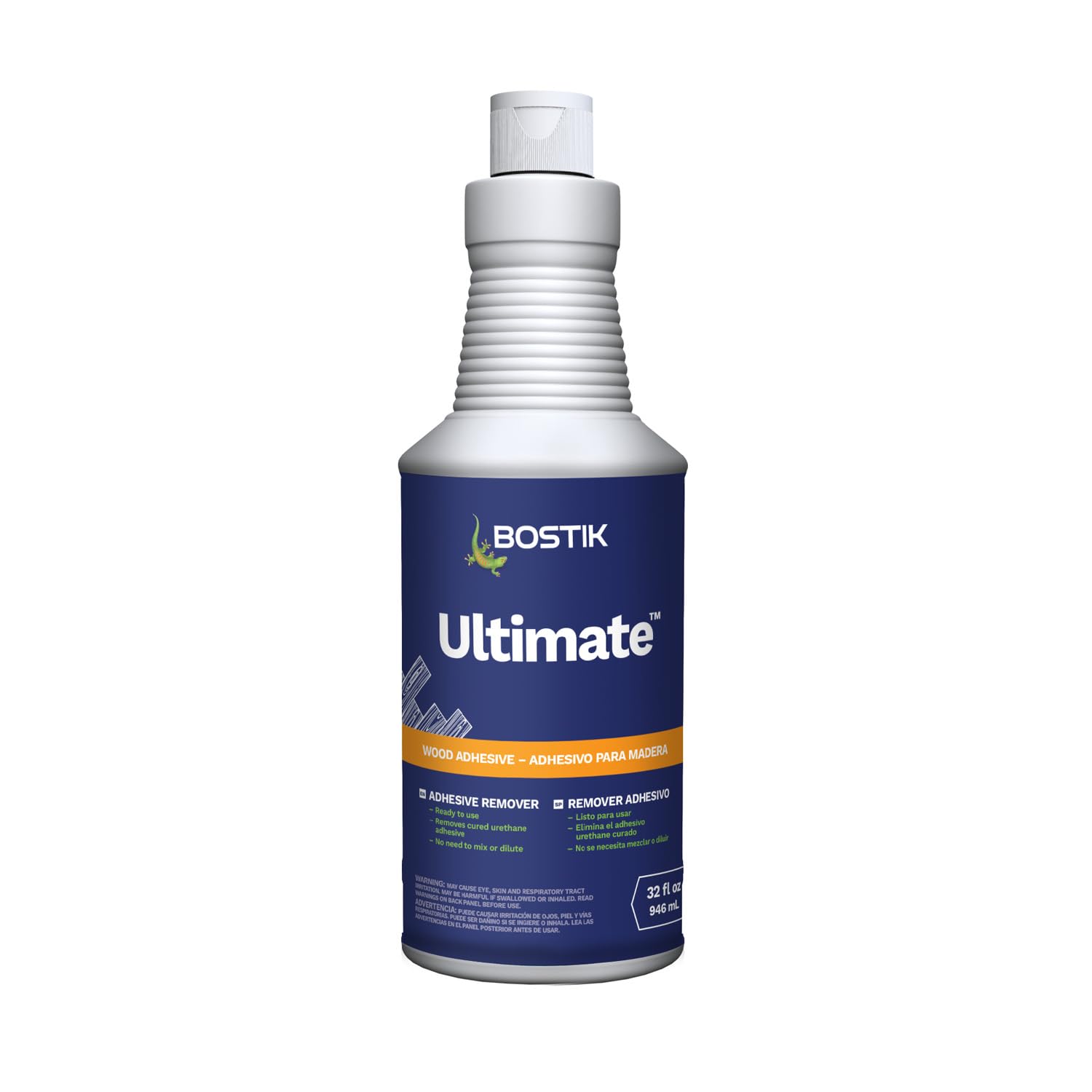
1. BOSTIK Ultimate 32fl/oz Adhesive Remover Liquid
Our pick — 4.0+★ from 150+ verified ratings; the strongest balance of quality and price.
The squeeze bottle that gets into the corners a jug cannot reach.
Start with what this one is built to do. It is a urethane adhesive remover (a liquid made to break down cured and wet urethane, construction, and wood-floor glues), and the label lists hardwood, vinyl, tile, laminate, and concrete among the surfaces it works on. On carpet glue over concrete, that makes it the pick for the messy edges — baseboards, door thresholds, stair treads, and the tight corners where a full-size jug is useless.
The 32-ounce squeeze bottle weighs 2 pounds, and the precision tip puts the liquid exactly on the glue spot instead of flooding the floor. Compare that with the 626 Carpet Adhesive Remover at 8.6 pounds in a 1-gallon jug, and this is the bottle you actually want in hand for detail work. The maker also states it is made in the USA and that the formula is water-rinseable, so a wet rag finishes the surface after the glue lifts.
Here is the honest catch. Functionality is what the formula does well, and the reviews back that up. But adhesive removal itself draws mixed feedback — some people get the glue off a floor cleanly, and others are left with an oily residue that needs a second wipe. Treat this as a spot-and-detail remover rather than the one you spread over 400 square feet. The upside is a low-odor, biodegradable liquid that will not gas out a closed bedroom while you work.
strongest on cured glue
- The precision tip targets glue spots and trowel ridges without soaking the whole floor.
- Low-odor and biodegradable, so indoor remodels stay breathable.
- Water-rinseable — wipe the surface down after the adhesive lets go.
- Works across concrete, vinyl, tile, laminate, and hardwood.
fumes need airflow
- 32 ounces goes fast on a large subfloor — this is detail work, not a whole-room pour.
- Can leave an oily film behind on some surfaces that needs a follow-up wipe.
tough jobs first: you are cleaning glue off thresholds, baseboards, and stair edges, or you want a low-odor bottle for a small concrete repair.
small touch ups: you have a full room of cured carpet glue — a gallon-size gel will get you through faster.
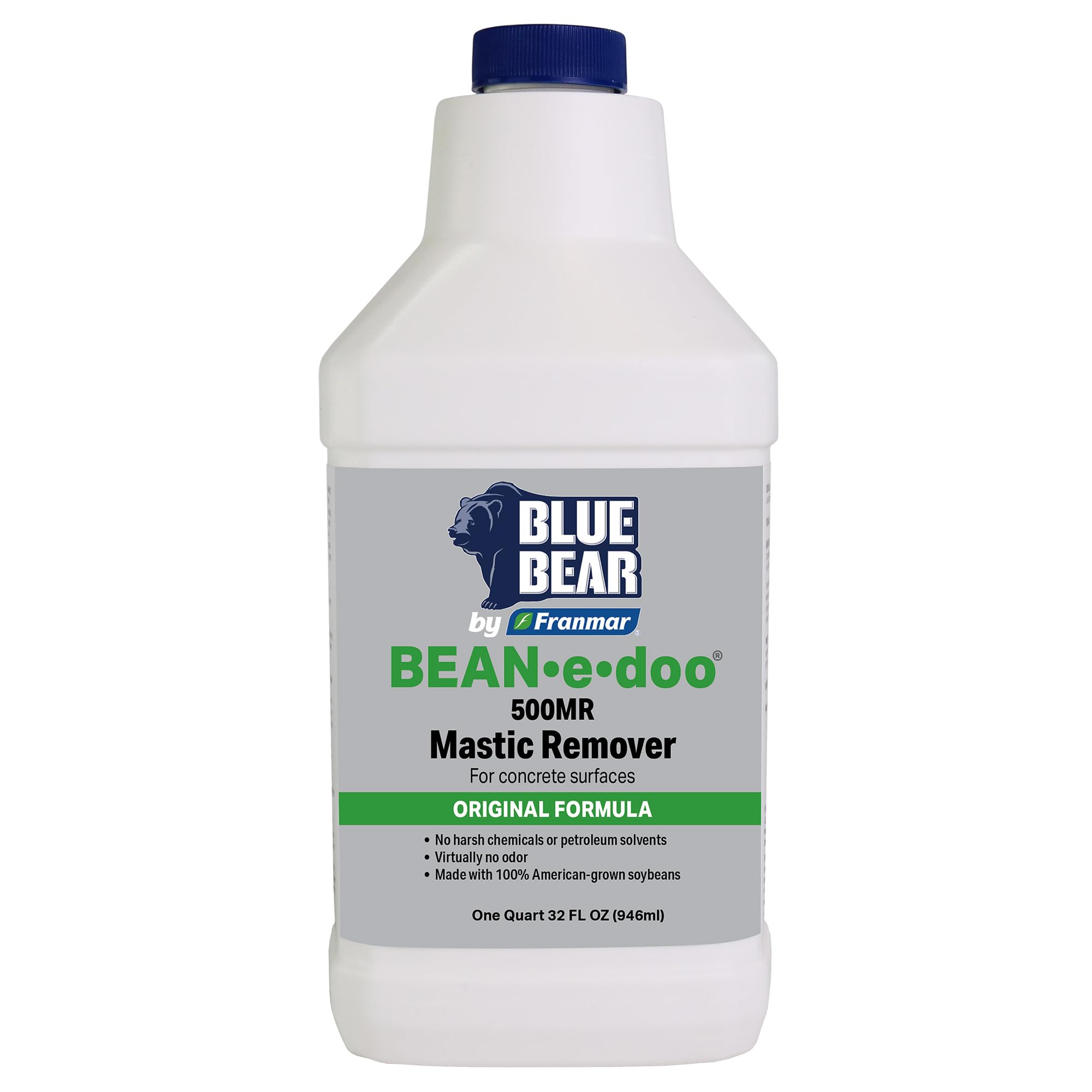
2. Blue Bear 500MR: BEAN-e-doo Mastic and Adhesive Remover for Concrete 1 Qt
The soy gel that eats through decades-old black mastic and barely smells.
If your concrete is wearing a 1950s cut-back mastic, this is the one worth starting with. The soybean-based formula is non-caustic and low-VOC (low in the volatile solvents that cause fumes), and it is designed to penetrate the adhesive until it softens rather than attacking it on the surface. On concrete that has been sealed with old black mastic, that dwell-and-penetrate approach is what actually works.
The container is a 1-quart size measuring 4 x 4 x 9 inches and weighing about 2.07 pounds, which keeps it easy to handle while you work one patch at a time. Coverage is listed at roughly 100 to 200 square feet per gallon. The maker gives a real timeline: allow 1 to 2 hours for black or asbestos mastics and 4 to 8 hours for vinyl or acrylic mastics, then scrape the softened glue and reapply if needed.
Effectiveness is the loudest thing people talk about here, and it is the product’s strongest card. Odor is the second recurring theme — no harsh petroleum smell, which matters when the job is in an occupied house. The messy part is real: clean-up takes work, and removability is genuinely a mixed bag, with the working time running longer than some buyers expected. This is a patience product. Spread it, walk away, come back when the mastic gives.
soy based formula: non-caustic and low-VOC means you can work indoors without a respirator headache, and the gel clings to vertical edges instead of running.
slow acting pace: a 1-to-2-hour wait on black mastic is normal, and vinyl or acrylic glues can run 4 to 8 hours — plan the job around that window, not against it.
green minded buyers: renovation work on old concrete where black mastic or hardened construction glue is the enemy.
fast deadline work: you need a fast turn around or you are working a small glue spot — the multi-hour dwell is wasted on a ten-minute job.
3. Max Strip Floor Adhesive Remover, Carpet & Mastic Glue Stripper, 1 Gal

A full gallon of citrus gel built to strip a whole subfloor in one pass.
For a whole room of carpet glue on concrete, volume and dwell time are what you are buying, and this jug gives you a gallon of gel. The formula is made to dissolve carpet glue, tile adhesive, mastic, and subfloor residue, and the maker states it usually handles the job in a single application. It contains no Methylene Chloride or NMP — two solvents many people deliberately avoid indoors — and it carries a citrus scent instead of a chemical one.
Application is straightforward. Shake it thoroughly before each use, spread it over the surface, then check every 90 minutes until the glue is ready to scrape. That is a gel working slowly into the adhesive rather than flashing off. Compared with the Blue Bear quart, this is the bulk option: one gallon versus one quart, for a full floor rather than a patch.
Here is the split you should know about. Effectiveness is the most-discussed topic, and it draws mixed reports — sometimes the glue comes up quickly, and sometimes it fights back. Removal time lands the same way, with some jobs coming up mostly clean and others leaving adhesive stuck to the concrete. Your prep helps: a warm room, a thick even coat, and the full 90-minute check cycle give the gel its best chance. This is a real floor-stripping gel for the buyer who wants a whole-subfloor product, not a spot fixer.
wide area strips: you are stripping a whole concrete floor and want a citrus-scented gel with no Methylene Chloride or NMP in the jug.
delicate surfaces: you want guaranteed one-pass results — the reviews split, so plan a second application on stubborn patches.
4. Krud Kutter AR01 Clear Adhesive Remover with Mild Odor, 1 Gallon

A water-based spray that lifts light glue and heel marks without fumes.
This one is for the lighter end of the job. It is a ready-to-use formula — spray it on and scrape it off — and the maker positions it as a safe alternative to solvent-based removers. That means water-based, biodegradable, non-flammable, non-toxic, and non-abrasive. On a concrete floor with fresh carpet seam sealer or a thin film of adhesive, that gentler chemistry is exactly the right tool.
It also multi-tasks beyond glue. The label lists dirt, grease, grime, heel marks, and floor wax alongside carpet seam sealer and mastic. Coverage is stated at 50 square feet per quart or 200 square feet per gallon, so a gallon reaches a decent-sized room. That is a better stated spread than the 626 Carpet Adhesive Remover at about 70 square feet per gallon, which matters when you are comparing jug for jug.
Honesty time: effectiveness is mixed here, and so are the buyers’ verdicts. Some find it works extremely well on their adhesive, and others find it does nothing at all on cured glue. That gap usually depends on the glue itself — fresh seam sealer (the glue used to join carpet seams) and light residue come up easily, while old, hard-set carpet adhesive over concrete needs a longer-dwell gel (a thicker formula that stays wet longer). This is a sensible pick when your glue is thin, your room needs low fumes, or you are also cleaning the concrete afterward.
indoor room use: you want a non-flammable water-based spray for light adhesive, seam sealer, and general concrete clean-up.
heavy residue jobs: your floor is coated in thick, cured carpet glue — that needs a gel that sits for hours, not a quick spray.
5. 626 Carpet Adhesive Remover
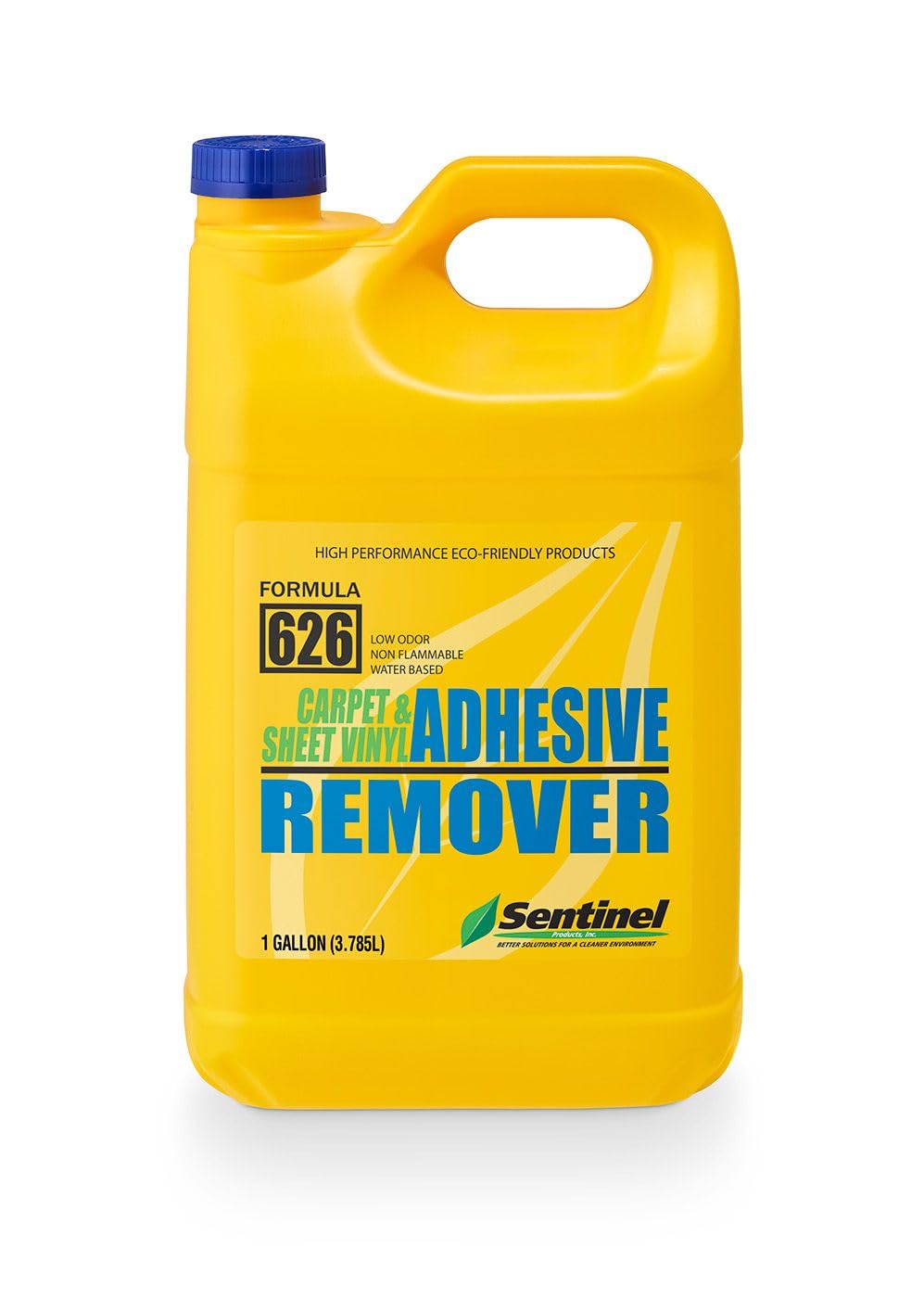
The plain water-based jug for latex and acrylic glue on a budget.
What this jug is designed for is worth being clear about. It is a water-based, biodegradable liquid aimed at latex, acrylic, and pressure-sensitive adhesives, and the label lists concrete, terrazzo, ceramic tile, vinyl tile, and wood substrate as suitable surfaces. The formula is non-flammable and non-hazardous, so it is fine to use indoors on a sealed floor.
The 1-gallon jug weighs 8.6 pounds, so it is portable for a full-floor job. Coverage is stated at about 70 square feet per gallon — a more modest spread than the Krud Kutter gallon at 200 square feet per gallon, so budget a bit more product for a big room. It is also specific about the glues it handles: yellow interior carpet adhesive, carpet square adhesive, sheet vinyl adhesive, and luxury vinyl plank adhesive among them.
The honest read is that this one draws the most divided response in the group. Effectiveness is the topic that comes up most, and it is mixed, with a fair share of buyers saying it does not dissolve glue well from surfaces like concrete porches. That is a real limit, not a shipping fluke. If your glue is fresh latex adhesive, it may be honest value. If it is old and hardened into the concrete, a longer-dwell gel is the safer bet.
carpet pull outs: a budget-minded job with fresh latex or acrylic carpet adhesive and a preference for a low-odor, non-flammable formula.
hard floor work: the glue is old and cured to the concrete — the reported results get shaky there.
6. Sentinel Formula 626 Carpet and Sheet Vinyl Adhesive Remover, 5 Gallons
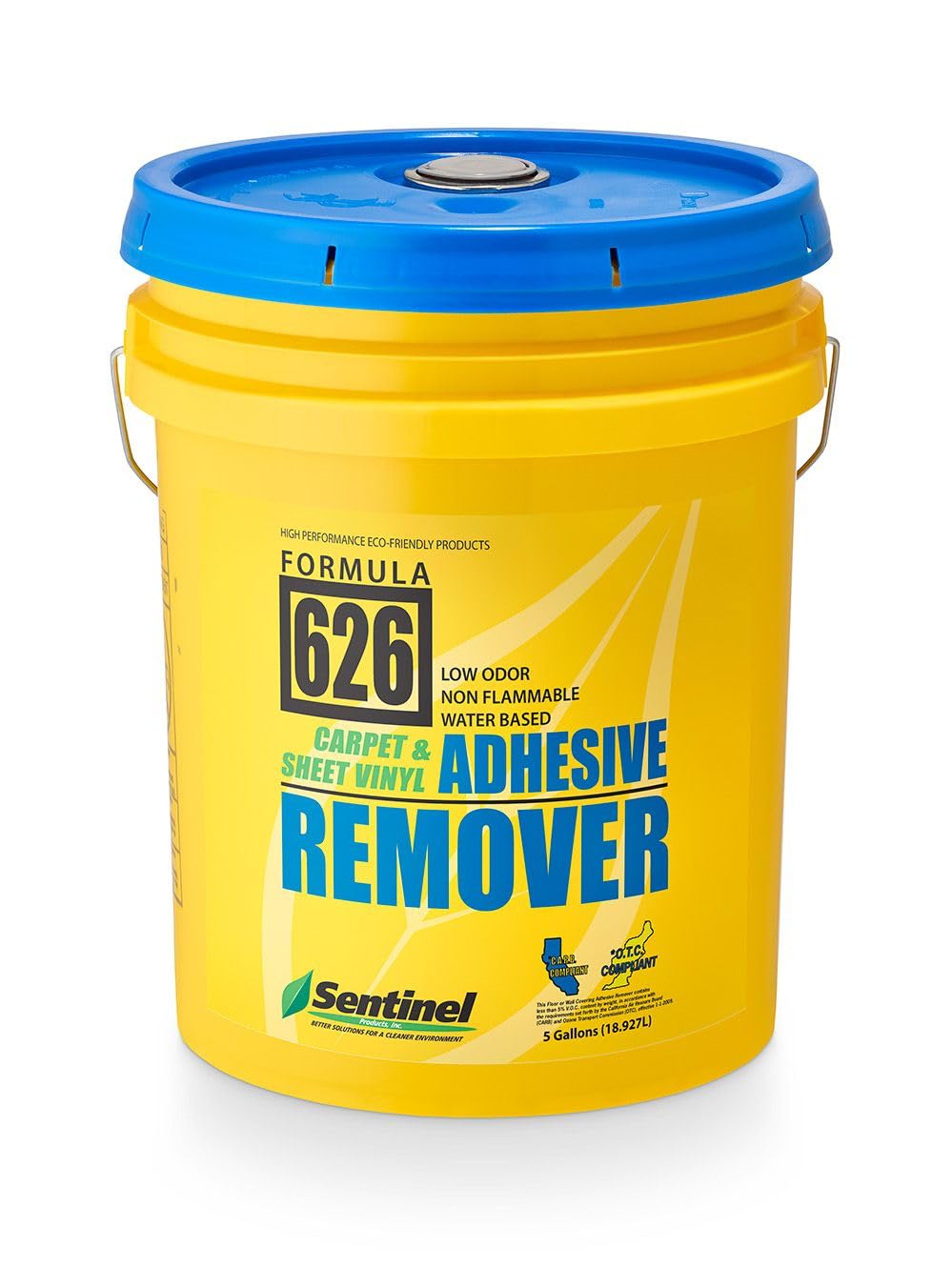
Five gallons in one container, versus the 1 gallon in the 626 jug.
Scale is the whole reason to look here. This container holds 5 gallons against the 1 gallon of the 626 Carpet Adhesive Remover, so it is aimed at a contractor-level job or a very large exposed concrete floor. It is the same carpet and sheet vinyl adhesive remover family, sold in a bulk pail, and the label describes it as a powerful, biodegradable, fast-removal formula.
The pail itself is a real thing to plan for. It measures 13 x 13 x 16 inches and weighs 43 pounds, so you are not carrying this up a ladder one-handed. That weight is the honest trade-off of bulk buying: you get enough product to cover a big space, but you need a helper and a clear path to the floor.
The caution here is the most important part of this review. Effectiveness is the main topic that comes up, and it is mixed-to-negative, with the adhesive removal drawing the same divided feedback. Some buyers do not find it works better than alternatives. That does not make it a bad product across the board — but it does mean you should test it on a small hidden patch of concrete before you open a 5-gallon pail (about 19 liters) and spread it across a whole floor. If it does not bite, you have learned that on a square foot rather than the entire room.
bulk size value: a 5-gallon pail is a serious volume for a large floor, and it is biodegradable and labeled for fast removal.
patch test needed: the reported results are uneven, so a hidden test patch is the sensible opening move on a big pail.
large vinyl jobs: you have a huge floor and want bulk product in one container rather than multiple small jugs.
tiny repair spots: you cannot test a patch first or you need a formula with a stronger track record on cured concrete glue.
Understanding the Specs
Dwell time (how long the remover sits before you scrape)
Dwell time is the working window between applying the remover and scraping the glue off. A short window suits fresh carpet seam sealer; a long window is what breaks down old black mastic. Pick a formula that tells you its dwell time clearly, then give it the full time before you probe a corner. If you scrape too early, you damage the concrete surface and waste product.
Coverage rate (square feet per gallon)
Coverage rate tells you how much floor one gallon can treat. The numbers here range from about 70 to 200 square feet per gallon, so a 400-square-foot slab can take two to six gallons depending on the product. Measure your floor, divide by the stated rate, and round up to the next gallon.
VOC and odor rating
VOC stands for volatile organic compounds — the solvents that turn into fumes in the air. A low-VOC formula is the better choice for an occupied house or a basement without good airflow. Soy-based and water-based removers do the same softening job with less smell, so check the label for low-VOC or non-caustic wording before you commit to a whole-floor job indoors.
Adhesive type and surface compatibility
Adhesive type matters as much as the container size. Latex, acrylic, pressure-sensitive, sheet vinyl, and black mastic all behave differently on concrete. Check the label’s list of both the adhesives it targets and the surfaces it is safe on, then run a small test patch. That single step catches most of the disappointments people report with any remover.
FAQ
Does carpet glue come off concrete with a remover alone?
How much remover do I need for a 400 square foot concrete floor?
Can I use these removers indoors without windows open?
Is a gel better than a liquid for carpet glue on concrete?
Will these removers damage the concrete surface?
Do these removers work on black cut-back mastic?
What is the difference between a remover and a regular solvent?
Should I use one remover for both carpet glue and sheet vinyl glue?
Why does the same remover work for some buyers and not others?
Do these removers need to be washed off after scraping?
Final Thoughts: The Verdict
The practical winner is the BOSTIK Ultimate Adhesive Remover Liquid — a squeeze bottle that gets into the corners and edges a jug cannot reach, and it does it with a low-odor, water-rinseable formula. If you are stripping a whole concrete floor, reach for the Blue Bear BEAN-e-doo Quart, whose soy gel is built for old black mastic with a stated 1-to-2-hour dwell. And if the job is large but you want a gallon of citrus gel with no Methylene Chloride or NMP, the Max Strip is the one to pull off the shelf. Test a patch before you commit a whole container — the fastest way to avoid the disappointment reviews describe.
How We Picked
We do not accept paid placement. Every pick is matched to a real buyer and a real use-case; we do not hands-on test units.
Sources & Methodology
Specifications: manufacturer listings and product documentation. Review insights: verified customer reviews, as of November 2026. Pricing: not shown on this page (it changes often); check the current price via the retailer link.
As an Amazon Associate, Gadgets Feed earns from qualifying purchases. This does not affect which products we feature.