
A carport that collapses in a moderate storm isn’t a shelter — it’s a liability. High winds don’t just rattle loose frames; they turn undersized anchors into projectiles and send thin-gauge roofing panels tumbling across the yard. The difference between a structure that holds firm and one that folds lies in specific engineering details: the gauge of the steel, the angle of the roof, the triangulation of the reinforcement, and the method of ground engagement. These are not marketing terms — they are the measurable factors that determine whether your vehicle stays protected when the gusts pick up.
I’m Rikta — the co-founder and writer behind Gadgets Feed. I’ve spent years analyzing the structural specifications, wind-load ratings, and real-world performance data of outdoor shelters, and I evaluate every carport through the lens of material science and engineering integrity rather than surface-level features. (And Homer 🐱 inspected every anchor set from his sunny concrete perch).
This guide breaks down the key factors that separate a wind-worthy carport from a budget gamble, and provides a curated selection of models that have proven their mettle against the elements. I’ve focused on steel frames, roof angles, reinforcement patterns, and anchoring systems so you can confidently choose a carport for high winds that actually delivers lasting protection for your vehicles and equipment.
How To Choose The Best Carport For High Winds
Selecting a high-wind carport requires evaluating the interplay of frame strength, roof geometry, anchoring options, and material durability. Below are the critical decision points that distinguish a resilient shelter from a temporary canopy.
Frame Material and Gauge
The frame is your carport’s skeleton. Galvanized alloy steel offers the best strength-to-weight ratio for wind resistance. Look for frames with a minimum wall thickness of 1.5 mm (16 gauge is common among mid-range models; 14 gauge or thicker indicates premium construction). Thicker steel resists bending and twisting under lateral wind loads. Avoid frames made from aluminum or thin-walled tubing with no stated gauge, as these lack the rigidity to handle sustained gusts.
Roof Pitch and Panel Design
A steep roof pitch — ideally around 7/12 or a 120-degree angle — reduces the surface area that wind can push against and helps snow slide off rather than accumulate. Flat or low-pitch roofs (160-degree or shallower) act like sails, catching wind and transferring more stress to the frame and anchors. Corrugated steel roof panels with an extended edge design also improve water runoff and resist uplift better than flat sheets or fabric covers.
Reinforcement and Braces
Diagonal braces on the sides and triangular reinforcement gussets at the corners prevent the frame from racking out of square. Some models add multiple roof crossbars and side stabilizers — these distribute wind forces across the entire structure. A carport with fewer than four roof crossbars or no side triangulation is vulnerable to torsional failure in high winds.
Anchoring and Ground Engagement
The strongest frame is useless if it isn’t anchored properly. Factory-provided stakes are often too short for high-wind scenarios. Replace or supplement them with 12-inch or longer screw-in ground anchors, concrete wedge bolts (for solid surfaces), or rebar stakes driven deep into the soil. Some carports include anchor kits with L-type pegs; serious wind resistance demands aftermarket heavy-duty anchors. For loose or sandy ground, compact the foundation and use earth anchors with ratchet straps.
Quick Comparison
On smaller screens, swipe sideways to see the full table.
| Model | Category | Best For | Key Spec | Amazon |
|---|---|---|---|---|
| Quictent 10×20 Hard Top | Metal Roof | 140 MPH wind resistance | 16 GA steel, 7/12 pitch | Amazon |
| K Knowbody 20×26 | Heavy-Duty | Military-grade frame strength | 15 GA / 2×2 steel beams | Amazon |
| WELYAS 12×20 | Alloy Frame | 2,100 lb snow capacity | Triangular reinforcements | Amazon |
| GarveeLife 13×26 (Standalone) | Oversized | Fits full-size trucks + boat | 19 GA / 2-inch poles | Amazon |
| GarveeLife 13×26 (All-Weather) | All-Weather | Beaufort 12 wind rating | 120° roof angle | Amazon |
| Backyard Discovery Norwood | Cedar Pavilion | Aesthetic + wind resistance | 6×6 cedar posts | Amazon |
| Palram Vitoria 5000 | DIY Kit | Rust-free aluminum frame | 6mm twin-wall polycarbonate | Amazon |
| Quictent 12×20 Metal Roof | Galvanized | Triangle-reinforced frame | 0.06in / 1.58in poles | Amazon |
| Ikuby Retractable | Foldable | Compact, lockable garage | 600D oxford fabric | Amazon |
| ADVANCE OUTDOOR 13×20 | Portable | Tool-free assembly | 1.5in / triple-layer PE | Amazon |
| VOYSIGN Metal 12×20 | Galvanized Steel | UV protection + rust resistance | 120.5° peak angle | Amazon |
In‑Depth Reviews
1. Quictent 10×20 ft Heavy Duty Metal Carport
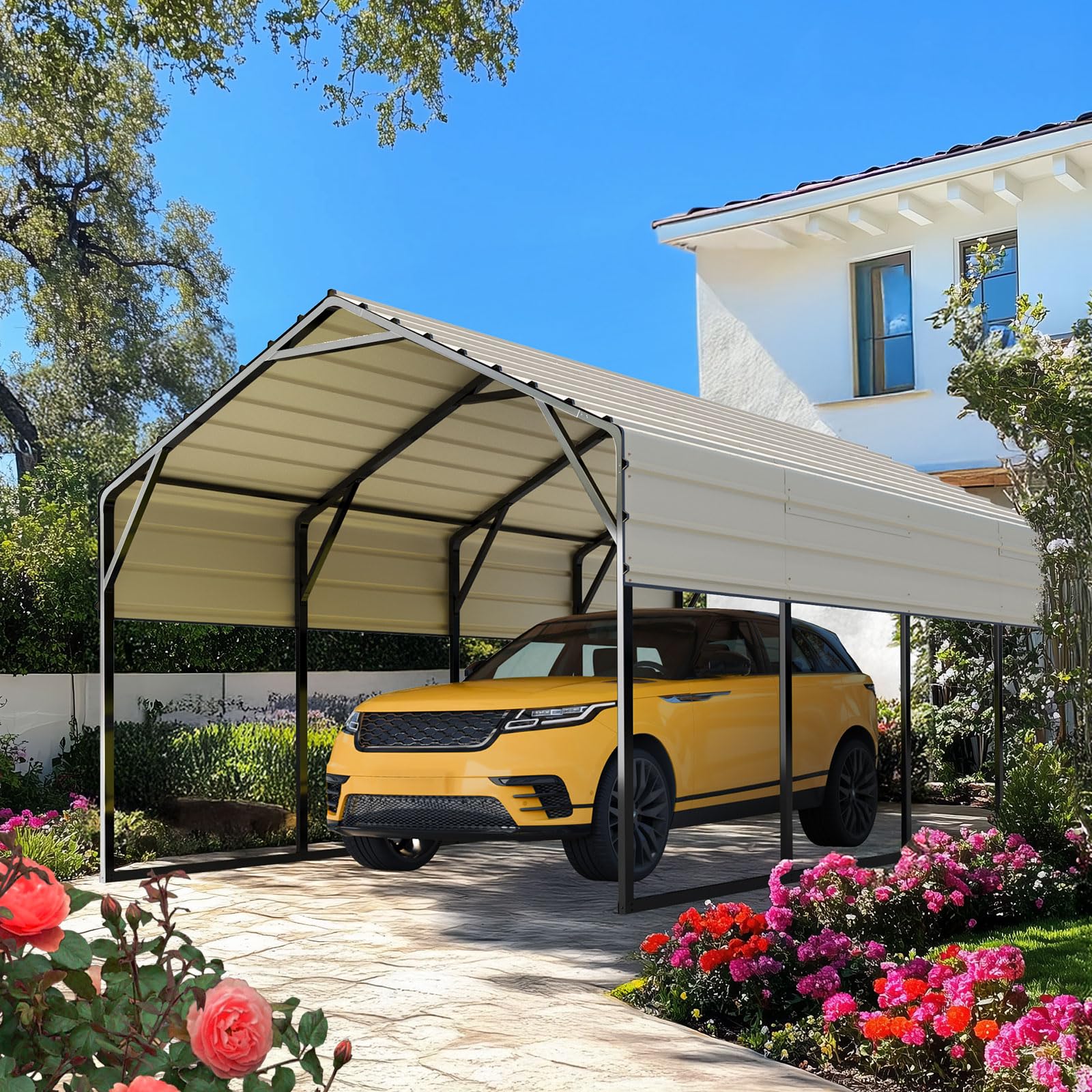
This Quictent model targets the high-wind buyer directly with a stated 140 MPH wind resistance and a 35 PSF snow load rating — numbers that few competitors in this size bracket publish openly. The 7/12 roof pitch is steep enough to shed snow and reduce wind uplift, and the frame uses 16-gauge galvanized steel with 15 reinforcement rods plus two top crossbars for torsional rigidity. The pre-drilled holes on roof panels and poles reportedly cut setup time by 50%, and assembly can be completed in about six hours with two people.
Real-world reports confirm the structural integrity: one owner documented survival through 70 MPH gusts, baking heat, and heavy snow since spring 2024, noting the geometry remained rock solid even after a vehicle accidentally bumped the frame. The extended 24-inch edge on the roof provides additional shade and helps channel water away from the sides. The kit includes bungees and wire tie-downs, though experienced owners recommend replacing the supplied stakes with rebar or concrete anchors for permanent high-wind installations.
The company has shown strong responsiveness — a damaged unit from FedEx was proactively replaced, and missing hardware was quickly shipped. The 10-year coverage is a confidence signal for long-term durability, and the pre-drilled hole design genuinely simplifies alignment for DIY builders. This is the most wind-focused specification sheet in the mid-size category, and the real-world feedback backs up the claims.
Why it’s great
- Published 140 MPH wind resistance with 35 PSF snow load
- Steep 7/12 roof pitch reduces wind uplift and sheds snow
- 15 reinforcement rods + 2 top crossbars for structural rigidity
- Pre-drilled holes simplify alignment and cut assembly time
Good to know
- Supplied ground stakes are inadequate for high-wind anchoring
- Assembly instructions can be unclear about piece directionality
- Dimensions slightly exceed 12 ft width; verify site clearance
2. K Knowbody 20×26 ft Heavy Duty Carport
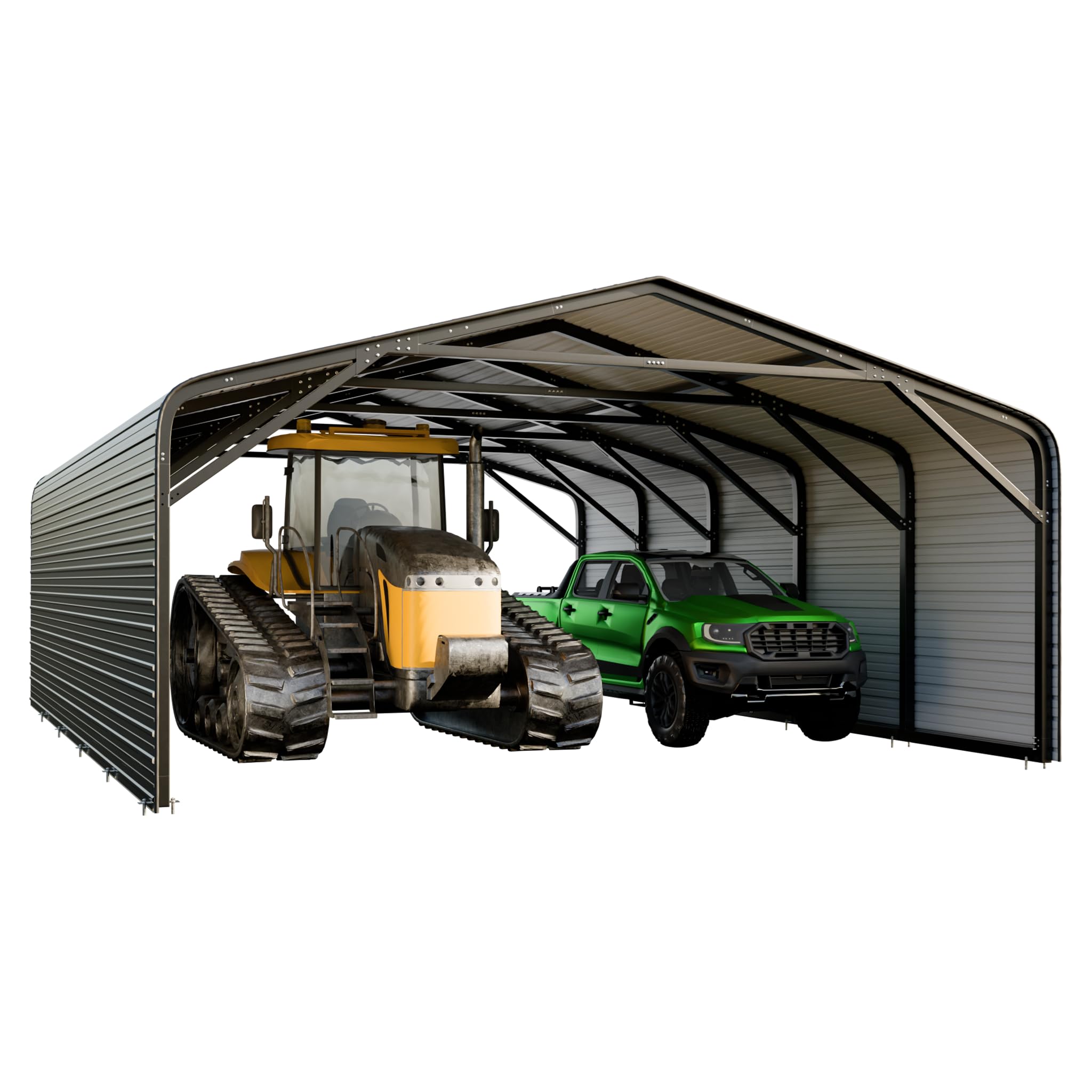
For buyers who need serious coverage for RVs, boats, and full-size trucks, the K Knowbody 20×26 delivers military-grade frame construction. The patent-pending SPB-frame design uses 2×2-inch powder-coated steel beams with a wall thickness of 1.7 mm — roughly 15 gauge — which is 3x thicker than the 0.8 mm steel found in many standard carports. The frame alone weighs 1,050 pounds, giving it the mass required to resist both uplift and lateral movement. Rated for 120 lbs per square foot of snow and 100 MPH winds, this structure is engineered for Category 2 hurricane zones and heavy blizzard regions.
Assembly is a significant project: 3-5 people and 15-20 hours are typical, though all holes are pre-punched and the powder coating resists rust even in coastal environments. The 20×20 foot coverage area provides enough room for two full-size trucks plus additional storage, with a 7-foot 5-inch entrance height that accommodates taller RVs. Ten heavy-duty anchor kits are included for secure ground fixation on concrete or compacted soil.
The main trade-off reported by owners is the roofing: the short panel sections create many seams, which can become leak points if not sealed with silicone caulk. Some early units arrived with minor shipping dings, but the seller has a reputation for promptly replacing damaged parts. For a semi-permanent structure that needs to withstand extreme weather without fail, this is the most overbuilt option in its size class.
Why it’s great
- Military-grade 2×2 / 15 GA steel beams — 3x thicker than standard
- Rated for 120 PSF snow load and 100 MPH winds
- Massive 20×26 footprint fits two full-size trucks or an RV
- Includes 10 heavy-duty anchor kits for ground fixation
Good to know
- Requires 3-5 people and 15-20 hours for assembly
- Short roof panel sections create multiple seam leak points
- Heavy — 1,050 lbs — requires careful site prep
3. WELYAS 12×20 ft Heavy Duty Carport
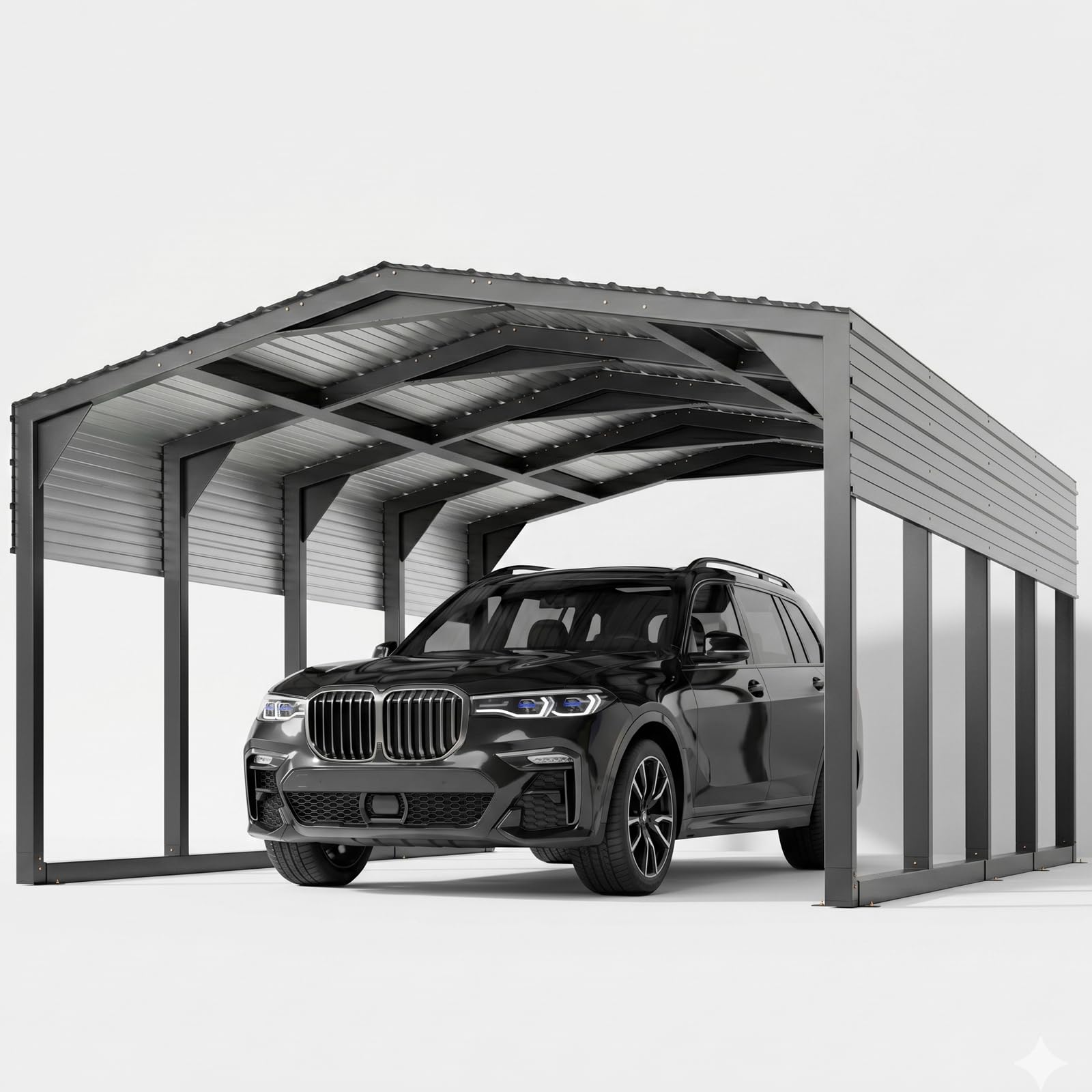
The WELYAS carport prioritizes snow load endurance with a published capacity of 2,100 lbs — enough to handle over 4 feet of heavy, wet snow without structural failure. The frame uses aluminum alloy rather than standard steel, which offers excellent corrosion resistance and a higher strength-to-weight ratio, though it comes at a cost premium. Extra triangular reinforcements are added on both the roof and sides to prevent racking, and the 16 ground pegs can be installed on soil, cement, or sand surfaces.
Seam tape is included to improve leak-proof performance at the roof panel joints, and the manufacturer claims wind resistance up to 100 MPH. The outer dimensions (12 feet wide by 20 feet deep by 8.5 feet tall) fit most trucks and boats comfortably, and all parts are pre-drilled and labeled for solo assembly — a claim supported by owners who reported completing the build in one day without professional help.
The primary criticism is the thin 29-gauge corrugated roof panels, which arrived dinged in about one-third of shipments due to inadequate packaging. Owners also noted that the frame base inserts create a water intrusion risk that can lead to internal corrosion over time; sealing these points with silicone is strongly recommended. Despite these build-quality quirks, the structural capacity and wind rating make it a serious contender for harsh winter climates.
Why it’s great
- Snow load rated to 2,100 lbs — one of the highest in this class
- Aluminum alloy frame resists corrosion better than steel
- Triangular reinforcements on roof and sides prevent racking
- Pre-drilled and labeled parts enable solo, one-day assembly
Good to know
- 29-gauge roof panels are thin and prone to shipping damage
- Frame base inserts can trap moisture and promote corrosion
- Seam tape requires careful application; silicone sealant preferred
4. GarveeLife 13×26 ft Oversized Metal Carport (Standalone)
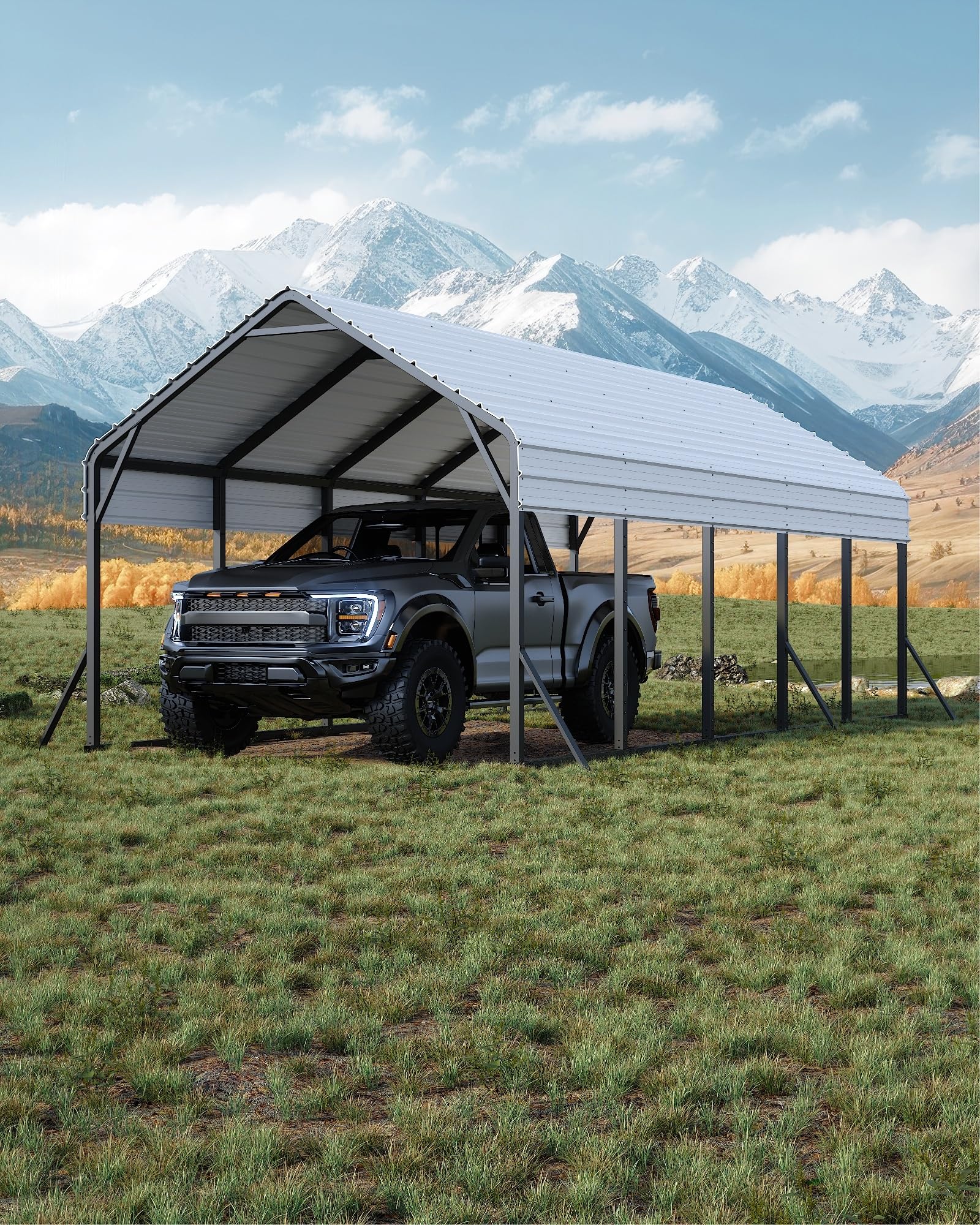
GarveeLife brings an oversized footprint — 26 feet 4 inches long by 13 feet 2 inches wide by 10 feet 10 inches tall — at a mid-range price point, making it one of the most economical ways to cover a full-size pickup plus a boat. The frame uses 2-inch diameter, 19-gauge high-strength steel poles with triple rust-resistant coating. The 120-degree roof angle is designed to increase top load-bearing capacity by 50% compared to flatter 160-degree designs, and multiple roof and side reinforcement bars improve wind performance up to Beaufort Force 12, which equates to hurricane-force winds above 73 MPH.
Weighing 780 pounds, the frame has the mass needed to resist lateral forces. Assembly requires 3 people and typically takes 6-8 hours, with pre-drilled holes and clearly marked parts. The company recommends installing on a flat, level concrete surface; for soft ground, they advise compacting the foundation and using aftermarket earth anchors. Owners report that concrete brackets are included but rebar stakes should be added for wind-prone sites.
The biggest challenge reported is the self-tapping screws, which many owners found hard to start and replaced with standard bolts. The roof panels can arrive scratched from shipping, and the instructions occasionally lack clarity about piece directionality. However, the customer service team has been praised for promptly replacing missing or damaged parts. For the sheer size-to-price ratio, this carport delivers an impressive balance of coverage and wind readiness.
Why it’s great
- Massive 13×26 ft footprint fits trucks and boats affordably
- 120° roof angle increases load capacity by 50% over flat designs
- Rated to Beaufort Force 12 with multiple reinforcement bars
- 780-pound frame provides inherent wind resistance mass
Good to know
- Self-tapping screws are difficult to start; many replace them
- Roof panels prone to shipping scratches and dents
- Requires concrete or compacted foundation for stability
5. GarveeLife 13×26 ft All-Weather Metal Carport
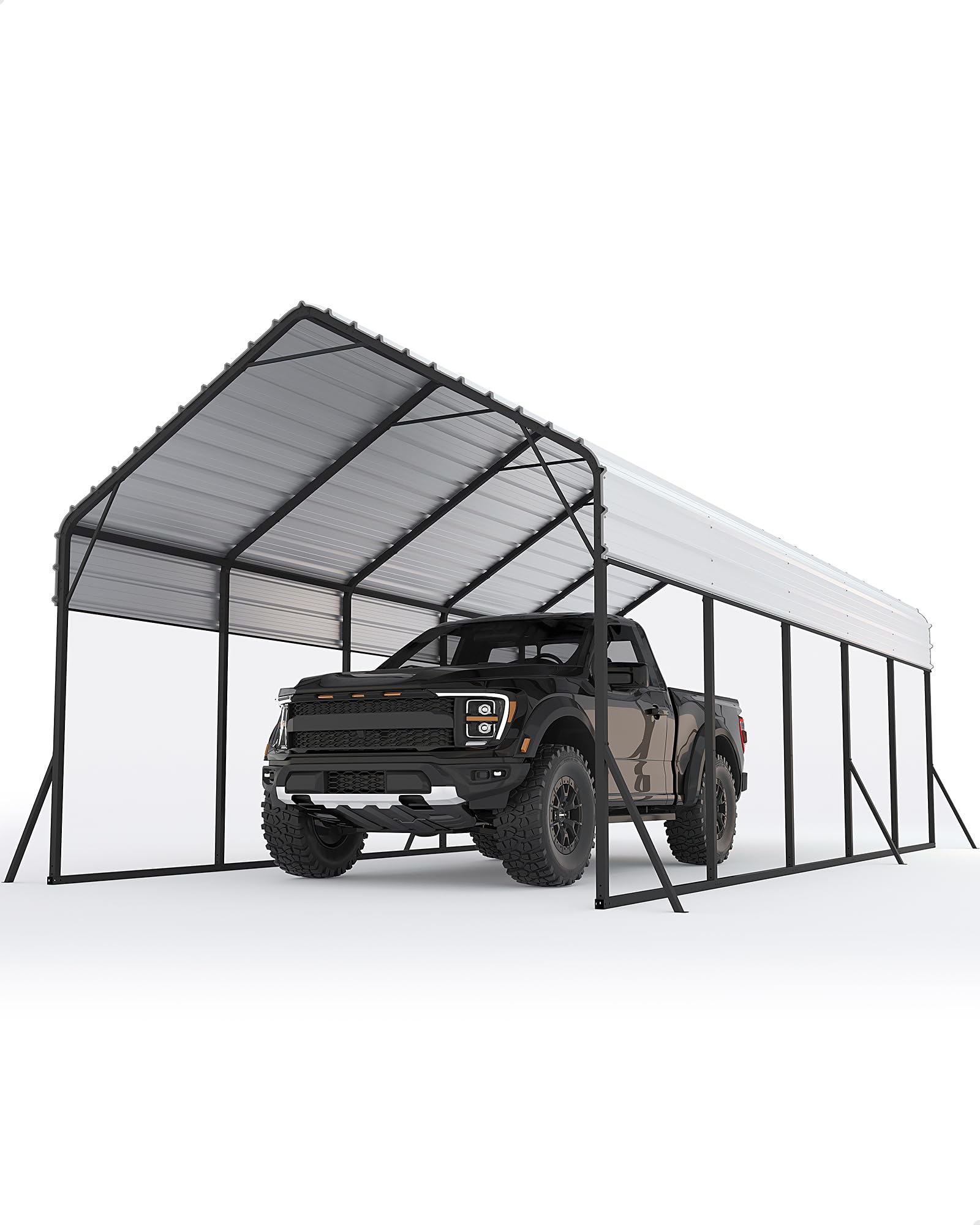
This second GarveeLife model shares the same 13×26 footprint and 120-degree roof angle but positions itself as the all-weather variant with a published snow load capacity up to 12,000 lbs — an extreme figure that requires proactive maintenance (the manufacturer recommends clearing snow before it exceeds 1 foot, and limiting accumulation to 6 inches in regions with wet snow). The 19-gauge, 2-inch steel poles and 27-gauge sheet metal roof are triple-coated for rust resistance.
The wind rating targets Beaufort Force 12, and the multiple roof reinforcement bars and side braces are designed to prevent uplift and racking. Owners report that the bolted frame design on the updated model is easier to assemble than earlier versions that relied on self-tapping screws — a meaningful improvement for DIY builders. The package includes concrete brackets for slab mounting and U-shaped stakes for softer ground, though additional guylines and ratchets are recommended for high-wind zones.
A recurring concern is that the metal roof panels are installed with their corrugations running vertically rather than horizontally, which some owners believe creates a potential leak path. The instruction manual has also drawn criticism for understating the assembly difficulty (labeled as 2-person, but most owners found 4-6 people necessary for raising the sides). Customer service is reportedly responsive to missing or damaged parts, and the 1-year warranty covers manufacturing defects.
Why it’s great
- Extreme snow load rating up to 12,000 lbs (with required maintenance)
- Bolted frame on updated model improves assembly over self-tap screws
- Triple rust-resistant coating on all steel parts
- Designed for Beaufort Force 12 wind survival
Good to know
- Vertical roof corrugations may create leak pathways
- Assembly requires 4-6 people despite claiming 2
- Active snow removal required to maintain 12,000 lb rating
6. Backyard Discovery Norwood 24×12 Cedar Gazebo
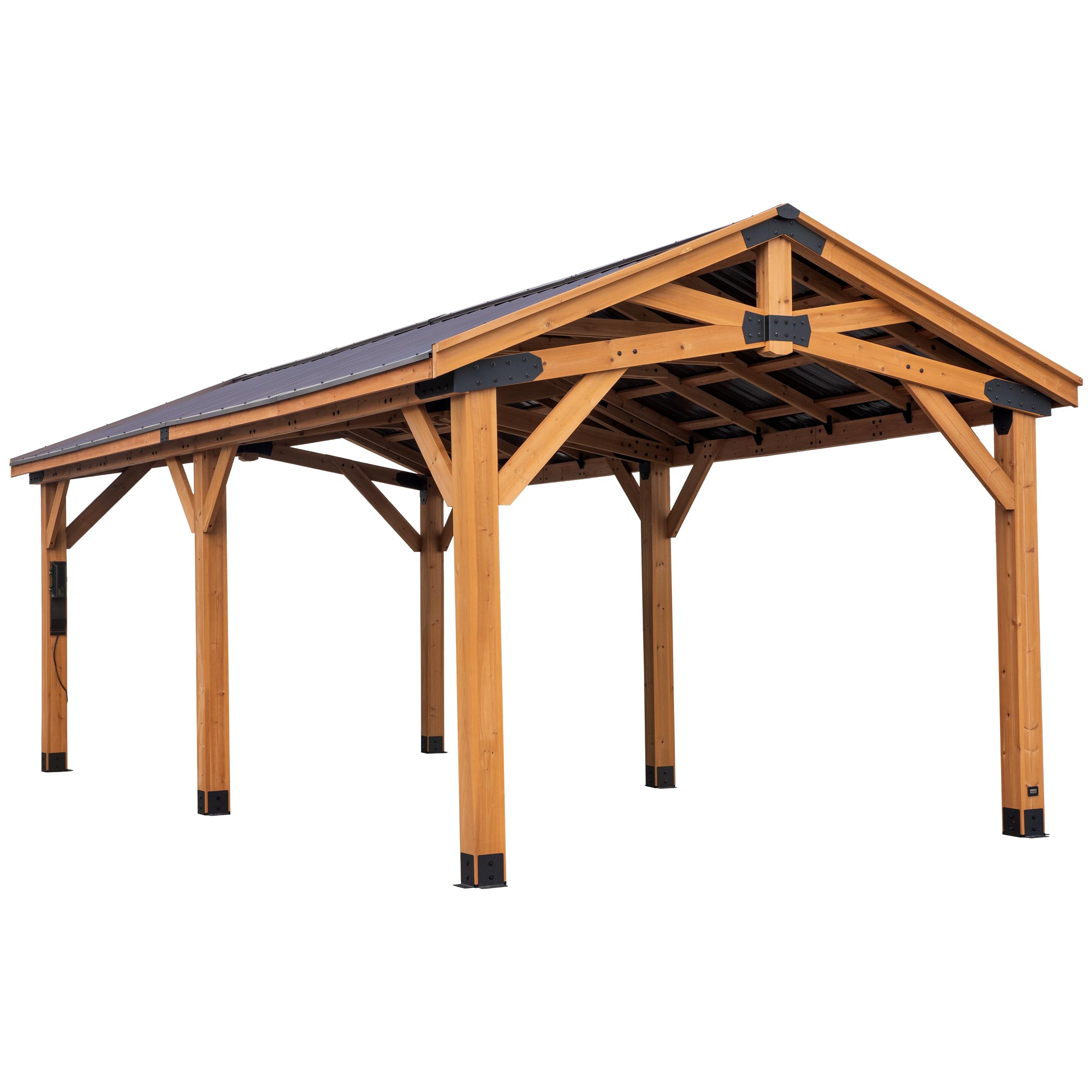
For buyers who want wind resistance without sacrificing aesthetics, the Backyard Discovery Norwood combines a 100 MPH wind rating with 100% cedar wood construction. The 6×6-inch cedar posts provide superior strength compared to standard 4×4 posts, and the 29-gauge Tudor Brown galvanized steel roof is dent- and corrosion-resistant. The peak roof design with corrugations running from peak to eave optimizes snow shedding and reduces uplift during storms. This is a pro-tect tested structure that has withstood 15,900 lbs of snow load (equivalent to 30 inches) in controlled testing.
The patented PowerPort system, which includes three electrical outlets and three USB ports mounted to a post, adds a layer of functionality that no other carport in this guide offers — ideal for outdoor entertaining or powering tools while working under cover. All pieces are pre-cut, pre-drilled, and pre-stained, and the interactive BILT app provides step-by-step 3D assembly instructions. The 5-year industry-leading warranty reflects confidence in the materials and engineering.
Assembly is demanding: one owner reported a 2-week solo build, while others hired crews of 5 for a full day. The 646-kilogram weight (approximately 1,424 lbs) requires substantial site preparation, and the cedar components must be sealed before assembly to maximize weather resistance. A few owners noted that the roof cap rubber connector was a weak point and replaced it with metal flashing. For a permanent, elegant structure that holds up in severe weather, this is the premium option.
Why it’s great
- 100 MPH wind rating with galvanized steel roof and cedar frame
- 6×6 cedar posts provide exceptional structural rigidity
- Built-in PowerPort with 3 outlets and 3 USB ports
- 5-year warranty and BILT app for guided assembly
Good to know
- Assembly is complex; often requires hired crew for 1-2 days
- Heavy — over 1,400 lbs — requires substantial foundation prep
- Roof cap rubber connector may need replacement with metal
7. Palram Vitoria 5000 10×16 Metal Carport

Palram — now Canopia — offers a fundamentally different approach to wind resistance: an aluminum frame paired with 6mm twin-wall polycarbonate panels that are virtually unbreakable and offer 100% UV protection. Aluminum doesn’t rust, eliminating a major failure point in coastal or humid environments, and the polycarbonate panels are shatter-resistant while remaining lighter than steel roofing. The arched roof design provides additional structural support against uplift, and built-in gutters channel water away from the base to prevent foundation erosion.
The 10×16 foot footprint (197 inches long by 114.5 inches wide by 94.5 inches tall) fits a standard car or small boat, and the powder-coated gray aluminum frame is maintenance-free. Assembly is designed for DIY without special tools, though owners recommend a second person for the leg installation. The 10-year limited warranty and US-based customer support provide peace of mind for a structure that will be exposed to the elements year-round.
Some owners found that a few roof beams required torquing to align pre-drilled holes, and the black plastic trim pieces were described as very difficult to install — requiring bending and snapping into place. On uneven surfaces, concrete footers are recommended. This is not the cheapest option per square foot, but for buyers who prioritize a rust-free, low-maintenance shelter that can handle moderate wind loads (the manufacturer doesn’t publish a specific MPH rating, but owner reports confirm survival through typical suburban storms), it is a compelling choice.
Why it’s great
- Rust-proof aluminum frame — ideal for coastal and wet climates
- 6mm twin-wall polycarbonate panels are shatter-resistant and UV protected
- Arched roof design adds structural support against wind uplift
- 10-year warranty with US-based customer support
Good to know
- Roof beams may require torquing to align pre-drilled holes
- Plastic trim pieces are difficult to install
- Not ideal for extreme wind regions; no published MPH rating
8. Quictent 12×20 ft Metal Roof Carport Kit
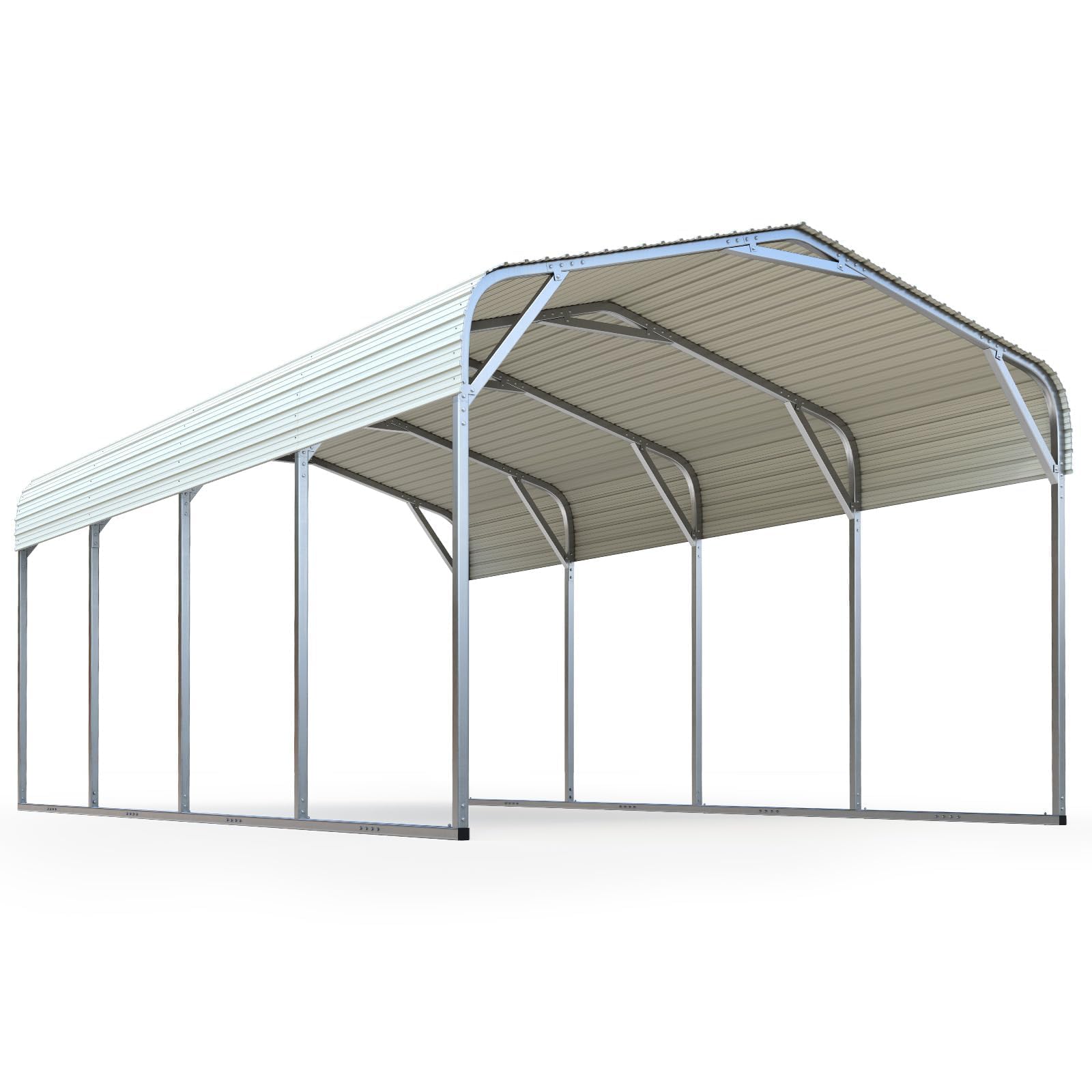
This Quictent model focuses on the structural principle of triangulation: extra reinforcement poles on the top and sides form a stable triangle design that prevents structural twisting under wind stress. The support poles are made of galvanized metal with a wall thickness of 0.06 inches and a pipe diameter of 1.58 inches, providing strong bending resistance. Unlike the previous Quictent entry, this is a metal roof carport (not a fabric cover), which offers superior resistance to sun, rain, wind, and snow.
The extended edge design on the roof panels directs rainwater away from the sides, reducing runoff erosion around the base. The coated steel roof surface provides heat insulation, waterproofing, and rust prevention. The 12×20 foot footprint (240 inches by 144 inches) fits most vehicles comfortably, and the 10-year manufacturer warranty is a strong indicator of confidence in the corrosion-resistant materials.
Assembly is reported as straightforward for a solo builder with a power drill — one owner completed it in about 5 hours, noting that all pre-drilled holes aligned perfectly. However, the instructions are slightly inaccurate about piece directionality, and some poles arrived with pre-existing dents that appeared to be manufacturing defects rather than shipping damage. The company’s customer service (specifically representative Betty) has been praised for exceptional responsiveness. A licensed contractor noted that the frame appears thinner than the advertised 16-gauge, which is worth verifying upon delivery.
Why it’s great
- Triangle reinforcement on roof and sides prevents twisting
- Galvanized metal poles with 0.06in wall thickness resist bending
- Extended edge roof panels direct water away from base
- 10-year manufacturer warranty on corrosion-resistant materials
Good to know
- Some poles arrive with pre-existing dents from manufacturing
- Frame gauge may be thinner than advertised 16-gauge
- Instructions lack clarity on piece directionality
9. Ikuby Retractable Carport
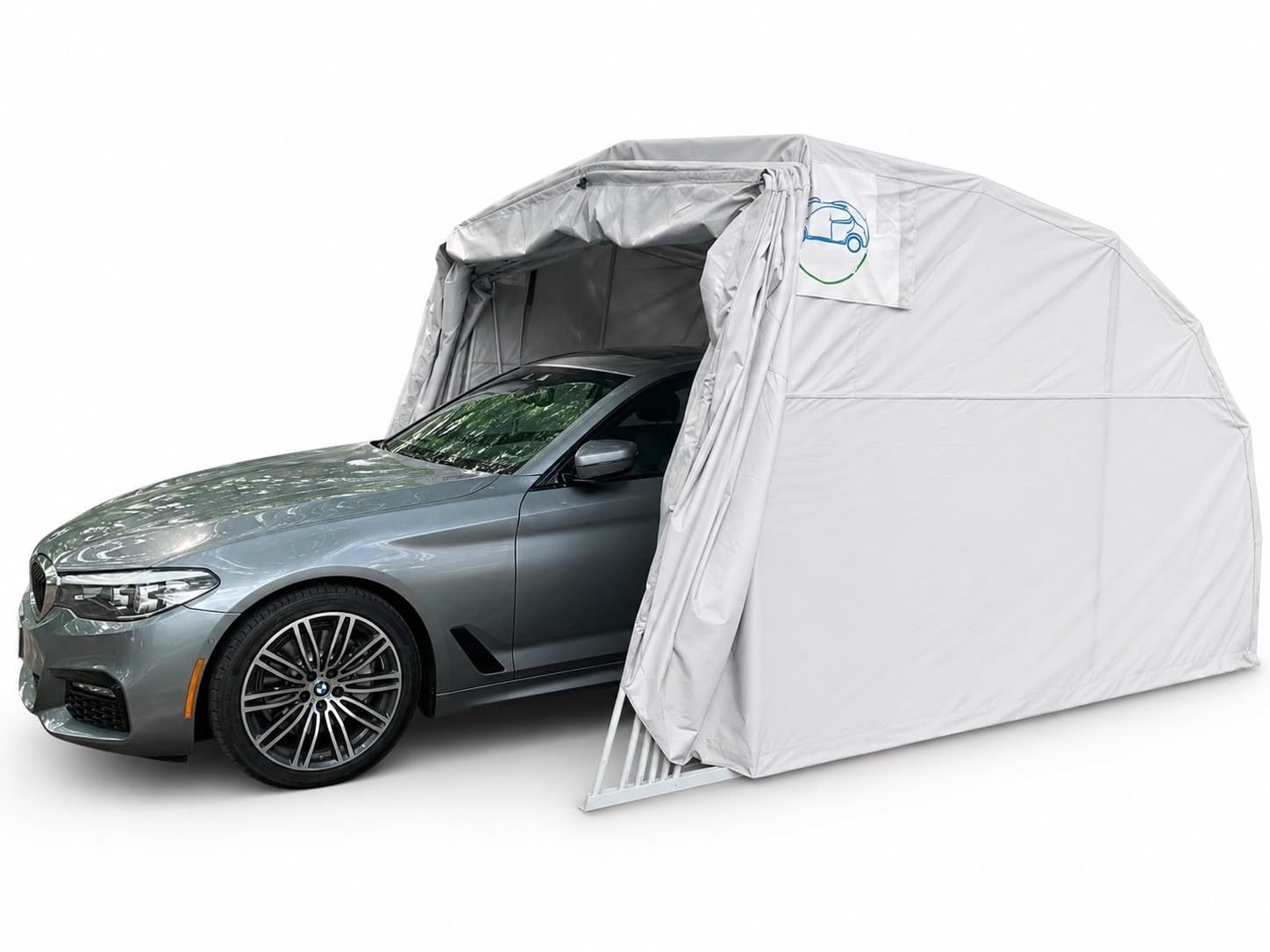
The Ikuby takes a different approach: a retractable, foldable car shelter built around a 210-pound alloy steel frame and a 600D oxford fabric cover with PU coating for waterproofing. Instead of a fixed structure, this carport can be opened and closed flexibly, making it suitable for renters or homeowners who want weather protection without a permanent installation. The fabric is rated UV-resistant, waterproof, and windproof, and the drawstring closure provides a snug fit around the vehicle.
Each pipe is numbered for easy identification, and assembly can be completed with two people in a few hours — significantly faster than a full metal carport. The manufacturer recommends drilling for concrete anchors on hard surfaces, and corkscrew stakes are included for soil. Owner reports confirm the structure withstands rain and 25 MPH winds without issues, and one owner’s unit survived a harsh winter with minimal fabric wear. The customer service team has a strong reputation for replacing parts even outside the 1-year warranty period.
The downsides are size and long-term durability. At 243 inches long by 110 inches wide by 90.5 inches tall, it fits a standard car or small SUV, but not larger trucks or boats. The fabric may develop mold after extended use (cleaning with spray is recommended), and the powder coating on some nuts cracked during assembly. For buyers with limited space who still need basic wind protection, this retractable design is a practical alternative — but it should not be compared to full steel carports in extreme weather scenarios.
Why it’s great
- Retractable design allows flexible use without permanent footprint
- 600D oxford fabric with PU coating is waterproof and UV-resistant
- Numbered pipes enable quick 2-person assembly
- Excellent customer service for replacement parts
Good to know
- Fits standard cars and small SUVs, not large trucks or boats
- Fabric can develop mold with extended use in humid climates
- Not suitable for extreme wind conditions beyond 25-30 MPH
10. ADVANCE OUTDOOR 13×20 ft Carport
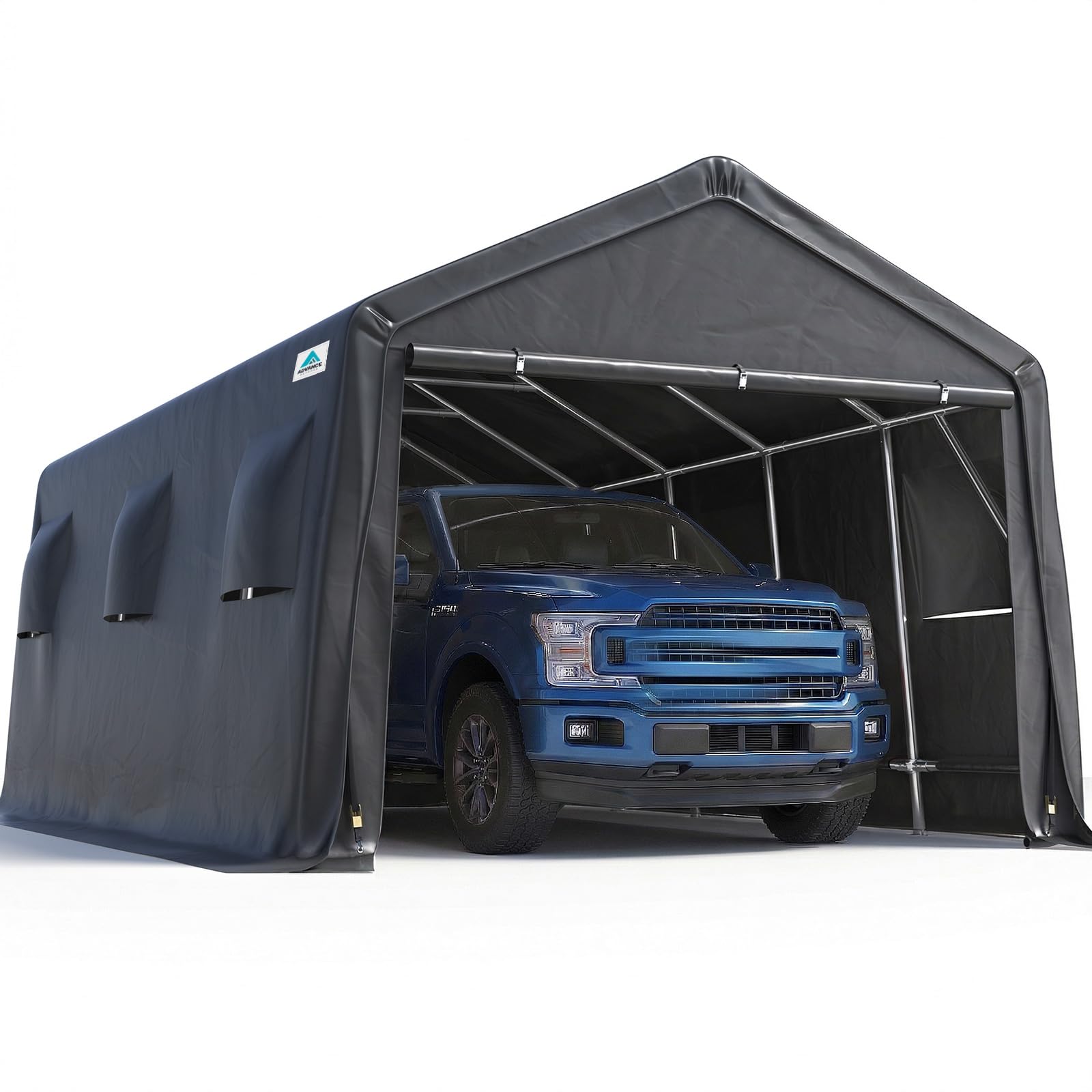
ADVANCE OUTDOOR offers a 13×20 foot carport at an entry-level price that delivers solid value for moderate wind environments. The frame uses 1.5-inch diameter steel poles with L-type pegs (8x300mm) for anchoring, and the cover is a triple-layer 240g PE material that is UV-treated, waterproof, and ripstop. The double-layer vents on each side panel help prevent condensation and reduce wind lift by allowing air to pass through rather than pressurizing the interior.
The tool-free frame assembly is genuinely quick: owners report completion in 2 hours with two people, though the fabric cover (which comes as one piece) may require a third person to drape over the frame without catching on poles. The 2 removable roll-up zipper doors at the front and back allow drive-through access and can be rolled up for ventilation. One owner reported the structure survived a harsh winter without issues, and the company replaced a damaged pole at no charge even after the customer caused the damage.
Long-term durability is the main concern. The PE fabric cover typically lasts about 3 years before sun and moisture degradation set in, and the zippers may fail after 2 years. Owners recommend replacing the included bungee cords with rope, adding screw-in anchors and ratchet straps for wind stability, and placing the whole structure on wood blocks or concrete tiles to keep the frame off damp ground. It is not a permanent solution for extreme wind zones, but for the price, it provides reliable protection for a few seasons.
Why it’s great
- Tool-free assembly with quick 2-person setup
- Triple-layer 240g PE cover is UV-treated and waterproof
- Double-layer side vents reduce condensation and wind lift
- Responsive customer service for part replacements
Good to know
- PE fabric cover typically lasts 3 years before degradation
- Zippers may fail after 2 years of regular use
- Bungee cords and supplied stakes inadequate for high winds
11. VOYSIGN 12×20 ft Metal Carport
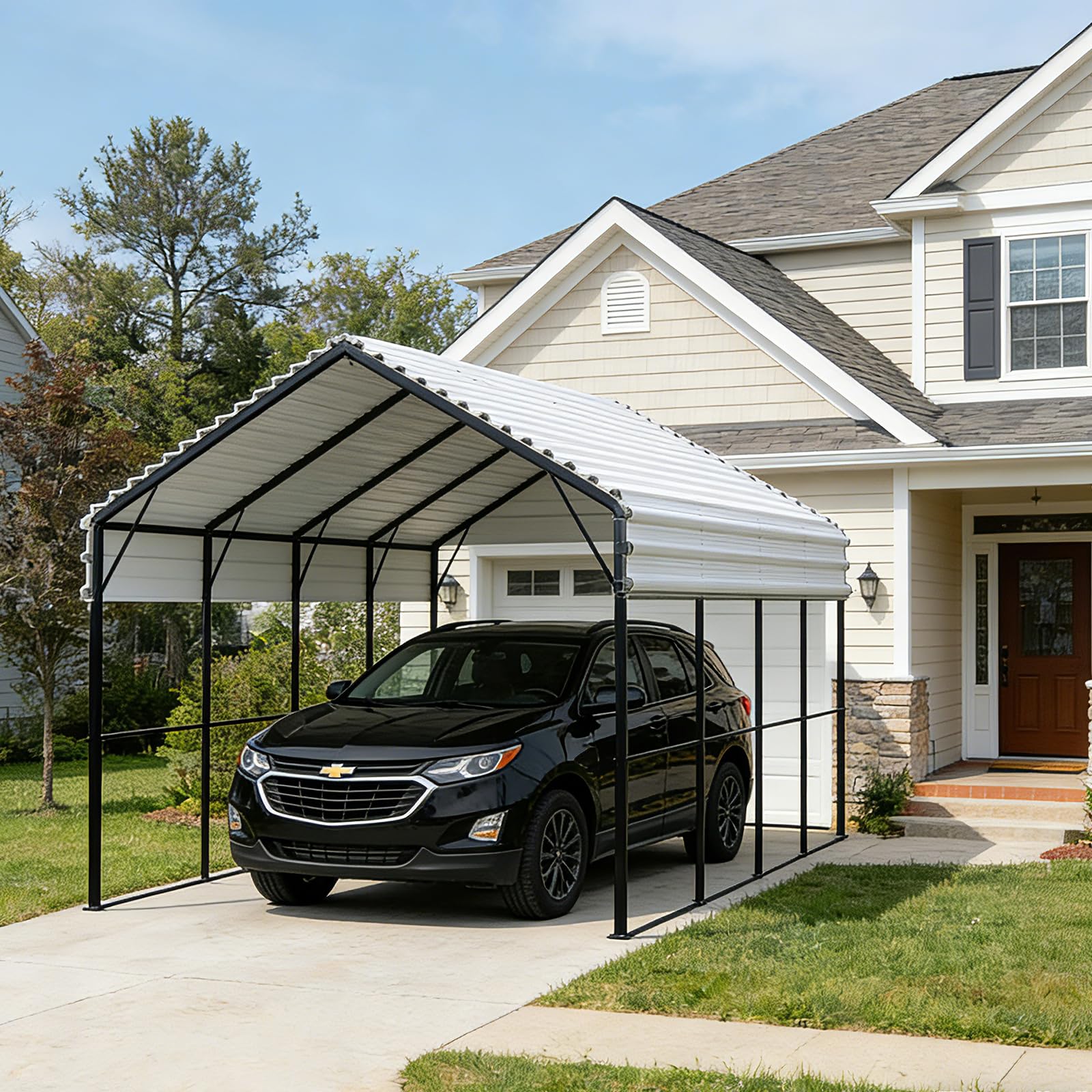
The VOYSIGN carport brings a metal roof to the entry-level end of the market, with an optimized 120.5-degree peak roof angle that increases snow load capacity by 50% compared to flat designs. The galvanized steel frame is engineered to resist rust, and the roof reflects UV rays to prevent paint fading on vehicles underneath. Multiple roof and side braces are included to improve wind resistance, though the manufacturer does not publish a specific MPH wind rating.
Assembly is reasonable for a metal carport at this tier: one owner completed a solo setup in 20 minutes using the included tools, while another reported that the legs required 6 people to hold in place while fastening. The stakes and weight bags included are designed to improve wind stability, and the company recommends watching the instructional video before starting. The 12×20 foot footprint (144 inches by 240 inches) fits full-size trucks comfortably.
Quality control is the primary risk. One owner reported a shipment with missing ingredients (incorrect parts) and severe rainwater leaking from the roof after assembly. Another found the included spikes useless for anchoring and added spray foam to seal gaps, plus water jugs for additional wind stabilization. The customer service team appears responsive to issues, but the manufacturing consistency is less reliable than more established brands. For budget-conscious buyers who are willing to spend extra on aftermarket sealing and anchoring, this metal carport can deliver solid protection — but it requires attentive setup and modification.
Why it’s great
- 120.5° peak roof angle increases snow load by 50% over flat designs
- Galvanized steel frame resists rust and reflects UV rays
- Budget-friendly entry point for a fully metal carport
- Multiple roof and side braces included for wind stability
Good to know
- Inconsistent quality control — some units have missing or incorrect parts
- Included stakes and anchors are too small for wind-prone sites
- Roof may leak if seam tape is not applied carefully
FAQ
What steel gauge should I look for in a high-wind carport?
Can I use a carport with a flat or low-pitch roof in windy areas?
How important are the ground stakes that come with the carport?
What is the difference between a PE cover carport and a metal roof carport for wind?
Do I need a concrete foundation for a high-wind carport?
Final Thoughts: The Verdict
For most users, the carport for high winds winner is the Quictent 10×20 Heavy Duty Metal Carport because it combines a published 140 MPH wind resistance with a steep 7/12 roof pitch and 16-gauge steel frame at a mid-range price point that represents the best balance of performance and value. If you need maximum snow capacity and can handle a longer assembly, the WELYAS 12×20 offers 2,100 lbs of snow load with aluminum alloy framing. And for the absolute largest heavy-duty coverage for extreme weather, nothing beats the K Knowbody 20×26 with its military-grade 15-gauge steel beams and 100 MPH wind rating. Whichever you choose, invest in aftermarket anchoring — even the best frame is only as strong as its connection to the ground.