
A nursing queen cat has the highest caloric and nutritional demands of her entire life. Her body is converting nutrients into milk at a staggering rate, and a formula designed for an adult maintenance diet simply lacks the density of protein, fat, calcium, and DHA she needs to sustain herself and her litter without losing critical body condition. Choosing the wrong recipe can lead to poor milk production, weight loss in the mother, or failure to thrive in her kittens.
I’m Min — the co-founder and writer behind Gadgets Feed. I’ve spent countless hours cross-referencing guaranteed analyses, ingredient lines, and real owner experiences to identify which formulations actually support the unique metabolic intensity of lactation and kitten development.
This guide breaks down the top contenders to help you select the perfect best cat food for nursing cats that balances immediate energy demands with long-term maternal health.
How To Choose The Best Cat Food For Nursing Cats
A nursing queen requires a diet designed for growth, not maintenance. The most common mistake is feeding an adult maintenance formula that lacks the protein, fat, and calcium density needed for milk production. Prioritize kitten-formulated or all-life-stage foods that meet AAFCO growth standards.
Calorie Density and Fat Content
Lactation can increase a queen’s energy requirement by 2 to 4 times her normal intake. Look for wet or dry food with at least 4,000 kcal/kg of metabolizable energy (ME) on a dry matter basis. Wet foods with high-fat content (around 30-50% on a dry matter basis) provide the dense calories she needs without making her eat huge volumes.
DHA and Amino Acid Profile
Docosahexaenoic acid (DHA) is essential for kitten brain and eye development, and it must come from the queen’s diet. Taurine and arachidonic acid are also critical — taurine deficiency can cause reproductive failure and dilated cardiomyopathy. Guarantee that the label lists supplemental taurine and a source of animal-based DHA, such as fish oil or chicken liver.
Quick Comparison
On smaller screens, swipe sideways to see the full table.
| Model | Category | Best For | Key Spec | Amazon |
|---|---|---|---|---|
| Royal Canin Mother & Babycat Dry | Dry Kibble | Nursing Queen + Weaning Kittens | 45%+ protein (DM); rehydratable kibble | Amazon |
| PetAg KMR Powder (12 oz) | Milk Replacer | Orphaned Kittens (newborn to 6 weeks) | Closest to queen’s milk; prebiotics + probiotics | Amazon |
| PetAg KMR Liquid (4-pack) | Milk Replacer | Bottle-feeding newborn kittens | Shelf-stable; ready-to-feed; easy digestion | Amazon |
| Applaws Kitten Wet Variety Pack | Wet Canned | Picky queens needing high hydration | Limited ingredient; high protein; grain-free | Amazon |
| Blue Buffalo Baby Blue Kitten Pate | Wet Pate | Queens with sensitive digestion | Chicken #1 ingredient; DHA; no by-product meals | Amazon |
| Sheba Perfect Portions Kitten Pate | Wet Pate (Twin-Pack) | Portion control for single-queen households | DHA; no corn/wheat/soy; 2.6 oz twin trays | Amazon |
| Tiki Cat Baby Mousse Pouches | Wet Mousse | Ultra-picky queens; transitioning to solids | Chicken liver for nutrients; high moisture; DHA | Amazon |
In‑Depth Reviews
1. Royal Canin Feline Health Nutrition Mother & Babycat Queen Dry Cat Food
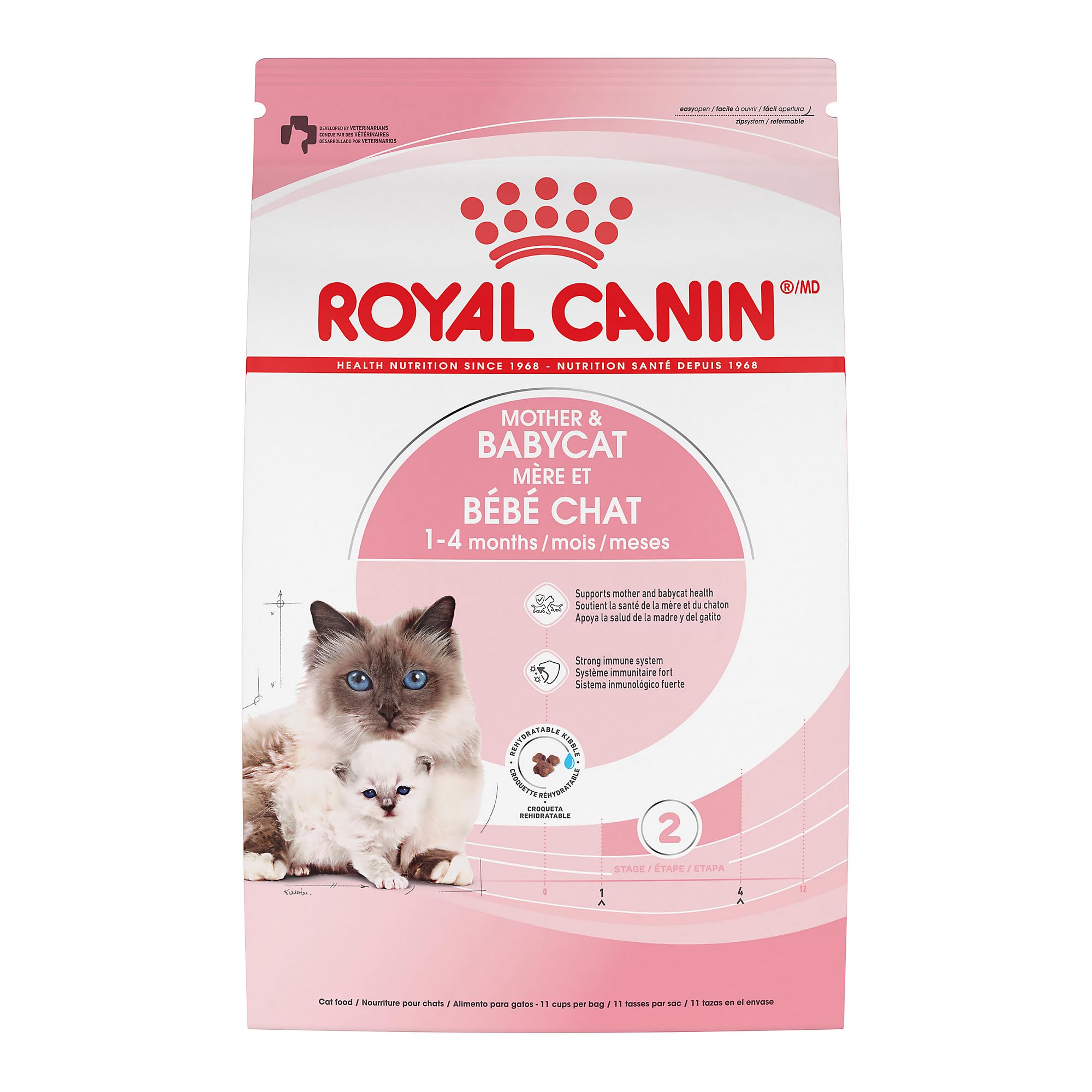
Royal Canin’s Mother & Babycat dry formula is specifically engineered for the unique metabolic demands of pregnancy and lactation. The small, rehydratable kibble is easy for a nursing queen to chew, and its formula delivers highly digestible proteins and a prebiotic blend to support gut health during a period when digestive upset is common. With around 4,300 kcal/kg ME, it matches the caloric density required to maintain the queen’s body weight while she produces milk.
The recipe includes an antioxidant complex (vitamins E and C) that passes through the milk to support the kittens’ developing immune systems. Arachidonic acid and DHA are also present, mimicking the composition of queen’s milk. Many reviewers note their cats maintain excellent body condition through weaning, and the kibble’s small size makes the transition to solid food smoother for kittens starting at around 4 weeks.
While the 6-pound bag is a premium investment, the targeted nutrition reduces the need for multiple supplements. It’s designed as a complete diet for the queen from gestation through the end of lactation and doubles as a starter food for weaning kittens up to 4 months old, making it a highly efficient single-bag solution.
Why it’s great
- Specifically formulated for pregnant/nursing queens
- Rehydratable kibble for easy chewing
- Clinically proven antioxidants for kitten immunity
Good to know
- Higher per-pound cost than general adult maintenance foods
- Some queens may prefer a wet food supplement for extra moisture
2. PetAg KMR Kitten Milk Replacer Powder (12 oz)
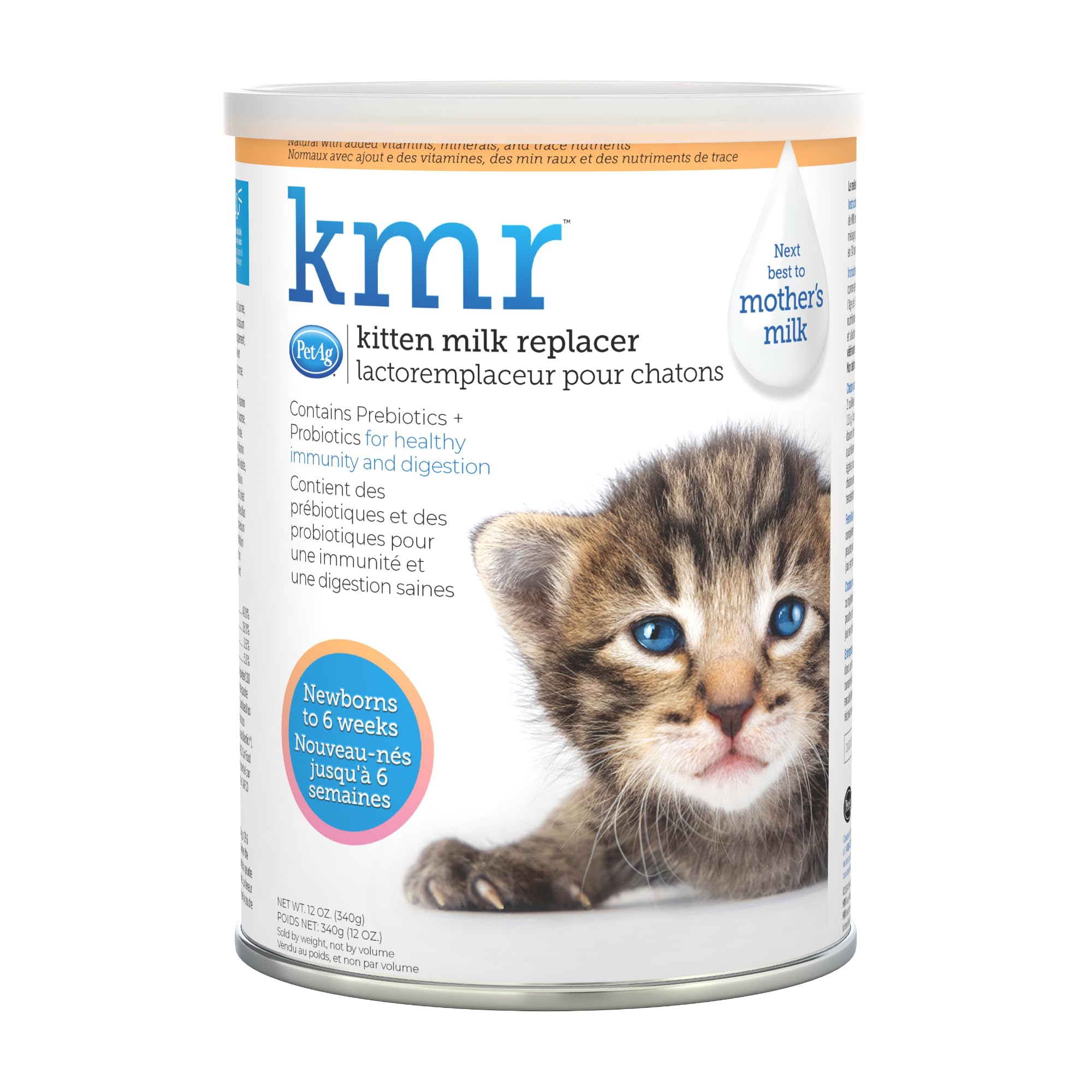
When a queen cannot nurse due to illness, rejection, or insufficient milk production, PetAg KMR Powder is the gold-standard replacement. Its macronutrient profile — approximately 42% protein and 45% fat on a dry matter basis — is the closest commercial approximation to a queen’s natural milk. The formula includes a specialized fiber blend of prebiotics and probiotics (Enterococcus faecium) to reduce the risk of diarrhea, which is the leading cause of mortality in bottle-fed kittens.
Mixing is straightforward: whisk or shake 1 part powder into 2 parts warm water, and avoid using a blender to prevent air bubbles that can cause bloat. The powder format allows you to prepare only what the kittens will consume within 24 hours, minimizing waste compared to pre-mixed liquid cans that must be discarded 72 hours after opening. Vitamins, minerals, and taurine are fully covered, eliminating the need for additional supplementation.
Owners consistently report that kittens gain weight steadily and produce low-odor, formed stools — a significant indicator of good gastrointestinal health. The 12-ounce bag makes roughly 96 ounces of reconstituted formula, which is economical for a litter of 4 to 6 kittens over their first 4 weeks of life. It’s a lifesaving tool for foster caregivers and breeders alike.
Why it’s great
- Closest nutritional match to queen’s milk available
- Probiotic blend reduces digestive upset
- Cost-effective powder format for larger litters
Good to know
- Requires mixing and warming before feeding
- Powder can clump if not whisked thoroughly
3. PetAg KMR Kitten Milk Replacer Liquid (11 oz, Pack of 4)

For caregivers who prioritize convenience and consistency, PetAg KMR Liquid offers the same nutritional profile as the powder in a ready-to-serve format. Each 11-ounce can provides a sterile, shelf-stable solution that eliminates any risk of mixing errors. Simply shake the can, warm to room or body temperature, and serve. This is ideal for single-kitten households or foster situations where only a small volume is needed per feeding.
The nutrient breakdown mirrors the powdered version, with high-quality milk proteins, DHA for brain development, and a balanced calcium-to-phosphorus ratio of 1.2:1 to support skeletal growth. The liquid formulation is particularly easy to digest for neonates under 2 weeks old, who have extremely fragile gastrointestinal tracts. The pack of 4 cans ensures a full week’s supply for a litter of 3 to 4 kittens.
Reviewers highlight that the liquid version reduces kitten stress because it mixes consistently without grit or sediment. The downsides are that opened cans must be refrigerated and discarded after 72 hours, making it slightly less efficient for very small litters. However, the convenience trade-off is well worth it for busy fosters who cannot afford the time to mix and measure powder.
Why it’s great
- Zero preparation — shake and serve
- Sterile and shelf-stable until opened
- Identical macronutrient profile to powdered KMR
Good to know
- Opened can must be used within 72 hours
- Higher cost per ounce compared to powder
4. Applaws Kitten Wet Cat Food Tuna, Salmon & Chicken Variety Pack

Applaws Kitten Wet Food is a limited-ingredient, grain-free canned option that excels for queens with suspected food sensitivities or picky palates. Each 2.47-ounce can features a single protein source (tuna, salmon, or chicken) in a savory broth, making it a high-moisture, high-palatability choice that encourages fluid intake during lactation. Including fish varieties introduces natural omega-3 fatty acids, which help maintain the queen’s coat and skin condition during the stress of nursing.
As a complementary food, Applaws is designed to be paired with a complete-and-balanced dry kitten kibble. This is an advantage for queens who need extra hydration but also require the dense calories of a dry food. The flake texture in broth is gentle on the digestive system and can be easily mashed for kittens beginning to wean at 4 weeks. The 16-pack provides variety across 3 protein profiles, preventing flavor fatigue over a multi-week feeding period.
Customer reports note that even queens who have refused other wet foods will eagerly consume Applaws, and the limited ingredient list reduces the risk of allergic reactions. It’s not a complete meal on its own, but as a topper or hydrating supplement alongside a growth-formulated kibble like Royal Canin, it creates an excellent nursing diet plan.
Why it’s great
- High moisture content supports lactation hydration
- Limited ingredient list for sensitive queens
- Natural omega-3 from fish for coat health
Good to know
- Designed as a complementary food, not a complete diet alone
- Small cans may require multiple per day for a nursing queen
5. Blue Buffalo Baby Blue Natural Kitten Wet Cat Food Healthy Growth Formula
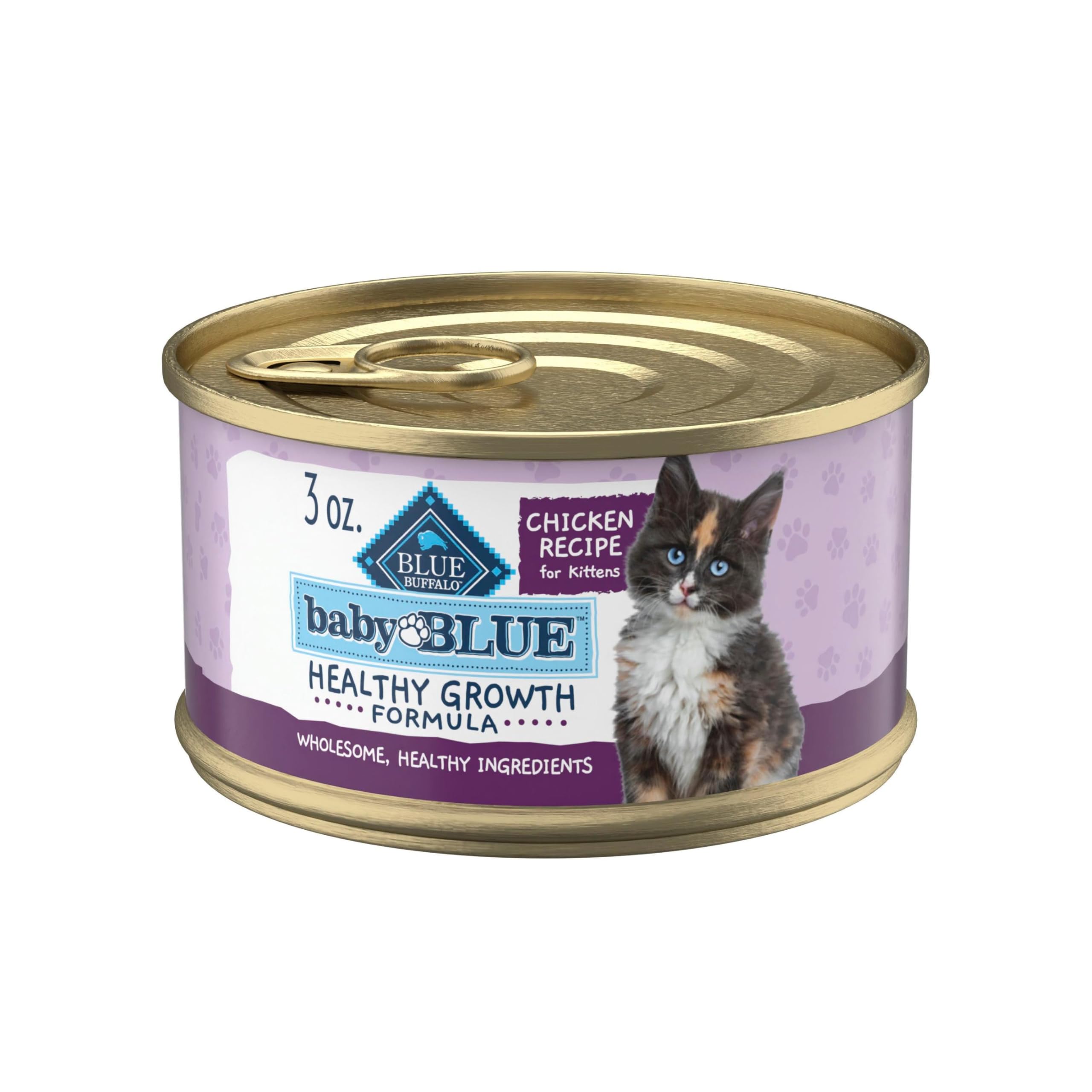
Blue Buffalo Baby Blue Kitten Pate offers an excellent balance of quality ingredients and affordability. Deboned chicken is the first ingredient, providing a high-quality animal protein base, while the formula includes DHA to support cognitive development in kittens. The pate texture is smooth and easy for a queen to eat, and it can be mixed with warm water to increase moisture for a queen who may be reluctant to drink enough while nursing.
The recipe avoids chicken by-product meals, corn, wheat, and soy, which are common fillers that offer low biological value. Instead, the calorie density comes from chicken fat and menhaden fish meal, delivering the concentrated energy a lactating queen requires. With a guaranteed analysis of 9% crude protein and 5% crude fat as-fed (roughly 50% and 30% on a dry matter basis), it aligns well with growth-stage nutritional targets.
Veterinarians often recommend Blue Buffalo for its transparency and inclusion of LifeSource Bits — a proprietary blend of antioxidants, vitamins, and minerals. The 24-can case is a practical volume for a multi-week feeding cycle, and the per-can cost is significantly lower than boutique limited-ingredient brands, making it an accessible choice for caregivers on a budget without sacrificing nutritional density.
Why it’s great
- Deboned chicken is the first ingredient
- DHA added for kitten brain development
- No chicken by-product meals, corn, wheat, or soy
Good to know
- Some picky queens may prefer a chunkier texture
- Pate can be a bit dry for some cats without added water
6. Sheba Perfect Portions Kitten Wet Food Pate, Chicken Recipe (24 Count)

Sheba Perfect Portions solves a common pain point for single-queen households: leftover food that dries out or goes bad. Each twin-pack tray contains two sealed, 1.3-ounce servings per tray, so you peel back only what you need. This is especially useful for a nursing queen who may graze throughout the day rather than eat a full meal at once. The pate texture is soft and promotes easy chewing for queens with decreased appetite or dental sensitivity.
Nutritionally, the chicken recipe is formulated with DHA to support kitten brain development and provides 100% complete and balanced nutrition for growth. It is grain-free and free of corn, wheat, and soy. The protein content is adequate for a kitten growth diet, though the fat content is slightly lower than some premium brands, meaning a high-energy queen might need more frequent feedings or a kibble supplement to meet her caloric demands.
Reviewers consistently praise the convenience and freshness factor, noting that the dual-compartment tray reduces waste significantly compared to standard 3-ounce cans that often go uneaten. The 24-count box provides 48 servings, which matches well with the feeding schedule of a lactating queen eating 3 to 4 small meals per day. Portion-controlled packaging also makes it travel-friendly for cats who move between foster homes or boarding.
Why it’s great
- Twin-pack trays keep each serving fresh
- Grain-free and DHA-fortified
- Perfect for queens who prefer small, frequent meals
Good to know
- Lower fat content than some kitten-specific formulas
- Some queens may not prefer the beef flavor variant
7. Tiki Cat Baby Mousse Wet Cat Food for Kittens, Chicken & Chicken Liver (12 Count)

Tiki Cat Baby Mousse targets the most challenging scenarios: a queen who has lost appetite post-birth or kittens struggling to transition from mother’s milk to solid food. The mousse texture is extraordinarily smooth and can be easily syringe-fed if necessary. Including chicken liver as a primary ingredient provides a natural source of iron and B-vitamins, which are critical for replenishing postpartum nutrient stores and supporting lactation.
The formula is high in moisture (around 82%), mousse texture helps ensure hydration, and the pouch format makes it easy to portion out small amounts multiple times per day. The DHA content supports kitten neurological development, and the limited ingredient approach minimizes the risk of gastrointestinal upset. At roughly 1,200 kcal/kg ME (as-fed), it is energy-dense enough to support weight gain in underweight queens without requiring them to eat large volumes.
Customer reviews often describe this product as a “miracle food” for sick or elderly cats who refuse other foods, and nursing queens are no exception. The chicken liver flavor is highly aromatic, which triggers the feeding response even in cats with diminished appetite. While it is marketed for kittens, the nutrient profile makes it an excellent high-calorie recovery food for a queen who has lost body condition during late pregnancy or early lactation.
Why it’s great
- Chicken liver provides natural iron and B-vitamins
- Ultra-smooth mousse texture for syringe feeding
- Aromatic enough to entice a queen with low appetite
Good to know
- Higher cost per serving than standard wet pates
- Pouches can be messy to open compared to cans
FAQ
Can I feed adult cat food to a nursing queen?
How much should a nursing cat eat per day?
Is dry or wet food better for a nursing cat?
When should I start weaning kittens from the queen’s food?
Final Thoughts: The Verdict
For most users, the best cat food for nursing cats winner is the Royal Canin Mother & Babycat Queen Dry Cat Food because it is the only formula specifically engineered to meet the queen’s metabolic demands during gestation and lactation while also serving as a weaning food for kittens. If you need a complete solution for orphaned kittens, grab the PetAg KMR Powder for its unmatched nutritional match to queen’s milk. And for a queen who is a picky eater or has low appetite post-birth, the Tiki Cat Baby Mousse Chicken & Chicken Liver is the most effective enticement available — its organ meat density and aromatic mousse texture are specifically designed to trigger the feeding response in compromised cats.