
When your cat crosses the senior threshold—typically around age seven—their nutritional needs shift dramatically. Kidneys work harder, joints stiffen, and digestion becomes more sensitive, making standard adult formulas inadequate. The right senior diet delivers precisely calibrated phosphorus for renal support, higher-quality protein to preserve lean muscle, and softer textures that accommodate diminishing dental health.
I’m Min — the co-founder and writer behind Gadgets Feed. I’ve spent countless hours analyzing ingredient panels, macronutrient profiles, kibble geometry, and feeding trials to build this guide specifically around the metabolic demands of aging felines.
This guide breaks down the most critical factors—protein source quality, phosphorus levels, kibble size, moisture content, and targeted supplements like probiotics and omega-3s—to help you confidently choose the best cat food for senior cats based on your cat’s unique health profile.
How To Choose The Best Cat Food For Senior Cats
Selecting a senior formula isn’t about grabbing a bag with an older cat on the label. The biological changes in cats aged seven and up demand specific adjustments to protein concentration, mineral balance, digestibility, and physical kibble design. Here are the four most critical factors to evaluate before buying.
Phosphorus and Kidney Protection
Reduced phosphorus intake is the single most researched dietary intervention for preserving kidney function in aging cats. Look for dry foods with phosphorus levels at or below 1.0% on a dry matter basis; wet foods should stay under 0.2% as-fed. Senior formulas that explicitly state adapted phosphorus levels are preferable to general adult maintenance foods.
Protein Quality Over Quantity
Senior cats need highly digestible animal-based protein to maintain muscle mass, not filler proteins from corn or soy. The first ingredient should be a named meat source—chicken, turkey, fish, or poultry meal—with a crude protein minimum of around 35% in dry food. Avoid formulas that rely on meat by-products or unnamed protein meals as the primary source.
Kibble Geometry and Dental Reality
Gingivitis, tooth resorption, and missing teeth are common in senior cats, making large or hard kibble difficult to chew. Small, disc-shaped, or porous kibble that breaks apart under gentle pressure will encourage consistent eating. Some premium brands now offer mousse or pâté textures that eliminate chewing entirely for cats with advanced dental issues.
Hydration Support via Wet Food Inclusion
Aging cats have a diminished thirst drive, putting them at higher risk for chronic dehydration and urinary tract issues. Wet food with a moisture content of 78% or higher provides supplemental water that dry kibble cannot offer. Feeding a combination of wet and dry—or prioritizing wet food for cats with early-stage kidney concerns—is a practical strategy supported by veterinary nutritionists.
Quick Comparison
On smaller screens, swipe sideways to see the full table.
| Model | Category | Best For | Key Spec | Amazon |
|---|---|---|---|---|
| Royal Canin Indoor 7+ | Dry Kibble | Adapted phosphorus for renal health | Phosphorus level: 0.7–1.0% | Amazon |
| Blue Buffalo Tastefuls Wet Pate | Wet Pate | Hydration for kidney support | Moisture content: ~78% | Amazon |
| Nulo FreeStyle Senior | Dry Kibble | Grain-free, high-protein muscle maintenance | Crude protein: ~40% | Amazon |
| Tiki Cat Silver Mousse | Wet Mousse | Easy-to-eat texture for dental issues | Texture: Smooth mousse | Amazon |
| Blue Buffalo Basics Turkey | Dry Kibble | Limited-ingredient diet for allergies | Single protein source: Turkey | Amazon |
| ORIJEN Guardian Senior | Dry Kibble | WholePrey ingredient profile | Crude protein: ~38% | Amazon |
| Purina Pro Plan LiveClear | Dry Kibble | Allergen reduction for owners | Fel D1 neutralizing protein | Amazon |
In‑Depth Reviews
1. Royal Canin Feline Health Nutrition Indoor 7+ Mature Dry Cat Food

Royal Canin’s Indoor 7+ formula is benchmark-tested for senior digestive health. The specialized kibble is designed with a porous structure that breaks down easily under light chewing pressure, making it accessible for cats with gingivitis or missing teeth. Owners consistently report reduced hairball frequency and firmer stools within two to three weeks of transitioning.
The adapted phosphorus level—around 0.8% on a dry matter basis—directly supports renal function without compromising protein quality. Chicken meal is the primary protein source, providing essential amino acids for lean muscle maintenance. The bag’s resealable closure is a practical detail that preserves kibble freshness between feedings.
Some cats with extreme protein sensitivities may still experience mild vomiting, as noted in a minority of reviews. However, for the vast majority of healthy seniors, this formula delivers reliable kidney support, optimal stool quality, and a texture that encourages consistent eating.
Why it’s great
- Adapted phosphorus levels for kidney health
- Soft, porous kibble that breaks down easily
- High digestibility reduces litter box odor
Good to know
- Not suitable for cats with advanced renal disease requiring prescription diets
- Some cats with extreme protein sensitivities may experience vomiting
2. Blue Buffalo Tastefuls Wet Cat Food Paté for Mature Cats
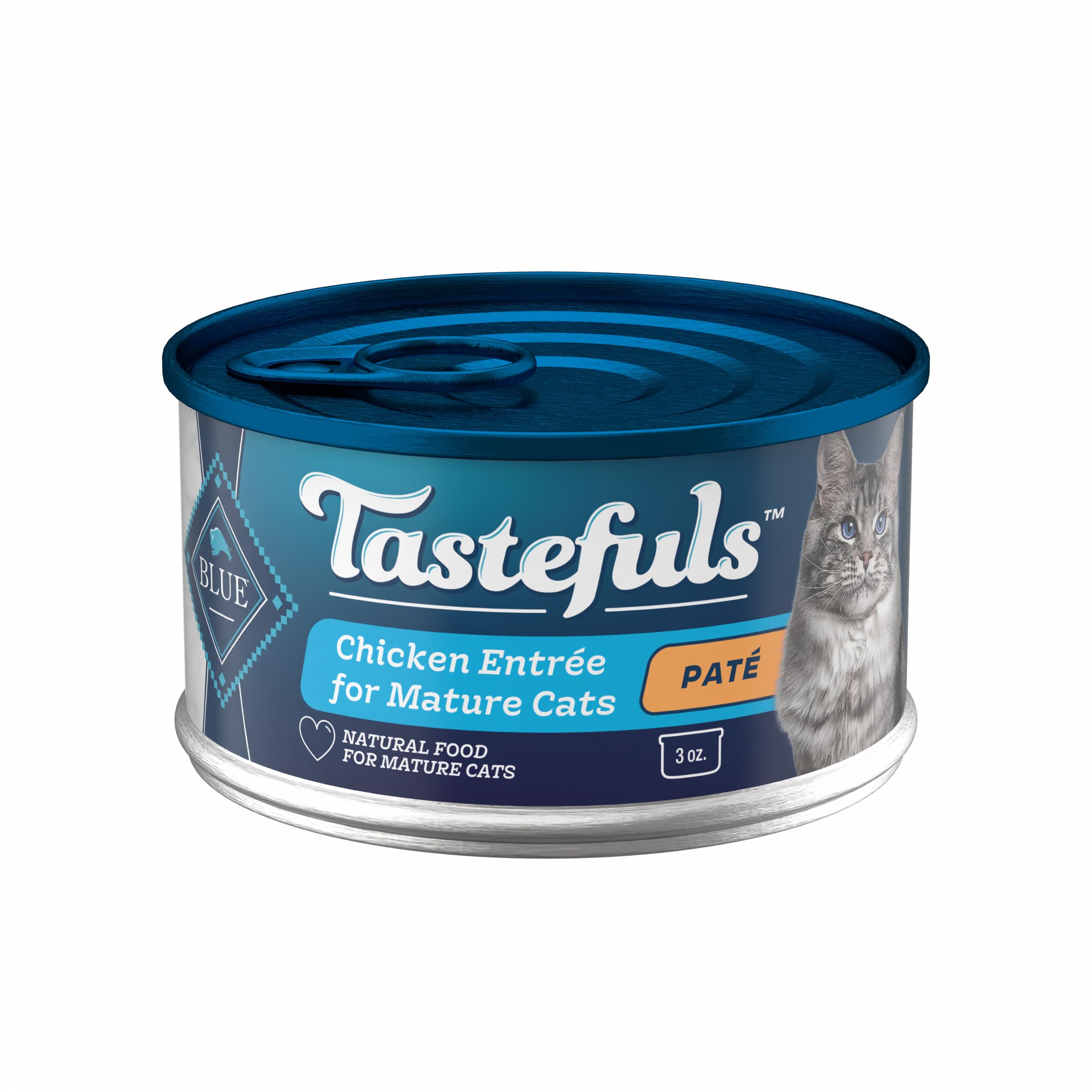
Blue Buffalo’s Tastefuls Mature Pate provides one of the highest moisture contents in its class, making it an excellent choice for senior cats who struggle to drink enough water on their own. The smooth, uniform pâté texture eliminates the need for chewing, which is a significant advantage for cats with advanced dental disease or missing teeth.
Real chicken appears as the first ingredient, with no chicken or poultry by-product meals. The recipe avoids corn, wheat, and soy—ingredients that can trigger digestive inflammation in sensitive seniors. Each 3-ounce can delivers approximately 78% moisture, helping to dilute urine and reduce the risk of crystal formation in aging urinary tracts.
Quality control reports indicate occasional batch variation—some cans have been described with an off-putting fishy odor. While this appears to be the exception rather than the rule, it is worth inspecting each can before serving. Despite this, the formula’s macronutrient balance and hydration profile make it a strong wet-food staple for senior cats.
Why it’s great
- High moisture content supports kidney function
- Smooth pate texture for cats with dental issues
- No corn, wheat, or soy in the ingredient panel
Good to know
- Occasional batch variability in odor and texture
- Some cats prefer alternative protein flavors beyond chicken
3. Nulo FreeStyle Senior Dry Cat Food
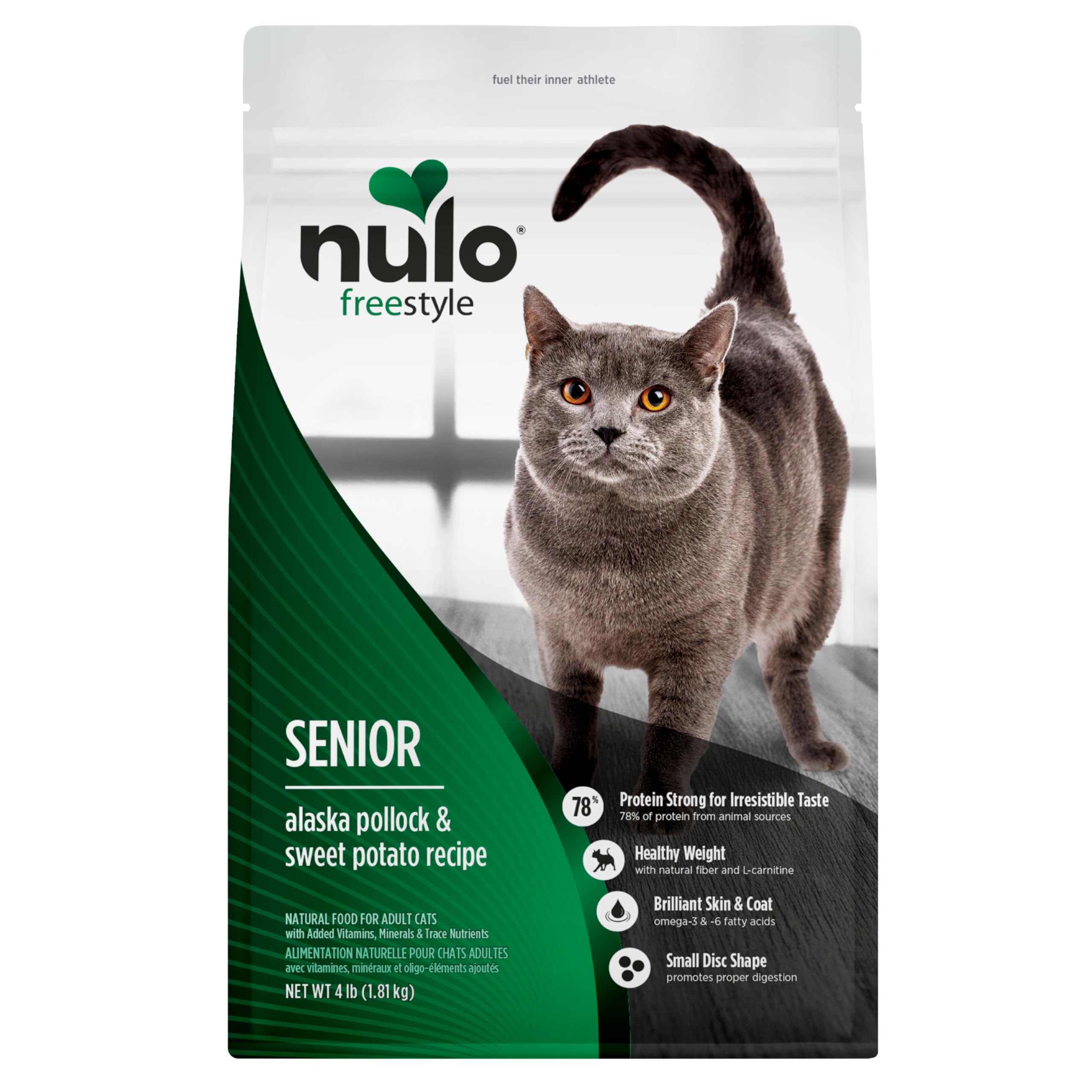
Nulo FreeStyle Senior pushes protein content to roughly 40% crude protein, with Alaska pollock as the first ingredient. This high animal-based protein concentration directly supports lean muscle maintenance—a common challenge in aging cats who begin losing muscle mass around age ten. The formulation also includes L-carnitine to promote fat metabolism and prevent unhealthy weight gain.
The small disc-shaped kibble, measuring roughly 7mm in diameter, is notably smaller than standard adult formulas. This geometry reduces the chewing force required, making the food accessible for cats with compromised dental health. Prebiotic fibers and BC30 probiotics support gut motility and nutrient absorption, addressing the slower digestion typical of senior cats.
Finicky eaters may initially accept this food but later refuse it, as reported by some owners of 17-year-old cats. The grain-free formula is free of corn, wheat, soy, rice, white potato, and tapioca, which is ideal for cats with multiple food sensitivities. The 4-pound bag size is relatively small for multi-cat households.
Why it’s great
- 40% crude protein from animal sources prevents muscle wasting
- Small disc-shaped kibble reduces chewing effort
- BC30 probiotics support senior digestive health
Good to know
- Not reliably accepted by extremely finicky cats
- Small bag size may require frequent reordering
4. Tiki Cat Silver Mousse Wet Cat Food for Seniors

Tiki Cat Silver Mousse is purpose-built for senior cats with dental barriers. The mousse texture is smooth enough to be lapped up without any chewing, yet dense enough to provide satiety. Real chicken appears as the first ingredient, delivering high-quality protein for muscle support while the added pumpkin offers soluble fiber for digestive regularity.
The high moisture content—typical of wet mousse formats—helps senior cats maintain hydration levels that dry food alone cannot achieve. Omega-3 fatty acids from fish oil support skin hydration and coat radiance, which often decline with age. The packaging uses durable pouches that are easier to open than traditional cans for owners with reduced hand strength.
The per-serving cost is higher than most wet pâté options, which can add up in multi-cat households. For single-cat households where dental issues are the primary concern, the mousse texture is a superior solution.
Why it’s great
- Smooth mousse texture requires no chewing at all
- Pumpkin provides natural fiber for digestive support
- High moisture content promotes hydration in seniors
Good to know
- Premium pricing compared to standard wet pate
- Small pouch size may not be sufficient for large senior cats
5. Blue Buffalo Basics Grain-Free Dry Cat Food, Turkey & Potato Recipe

Blue Buffalo Basics Skin & Stomach Care is a limited-ingredient dry food that uses deboned turkey as its sole animal protein source. This minimal ingredient profile is specifically designed for senior cats with food allergies or sensitivities to chicken, beef, or fish. The recipe excludes corn, wheat, soy, dairy, and eggs, effectively eliminating the most common feline allergens.
Omega-3 and omega-6 fatty acids support skin barrier function and coat quality, both of which can decline in aging cats. The inclusion of pea fiber and pumpkin provides gentle digestive fiber without irritating sensitive stomachs. LifeSource Bits—antioxidant-rich kibble inclusions—boost immune function, which is particularly important for senior immune systems.
The kibble size is relatively small at approximately 8mm, though some owners of cats with missing molars note the pieces are still too hard for effortless chewing. While the 5-pound bag is larger than many limited-ingredient options, the cost per pound is slightly higher than standard senior formulas. For cats with confirmed chicken or grain allergies, this formula provides reliable symptom relief.
Why it’s great
- Single turkey protein source for allergy management
- Free of eight common allergens including chicken and dairy
- LifeSource Bits provide targeted immune support
Good to know
- Kibble may still be too hard for cats with advanced dental issues
- Higher per-pound cost than standard senior formulas
6. ORIJEN Guardian Senior Grain Free Dry Cat Food
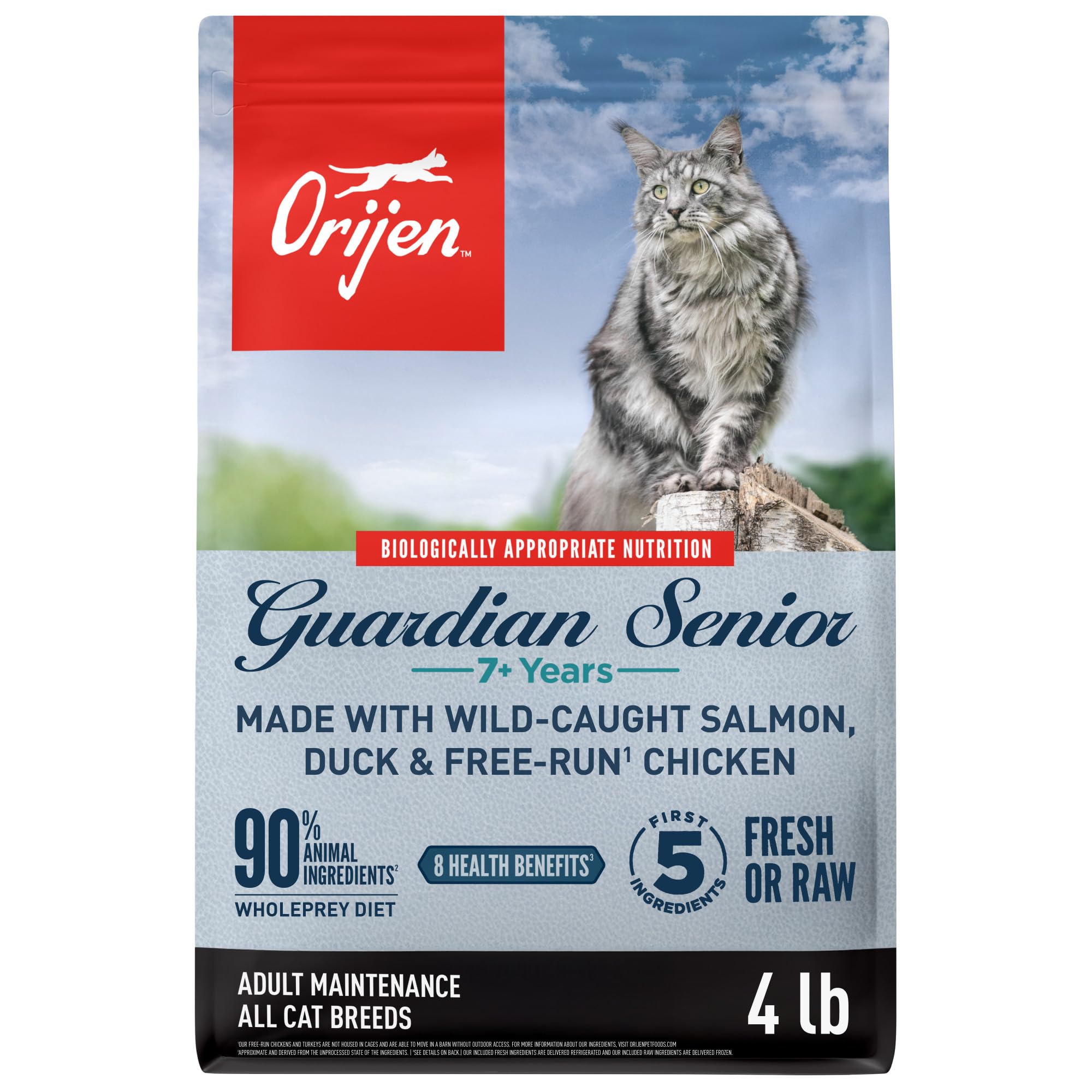
ORIJEN Guardian Senior is formulated using the WholePrey philosophy, incorporating fresh or raw poultry and fish including bones and organs to mirror the nutritional profile of a natural feline diet. The first five ingredients are fresh or raw animal sources, delivering a protein content of roughly 38% that supports muscle retention and metabolic function in cats aged seven and older.
The kibble shape is a 7mm disc, slightly smaller than the brand’s adult formulas, making it more manageable for senior cats with reduced jaw strength. The formula is grain-free and avoids peas, lentils, and white potatoes as primary carbohydrate sources, which distinguishes it from many competitors that rely on legume fillers. Taurine, omega-3 fatty acids, and glucosamine are included for heart, coat, and joint support respectively.
The cost per pound is noticeably higher than mid-range options, though the higher calorie density means cats need less volume to meet their energy requirements—potentially offsetting the price difference over time. The strong fish aroma may be off-putting to some owners, but most cats respond enthusiastically. For owners prioritizing ingredient sourcing and biological appropriateness, this is a standout choice.
Why it’s great
- WholePrey ingredients including organs and bone for natural nutrition
- Grain-free with no pea or lentil fillers
- Higher calorie density reduces feeding volume needed
Good to know
- Premium pricing reflects ingredient quality
- Strong fish scent may be noticeable during feeding
7. Purina Pro Plan LiveClear Senior Cat Food 7+

Purina Pro Plan LiveClear is the only senior cat food on this list that actively addresses human allergies. A key protein sourced from eggs binds to the Fel D1 allergen in the cat’s saliva, neutralizing it before it transfers to dander and fur. Owners with mild to moderate cat allergies consistently report significantly reduced sneezing and watery eyes after their cat has been on this food for three to four weeks.
Beyond its allergen-reducing claim, the formula is fortified with guaranteed live probiotics for digestive health and antioxidants for immune support. The kibble is a moderate size suitable for most senior cats, though cats with missing teeth may still prefer a wet food alternative. The chicken and rice recipe provides a familiar protein base that most cats accept readily during transition.
The 5.5-pound bag size is relatively small given the daily feeding volume requirement, leading to more frequent reordering. Some owners wish for a wet food version of the LiveClear formula for enhanced hydration benefits. For households where a human family member suffers from cat allergies, this food offers a practical, non-pharmaceutical intervention that can improve quality of life for both cat and owner.
Why it’s great
- Neutralizes Fel D1 allergen in cat saliva
- Live probiotics support senior digestive health
- High palatability eases food transitions
Good to know
- Small bag size requires frequent repurchasing
- No wet food version currently available for hydration support
FAQ
At what age should I switch my cat to senior food?
Is wet food better than dry food for senior cats?
Can I feed my senior cat the same food as my younger cat?
How do I transition my senior cat to a new food without upsetting their stomach?
Final Thoughts: The Verdict
For most owners, the best cat food for senior cats winner is the Royal Canin Indoor 7+ because its adapted phosphorus levels, soft porous kibble, and high digestibility address the three most common senior health concerns—kidney stress, dental difficulty, and digestive sensitivity—all within a single formula at a practical price point. If your priority is boosting hydration for early-stage kidney support, grab the Blue Buffalo Tastefuls Wet Pate for its high moisture content and smooth texture. And for senior cats with confirmed chicken allergies or multiple food sensitivities, nothing beats the Blue Buffalo Basics Turkey & Potato for its limited-ingredient approach that eliminates the most common feline allergens.