
A sudden shift in your cat’s litter box odor often signals that something is off internally. The smell isn’t the root problem — it’s a direct symptom of how well (or poorly) your cat digests what you feed them. The right choice targets the gut, not just the odor.
I’m Min — the co-founder and writer behind Gadgets Feed. I’ve spent hundreds of hours cross-referencing veterinary nutrition guidelines against consumer reports to identify which ingredients and formulations actually address the digestive fermentation that produces foul stool.
Whether you are dealing with a sensitive stomach, a picky eater, or a diet that just isn’t working, making an informed switch is the fastest path to relief. This guide breaks down the top options for the best cat food for smelly poop by focusing on real digestive science, not marketing claims.
How To Choose The Best Cat Food For Smelly Poop
Stool odor is a clear indicator of the microbial environment in your cat’s colon. When undigested food particles reach the large intestine, bacteria ferment them, producing sulfurous gases. The goal is to ensure nutrients are absorbed upstream so less substrate reaches the fermentation zone. Selecting a formula with highly digestible protein and controlled fiber is the primary lever.
Prioritize Digestible Protein Sources
Protein is the single most important macronutrient for cats, obligate carnivores that cannot thrive on plant-based diets. However, not all protein is equally digestible. Look for formulas where a named animal protein (chicken, lamb, duck, fish) is the first ingredient. Highly processed meals or low-quality protein sources can be harder to digest, leading to more waste and stronger odor.
Look for Prebiotics and Probiotics
A healthy gut microbiome is the first line of defense against foul-smelling stool. Prebiotic fibers (like chicory root, inulin, or psyllium) feed beneficial bacteria, while probiotics (live active cultures like BC30 or Enterococcus faecium) help maintain a balanced gut flora. Many high-end formulations now include guaranteed levels of both, reducing the need for separate supplements.
Avoid Common Irritants
Certain ingredients are notorious for causing digestive upset in cats. Corn, wheat, soy, and artificial preservatives can trigger inflammation and poor nutrient absorption. Even some natural fibers like carrageenan (a seaweed-derived thickener) have been linked to gastrointestinal inflammation in some studies. Stick to limited-ingredient or grain-free recipes that avoid these common triggers if your cat is sensitive.
Quick Comparison
On smaller screens, swipe sideways to see the full table.
| Model | Category | Best For | Key Spec | Amazon |
|---|---|---|---|---|
| Royal Canin Feline Care Nutrition Digestive Care | Premium | Chronic digestive issues & stool quality | 95% healthy stool after 10 days | Amazon |
| Purina Pro Plan Sensitive Skin and Stomach | Premium | Lamb as a novel protein source | Live probiotics for digestive health | Amazon |
| ACANA Indoor Entree Dry Cat Food | Premium | High protein with hairball control | 65% animal ingredients | Amazon |
| Instinct Original Dry Cat Food | Mid-Range | Raw-coated kibble for picky eaters | 81% animal ingredients & oils | Amazon |
| Nulo FreeStyle Indoor Dry Cat Food | Mid-Range | Novel duck & cod protein for allergies | BC30 probiotics for gut health | Amazon |
| Blue Buffalo Wilderness Weight & Hairball Control | Mid-Range | Weight management for free grazers | Psyllium fiber for bulk and digestion | Amazon |
| Nutro Wholesome Essentials Indoor Dry Cat Food | Budget-Friendly | Gentle digestive support on a budget | Natural prebiotic fiber for digestion | Amazon |
In‑Depth Reviews
1. Royal Canin Feline Care Nutrition Digestive Care Adult Dry Cat Food

Royal Canin designed this formula around one specific clinical metric: stool quality. An internal study showed that over 95% of cats produced healthy stool after just 10 days on this diet. The proprietary blend of prebiotics and dietary fiber works to slow transit time, allowing more nutrients to be absorbed before reaching the colon where odor-causing fermentation occurs.
The unique ring-shaped kibble forces cats to chew more thoroughly, slowing down their eating speed. This reduces the amount of air swallowed during meals, which directly cuts down on gas production and intestinal bloating. For cats that wolf down food and then vomit, this design alone can transform their digestive experience.
Customers consistently report dramatic reductions in vomiting frequency and firmer, less odorous stools within the first week of switching. Many users describe it as the “only food that worked” after trying numerous budget and even other premium brands. The 6-pound bag is priced at a premium level, but for cats with persistent digestive sensitivity, the reduction in litter box odor and vet visits justifies the investment.
Why it’s great
- Proven 95% healthy stool rate in clinical trials
- Unique ring shape encourages slow eating
- Excellent for frequent vomiting and loose stools
Good to know
- One of the more expensive options per pound
- Contains fish, gluten, and soy allergens
- Some cats dislike the unusual kibble shape
2. Purina Pro Plan Sensitive Skin and Stomach Cat Food
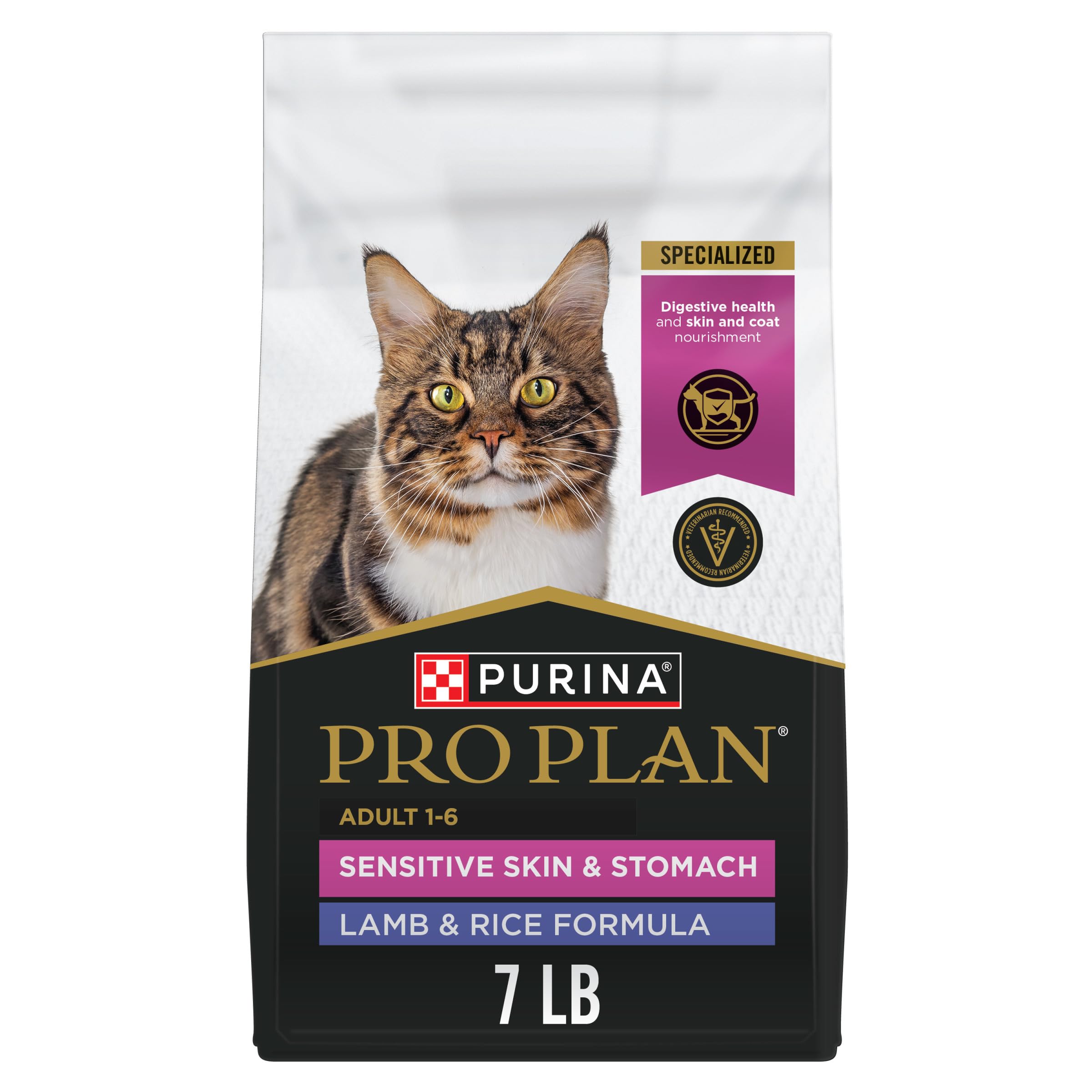
This formula uses real lamb as the first ingredient, making it an excellent novel protein option for cats that have developed sensitivities to chicken or fish. The combination of rice and oatmeal provides easily digestible carbohydrates that are gentle on the gastrointestinal tract compared to corn or wheat-based fillers. Each serving is fortified with guaranteed live probiotics specifically added after the cooking process to ensure viability.
Omega-6 fatty acids and vitamin A work together to support skin and coat health, which frequently suffer alongside digestive issues. The kibble texture is standard but the ingredient profile is anything but. With no artificial colors or flavors, this is a clean, science-backed formula that doesn’t rely on gimmicks. The 7-pound bag represents strong value in the sensitive-stomach category.
Customer feedback highlights two dramatic outcomes: cessation of itching and scratching (linked to food allergies) and return to firm, normal stool within two weeks of transitioning. Multiple reviewers note that even cats with long histories of chronic diarrhea or soft stools found relief. The larger 22-pound bag offers even better cost efficiency for multi-cat households.
Why it’s great
- Novel lamb protein avoids common chicken allergies
- Live probiotics survive processing for gut health
- Excellent value per pound in large bags
Good to know
- Contains grains (rice, oatmeal) — not grain-free
- Not all cats respond within the first week
- Some cats may find lamb flavor less palatable
3. ACANA Indoor Entree Dry Cat Food
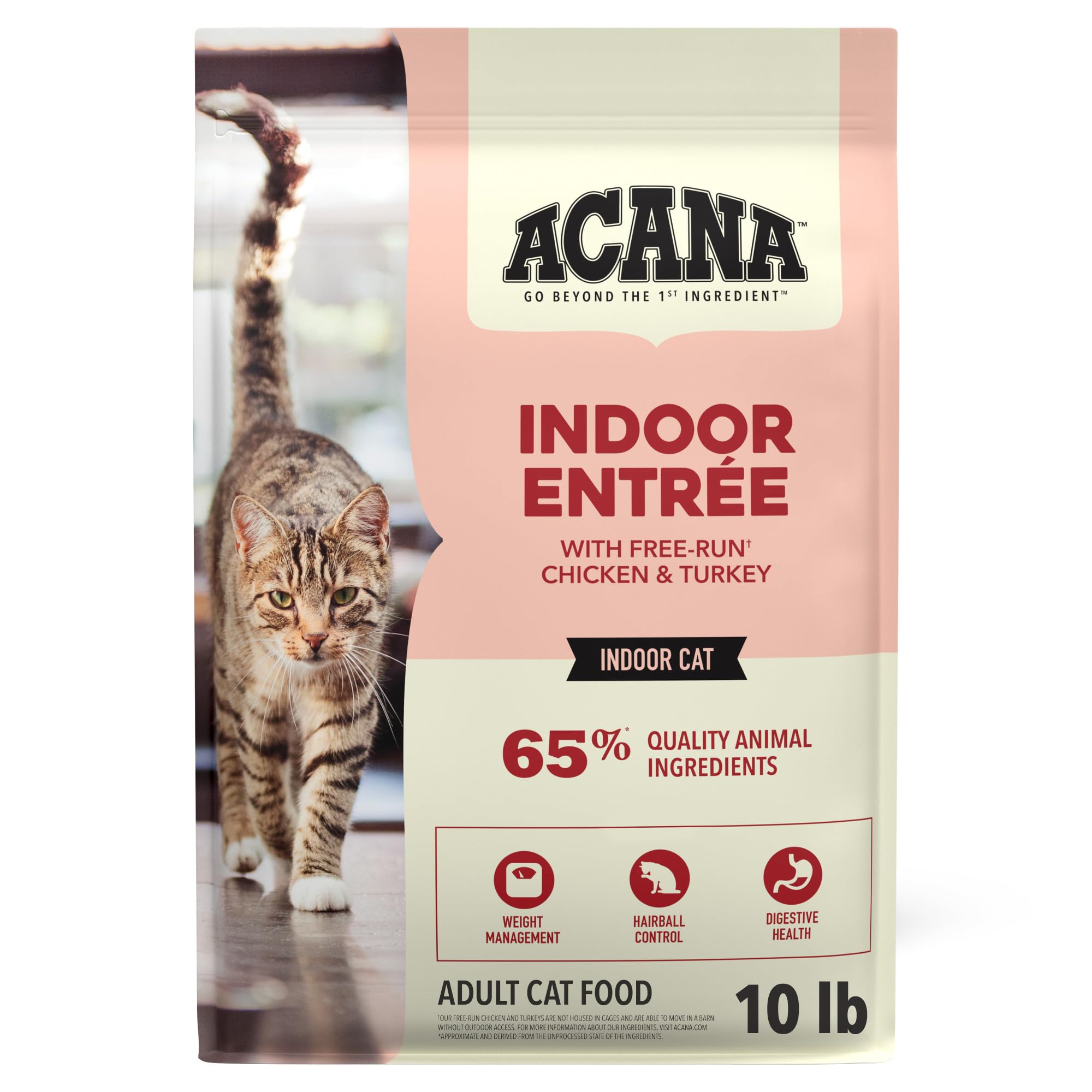
ACANA’s Indoor Entree pushes the protein envelope with 65% animal ingredients from free-run chicken, turkey, whole herring, and rabbit. This diverse protein spectrum reduces the risk of developing a single-protein intolerance while providing the amino acid profile an obligate carnivore needs for optimal digestion. The remaining 35% is made up of fruits, vegetables, and botanicals that contribute fiber and prebiotics without diluting the meat content.
The formula is specifically tailored for indoor cats, addressing three common issues that correlate with foul stool: hairball buildup, weight management, and low fiber intake. By incorporating whole prey ingredients like organs and cartilage, ACANA provides natural sources of glucosamine and taurine that support both digestion and overall vitality. The kibble is denser than average, encouraging more chewing and slower consumption.
Long-term users report that their cats maintain consistent stool quality, glossy coats, and stable energy levels. One reviewer noted that after five years on this food, their cat had “smooth vet visits and good poop” — the most direct endorsement for stool quality. The 10-pound bag offers a solid cost-per-pound ratio for a super-premium brand.
Why it’s great
- Four animal protein sources reduce allergy risk
- Grain-free and filler-free formulation
- Resealable bag maintains kibble freshness
Good to know
- High protein may cause weight gain on free-feeding
- Some cats find the dense kibble too hard
- Price point sits firmly in premium territory
4. Instinct Original Dry Cat Food

Instinct takes a unique approach by freeze-drying raw ingredients and coating the kibble after cooking, preserving enzymes and live probiotics that are typically destroyed by high-temperature extrusion. The result is a product that delivers 81% animal-based ingredients and oils, with cage-free chicken as the leading protein. This raw coating provides natural digestive enzymes that help break down food more efficiently in the stomach, reducing the amount of undigested material reaching the colon.
The formula is completely grain-free, with no potato, corn, wheat, or soy. It also excludes by-product meals and artificial preservatives. Guaranteed levels of live probiotics support ongoing gut health, while omega-3 and omega-6 fatty acids nourish the intestinal lining. The kibble is a standard pellet shape, but the raw coating significantly enhances palatability for even the pickiest eaters.
Customers report dramatic improvements in cats that previously suffered from chronic vomiting or soft stools. One reviewer specifically noted that “no more vomiting” was their primary outcome. However, it’s worth noting that the recommended serving size can be calorie-dense; some owners found their cats gained weight unless portion sizes were carefully controlled.
Why it’s great
- Raw coating preserves natural digestive enzymes
- 81% animal ingredients support lean muscle
- Excellent for cats with chronic vomiting issues
Good to know
- High calorie density requires portion control
- Contains tapioca, which some owners avoid
- Pricier than many mid-range options
5. Nulo FreeStyle Indoor Dry Cat Food
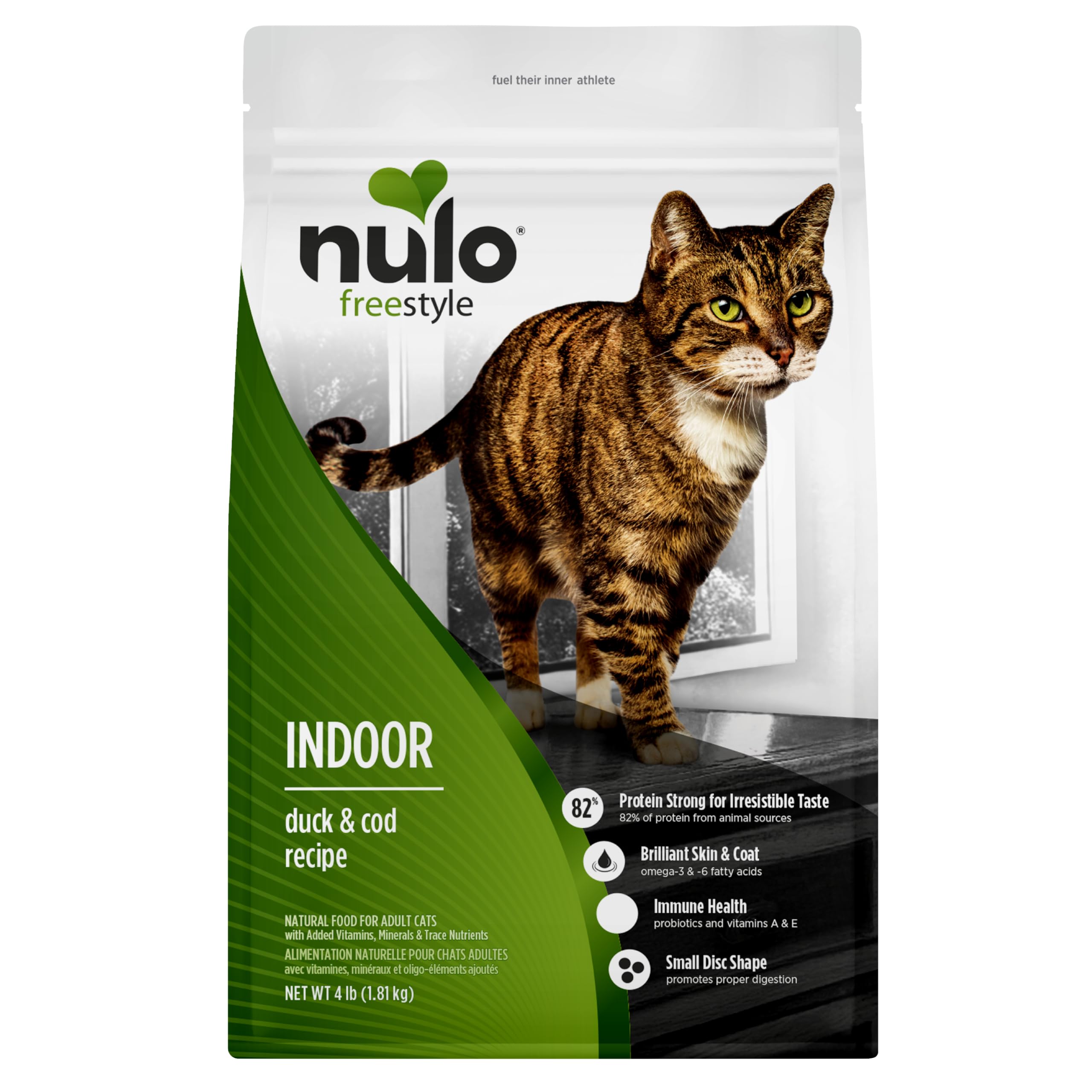
Nulo’s FreeStyle formula differentiates itself with novel protein sources — deboned duck and cod — that are significantly less likely to trigger food sensitivities compared to chicken or fish. This is a critical advantage for cats whose smelly poop stems from a protein intolerance that causes inflammation and poor absorption. The 82% animal-based protein content supports lean muscle development without the inflammatory response that common proteins can provoke.
The inclusion of BC30 (Bacillus coagulans) probiotics sets this formula apart. BC30 is a spore-forming probiotic that survives the high temperatures of kibble extrusion and the acidic environment of the stomach, ensuring live cultures reach the intestines where they can colonize. Prebiotic fibers from chicory root and vegetables feed these beneficial bacteria, creating a self-sustaining cycle of digestive health.
Reviews highlight improved coat shine, consistent energy levels, and a notable reduction in hairballs. One multi-cat household observed that even roommates’ cats were drawn to the food’s scent, indicating high palatability. The small disc-shaped kibble is easy for cats to chew and swallow, reducing the risk of gulping and subsequent regurgitation.
Why it’s great
- Novel duck & cod protein minimizes allergy risk
- BC30 probiotics survive cooking and digestion
- Small disc shape suits cats with dental issues
Good to know
- 4-pound bag is smaller than some alternatives
- Duck flavor may not appeal to all cats
- Higher price point for the bag size
6. Blue Buffalo Wilderness Weight & Hairball Control

This formula addresses a specific subset of smelly poop causes: the combination of weight management and hairball control. Psyllium fiber acts as a bulking agent that helps move hair through the digestive tract while also absorbing excess moisture to firm up loose stools. This dual action makes it particularly effective for indoor cats that overeat, accumulate hairballs, and produce inconsistent, foul-smelling stool as a result.
Real chicken is the primary protein, and the formula excludes by-product meals, corn, wheat, and soy. The proprietary LifeSource Bits are cold-processed to preserve their antioxidant content, supporting immune health alongside digestive function. With balanced calories designed for weight control, this food helps prevent the obesity that can exacerbate digestive sluggishness and stool odor.
Customer feedback is strongly positive for multi-cat households. One owner of six senior cats noted a “notable reduction” in fur balls and improved stool consistency after switching to this grain-free formula. The psyllium component received specific praise from a reviewer who described it as “bulk to prevent diarrhea.” The 5-pound bag is a reasonable entry point for testing, though larger bags offer better value.
Why it’s great
- Psyllium fiber firms stool while controlling hairballs
- Weight management formula prevents overfeeding
- No corn, wheat, or soy fillers
Good to know
- Chicken formula lacks hairball control enzymes
- Some cats find the lower fat content less palatable
- May be too calorie-restricted for active cats
7. Nutro Wholesome Essentials Indoor Dry Cat Food
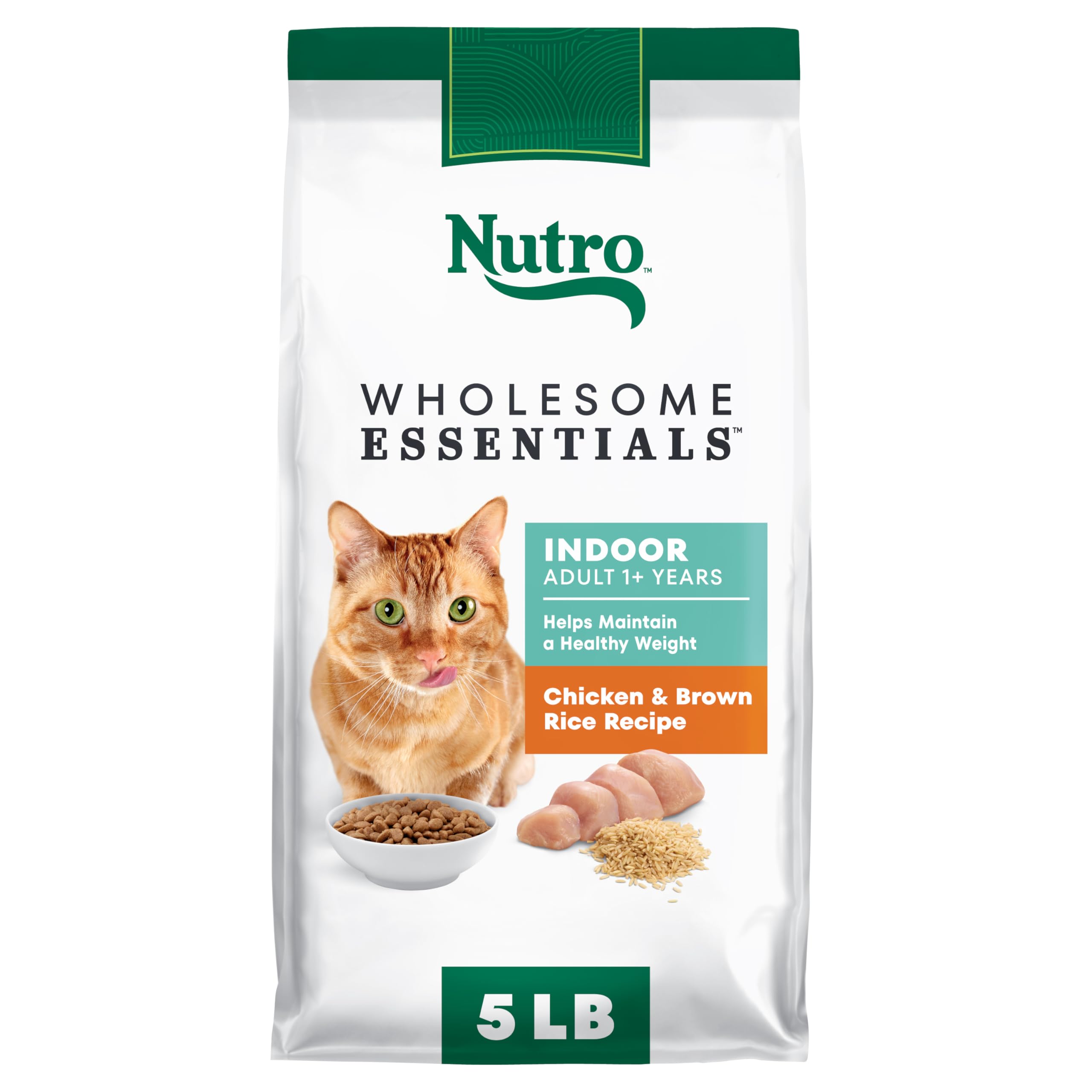
Nutro’s Wholesome Essentials line is built around simplicity: real chicken as the first ingredient, brown rice for digestible carbohydrates, and natural prebiotic fiber for digestive support. There are no artificial colors, flavors, or preservatives, and all ingredients are non-GMO. This straightforward approach is ideal for cats whose smelly poop is caused by sensitivity to complex or highly processed formulas.
The low sodium claim makes this a suitable option for cats with kidney concerns, and the Vitamin E and selenium antioxidants support immune health alongside digestion. While it doesn’t contain live probiotics like some premium options, the natural prebiotic fiber from whole grains and vegetables provides the substrate for existing gut bacteria to thrive. The kibble is small and easy to chew, reducing the risk of gulping.
Customers appreciate the consistency of quality over years of use. One reviewer’s cat has been on this food for seven years without digestive issues. Another noted that their sensitive-stomach kitten transitioned to this food easily and has maintained excellent digestive health. The 5-pound bag is very accessible for budget-conscious owners looking for a first step toward improving litter box odor.
Why it’s great
- Clean, simple ingredient list with no fillers
- Non-GMO and low sodium for health-conscious owners
- Proven long-term reliability for sensitive stomachs
Good to know
- Contains brown rice (not grain-free)
- No guaranteed live probiotics
- Small bag size limits value for multi-cat homes
FAQ
Why does my cat’s poop smell worse on certain protein sources?
How long after switching food will my cat’s stool odor improve?
Can grain-free formulas actually make stool odor worse?
Is wet food better than dry food for reducing litter box odor?
Do hairball control foods actually reduce poop smell?
Final Thoughts: The Verdict
For most users, the best cat food for smelly poop winner is the Royal Canin Feline Care Nutrition Digestive Care because its clinical formulation and unique kibble design directly address the digestive inefficiencies that produce foul stool. If you want a novel protein source to rule out food allergies, grab the Purina Pro Plan Sensitive Skin and Stomach. And for the highest animal protein content with raw-coated digestive enzymes, nothing beats the Instinct Original Raw Coated Kibble.