
Feline digestive issues — from chronic vomiting and loose stools to gassiness and a finicky appetite — are among the most common distress signals cat owners face. The root cause often lies in a compromised gut microbiome, where beneficial bacteria are outnumbered by harmful strains, impairing nutrient absorption and triggering inflammation. Choosing a diet fortified with targeted probiotics and prebiotic fibers can rebalance that ecosystem, reducing symptoms and improving coat quality, energy levels, and overall resilience.
I’m Min — the co-founder and writer behind Gadgets Feed. I’ve spent countless hours analyzing the latest veterinary nutrition research, comparing sifting through hundreds of customer reports on digestive outcomes, and dissecting the label claims of every major feline probiotic formula to isolate the truly effective options from the marketing fluff.
Whether your cat suffers from a diagnosed sensitivity, age-related digestive slowdown, or simply needs a daily microbiome tune-up, this guide cuts through the noise to deliver the best cat food with probiotics based on real science and verified long-term feeding results.
How To Choose The Best Cat Food With Probiotics
Not all probiotic cat foods are created equal. The three pillars to evaluate are the strain-specificity of the probiotics, the inclusion and type of prebiotic fibers that feed those bacteria, and the overall macronutrient profile that supports the probiotic’s survival through the stomach acid.
Strain Specificity & Survivability
Look for named strains such as *Enterococcus faecium*, *Bifidobacterium animalis*, or *Lactobacillus acidophilus*. These have demonstrated ability to survive the acidic environment of the feline stomach and colonize the intestines. Generic “dried fermentation products” or “probiotics” on the label without a specific strain name often lack guaranteed potency at the time of feeding.
Prebiotic Fiber Synergy
Probiotics need fuel to flourish. Ingredients like pumpkin, chicory root extract (inulin), beet pulp, and psyllium husk provide soluble fibers that selectively feed beneficial bacteria while promoting regular, formed stools. A formula with probiotics but no prebiotic fiber source is only half the equation — the bacteria will struggle to establish long-term colonies.
Life Stage & Condition-Specific Formulation
A kitten’s microbiome requires different support than a senior cat’s. Kitten formulas should include DHA for brain development alongside probiotics. Senior cats benefit from added glucosamine and chondroitin for joints and lower phosphorus for kidney protection. Adults with stress-induced digestive issues need formulations with hydrolyzed casein or L-tryptophan to calm the nervous system via the gut-brain axis.
Quick Comparison
On smaller screens, swipe sideways to see the full table.
| Model | Category | Best For | Key Spec | Amazon |
|---|---|---|---|---|
| Farmina N&D Quinoa Digestion | Premium Dry | High-quality Italian ingredients | Lamb & Quinoa with Fennel & Mint | Amazon |
| Hill’s Prescription Diet GI Biome | Veterinary Dry | Chronic digestive issues & stress | ActivBiome+ technology with prebiotic fibers | Amazon |
| Wellness Core Digestive Pate | Premium Wet | Finicky cats needing grain-free wet food | 12-pack variety, carrageenan-free pate | Amazon |
| Health Extension Chicken & Brown Rice | Mid-Range Dry | All-life-stage digestive support | Probiotics + apple cider vinegar + ginger | Amazon |
| Wellness Complete Health Senior | Mid-Range Dry | Senior cats needing joint & digestive care | Deboned chicken first, glucosamine + chondroitin | Amazon |
| Hill’s Science Diet Kitten Sensitive Stomach | Mid-Range Dry | Kittens with sensitive digestion | Prebiotic fiber + DHA for brain development | Amazon |
| Tiki Cat Solutions Digestion Mousse | Mid-Range Wet | Cats with oral issues or poor appetite | Mousse texture with pumpkin & gentle fiber | Amazon |
In‑Depth Reviews
6. Farmina N&D Quinoa Digestion Lamb & Fennel
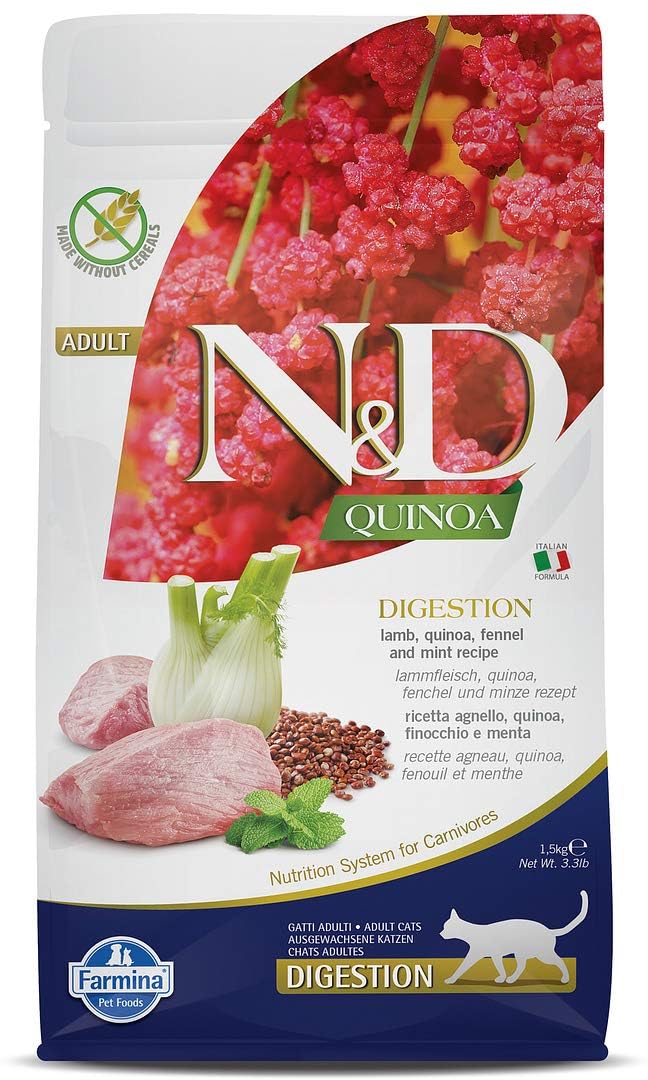
Farmina’s N&D Quinoa Digestion formula represents the pinnacle of Italian pet food engineering, using cold-infusion technology to preserve the integrity of the probiotics and prebiotic compounds that would otherwise be destroyed by high-heat extrusion. The lamb, quinoa, fennel, and mint recipe is deliberately limited-ingredient to minimize allergic triggers while providing a diverse array of phytonutrients that support the gut lining. Multiple customer reports confirm resolution of chronic dandruff and improved coat luster within weeks of switching, alongside normalized stool consistency — a strong signal that the microbiome has genuinely repopulated.
The kibble size is notably small and uniform, making it easy for both seniors and flat-faced breeds to manage without excessive chewing. The 3.3-pound bag is modest in volume, reflecting the dense nutritional profile — a little goes further than with lower-calorie competitors because the protein and fat ratios are dialed in for efficient metabolism. Owners of persistently picky eaters report that even the most resistant cats eventually accept this food, often after the aroma of fennel and mint triggers a novel interest. The absence of rendered meals and the explicit naming of quinoa as a complete plant protein contribute to the formula’s superior digestibility score.
It is important to note that this is a therapeutic-class diet, meaning it is formulated to address specific digestive pathologies rather than serve as a general maintenance food. The premium cost per pound reflects the sourcing of non-GMO ingredients and the proprietary cold-infusion process, but for owners of cats with confirmed food sensitivities, IBD, or chronic inflammatory conditions, the investment consistently pays off in reduced veterinary visits. The brand’s Italian manufacturing facility adheres to human-grade food production standards, which adds an extra layer of confidence regarding batch consistency and contaminant testing.
Why it’s great
- Cold-infusion preserves probiotic and prebiotic integrity through the kibble production process
- Limited-ingredient lamb and quinoa base minimizes allergic triggers while maximizing nutrient density
- Clinically observed improvement in coat condition, dandruff resolution, and stool normalization across multiple age groups
Good to know
- Price tag sits at the premium end of the category, making it a serious investment for multi-cat households
- Some finicky cats may take several days to accept the fennel and mint aroma, though most eventually acclimate
7. Hill’s Prescription Diet GI Biome Stress
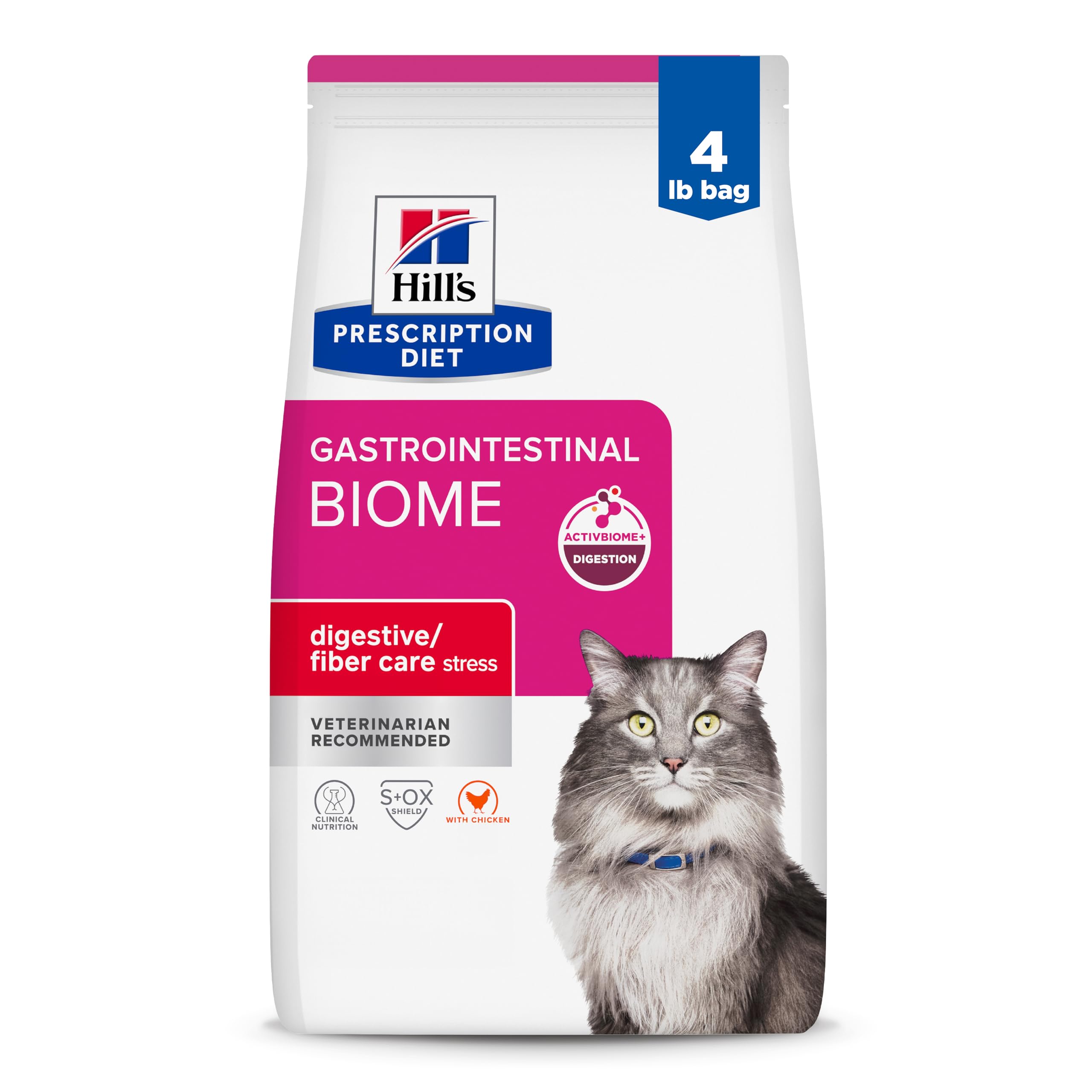
Hill’s Prescription Diet Gastrointestinal Biome Stress formula is built around proprietary ActivBiome+ ingredient technology, a blend of prebiotic fibers specifically selected to stimulate the growth of beneficial bacteria like Bifidobacteria and Faecalibacterium within hours of ingestion. The clinical data from Hill’s nutritionists shows that this formula can promote regular healthy stool in as little as 24 hours, which is remarkable speed for a dry kibble. The inclusion of hydrolyzed casein and L-tryptophan targets the gut-brain axis directly, reducing stress-related cortisol spikes that often trigger or exacerbate digestive upset in anxious or high-strung cats.
Real-world customer reports from Sphynx and Persian owners — breeds notoriously prone to loose stools and gastrointestinal inflammation — confirm that this food has been life-changing, with reports of immediate resolution of chronic diarrhea and nausea. The kibble shape is intentionally small and slightly flattened, which helps brachycephalic cats pick up and chew the pieces without gagging. The high levels of omega-3 fatty acids (DHA and EPA) provide additional anti-inflammatory support for the intestinal lining, which is crucial for cats with IBD or suspected food allergies. Multiple reviewers noted that their cats actively preferred this food over their previous diets, even when the previous food was a more palatable wet formula.
Because this is a veterinary prescription diet, it requires a consultation with your veterinarian to confirm it is appropriate for your cat’s specific condition. The price is among the highest in this comparison, but the targeted nature of the formulation — addressing both the mechanical digestion issue and the neurological stress component — means it is often the only food that works for cats with complex, multi-factorial digestive disorders. Owners should be prepared for a potential transition period of 3-5 days during which the cat’s microbiome adjusts, but the overwhelming majority of reviews report positive outcomes within the first week.
Why it’s great
- ActivBiome+ prebiotic technology clinically shown to firm stool within 24 hours in controlled feeding trials
- Hydrolyzed casein and L-tryptophan reduce stress hormone levels, breaking the gut-brain-stress cycle
- High DHA and EPA omega-3s provide potent anti-inflammatory support for IBD and colitis cats
Good to know
- Requires a veterinary prescription, which adds an extra step before purchase and ongoing vet oversight
- The premium price point is significant even for a therapeutic diet, especially for larger or multi-cat households
5. Wellness Core Digestive Grain Free Pate Variety

The Wellness Core Digestive line specifically targets the grain-free and carrageenan-free wet food niche, which is critical because carrageenan — a common thickener in many canned cat foods — has been implicated in intestinal inflammation in sensitive cats. This variety pack includes 12 individual 3-ounce cans spread across four proteins (beef and chicken, chicken, salmon and turkey, and turkey), allowing you to rotate flavors without committing to a single protein source. The pate texture is smooth enough to be mashed into a slurry for syringe-feeding sick cats, yet firm enough to hold its shape for picky eaters who prefer eating off a plate.
Customer feedback consistently highlights that this is the one wet food finicky cats with sensitive stomachs actually finish — a sentiment echoed by owners of cats that had previously rejected every other digestive-care wet food on the market. The grain-free formulation eliminates corn, wheat, and soy, which are common triggers for feline food allergies that manifest as vomiting or soft stool. Each can is precisely portioned for a single feeding for an average 8-10 pound cat, reducing waste and the risk of bacterial contamination from refrigerated leftovers that some cats refuse the next day. The omega-3 and omega-6 fatty acid profile supports the intestinal lining’s repair mechanisms, which is especially beneficial for cats recovering from a bout of gastroenteritis or antibiotic treatment.
One limitation to consider is the sodium content, which is slightly higher than some other digestive wet foods, so cats with hypertension or chronic kidney disease may need a different formulation. Additionally, the 3-ounce can size, while convenient, makes it slightly less economical per ounce compared to larger 5.5-ounce cans. However, for owners who have struggled to find a wet food their cat both enjoys and tolerates digestively, the convenience and high acceptance rate of this variety pack often justify the premium. The inclusion of a free pet food bowl with the bundle is a minor but appreciated bonus.
Why it’s great
- Carrageenan-free formulation avoids a known intestinal irritant common in other wet pates
- Four-flavor variety reduces flavor fatigue and allows protein rotation for allergy management
- Smooth pate texture works for both healthy eaters and cats recovering from oral surgery or illness
Good to know
- Sodium content may be a concern for cats with pre-existing kidney or heart conditions
- 3-ounce cans are less economical per ounce than larger cans from competing digestive care lines
4. Health Extension Chicken & Brown Rice Dry

Health Extension takes a holistic approach to digestive health by layering probiotics with apple cider vinegar and ginger — two ingredients with documented prokinetic and anti-inflammatory effects on the gastrointestinal tract. The chicken and brown rice base provides a gentle, easily digestible protein and carbohydrate source that is unlikely to trigger sensitivities in the majority of cats. This is one of the few formulas that explicitly carries an all-life-stage claim, meaning it meets the nutritional benchmarks for kittens as young as six weeks, adult maintenance, and senior cats, which makes it an efficient choice for multi-cat households with varying ages.
Customer reports are particularly strong regarding the resolution of urinary crystals and chronic vomiting. One reviewer noted that their male cat’s recurring urinary issues completely resolved after switching to this food — likely due to the controlled mineral levels and the alkalinizing effect of the apple cider vinegar on urine pH, which discourages crystal formation. The kibble size is slightly larger than average, which may encourage chewing in cats that tend to gulp their food and then regurgitate. The absence of corn, wheat, soy, and artificial preservatives aligns with the ingredient quality expected from a holistic brand, and the 4-pound bag size is convenient for households that prefer to buy smaller batches to ensure freshness.
One ingredient concern to note is the presence of carrageenan in the ingredient list — despite the otherwise clean formulation. While carrageenan is generally recognized as safe by the FDA, some cat owners and holistic veterinarians prefer to avoid it due to potential inflammatory effects. The ginger content, while beneficial for nausea, may cause mild gastric upset in cats with extremely sensitive stomachs if introduced too quickly. The flavor profile is palatable enough that most cats accept it readily, though a few reviewers noted flavor fatigue over time and recommended rotating with wet food to maintain interest. Overall, this is the most cost-effective entry point into probiotic-fortified dry food without sacrificing ingredient transparency.
Why it’s great
- All-life-stage nutritional completeness eliminates the need for separate kitten and adult food in multi-cat homes
- Apple cider vinegar and ginger provide dual-action digestive support — pH regulation and anti-nausea — beyond standard probiotics
- Strong track record for resolving urinary crystal issues and chronic vomiting within weeks of switching
Good to know
- Contains carrageenan, which some owners prefer to avoid due to potential inflammatory concerns
- Ginger may cause mild initial gastric upset in cats with extremely sensitive digestive tracts if transition is too abrupt
1. Wellness Complete Health Senior Dry

Wellness Complete Health Senior is purpose-built for cats aged 7 and older, addressing the three most common age-related challenges: declining digestive efficiency, joint stiffness, and reduced kidney function. The chicken-first recipe delivers highly bioavailable protein while the controlled mineral levels — specifically reduced phosphorus and magnesium — help protect aging kidneys from further strain. Added glucosamine and chondroitin support synovial joint health, which is often overlooked in senior feline nutrition but directly impacts mobility and quality of life. The probiotic and prebiotic fiber blend targets the age-related decline in beneficial gut bacteria, which is a primary driver of malabsorption and weight loss in senior cats.
Multiple verified reviews from owners of 15- and 16-year-old cats report that this food was eaten enthusiastically even by cats that had stopped eating their previous diets, and that vomiting frequency dropped significantly — often to zero — after the transition. The kibble size is moderate, but many senior owners noted that the texture held up well when softened with warm water, making it easier for cats with dental issues to manage. The 5.5-pound bag size is practical for single-cat senior households, as it stays fresh before the cat can finish it. The inclusion of omega-3 fatty acids from flaxseed and fish oil supports the skin and coat, addressing the dull, flaky coat that often accompanies aging feline digestive inefficiency.
It is worth noting that this formula is not grain-free, containing brown rice and oatmeal as carbohydrate sources. While these are generally well-tolerated, cats with confirmed grain allergies may still react, so a grain-free senior formula would be a better fit for that subset. The glucosamine content, while helpful, is at maintenance levels rather than therapeutic levels, so cats with advanced arthritis may need additional supplementation. For the majority of senior cats whose primary issue is maintaining a healthy weight, good digestion, and comfortable joint mobility, this formula provides a balanced, vet-formulated solution at a mid-range price point that is sustainable for long-term feeding.
Why it’s great
- Senior-targeted mineral profile with reduced phosphorus and magnesium supports kidney function and urinary health
- Glucosamine and chondroitin at maintenance levels support joint mobility without requiring separate supplements
- Clinically reported reduction in vomiting and improved appetite in geriatric cats, often within days of switching
Good to know
- Not grain-free — contains brown rice and oatmeal, which may not suit cats with confirmed grain sensitivities
- Glucosamine level is maintenance-oriented, so cats with severe arthritis may still require additional joint supplements
2. Hill’s Science Diet Kitten Sensitive Stomach
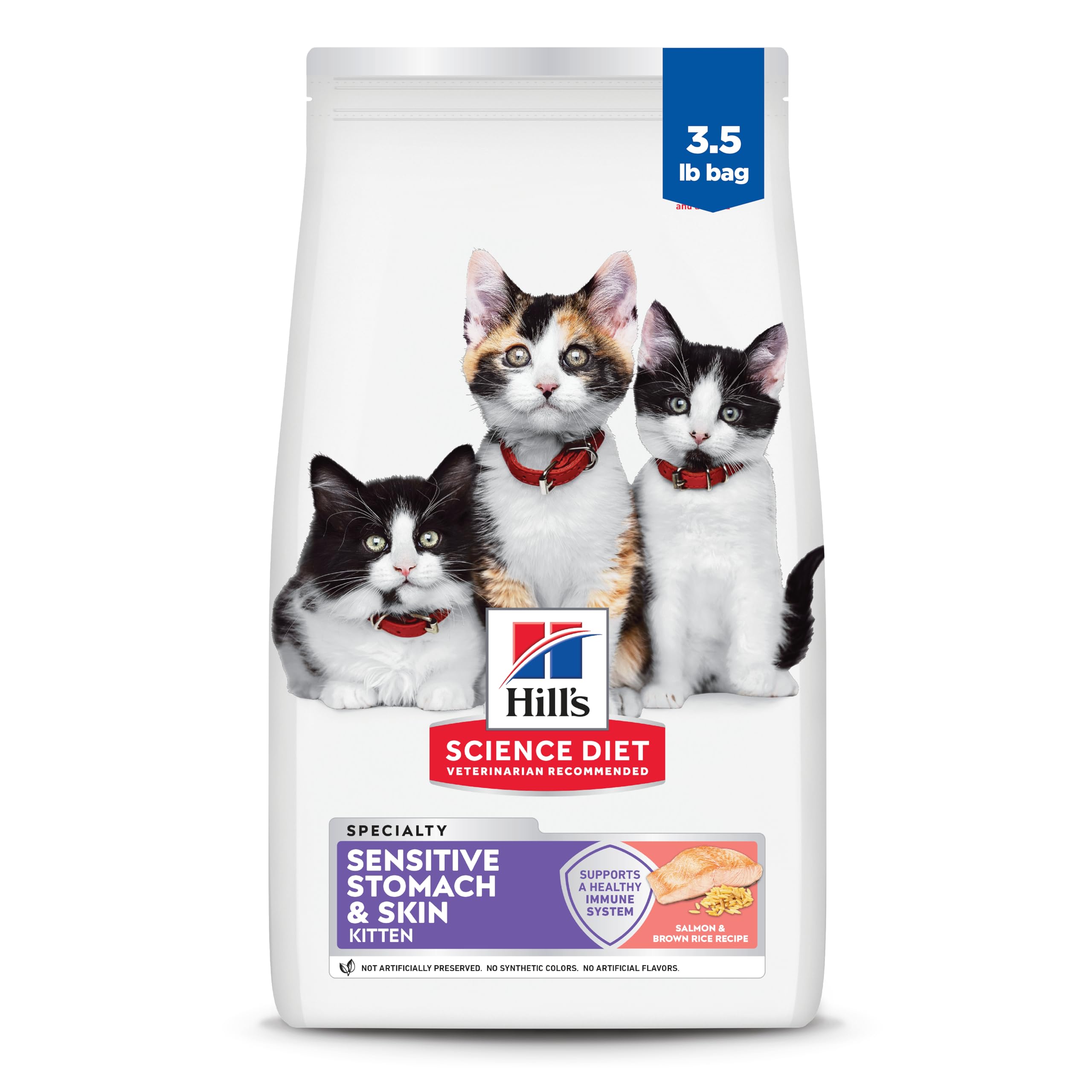
Hill’s Science Diet Kitten Sensitive Stomach & Skin formula uniquely addresses the dual challenges of early-life digestive sensitivity and rapid developmental needs by combining highly digestible prebiotic fiber with DHA for brain and vision development. The salmon and brown rice protein base is a novel protein source for most kittens raised on chicken-based foods, which reduces the likelihood of an allergic reaction triggering digestive upset during the critical weaning period. The kibble is notably small and flattened — measuring roughly 5-6mm in diameter — which is specifically designed for small kitten mouths and reduces the risk of choking or regurgitation from oversized kibble pieces.
Customer testimonials include remarkable reports from owners of tailless bobtail kittens and Persians with congenital constipation issues that resolved completely after switching to this formula. The prebiotic fiber is gentle enough to normalize stool without causing the loose stools that sometimes accompany high-fiber diets in young cats. Multiple reviewers noted that their kittens’ coats became visibly shinier and softer within two weeks, and that scratching from dry skin diminished significantly — evidence of the omega-3 and omega-6 fatty acids’ systemic anti-inflammatory effect. The formula is veterinarian-recommended for sensitive stomachs, and the brand is the #1 US vet-recommended therapeutic pet food brand, providing confidence for first-time kitten owners who may be unsure how to interpret ingredient claims.
The primary limitation is the bag size — 3.5 pounds is a relatively small quantity for a growing kitten that may consume 1/3 to 1/2 cup of food per day, meaning you will need to repurchase more frequently than with larger bags. The cost per pound is also higher than adult or all-life-stage foods, though the specialized nutritional profile justifies the premium for kittens that genuinely need digestive support. This formula is not suitable for adult cats long-term due to the elevated calcium and phosphorus levels required for kitten skeletal development, so you will need to transition your cat to an adult formula at around 12 months of age.
Why it’s great
- Ultra-small kibble size (5-6mm) prevents choking and regurgitation in weaning kittens and brachycephalic breeds
- Novel salmon protein base minimizes allergic reaction risk for kittens raised on chicken-based diets
- DHA inclusion supports cognitive development while prebiotic fiber normalizes stool consistency without causing diarrhea
Good to know
- 3.5-pound bag is relatively small for growing kittens, requiring more frequent repurchasing compared to larger options
- Not suitable for adult or senior cats due to elevated calcium and phosphorus tailored for skeletal development
3. Tiki Cat Solutions Digestion Mousse
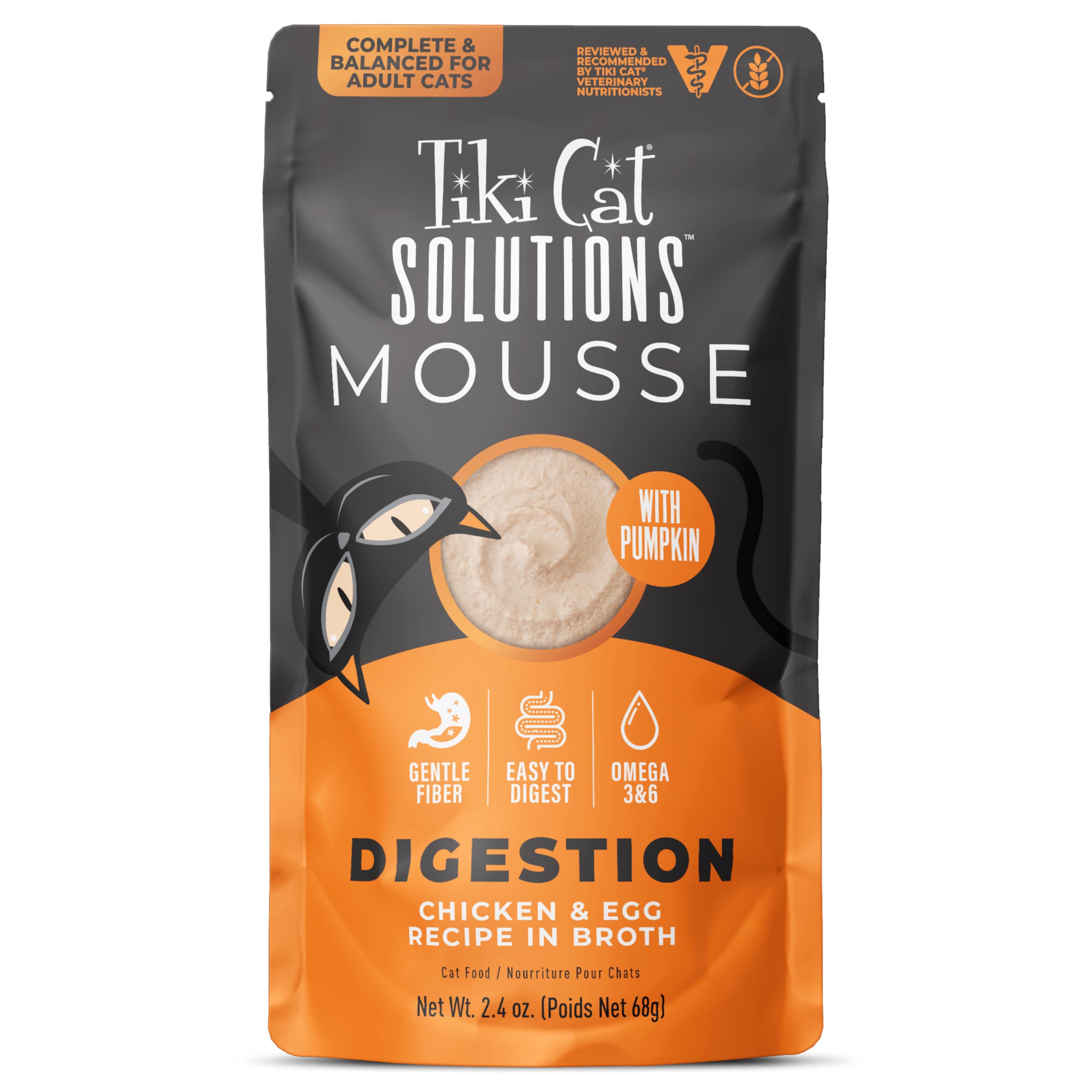
Tiki Cat Solutions Digestion Mousse in Chicken & Egg Recipe takes a fundamentally different approach to digestive support by using a lightweight, airy mousse texture that requires virtually no chewing — a critical feature for cats recovering from stomatitis, dental extractions, or oral injuries. The mousse is formulated with pumpkin as the primary fiber source, which is rich in both soluble and insoluble fibers that regulate transit time without causing the gassiness often associated with more aggressive fiber sources like psyllium or beet pulp. The Omega 3 and 6 fatty acids, derived from fish oil, provide targeted anti-inflammatory support for the entire GI tract, and the limited ingredient profile — chicken, egg, pumpkin, and essential vitamins — reduces the likelihood of triggering food sensitivities in cats with complex allergies.
Customer reviews from owners of toothless cats, cats with severe stomatitis, and cats with chronic vomiting are remarkably consistent: this was the only food that their cats could eat without pain and that stayed down after consumption. The mousse consistency is described as “meat pudding” — smooth enough to be licked clean from a plate, which means cats with sore mouths do not have to mechanically break down the food. For cats that are simply picky eaters with sensitive stomachs, the high moisture content (roughly 82%) provides hydration alongside nutrition, which supports kidney function and prevents constipation. The 2.4-ounce pouch size is intended as a single serving, which is convenient for portion control but also means the product is not as economical as larger multi-serving cans.
The most common criticism across reviews is the perceived value — the pouches appear only half-full, and while that is a function of the mousse manufacturing process (entrapped air creates volume), the visual impression of receiving less product for the price is a recurring theme. For cats that need 2-3 pouches per day to meet caloric needs, the cost accumulates quickly. Additionally, the mousse texture may not be appealing to cats that prefer chunkier textures or gravy-based foods. However, for the specific use case of a cat that cannot chew or that vomits after eating any other food, the Tiki Cat Digestion Mousse is a uniquely effective solution that fills a genuine gap in the probiotic cat food market.
Why it’s great
- Ultra-smooth mousse texture is the only food many oral-surgery recovery cats and toothless seniors can eat painlessly
- Pumpkin fiber provides a gentle, dual-action digestive regulator that firms loose stools without causing gas or bloating
- Limited ingredient base (chicken, egg, pumpkin) drastically reduces allergic reaction risk for cats with multiple sensitivities
Good to know
- Visual fill level in pouches appears low (roughly half-full) due to the aeration inherent in mousse production, leading to perceived value concerns
- Cost per feeding is higher than traditional pate or dry foods, especially for cats requiring multiple pouches daily
FAQ
How quickly should I expect to see digestive improvement after switching to a probiotic cat food?
Can I feed my cat a probiotic dry food and a probiotic wet food from different brands at the same time?
Do probiotics in cat food survive the high heat of the canning or extrusion process?
Final Thoughts: The Verdict
For most owners seeking a reliable daily maintenance diet that actively supports gut health, the best cat food with probiotics winner is the Farmina N&D Quinoa Digestion Lamb because its cold-infusion technology preserves probiotic integrity while the limited-ingredient lamb and quinoa base minimizes allergic triggers and delivers consistent, clinically-observed stool normalization and coat improvement. If your cat needs a veterinarian-formulated solution for chronic stress-related digestive disorders and rapid stool firming, grab the Hill’s Prescription Diet GI Biome Stress. And for the specific case of a cat with oral pain or severe dental disease that still needs probiotic support, nothing beats the Tiki Cat Solutions Digestion Mousse for its uniquely lickable, no-chew-required texture that keeps nutrition coming without pain or vomiting.