
The wet sound of a cat hacking up a hairball at 3 AM is a sound no pet owner wants to hear. Beyond the mess, it signals that hair is accumulating in your cat’s digestive tract, which can lead to constipation, vomiting, and discomfort. A proper remedy doesn’t just mask the symptom; it uses lubricants and fiber to help that fur pass naturally through the stool instead of coming back up.
I’m Min — the co-founder and writer behind Gadgets Feed. I’ve spent weeks digging through the ingredient panels, analyzing customer feedback on palatability, and comparing the active mechanisms of gels, pastes, chews, and purees to find which formulas actually deliver on their promise of fewer hairballs.
After reviewing dozens of formulations, I’ve narrowed the field to the seven most effective options available right now. This guide will walk you through the ingredients that matter, the textures cats actually accept, and the proven results that define the best cat hairball remedy for your specific feline.
How To Choose The Best Cat Hairball Remedy
Not all hairball remedies are created equal. Some rely on heavy petroleum-based lubricants to coat the fur and force it through, while others use natural fiber sources like psyllium husk or pumpkin powder to bulk up the stool and gently escort the hair out. Your cat’s willingness to actually eat the stuff is just as important as the ingredient list. A formula that sits uneaten in the bowl is a formula that does nothing.
Identify the Delivery Format Your Cat Will Accept
Cats are famously picky about texture and taste. Malt pastes and gels are the traditional go-to; you squeeze a ribbon onto your finger or their paw and hope they lick it off. Some cats love the sticky, sweet malt flavor and will clean the tube. Others will turn up their nose and walk away. Chews offer a crunchy exterior with a soft center, which appeals to cats who prefer kibble-like textures. Lickable purees are a newer category that doubles as a high-moisture treat, making them ideal for cats who need extra hydration and will eat anything that comes out of a tube. Choose the format your cat is most likely to eat consistently.
Scrutinize the Active Ingredients
The difference between a band-aid and a real solution comes down to the ingredient list. Petrolatum (petroleum jelly) has been a staple in hairball remedies for decades because it is a cheap, effective lubricant. However, many pet owners now prefer petrolatum-free alternatives that use natural oils, malt, and fiber. Look for ingredients like malt syrup, psyllium husk, slippery elm bark, pumpkin powder, and marshmallow root. These not only help move hair through the system but also soothe the digestive tract and support overall gut health. Avoid formulas loaded with artificial colors, preservatives, and carrageenan.
Evaluate the Dosage and Value Per Serving
A 3.5-ounce tube of paste may last a long time if your cat only needs a small dose two to three times per week. Chews have a clear per-treat cost, and you’ll need to administer the correct number per pound of body weight. Puree-based remedies typically recommend one to two tubes per day. Calculate the monthly cost before committing. A premium-priced option that your cat loves and eats regularly is infinitely more valuable than a cheap tube that gets ignored after day one.
Quick Comparison
On smaller screens, swipe sideways to see the full table.
| Model | Category | Best For | Key Spec | Amazon |
|---|---|---|---|---|
| Pugalo Hairball Gel | Malt Paste | Natural ingredient fans | Psyllium husk + pumpkin powder | Amazon |
| Rocco & Roxie Hairball Treats | Crunchy Chews | Picky cats who love treats | Dual-texture with slippery elm | Amazon |
| INABA Churu Indoor Care (20 Pack) | Lickable Puree | Hydration + hairball control | 88% moisture, 6 calories each | Amazon |
| Sentry Petromalt (Pack of 2) | Liquid Malt | Proven traditional formula | Petrolatum-based original malt | Amazon |
| INABA Churu Indoor Care (24 Pack) | Lickable Puree | Premium multi-cat households | Insoluble vegetable fiber, 6 cal | Amazon |
| PetAg Hairball Solution Gel | Gel Lubricant | Cat-proof gel acceptance | Petrolatum + chicken flavor | Amazon |
| Bio PetActive CatiMalt +Plus | Natural Gel | All-natural ingredient focus | Pumpkin + marshmallow root | Amazon |
In‑Depth Reviews
1. Pugalo Cat Hairball Remedy Gel

This malt paste from Pugalo stands out because it avoids white petrolatum entirely. Instead, it uses psyllium husk and malt to naturally bind and move ingested hair, while pumpkin powder and slippery elm bark soothe the digestive tract. That dual-action mechanism—fiber to push hair out and demulcents to calm irritation—is exactly what a premium hairball remedy should deliver. The 3.5-ounce tube provides good value for a formula this clean.
Customer reports highlight that even extremely picky cats, including one with IBD, accepted this gel readily. The malt flavor is strong enough to entice licking directly from the tube or off a finger. Users note a dramatic reduction in hairball frequency, with many reporting zero incidents after consistent daily use. The included one-year warranty adds a layer of confidence rarely seen in pet supplements.
The main drawback is availability. Several verified buyers mention this product is difficult to find in Amazon search results, so bookmark this link. Also, while most cats love it, a small minority of diva-level picky eaters have refused it entirely. If your cat belongs to that stubborn club, you may want to consider a different format like chews or puree.
Why it’s great
- Petrolatum-free formula with natural lubricants
- Includes slippery elm and pumpkin for digestive health
- Most cats accept the malt flavor eagerly
Good to know
- Hard to find via standard Amazon search
- Not all cats will accept the paste texture
2. Rocco & Roxie Hairball Treatment Treats
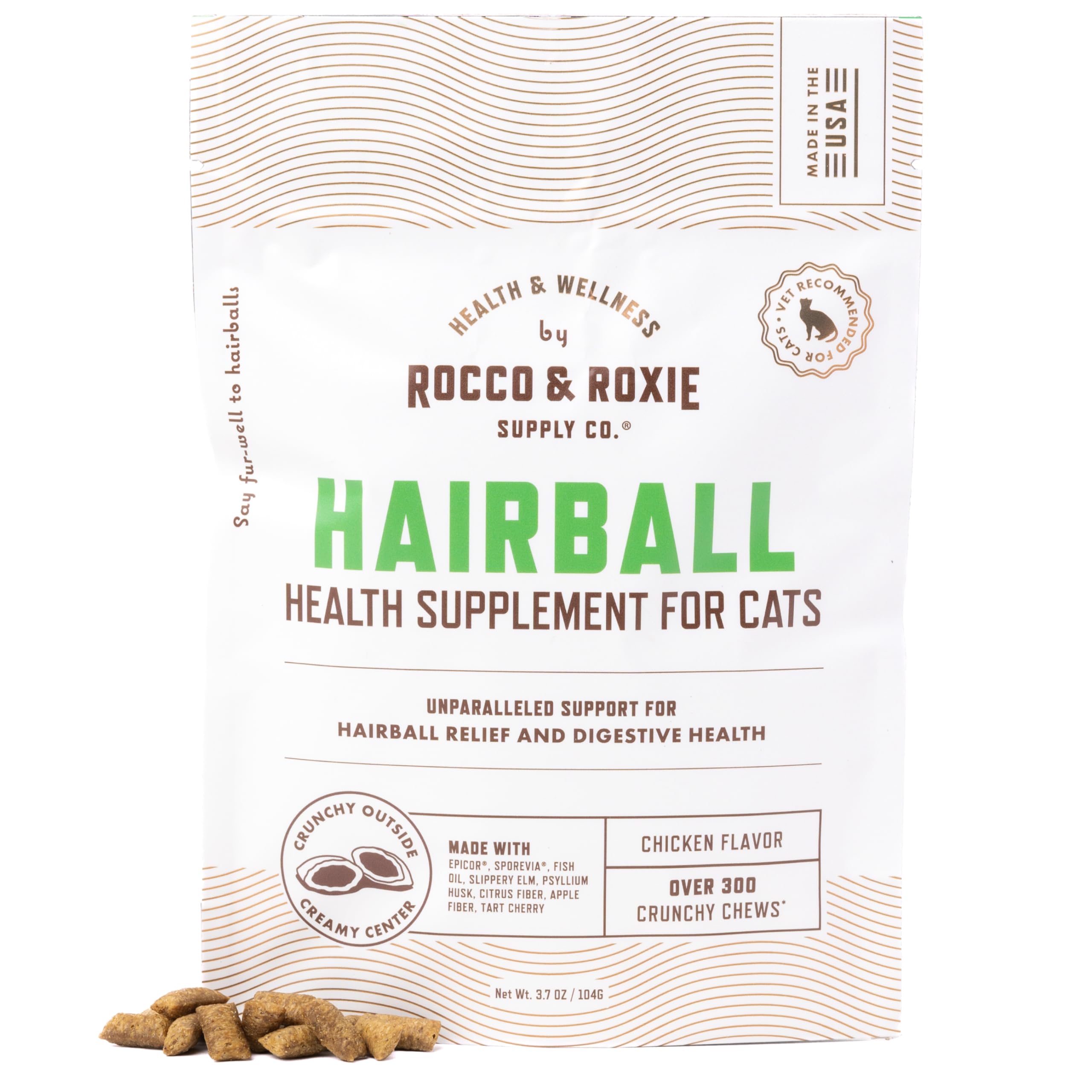
If your cat refuses paste, this dual-textured chew from Rocco & Roxie is the best alternative. Each treat has a crunchy exterior and a creamy center, mimicking the texture of a kibble-treat hybrid. The formula includes slippery elm, psyllium husk, apple fiber, and the probiotic Sporevia. That combination addresses hairball prevention from both the mechanical fiber side and the microbiome support angle, which is a more holistic approach than simple lubrication.
Each bag contains 300 chews, and the feeding guideline is one chew per pound of body weight per day. That means a 10-pound cat gets 10 treats daily, so a single bag lasts about a month. Reviews consistently report that even the pickiest eaters go crazy for these treats, making administration effortless. One user reported their cat’s hairball vomiting dropped from daily to once a week after switching to these chews.
The biggest downside is the cost per treat when feeding a larger cat the recommended daily amount. Some buyers feel the price is steep relative to the quantity. Additionally, while the chicken flavor is widely accepted, cats with specific poultry allergies may not tolerate this formula. Check the ingredient panel if your cat has known sensitivities.
Why it’s great
- Dual-texture crunchy chews with a creamy center
- Contains probiotics for digestive health support
- Extremely high palatability for picky cats
Good to know
- Requires multiple chews per day for larger cats
- Chicken flavor may not suit all diets
3. INABA Churu Indoor Care (20 Pack)
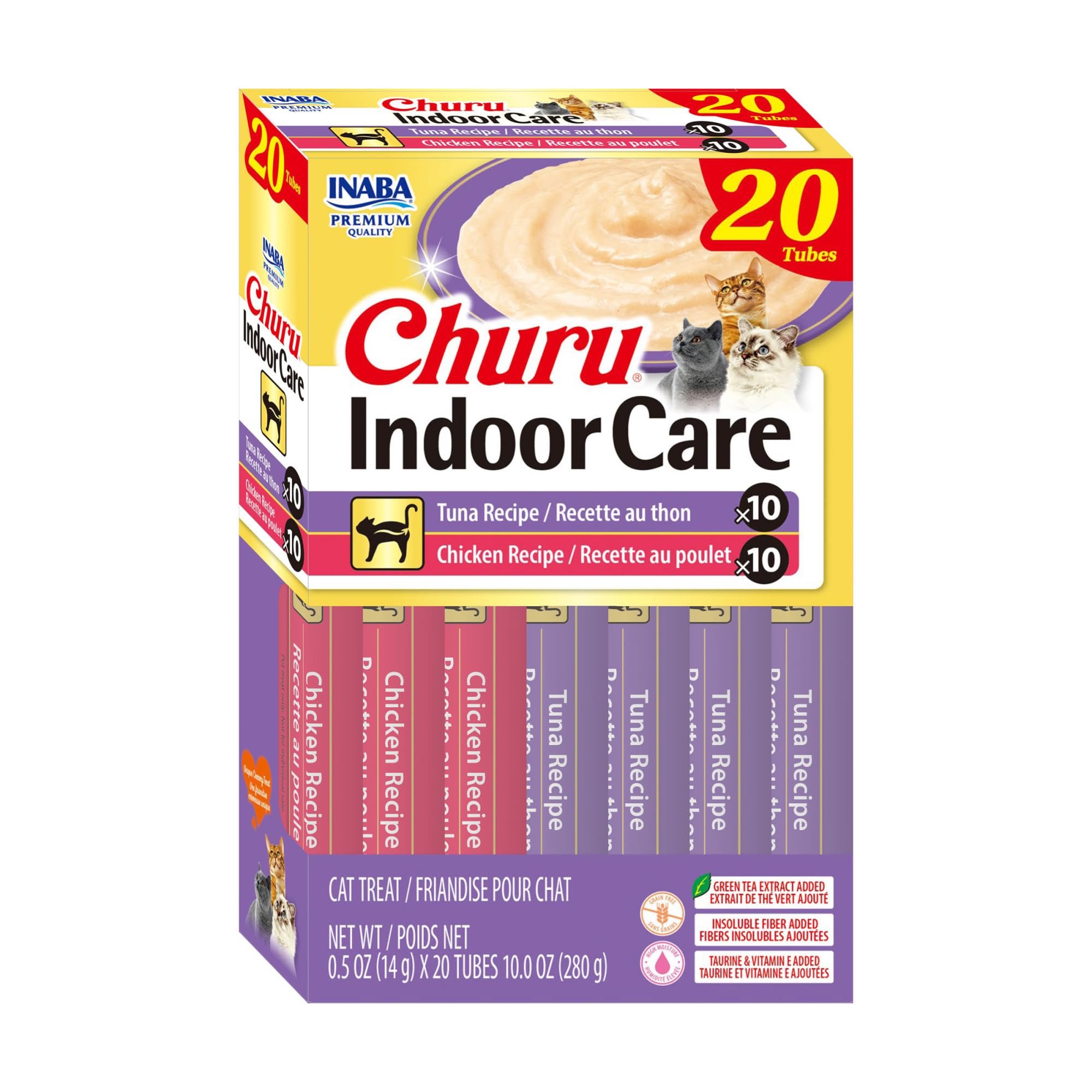
INABA’s Churu line has a cult following for good reason. This Indoor Care variant adds an insoluble vegetable fiber specifically to aid hairball control, while maintaining the ultra-creamy, lickable texture cats adore. At just 6 calories per tube and 88% moisture content, these treats double as a hydration source. For cats that don’t drink enough water—especially those prone to hairballs—this is a clever way to increase fluid intake while actively managing fur.
The 20-pack contains a mix of tuna and chicken flavors, and owners report that cats who normally ignore hairball pastes will happily lick an entire tube of Churu. The instruction to feed two tubes daily for hairball control is easy to follow. Users note that missing a day often results in a hairball, which confirms the product is doing real work rather than just acting as a tasty snack. The ingredient list is free of grains, preservatives, artificial colors, and carrageenan.
The primary limitation is cost over time. At two tubes per day, a 20-pack lasts only 10 days. For multi-cat households, you will need to buy in bulk to keep up. Also, the puree format is less portable than a tube of paste or a bag of chews, especially if you need to travel with your cat.
Why it’s great
- High-moisture treat supports hydration
- Very low calorie count per tube
- Extremely high acceptance rate from cats
Good to know
- Only 20 tubes per pack; requires frequent reordering
- Must feed two tubes daily for hairball control
4. Sentry Petromalt Hairball Relief (Pack of 2)

Sentry Petromalt is the old guard of hairball remedies, and it has earned its reputation over decades. Each tube in this two-pack contains a liquid malt formula that uses petrolatum as the primary lubricant. When ingested, it coats the hair in the stomach and helps it slide through the digestive tract rather than clumping into a hairball. It is safe for kittens over four weeks old and has a proven track record for relieving constipation, dry cough, and occasional vomiting related to hairballs.
Owners who have been buying this brand for 20 or 30 years swear by it, noting that most of their cats love the malt taste and will lick it straight from the tube or off a finger. The liquid consistency is thinner than many pastes, which makes it easier to swallow and reduces the chance of your cat shaking it off their paw. The two-pack provides excellent value for a tried-and-true solution that costs less per ounce than most natural alternatives.
The obvious concern is the petrolatum base. Some pet owners prefer to avoid petroleum-derived ingredients for dietary reasons. Additionally, while many cats love it, there is a clear split in reviews: about one in five cats will absolutely refuse this product, leaving owners with an opened tube they cannot return. If your cat is a flavor snob, start with a single tube rather than the two-pack.
Why it’s great
- Proven formula trusted for decades
- Good value as a two-pack
- Thin liquid texture is easy for cats to swallow
Good to know
- Contains petrolatum; not for natural-diet households
- Some cats refuse to eat it
5. INABA Churu Indoor Care (24 Pack)
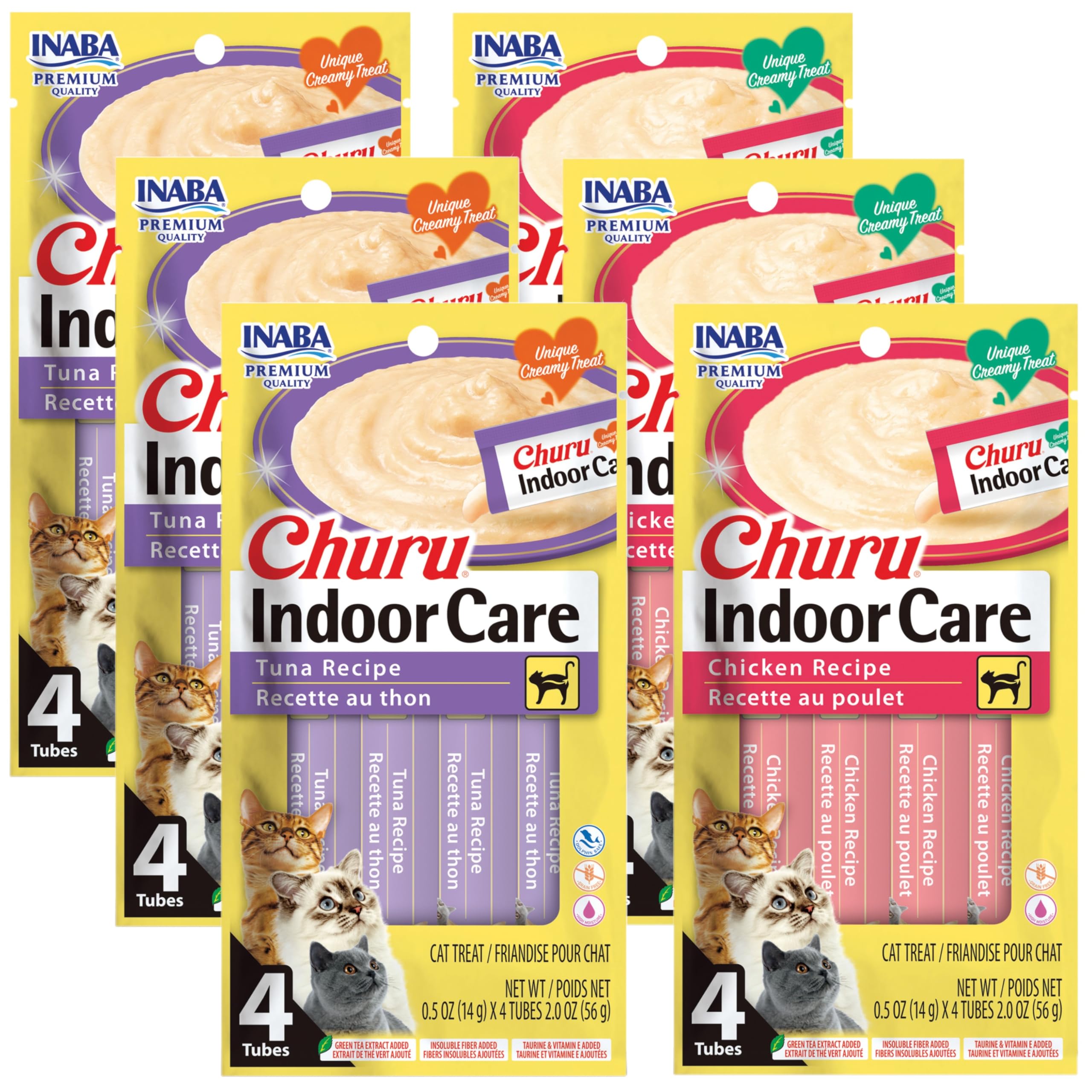
This is the larger, more economical version of the Inaba Churu Indoor Care formula, packing 24 tubes into one purchase. The recipe is identical to the 20-pack: the same creamy purée texture, the same insoluble vegetable fiber for hairball control, and the same 88% moisture content. The difference is purely in the total count, making this the smarter buy for multi-cat households or owners who have already confirmed their cat loves the formula.
The feedback from long-term users is remarkable. Owners of Maine Coons—a breed notorious for massive, frequent hairballs—report that this treat completely eliminated the problem. Cats beg for it, and the act of licking the purée from the tube or a plate is itself a bonding ritual. The low calorie count means you can feed the recommended two tubes per day without worrying about weight gain. The ingredient transparency is top-tier, with no grains, preservatives, or artificial additives.
The only real downside is the same as the 20-pack: the cost per tube is higher than a traditional paste, and you will go through a 24-pack in under two weeks at the full daily dose. Also, some cats prefer the texture squeezed onto a plate rather than licked from the tube, which creates a tiny bit of extra cleanup.
Why it’s great
- Better value per tube than smaller packs
- Proven effective for heavy-shedding breeds
- Clean ingredient list with no artificial additives
Good to know
- Still a premium cost per treatment
- Two tubes per day adds up quickly
6. PetAg Hairball Solution Gel (Pack of 2)

PetAg’s Hairball Solution Gel is a no-nonsense lubricant that gets the job done for a very reasonable cost. This two-pack gives you 7 total ounces of gel, which is more product than most competitors. The formula relies on petrolatum, glycerin, and vegetable oil to create a slick coating that pushes hair through the system. The chicken flavor is well-accepted by many cats, and the thick, maple-syrup-like texture stays on the paw or food long enough for the cat to lick it off.
Owners report that this gel works effectively for reducing hairball frequency, with one user noting that their cat went from daily hacking to near-zero incidents with a half-inch squeeze every few days. The gel is also notably easier to administer than some pastes because it does not need to be refridgerated or mixed into food. Many cats will lick it directly from the tube or your finger without fuss.
The major complaint involves a formula change some customers observed. The older version (yellow cat on tube) was widely loved, but a newer reformulation (brown cat on tube) has a thinner, oilier texture that some cats reject. This inconsistency makes it a gamble if you are buying for the first time. Also, the petrolatum base disqualifies it for owners seeking a fully natural remedy.
Why it’s great
- Generous 7-ounce total in a two-pack
- Thick gel texture stays on food or paw
- Proven to reduce hairball frequency
Good to know
- Formula may vary; some cats notice the difference
- Petrolatum-based; not a natural option
7. Bio PetActive CatiMalt +Plus

Bio PetActive CatiMalt +Plus takes the natural approach seriously, combining pumpkin, marshmallow root, slippery elm bark, and psyllium seed into a creamy gel. There is no petrolatum, no artificial colors, and no preservatives. The natural oils and lubricants in the formula help prevent hairballs by promoting healthy skin and coat while also soothing the intestinal tract. The pumpkin flavor is appealing enough that many cats will lick it directly from the tube or your finger.
The feeding guide is straightforward: apply 2-3 cm of paste to the cat’s paw two to three times per week for prevention, or daily for active hairball elimination. Owners who have successfully introduced it report that their cats love the taste and that it effectively reduces hairball incidents. The inclusion of marshmallow root is a nice touch for cats with sensitive stomachs, as it provides gentle demulcent action.
The catch is palatability variance. A significant number of customer reviews mention that their cat flat-out refuses this gel, describing the smell as unpleasant and the texture as unappealing. In one reported case, none of three cats would touch it. This means the product is a bit of a gamble. Additionally, the tube size is smaller than some competitors, which can make the per-dose cost higher than alternatives with similar ingredient profiles.
Why it’s great
- Fully natural ingredient panel, no petrolatum
- Marshmallow root soothes sensitive digestive tracts
- Good for daily or weekly maintenance use
Good to know
- Many cats dislike the taste and smell
- Small tube size compared to competitors
FAQ
Can I give my cat a hairball remedy every day?
What is the difference between malt paste and gel formulas?
Are hairball treats as effective as paste remedies?
Final Thoughts: The Verdict
For most users, the winner of the cat hairball remedy category is the Pugalo Hairball Gel because it combines a petrolatum-free natural formula with proven ingredients like psyllium husk and pumpkin powder that most cats love. If you need a no-fuss treat that picky eaters will accept, grab the Rocco & Roxie Hairball Treats. And for multi-cat homes that want to boost hydration while controlling hairballs, nothing beats the INABA Churu 24-Pack.