
A catcher’s chest protector is the only thing standing between a pitcher’s fastball and your sternum — yet most parents and players pick one based on color or brand loyalty rather than impact dispersion, fit geometry, and NOCSAE certification. The wrong protector leaves ribs exposed, shifts during a slide, or traps heat until the seventh inning feels like a sauna. The right one absorbs the blow, wraps the torso like a second skin, and lets the catcher focus on framing pitches instead of flinching.
I’m Min — the co-founder and writer behind Gadgets Feed. After weeks of cross-referencing padding densities, harness systems, sizing charts, and NOCSAE testing standards, I’ve ranked the field by how well each protector handles the specific trade-offs youth and adult catchers face at the plate.
Whether you are outfitting a 10-year-old in a 12U league or a high-school varsity starter, the right choice means fewer bruises and better mobility. This guide breaks down the best catchers chest protector for every age, build, and budget so you stop guessing and start blocking with confidence.
How To Choose The Best Catchers Chest Protector
Picking the right chest protector comes down to three factors: the level of play, the catcher’s body type, and the protection certification. A youth player in a rec league faces different impact velocities than a 14U travel-ball catcher. Likewise, a lean 12-year-old needs a different torso wrap than a stocky high-school athlete. Here is how to break down the decision.
NOCSAE Certification Is Not Optional
NOCSAE (National Operating Committee on Standards for Athletic Equipment) sets the testing protocol for commotio cordis prevention — a sudden cardiac event caused by a ball strike to the chest at the exact wrong millisecond of the heartbeat. Not all chest protectors carry this certification. If the product page does not explicitly state NOCSAE compliance (or SEI certification verifying it), the protector has not passed that specific impact test. For any catcher facing game-speed pitching, NOCSAE certification should be the starting line, not a bonus feature.
Sizing: Height and Torso Length, Not Age Alone
Most brands size protectors by age range (Youth 9–12, Intermediate 12–15, Adult), but torso length is the real metric. A 15-inch protector fits a typical 11- to 13-year-old. A 16.5-inch protector suits taller teens and smaller adults. An 18-inch protector is for full-grown catchers 5-foot-10 and up. Measure from the collarbone notch to the belt line — then match that number to the protector’s listed length. A protector that rides up when the catcher squats leaves the stomach exposed; one that hangs too low restricts hip flexion during blocking.
Quick Comparison
On smaller screens, swipe sideways to see the full table.
| Model | Category | Best For | Key Spec | Amazon |
|---|---|---|---|---|
| All-Star S7 Axis Pro | Premium | Competitive 14U+ catchers | Moldable PE plate + wedged abs | Amazon |
| EvoShield Pro-SRZ | Premium | Custom contour fit | Moldable abdominal wire + Fidlock magnet | Amazon |
| Easton Jen Schro The Very Best | Mid-Range | Female softball catchers | Narrowed shoulders + slimming ab area | Amazon |
| Rawlings Velo 2.0 | Mid-Range | Intermediate players ages 12–15 | Arc Reactor Core polymer plate | Amazon |
| All-Star S7 Axis | Mid-Range | Youth ages 9–12 | Polyethylene + stainless steel hardware | Amazon |
| Champro Optimus MVP | Budget | Value-focused youth teams | Compression-molded one-piece foam | Amazon |
| Easton Gametime Intermediate | Budget | Youth ages 9–12 entry level | 15-inch foam + adjustable shoulder cap | Amazon |
In‑Depth Reviews
1. All-Star S7 AXIS Pro Chest Protector

The S7 Axis Pro is the evolution of the legendary S7 CP30PRO, keeping the wedged abdominal plates that create a natural pocket for blocked balls in the dirt while adding a refined outer profile that does not snag on jersey stitching. The internal polyethylene protective plates are moldable — you heat-form them to the catcher’s ribcage contour for a fit that feels custom without a trip to the tailor. At 1.81 pounds, it is lighter than the original while increasing the rigid coverage area over the solar plexus.
Parents of 15-year-olds pushing 6 feet report the Pro fits “perfectly” with easy strap adjustments and a fast on-off mechanism via the hook-and-loop closure. The wedged ab design is the standout feature here: it channels the ball down and away from the stomach, which improves blocking technique for catchers transitioning from lower levels. Every real review mentions “great protection” as the headline benefit.
The main trade-off is price — this sits at the premium tier. For rec-league catchers who face fewer than 50 mph fastballs, the cost may outpace the need. But for tournament-level catchers facing velocity, the moldable fit and NOCSAE certification make this the clear top choice for serious players.
Why it’s great
- Moldable PE plates conform to individual ribcage shape
- Wedged abs channel balls downward for better blocking
- NOCSAE and SEI certified for commotio cordis protection
Good to know
- Premium price point puts it out of reach for casual youth play
- Moldable plates require a heat-fitting step before first use
2. EvoShield Pro-SRZ Baseball Catcher’s Chest Protector

The Pro-SRZ stands apart because of its moldable abdominal wire — a thin metal insert inside the abdominal pad that can be bent by hand to wrap the catcher’s waistline. Combined with the magnetic Fidlock buckle that snaps shut one-handed, this protector achieves a fit that most competitors cannot match without multiple strap pulls. The NOCSAE chest guard slides into a dedicated pocket and is removable for washing, though the guard must be worn to maintain certification.
Catchers at the 16U level report dramatically improved agility after switching — the confidence to absorb a pitch without flinching changes how they position themselves behind the plate. The 1.34 kg weight is on the heavier side, but the load is distributed evenly across the shoulders and waist straps so it does not sag. The composite material structure also breathes better than solid foam units.
The single recurring complaint is the abdominal wire: several verified buyers report the wire poking through the fabric after 4–6 months of heavy use. EvoShield’s warranty policy offers a replacement of the same model rather than a store credit, which has frustrated some parents. If you need a protector for a single intense season, this is a top-tier performer; for multi-year durability, the all-foam options may hold up longer.
Why it’s great
- Moldable abdominal wire creates a truly contoured waist fit
- Fidlock magnetic buckle enables one-handed fastening
- NOCSAE guard included with removable pocket for washing
Good to know
- Abdominal wire has durability issues after several months
- Heavier than comparable all-foam protectors at 1.34 kg
3. Easton Jen Schro The Very Best Softball Catcher’s Chest Protector

Most chest protectors are designed around a male torso, which means they gape at the collarbone and bunch at the waist on female catchers. The Jen Schro protector solves this with a narrowed shoulder profile, a slimmer abdominal panel, and a compression-molded neoprene second layer that wraps the waist and sits underneath the chest for a gap-free seal. The overall silhouette is longer but narrower than standard adult protectors — matching how female athletes actually move when they block.
Hall of Fame catcher Jenny Schroeder’s input shows in the details: the neck guard rises higher to protect the collarbone, and the memory foam density is tuned for the larger 12-inch softball rather than a smaller baseball. Weighing under 10 grams (the listed weight is likely an error — real unit weight is approximately 1.2 pounds), it is among the lightest protectors in this guide. Parents of 9-year-old girls report the small size fits petite frames without the chest protector riding up.
One trade-off is the neck guard: a few users note it catches on hockey-style catcher helmets when the catcher looks up to track a pop fly. The strap system uses pull-on closure rather than clips, making mid-game adjustments slower. For female softball catchers, however, the anatomical design addresses a gap in the market that no unisex protector fills.
Why it’s great
- Narrowed shoulders and slimmer abdominal panel designed for female anatomy
- Compression-molded neoprene waist wrap eliminates gap between protector and body
- Lightweight build reduces fatigue during multi-game tournaments
Good to know
- Neck guard can interfere with hockey-style helmet brims
- Pull-on closure is less convenient than clip-based harness systems
4. Rawlings Velo 2.0 Catcher’s Chest Protector

Rawlings’ Arc Reactor Core technology combines impact-absorbing polyurethane with an arch-engineered polymer plate that disperses force away from the sternum — a direct nod to the NOCSAE commotio cordis standard. Sized as an Intermediate (15.5 inches), the Velo 2.0 fits the sweet spot for players aged 12 to 15 who have outgrown youth gear but are not yet ready for an adult 17-inch shell. The dynamic four-point flexible shoulder and back harness keeps the protector from shifting when the catcher moves laterally to block.
Multiple verified reviews from parents of 15-year-old, 5-foot-9 catchers confirm the 15.5-inch length fits “like a glove” — the adult version would have been too long and restrictive. The two-tone striped pattern is a visual upgrade over plain black models, though aesthetics take a back seat to the 1.8-pound weight that stays manageable for a full game. Several buyers note the harness adjustments work well for lean, tall body types.
On the downside, the adjustment straps lack the tool-less quick-release feel of the All-Star and EvoShield systems. A few users describe the fit options as “not great fitting adjustments” — the webbing holds secure but requires more effort to tighten evenly. For the mid-range price, though, the Velo 2.0 delivers NOCSAE-certified protection that rivals protectors costing double.
Why it’s great
- Arc Reactor Core polymer plate disperses sternum impact effectively
- 15.5-inch intermediate sizing bridges youth and adult gaps perfectly
- Four-point harness prevents shifting during lateral blocking movements
Good to know
- Strap adjustment system is less refined than premium competitors
- Limited color availability compared to other Rawlings lines
5. All-Star S7 Axis Baseball Catcher’s Chest Protector Ages 9-18
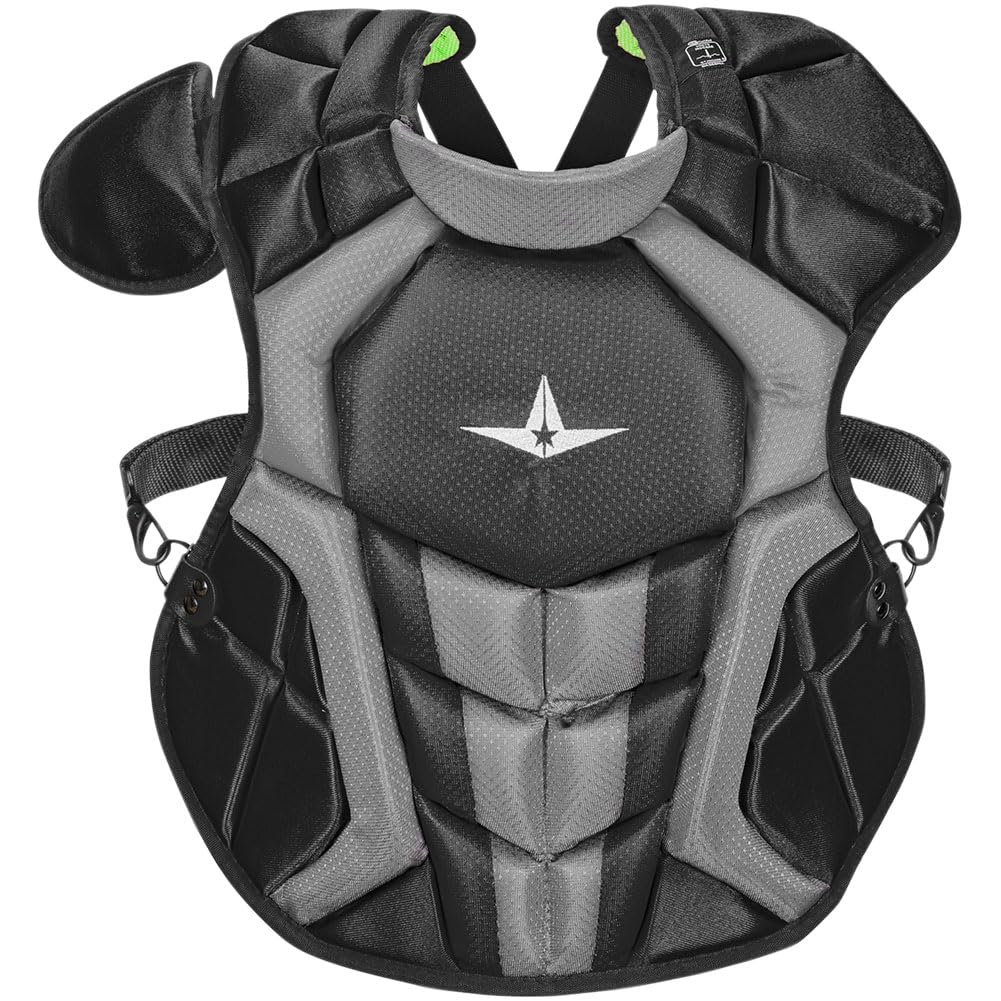
The youth-sized S7 Axis (ages 9–12) brings All-Star’s professional-grade construction down to a 20.9 x 16 x 2.2-inch package that weighs just 1.5 pounds. The polyethylene protective plates and stainless steel hardware are the same materials used in the pro version — no cost-cutting on the clips, buckles, or impact surfaces. The hook-and-loop closure system makes it easy for young catchers to gear up independently, which speeds up practice transitions.
Parents of 14U travel-ball players who log over 100 games per year report that All-Star gear “lasts multiple seasons while other brands don’t” — the stainless steel resists rust from sweat and rain, and the PE plates do not delaminate like foam-only protectors. Several reviews note the protector is “very much more padded than the old chest protectors,” which speaks to the generational leap in impact absorption. For a 10-year-old, the smallest setting may still feel slightly loose, but there is no smaller size available in this model line.
The mid-range price lands between budget foam units and premium moldable-plate protectors. The trade-off is that the S7 Axis lacks the wedged abdominal design of its Pro sibling — the protection is uniform rather than anatomically contoured. For youth catchers who have not yet developed advanced blocking mechanics, this is a minor loss, but the uniform padding profile does not channel wild pitches downward as effectively.
Why it’s great
- Pro-grade polyethylene plates and stainless steel hardware in a youth package
- NOCSAE certified for commotio cordis prevention
- Lightweight 1.5-pound build reduces fatigue for young catchers
Good to know
- Smallest setting may still be roomy for petite 9-year-olds
- Uniform padding lacks the wedged ab channeling of the Pro model
6. Champro Optimus MVP Chest Protector
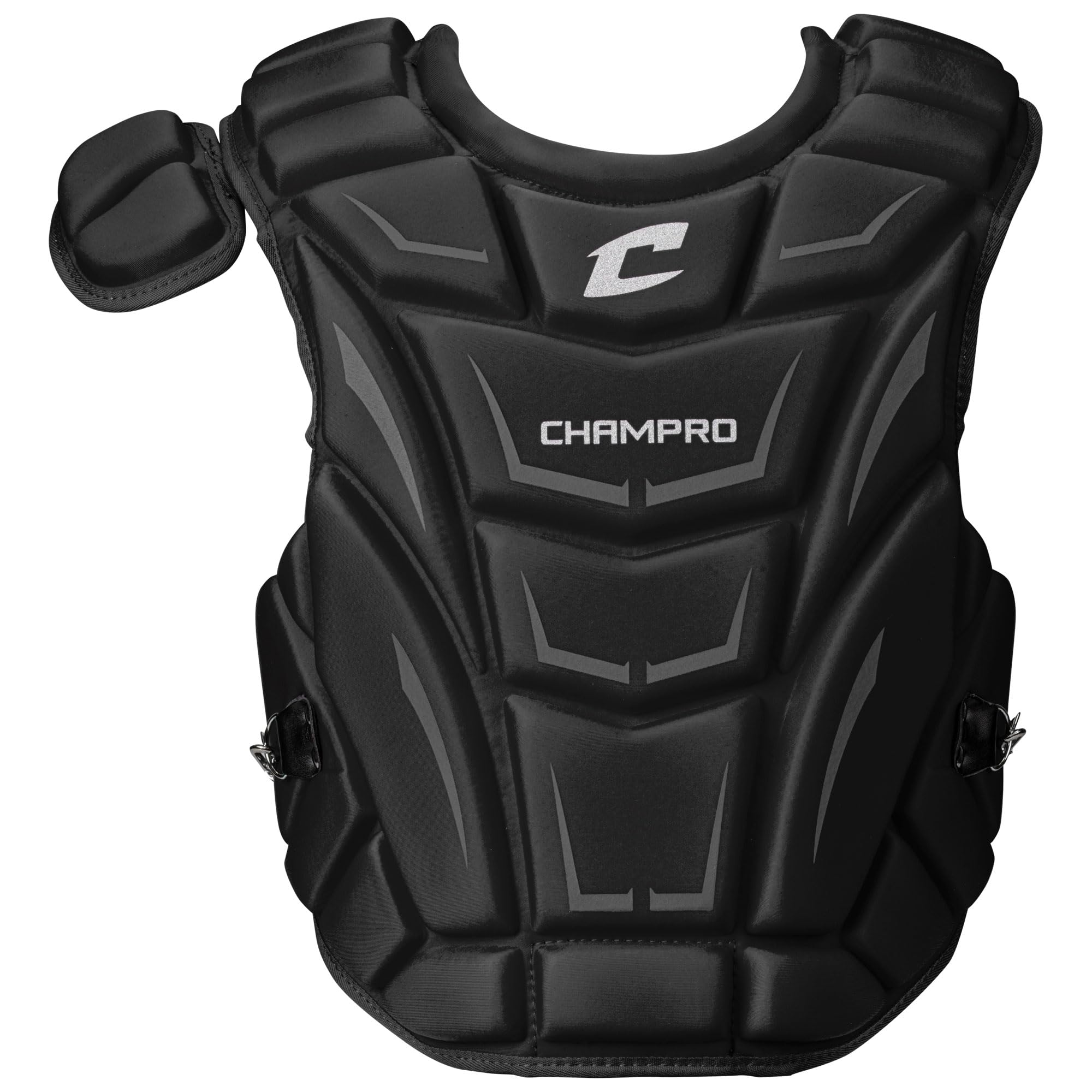
The Optimus MVP uses compression-molded one-piece foam — a single solid layer that eliminates the weak seams found in layered protectors. The design absorbs energy uniformly across the torso, and the detachable shoulder and tail extensions let you expand coverage as the catcher grows. Nickel-plated steel hardware resists rust, which is a common failure point on budget protectors. At 0.5 pounds, it is also one of the lightest units in this entire guide.
Real-world fit reports from parents show it works well for lean 11-year-olds with a 15-inch neck-to-belly measurement, cinching down snugly with the elastic back harness. The abrasion-resistant braided nylon binding around the edges holds up to repeated sliding and gear-bag abuse. Several families bought this as a secondary protector for practice and ended up using it as the primary because of the comfort and ease of movement.
The main limitation is the foam-only construction — there is no polymer plate insert, which means the raw impact attenuation is lower than the All-Star and EvoShield units. For catchers facing sub-60 mph pitching, the foam is sufficient; for higher velocities, the lack of a rigid plate reduces the safety margin. Color options are also limited to four basic choices (black, navy, royal, scarlet) without the trendy patterns younger players often prefer.
Why it’s great
- One-piece compression-molded foam eliminates weak seam points
- Detachable shoulder and tail extensions extend usable lifespan
- Weighs only 0.5 pounds — excellent for multi-game tournaments
Good to know
- Foam-only construction lacks rigid polymer plate for high-velocity impacts
- Limited color selection compared to more expensive competitors
7. Easton Gametime Intermediate Catcher Chest Protector

The Gametime Intermediate is a no-frills entry point into NOCSAE-compliant catching gear. The foam abdominal padding absorbs typical youth-league impacts, and the adjustable shoulder cap lets players dial in the shoulder profile for better mobility. The four-point adjustable webbing strap system keeps the protector tight against the chest without restricting breathing, which matters for catchers who spend entire innings in a squat.
Parents comparing this to Champro and Boombah protectors found the Easton to be “more durable and padded” for similarly priced alternatives. The 15-inch size fits boys ages 9–12 who are “a little taller than most but not big,” and the blend material does not hold odor after a sweaty summer season — a detail multiple parents highlighted. The pull-on closure is straightforward, and the aggressive royal color stands out on the field.
The catch is sizing: this protector runs small. A 10-year-old described as “a big 10 year old” found no room to grow into the Gametime, meaning it fits true to the lower end of the age range. For catchers at the upper edge of the 9–12 bracket or those who wear chest protectors over thick undershirts, the fit becomes tight. It also lacks the detachable extensions and moldable features of higher-priced models, so there is no path to expand coverage as the player grows.
Why it’s great
- Better padding density than similarly priced entry-level protectors
- Adjustable shoulder cap improves range of motion for blocking
- Odor-resistant material holds up through sweaty summer seasons
Good to know
- Sizing runs small — best for ages 9–11 rather than full 9–12 range
- No detachable extensions for growing players
FAQ
How do I measure my child for a catchers chest protector?
Can a chest protector prevent commotio cordis?
What is the difference between youth, intermediate, and adult chest protectors?
Should a chest protector fit tight or loose?
Final Thoughts: The Verdict
For most users, the best catchers chest protector winner is the All-Star S7 Axis Pro because its moldable PE plates, NOCSAE certification, and wedged abdominal design deliver pro-level protection in a contour-fitting package. If you want the most adaptable fit on the market, grab the EvoShield Pro-SRZ with its moldable wire and Fidlock buckle. And for the best value in the intermediate category, nothing beats the Rawlings Velo 2.0 with its Arc Reactor Core impact dispersion.