
A base station antenna is the single most important piece of your CB setup; it determines whether your signal punches through interference or just fades into the noise. A poor antenna reduces the most powerful radio to a whisper, while a well-chosen one turns a modest rig into a regional powerhouse. This guide breaks down the top options on Amazon, focusing on the concrete specs that separate an efficient radiator from a dummy load.
I’m Min — the co-founder and writer behind Gadgets Feed. I’ve spent hundreds of hours researching and comparing the technical specifications and real-world performance data of CB base antennas to help you match the right design to your operating goals. I focus on isolating the measurable metrics like gain, bandwidth, power handling, and radiation angle that actually dictate your range and clarity.
After analyzing seven of the most popular models, this guide delivers a clear, no-nonsense breakdown of the best cb base antenna options available right now, from versatile 3/4-wave J-poles to the classic stainless steel quarter-wave whip.
How To Choose The Best CB Base Antenna
The ideal CB base antenna depends on your operating style, physical space, and your tolerance for tuning. You’ll need to weigh the antenna’s electrical length (how many wavelengths it covers) against its physical footprint and wind loading.
Electrical Length and Radiation Pattern
A 1/4-wave antenna like the 102-inch stainless whip has a very low radiation angle, which is ideal for DX (skip) on 11 meters. A 1/2-wave design (Solarcon A-99) and a 5/8-wave design both offer a slightly higher radiation angle but still perform excellently for both local and long-range contacts. A 3/4-wave J-pole (Sirio Vector 4000) offers a lower angle for outstanding DX performance but requires more precise tuning. The electrical length is not always the same as the physical length — a loaded vertical (Patriot PAT12) is physically shorter than a full quarter-wave but sacrifices some bandwidth and efficiency.
Power Handling and SWR Tuning
Every antenna has a maximum wattage rating, measured in PEP (peak envelope power). If you’re running a stock CB radio (4 watts), a 300-watt antenna is fine. If you plan to use an amplifier, choose an antenna rated at 2000 watts PEP or more. SWR (Standing Wave Ratio) tuning is critical — the goal is 1.5:1 or lower across channels 1 through 40. Many antennas come pre-tuned, but a true base antenna should have adjustable tuning rings or a stinger to dial in your specific installation.
Mounting and Grounding
A base antenna’s performance is heavily influenced by its mounting height and the quality of its ground plane. A true 1/4-wave requires a good ground plane (usually provided by the metal mast or radials). A 1/2-wave antenna like the A-99 is “no-radial” because the 1/2-wave design creates a virtual ground at the feedpoint. Always mount the antenna as high as possible and ensure all connections are weatherproofed. DC grounding protects your radio from static discharge and lightning strikes.
Quick Comparison
On smaller screens, swipe sideways to see the full table.
| Model | Category | Best For | Key Spec | Amazon |
|---|---|---|---|---|
| Solarcon A-99 | 1/2-Wave Vertical | All-around performance | 2000W PEP, 17 ft | Amazon |
| Sirio Vector 4000 | 3/4-Wave J-Pole | DX and low-angle radiation | 1400 KHz bandwidth | Amazon |
| Tram 1411 Discone | Broadband Discone | Multi-band scanning | 25 MHz – 1300 MHz | Amazon |
| ProComm PAT12 | Loaded Vertical | Compact base setup | 2000W PEP, 12 ft | Amazon |
| Hustler IC-56 Whip | Quarter-Wave Whip | Maximum efficiency | 102 in, 17-7PH steel | Amazon |
| Hustler Redman 102RM | Quarter-Wave Whip | Budget whip antenna | 102 in, 17-7PH steel | Amazon |
| Pro Trucker 102 in | Quarter-Wave Whip | Entry-level whip | 102 in, tapered steel | Amazon |
In‑Depth Reviews
1. Solarcon A-99

The Solarcon A-99 is the benchmark 1/2-wave vertical for CB and 10-meter operation. At 17 feet tall and handling 2000 watts PEP, it offers an excellent balance of performance and ease of installation. Its 1/2-wave design means it requires no ground radials, which simplifies mounting on a mast or even a tree trunk. The three-section fiberglass construction is DC-grounded, providing crucial static discharge protection for your radio.
SWR tuning is straightforward using the factory-set tuning ring at the base. Most users report an SWR of 1.1:1 or lower across the 40 CB channels right out of the box, with only minor tweaking needed for 10-meter ham operation at 26.9 MHz. The A-99 has survived winds over 85 mph when properly guyed, and its lightweight 2-pound build makes it easy to raise to heights of 30 feet or more.
Performance on skip is outstanding. Many reviewers have reported working worldwide contacts on 10 meters at 800 watts and solid local coverage on 100 watts. This antenna has been a CB and ham radio staple for decades for good reason — it works, it’s durable, and you don’t need an engineering degree to set it up.
Why it’s great
- No ground radials required — mounts on simple mast
- Pre-tuned SWR under 1.2:1 across CB band
- Survives extreme weather (85+ mph winds reported)
- DC grounded for lightning and static protection
Good to know
- Fiberglass may degrade in UV if left unpainted
- Optimal height of 30+ feet needed for best DX
2. Sirio Vector 4000

The Sirio Vector 4000 is a premium 3/4-wave coaxial J-pole antenna designed for serious DXers. Its electrical length provides a lower radiation angle than the A-99, making it a top performer for skip contacts. The antenna is tunable from 27 to 28.5 MHz by adjusting the top stinger length, giving you fine control over the resonant frequency. It can handle up to 3000 watts PEP, making it suitable even for the legal-limit operators.
SWR tuning requires an analyzer — expect to spend about 5 minutes dialing it in for a flat 1.2:1 across the band. The included hardware does have a reputation for being somewhat soft, so using Loctite on the set screw for the stinger and self-tapping screws for the loop is strongly advised. The 12-pound weight and 8.5-meter height make it a substantial structure, requiring a sturdy mast and proper guying for long-term stability.
Once tuned, the Vector 4000 is a beast. Users report hearing 6 to 10 S-units higher on skip days and making contacts across 10 US states and multiple countries on only 3 watts. One reviewer with 21 feet of mast height said it outperformed the Antron 99 and survived hurricanes. This is a specialist tool for operators who want every last dB of performance.
Why it’s great
- Very low radiation angle; excellent for DX
- Wide SWR bandwidth (1400 KHz under 2:1)
- Handles up to 3000W PEP
- Stinger tuning allows fine frequency adjustment
Good to know
- Difficult tuning without an analyzer
- Hardware quality (bolts, set screws) needs careful handling
3. Tram 1411 Discone
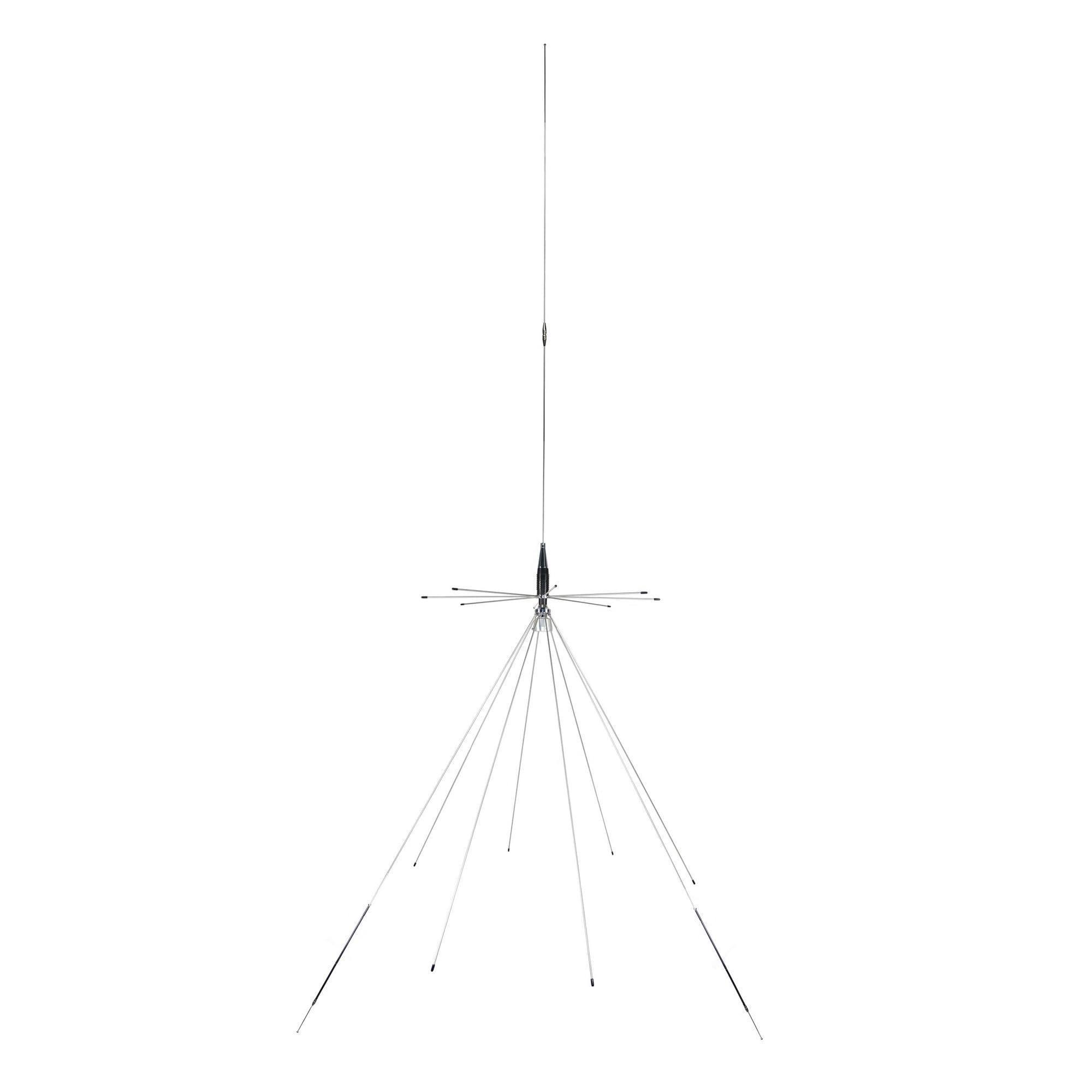
The Tram 1411 is a discone antenna that covers an incredibly wide frequency range from 25 MHz to 1300 MHz, making it a fantastic choice for the scanner enthusiast or ham who wants to monitor multiple bands with a single feedline. It can also transmit on 10 meters, 11 meters, and VHF/UHF ham bands. The 300-watt max power rating is sufficient for stock CB radios and many mobile/portable transceivers.
On CB, the SWR runs about 1.1:1 on channel 19 and up to 1.5:1 at the band edges. Users have reported excellent results on 2-meter and 70-centimeter ham bands, as well as decent GMRS performance. The wideband performance is exceptional for software-defined radio (SDR) work, where the antenna pulls in signals from broadcast FM to aircraft band. The included 6 lower radials (32 inches) and 2 adjustable lower radials (48 to 53 inches) give you options for tuning.
Build quality is good with a solid aluminum hub and spokes, though the SO-239 connector lacks a notch for the PL-259’s locking spikes, which some users found odd. Assembly is straightforward, but the small set screws can be easy to lose. The antenna is best paired with LMR400 or RG-8X coax for runs over 25 feet.
Why it’s great
- Massive coverage: 25 MHz to 1300 MHz
- Can transmit on CB, 10m, 2m, 70cm, and more
- Rust-free stainless steel construction
- Good SWR on CB (1.1:1 ch19)
Good to know
- SO-239 connector has no locking notch for PL-259
- Large physical design (102 inches long, 8 ft wide radials)
4. ProComm Patriot PAT12

The Patriot PAT12 is a 12-foot loaded fiberglass vertical designed as a compact alternative to full-length base antennas. It handles 2000 watts PEP and requires no ground radials, which simplifies installation. This antenna is aimed at operators who need solid local and regional performance but lack the space or HOA permission for a 17-foot or taller structure. The design is similar to the classic Shakespeare Big Stick, with internal loading coils to achieve resonance at 11 meters.
Tuning is done via two adjustable tuning rings near the base. Users report achieving an SWR of 1.2:1 to 1.5:1 out of the box. Performance for local CB contacts is good — around 10 miles with S9 signal reports. However, some users have noted that the PAT12 has a higher noise floor and weaker receive compared to a full 1/2-wave or a stainless whip. A few reviewers experienced quality control issues, including internal shorts, that were handled by the manufacturer’s customer service.
If you’re operating from an attic or a tight backyard, the PAT12 is a workable solution. It’s also a good first step into base station operation. But if you have the space and the height, a longer, unloaded antenna will likely outperform it on both transmit and receive.
Why it’s great
- Compact 12-foot height fits tighter spaces
- No ground radials needed, easy installation
- High power rating (2000W PEP)
- Easy SWR tuning with adjustable rings
Good to know
- Reduced receive sensitivity vs. full-length antennas
- Some quality control reports; check unit on arrival
5. Hustler IC-56

The Hustler IC-56 is a premium quarter-wave stainless steel whip, a full 102 inches (8.5 feet) of 17-7PH tapered steel. This is the classic CB antenna — nothing loads a quarter-wave ground plane better than a full-length, top-loaded whip. The dissipation ball tip reduces unwanted static buildup, and the steel is tough enough to be bent 180 degrees and still spring back to shape, making it ideal for off-road or heavy-use environments.
SWR is legendary on this antenna. Multiple reviews report a flat 1.0:1 across all 40 channels when properly mounted on a good ground plane, like a metal mast or a set of 102-inch radials. The SWR remains under 1.5:1 even when the whip is tied down for overhead clearance. The welded 3/8-inch x 24 threaded base accepts most standard mobile mounts, and a 6-inch spring or quick-disconnect is recommended to absorb wind and impact stress.
For a base installation, you’ll need a heavy-duty ball mount and a substantial ground plane. Once set up, the IC-56 provides exceptional receive sensitivity and radiated efficiency, often outperforming loaded fiberglass antennas in both TX and RX. The packaging (PVC pipe) is excellent, keeping the whip straight during shipping.
Why it’s great
- Flat SWR (1.0:1) across all 40 channels possible
- Extremely durable; springs back from 180-degree bends
- Dissipation ball tip reduces static noise
- Excellent TX/RX efficiency vs. loaded antennas
Good to know
- Requires a robust ground plane (metal mast or radials)
- Full height (8.5 ft) may be tall for some installations
6. Hustler Redman 102RM
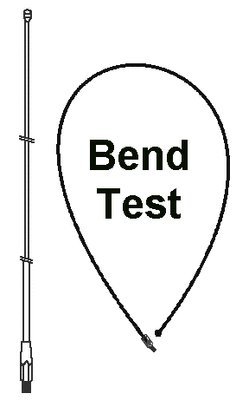
The Hustler Redman 102RM is the same 102-inch quarter-wave whip as the IC-56, made from the same 17-7PH stainless steel, but offered at a more budget-friendly price point. It includes a stud mount for installation on any standard 3/8-inch x 24 threaded base. The whip is designed to bend 180 degrees and return to its original shape, making it nearly indestructible in normal use.
SWR performance is on par with the IC-56: users report low SWR figures from 1.0:1 to 1.5:1 after proper mounting. One user noted that a 6-inch spring and a quality ball mount are essential for safe highway use or high-wind environments. The Redman 102RM can also be modified for 10-meter ham operation by removing a portion of the tip with a hacksaw, turning it into a 1/2-wave base antenna.
Installation is straightforward: mount it to a sturdy metal mast or ball mount, connect your coax, and check SWR. The antenna ships in a PVC tube for protection. Some users reported minor packaging damage (PVC glue failing), but the antenna itself remained intact. For the price, this whip delivers the same raw efficiency as its premium sibling.
Why it’s great
- Same 17-7PH steel as premium whips at lower cost
- Excellent SWR (1.0 to 1.5:1 typical)
- Can be trimmed for 10-meter operation
- Versatile: works on both mobile mounts and base ground planes
Good to know
- Packaging PVC may split in transit
- Needs spring/quick-disconnect to protect mount
7. Pro Trucker 102 in

The Pro Trucker 102 is a no-frills quarter-wave stainless steel whip designed for users who want the proven performance of a 102-inch antenna at the lowest possible entry point. The tapered 17-7PH stainless steel rod is the same material used by more expensive brands, and it includes an SWR-adjustable mounting stud for fine-tuning. The antenna fits all standard 3/8 x 24 threaded mounts.
While it’s primarily marketed as a mobile antenna, the Pro Trucker 102 works perfectly as a base antenna when mounted on a ground plane. Users report great transmit and receive range, with SWR figures that can be tuned to near-flat with a little patience. The build quality is sturdy, and the whip is resistant to bending from trees and other roadside obstacles.
One caveat: there is no dissipation ball or other static-reduction feature, so you may hear more noise in electrically noisy environments. The mounting hardware is adequate but not as robust as heavy-duty bases. For the price, this is a solid, functional whip that delivers the fundamental advantage of a full 1/4-wave radiator.
Why it’s great
- Full 102-inch quarter-wave at lowest price point
- Sturdy tapered stainless steel construction
- SWR adjustable stud included
- Excellent value for base or mobile use
Good to know
- No static dissipation tip included
- Lacks premium mounting hardware
FAQ
What is the ideal height for a CB base antenna?
Can I use a mobile whip as a base antenna?
Why does my SWR change between channels 1 and 40?
How do I protect my antenna from lightning strikes?
Final Thoughts: The Verdict
For most users, the best cb base antenna winner is the Solarcon A-99 because it offers the best balance of low SWR, high power handling, and simple no-radial installation for both CB and 10-meter operation. If you want the absolute DX performance and don’t mind precise tuning, grab the Sirio Vector 4000. And for a pure, efficient quarter-wave that you can mount on a ground plane, nothing beats the Hustler IC-56.