
Our readers keep the lights on and my morning glass full of iced black tea. As an Amazon Associate, I earn from qualifying purchases.
Specs are compiled from manufacturer listings and verified buyer reviews and can change over time — please confirm the key details on the product page before buying.
Handing a child their first phone is a leap of faith. You want them reachable for the ride home from soccer, but the thought of an open browser and stranger-filled group chats keeps you up at night. The right device lets you set rules from your own phone, giving the child independence and you a location pin that says “arrived safe.”
I’m Min — the founder and writer behind Gadgets Feed. This guide is built by comparing the manufacturers’ published specifications and the patterns across verified customer reviews, so you get each pick’s real strengths and trade-offs instead of marketing spin.
Whether your child is 6 or 13, the ideal cell phone for kids depends on the age, the carrier, and how much control you really want. That decision gets clear when you see which devices lock down apps and which ones just track location.
Our Picks at a Glance
How To Choose The Best Cell Phone For Kids
You avoid the biggest mistake parents make—buying a standard smartphone and hoping a parental control app will do the heavy lifting. These dedicated kids’ phones build the safety right into the operating system, so a child cannot simply uninstall the rules. Your real choice depends on form factor, network, and the level of monitoring you want.
Watch vs. Phone vs. Safe Phone
A smartwatch like the TickTalk5 is perfect for ages 3-12 because there’s no open app store and no social media access, just calls, texts, and GPS. The Secure Phone takes that even further with no internet at all. For older kids who need a real screen for school apps, a parent-managed phone built on a Samsung Galaxy gives full Android functionality without the open app store.
The Carrier Question You Can’t Skip
Some of these devices require you to buy a cellular plan directly from the manufacturer, like the Secure Phone or the Teracube Thrive. Others, like the G-Mee Connect Pro, lock you to a specific network like T-Mobile. Before you fall in love with a device, check whether your current carrier will work with it, or you might face an activation headache later.
Quick Comparison
| Model | Best For | Form Factor | Battery Capacity | Key Feature | Amazon |
|---|---|---|---|---|---|
| TickTalk5★ Best Overall | Ages 3-12 first device | Smartwatch | 770 mAh | Video calls | Amazon |
| DXPICR 4G WatchBudget Pick | Budget smartwatch | Smartwatch | — | IP68 waterproof | Amazon |
| Troomi A16 | Real smartphone, managed | Smartphone | 5000 mAh | 5G AMOLED | Amazon |
| G-Mee Connect Pro | No-camera phones | Smartphone | 3000 mAh | No camera | Amazon |
| Teracube Thrive | Teens needing apps | Smartphone | 4000 mAh | App approval | Amazon |
| KidsConnect Secure | No-internet simplicity | Basic phone | — | 3 speed-dial buttons | Amazon |
| Bark Phone A16 | Heavy social monitoring | Smartphone | 5000 mAh | Social media alerts | Amazon |
In‑Depth Reviews
1. TickTalk5 Kids Smart Watch
Our pick — over 4★ from 1,500+ verified ratings; the strongest balance of quality and price.
The wrist-worn safety net that lets you see your child’s location even indoors.
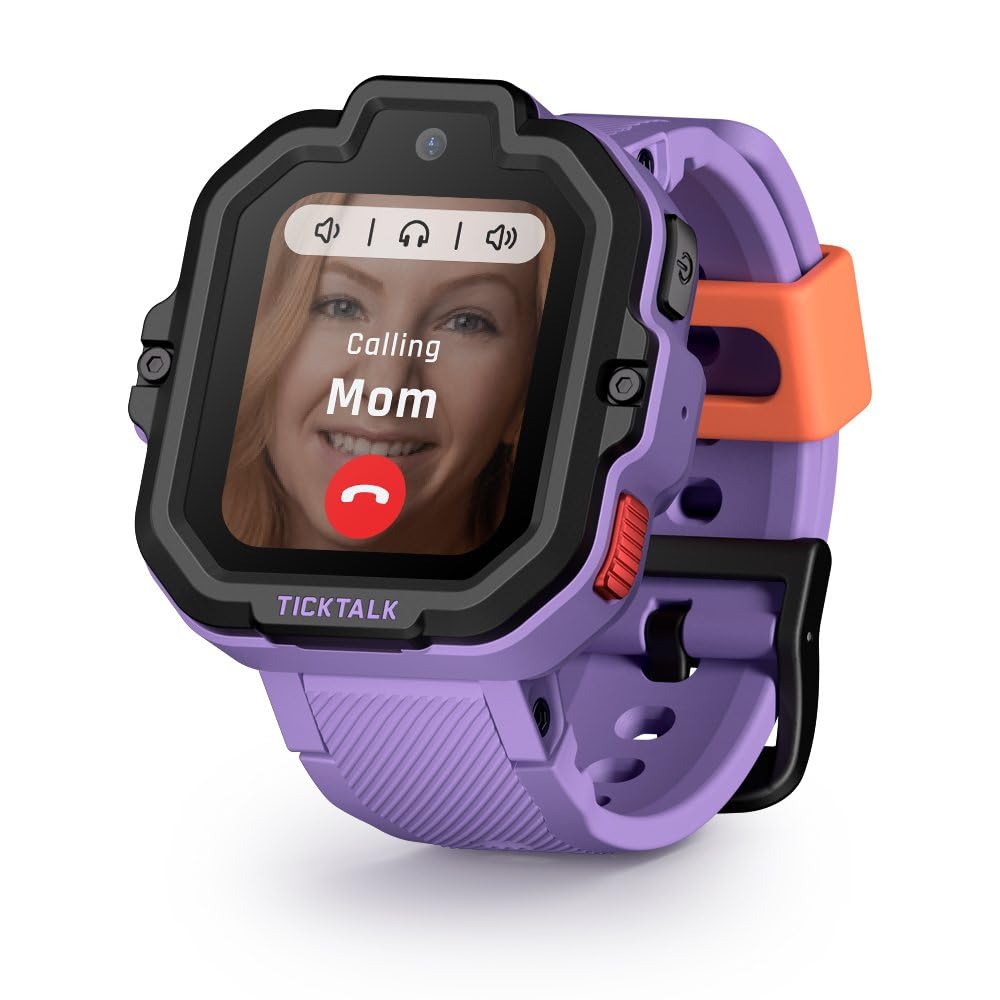
For a child between 3 and 12, this 4G LTE smartwatch gives you the confidence of a phone without the baggage. The standout is the 5MP front camera for HD voice and video calls, so your kid can show you the homework page instead of just describing it. It runs on cellular data or WiFi, and quick-dial buttons make 911 and emergency contacts reachable with one tap.
The GPS tracking is the hero feature here, using Google Maps with TickTalk’s SmartPin AI correction to stay accurate even when your child is inside a school building or mall. Parents get notified instantly with the location whenever an emergency call goes out. The watch handles real SMS and group chats, but only with contacts you approve in the TickTalk app, and unknown numbers are automatically blocked.
Build quality is where this one leads the pack, with IP67 water resistance and a shockproof, dustproof body designed for active play. The 770 mAh battery gives up to 100+ hours of standby, though heavy use means a nightly charge. The crowd favorite holds a strong 4.3-star rating, with overall quality and communication features the most-praised aspects. The recurring trade-off is battery life, which owners describe as making it through the day but not much more.
What wins parents over
- AI-powered SmartPin GPS stays accurate indoors
- No games, no social media, just approved contacts
- 5MP camera for smooth HD video calls
The daily reality check
- Typing texts on the small screen is tough for little fingers
- Battery needs a nightly charge with regular use
- Speech-to-text may require repeating messages
Reach for this if: you want a durable, distraction-free first device with video calling and indoor-accurate GPS for an elementary-age child.
Look elsewhere if: your kid needs a full keyboard or is old enough to demand a real smartphone screen.
2. DXPICR 4G Kids Smart Watch
A waterproof watch that tracks on five satellite systems for under eighty dollars.
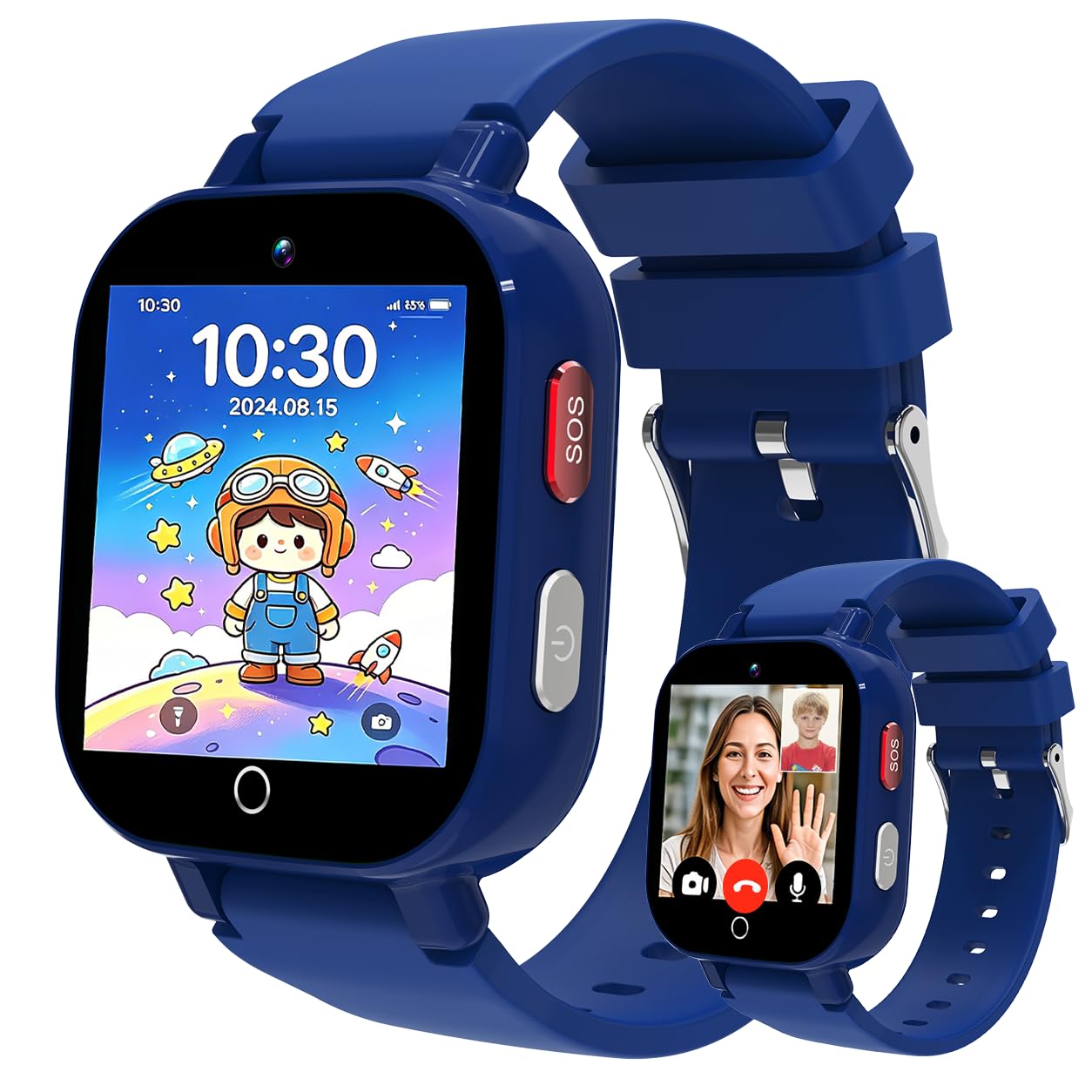
This is the value play for parents who want the essentials without the premium price tag. The big differentiator is IP68 waterproofing, which means it survives pool days and rainy playgrounds where lesser watches fail. It also skips the extra cost of a SIM card since one is included, ready for a family plan.
Location tracking leans on multi-satellite GPS that pulls from GPS, GLONASS, Galileo, BeiDou, QZSS, and NavIC systems for more accurate updates in everyday use. You can set multiple geofences and get instant alerts when your child enters or leaves a safe zone, plus remotely ring the watch to find it when it’s lost under a couch. The SOS button auto-calls preset contacts, and a remote listening feature lets you hear the surroundings when needed.
What makes this one fun for kids is the AI assistant with translation, image recognition, and watch faces, plus a camera, games, and sports modes. The battery is the honest weak spot, with a 7-day standby claim that real-world use cuts down. Quality is the most-praised aspect in reviews, and the watch-nearly-3335 owners proves it’s a popular entry point for a “perfect smartphone alternative” at this price.
Owner consensus: Buyers report the GPS locks on accurately and the call quality is clear, making it an ideal first smartphone alternative for a growing kid.
Go for it if: you want a budget-friendly waterproof watch with AI extras and multi-satellite GPS.
Think twice if: you need reliable SMS replies or a flawless app experience, as some units hit connectivity quirks.
3. Troomi Safe Phone

A grown-up Samsung Galaxy hiding a child-safe operating system underneath.
For parents who want their teen to carry a real phone, the Troomi runs on the Samsung Galaxy A16, a serious piece of hardware. The 5000 mAh battery is double what the watches offer, and the 1080×2400 AMOLED display means this looks and feels like the adult phone your kid is asking for. It’s built on 5G cellular, so it’s ready for years of network upgrades.
The magic is in the Troomi OS layered on top. Kids cannot download apps from an open store; instead, parents pick from the Troomi App Library, and some school apps may not be available, so checking your child’s required apps before buying is smart. Calls and texts only work with parent-approved contacts, unknown numbers can be auto-blocked, and the Parent Portal shows real-time GPS location and history.
You do need a Troomi service plan to activate this, and it runs on the AT&T network, so it won’t work with your existing carrier SIM. The reviews are genuinely split, with a 3.2-star average reflecting both delighted families and frustrated ones. The strongest praise centers on the safety features, while the biggest recurring complaint is functionality issues and a setup that isn’t the smoothest.
Why families commit
- Premium Samsung hardware with a 5000 mAh battery
- Grows with the child as you open up more apps over time
- Fingerprint security and a sharp 1080p AMOLED screen
The honest friction
- Requires a separate Troomi service plan on AT&T
- Setup isn’t user-friendly and contacts take work
- Some report intermittent texts and app bugs
Best for: families already on the “Wait Till 8th” path who want a true smartphone with a curated app library.
Not for: anyone expecting plug-and-play setup or a perfectly bug-free first month.
4. G-Mee Connect Pro

The rare phone with zero cameras, so there’s no way to share a photo you haven’t seen.
This is the answer for parents whose main fear is their child sending photos or video chatting with strangers. The G-Mee Connect Pro deliberately ships with no cameras at all, which completely removes the risk of a kid posting selfies or getting into a video call with someone unknown. It’s a full Android 13 phone with a 2.0 GHz octa-core processor and 4GB RAM, so it handles everyday apps smoothly.
The 5.72-inch HD+ display with 1440×720 resolution is a real screen for streaming, and the 3000 mAh battery is rated for up to 8 hours of HD video playback. Storage is generous at 64GB internal, expandable with a micro-SD card beyond that. There’s also a built-in app locker so you can PIN-lock individual apps before handing it over, plus a fingerprint scanner for good measure.
The catch is the carrier: this is a T-Mobile locked phone, so you’ll need a T-Mobile SIM or one of its resellers. It ships with earbuds, a case, and a pre-installed screen protector. Owners praise the clear call sound and the value, describing it as perfect for kids or high-security jobs. The common note is that battery life lands around 6 hours of heavy use, not the full rated 10.
The verdict: If “no camera” is your non-negotiable rule, this is the most capable phone that actually honors it — and the dual SIM support and NFC make it feel like a grown-up device.
Pick this when: you want a distraction-managed phone and the total absence of a camera is the point.
skip it if: your child needs to be on a Verizon or AT&T plan, since it’s locked to T-Mobile.
5. Teracube Thrive
The teener’s phone where every single app needs your stamp of approval first.
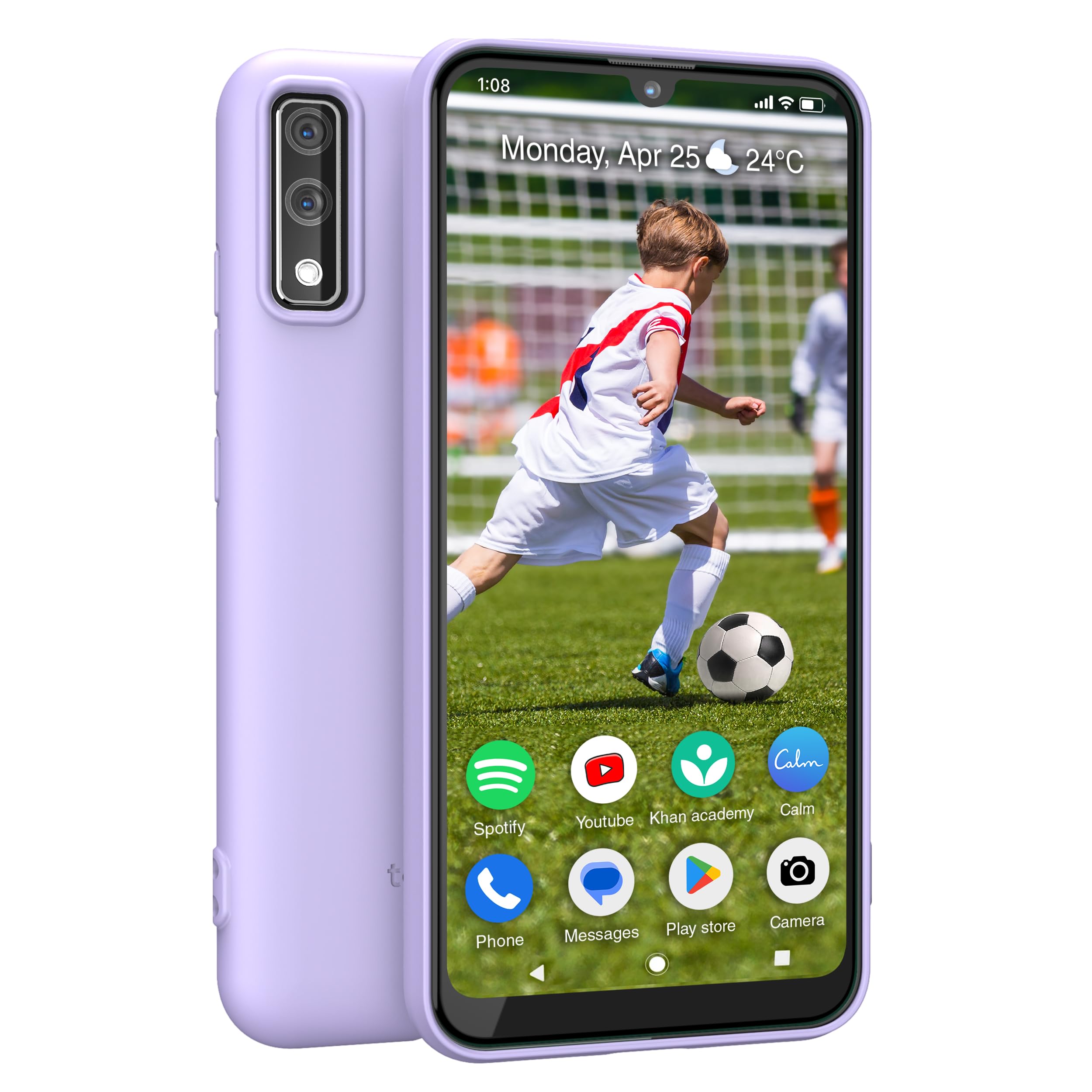
For kids who genuinely need apps — the ones for school, music, or homework — the Teracube Thrive gives parents the final say on every one. All apps require parental approval through the Thrive parent app, and each one gets its own time restriction with tamper-proof controls your kid can’t bypass. It’s built for ages where a smartwatch feels babyish but an open smartphone feels dangerous.
The battery is a 4000 mAh unit with up to 15 hours of talk time, which comfortably outlasts a school day. It’s 5G compatible and includes a front and rear camera, so this is a step toward a normal phone experience without the normal phone risks. Safe search and browsing are built in, and all unknown or spam calls get blocked automatically, giving you a shield against the most common online threats.
You must activate this on Teracube Wireless, which bundles the phone with its own service, and it’s not compatible with other carriers. The phone includes a protective case and a pre-installed glass screen protector, plus Teracube Care+ for express replacements on defects or accidents. Reviews land at a 3.9-star average, with suitability for teens and value for money the most-praised aspects, while reliability gets mixed marks from a handful of owners.
The strong points
- Tamper-proof app controls set real time limits
- 15-hour talk time battery goes beyond a school day
- Care+ protection covers accidental breakage
What to weigh
- Monthly service is a bit higher than competitors
- No built-in voicemail on the device
- A handful of units hit reliability snags
Best for: teens who need real apps but still need a parent’s hand on every download and screen-time limit.
Look elsewhere if: you want to keep your existing carrier, since Teracube Wireless is mandatory here.
6. KidsConnect Secure Phone

A bare-bones phone with no internet, no games, and three big buttons a 6-year-old can master.
This is the purest expression of “phone for safety only.” The KidsConnect Secure has no internet, no games, no apps, and no spam calls, so there’s genuinely nothing to mess up. It’s a touchscreen device, but it strips away everything except calling, texting, and GPS tracking. For a child with special needs, or a grandparent with dementia, that simplicity is the entire point.
You get three preset speed-dial buttons for the most important contacts, plus support for up to 15 programmed numbers, and calls and texts only go to and from the numbers parents set. The SOS button triggers a call with a GPS link so you know exactly where the child is when they press it. The real-time tracking works on 4G with T-Mobile or AT&T, and there’s even a listen-in feature so parents can hear the surroundings.
The honest limits are real: you must buy a cellular plan from Secure Phone directly, and the battery lasts about 24 hours, needing a nightly charge. Texting is limited to canned messages, which is fine for basic check-ins but not real conversations. Reviews at 4.2 stars consistently praise the functionality and ease of use, and the GPS accuracy is described as remarkably close to the actual spot. The main caution is that this isn’t a ruggedized device, so a rough-and-tumble kid could crack the screen.
Where it shines: Owners of the Secure Phone highlight the accurate GPS and the way it blocks scammers entirely, calling it an excellent pick for seniors and kids alike.
Reach for it if: you need a dead-simple communication device with rock-solid GPS and zero internet risk.
Pass if: your child is clumsy, as the plastic body isn’t shockproof like the watches.
7. Bark Phone for Kids
The monitoring heavyweight that scans texts and 30-plus social platforms for real danger.
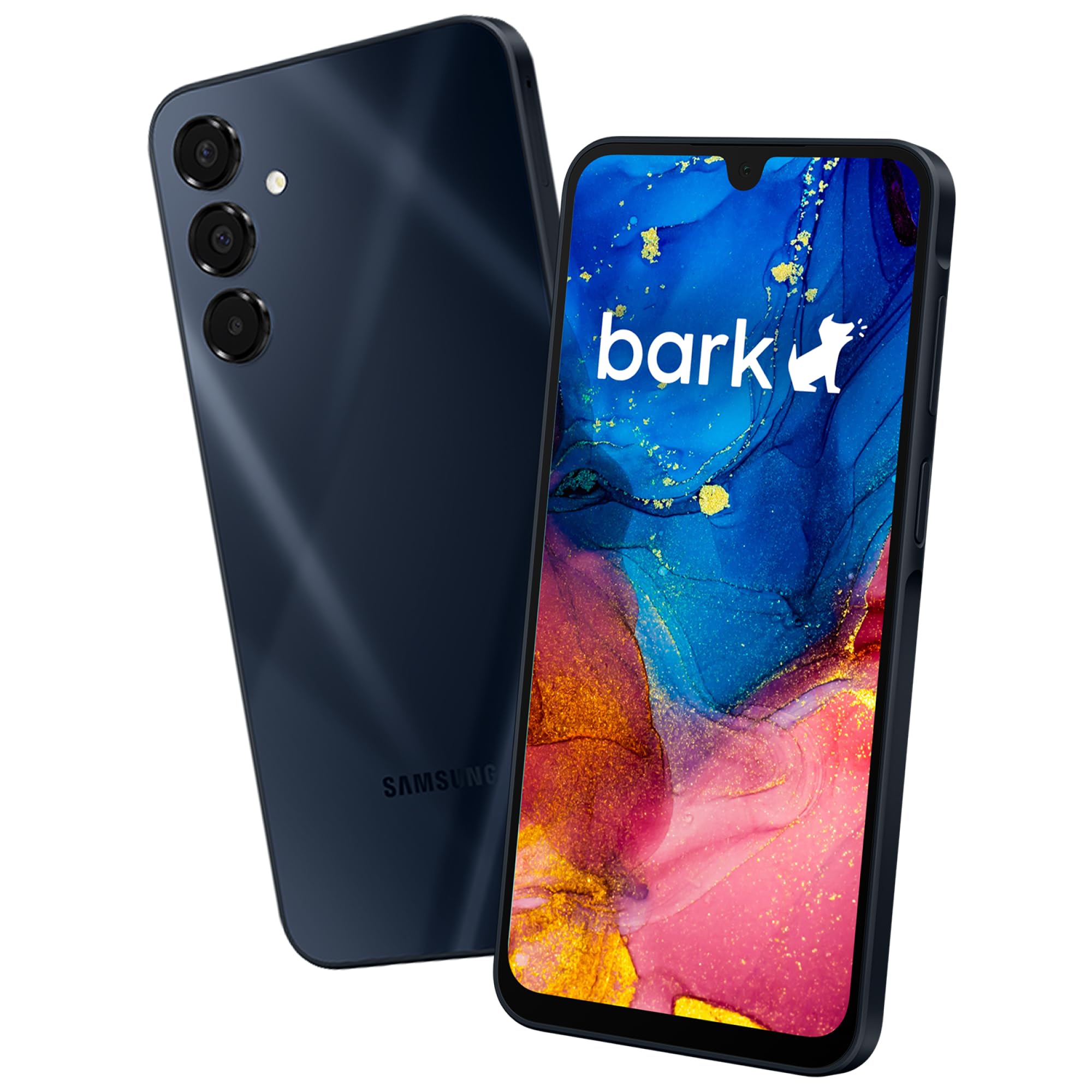
If your teen already has a social life online, the Bark Phone is the most sophisticated safety net you can buy. It’s built on the Samsung Galaxy A16 with a 5000 mAh battery and a 1080×2400 AMOLED display, so it’s serious hardware. But the real power is the monitoring: Bark scans texts, emails, and 30+ social media platforms for signs of online predators, sexting, suicidal ideation, bullying, violence, and drug or alcohol content.
The alerts are what separate this from every other pick. You get notified of potential issues rather than having to dig through your kid’s messages yourself, which makes it feel less like spying and more like a safety system. The parental controls are tamper-proof, meaning the rules you set stay in place, and texts can’t be deleted without your permission. Location sharing comes three ways: a real-time map, customizable location alerts, and manual check-ins.
You can also approve every app your child installs and every contact they text, filter websites, and pause the internet entirely when you want a break. Reviews give it a 4.3-star average, with phone quality and safety the most-praised aspects. The setup draws mixed feedback, with some finding it easy and others confused, and at least one parent felt the web filtering only alerted after the fact rather than blocking outright. For a 12-year-old getting their first real phone, this is the gold standard.
The safety arsenal
- Scans 30+ social platforms automatically
- Tamper-proof rules kids can’t delete
- 5000 mAh battery and crisp AMOLED screen
The trade-offs
- Confusing setup for some parents
- Web filtering can notify rather than block
- Premium price for the monitoring service
The one for: parents of teens already deep into social media who want automatic alerts instead of manual snooping.
Not the one if: you’re looking for a budget device or a simple no-internet brick.
Understanding the Specs
Battery Capacity in mAh
Milliamp-hours (mAh) tell you how long the battery lasts between charges. On a kid’s watch like the TickTalk5 with 770 mAh, you’re looking at a nightly charge routine. A full smartphone like the Bark or Troomi carries a 5000 mAh battery, which easily spans a full day of heavy use and then some. Bigger batteries only come in full phones; watches physically can’t fit them.
Carrier Lock vs. Bundled Plan
This is the spec that trips up most parents. Some phones, like the G-Mee, are locked to a specific carrier like T-Mobile, so you bring your own SIM. Others, like the Teracube and Secure Phone, require you to buy their own monthly cellular plan. The Troomi runs on the AT&T network but needs its own service plan too. Always check which carrier your family already uses before picking a locked device.
FAQ
At what age should I get my child a phone?
Will my existing carrier plan work with these phones?
Can my kid still get around the parental controls?
What is the difference between a kids smartwatch and a kids smartphone?
How long does the battery last on a typical day?
What happens if my kid breaks the phone?
Do these phones block strangers and spam calls?
Can I see my child’s location in real time?
Final Thoughts: The Verdict
For most families, the cell phone for kids winner is the TickTalk5 because it wraps video calls, indoor-accurate GPS, and ironclad parental controls into a shockproof watch your child will actually wear. If your teen needs real apps and serious social media monitoring, grab the Bark Phone. And for the parent who wants zero internet risk, the Secure Phone strips away everything but the safety.
How We Picked
We do not accept paid placement. Every pick is matched to a real buyer and a real use-case; we do not hands-on test units.
Sources & Methodology
Specifications: manufacturer listings and product documentation. Review insights: verified customer reviews, as of August 2026. Pricing: not shown on this page (it changes often); check the current price via the retailer link.
As an Amazon Associate, Gadgets Feed earns from qualifying purchases. This does not affect which products we feature.