
Handing a child their first phone is a major milestone, but the open internet, social media, and unrestricted contact lists create genuine anxiety for parents. The market is flooded with standard smartphones that require you to cobble together third-party monitoring apps, often with limited success. Finding a device with baked-in, tamper-proof controls is the only reliable path to real peace of mind.
I’m Min — the co-founder and writer behind Gadgets Feed. I’ve spent hundreds of hours analyzing the technical specifications, monitoring capabilities, and real-world feedback across devices specifically designed to give parents control over their child’s digital world.
After deep research into hardware specs, OS-level restrictions, and GPS accuracy, I’ve ranked the top contenders to help you find the absolute best cell phone for parental controls.
How To Choose The Best Cell Phone For Parental Controls
The wrong approach is buying a standard Android phone and hoping a free app does the job. A true parental control phone works at the OS level, meaning the child cannot bypass restrictions by force-stopping an app or factory resetting the device. Look for these features.
OS-Level Lockdown vs. Third-Party Apps
A dedicated kid’s phone runs a modified operating system that prevents app store access, camera use, and internet browsing without your explicit approval via a parent portal. Standard phones rely on supervision apps that a tech-savvy teen can often circumvent. For true security, you need the former.
GPS Tracking Accuracy and Battery Life
Real-time location is a top reason parents buy these devices. Look for phones that offer a dedicated location chip (like HaloGPS in the JrTrack 5) rather than relying solely on cellular triangulation. However, constant GPS polling drains battery life fast — a trade-off you must balance. A 24-hour battery is the baseline for a kid’s device that needs daily charging.
Required Service Plans and Hidden Costs
Most dedicated kid phones require a proprietary monthly service plan that covers the monitoring software and cellular data on a specific network (often AT&T or T-Mobile). These costs add to per month on top of the phone price. Always check if there are additional licensing fees, activation charges, or “Care+” plans before buying, as these can double your first-year cost.
Quick Comparison
On smaller screens, swipe sideways to see the full table.
| Model | Category | Best For | Key Spec | Amazon |
|---|---|---|---|---|
| Bark Phone | Premium | Social Media & Text Monitoring | 6.7″ 1080p 120Hz Display / 128GB Storage | Amazon |
| Google Pixel 10 | Premium | Long-Term Software Support | 4970mAh Battery / 7 Years of Updates | Amazon |
| Google Pixel 10a | Mid-Range | High-Quality Everyday Phone | 128GB / 4300mAh / 6.3″ FHD+ | Amazon |
| JrTrack 5 Smart Watch | Specialty | Young Kids (Ages 6-12) | 680mAh / HaloGPS / eSIM Only | Amazon |
| Secure Phone 4G GPS | Specialty | Seniors & Special Needs | Speed Dial Buttons / No Apps | Amazon |
| Teracube Thrive | Mid-Range | Autistic Children | 4GB RAM / 64GB / Tamper-Proof OS | Amazon |
| Troomi Safe Phone | Budget | First Time Smartphone Kids | 6.7″ / 5G / Gradual Feature Unlock | Amazon |
In‑Depth Reviews
1. Bark Phone
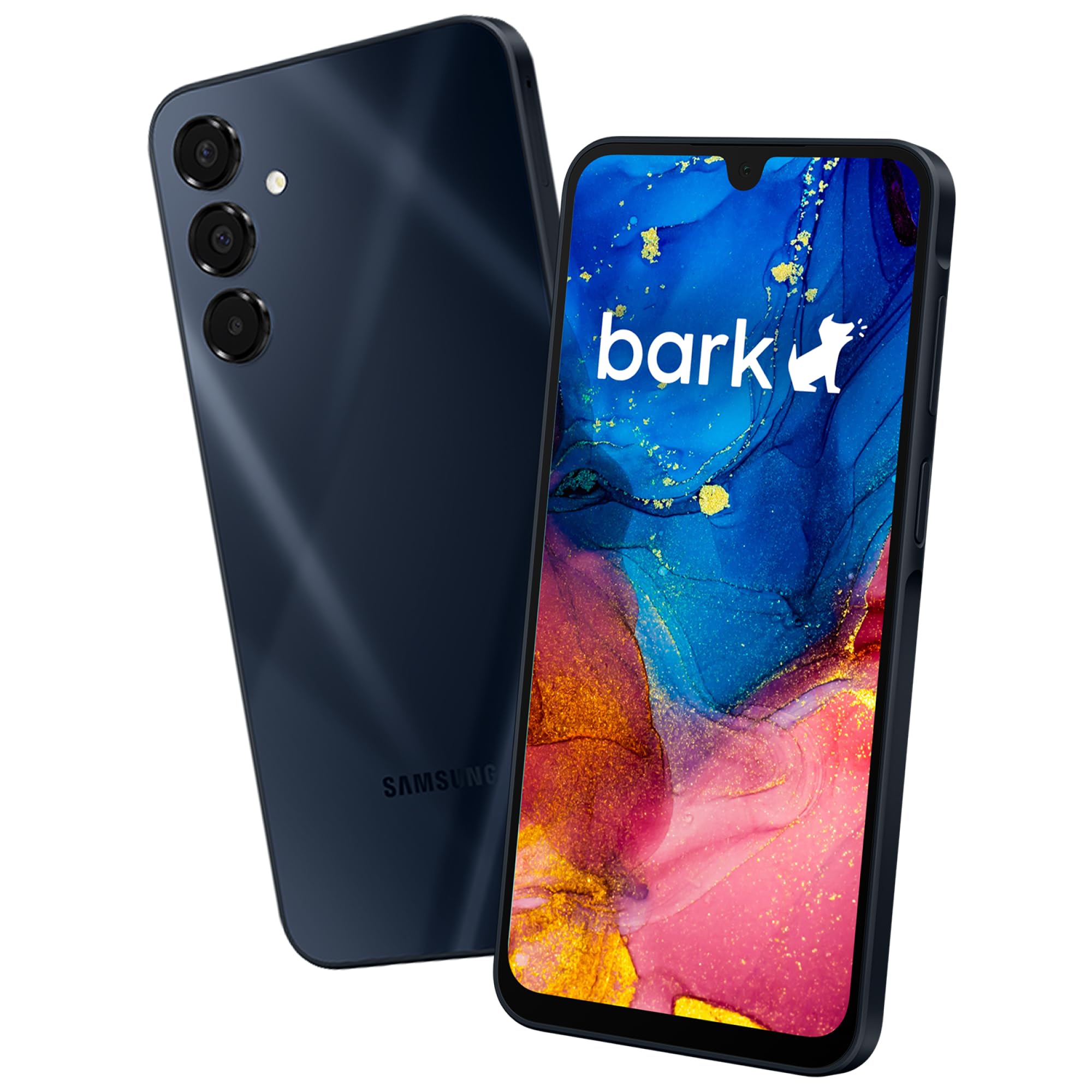
The Bark Phone stands out as the premium solution for parents who want deep monitoring without the child knowing they can bypass it. It runs on a Samsung Galaxy A16 but is completely locked down by Bark’s OS, which scans texts, emails, and 30+ social media platforms for signs of cyberbullying, predators, and suicidal ideation. The hardware itself is solid — a 6.7-inch 1080p display with a smooth 120Hz refresh rate and 128GB of storage, which is more than enough for a kid’s media.
The tamper-proof nature of the OS is critical. The child cannot delete texts or install apps without your permission. The GPS location tracking offers three modes: a real-time map, check-ins, and customizable alerts for zones like school or a friend’s house. This is the most feature-rich monitoring system available on a dedicated device, though it requires a monthly plan starting at /month for the starter tier.
Customer feedback from parents of neurodivergent children is particularly strong, praising the easy setup and the ability to gradually unlock features as the child matures. The only consistent downside is that the lowest-tier plan lacks mobile data, meaning the phone is essentially a talk-and-text device with no internet unless connected to Wi-Fi. For full functionality, you will want the /month plan or higher.
Why it’s great
- Deep social media and text monitoring with automated alerts.
- Tamper-proof OS prevents circumvention by tech-savvy kids.
- Excellent 6.7-inch display with a 120Hz refresh rate for smooth use.
Good to know
- Requires a monthly service plan; lowest tier lacks mobile data.
- Phone is larger than some parents expect for a kid’s device.
- Parent portal has a learning curve to set up all monitoring features.
2. Google Pixel 10
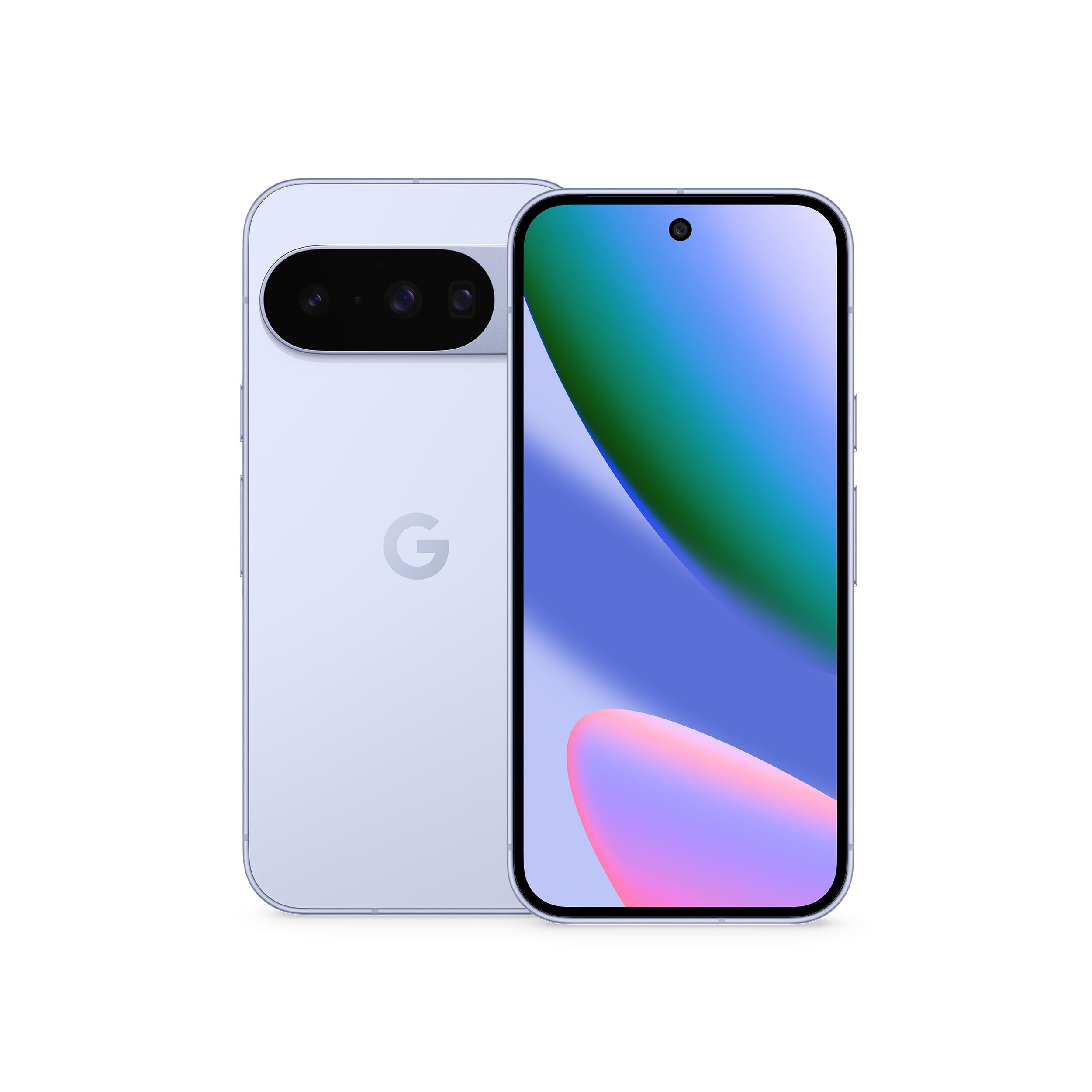
The Google Pixel 10 is an outlier on this list — it is not a dedicated “kid’s phone,” but it is the best standard smartphone for a parent who wants to combine Google’s Family Link with high-end hardware. The Tensor G5 chip provides smooth performance for years, and the promise of 7 years of OS and security updates means this phone can safely stay in a child’s hands through middle and high school. The 4970mAh battery comfortably lasts a full day under moderate use.
The triple rear camera system, including a 5x telephoto lens, is genuinely impressive for a phone in this segment. It allows a teenager to take excellent photos without needing a separate camera. Google’s Family Link lets you manage app approvals, screen time, and track location. The key advantage here is that you are not locked into a proprietary service plan — you can use any carrier, giving you flexibility on monthly costs.
The primary drawback is that Family Link is an app, not a tamper-proof OS. A determined teen with a recovery PIN can disable it during the setup process. The Pixel 10 also uses an eSIM as the default, with no physical SIM slot, which may complicate switching carriers for some users. This phone is best for an older, responsible teen rather than a younger child.
Why it’s great
- Industry-leading 7-year software update commitment.
- Excellent camera system with telephoto and Night Sight.
- Large 4970mAh battery for all-day use.
Good to know
- Control is via an app, not a tamper-proof OS; can be bypassed.
- Uses eSIM only, limiting carrier flexibility.
- Premium price point with no dedicated kid-safe OS.
3. Google Pixel 10a

The Google Pixel 10a is the smarter mid-range choice for parents who want a feature-rich Android phone without the premium flagship cost. It features the same excellent camera software as the Pixel 10, including the Camera Coach feature that helps compose shots. The 4300mAh battery delivers over 30 hours of life, and the 128GB of base storage is double what you get on many entry-level phones, preventing the “storage full” complaints from your teen.
For parental controls, you pair this with Google’s Family Link, which provides robust screen time management, app blocking, and location sharing. The phone is also IP68 rated, meaning it can survive accidental drops in water, and the Corning Gorilla Glass 7i protects the display. This is a durable option that doesn’t look like a “kid’s phone,” which older teens will appreciate.
The main limitation here is that the parental features are software-based. The AI assistant Gemini is heavily integrated, and while it can be useful, some parents may find the push notifications excessive. The 720p display is also a step down from the Pixel 10’s sharper screen, though it is perfectly adequate for a teenager’s typical video watching and texting habits.
Why it’s great
- Excellent 30+ hour battery life with 4300mAh capacity.
- IP68 water and dust resistance for peace of mind.
- Great value with solid performance and camera quality.
Good to know
- 720p display is lower resolution than some competitors.
- Parental controls rely on Family Link app, not OS-level locks.
- Heavy Gemini AI integration may require manual setup to disable.
4. JrTrack 5 Kids Smart Watch
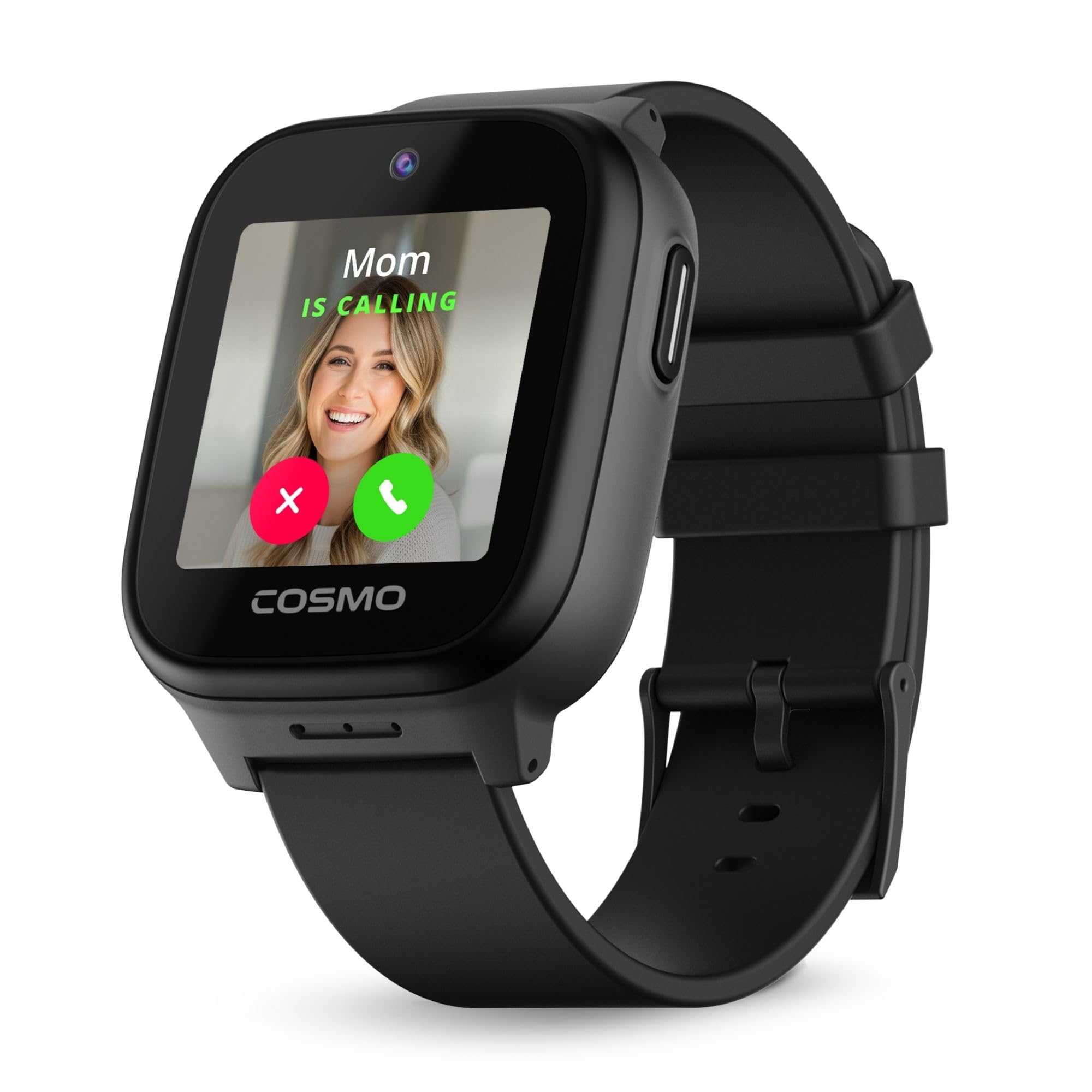
The JrTrack 5 is not a phone you hold to your ear — it is a 4G LTE smartwatch designed for children ages 6-12. Its standout feature is the HaloGPS chip, which provides the fastest and most accurate location tracking in this category, going beyond simple cellular triangulation. The watch supports secure calling and True Texting (including short video messages) with parent-approved contacts only, making it a true communication device without the distraction of a full phone.
The watch comes with a Focus Mode that locks the device during school hours, and an SOS button that sends an alert with a GPS link. It also offers optional kid-safe apps like Spotify Kids (with a separate subscription). The 680mAh battery lasts about 24 hours, which is standard for this form factor. The parent app is easy to use for setting contact lists and viewing location history.
There are notable trade-offs. Call quality is described as inconsistent, sometimes hard to hear, and the GPS location can lag by a few minutes in real-time. The watch requires a monthly eSIM plan through Cosmo Mobile starting at /month, and the silicone band may not fit smaller wrists perfectly. It is a great starter device but will not replace a smartphone for an older child.
Why it’s great
- Industry-leading HaloGPS for pinpoint location accuracy.
- Focus Mode and SOS alerts for school and emergencies.
- No internet or social media access built-in.
Good to know
- Daily charging required; 680mAh battery last ~24 hours.
- Inconsistent call quality and occasional GPS lag.
- Requires Cosmo Mobile service plan; not compatible with other carriers.
5. Secure Phone 4G GPS Tracker

The Secure Phone 4G GPS Tracker is the most basic device on this list — deliberately so. It is a simple, button-style phone with no internet, no apps, and no games. It is designed for elderly individuals, people with dementia, or special needs children who cannot manage a touchscreen. The phone features three speed-dial buttons and an SOS button that sends a text with a GPS link to caretakers.
The GPS tracking is accurate to roughly 10 feet, and the parent or caregiver app includes a remote listening feature, allowing you to hear the environment around the phone. The phone supports up to 15 contacts, and only those contacts can call in or out. This absolute lockdown means the user cannot accidentally call a scammer or browse inappropriate content. The screen is a small touchscreen, but the interface is designed for simple use.
The major drawback is the durability. The plastic construction is not rugged; one reviewer reported a cracked screen on the first field trip. There is also no repair program — only a 50% discount on a replacement. The phone requires a proprietary service plan from Secure Phone, and it only supports canned text messages, which limits communication for older, capable children.
Why it’s great
- Maximum security: no internet, apps, or spam calls possible.
- Excellent GPS tracking accurate to ~10 feet.
- Speed dial and SOS button for emergencies.
Good to know
- Plastic build is not durable; prone to cracking.
- Requires a proprietary cellular plan from Secure Phone.
- Only pre-written text messages; no free typing.
6. Teracube Thrive Kids Smart Phone
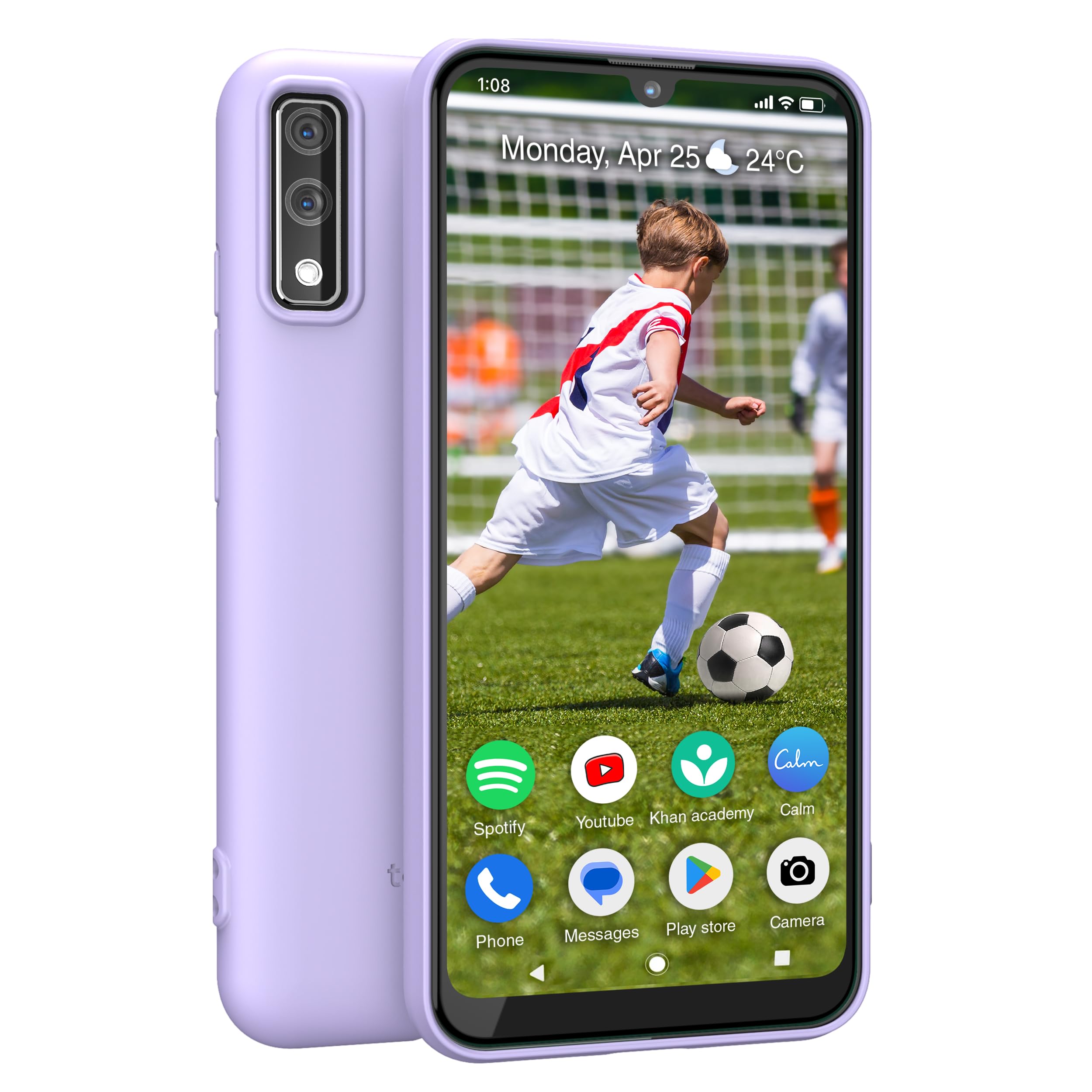
The Teracube Thrive delivers a dedicated, child-safe OS on decent mid-range hardware. It runs Android 14 with a MediaTek Kompanio 800T processor and 4GB of RAM, which is sufficient for educational apps and light browsing without lag. The 6.1-inch display with 720p resolution is adequate for videos, though it won’t win any sharpness awards. The 64GB of internal storage is a bit tight if your child downloads many apps.
The Thrive’s core strength is its tamper-proof Parental Control system. You manage every app from the Thrive Parent app — no app can be installed without your approval, and each app has a time limit. The safe search and browsing filters block inappropriate content, and all unknown calls are automatically blocked. The phone also includes Teracube Care+, offering express replacements for defects and accidents.
There is a significant catch: while the phone is budget-friendly, some users report a surprise lifetime licensing fee during activation on top of the required monthly plan. The monthly fee is also slightly higher than some competitors. Performance issues like slowness and battery drain have been reported after a few months of use, and voicemail is not supported. It is a solid entry-level option for a younger child, but expect to upgrade within a year or two.
Why it’s great
- Tamper-proof OS with full app approval and time limits.
- Includes Teracube Care+ for accidental damage replacement.
- Built-in spam call blocking and safe search.
Good to know
- Potential licensing fee during activation.
- Performance can degrade after months of use.
- No voicemail support available.
7. Troomi Safe Phone for Kids (Samsung Galaxy A16)

The Troomi Safe Phone offers a compelling “gradual freedom” approach, built on the capable Samsung Galaxy A16 hardware. The phone features a 6.7-inch FHD+ display (1080p) and supports 5G connectivity, providing a much better screen and faster data than most dedicated kid phones. The phone is completely locked down until you, as the parent, choose to grant access to more features through the Troomi Parent Portal.
Parents can only approve apps from the Troomi App Library, which is curated but may not include every school or social app your child needs. The GPS tracking is reliable, and the parent portal allows you to view location history and set screen time schedules. The primary selling point is that the phone can “grow” with the child — you start with basic calls and texts, then gradually enable messaging, apps, and browsing as they demonstrate responsibility.
The most critical drawback is the required Troomi service plan. Without it, the phone is essentially a brick; it cannot be used on Wi-Fi only. Customer reviews also highlight significant security concerns: the phone is fully managed by Troomi, not the parent, meaning Troomi has system-level access to the camera, microphone, and messages. Some users also reported major setup issues, including the phone getting stuck in a foreign language and broken QR codes for activation.
Why it’s great
- Excellent 6.7-inch FHD+ display with sharp 1080p resolution.
- Supports 5G cellular for faster data speeds.
- Gradual feature unlock allows the phone to grow with the child.
Good to know
- Useless without a Troomi service plan; no Wi-Fi-only mode.
- Troomi, not the parent, has system-level device access.
- Setup can be problematic with activation and language bugs.
FAQ
Can a child bypass the parental controls on these phones?
Do all kid phones require a monthly service plan?
What is the difference between a smartwatch and a phone for kids?
Final Thoughts: The Verdict
For most users, the cell phone for parental controls winner is the Bark Phone because it offers the deepest, tamper-proof monitoring across texts and social media while running on solid Samsung hardware. If you want standard Android flexibility with 7 years of updates, grab the Google Pixel 10. And for a young child needing only basic contact with pinpoint GPS accuracy, nothing beats the JrTrack 5 Smart Watch.