
A flickering signal bar on your dash isn’t just an annoyance—it’s a productivity killer and a safety risk. Whether you’re overlanding in the backcountry, piloting a semi across state lines, or living the RV life full-time, a weak cellular link means lost navigation, dropped work calls, and streaming that buffers endlessly. The right external antenna pulls in the 5G and 4G LTE signal that your vehicle’s metal body inherently blocks, turning your rolling office into a reliable connectivity hub.
I’m Min — the co-founder and writer behind Gadgets Feed. For this guide, I’ve spent dozens of hours analyzing frequency response curves, MIMO configurations, gain ratings, connector standards, and real-world field reports across seven top contenders to isolate exactly which antenna delivers the strongest, most consistent link for your specific setup.
After dissecting everything from omnidirectional coverage to high-gain directional panels, I’ve assembled the definitive analysis to help you select the best cellular vehicle antenna 5g for your rig and budget.
How To Choose The Best Cellular Vehicle Antenna 5G
Selecting a vehicle-mounted 5G antenna isn’t as simple as picking the tallest one with the highest dBi rating. You need to match the antenna’s frequency coverage, MIMO architecture, and connector type to your specific router or signal booster, all while accounting for the metal surface it will be mounted on.
Frequency Range and 5G Band Support
Not all “5G” antennas are created equal. True 5G NR (New Radio) operates on two distinct ranges: Sub-6 GHz (FR1) and millimeter wave (FR2), which starts around 24 GHz. In vehicle use, you need an antenna that covers the full Sub-6 spectrum, ideally from 600 MHz to 6000 MHz. This ensures backward compatibility with 4G LTE bands (Band 12, 13, etc.) while supporting the faster mid-band frequencies like C-band (3.7-3.98 GHz) that carriers are actively deploying.
MIMO Configuration: 2×2 vs 4×4
MIMO (Multiple Input Multiple Output) is the bedrock of modern cellular speed. A 2×2 MIMO antenna uses two internal elements, effectively doubling the data pipe compared to a single antenna. A 4×4 MIMO antenna, like the high-end Waveform QuadPro, uses four elements, unlocking the full potential of 5G carriers that support 4×4 MIMO on their network side. If your router supports 4×4 MIMO, investing in a matching antenna yields dramatically faster and more stable connections, especially in fringe areas.
Gain and Radiation Pattern
Gain, measured in dBi, quantifies how well the antenna focuses energy. Higher gain (10 dBi) often means a flatter “pancake” of coverage, which is great for flat terrain but can miss signals from a tower on a steep hill. Lower gain (3-4 dBi) offers a wider vertical beam, better suited for hilly or mountainous routes. An omnidirectional pattern sends and receives in a 360-degree horizontal circle, ideal for moving vehicles where the tower’s direction changes constantly. A directional panel, by contrast, must be aimed at a specific tower, offering peak gain only in that direction.
Connector Type and Cable Quality
The physical link between the antenna and your device is a frequent point of failure. Most vehicle antennas end in an N-Male, SMA-Male, or TS-9 connector. Check your router or booster’s port before buying. Low-loss cable like RG58 or LMR-200 is critical; a long run of cheap RG174 can erase half the gain your antenna just captured. Some antennas, like the Proxicast ANT-121-M22, come with integral SMA leads, simplifying the connection.
Mounting and Durability
A vehicle antenna lives in a brutal environment—wind, rain, UV radiation, and road vibration. Look for rugged construction (ABS radomes, stainless steel hardware) and IP66 or military-spec ratings (MIL-STD-810H). The mounting mechanism matters: permanent screw-mounts offer the best signal through a solid ground plane, while magnetic mounts are portable but often compromise performance. Consider how the antenna will attach to your roof, hood, truck bed rail, or a dedicated mast.
Quick Comparison
On smaller screens, swipe sideways to see the full table.
| Model | Category | Best For | Key Spec | Amazon |
|---|---|---|---|---|
| Waveform QuadPro | Premium Panel | Ultimate 5G speed & reliability | 4×4 MIMO, 9.1 dBi gain | Amazon |
| Proxicast ANT-126-002 | High-Gain Omni | Long-range omnidirectional coverage | 10 dBi, 600-6000 MHz | Amazon |
| weBoost Overland 311248 | Trail-Ready Omni | Overland and RV mobile setups | MIL-SPEC, foldable mast | Amazon |
| Proxicast ANT-121-M22 | Low Profile MIMO | Discreet permanent installations | 2×2 MIMO, only 3.2″ tall | Amazon |
| weBoost 4G-OTR 311229 | Trucker Omni | Semi-truck and heavy-duty fleet | 40″ extendable, IP66 rated | Amazon |
| Teltonika PR1KC640 | Multi-Function Roof | Integrated 5G, GNSS, and Wi-Fi | 5G + GNSS + Wi-Fi combo | Amazon |
| SIGNALPLUS Omni 10dBi | Budget Omni | Entry-level signal improvement | 10 dBi, includes cable & adapters | Amazon |
In-Depth Reviews
1. Waveform QuadPro 4×4 MIMO Panel Antenna

This is the heavy hitter. The Waveform QuadPro is a directional panel antenna that supports full 4×4 MIMO, meaning it uses four separate internal antenna elements to communicate with the cell tower simultaneously. This architecture is the only way to unlock the peak data rates that 5G carriers are capable of, particularly on T-Mobile, Verizon, and AT&T networks. With up to 9.1 dBi of gain across the entire 600-6000 MHz range, it pulls in distant signals that weaker omni antennas miss.
The kit is comprehensively engineered for a DIY installation. It ships with a Window Entry Cable that lets you route the UltraFlex-Quad cable through a window gap without drilling, plus a FlexMount that adapts to various roof profiles. Real-world users report going from a single bar or no service to four solid bars on T-Mobile Home Internet gateways, with stable pings in the low 20s for gaming and 4K streaming. The tradeoff is that it is a directional antenna—you must aim it toward your nearest tower, making it less ideal for a constantly moving vehicle.
For stationary setups like a van at a campsite or an RV parked for extended stays, the QuadPro is the gold standard. It also includes a robust 3-year warranty. If mobility is your primary use case, the aiming requirement may be a dealbreaker, but for pure signal acquisition power, nothing else in this lineup comes close.
Why it’s great
- Full 4×4 MIMO provides the fastest possible 5G speeds.
- Complete kit with window-entry cable simplifies no-drill installation.
- Detailed guides for T-Mobile, Verizon, and AT&T gateways.
Good to know
- Directional design must be aimed at a specific cell tower.
- Premium price point reflects the advanced hardware.
2. Proxicast High Gain 10 dBi Universal Wide-Band (ANT-126-002)

When you need raw gain in an omnidirectional package, the Proxicast ANT-126-002 delivers. Its 10 dBi rating is at the high end for omni antennas, giving it a competitive edge in pulling in weak signals from towers that are far away but unobstructed. The white ABS radome houses a single-element design covering all Sub-6 4G and 5G bands, and the integrated N-Female connector makes it ready for a low-loss 50-ohm cable run.
This antenna is a favorite among RV owners and boaters who need reliable connectivity while stationary or moving slowly. The optional pole or wall mount is straightforward, though you will need to purchase a mast and cable separately. Users with Netgear Nighthawk MR1100 routers have reported massive improvements, jumping from 2 bars to a full 5 bars with a 10-20 dB signal strength increase—translating to 25 Mbps down speeds in previously dead zones.
One downside worth noting: some users have reported longevity issues, with the internal RF circuitry failing after a couple of months of continuous outdoor exposure. While the build quality is generally solid, the 10 dBi gain comes from a physically narrower beam pattern, meaning it works best in flat terrain where the cell tower sits at a consistent elevation.
Why it’s great
- 10 dBi of gain is among the highest for omnidirectional vehicle antennas.
- Compact aerodynamic shape works well on marine and RV roofs.
- Stainless steel mounting hardware resists corrosion.
Good to know
- Does not include the necessary coaxial cable.
- Narrow vertical beam pattern may be suboptimal in hilly terrain.
3. weBoost Overland Antenna for Drive Reach (Model 311248)

Purpose-built for the weBoost Drive Reach signal booster kit, this overland-specific antenna brings MIL-SPEC and NEMA-rated durability that can survive trail dust, rain, and accidental brush contact. It’s an omnidirectional design that folds down when not in use, a feature overlanders and truck campers specifically request to avoid damage on low-clearance trails. The 15-foot cable is pre-attached, simplifying the installation process.
In real-world use, the Overland antenna has proven itself in rural desert environments, maintaining a steady two-bar signal where the vehicle’s internal antenna showed nothing. Users report enough stability for lag-free Xbox gaming and consistent video calls while parked. The mounting hardware is robust, but be aware that the kit does not include a mount—you will need to source your own permanent or temporary bracket, which caught a few buyers off guard.
Compatibility is limited to the Drive Reach booster system. It will not work as a standalone antenna connected directly to a modem, because it requires the booster’s internal amplifier to function. If you already own or plan to buy a weBoost Drive Reach, this antenna is the logical upgrade for off-grid travel. If you are building a system from scratch, other options offer more flexibility without the booster requirement.
Why it’s great
- Folds down for safe low-clearance trail driving.
- Rugged MIL-SPEC construction handles extreme conditions.
- Seamless plug-and-play integration with weBoost Drive Reach.
Good to know
- Requires a separate weBoost Drive Reach booster to function.
- No mounting bracket included in the box.
4. Proxicast Vandal Resistant 2×2 MIMO Low Profile (ANT-121-M22)

If appearance and aerodynamics matter to you, the Proxicast ANT-121-M22 is the stealth champion. Standing just 3.2 inches tall, it is a permanent screw-mount antenna that uses 2×2 MIMO with two isolated omnidirectional elements inside the same compact enclosure. Its vandal-resistant construction makes it suitable for fleet vehicles, service trucks, or any installation where the antenna must survive car washes and low garage clearance.
Performance-wise, users report an immediate 10 dB improvement in signal strength on 4G LTE routers like the Netgear MR1100 and MoFi 4500. The dual SMA-Male leads are permanently attached (10 feet long), eliminating the need for a separate jumper cable. In one detailed review, a customer mounted it to a RAM 1500 using the existing satellite radio hole, achieving a jump from 2 to 4 bars. Some users have questioned whether the two leads are truly isolated, with one reviewer observing they were soldered to the same point internally, which would negate MIMO benefits—though the vast majority report excellent real-world performance.
The main tradeoff with a low-profile design is lower gain (3-4 dBi) compared to taller omni antennas. This makes it best suited for areas where the cell tower is relatively close, or for augmenting a signal booster that already has some amplification. For a clean, permanent install that won’t whistle at highway speeds, this is the top choice.
Why it’s great
- Extremely low profile design minimizes wind noise and theft risk.
- Integral dual SMA leads simplify connection to MIMO routers.
- Vandal-resistant materials withstand harsh environments.
Good to know
- Lower gain (3-4 dBi) is less effective in deep fringe areas.
- Some concerns about true MIMO isolation in manufacturing.
5. weBoost 4G-OTR Trucker Edition Antenna (Model 311229)
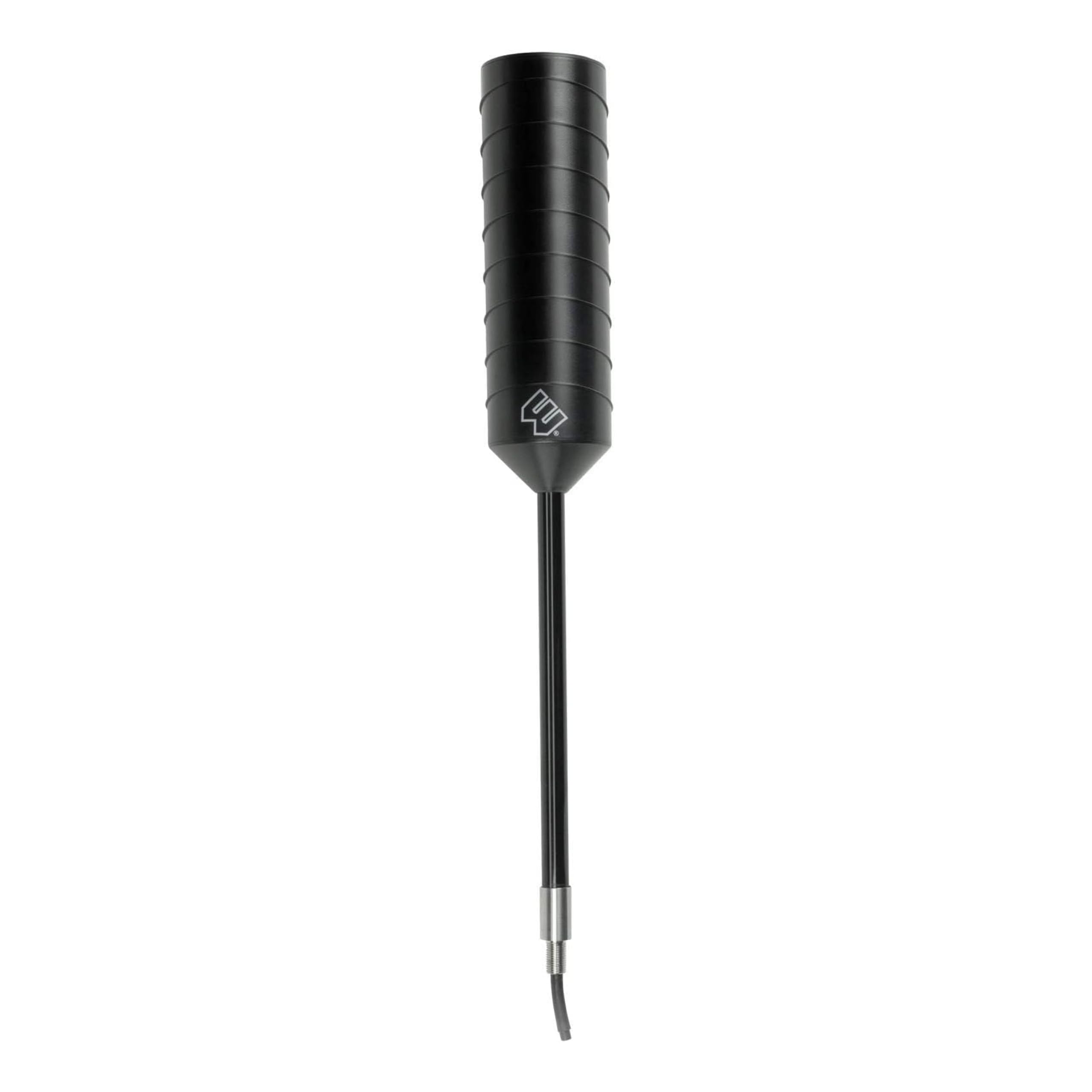
Built specifically for the long-haul trucking environment, the weBoost 4G-OTR is a heavy-duty omnidirectional antenna that extends from a compact 7.5 inches to a full 40 inches for maximum signal reach. It meets Mil-Spec 810H and NEMA IP66 standards, meaning it can survive rain, ice, dust, and the constant vibration of a semi-tractor. The kit includes mast extensions, a spring base, and a 16-foot low-loss cable.
Real-world reports from owner-operators are overwhelmingly positive. One user described restoring their work connectivity on the California coast, going from zero bars on Verizon to a full signal with 3.5 Mbps down, allowing them to work from the cab. Another long-haul driver noted that the antenna, when paired with a weBoost Drive Reach booster, tripled their Mint Mobile signal in both upload and download directions. The spring base is a critical feature—it absorbs the whipping action at highway speeds, though some users felt the included spring was undersized for the antenna’s weight and swapped it for a standard CB spring.
The antenna is designed specifically to pair with weBoost signal boosters (sold separately). It will not function as a passive antenna directly connected to a modem. The cable terminates in an FME connector, which then requires the booster’s pigtail to finish the connection to your device. If you are a trucker or overlander running a weBoost booster and need a battle-tested, extendable antenna, this is your unit.
Why it’s great
- Extends to 40 inches for superior signal reach on the road.
- Mil-Spec and IP66 rated for extreme durability.
- Includes everything needed for a semi-truck installation.
Good to know
- Requires a weBoost signal booster to function.
- The included spring mount may need an upgrade for heavy use.
6. Teltonika 5G/GNSS/Wi-Fi Combo Roof SMA Antenna (PR1KC640)
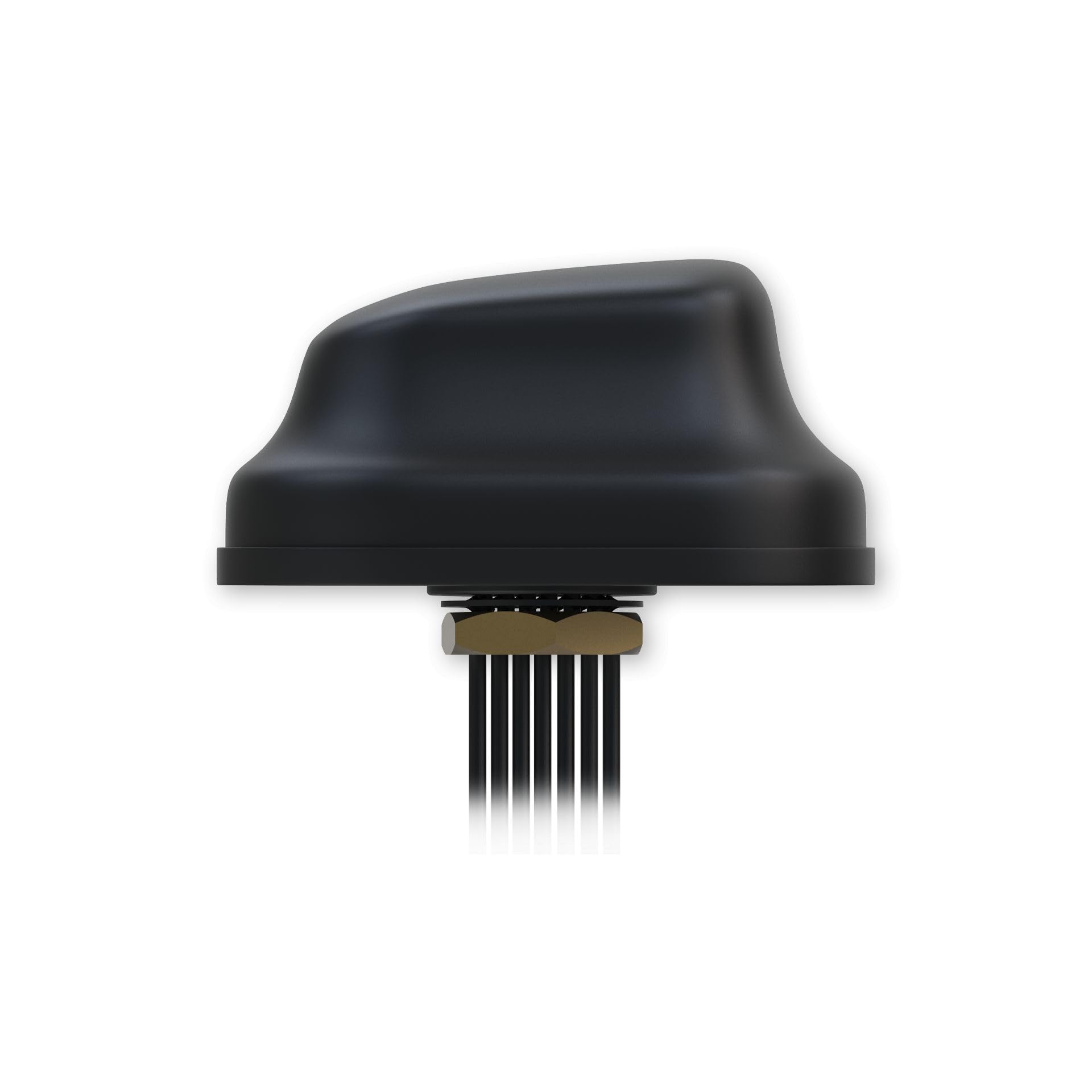
The Teltonika PR1KC640 is a clever piece of engineering that packs three essential radio functions into a single roof-mount housing: a 5G cellular antenna, a GNSS (GPS/GLONASS/Galileo) antenna, and a dual-band Wi-Fi antenna. This consolidation is a massive advantage for installations where roof real estate is limited, such as on vans, boats, or industrial vehicles that already have solar panels, fans, and other protrusions competing for space.
Specifically designed as a companion for Teltonika’s RUTX50 and RUTC50 industrial routers, the PR1KC640 comes with 5 meters (about 16.4 feet) of RG174 cables with SMA connectors. In tests against a higher-priced €300 competitor, users found the Teltonika’s performance equal or better in some metrics, particularly after trimming the cables to reduce loss. The black plastic radome is UV-stabilized, and users report excellent durability in marine environments.
The primary caveat is that the pre-terminated RG174 cables are relatively high-loss at 5G frequencies. For the best performance, you may want to shorten them significantly, as one user demonstrated by cutting them down to 50 cm for a camper installation where the router sat directly under the antenna. If you need a clean, all-in-one solution that keeps your roof clear of multiple separate antennas, this is an elegant choice.
Why it’s great
- Combines 5G, GNSS, and Wi-Fi in one compact housing.
- Ideal for preserving roof space on vans and boats.
- UV-resistant housing holds up well in sun exposure.
Good to know
- Included RG174 cables have high signal loss; best kept short.
- Best paired with Teltonika routers for guaranteed compatibility.
7. SIGNALPLUS Omni Directional 10dBi 4G/5G Antenna

The SIGNALPLUS Omni antenna disrupts the value equation by offering a 10 dBi gain omni for a fraction of the cost of other options. It covers the full 600-6000 MHz range and includes an N-Male to SMA-Male adapter, a TS-9 adapter, mounting hardware, and a 10-meter RG58 cable in the box. For an entry-level buyer just testing the waters of a vehicle antenna system, this all-inclusive package is hard to ignore.
Field reports from RV owners confirm it works. One user mounted it via a 40-inch arm to a TravlFi router in their trailer and found it outperformed a WeBoost system, rivaling Starlink at certain campsites for streaming. Another user with a metal roof saw a noticeable improvement in signal strength inside their home. The standout story: an overlander who combined it with a 40-inch mast and saw stable connections in remote areas where fiber was unavailable.
There are legitimate compromises at this price point. The RG58 cable, while functional, has higher loss than LMR-200, especially at 5G frequencies. Some users found the antenna did not solve their specific problem when paired with a finicky signal booster that needed a minimum input signal. Build quality feels less robust than the Proxicast or weBoost options, but for the money, it’s a remarkable entry point into better vehicle connectivity.
Why it’s great
- Excellent value with 10 dBi gain at an entry-level price.
- Includes cable, adapters, and mounting hardware outright.
- User reports show it can rival far more expensive setups.
Good to know
- RG58 cable introduces noticeable loss over longer runs.
- Build quality may not withstand years of constant outdoor exposure.
FAQ
Can I use a 5G vehicle antenna directly with my phone?
Does a longer antenna always mean better reception?
What happens if I use a 5G antenna with a 4G LTE booster?
Final Thoughts: The Verdict
For most users who need a rock-solid stationary or semi-stationary setup, the best cellular vehicle antenna 5g winner is the Waveform QuadPro because its 4×4 MIMO and high gain deliver unmatched speeds and reliability. If you need a rugged, foldable option for active overland travel with a weBoost booster, grab the weBoost Overland Antenna. And for a clean, low-profile 2×2 MIMO permanent install that won’t whistle on the highway, nothing beats the Proxicast ANT-121-M22.