
Concrete doesn’t stay perfect forever. Whether it’s the hairline stress cracks on a new patio or the widening gaps on an old driveway, every slab eventually needs a repair that actually holds. The problem is that most crack fillers fail because they shrink, peel, or wash out during the first freeze-thaw cycle, leaving you right back where you started.
I’m Min — the co-founder and writer behind Gadgets Feed. I’ve spent countless hours comparing polymer chemistries, waterproofing ratings, and cure-time data across dozens of concrete repair products to separate the temporary bandages from the long-term fixes..
Choosing the wrong product means wasting a weekend and watching your repair crumble within months. This guide breaks down the best formulations for every crack type so you can make a confident purchase. It’s everything you need to find the right best cement crack filler for a lasting, weatherproof repair that saves you from re-doing the work.
How To Choose The Best Cement Crack Filler
Choosing a cement crack filler isn’t about grabbing the first tube on the shelf. The biggest mistake DIYers make is using a rigid, non-flexible filler on a crack that moves with temperature changes. You need to match the material to the crack width, the surface slope, and the expected weather exposure.
Polyurethane vs. Acrylic vs. Thermoplastic Rubber
Polyurethane sealants like Sikaflex offer the highest elasticity and waterproofing, making them ideal for expansion joints and high-traffic slabs. Acrylic latex fillers are easier to apply and clean up with water but lack the long-term flexibility for deep, wide cracks. Thermoplastic rubber rods (melt-in style) provide a permanent, semi-rigid bond for asphalt and concrete but require a torch and practice to apply evenly.
Self-Leveling vs. Trowel-Grade vs. Pour-in Granules
Self-leveling liquids flow into horizontal cracks and form a smooth surface with no tooling, but they run off sloped areas. Trowel-grade compounds stay where you put them and work on vertical or angled surfaces. Pour-in granular fillers like the Magic Crack Filler use a water-activated setting process, which is incredibly simple for small, shallow stress cracks but less effective for deep structural gaps.
Quick Comparison
On smaller screens, swipe sideways to see the full table.
| Model | Category | Best For | Key Spec | Amazon |
|---|---|---|---|---|
| Sikaflex 1C SL (12-Pack) | Professional Polyurethane | Expansion joints & high-traffic slabs | +/- 25% movement elasticity | Amazon |
| Crack-Stix 125ft 1/2″ | Thermoplastic Rod | Asphalt & concrete deep cracks | 125 ft. length per box | Amazon |
| Akona Pourable Crack Filler | Pourable Liquid Mastic | Driveways & slabs (cracks up to 1/4″) | 1-hour dry time | Amazon |
| Dalton PLI-STIX 60ft (2-Pack) | Melt-In Rubber Rod | Watertight seals on small cracks | 100% watertight self-leveling seal | Amazon |
| Henry Driveway Elastomeric | Elastomeric Emulsion | Managing wide driveway cracks | EPDM rubber formulation | Amazon |
| MuzeFansi Cement Crack Sealant (2-Pack) | Polyurethane Gel | Waterproofing basements & slabs | 2-3 hour tack-free cure | Amazon |
| Magic Crack Filler Bottle (1.4 lb) | Granulated Pour-In | Small stress cracks in new concrete | Water-activated setting | Amazon |
In‑Depth Reviews
1. AWF PRO Sikaflex 1C SL (12-Pack)

Sikaflex is the industry standard for expansion joint repair, and the 1C SL formulation is the goldilocks of self-leveling sealants. It’s liquid enough to flow into a 1/4-inch gap without tooling, yet thick enough that it won’t run off a slight slope if you apply it with a steady hand. The +/- 25% movement rating means it flexes with concrete expansion in summer and contraction in winter without tearing.
The accelerated tack-free time is a real advantage on horizontal slabs — you can walk adjacent to the repair within hours, and the full cure delivers a tough, waterproof seal that resists UV aging and chemical corrosion. The 12-pack case gives you 120 ounces of material, which is substantial for large projects like warehouse floors, long sidewalk joints, or expansive patios. Just note that on any significant slope, gravity will pull the sealant downhill, so it’s best reserved for flat or nearly flat surfaces.
For the serious DIYer or contractor, this is the benchmark. It meets ASTM C-920 and Federal Specification TT-S-00230C, so you know the performance is verified. The cost per cartridge is higher, but the bond longevity and elasticity justify every penny when you consider that cheaper fillers will fail in a single season.
Why it’s great
- Exceptional elasticity handles seasonal slab movement
- Self-leveling saves time on horizontal joints
- Meets ASTM C-920 and federal specs — verified quality
Good to know
- Runs on sloped surfaces; not for angled driveways
- Best applied with a foam backer rod for deep cracks
2. Crack-Stix 125 Foot 1/2″ Blacktop Crack Filler

Crack-Stix takes a different approach: instead of a liquid that needs to set, you get a solid thermoplastic rubber rod that you melt into the crack using a propane torch or heat gun. The result is a permanent, watertight bond that hardens almost instantly — you can drive on it within minutes, not hours. This 125-foot spool gives you massive coverage for long driveways and large paved areas.
The material doesn’t shrink as it cools, and it bonds aggressively to both concrete and asphalt. Multiple users report it lasting several seasons without recracking, unlike cheaper rubberized caulks that soften in summer heat. The technique takes a little practice — you’ll want a helper and a steady hand to move the torch while feeding the rod — but once you nail it, the repair looks clean and performs like factory material.
Because it’s thermoplastic, the filler can be reheated and reflowed if you miss a spot. That flexibility is a massive advantage over acrylic-based fillers that form a skin but remain soft underneath. For deep cracks or joints, fill the void with sand or backer rod first to reduce the amount of material needed. This is a pro-level solution that pays for itself in durability.
Why it’s great
- Cures instantly upon cooling — no waiting days to drive
- Will not re-melt in summer heat like rubber caulk
- 125 feet of material covers long driveways
Good to know
- Requires a propane torch or heat gun
- Needs practice to apply smoothly without wasting material
3. Akona Gray Pourable Concrete Crack Filler (Gallon)

Akona’s pourable liquid mastic is the most straightforward solution for horizontal cracks up to 1/4 inch wide and 1/4 inch deep. You simply shake the gallon jug, snip the tip, and pour directly into the crack — no mixing, no torch, no trowel. One gallon covers 160 linear feet at the target dimensions, making it extremely cost-effective for a standard driveway or sidewalk project.
The 1-hour dry time is genuinely useful for weekend repairs. You can fill a series of cracks in the morning and walk on the slab by afternoon. The cured material matches light gray concrete well, blending in better than black asphalt fillers. Users consistently note that leftover sealant in the jug stays liquid for at least a year, meaning you can store it for future touch-ups without the product hardening in the container.
That said, this is a rigid mastic, not an elastomeric sealant. On moving cracks or in freeze-thaw climates, it may re-crack if the underlying concrete shifts. For hairline stress cracks or non-structural repairs, it’s an excellent quick fix. But for active expansion joints or wide gaps, you’ll want a more flexible alternative like the Sikaflex or a melt-in rod.
Why it’s great
- Incredibly easy pour-and-go application — no tools needed
- Dries in 1 hour for same-day use of the surface
- 160 linear feet per gallon is outstanding coverage
Good to know
- Not flexible — may re-crack on moving joints
- Requires forearm strength to squeeze the thick liquid out
4. Dalton Enterprises PLI-STIX 60 Ft. (2-Pack)
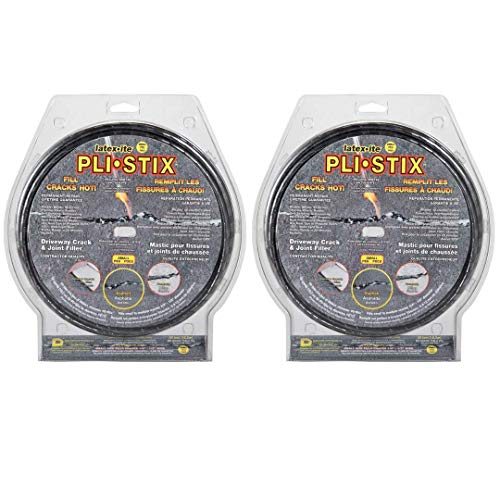
PLI-STIX is another contractor-grade melt-in filler, but it’s designed specifically for smaller cracks (up to 1/4 inch wide) where you want a 100% watertight seal. The 60-foot total length across two rods is perfect for a standard single-car driveway or a sidewalk section. The material is a thermoplastic rubber that, once heated, self-levels into the crack and bonds permanently to both concrete and asphalt.
Users consistently praise the adhesion quality — one reviewer noted the bond is “tighter than latex/acrylic.” The seal remains flexible enough to survive winter freezing without cracking, but rigid enough to stay in place under vehicle weight. Because it’s a solid rod, there’s no liquid spill or over-pour mess. Just be mindful that the advertised 60 feet may vary slightly (one buyer received only 52 feet), so plan for a little less coverage than the package states.
The process is labor-intensive: you need to cut short lengths (1-5 inches), melt them into the crack with a heat gun, and smooth them. For trouble areas, it can take 5 hours for a full repair. However, the result is a permanent bond that far outlasts any caulk or liquid filler. This is the right choice if you want to fill a crack once and forget about it for several years.
Why it’s great
- 100% watertight seal that lasts through winters
- Self-levels when heated for a smooth finish
- Bonds to both concrete and asphalt without primers
Good to know
- Advertised length may vary; measure your job
- Tedious application — better for small, precise repairs
5. Henry Driveway Elastomeric Emulsion Crack Filler

Henry’s elastomeric emulsion is a thin, brushable liquid made from EPDM rubber. It’s designed to be poured into a cup and painted into cracks with a brush, giving you precise control over depth and coverage. The material dries to a bright black finish in about 10 minutes, making it one of the fastest-setting options on this list. It’s well-suited for managing long, shallow driveway cracks where a thick caulk would be wasteful.
The rubber formulation remains flexible after curing, so it can handle moderate slab movement without splitting. However, the thin consistency means it spreads easily, so deep cracks will require multiple brush applications to build up the fill. The product is also vulnerable to rain if humidity is high — it needs at least 24 hours of dry weather to fully set, and 3-4 consecutive dry days are better for a durable repair.
For the price, this is a solid choice for maintenance-level crack management. It won’t fill a 1/2-inch gap in one go, and it requires patience with the brush technique. But for a cost-effective way to slow down crack propagation on an aging driveway, it gets the job done. The 8-pound container holds plenty of material for multiple sessions.
Why it’s great
- Dries in 10 minutes to a clean black finish
- Brushable application provides precise control
- EPDM rubber stays flexible through temperature swings
Good to know
- Thin consistency requires multiple coats for deep cracks
- Needs 24+ hours of dry weather to cure fully
6. MuzeFansi Cement Crack Sealant (2-Pack)
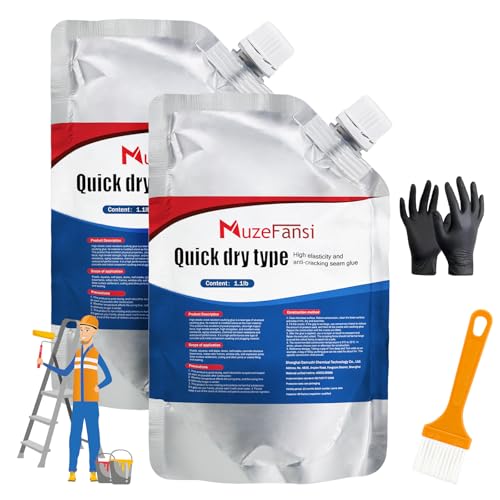
The MuzeFansi 2-pack delivers a polyurethane gel that’s designed for both indoor and outdoor waterproofing. It comes with a standard caulking nozzle, brush, and gloves, so you have everything needed for a clean application. The gel cures tack-free in 2-3 hours and fully hardens within 24-48 hours, which is competitive for a polyurethane-based product at this price point.
Users report it works well for sealing basement cracks after heavy rain and for filling expansion joints on concrete slabs. The self-leveling properties mean it flows into the crack and smooths out without heavy tooling. However, the consistency is on the thicker side — it won’t run like water but it also doesn’t flow as easily as premium polyurethanes like Sikaflex. One common complaint is that getting the last 1/3 of the material out of the pouch can be a struggle.
For smaller jobs like a single garage floor crack or a handful of sidewalk joints, this 2-pack is a solid value. The included accessories (nozzle, brush, gloves) remove the need for extra purchases. Just be aware that the material is grey, so it won’t blend perfectly with every concrete color. If you need a tan or limestone match, look at the Sikaflex options instead.
Why it’s great
- Fast 2-3 hour tack-free cure for quick access
- Includes nozzle, brush, and gloves in the kit
- Good waterproofing performance after heavy rain
Good to know
- Thicker consistency doesn’t flow as freely as premium brands
- Pouch can be difficult to empty completely
7. Magic Crack Filler Bottle (1.4 lb)
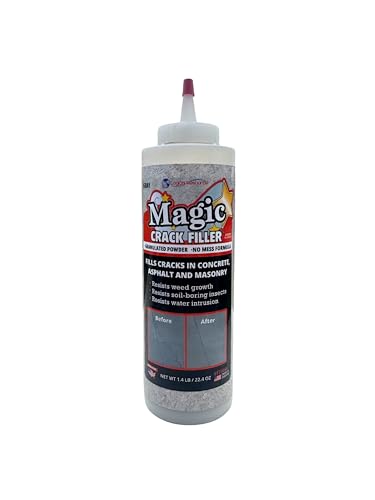
Magic Crack Filler takes the simplest possible approach: pour a granulated powder into the crack, spritz with water, and walk away. The powder absorbs the water and sets into a solid, weather-resistant fill that blends surprisingly well with gray concrete. It’s incredibly forgiving for first-time users — there’s no mixing ratio to get wrong and no heat gun to fumble with.
Multiple reviewers confirm it holds up for months through rain and freezing temperatures, with no peeling or cracking. The color match to concrete is excellent, and even after drying, the filler remains a close visual match to the surrounding slab. One clever tip from a user: use a rubber mallet to settle the powder into the crack before adding water, then refill and spritz again for a dense, solid repair.
The catch is that this is designed for small stress cracks — think hairline to 1/4-inch wide, not gaping 1-inch fissures. It’s also not elastomeric, so it won’t flex with major slab movement. For the price, it’s a fantastic quick-fix option for patios, walkways, and new concrete that has developed minor cracks. It’s the easiest product to store and reapply, making it a great backup to have on hand.
Why it’s great
- Absurdly simple — just pour, spray, and set
- Excellent color match to gray concrete
- Weather-resistant through freeze-thaw cycles
Good to know
- Not for deep or wide structural cracks
- Lacks flexibility for moving joints; best for stable slabs
FAQ
Can I use a self-leveling filler on a sloped driveway?
How do I prepare a crack before applying a polyurethane sealant?
Final Thoughts: The Verdict
For most users, the best cement crack filler winner is the AWF PRO Sikaflex 1C SL (12-Pack) because its +/- 25% movement elasticity and rapid cure time handle the widest range of concrete repairs with professional-grade reliability. If you want a fast, no-torch solution for straight forward driveway cracks, grab the Akona Pourable Concrete Crack Filler. And for deep asphalt or concrete gaps where you need a permanent, weather-proof bond, nothing beats the Crack-Stix 125 Foot Melt-In Rod.