
Mixing concrete by hand with a shovel in a wheelbarrow is a fast track to a sore back, inconsistent batches, and wasted material. For any project beyond a single bag of quick-set, a dedicated cement mixer transforms the job — delivering a uniform, workable mix every time and cutting your labor time by more than half.
I’m Min — the co-founder and writer behind Gadgets Feed. I’ve spent countless hours analyzing motor specs, drum capacities, build quality, and real-world owner feedback across the full range of electric cement mixers to separate the durable workhorses from the disposable junk.
Whether you are pouring footers for a shed, laying a patio, or mixing stucco for a renovation, the right machine saves your back and your schedule. This guide breaks down the top options to help you find the best cement mixer for your specific project size and budget.
How To Choose The Best Cement Mixer
Selecting the right mixer comes down to three variables: the volume of concrete you need per batch, the frequency of use, and the jobsite conditions. A unit that is too small forces multiple batches, adding time and fatigue. A unit that is too heavy or underpowered creates frustration. Match the machine to your actual workload.
Drum Volume and Batch Capacity
A mixer’s listed cubic-foot drum volume is not the same as its usable batch capacity. A 4.0 cubic-foot drum typically handles one 80-pound bag of premix concrete per batch — about 0.6 cubic feet of finished concrete. For larger pours, a 5.0 cubic-foot drum can mix two 80-pound bags at once, doubling your hourly output. Always check real-user reports on how many bags the drum actually handles without spillage.
Motor Power and Drive System
Motors in this category range from 1/3 HP (around 250W) to 1/2 HP (375W) and beyond. More wattage means the motor is less likely to stall when mixing stiff, low-slump concrete. Direct-drive systems are simpler and more reliable than belt-driven alternatives, which can slip or wear out. A 500W to 650W motor provides a solid safety margin for frequent use with heavy loads.
Drum Material: Steel vs. Polyethylene
Steel drums are traditional and durable, but they are heavy and prone to rust if not cleaned immediately. The interior paint on budget steel drums can chip off into the mix, which is a dealbreaker for finish work. Polyethylene (poly) drums are lighter, resist corrosion, and clean up faster with a simple hose-out, but they can warp slightly if stored in direct sunlight. Poly drums are the better choice for homeowners and light commercial use.
Quick Comparison
On smaller screens, swipe sideways to see the full table.
| Model | Category | Best For | Key Spec | Amazon |
|---|---|---|---|---|
| BILT HARD 4 Cu.Ft. Poly Drum | Premium | Homeowners & finish work | 500W motor, poly drum | Amazon |
| BILT HARD 4 Cu.Ft. Steel | Premium | Heavy residential use | 550W motor, steel drum | Amazon |
| SPECRAFT 4.9 Cu.Ft. | Mid-Range | Wheelbarrow-style portability | 375W motor, 4.9 cu.ft drum | Amazon |
| Fujampe Generic 4.2 Cu.Ft. | Mid-Range | Value & proven longevity | 1/2 HP motor, 36 RPM | Amazon |
| Bosch GBM9-16 Mixer | Premium | Bucket mixing & plaster | 9.0 Amp motor, 5/8″ chuck | Amazon |
| Milwaukee M18 FUEL Mud Mixer | Premium | Remote-site portability | 18V cordless, 100 RPM | Amazon |
| ZeHuoGe 5 Cu.Ft. | Mid-Range | Large batch volume | 2/3 HP motor, 5 cu.ft drum | Amazon |
| SPOWAY 5.0 Cu.Ft. | Budget | Low-cost large drum | 650W motor, 5 cu.ft drum | Amazon |
| ZeHuoGe 3 Cu.Ft. | Budget | Entry-level small projects | 1/3 HP motor, 3 cu.ft drum | Amazon |
In‑Depth Reviews
1. BILT HARD Cement Mixer 4 Cu.Ft. Portable Electric Poly Drum

The BILT HARD poly-drum model is the smartest choice for most homeowners because it eliminates the two biggest headaches of steel-drum mixers: rust and paint chipping. The 500W motor spins the drum at 24 RPM — slower than some, but that lower speed reduces splashing and produces a more consistent blend. The 4.0 cubic-foot drum comfortably handles two 60-pound bags per cycle, and the poly drum rinses clean in under a minute.
Portability is a standout feature here. The 10-inch flat-free tires never need inflation, and the wheelbarrow-style frame with a low dump profile makes it easy to pour directly into forms or a wheelbarrow. Users consistently report that the poly drum resists the denting and cracking that plague cheaper sheet-metal drums. The 500W motor stays cool even after running continuously for half a day on slab pours.
Assembly is straightforward with labeled hardware, though the plastic drum may arrive slightly out of round — a common manufacturing quirk that typically does not affect performance. This unit is not suited for mixing more than three 60-pound bags at a time, but for residential projects up to a small patio or shed foundation, it delivers unmatched ease of use and cleanup.
Why it’s great
- Poly drum is rust-proof and effortless to clean
- Flat-free tires mean zero maintenance
- Low dump profile makes pouring easy
Good to know
- Not designed for more than 2–3 bags per batch
- Plastic drum can arrive slightly out of round
2. BILT HARD Cement Mixer 4 Cu.Ft. Steel Drum

If you prefer a traditional steel drum and need a bit more muscle, the BILT HARD steel version upgrades to a 550W motor that powers through stiff concrete mixes without bogging down. The steel drum has a powder-coat finish that resists corrosion, though you still need to hose it out promptly after each use. The 4.0 cubic-foot capacity is identical to the poly version, but the steel drum adds about 10 pounds to the overall weight — 90.4 pounds total.
The triangular steel stand provides excellent stability during mixing, and the two 9-inch wheels are adequate for moving across flat ground. Users have noted that this unit handles 10-plus hours of continuous mixing without the motor overheating, making it a legitimate option for larger residential projects. The 26.7 RPM drum speed is a touch faster than the poly model, which helps when mixing stucco and mortar.
Assembly is manageable with the included step-by-step manual, and the labeled parts help avoid confusion. If you are willing to rinse the drum after every job, this steel mixer offers greater long-term durability for frequent, heavy use.
Why it’s great
- 550W motor handles stiff mixes reliably
- Steel drum with powder-coat resists rust
- Triangular stand offers great stability
Good to know
- Steel drum requires immediate cleanup to prevent rust
- Frame can flex under max loads
3. SPECRAFT Electric Cement Mixer, 4.9 Cu.Ft.
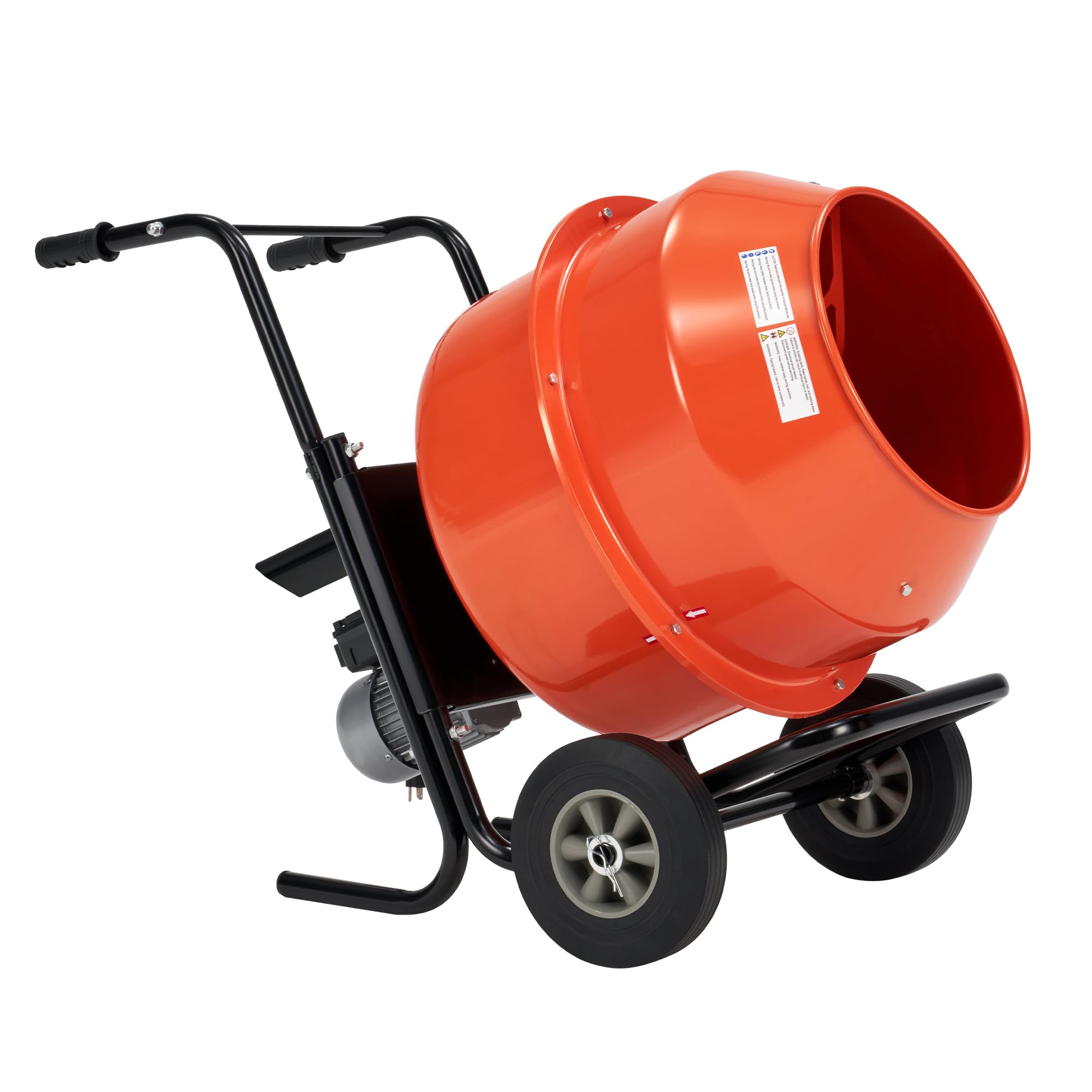
The SPECRAFT 4.9 Cu.Ft. mixer offers the largest drum in the mid-range tier at a competitive price, making it ideal for anyone who needs to batch out larger volumes without jumping to a premium price point. The 375W motor runs at 29.5 RPM, which is well-suited for concrete and mortar. The wheelbarrow-style frame transforms the mixer into a mobile cart — you load it at the stack, mix on site, and wheel it to the pour location.
The Q235 steel construction with rust-resistant coating adds real durability for outdoor storage. The 140L (4.9 cu.ft.) drum has a smooth interior that reduces material buildup, and the 22.4-inch opening makes bag loading effortless. Users report that it mixes three 60-pound bags at a time without issue. The motor is rated for light commercial use, though it lacks the raw torque of higher-wattage competitors.
Some owners have noted that the paint on the drum can peel early, so expect to touch up the interior if you use it heavily. The assembly is straightforward, though the instruction manual could be clearer. If you prioritize batch size per dollar and want a mobile design that doubles as a wheelbarrow, this SPECRAFT mixer is a solid value pick.
Why it’s great
- Largest drum in its price range (4.9 cu.ft.)
- Wheelbarrow frame improves jobsite mobility
- Reinforced Q235 steel for outdoor durability
Good to know
- Paint on interior drum may peel over time
- 375W motor lacks reserve torque for heavy loads
4. Fujampe Generic Portable 4.2 Cu.Ft. Cement Mixer

The Fujampe Generic 4.2 Cu.Ft. mixer has built a reputation for surprising longevity at a mid-range price point. The 1/2 HP motor drives the drum at a fast 36 RPM — noticeably quicker than the 24–30 RPM common on competitors. That speed helps churn through batches faster, though it can cause more splashing if you overload the drum. The alloy steel construction feels solid, and the triangular stand with wheels provides stability.
User reports indicate that this unit can last three years or more of regular heavy use — a strong indicator of build quality. It handles premix bags and Portland cement/sand blends equally well, performing reliably in hot and cold conditions. The non-slip handle with a safety lock keeps the drum in position during pouring. Cleanup is straightforward with a hose, though the steel drum requires the same prompt rinsing as any steel unit.
The assembly process is more involved than average, taking about two hours, and the belt-driven system can slip if the sheet metal flexes during installation. Some units arrive with minor alignment issues that require a washer spacer to fix. If you are comfortable with a bit of mechanical tinkering, this mixer offers exceptional value and proven longevity for the price.
Why it’s great
- 36 RPM drum speed is faster than most competitors
- Proven to last 3+ years with heavy use
- Alloy steel frame is durable and stable
Good to know
- Belt-driven system can slip if not aligned perfectly
- Assembly requires patience and mechanical aptitude
5. Bosch GBM9-16 9 Amp 5/8 Inch Mixer with D-Handle

The Bosch GBM9-16 is not a drum mixer — it is a heavy-duty paddle mixer designed for mixing thin-set, plaster, stucco, and concrete directly in a 5-gallon bucket. The 9.0 amp motor generates exceptional torque, and the variable-speed trigger gives you full control over the mixing action. The 360-degree rotating D-handle allows you to maintain a natural wrist angle, reducing fatigue during long mixing sessions and preventing wrist injury if the paddle snags.
The 5/8-inch keyed chuck accepts standard mixing paddles, and the 8-foot rubber cord with a grounded plug offers good reach on the jobsite. It is particularly effective for mixing marmorino plaster and other finish materials where a consistent, lump-free blend is critical.
This is not a solution for bulk concrete pours. You are limited to bucket-sized batches, and the tool requires a firm grip to control the reaction torque. But for finish work, tile mortar, and small concrete repairs, the Bosch GBM9-16 outperforms any drum mixer in terms of mix quality and portability.
Why it’s great
- 9.0 amp motor provides excellent torque for thick mixes
- Rotating D-handle reduces wrist strain and improves safety
- Proven daily-use durability over years
Good to know
- Limited to bucket-sized batches
- Requires a firm grip to control torque reaction
6. Milwaukee M18 FUEL Mud Mixer (Bare Tool)
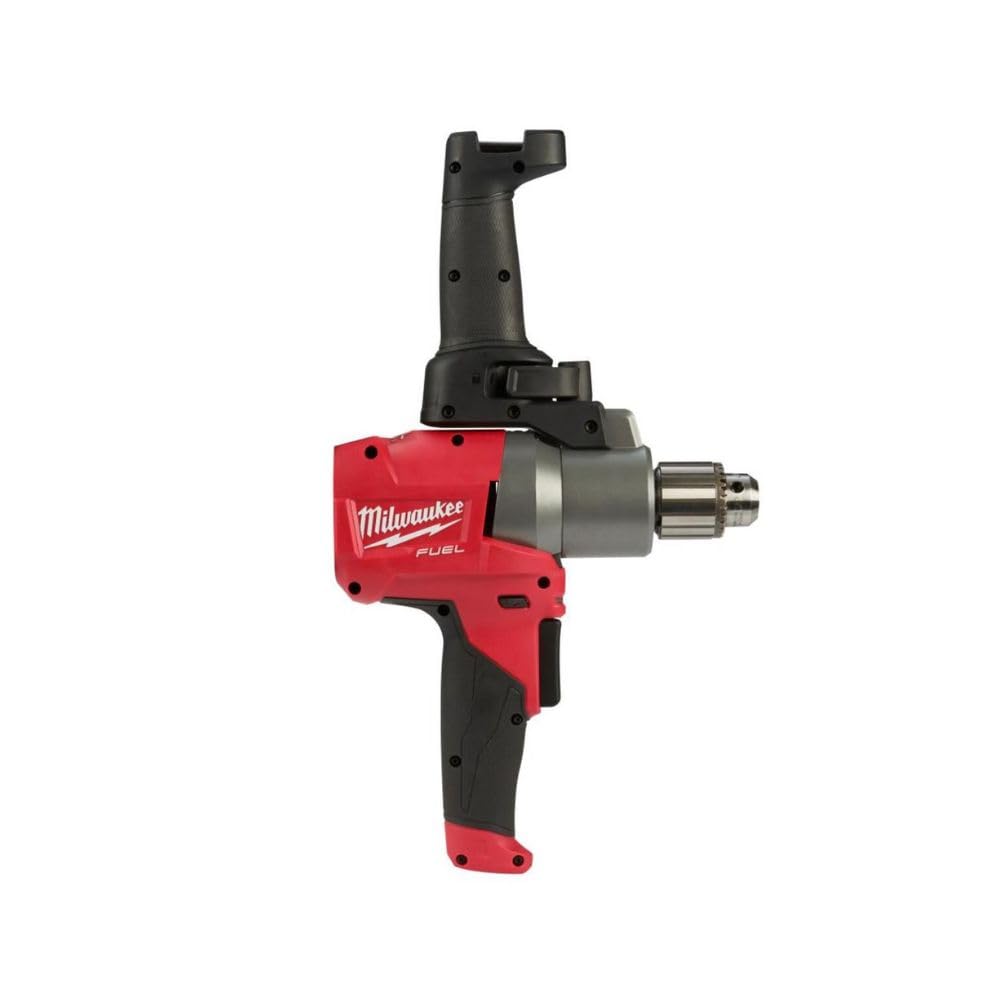
The Milwaukee M18 FUEL Mud Mixer is the ultimate choice for jobsites without power. As a bare tool, it requires an M18 battery (not included), but the cordless freedom is transformative for remote work — trench footings, mountain cabins, or any site where dragging a generator is impractical. The dial-limited top speed of 100 RPM prevents splashing and gives you precise control over the mixing process.
Users report that a single 6.0Ah battery can mix roughly 25 buckets of mortar or concrete — enough for a full day of tile setting. The M18 FUEL platform delivers impressive torque for a battery-powered tool, handling two 60-pound bags of concrete in a 15-gallon bucket without stalling. The stainless steel build resists corrosion from wet materials, and the overall weight of just 7.1 pounds makes it easy to handle for extended periods.
This is not a tool for bulk foundation pours. You are mixing bucket by bucket, which adds time for large slabs. The lack of a cord means you must keep spare batteries charged and cycled. For contractors and serious DIYers who already own M18 batteries, this is the most versatile mixing tool money can buy — it delivers professional-grade mixing anywhere.
Why it’s great
- True cordless freedom for remote jobsites
- 100 RPM speed limit prevents splashing
- Lightweight at 7.1 pounds
Good to know
- Bare tool — requires M18 battery and charger
- Only suitable for bucket-sized batches
7. ZeHuoGe 5 Cu.Ft. Electric Cement Mixer

The ZeHuoGe 5 Cu.Ft. is the largest drum among the mid-range picks, offering a genuine 5 cubic feet of volume that allows you to mix up to four 80-pound bags per batch. The 2/3 HP (3.5A) motor provides adequate torque for these heavy loads, and the direct-drive system eliminates belt-related maintenance. The cast-iron drum and heavy-duty steel frame give it a solid, premium feel at a mid-range price point.
The adjustable tilt angle and foot-pedal safety locks add a layer of convenience and security when pouring. The 7-inch wheels are larger than the 6-inch wheels on the 3 cu.ft. sibling, making it easier to move across rougher terrain. This is the best pick if you are pouring a slab or a large footing and want to minimize the number of batches you have to run.
The trade-off is weight — at 106 pounds, this is a heavy machine to maneuver. The assembly instructions are notoriously poor, with mismatched diagrams and missing steps, and some units arrive with internal wiring issues or drum leaks that require sealing with silicone. If you are willing to work through the setup frustrations and perform a bit of remedial assembly, the batch capacity is unmatched at this price.
Why it’s great
- Mixes four 80-pound bags per batch
- Cast-iron drum and steel frame are very durable
- Direct-drive motor requires no belt maintenance
Good to know
- Very heavy at 106 pounds
- Assembly instructions are poor; may need initial fixes
8. SPOWAY 5.0 Cu.Ft. Electric Cement Mixer
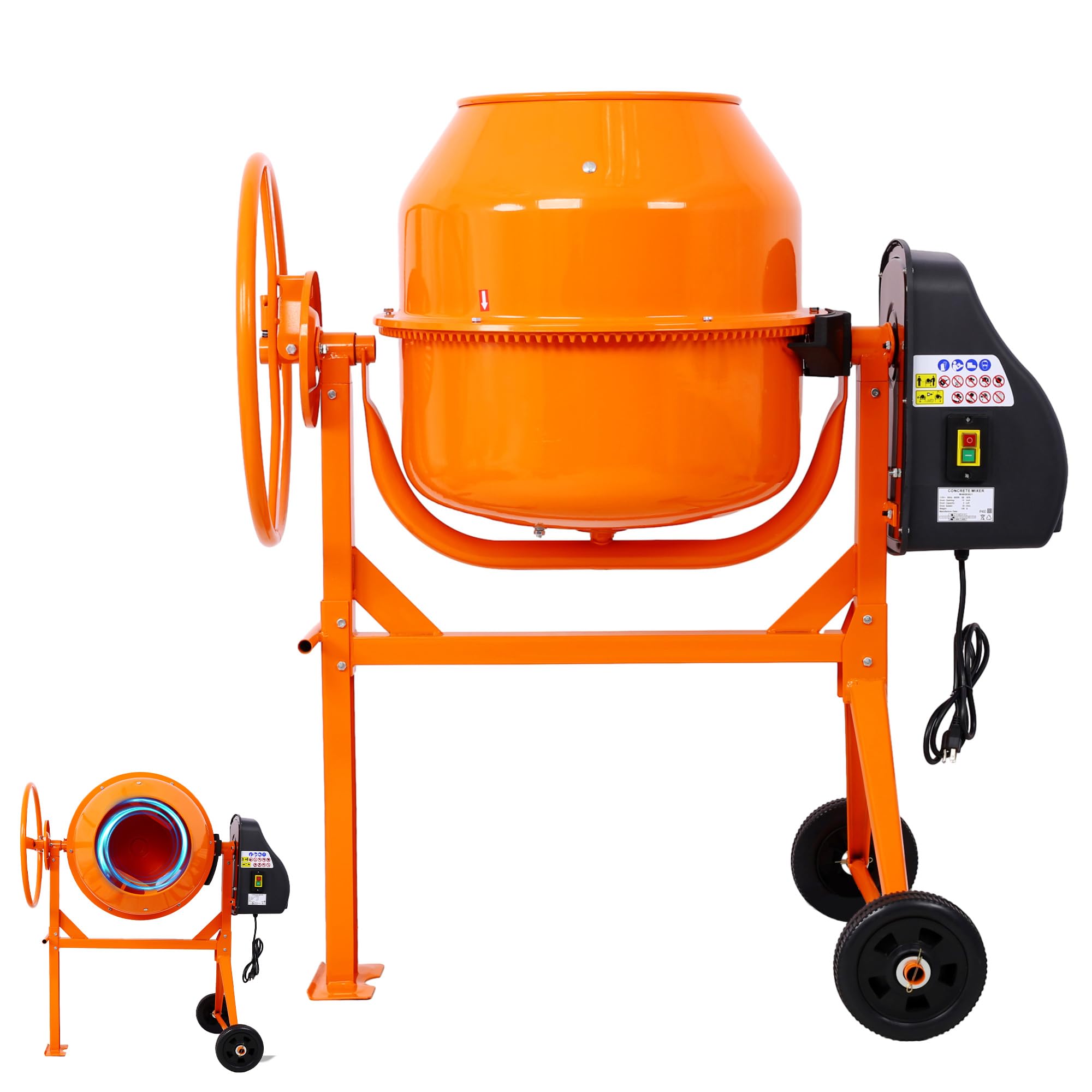
The SPOWAY 5.0 Cu.Ft. mixer offers the largest drum in the budget tier, pairing a 650W motor with a 5.0 cubic-foot capacity. On paper, this looks like a screaming deal for big-batch mixing. The 650W motor is one of the highest wattage ratings among all mixers tested here, suggesting it should handle stiff loads without breaking a sweat. The portable design includes wheels and a stand for basic mobility.
In practice, the SPOWAY suffers from a critical quality-control issue: the interior paint on the drum chips off after just three to four bags of concrete. For rough fill or non-finish work, this is merely annoying, but for any exposed concrete, it is a dealbreaker. There are also reports of the motor failing after around 60 bags of use, suggesting the motor may not be built to the same standard as the wattage rating implies.
If you need a cheap mixer for a single small project where appearance does not matter and you can tolerate the risk of early failure, the SPOWAY will get the job done. For any project where finish quality or reliability matters, the paint chipping and motor longevity issues make it a riskier choice than the mid-range alternatives.
Why it’s great
- Large 5.0 cu.ft. drum at a budget price
- High 650W motor wattage
- Portable with wheels and stand
Good to know
- Interior paint chips into the concrete
- Reports of motor failure after ~60 bags
9. ZeHuoGe 3 Cu.Ft. Electric Cement Mixer

The ZeHuoGe 3 Cu.Ft. is the smallest and most affordable true drum mixer in this lineup, designed for light-duty jobs like mixing mortar for block walls, stucco patches, or small concrete pours. The 1/3 HP motor is adequate for batches of up to four 80-pound bags, though the smaller drum means you will be running more cycles for larger projects. The cast-iron drum and steel frame feel robust for the price.
Users appreciate the 650W motor for its consistent performance on medium-sized building projects and farm tasks. The safety lock on each foot pedal adds stability during operation, and the two 6-inch wheels make it possible to move the unit around a flat jobsite. It handles not only concrete and mortar but also seed inoculation and feed mixing, adding versatility for farm use.
The same assembly frustrations that plague the larger 5 cu.ft. sibling apply here: poor instructions, mismatched hardware in the diagrams, and potential wiring issues out of the box. Some units arrive with drum leaks that require silicone sealant. This mixer is best suited for the budget-conscious DIYer who is comfortable with basic tool assembly and wants to upgrade from hand-mixing without a large investment.
Why it’s great
- Lowest entry price for a drum mixer
- Cast-iron drum and steel frame are durable
- Versatile for concrete, mortar, and feed mixing
Good to know
- Poor assembly instructions and missing parts are common
- Drum leaks reported; may need silicone sealant
FAQ
How many 80-pound bags of concrete can a 4 cu.ft. mixer handle per batch?
Is a steel drum mixer better than a poly drum mixer?
Why does my new cement mixer leak from the drum?
Final Thoughts: The Verdict
For most users, the best cement mixer winner is the BILT HARD 4 Cu.Ft. Poly Drum because it combines a rust-proof poly drum, a reliable 500W motor, and flat-free tires in a package that is easy to use and clean. If you want maximum batch volume for large pours, grab the ZeHuoGe 5 Cu.Ft. despite its assembly quirks. And for cordless freedom on remote jobsites, nothing beats the Milwaukee M18 FUEL Mud Mixer.