
Our readers keep the lights on and my morning glass full of iced black tea. As an Amazon Associate, I earn from qualifying purchases.
Specs are compiled from manufacturer listings and verified buyer reviews and can change over time — please confirm the key details on the product page before buying.
Getting centipede grass seed to actually sprout — not just sit there — often depends on two things: how the seed is coated and whether you can keep it wet long enough. This guide sorts through your options so you pick the bag that matches your soil, your patience, and your yard size.
I’m Min — the founder and writer behind Gadgets Feed. This guide is built by comparing the manufacturers’ published specifications and the patterns across verified customer reviews, so you get each pick’s real strengths and trade-offs instead of marketing spin.
Whether you are planting a new lawn from scratch or filling in bare patches, the best centipede grass seed depends on coverage, germination rate, and how much prep you are willing to do.
Quick Picks
- Centipede Grass Seed 5 Pound (Gulf Kist Seed) — Best Overall
- TifBlair Centipede Grass Seed (1 Lb.) Direct from The Farm — Certified Quality
- Lawnifi Santee Centipede Grass Seeds for Lawn, 2 lbs Covers 4,000 Sq Ft — Top Performer
- Centipede Grass Seeds “Tifblair Certified” 1 LB – 4000 Sq. Ft. Coverage — Budget Champion
How To Choose The Best Centipede Grass Seed
Centipede grass is a warm-season turf that loves sandy, acidic soil and needs less fertilizer than Bermuda or St. Augustine. But its seed is tiny and demands consistent moisture and soil contact. Here is what separates a thick lawn from a lost season.
Coverage Rate and How It Relates to Seed Coating
Bags label coverage in square feet — usually 4,000 to 20,000 — but that number assumes you spread the seed at the recommended rate. Some seeds come with a coating (a clay or polymer shell) that adds weight but helps the seed hold moisture. Heavier seeds per pound mean the bag covers less area, but the germination rate is often higher because the coating protects the tiny seed from drying out.
Germination Time and Water Commitment
Centipede seed needs to stay constantly damp for 7 to 14 days in soil that is at least 70°F. If you miss a day of watering during that window, the small embryo dies. Buyers who succeed usually water twice daily for at least two weeks, and many cover the seed with a light layer of topsoil or peat moss to keep it from washing away or baking.
Soil Prep and Seed-to-Soil Contact
You cannot just toss centipede seed on the ground and walk away. The seed needs direct contact with loosened soil. Reviewers who got dense stands tilled or raked the area first, then rolled or walked over it to press the seed in. Many also covered the seed with about a quarter-inch of dirt — uncovered seed often produced zero results.
Certified vs Non-Certified Seed
Labels like “Certified” or “Direct from The Farm” mean the seed has passed a check for purity, weed content, and germination percentage. Certified seed costs more upfront but avoids the weed problems and blank patches that come with cheaper, unlabeled blends.
Quick Comparison
On smaller screens, swipe sideways to see the full table.
| Model | Best For | Coverage | Weight | Germination Reports | Amazon |
|---|---|---|---|---|---|
| Centipede Grass Seed 5 Pound | Large new lawns | 20,000 sq ft | 5 lb (80 oz) | 100% germination in 7 days in one review | Amazon |
| Lawnifi Santee Centipede Grass Seeds | Drought-tolerant patches | 4,000 sq ft | 2 lb (32 oz) | Mixed — some saw nothing | Amazon |
| TifBlair Centipede Grass Seed (1 Lb.) Direct from The Farm | Certified quality for small areas | 4,000 sq ft | 1 lb (16 oz) | 70-75% typical; excellent when covered | Amazon |
| Centipede Grass Seeds “Tifblair Certified” 1 LB | Rejuvenating existing centipede | 4,000 sq ft | 1 lb (16 oz) | Mixed — zero to excellent | Amazon |
In‑Depth Reviews
1. Centipede Grass Seed 5 Pound (Gulf Kist Seed)

The 5-pound bag that one buyer called “100% successful” in just seven days.
This is the bulk option for anyone starting a large centipede lawn from scratch. You get 80 ounces (5 pounds) of coated seed — a clay or polymer shell around each seed — designed to improve germination and survivability without any mulch mixed in. According to Gulf Kist, it covers up to 20,000 square feet, which is roughly a half-acre. One buyer who used the full bag on 900 sq ft got such thick growth they regretted not buying four bags. For the sheer volume, it comes in at 5 pounds versus the 1-pound TifBlair unit, making it the bigger buy per bag.
The catch is the watering commitment. One reviewer who saw sprouts in ten days watered four times daily for ten straight days. And it is not simple to use — two buyers in North Carolina reported zero germination despite fresh topsoil and daily watering, one even after a second bag failed. The product works best in sandy soil (it is formulated for that) in USDA Hardiness Zone 8. If your soil stays damp naturally or you can set up an irrigation timer, this is the best value for coverage depth.
Buyers report that after three weeks some saw only a bread-plate-sized patch of sprouts, which points to how sensitive centipede is to seed-to-soil contact. Unlike the Lawnifi Santee, which some said did not germinate even after 14 days of daily watering, one user of this Gulf Kist bag reported 100% germination in 7 days and noted it outperformed Scott’s seed, which had only 5% germination. That is a huge swing — perfect conditions produce a dense stand, but one dry day and you lose the whole batch.
The biggest pour of seed you can get: At 5 lb, this covers more ground in a single bag than any other pick. Ideal for a whole-yard overhaul in warm sandy soil.
The narrow window of success: Watering gaps kill germination fast. If you cannot commit to daily watering for two weeks, a smaller bag from a different brand may be less risky.
Reach for this if: You own a large yard (up to 20,000 sq ft) that gets full sun and you can water consistently for two to four weeks.
Look elsewhere if: Your yard has shade or you cannot irrigate daily all summer long.
2. TifBlair Centipede Grass Seed (1 Lb.) Direct from The Farm
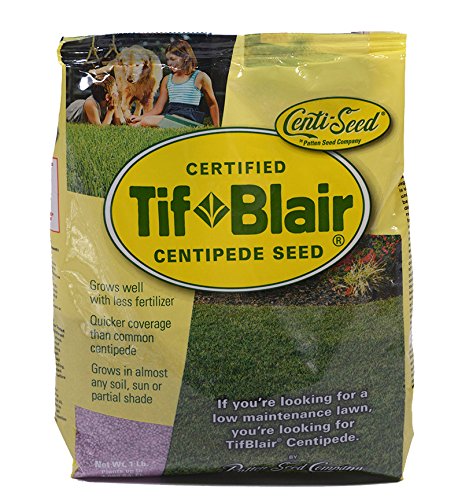
Heirloom seed from the farm that insists on being kept wet and covered.
This is organic, heirloom seed from Patten Seed Company, shipped directly from the farm. It is drought tolerant (needs less water once mature) down the road, but getting it started requires precision. The most detailed buyer story came from Chattanooga, where someone planted in late August and saw high germination — but only when the seed was covered with a quarter-inch of dirt and kept constantly wet. Uncovered seed produced poor results. That same buyer noted it stayed green longer than Bermuda well into November, then survived winter and returned in spring sending out stolons (the above-ground runners that spread the grass). It is a top-end choice for anyone targeting full certification and organic material.
The heavier the prep, the better the outcome. Another buyer over-seeded a 5-by-15-foot spot and saw germination visible on day seven, watering two to four times daily. They were so pleased they planned to order the 5-pound bag — but noted the seeds are tiny and coated, which means you need a careful spreader setting. At the same time, one professional-grade reviewer reported a 70-75% germination rate and was initially disappointed, but then noted the grass that came up started to destroy crabgrass and other weeds, so they ended up satisfied overall. That separates it from the Tifblair Certified below, where some buyers hit zero. It is slightly more reliable when you follow instructions.
A key difference from the bulk Gulf Kist 5-pound bag: this is a single pound (16 ounces), so you cover maybe a quarter of the area. But the organic certification and heirloom lineage matter if you are trying to avoid chemical coating. And unlike the Lawnifi Santee, where one buyer over-seeded and watered daily for 14 days plus with no result, at least three reviewers here saw real growth within the first week to ten days when they kept the seed covered and damp.
Two habits that make it work
- Heirloom organic seed with no chemical treatment
- Excellent germination when covered with 1/4″ dirt and watered
- Drought tolerant once established; survives winter in Zone 7/8
Two risks a buyer should know
- Expensive per square foot compared to the bulk 5 lb bag
- Uncovered seed can fail entirely — requires precise soil contact
Best for: Gardeners who want organic seed and are willing to do the exact soil prep (cover and water for 8-12 days).
skip it if: You want to just throw seed down and walk away — this bag demands your attention.
3. Lawnifi Santee Centipede Grass Seeds for Lawn, 2 lbs Covers 4,000 Sq Ft
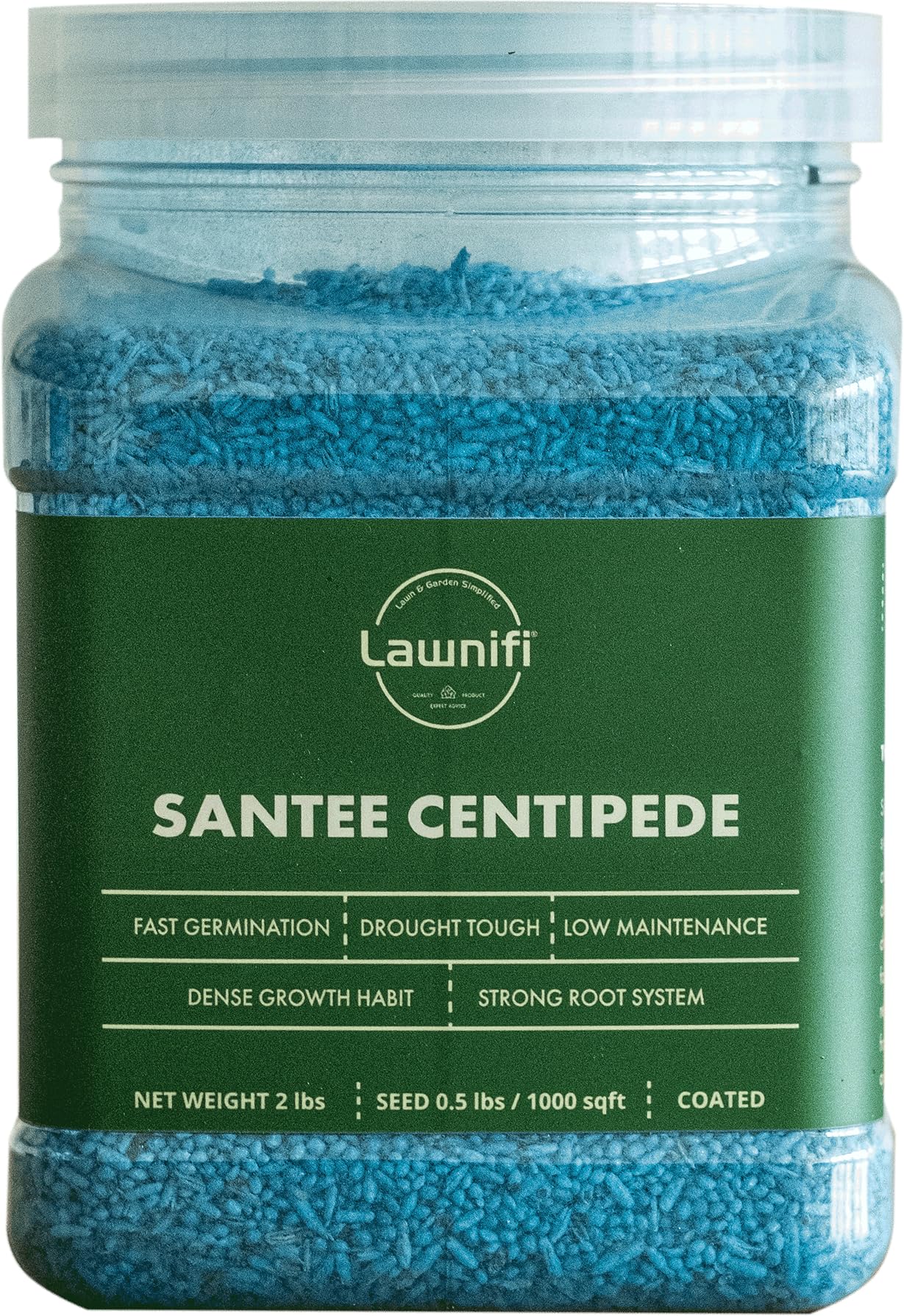
A fertilizer-coated Santee variety built for drought tolerance and a fine-textured lawn.
Lawnifi claims this grass seed produces a dense, low-maintenance lawn that stands up to foot traffic, thrives in hot, dry southern climates, and needs minimal watering once established. The seeds come coated with fertilizer — the bag says it is for faster establishment — and covers 4,000 square feet at the recommended rate. The ideal mowing height is just 1-2 inches, which keeps the turf dense and low. It is a premium product priced higher than the TifBlair offerings, and the fertilizer coating is supposed to give it a leg up on germination without needing separate starter fertilizer.
But the real-world results are all over the map. One buyer in South Carolina used it to fill bare spots and said it works well if undisturbed when first sprouting, even though they heard centipede grass could not grow from seed there. Another buyer saw every seed collected by ants into piles at each ant hill, calling it “ant food.” A third over-seeded and watered every day for 14 days plus — no new centipede grass appeared. They plan to go back to TifBlair. A fourth buyer cleared the area, added lime, and watered for almost a month — no grass grew. That review split is a big gamble at this price tier. Unlike the organic TifBlair Direct from The Farm, which has documented germination in day 7-8, the Lawnifi seems to depend heavily on whether ants or birds find your seed first.
If you compare strictly by weight, this 2-pound bag (32 ounces) sits between the budget 1-pound options and the massive 5-pound Gulf Kist bag. It comes in at 32 ounces versus the 80-ounce Gulf Kist. But the fertilizer coating is a genuine time-saver if you do not want to spread starter fertilizer separately. The grass is crab-apple green, so the color payoff is high — if it grows. The review pattern suggests this bag is best for overseeding small bare spots where you can protect the seed from ants by covering it with a thin layer of soil, which many centipede buyers already do anyway.
Fertilizer-coated for less work: The coating eliminates a separate step and promises faster establishment — ideal if you want a minimal-prep overseed for a small patch.
Ants and inconsistent germination: More than one review saw zero growth after a month of daily watering. This is the biggest risk among the four picks.
Best for: A buyer who wants a single-step coated seed for a small, bare spot and is prepared to cover it with soil to protect from ants.
Look elsewhere if: You need to fill a large area reliably or do not have time to baby the first few weeks.
4. Centipede Grass Seeds “Tifblair Certified” 1 LB – 4000 Sq. Ft. Coverage

The certified seed that one reviewer bluntly called “lousy” and another said beat weeds over two years.
This is Tifblair’s certified seed in a 1-pound bag (16 ounces), labeled for 4,000 square feet. The certification guarantees purity and a baseline germination rate — but the reviews show that guarantee only goes so far. One reviewer noted that they “planted per instructions water twice daily for 4 weeks. not a single seed germinate,” and finished with “Would not recommend.” Another gave it 3 out of 5, saying they “got some sprouts — not what I expected” and called it overpriced. A third buyer, however, gave it 5 stars, saying it establishes slowly but crowds out weeds over 2-3 years, and that it spreads via runners (stolons) like crabgrass. That same buyer also stressed that the seeds must be covered with soil or they will not germinate.
The split in reviews here is wider than for any other product. It seems that if you have sandy soil, full sun, and you cover the seed with a light layer of dirt and keep it wet for weeks, it can produce a beautiful, weed-choking stand. If you skip any of those steps, you get nothing. One reviewer in southeast clay soil said the grass spreads well and is drought tolerant — but called the seeding process “a little more work… you can’t just throw seed on the ground.” That honest read is probably the truest summary of this bag. Compared to the TifBlair Direct from The Farm, which had professional reviews calling it 70-75% germination, this certified version has at least one verified zero-germination report, making it slightly less consistent.
The value here is tricky. At its unit count of 16 ounces, it matches the TifBlair Direct in size but costs just as much. The Gulf Kist 5-pound bag, per ounce, works out far cheaper but you risk wasting a lot if your conditions are not perfect. This is the one to buy if you want a small bag for a trial patch and are willing to follow the strict watering and covering regimen. The mixed reviews mean you could lose your whole investment, so it is not for someone who needs guaranteed results.
What the land prefers
- Certified purity and germination baseline
- Covers 4,000 sq ft in a manageable 1 lb bag
- Can crowd out weeds over 2-3 years
What the reviews warn
- Zero germination possible even with strict watering
- Expensive for the disappointing results some get
Reach for this if: You need a small certified bag to spot-fill or test your soil and you have time to cover and water for four weeks.
Look elsewhere if: You need a guaranteed dense lawn — the mixed germination reviews are a real red flag.
Understanding the Specs
Coatings and Germination Aids
Coated seeds have a clay or polymer shell that retains moisture around the tiny embryo. This can raise germination rates from near-zero to 100% in dry conditions, but it adds weight — a coated 1-pound bag covers fewer square feet than an uncoated one. The Lawnifi Santee and Gulf Kist seeds both use coatings, while the TifBlair Direct from The Farm is uncoated organic seed. Coated seeds are smarter for spring planting in windy or dry areas.
Square-Foot Coverage and Seeding Rate
The coverage number on the bag (like 4,000 or 20,000 sq ft) assumes you spread at the label rate — usually 1-2 pounds per 1,000 square feet. The 5-pound Gulf Kist bag covers 20,000 sq ft, while 1-pound bags cover 4,000 sq ft. But if your soil is poor or your seed is coated, you may need to use 2 pounds per 1,000 square feet instead of 1 pound per 1,000 square feet for a thick stand.
FAQ
How long does centipede grass seed take to germinate?
Can I just throw centipede seed on the ground without covering it?
How often should I water newly seeded centipede grass?
Will centipede grass seed grow in shade?
Is centipede grass seed drought tolerant once established?
Should I use coated or uncoated centipede seed?
What is the best soil type for centipede grass?
Why did my centipede seed not germinate at all?
How much area does a 5-pound bag of centipede seed cover?
Can I overseed an existing centipede lawn with this seed?
Final Thoughts: The Verdict
For most people, the best centipede grass seed winner is the Centipede Grass Seed 5 Pound (Gulf Kist Seed) because it covers the most ground per bag and has at least one verified 100% germination review. If you want certified organic seed that is more reliable when covered with soil, grab the TifBlair Centipede Grass Seed (1 Lb.) Direct from The Farm. And for a small patch overseed with fertilizer coating, the Lawnifi Santee Centipede Grass Seeds is your best pick.
How We Picked
We do not accept paid placement, and we did not hands-on test every unit. Instead, we match each pick to a real buyer and use-case by comparing the manufacturers’ published specifications against the patterns in verified customer reviews — so you get each pick’s real strengths and trade-offs instead of marketing copy.
Sources & Methodology
Specifications: manufacturer listings and product documentation. Review insights: verified customer reviews, as of July 2026. Pricing: not shown on this page (it changes often); check the current price via the retailer link.
As an Amazon Associate, Gadgets Feed earns from qualifying purchases. This does not affect which products we feature.
Product prices and availability are accurate as of the date/time indicated and are subject to change. Any price and availability information displayed on Amazon at the time of purchase will apply to the purchase of this product. As an Amazon Associate I earn from qualifying purchases.
CERTAIN CONTENT THAT APPEARS ON THIS SITE COMES FROM AMAZON. THIS CONTENT IS PROVIDED "AS IS" AND IS SUBJECT TO CHANGE OR REMOVAL AT ANY TIME.
Amazon and the Amazon logo are trademarks of Amazon.com, Inc. or its affiliates.