
Our readers keep the lights on and my morning glass full of iced black tea. As an Amazon Associate, I earn from qualifying purchases.
Every frame-per-second drop in a fast-paced shooter traces back to your processor’s ability to feed instructions to your GPU. A weak central processing unit creates a bottleneck that leaves high-refresh-rate monitors underutilized and stutters during complex physics calculations. The difference between a smooth 144 FPS experience and a choppy 60 FPS slog often comes down to chip architecture, cache size, and core count—not just graphics card choice.
I’m Min — the co-founder and writer behind Gadgets Feed. My buying guides are built on hundreds of hours of cross-referencing synthetic benchmarks, real-world frame-time graphs, and thermal data to separate marketing claims from measurable gaming performance gains.
Whether you are upgrading an existing DDR4 rig or building a new AM5 system, navigating the trade-offs between core count, clock speed, and cache architecture defines the hunt for the absolute best central processing unit for gaming pc right now.
How To Choose The Best Central Processing Unit For Gaming PC
Gaming CPUs live and die by three metrics: single-threaded clock speed, L3 cache size, and thermal headroom. A chip that excels at Cinebench multi-core rendering might still choke in a latency-sensitive game like Counter-Strike 2 if its core-to-core communication penalty is high. Understanding the specific architecture trade-offs—AMD’s chiplet design versus Intel’s hybrid P-core/E-core layout—is essential before you buy.
3D V-Cache vs. High Clock Speeds
AMD’s 3D V-Cache stacks an extra 64 MB of L3 cache on top of the standard die, drastically reducing memory latency in game engines that benefit from large data pools. The Ryzen 7 7800X3D and Ryzen 7 9800X3D leverage this to beat chips with raw clock-speed advantages in titles like Factorio, Microsoft Flight Simulator, and Civilization VI. Intel’s 14th Gen counters with up to 6.0 GHz turbo frequencies on the i9-14900KF, which gives an edge in lightly-threaded, clock-sensitive workloads. Your preferred game library determines which camp wins.
Core Count and Gaming Workloads
Most modern games still rely heavily on 6-8 cores. Beyond that, additional cores primarily benefit background streaming, Discord, OBS encoding, or multi-tasking while gaming. A 16-core chip like the Ryzen 9 5900XT is overkill for pure gaming but shines when you render video or compile code while keeping a game window open. Matching core count to your actual multi-threaded needs prevents wasting budget on cores your GPU-bound gaming scenario cannot utilize.
Platform Longevity and Memory Support
Socket AM5, introduced with AMD’s Ryzen 7000 series, promises multi-generational support through at least 2027, allowing a future processor drop-in upgrade without swapping the motherboard. Intel’s LGA1700 platform supports both DDR4 and DDR5 memory, giving budget builders flexibility but ending with the 14th Gen—no future CPU generation will fit that socket. Your choice of platform dictates whether you can cheaply upgrade two years from now or face a full rebuild.
Quick Comparison
On smaller screens, swipe sideways to see the full table.
| Model | Category | Best For | Key Spec | Amazon |
|---|---|---|---|---|
| AMD Ryzen 7 9800X3D | Premium | Ultimate gaming performance | 104 MB cache, 5.2 GHz boost | $444.00$479.00Amazon |
| AMD Ryzen 7 7800X3D | Premium | Best value gaming chip | 104 MB cache, 75W gaming draw | $348.99$449.00Amazon |
| Intel i9-14900KF | Premium | Multi-threaded productivity + gaming | 24 cores, 6.0 GHz turbo | $427.99Amazon |
| Intel i7-14700KF | Mid-Range | Workstation and gaming hybrid | 20 cores, 5.6 GHz boost | $519.99Amazon |
| Intel i5-14600KF | Mid-Range | Budget DDR4/DDR5 flexibility | 14 cores, 5.3 GHz boost | $251.99Amazon |
| AMD Ryzen 9 5900XT | Mid-Range | DDR4 productivity powerhouse | 16 cores, 72 MB cache | $281.29$349.00Amazon |
In‑Depth Reviews
1. AMD Ryzen 7 9800X3D
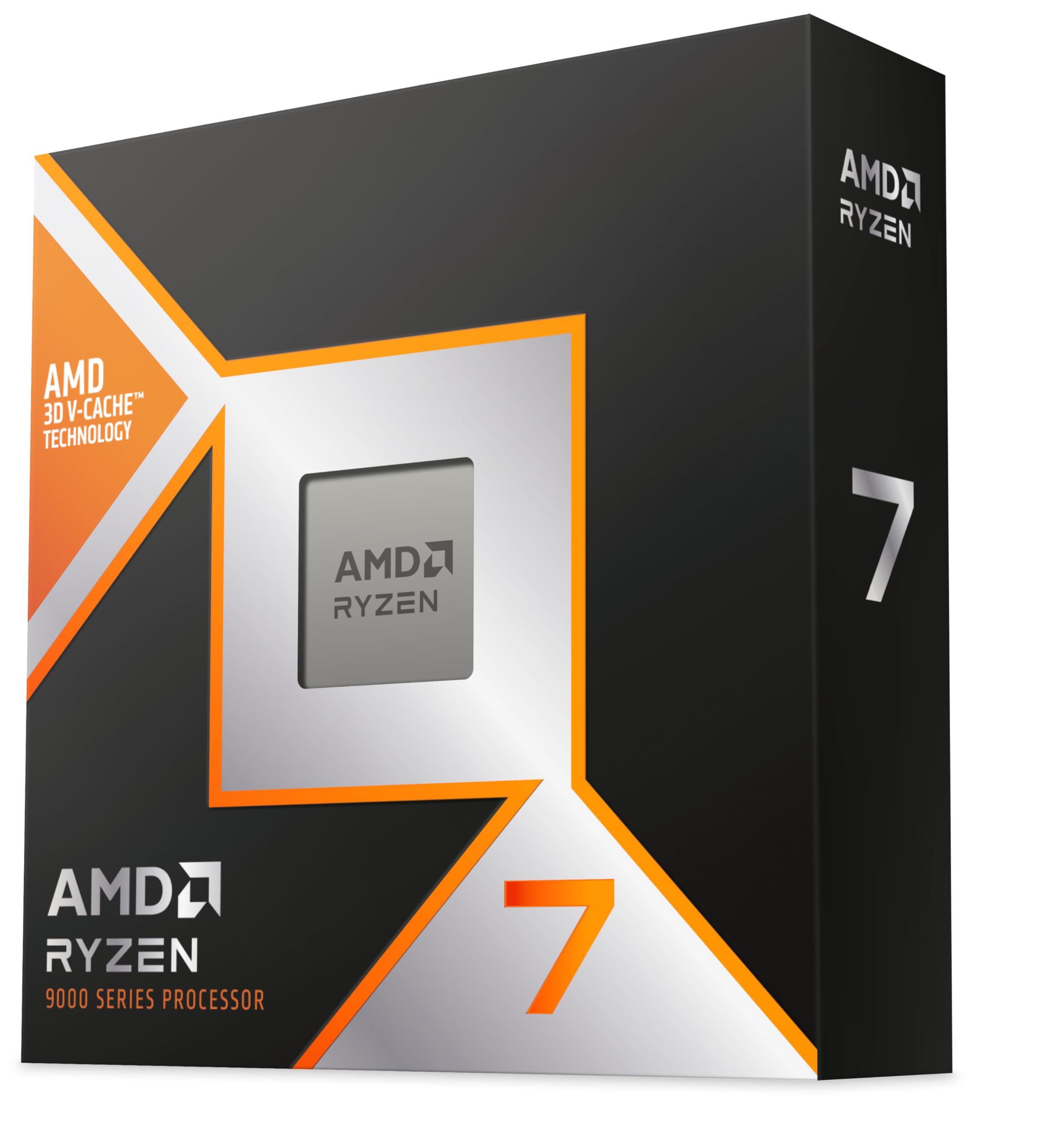
Built on AMD’s Zen 5 architecture with a second-generation 3D V-Cache, the Ryzen 7 9800X3D delivers roughly 16% IPC uplift over the 7800X3D while maintaining a 5.2 GHz boost clock. In CPU-bound scenarios at 1080p with a high-end GPU like the RTX 4090, this chip posts frame rates that surpass every other consumer processor on the market—especially in simulation, RTS, and open-world titles where cache size directly correlates to 1% low percentiles.
The 96 MB L3 cache sits stacked directly above the CCD, improving thermal transfer compared to the original 3D V-Cache implementation. Real-world thermals remain manageable even with a modest dual-tower air cooler, and the drop-in compatibility with existing AM5 motherboards means no platform overhaul if you already own a B650 or X670 board. Power draw peaks around 120W under full gaming load, making it roughly 40% more efficient than Intel’s flagship at similar gaming performance levels.
Where the 9800X3D falls short is pure multi-core render workloads: its 8-core configuration cannot match the 24-core i9-14900KF in Cinebench multi-threaded scores. Gamers who also do heavy video transcoding or 3D rendering will want to weigh whether the gaming crown outweighs a productivity penalty. For pure frame-rate chasing with minimal power consumption, this is currently the pinnacle.
Why it’s great
- Highest gaming frame rates in CPU-bound titles
- Outstanding power efficiency under gaming loads
- Drop-in compatible with existing AM5 boards
Good to know
- 8-core limit reduces multi-threaded productivity performance
- Premium pricing above the 7800X3D
- Cooler not included in the box
2. AMD Ryzen 7 7800X3D

The Ryzen 7 7800X3D redefined gaming CPU value by pairing 8 Zen 4 cores with an additional 64 MB of stacked L3 cache for a total of 104 MB—an architecture that makes it consistently faster than Intel’s i9-13900K and i9-14900K in gaming despite costing significantly less. In titles like Counter-Strike 2, Cyberpunk 2077, and Baldur’s Gate 3, the 7800X3D delivers smoother 1% and 0.1% low frame rates that translate to a perceptibly stutter-free experience.
Power consumption is the real headline: the chip sips roughly 75W during gaming sessions, which means a air cooler is perfectly adequate and system heat output stays low even in small-form-factor cases. Owners report idle temperatures around 40°C and gaming peaks of just 65-70°C with a basic tower cooler. The AM5 platform also provides a clear upgrade path to future Ryzen 9000 series processors without a motherboard swap.
The trade-off is that its 5.0 GHz boost clock is modest compared to Intel’s 6.0 GHz i9-14900KF, and in productivity tasks like video encoding or software compilation, the 7800X3D trails chips with higher core counts and clock speeds. Gamers who never touch rendering or code compilation will find no meaningful downside, while hybrid user workloads shift the value equation toward Intel’s higher-core-count alternatives.
Why it’s great
- Exceptional gaming performance with very low power draw
- Runs cool on budget air coolers
- AM5 platform offers future CPU upgrade path
Good to know
- Modest all-core clock speed limits productivity tasks
- No integrated graphics for troubleshooting
- Requires discrete GPU for any display output
3. Intel i9-14900KF

Intel’s i9-14900KF is the fastest clock-speed champion on the consumer market, hitting 6.0 GHz out of the box with Thermal Velocity Boost. Its hybrid architecture combines 8 Performance-cores and 16 Efficient-cores for a total of 24 cores and 32 threads, making it a monster for heavily multi-threaded workloads like 4K video rendering, 3D modeling, and software compilation. In gaming, it trades blows with the Ryzen 7 7800X3D depending on the title—typically pulling ahead in clock-sensitive games like Valorant and Rainbow Six Siege while trailing in cache-dependent simulation games.
The chip demands serious cooling: a 360mm AIO liquid cooler is strongly recommended, as sustained all-core loads can push past 250W and cause thermal throttling on inadequate coolers. Users consistently report idle temperatures around 35°C and load temperatures of 70-80°C with high-end liquid cooling, but the thermal density of the die means hot spots can still spike. BIOS updates with Intel’s microcode 0x12F are now essential to address the Vmin shift instability issue that affected early 13th and 14th Gen processors.
The LGA1700 platform supports both DDR4 and DDR5 memory, giving builders flexibility to reuse existing DDR4 kits and save money on the total system cost. However, LGA1700 is a dead-end socket—Intel’s next generation, Arrow Lake, requires a new motherboard. If you want a future upgrade path, Ryzen’s AM5 platform is the better long-term bet. The i9-14900KF excels for users who need maximum multi-core productivity now and are comfortable building a new system for the next CPU cycle.
Why it’s great
- Industry-leading 6.0 GHz single-core turbo frequency
- 24 cores deliver class-leading multi-threaded performance
- DDR4 and DDR5 memory flexibility
Good to know
- Very high power draw demands premium liquid cooling
- Requires latest BIOS for stability fixes
- LGA1700 platform has no future CPU upgrade path
4. Intel i7-14700KF

The i7-14700KF splits the difference between pure gaming and serious productivity: 8 P-cores and 12 E-cores deliver 20 total cores and 28 threads, with a 5.6 GHz turbo that keeps single-threaded gaming performance strong. In CPU-intensive game titles like Battlefield 2042 and Hogwarts Legacy, the i7-14700KF matches the i9-14900KF within a few percent while costing noticeably less. The E-cores handle background tasks like Discord, OBS encoding streams, and antivirus scans without stealing resources from the primary gaming cores.
Thermal behavior is significantly more forgiving than the i9-14900KF. Users report stable temperatures with a good dual-tower air cooler or a 240mm AIO, with gaming loads rarely exceeding 75°C. The chip does benefit from a contact frame to improve thermal transfer between the IHS and the cooler, and users consistently recommend updating the BIOS to the latest microcode revision to avoid the stability issues that plagued earlier 14th Gen batches. Real-world Cinebench R23 multi-core scores sit around 35,000 points with proper cooling.
The i7-14700KF supports both DDR4 and DDR5, making it an excellent choice for builders who want to reuse a DDR4 motherboard and memory kit while still getting modern gaming performance. The main downside is platform dead-end: LGA1700 will not support Intel’s next-generation processors, so this build is a final-stop upgrade. For a GPU pairing up to the RTX 4080 Super or RX 7900 XTX, the i7-14700KF provides essentially no gaming bottleneck while offering workstation-class multi-core performance.
Why it’s great
- Excellent gaming performance close to i9 tier
- Strong multi-core capability for productivity tasks
- Compatible with affordable DDR4 memory
Good to know
- Requires BIOS update for stability fixes
- Contact frame recommended for optimal thermals
- LGA1700 platform upgrade path ends here
5. Intel i5-14600KF

The i5-14600KF represents the sweet spot for mid-range gaming builds, pairing 6 Performance-cores and 8 Efficient-cores for a total of 14 cores and 20 threads with a 5.3 GHz turbo. In gaming, it delivers frame rates within 5-10% of the i7-14700KF at 1440p and 4K, making it a remarkably efficient choice when paired with GPUs like the RTX 4070 Super or RX 7800 XT. The difference shows in multi-threaded productivity—the i7 pulls ahead distinctly in video rendering and software compilation.
Thermal management is easy: a basic 240mm AIO or even a high-end dual-tower air cooler keeps temperatures under control during gaming loads. The chip does not experience the same thermal density issues as the i9-14900KF, and users report gaming temperatures around 65-70°C with standard cooling solutions. Intel’s LGA1700 platform support for both DDR4 and DDR5 means budget-conscious builders can pair this CPU with affordable DDR4-3200 kits without sacrificing meaningful gaming performance.
The lack of integrated graphics (the KF suffix) means you absolutely need a discrete GPU for any display output, which is standard for gaming builds but inconvenient if you need to troubleshoot a GPU issue. BIOS updates remain critical for this generation—users consistently report that updating to the latest microcode eliminates instability issues and improves memory compatibility. For a strictly gaming-focused build on a budget, the i5-14600KF delivers near-flagship gaming performance at a fraction of the total platform cost.
Why it’s great
- Gaming performance close to high-end i7 and i9 chips
- Low thermal output suits budget cooling solutions
- DDR4 and DDR5 memory flexibility saves build cost
Good to know
- No integrated graphics for display troubleshooting
- Requires BIOS update for stability
- E-cores less beneficial for pure gaming workloads
6. AMD Ryzen 9 5900XT
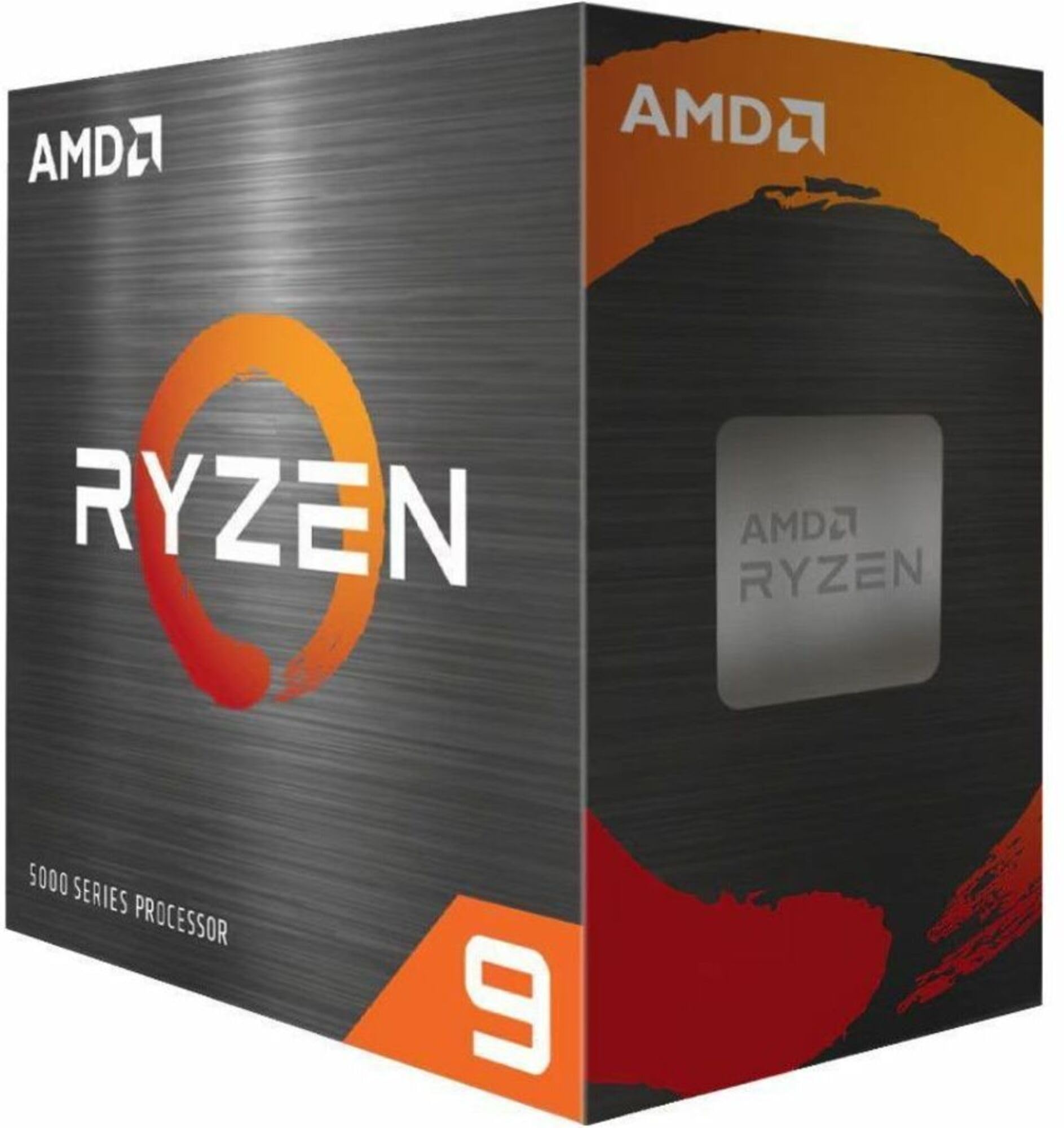
The Ryzen 9 5900XT brings 16 Zen 3 cores and 32 threads to the AM4 platform at a price that undercuts any comparable modern CPU. Its 72 MB L3 cache and 4.8 GHz boost clock make it a strong choice for multi-threaded workloads like video transcoding, software compilation, and running multiple virtual machines—all while keeping a game open on the primary monitor. Real-world benchmarks put it ahead of the 5950X in multi-threaded workloads thanks to better thermal behavior and reduced throttling.
Where the 5900XT loses ground is gaming-specific scenarios. The chip uses a dual-CCD design, meaning game engines that are sensitive to inter-CCD latency can suffer from stuttering or lower-than-expected frame rates compared to single-CCD chips like the 5800X3D. Users report that disabling the second CCD in BIOS can improve gaming performance in latency-sensitive titles, but that reduces the core advantage. For pure gaming, X3D variants offer significantly smoother frame pacing and higher 1% lows.
The AM4 platform is the 5900XT’s strongest value argument: you can drop it into an existing B450, B550, or X570 motherboard with a BIOS update and extend the life of a DDR4 system by several years. Power draw is a manageable 130W under load, though users strongly recommend a 360mm AIO or high-end air cooler to keep all-core boost clocks stable during prolonged workloads. This processor is ideal for users who need massive multi-threading capability on a DDR4 budget and are willing to accept that it will not beat modern X3D chips in gaming frame rates.
Why it’s great
- 16 cores at a very competitive price point
- Drop-in upgrade for existing AM4 DDR4 systems
- Excellent multi-threaded productivity performance
Good to know
- Dual-CCD design hurts gaming frame pacing
- Requires capable aftermarket cooling
- AM4 platform has no further CPU upgrade path
FAQ
Is 3D V-Cache worth the premium for gaming?
Do I need a 24-core CPU for gaming?
Should I buy DDR4 or DDR5 memory with a gaming CPU?
What happens if my CPU thermal throttles during gaming?
Final Thoughts: The Verdict
For most users, the best central processing unit for gaming pc winner is the AMD Ryzen 7 9800X3D because its 3D V-Cache architecture delivers unmatched gaming frame rates with dramatically lower power draw than the competition. If you want best-in-class value with nearly identical gaming performance, grab the AMD Ryzen 7 7800X3D. And for hybrid gaming and productivity workloads where multi-core performance matters most, nothing beats the Intel i9-14900KF.
Product prices and availability are accurate as of the date/time indicated and are subject to change. Any price and availability information displayed on Amazon at the time of purchase will apply to the purchase of this product. As an Amazon Associate I earn from qualifying purchases.
CERTAIN CONTENT THAT APPEARS ON THIS SITE COMES FROM AMAZON. THIS CONTENT IS PROVIDED "AS IS" AND IS SUBJECT TO CHANGE OR REMOVAL AT ANY TIME.
Amazon and the Amazon logo are trademarks of Amazon.com, Inc. or its affiliates.