
Our readers keep the lights on and my morning glass full of iced black tea. As an Amazon Associate, I earn from qualifying purchases.
Specs are compiled from manufacturer listings and verified buyer reviews and can change over time — please confirm the key details on the product page before buying.
You bolted an engine onto your mini bike or go-kart, and now you need the one part that makes it actually move when you hit the throttle: a centrifugal clutch. It works simply: the clutch spins freely at idle, then internal weights (called clutch shoes) fly outward as the engine revs, grabbing the drum and sending power to the wheel. If you pick the wrong bore size, tooth count, or chain pitch, your kart either sits still or burns the clutch up in the first five minutes. This guide stacks six real, tested-fit clutches head-to-head so you know exactly which one matches your engine shaft and your build.
I’m Min — the founder and writer behind Gadgets Feed. This guide is built by comparing the manufacturers’ published specifications and the patterns across verified customer reviews, so you get each pick’s real strengths and trade-offs instead of marketing spin.
Choosing the best centrifugal clutch depends on matching three things: your engine’s shaft diameter, your chain size, and the sprocket teeth count that fits your top-speed goal.
Our Picks at a Glance

How To Choose The Best Centrifugal Clutch
Picking a clutch is simpler than it looks once you lock down three numbers. Get these right and your engine connects smoothly to the wheels. Get them wrong and you are either returning the part or smelling burnt shoes on your first ride.
Bore Diameter — The Non-Negotiable Match
Your engine’s crankshaft (the spinning rod that sticks out) has a specific diameter — usually 3/4″ or 5/8″ — and a slot called a keyway (typically 3/16″ wide). A metal key slides in that slot to lock the clutch to the shaft so it does not slip. The clutch’s bore must slide over that shaft exactly. A 3/4″ bore fits the common Predator 212 and Honda GX160/GX200 engines. A 5/8″ bore fits smaller engines like the Predator 97cc or older 3 HP motors. Measure your shaft with a caliper before buying — eyeballing it costs you shipping time.
Tooth Count and Chain Pitch — The Speed Trade-Off
The clutch sprocket’s tooth count controls your ratio (how many times the clutch spins for each wheel spin). More teeth (like 12T) give quicker acceleration but lower top speed. Fewer teeth (like 10T) trade some bottom-end grunt for a higher top end, so you go faster on straights. The chain pitch (the distance between the chain pins) must match: #35 chain is narrower and fits 11T or 12T sprockets, while #40/41/420 chain is wider and typically used with 10T sprockets. Mixing chain pitches ruins the engagement and chews up your drivetrain.
Material and Heat Dissipation
Clutches are usually made from sintered iron or steel. The friction material on the shoes (what grabs the drum) varies. On a long ride, the clutch gets hot — one VASHLY buyer reported the heat was enough to smoke the decal off the clutch drum. Steel and iron dissipate that heat fast, but a clutch that overheats can glaze the shoes (make them hard and shiny) and lose grip. If you are running hard or carrying heavy loads, look for a clutch with a reputation for taking sustained punishment without fading.
Quick Comparison
| Model | Best For | Bore | Teeth | Chain | Weight | Amazon |
|---|---|---|---|---|---|---|
| CORINTH Centrifugal Clutch★ Best Overall | Durable value with included chain | 3/4″ | 10T | #40/41/420 | 4.6 lb | Amazon |
| Beitetoo Go Kart ClutchBest Value | Break-in guided, silky takeoffs | 3/4″ | 10T | #40/41/420 | 2.66 lb | Amazon |
| caqeg Centrifugal Clutch | No-jerk engagement on small bikes | 3/4″ | 10T | #40/41/420 | 2.55 lb | Amazon |
| VASHLY Go Kart Clutch | Predator 224 builds, heavy load | 3/4″ | 10T | #40/41/420 | 2.29 lb | Amazon |
| GYMMEDS Go Kart Clutch | Quick acceleration from 12T gear | 3/4″ | 12T | #35 | 3.63 lb | Amazon |
| KRGUOD Centrifugal Clutch | Small 97cc engines with 5/8″ shaft | 5/8″ | 11T | #35 | 3.56 lb | Amazon |
In‑Depth Reviews
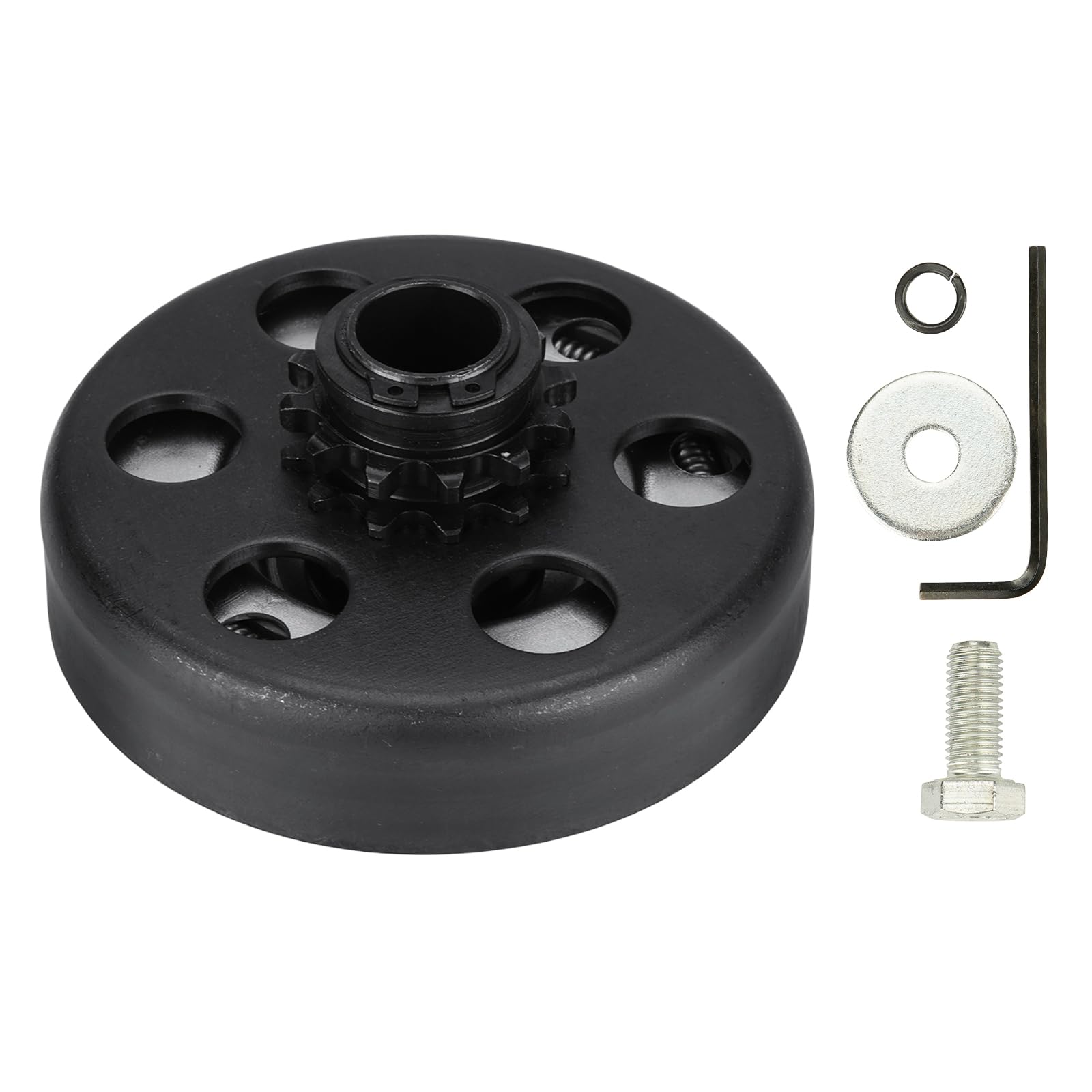
1. CORINTH Centrifugal Clutch, Go Kart Clutch 3/4″ Bore 10 Tooth for #40/41/420 Chain
Our pick — over 4★ from 900+ verified ratings; the strongest balance of quality and price.
The CORINTH clutch earns the top spot because it includes the chain and delivers proven durability for the price — a 4.4-star average across 920 buyer ratings.
You get a 3/4″ bore, 10-tooth sprocket made for #40/41/420 chain, and the chain itself is in the box, so there is no second Amazon order before your first test run. It fits the common Predator 212 and Honda GX160/GX200 engines, plus any other motor with a 3/4″ crankshaft and a 3/16″ keyway. At 4.6 pounds, it is the heaviest pick here — that extra steel mass soaks up heat during extended runs, so the clutch is less likely to overheat than a lighter unit like the VASHLY (2.29 lb).
Buyers report it is “very durable for the price it was excellent” and note it held up well even when they were initially skeptical. Install takes basic hand tools: slide it onto the shaft, tighten the bolt, loop the included chain. The trade-off is weight — the CORINTH is noticeably heavier than the VASHLY (4.6 lb vs 2.29 lb), so if every ounce matters on a lightweight mini bike, you might prefer a lighter option. For most standard builds, the included chain and the solid durability feedback make this the default choice.
Why it leads
- Chain included — buy one part, not two
- 920 ratings averaging 4.4 stars with strong durability feedback
- Fits 2-6.5 HP engines from Honda, Predator, and clones
One thing to know
- At 4.6 lb compared to the VASHLY at 2.29 lb, so not the lightest for weight-sensitive builds
Grab it if: you want one box with the clutch and chain matched, plus a track record of thousands of buyers calling it durable.
Look elsewhere if: shaving every pound from your mini bike build is the priority.
2. Beitetoo Go Kart Clutch 3/4″ Bore 10T for #40 41 420 Chain, Centrifugal Clutch
The Beitetoo is the bargain pick that comes with a proper break-in guide — the step most first-time builders skip and then wonder why the clutch slips and smokes.
This 3/4″ bore, 10-tooth unit runs #40/41/420 chain (not included) and targets the same engine family as the CORINTH: Predator 212, Honda GC/GX series, Briggs, and Tecumseh engines with a 3/4″ shaft. The standout detail is the manufacturer’s break-in instructions — they recommend 3-5 partial-throttle runs before full power to let the shoes and drum mate evenly. It ships with a clutch bolt, washer kit, and a screw wrench, so you have the hardware to mount it right away.
One reviewer ran it “for about 3 miles straight with no issues to the new clutch” on a 224 Predator engine, and another said install is “so easy a child could do it.” At 2.66 pounds, it is noticeably lighter than the CORINTH (4.6 lb), making it a solid choice for a lighter mini bike or chopper. A buyer should note the chain is sold separately — factor that cost into your build plan.
Where it wins
- Break-in instructions reduce the risk of glazed shoes on first run
- Lighter than the top pick at 2.66 lb
- Includes bolt, washer kit, and wrench
Trade-off
- Chain is not included, so you need to buy a #40/41/420 chain separately
Reach for this if: you are on a budget and appreciate a manufacturer who tells you how to break in the clutch properly.
skip it if: you want a chain in the box to save a separate purchase.
3. caqeg 3/4″ Bore 10T Go Kart Centrifugal Clutch for #40/41/420 2-6.5HP Predator 212
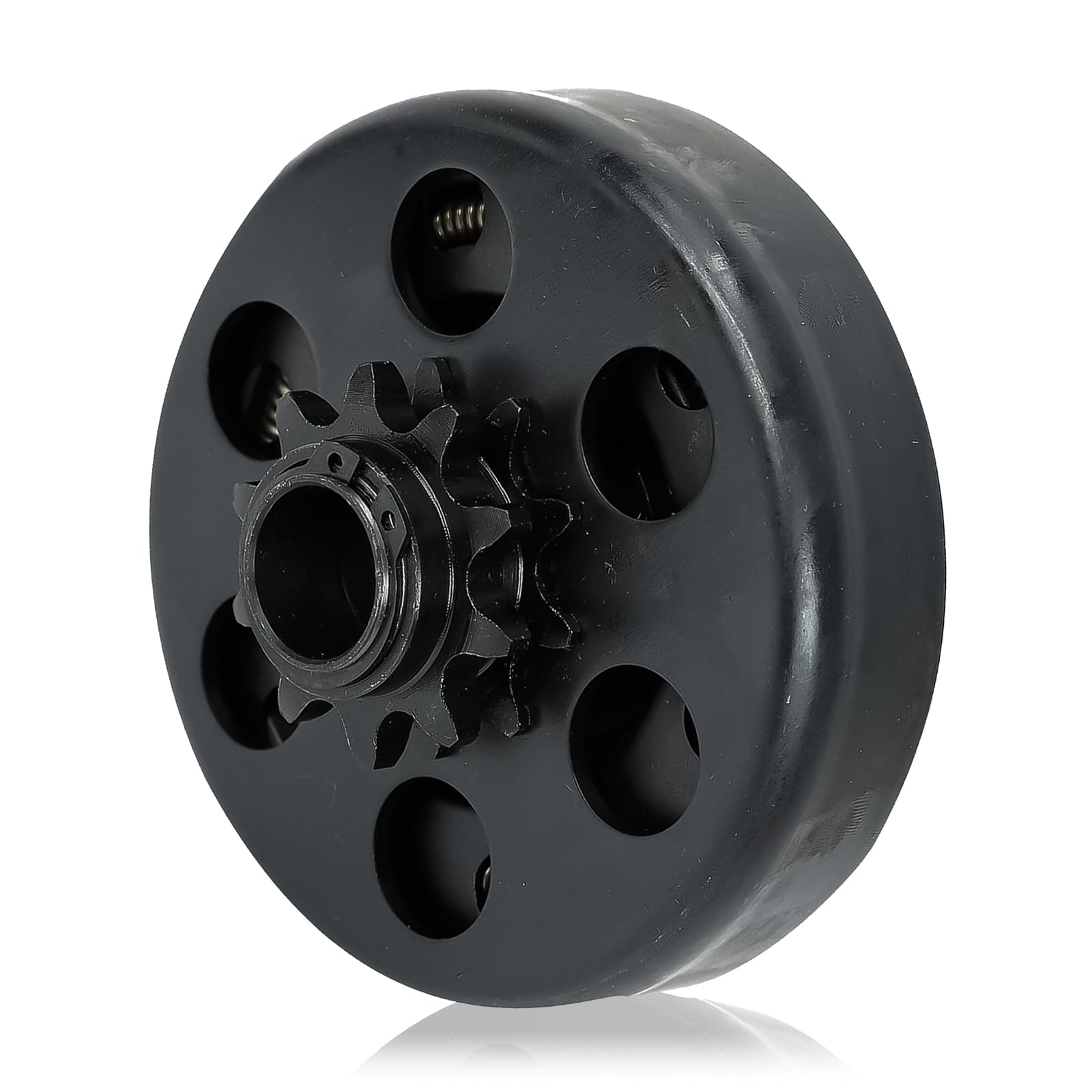
The caqeg clutch delivers the smoothest, jerk-free start of the bunch — a common complaint it solves well, according to buyers.
With a 3/4″ bore and 10-tooth sprocket for #40/41/420 chain, this clutch is a direct fit for Predator 212 engines and the full Honda GX/GC lineup. The brushed exterior finish separates it visually, but the real story is in the engagement feel. One buyer specifically noted it “works great, no jerking/grabbing” — which matters if you have ever been thrown forward by an abrupt clutch grab on a small kart. The chain stretched a bit during break-in, which is normal for new chain, and the owner called it a good value.
Another reviewer used it as a direct replacement on a 2021 Coleman BT200X and had it installed in about 30 minutes. At 2.55 pounds, it is lighter than the CORINTH (4.6 lb) and sits close to the VASHLY (2.29 lb), so weight-conscious builders will like it. The trade-off is that the chain is not included, and the 2-6.5 HP range means you cannot push it reliably on a hot-rodded engine making more than about 7 HP without risking shoe wear.
Why it stands out
- Owners mention smooth, non-grabbing engagement
- Lightweight at 2.55 lb for weight-sensitive builds
- Brushed finish resists surface rust better than raw steel
Limitation
- Chain not included
- Best for sub-7 HP engines; may slip on higher-power builds
Best for: Coleman BT200X owners or anyone who wants a clean takeoff without that lunging grab.
Consider the alternative: if your engine is built and pushing beyond 7 HP, step up to a heavier-duty unit like the CORINTH.
4. VASHLY Go Kart Clutch 3/4″ Bore 10 Tooth for #40/41/420 Chain Predator 212

The VASHLY is the lightest 3/4″ clutch here at 2.29 pounds compared to the CORINTH at 4.6 lb — and a favorite for Predator 224 builds.
This 10-tooth, 3/4″ bore clutch fits #40/41/420 chain and is specifically designed for single-wheel drive karts with tires no taller than 15″. The lightweight iron construction (2.29 lb) means less rotating mass on the crankshaft, which can help the engine rev more freely. It is bidirectional (mounts inward or outward on the shaft) depending on your frame layout. The package includes two clutch bolts, two washers, and two screw wrenches — nice redundancy if you drop a bolt in the grass.
One builder using it on a 224cc Predator called it “very nice clutch can handle heavy loads for a while,” but noted “the sticker started to burn and I thought the motor was on fire.” That is the clutch getting hot enough to singe the decal — not a failure, but a clear sign the clutch is working hard. Buyers also say it “fits 212 like a glove” and call it plug-and-play smooth. The trade-off is the same heat concern: if you plan long hill climbs or heavy pulling, consider the extra thermal mass of the heavier CORINTH (4.6 lb).
Why builders like it
- Lightest 3/4″ bore clutch at only 2.29 lb — less drag on the crank
- Bi-directional mounting, fits inward or outward
- Two bolts and washers included as spares
Heads-up
- Decal can burn off under sustained heavy load — not a defect, but a heat indicator
Ideal for: a Predator 224 build on a mini bike where every half-pound off the crank helps acceleration.
Not ideal for: long, hard pulls that keep the clutch engaged for minutes — the lighter drum will heat up faster than a heavier unit.
5. GYMMEDS Go Kart Clutch 3/4″ Bore 12 Tooth with #35 Chain, Centrifugal Clutch for Predator 212
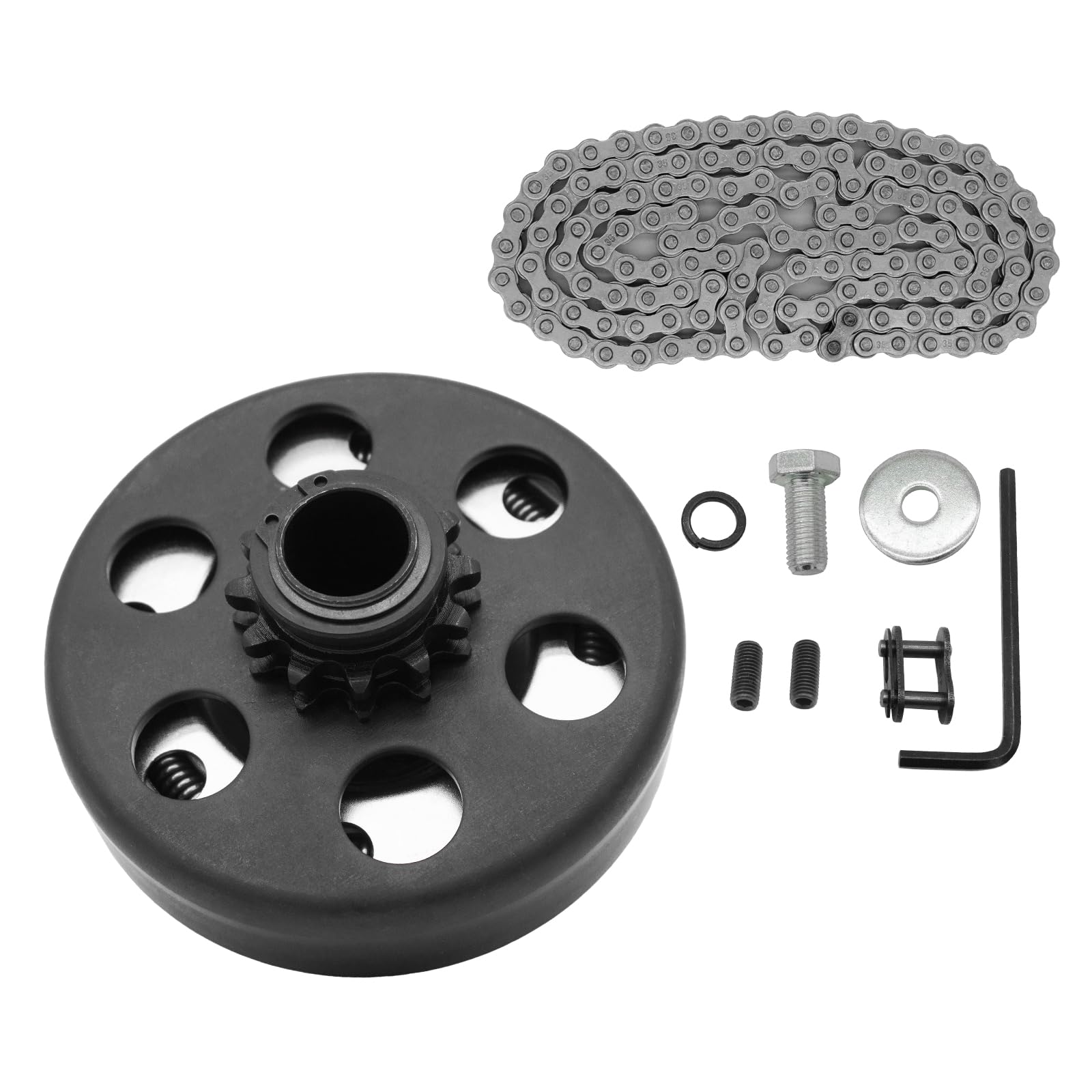
The GYMMEDS swaps the standard 10T for a 12-tooth sprocket and #35 chain — that extra gearing gives you snappier starts from a standstill.
This 3/4″ bore clutch uses a 12-tooth sprocket and comes with a #35 chain, a different pitch than the #40/41/420 chain used on most other picks here. The 12-tooth gear gives you lower gearing, meaning the engine revs quicker against the axle and the kart jumps off the line faster. The package includes the clutch, chain, bolt, washer kit, wrench, and two set screws — everything in one box.
Buyers confirm it is a quality part that “holds up better than original” and that the install is easy with a perfect fit. The machined steel exterior looks clean and resists corrosion better than a raw finish. A buyer needs to be aware that the #35 chain is not interchangeable with #40/41/420 — if your axle sprocket is #40 pitch, this clutch will not mesh with it. Check your axle sprocket before buying. The 12-tooth sprocket gives a lower gear ratio compared to a 10-tooth sprocket, providing quicker acceleration.
Why it stands out
- 12-tooth sprocket gives quicker acceleration than a 10-tooth clutch
- #35 chain and clutch included in one purchase
- Machined steel finish for better corrosion resistance
Compatibility check
- Uses #35 chain — your axle sprocket must also be #35 pitch
- Not a direct swap if your build uses #40/41/420 chain
Grab it for: tight-track karts and mini bikes where you want that immediate hole-shot feel rather than a high top speed.
pass on it if: your axle sprocket is already #40/41/420 — you would need to swap the axle sprocket too.
6. KRGUOD Centrifugal Clutch 5/8″ Bore 11 Tooth with #35 Chain
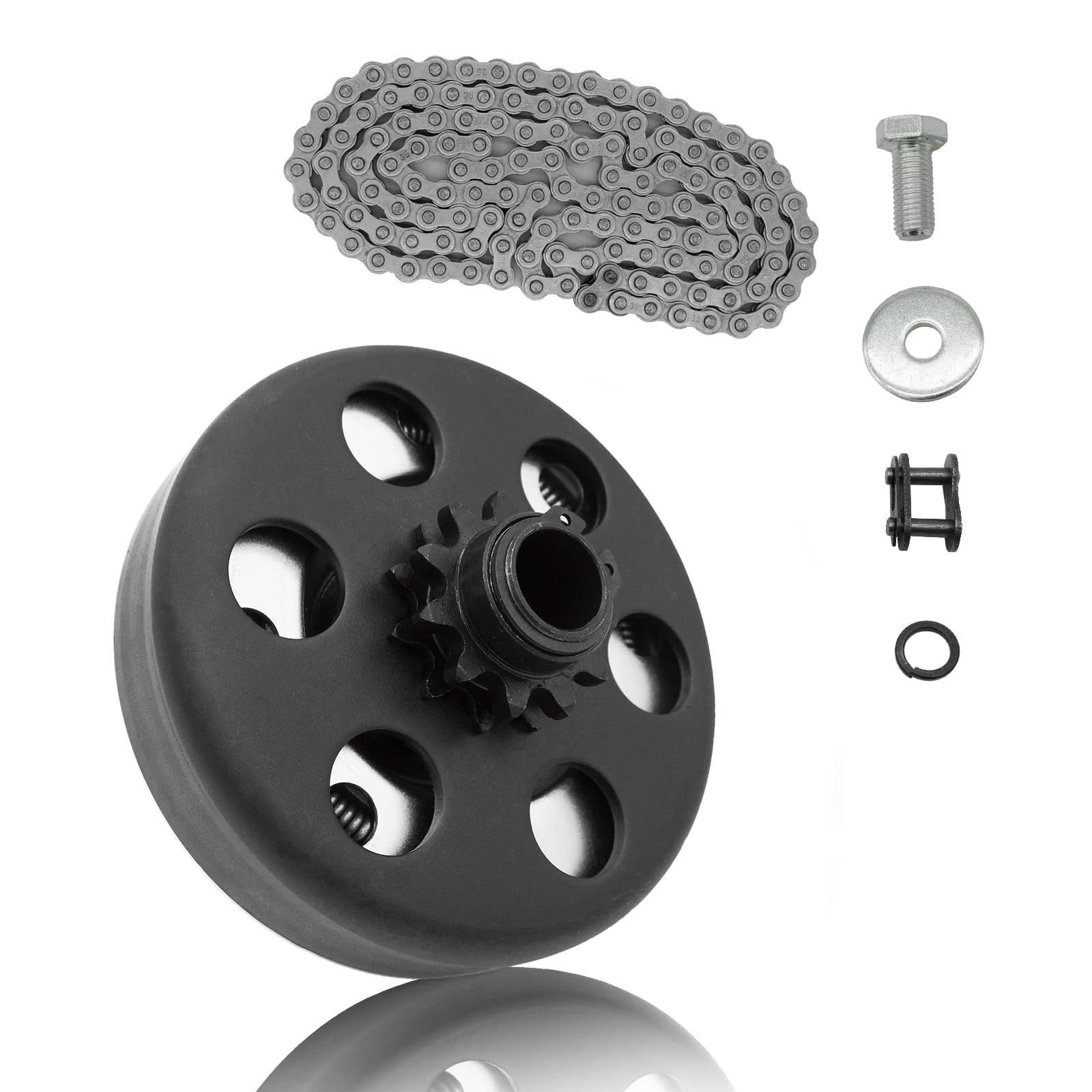
The KRGUOD fills the gap for smaller engines with a 5/8″ shaft — a bore size the other picks here do not cover.
While most clutches target the 3/4″ Predator 212, this KRGUOD clutch uses a 5/8″ bore with an 11-tooth sprocket for #35 chain. It is designed for smaller power plants like the Predator 2.8 HP 97cc engine and some older 3 HP motors — the kind found on mini scooters, small choppers, and lightweight fun karts. The package includes the clutch, a 130-link #35 chain, and an accessory kit so you have everything to install it. The chain length can be shortened using the connecting link (a removable link that lets you adjust length), giving you flexibility for different wheelbase lengths.
One reviewer noted it fit a Coleman CT 200U perfectly but found the 130-link chain was about 4 feet too short for their build — a reminder that chain length needs to be checked against your specific axle-to-shaft distance. Another buyer suggests “get one drop of oil into the bearing for much longer life,” a simple maintenance tip worth following. At 3.56 pounds, it is heavier than the 3/4″ options from VASHLY (2.29 lb) and caqeg (2.55 lb), but that extra mass is partly in the included chain. The 5/8″ bore (15.875 mm) versus the 3/4″ bore (19.05 mm) of the CORINTH, so measure your shaft carefully.
What it does well
- Only pick here with a 5/8″ bore — fits 97cc Predator and similar small engines
- #35 chain and accessories included
- Easy installation with basic tools, per buyer reports
Before you buy
- Included 130-link chain may be too short for longer wheelbases — measure your setup
- 5/8″ bore will not fit standard 3/4″ Predator 212 engines
Reach for it if: you have a 97cc Predator or an older 3 HP engine with a 5/8″ shaft and want a complete clutch-plus-chain setup in one order.
Look elsewhere if: your engine uses a 3/4″ crankshaft — the bore is simply too small.
Understanding the Specs
RPM Engagement Range
The clutch shoes are tuned to fly outward and grab the drum at a specific engine speed — typically around 1800-2200 RPM for these 2-6.5 HP clutches. If your engine idles too high, the clutch will drag and wear the shoes. If it engages too late, you have to rev the engine hard before moving, which feels jerky. The break-in procedure (3-5 partial-throttle runs) helps the shoes and drum surface mate evenly so engagement becomes smooth instead of grabby.
Chain Pitch and Why It Matters
Chain pitch is the distance between the chain pins, measured in inches or millimeters. #35 chain has a 3/8″ pitch and is narrower, used on 11T and 12T sprockets. #40/#41/#420 chain has a 1/2″ pitch and is wider, used on 10T sprockets. You cannot mix them — a #40 chain will not seat on a #35 sprocket. When buying a clutch, confirm your axle sprocket pitch is identical, or you are buying a sprocket as well. The GYMMEDS clutch uses #35 chain, while the others use #40/41/420, so it is a fork in the road, not a matter of preference.
FAQ
Will a 3/4″ bore clutch fit a 5/8″ crankshaft?
What does the keyway do on a centrifugal clutch?
Can I use a #35 chain clutch with a #40 axle sprocket?
Why does my new centrifugal clutch smoke on the first ride?
How many teeth should I get — 10T, 11T, or 12T?
Will a Predator 212 clutch fit a Honda GX160?
Do I need to oil a centrifugal clutch?
What happens if the clutch chain is too long or too short?
Final Thoughts: The Verdict
For most builders, the best centrifugal clutch winner is the CORINTH Centrifugal Clutch because it combines a proven 4.4-star rating across 920 reviews, an included #40/41/420 chain, and the heat-soaking mass of a 4.6-pound steel body — everything you need for a reliable first install. If you want the quickest acceleration from a standing start, grab the GYMMEDS 12-tooth clutch with its lower gearing and included #35 chain. And for a lightweight Predator 224 build where every ounce matters, the feathery VASHLY Go Kart Clutch at 2.29 pounds is your best bet for a quick-revving setup.
How We Picked
We do not accept paid placement. Every pick is matched to a real buyer and a real use-case; we do not hands-on test units.
Sources & Methodology
Specifications: manufacturer listings and product documentation. Review insights: verified customer reviews, as of July 2026. Pricing: not shown on this page (it changes often); check the current price via the retailer link.
As an Amazon Associate, Gadgets Feed earns from qualifying purchases. This does not affect which products we feature.
Related Guides
Product prices and availability are accurate as of the date/time indicated and are subject to change. Any price and availability information displayed on Amazon at the time of purchase will apply to the purchase of this product. As an Amazon Associate I earn from qualifying purchases.
CERTAIN CONTENT THAT APPEARS ON THIS SITE COMES FROM AMAZON. THIS CONTENT IS PROVIDED "AS IS" AND IS SUBJECT TO CHANGE OR REMOVAL AT ANY TIME.
Amazon and the Amazon logo are trademarks of Amazon.com, Inc. or its affiliates.