
Our readers keep the lights on and my morning glass full of iced black tea. As an Amazon Associate, I earn from qualifying purchases.
Specs are compiled from manufacturer listings and verified buyer reviews and can change over time — please confirm the key details on the product page before buying.
The biggest shift when you move from a dark metal loaf tin to a ceramic one is the crust. Stoneware and porcelain hold heat evenly, so your bread browns all the way around instead of scorching on the bottom while the sides stay pale. That even heat is exactly why sourdough bakers hoard these pans, and why a simple quick bread comes out looking bakery-finished. This guide sorts the best ceramic loaf pan options by how they actually perform in a home oven, not just how they photograph.
I’m Min — the founder and writer behind Gadgets Feed. This guide is built by comparing the manufacturers’ published specifications and the patterns across verified customer reviews, so you get each pick’s real strengths and trade-offs instead of marketing spin.
Whether you bake daily sourdough or an occasional banana bread, the right ceramic loaf pan changes your results more than any other bakeware upgrade you can make.
Our Picks at a Glance


How To Choose The Best Ceramic Loaf Pan
Your loaf pan should give you the crust you want and survive your oven’s heat without cracking. So focus on three things: the size of your loaves, the crust style you prefer, and how much thermal abuse the pan can take. Nail these three factors and you will end up with a pan that bakes exactly the way you want.
Glazed or unglazed interior
The interior finish is the single biggest flavor lever. An unglazed stoneware surface pulls moisture from the dough as it bakes, which is what creates that crackly, artisan-style crust. A glazed enamel interior is nonporous and easier to release food from, but it gives you a softer, more tender crust. Decide which bread you bake most before you choose.
Size versus your dough
Standard loaf pans run 9 by 5 inches, while mini pans sit around 6.2 inches. If you bake wet, high-hydration sourdough, an overfilled pan will weld the dough to the lid or spill over the rim. Match the pan to your typical recipe yield, and remember that a bigger pan means shorter, wider loaves, not taller ones.
Thermal shock resistance
Going straight from freezer to hot oven is the classic way to crack ceramic. Look for pans rated for a wide temperature range, like -9°F to 500°F, and always check whether the manufacturer allows that direct transfer. Some pans demand you let dough come to room temperature first.
Quick Comparison
| Model | Best For | Capacity | Dimensions | Max Heat | Amazon |
|---|---|---|---|---|---|
| Wisenvoy Porcelain Loaf Pan★ Best Overall | Pretty everyday breads | — | 9.8″L x 5.5″W x 3.2″H | 400°F | Amazon |
| KOOV Texture Loaf PanTop Performer | Heavy-duty stoneware loaves | — | 9″L x 6″W x 3.5″H | 500°F | Amazon |
| GDCZ Mini Loaf Pan 4-PackBest Value | Individual servings and gifts | — | 6.2″L x 3.3″W x 2.4″H | — | Amazon |
| Ohio Stoneware Kitchen Naturals | Natural clay sourdough | — | 8.5″L x 4.5″W x 3″H | 500°F | Amazon |
| Superstone Covered Baker | Artisan Italian loaves | 4.8 lbs | 15.3″L x 5.9″W x 7″H | — | Amazon |
| Le Creuset Heritage Loaf Pan | Glazed everyday versatility | 1.5 qt | 9″L x 5″W x 3″H | 500°F | Amazon |
| Sassafras Covered Bread Baker | Bakery-style crackly crusts | — | 15″L x 5″W x 7″H | 500°F+ | Amazon |
| Emile Henry Italian Bread Baker | Sandwich loaves and sourdough | — | 13.4″L x 5.3″W x 5.5″H | — | Amazon |
In‑Depth Reviews
1. Wisenvoy Porcelain Loaf Pan
Our pick — over 4.5★ from 400+ verified ratings; the strongest balance of quality and price.
The most-praised pick for its hand-painted looks and dependable everyday baking.
This is the pick that wins people over first with its looks — the hand-painted blue-green pattern is the most-praised feature by far, with more than fifty owners calling it out. But it is not just a pretty face; the porcelain body measures 9.8″L x 5.5″W x 3.2″H, a true standard loaf size that handles quick breads, pound cakes, meatloaf, and even lasagna without feeling cramped. Buyers report they have used it “dozen of times the last year or so,” and it still comes out of the oven looking new.
The porcelain is lead-free and non-toxic, and the smooth texture makes cleanup genuinely easy — dishwasher, microwave, freezer, and oven are all fair game. The full range is the standout here: you can pull it straight from the freezer and slide it into a hot oven without changing containers, which is a rare convenience. The one honest caveat is the non-stick surface, which gets mixed feedback; a handful of owners found it loses its release power after heavy use, so a light grease before baking is a smart habit.
What you are really getting is a dual-purpose piece: a dependable bread pan that doubles as a decorative serving dish, which is why the size and appearance get so much love. For the price, it is the most balanced all-rounder on this list.
What wins people over
- Hand-painted pattern turns the pan into counter décor
- Freezer-to-oven direct transfer saves a step
- Dishwasher-safe porcelain cleans up fast
- True 9.8-inch loaf size for everyday breads
The honest trade-offs
- Non-stick release fades for some after months of use
- Heavy ceramic body takes getting used to
Reach for this if: you want one versatile pan that bakes well and looks good enough to serve from directly at the table.
Look elsewhere if: you need a pan that releases bread with zero greasing every single time — this one likes a little butter.
2. KOOV Ceramic Loaf Pan
A heavy-duty stoneware pan rated to 500°F for years of frequent use.
Quality is the word that dominates owner feedback here, and it is earned. This pan is made of professional-grade stoneware that is oven safe to 500°F, so it shrugs off the high heat that ruins lesser ceramics. It also runs noticeably larger than many ceramic rivals at 9″L x 6″W x 3.5″H — buyers specifically note it is bigger than other ceramic options, which means roomier loaves and less overflow panic with wet dough.
The textured yellow exterior gives it a handmade, decorative feel that owners call worthy of the dining table. On performance, the feedback is consistent: even heat distribution with no hot spots, which is exactly what you want for a tall loaf that finishes in the center without burning the crust. Owners mention they have owned it “for awhile now,” used it heavily, and still trust its build quality — one even swears off metal bread pans for good after switching.
Unlike the Wisenvoy above, this one leans harder into durability than looks, though it has plenty of visual charm. The non-stick glaze gets mixed comments, so a quick buttering is still your friend, but the smooth finish makes hand-washing or the dishwasher both easy options. It is the pan to grab if you bake often and want something that will not quit.
Built for the long haul
- Oven safe to 500°F for high-heat baking
- Larger 9×6-inch size fits bigger loaves
- Professional-grade chip-resistant stoneware
- Even heat with no scorched spots
Keep in mind
- Non-stick performance varies between owners
- Heavier than typical metal pans
Best suited for: the regular baker who wants a sturdy, high-temp pan that bakes evenly for years.
Not ideal if: you prefer a lighter pan for frequent lifting in and out of the oven.
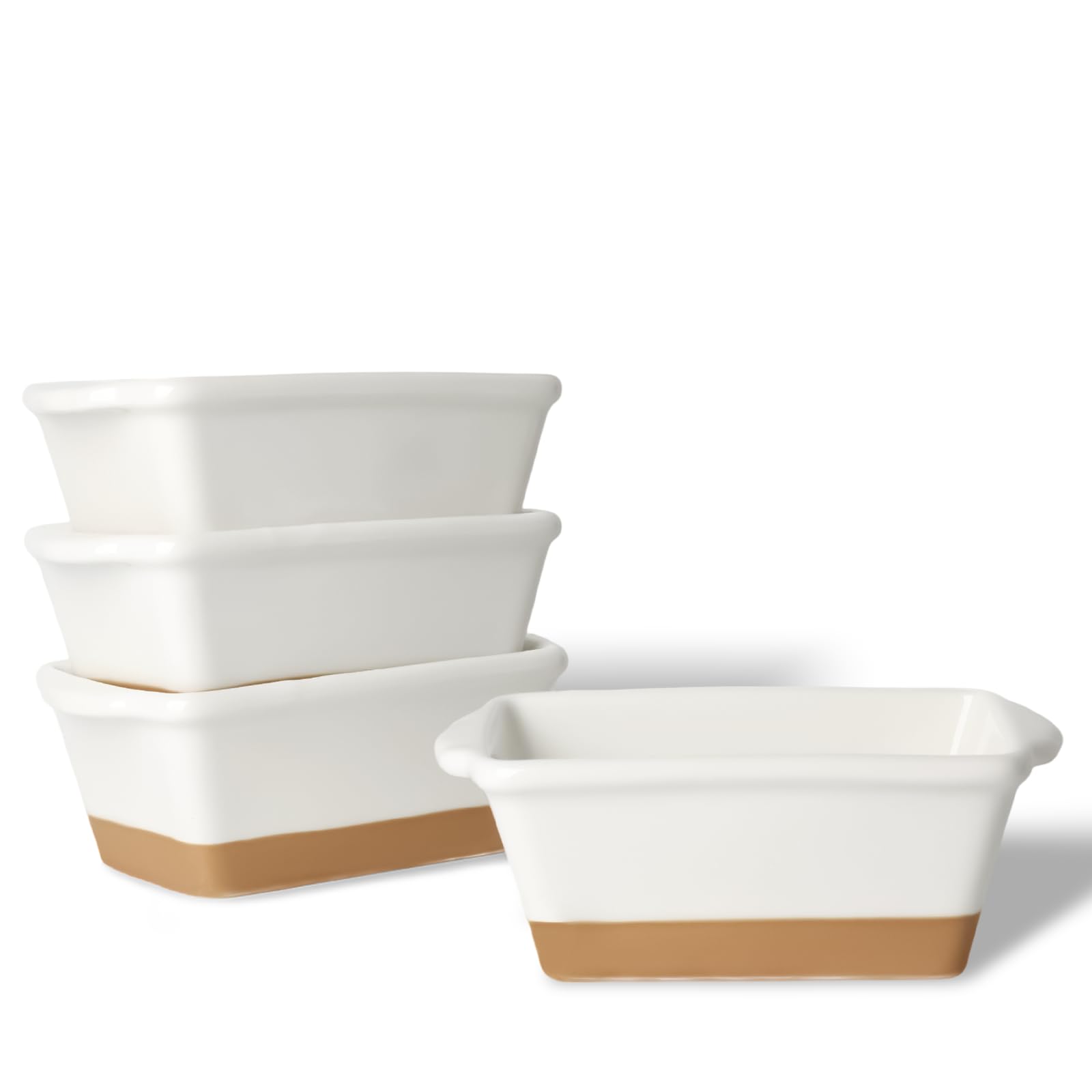
3. GDCZ Ceramic Mini Loaf Pan 4-Pack
Four stackable 6.2-inch minis for single-serving loaves and easy gift giving.
Size is the whole story here, and it is the feature owners praise most. Each mini pan measures just 6.2″L x 3.3″W x 2.4″H — about 45% shorter than the 9-inch KOOV above — which makes them perfect for single-serving loaves, gift loaves, and portioned desserts. Because they stack neatly, four pans take up barely more cabinet space than one full-size pan, a real win for small kitchens.
The ceramic construction gives even heat distribution with no hot spots, so your mini pies and loaves bake uniformly even in a crowded oven. Built-in side handles make it easy to grip with oven mitts, and the whole set is safe in the oven, microwave, and dishwasher. Owners love that these are “smaller than I expected, but heavy duty,” and specifically appreciate that sourdough’s acidity won’t corrode ceramic the way it can damage older metal pans.
The trade-off is durability in transit: a few buyers received cracked units during shipping, which is the recurring complaint. That risk is offset by the value of getting four pans at once, but it is worth inspecting the box the day it arrives. For individual servings and gift giving, this set is the most practical pick on the list.
Why owners love it
- 4 pans for the price of one full-size
- Stackable design saves cabinet space
- Even heat with no hot spots
- Safe in oven, microwave, and dishwasher
Watch out for
- Some units arrive cracked from shipping
- Too small for full-size bread recipes
Grab this set if: you bake small batches, want gift-ready loaves, or need to test a ceramic pan without a big commitment.
Think again if: you primarily bake full-size sandwich loaves — these minis cap out at individual portions.
4. Ohio Stoneware Kitchen Naturals Loaf Pan

An unglazed clay-and-water pan that delivers clean release and even heat for sourdough.
This is the purist’s choice, made from nothing but clay and water with no synthetic coatings at all. The unglazed natural surface is what makes it special: it distributes heat evenly up to 500 degrees F, and its nonabsorbent, stick-resistant texture lets bread slide right out. Owners who have baked for decades report loaves come out “perfectly every time,” with one 30-year sourdough veteran calling it excellent for the job.
At 8.5″L x 4.5″W x 3″H, it is a touch more compact than the 9-inch KOOV above, but the shorter width suits a denser artisan loaf. Owners who switched from other stoneware brands found this one holds up better and releases bread more cleanly — one compares it favorably to a well-known stone bread pan and says it lasts. The clay develops a golden patina over time, which regulars treat as a badge of honor rather than a flaw.
The quirks are real and worth knowing. Owners advise cooling the pan fully before cleaning, skipping soap in favor of oil-and-wipe care, and using parchment for easy release. The packaging gets occasional criticism for being too thin to protect the stoneware in transit. This is a pan for bakers who enjoy a ritual, not for someone who wants to toss it in the dishwasher after every loaf.
The pure-clay appeal
- Made from just clay and water, no coatings
- Bread releases cleanly from the unglazed surface
- Even heat up to 500 degrees F
- Develops a desirable golden patina over time
The learning curve
- Needs special care: no soap, cool before washing
- Thin packaging risks cracks in transit
Choose this if: you are a sourdough devotee who wants a natural, uncoated surface and enjoys a hands-on care routine.
skip it if: you want a low-maintenance pan you can run through the dishwasher without a second thought.
5. Superstone Covered Baker

A covered stoneware baker that traps steam for crackly, bakery-style crusts.
Baking performance is what this covered baker is all about — it is the aspect owners praise most, and for good reason. The unglazed interior pulls moisture from the dough, which produces that crackly crust and light, airy crumb you associate with a professional bakery. The oblong shape, sized at 15.3″L x 5.9″W x 7″H, is designed for Italian-style loaves, and the lid traps steam to give you maximum oven spring without spritzing water.
At 4.4 pounds, it is noticeably lighter than a cast-iron Dutch oven yet delivers similar steam-trapping results, which owners highlight as a major advantage. A 40-year baking veteran calls it essential for artisan baguettes and batards, noting it supports very wet dough that would collapse in an open pan. It is also versatile beyond bread — owners use it for roasting potatoes with crispy skins and making flaky pie crusts.
The honest catch is fragility, which is the most-discussed downside. A light dusting of cornmeal in the preheated pan solves the sticking issue. This is a high-reward baker that demands careful handling, so it suits enthusiasts more than casual bakers.
The artisan payoff
- Unglazed interior creates crackly, bakery-style crusts
- Lid traps steam for maximum oven spring
- Lighter than cast iron with similar results
- Handles very wet, high-hydration dough
Handle with care
- Fragile stoneware can crack in transit
- Lid can stick to the bread if overfilled
Best for: dedicated sourdough and artisan bakers who want Dutch-oven results without the cast-iron weight.
Not for: casual bakers who need a bulletproof pan — this one rewards gentle hands.
6. Le Creuset Stoneware Heritage Loaf Pan
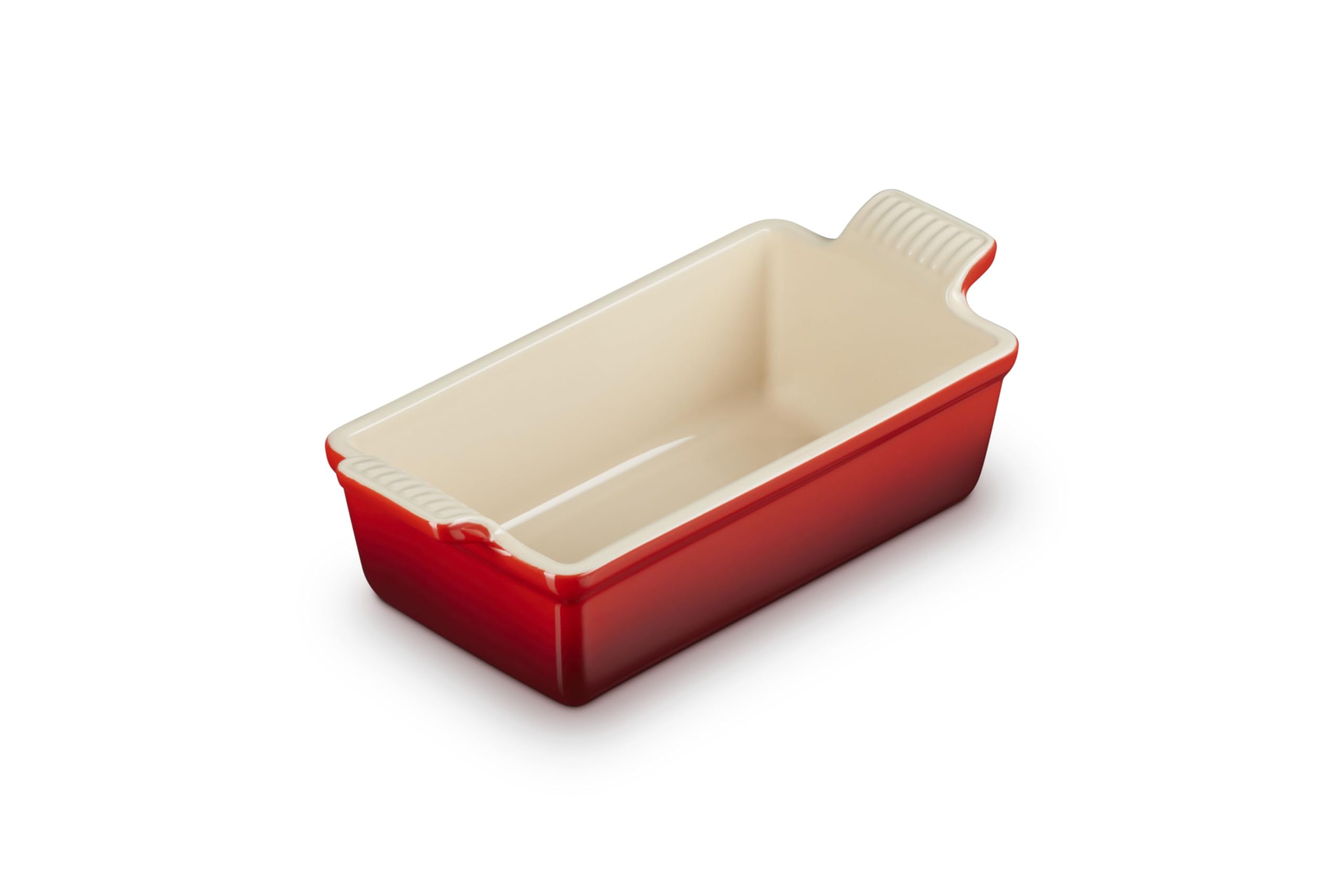
A premium glazed stoneware pan with a scratch-resistant cerise enamel finish.
Quality is the word that defines this pan — it is the most-praised aspect by a wide margin, with more than seventy owners calling it out. The premium stoneware delivers excellent heat distribution for uniform browning with no hot spots, and the colorful glaze is nonporous, non-reactive, and scratch-resistant. The 1.5-quart capacity, sized at 9″L x 5″W x 3″H, is the classic loaf size that works for sourdough, pumpkin bread, and even small dinner casseroles.
What sets this apart from the unglazed pans on this list is the smooth enamel interior. It releases food easily for quick cleanup, resists staining and flavor absorption, and wipes clean in seconds — owners routinely call it the easiest pan to wash they have owned. The thermal range is exceptional at -9°F to 500°F, so you can freeze and bake in the same dish, and it is safe in the oven, microwave, broiler, and dishwasher. The limited lifetime warranty backs up the premium price.
Compared to the KOOV above, this one trades a little raw durability for a vastly easier cleaning experience and a far more refined look. The main debate among owners is sturdiness — while most find it rock solid, a few report fragility if knocked. It is the pan to buy if you want a beautiful workhorse that doubles as a serving piece.
The premium difference
- Scratch-resistant, stain-resistant enamel glaze
- Thermal range from -9°F to 500°F
- Releases food easily, cleans up in seconds
- Limited lifetime warranty included
The premium cost
- Priciest standard-size option on this list
- Some owners find it fragile if dropped
Worth it for: bakers who want a gorgeous, easy-to-clean pan that will last decades and matches a Le Creuset collection.
Reconsider if: your budget is tight or you need an unglazed surface for crackly artisan crusts.
7. Sassafras Superstone Covered Bread Baker
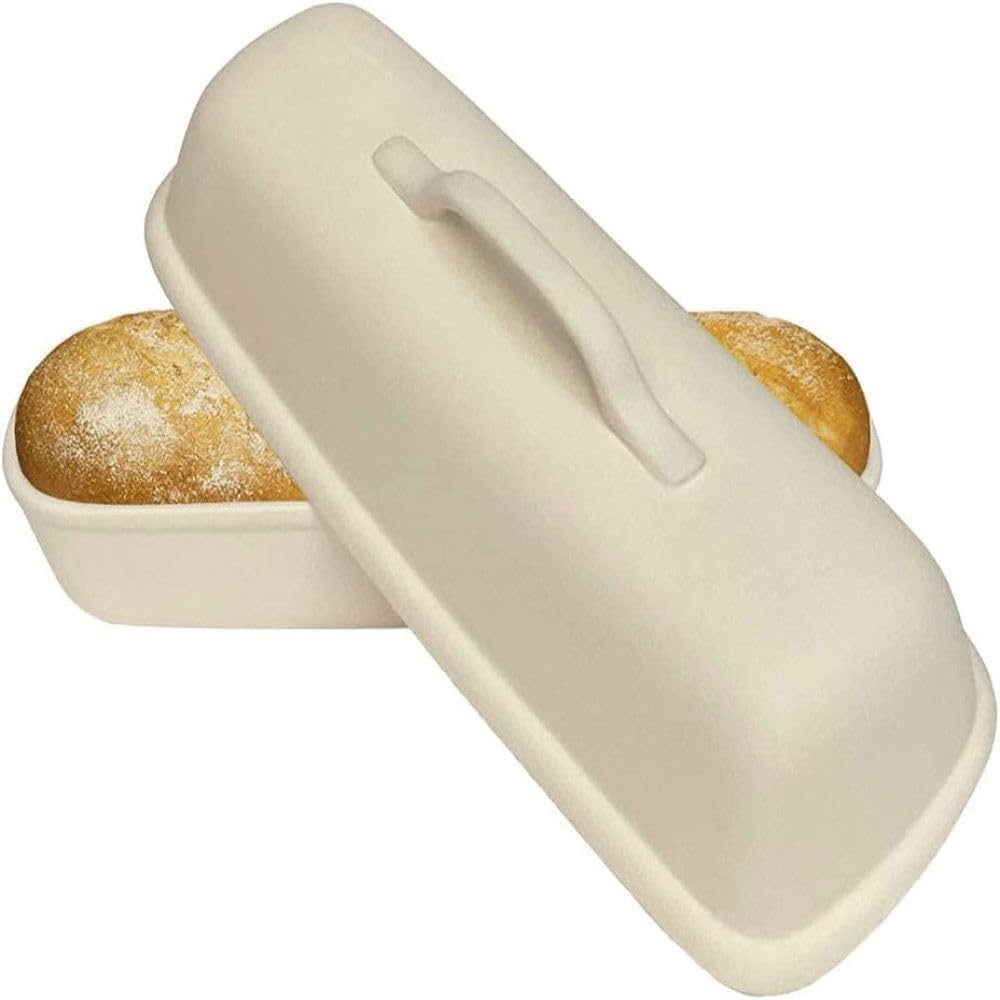
A covered stoneware baker praised by over 130 owners for its crackly artisan crust.
Quality leads the praise here by a landslide — more than 130 owners call it out — but the real star is the crust. The unglazed interior pulls moisture from the dough to produce a crackly, deeply browned exterior with a light crumb inside, and the crust aspect earns over ninety mentions. Owners who have kept theirs for over six years report it still turns out bakery-quality loaves with a higher rise and crisp artisanal crust.
At 15″L x 5″W x 7″H and 6.5 pounds, this is a substantial piece of stoneware that mimics a professional brick-lined bread oven. It handles temperatures over 500°F, and the manufacturer notes it is fired at 2100°F, so it is built for serious heat. The glazed exterior looks classy on the counter, while the unglazed interior does the work. Owners find the lid handle useful, though some wish for end handles to make oven removal easier.
Compared to the Superstone above, this one is heavier and draws even more effusive crust praise, but it shares the same core caution: overfilling makes the lid stick, and a few units arrive chipped from shipping. Owners have a clear workaround — season with oil, dust with cornmeal, and avoid overfilling. This is the pan for someone who treats bread baking as a craft.
The craft-level results
- Crackly, deeply browned crusts with light crumb
- Withstands temperatures over 500°F
- Proven to last 6+ years of regular use
- Glazed exterior looks elegant on the counter
The careful-craft reality
- Heavy at 6.5 pounds, awkward to lift hot
- Overfilling sticks the lid to the bread
Made for: serious sourdough and artisan bakers who want the closest thing to a brick oven at home.
Pass on it if: you want a lightweight pan or bake mostly sandwich bread.
8. Emile Henry Italian Bread Loaf Baker

A French ceramic classic that turns out picture-perfect sandwich loaves.
Quality is the dominant theme in owner feedback — over a hundred buyers single it out — and baking performance runs a close second. This covered baker from Emile Henry is specifically designed for artisan loaves with crisp, golden crusts and chewy, airy interiors. The domed lid and ceramic walls trap steam to create that dry, crackling exterior, while the ridged base prevents the dough from sticking. It is the pan owners reach for when they want a loaf that fits perfectly in a sandwich container.
At 13.4″L x 5.3″W x 5.5″H and 6.6 pounds, it handles a full kilogram of dough at once, and owners love that it needs no greasing or parchment for most bakes. The base fits neatly inside the lid for compact storage, and the lid handles make it easy to maneuver. It is lighter and cools faster than cast iron, which owners repeatedly cite as a winning advantage. The 10-year manufacturer warranty and included recipe book add real long-term confidence.
Unlike the unglazed pans above, this ceramic baker gives a slightly less crunchy crust than a Dutch oven, which owners actually prefer for sandwiches. The durability debate is the one honest split — many call it very durable, while others report fragility. The ridged base is the feature that wins people over, eliminating the stuck-dough frustration that plagues other covered bakers.
The everyday excellence
- Ridged base prevents dough from sticking
- Lighter and faster-cooling than cast iron
- Bakes a full kilogram of dough at once
- 10-year manufacturer warranty included
Know before you buy
- Crust is less crunchy than a Dutch oven
- Durability gets mixed feedback from owners
Pick this if: sandwich bread and sourdough are your staples and you want a covered baker with easy release and a 10-year warranty.
Look past it if: you need the absolute crispiest crust possible — an unglazed stoneware option serves that better.
Understanding the Specs
Glazed vs. unglazed interiors
The interior surface of a ceramic loaf pan changes the crust you get. An unglazed stoneware surface pulls moisture from the dough, creating that crackly, artisan-style crust — this is what the Sassafras and Superstone bakers are built around. A glazed enamel interior is smoother, releases food more easily, and gives a softer crust, which is why the Le Creuset and KOOV pans clean up so fast.
Thermal shock resistance
Ceramic expands and contracts with temperature, and sudden swings can crack it. Look for a wide rated range — the Le Creuset handles -9°F to 500°F, while the Sassafras exceeds 500°F. Some pans allow direct freezer-to-oven transfer, but others, like the Ohio Stoneware, need gentler handling. If you plan to freeze dough, check this spec before buying.
Capacity and dough fit
A standard loaf pan holds around 1.5 quarts, which fits most quick bread and sourdough recipes. Mini pans at 6.2 inches are for individual servings and gifts. Wet, high-hydration dough rises more, so an overfilled pan will stick to the lid or overflow. Match the pan to your recipe yield so you never clean dough off the oven floor.
Heat tolerance for high-temp baking
Most ceramic loaf pans are oven safe to around 400-500°F, which covers standard bread baking. If you preheat the pan empty for artisan loaves, you want the higher end of that range. The KOOV and Ohio Stoneware both rate to 500°F, giving you headroom. Always confirm your pan’s limit before cranking the oven.
FAQ
What is the difference between glazed and unglazed ceramic loaf pans?
Can I put a ceramic loaf pan directly from the freezer into a hot oven?
Why does my bread stick to a ceramic loaf pan?
Will ceramic loaf pans crack in the dishwasher?
How big a loaf can a 9-inch ceramic loaf pan hold?
Is ceramic or metal better for baking bread?
Why is a covered baker better for artisan bread?
Are mini loaf pans worth buying?
Why did my ceramic loaf pan crack during shipping?
Is the Emile Henry loaf pan worth the higher price?
Final Thoughts: The Verdict
For most people, the ceramic loaf pan winner is the Wisenvoy Porcelain Loaf Pan because it combines a true 9.8-inch loaf size, freezer-to-oven convenience, and a hand-painted look that makes it the crowd favorite. If you want high-temp durability for frequent baking, grab the KOOV Ceramic Loaf Pan with its 500°F stoneware. And for artisan sourdough with crackly crusts, the Sassafras Covered Bread Baker is the one to reach for — the thing everyone raves about is that bakery-quality crust, and it has the review volume to back it up.
How We Picked
We do not accept paid placement. Every pick is matched to a real buyer and a real use-case; we do not hands-on test units.
Sources & Methodology
Specifications: manufacturer listings and product documentation. Review insights: verified customer reviews, as of August 2026. Pricing: not shown on this page (it changes often); check the current price via the retailer link.
As an Amazon Associate, Gadgets Feed earns from qualifying purchases. This does not affect which products we feature.