
Every summer, those south-facing windows turn rooms into greenhouses, driving up AC bills and baking your furniture until it cracks and fades. The fix isn’t curtains or blinds — it’s a film that actually rejects infrared heat at the molecular level while keeping your view clear. Ceramic tint for home windows uses nano-ceramic particles embedded in the film to selectively block solar energy without the mirror-like glare of traditional metallic films.
I’m Min — the co-founder and writer behind Gadgets Feed. After analyzing hundreds of spec sheets, customer install reports, and measured UV/IR rejection rates across the most popular residential window films, I’ve separated the films that actually perform from those that just look good on paper.
Whether you’re fighting afternoon heat spikes, protecting hardwood floors from sun damage, or simply wanting daytime privacy without losing natural light, this guide breaks down the specs that matter for finding the best ceramic tint for home windows for your specific windows and budget.
How To Choose The Best Ceramic Tint For Home Windows
Not all window films are equal. The key metric is IR (infrared) rejection — the percentage of solar heat the film stops before it passes through the glass. A ceramic film with 95%+ IR rejection will drop a sun-facing room by several degrees on a 95°F day, while a standard dyed film might only achieve 30-40% rejection. The other critical spec is VLT (Visible Light Transmission), which dictates how much natural light enters and how much daytime privacy you get. Choose a VLT below 20% for strong privacy and heat blocking, or 50-75% if you want maximum light with moderate heat reduction. Finally, installation type matters: static-cling films avoid adhesive residue and work on rentals, while adhesive ceramic films bond permanently for longer durability but require precise application.
VLT Percentage: The Light vs. Privacy Tradeoff
VLT determines how dark the film appears from both sides. A 5% VLT is nearly limo-black and blocks almost all visible light, giving maximum daytime privacy and heat reduction — but it makes rooms feel like a cave and may violate local building codes for egress windows. A 35% VLT is the sweet spot for most homes: it reduces glare and heat significantly while maintaining decent outward visibility and natural light. For rooms where you want minimal visual change, a 70-75% VLT ceramic film is nearly clear but still blocks 99% of UV and most IR heat — you get the energy savings without the darkened look.
Adhesive vs. Static Cling: Permanent Bond vs. Flexibility
Static-cling films (non-adhesive) install using only soapy water and rely on electrostatic adhesion to the glass. They’re removable without residue, making them ideal for apartments or rental homes, but they can peel over time in direct sunlight and typically can’t be used on double-pane windows due to heat buildup between panes. Adhesive ceramic films use a pressure-sensitive glue that bonds permanently to the glass, offering better long-term adhesion and heat rejection, but they require much more careful installation — any dust or bubble under the film becomes permanent. Adhesive films are generally the right choice for single-pane windows in owned homes where you want a permanent energy solution.
Quick Comparison
On smaller screens, swipe sideways to see the full table.
| Model | Category | Best For | Key Spec | Amazon |
|---|---|---|---|---|
| Snapguard 75% Ceramic | Premium Ceramic | High light + high heat rejection | 99% UV, 99% IR, 75% VLT | Amazon |
| United 2PLY Nano Ceramic | Pro-Grade Dual Layer | Maximum heat rejection & clarity | IR-95 rejection, 35% VLT | Amazon |
| Snapguard Solutions 70% Tint | Mid-Range Ceramic | Budget-friendly ceramic upgrade | 99% UV, 2 mils thin, 70% VLT | Amazon |
| IAQWE 35% Ceramic | Multi-Roll Value | Large coverage at low per-sq-ft cost | 99% UV, 35% VLT, 40x100ft | Amazon |
| KESPEN Black-Silver Reflective | Daytime Privacy | Daytime mirror privacy + heat reduction | 90% UV, 12% VLT, 24 sq ft | Amazon |
| STATINT Reflective Film | Budget Static Cling | Apartment-friendly removable install | 90% UV, 13% VLT, 24 sq ft | Amazon |
| RockRose 5% Carbon Film | Deep Privacy Roll | Maximum darkness for privacy | 99% UV, 5% VLT, 100ft roll | Amazon |
In‑Depth Reviews
1. Snapguard Solutions 75% VLT Nano Ceramic Home Window Tint

This is the film you want when you care about heat rejection first and barely want to notice the tint at all. At 75% VLT, the Snapguard ceramic film is nearly clear — it lets in most natural light while still blocking 99% of UV rays and up to 99% of infrared radiation. That IR number is what actually drops the room temperature, and at this VLT, you get the energy savings without the dark, cave-like feel of lower-percentage films. It’s a 5×10 foot roll covering 50 square feet, enough for several standard residential windows.
Installation requires the adhesive peel-and-stick method, which means you need a perfectly clean glass surface, a sharp blade, and a quality squeegee — but the payoff is a permanent bond that won’t lift in direct sun. Customer feedback highlights significant temperature drops on south-facing windows, with multiple users noting their AC ran less frequently after application. The film has a very subtle light-blue hue that’s barely noticeable, maintaining clear HD views outward during the day.
The one catch is compatibility: Snapguard explicitly warns against using this on double-pane or insulated glass units, as the heat buildup between panes can cause seal failure. For standard single-pane home windows, however, this is the most balanced ceramic option on the market — you get premium IR rejection with minimal visual compromise. If you want privacy at night, you’ll still need curtains because the 75% VLT doesn’t create a one-way mirror effect.
Why it’s great
- Blocks 99% of UV and up to 99% of IR heat for real energy savings
- High 75% VLT keeps rooms bright while reducing glare
- Permanent adhesive bond lasts years if installed correctly
Good to know
- Not compatible with double-pane or insulated glass windows
- Adhesive installation requires precision — dust or bubbles are permanent
- Does not provide nighttime privacy; curtains still needed after dark
2. United 2PLY Nano Ceramic Pro Window Tint Film 35% VLT
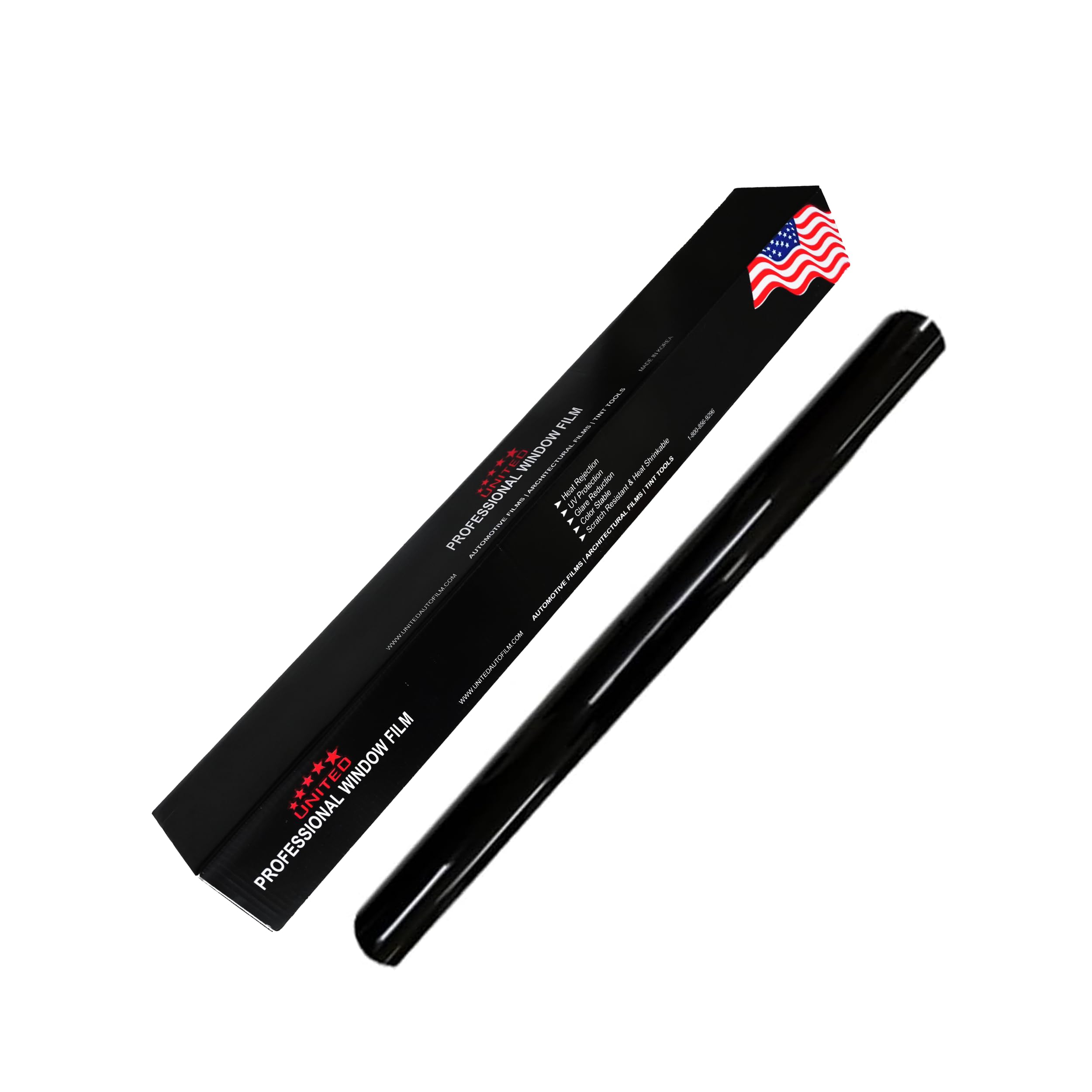
The United 2PLY ceramic film uses two distinct layers of nano-ceramic particles embedded in PET and laminate adhesive, which is an unusual construction for residential film. Most single-ply ceramic films achieve around 50-60% TSER (Total Solar Energy Rejection), but this dual-layer design pushes IR rejection to 90-95%, meaning it stops nearly all infrared heat before it passes through the glass. At 35% VLT, it provides solid daytime privacy while maintaining clear visibility at night — a balance that’s hard to find in darker films.
This film supports both wet and dry heat-shrink installation, which is the method professionals use to conform film to curved or oddly-shaped windows. It’s non-metalized, so there’s zero risk of signal interference with Wi-Fi, GPS, or cellular reception — a problem many older reflective films cause inside homes. The 24-inch x 100-foot roll gives you 200 square feet of coverage, enough for multiple large windows or even a small storefront.
Some users note the film has a slight greenish tint rather than a pure gray or black appearance, which may not suit everyone’s aesthetic preferences. The installation process is also demanding — this is not a beginner film due to its thickness and the heat-shrink requirement. But if you’re looking for the highest IR rejection available in a residential ceramic film and have the patience for a proper install, this dual-layer construction delivers measurable room temperature drops that thinner single-ply films can’t match.
Why it’s great
- Dual-layer ceramic construction achieves IR-95 heat rejection
- Non-metalized design preserves cell and Wi-Fi signal inside the home
- Heat-shrink compatible for professional-grade conforming to curved glass
Good to know
- Some users report a greenish tint rather than neutral gray
- Requires heat gun and experience for proper installation
- High upfront cost compared to single-ply ceramic films
3. Snapguard Solutions Residential Ceramic Window Tint 70%

If you want ceramic-level heat rejection at a price that undercuts the premium brands by a wide margin, this Snapguard 70% film is the entry point. At 2 mils thick, it’s noticeably thinner than the premium dual-layer films, which actually makes it easier to install on flat residential windows — less stiffness means it conforms faster with fewer bubbles. It blocks 99% of UV and claims 95-99% IR rejection, though at this price point the real-world IR number likely sits at the lower end of that range.
The 70% VLT keeps rooms bright while cutting glare, similar to the premium Snapguard 75% film above, but this version uses static-cling installation rather than adhesive. That makes it removable without leaving residue, which is ideal for renters or anyone who might want to change films seasonally. The 3×12 foot roll covers 36 square feet, a good size for a couple of large living room windows or a sliding glass door.
The thin film does have a tradeoff: it’s more prone to tearing during installation if you use a dull blade, and the static cling may weaken over time in windows that get extreme direct sun exposure for years. Some users also note the film isn’t dark enough to provide meaningful daytime privacy — at 70% VLT, people can still see silhouettes inside. For pure heat reduction on a budget, though, this ceramic film outperforms any dyed or carbon film at twice the price.
Why it’s great
- Ceramic IR and UV protection at an accessible price point
- Static-cling installation is removable and residue-free
- Thin 2-mil film is easier to install on flat windows
Good to know
- Thin film tears easily with dull blades during install
- Not dark enough for significant daytime privacy
- Static cling may weaken with long-term direct sun exposure
4. IAQWE 35% VLT Ceramic Car Window Tint Film 40×100 ft
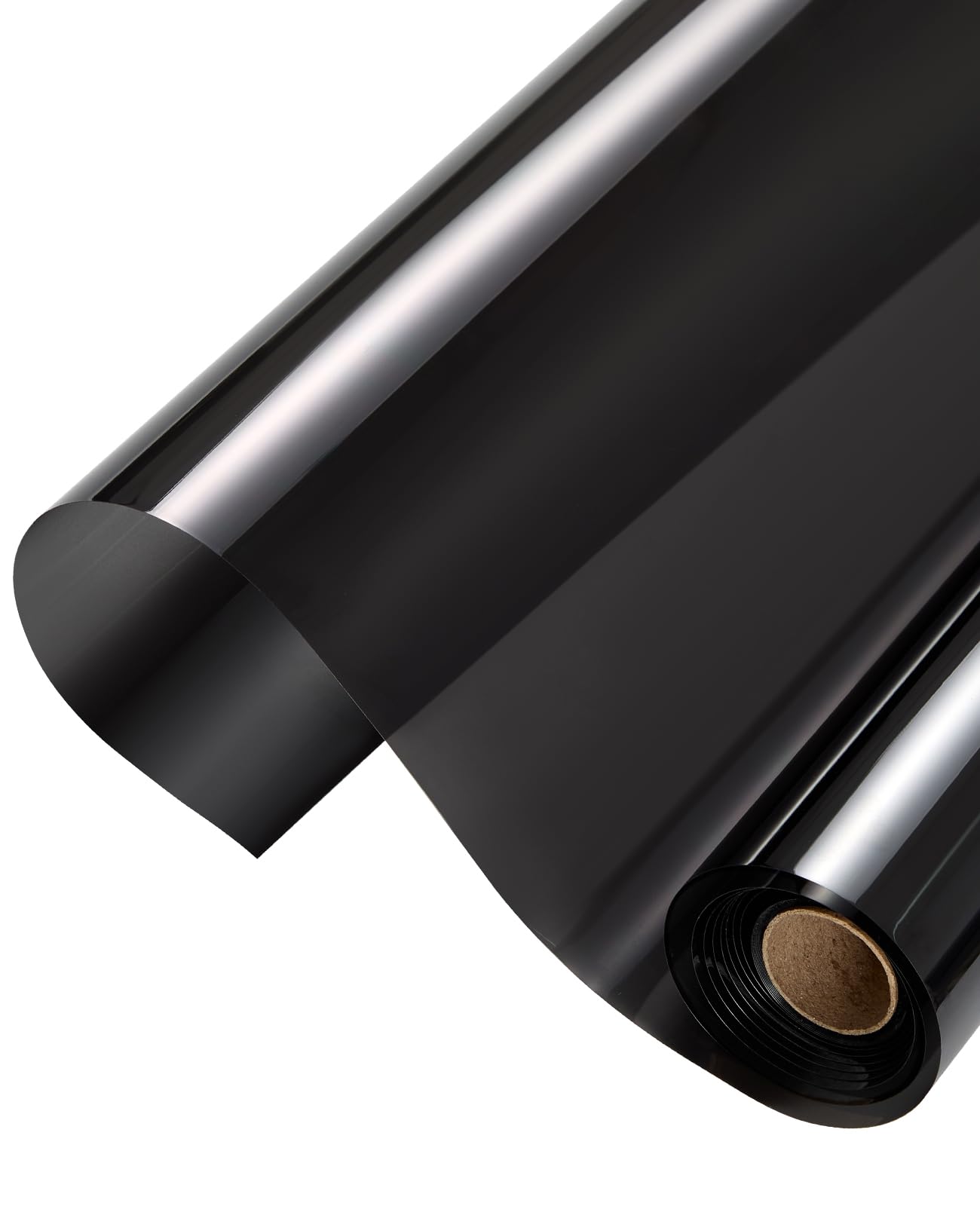
While marketed as a car tint, the IAQWE ceramic film works equally well on home windows — and the massive 40-inch x 100-foot roll gives you enough material to tint an entire house at a per-square-foot cost that’s hard to beat. The 35% VLT provides the classic privacy-and-visibility balance that most homeowners want: strong daytime privacy and significant glare reduction, while still allowing enough light to keep rooms from feeling like a basement. At 99% UV rejection, your floors and furniture are fully protected from fading.
The peel-and-stick adhesive installation is straightforward for flat glass surfaces, and the ceramic construction means no metal content to interfere with home Wi-Fi or cell signals. The film also includes a scratch-resistant surface layer that holds up against cleaning and accidental contact — a feature often missing from budget-oriented tint films. Several reviewers report successfully using this on large home windows and sliding doors with noticeable heat reduction.
There are quality control concerns, however. Some rolls arrive with inconsistent adhesive strength — the film can struggle to stay stuck at the edges if not perfectly installed. The 40-inch width is also more than most home windows need, meaning you’ll be cutting off substantial waste strips. For whole-house projects where coverage area and budget are the primary constraints, this roll delivers massive value, but expect to spend extra time trimming and possibly dealing with edge lift on certain windows.
Why it’s great
- 100-foot roll covers an entire house at a low per-square-foot cost
- 35% VLT balances daytime privacy with natural light
- Scratch-resistant surface holds up to window cleaning
Good to know
- Adhesive quality can be inconsistent between production batches
- 40-inch width creates waste on standard residential windows
- Film is thin and tears more easily than premium options
5. KESPEN Window Film One Way Daytime Privacy Reflective Tint

KESPEN’s reflective film is the traditional approach to window privacy — a metallic, mirror-like finish outside that transforms into a tinted view from inside during daylight hours. At 12% VLT, it’s significantly darker than ceramic options, which means it blocks more visible light and creates stronger one-way privacy. The tradeoff is that at night, when interior lights are on, the mirror effect reverses completely and people can see in from outside — so curtains are mandatory after dark.
The static-cling installation is straightforward and residue-free, making it a strong choice for apartments where you can’t permanently alter the windows. Blocking 90% of UV and 82% of IR rays, it performs well on heat reduction despite not being a true ceramic film. The black-silver finish gives windows a modern, uniform appearance from the street, and the 35.4 x 98.4 inch roll covers about 24 square feet per pack.
Because this is a reflective film, not a nano-ceramic one, the heat rejection comes from reflecting sunlight rather than absorbing and dissipating it — which means the glass itself can get hotter to the touch. That’s fine for single-pane windows but problematic for double-pane units where the heat buildup between panes can stress the seal. If you want the classic mirrored look and are on a tight budget, this is a solid performer, but it lacks the signal-friendly, non-reflective benefits of true ceramic construction.
Why it’s great
- Strong daytime one-way mirror privacy at 12% VLT
- Static-cling install is removable and leaves no residue
- Blocks 90% UV and 82% IR for noticeable heat reduction
Good to know
- Nighttime privacy requires curtains — mirror effect reverses with interior lights
- Reflective film can heat up the glass itself rather than absorbing heat
- Not recommended for double-pane or insulated glass windows
6. STATINT Window Tinting Film Daytime Privacy Reflective Film

STATINT’s reflective film is the entry-level option for homeowners who want immediate heat and glare reduction at the lowest possible cost per window. At 13% VLT, it’s almost as dark as the KESPEN film above, providing strong daytime privacy through its reflective silver exterior. It blocks 90% of UV and 82% of infrared rays — the same specs as the KESPEN film for a slightly lower price, making this the most affordable option for covering multiple windows on a budget.
The static-cling design means no glue, no chemicals, and easy removal — a critical feature for renters. The film is thick and durable compared to budget dyed films, and users consistently report that it cuts cleanly with a sharp blade and installs smoothly when using plenty of soapy water. The 35.4 x 98.4 inch roll covers 24.19 square feet, enough for one large picture window or two standard-sized windows.
There are tradeoffs at this price point. The film is prone to creasing during unrolling if you’re not careful, and the reflective finish can look somewhat aluminum-foil-like from the outside, which some homeowners find less aesthetically pleasing than a true ceramic tint. Like all reflective films, it’s not suitable for double-pane windows, and the daytime-only privacy means you’ll need curtains at night. For pure function at the lowest cost, however, this film delivers real temperature drops and UV protection that justifies its place as a solid budget starting point.
Why it’s great
- Lowest-cost option for heat and UV protection per square foot
- Static-cling install requires no glue and leaves zero residue on removal
- Thick vinyl film holds up well during installation
Good to know
- Reflective exterior has a noticeable aluminum-foil appearance
- Film creases easily if not handled carefully during unrolling
- Not for double-pane glass and requires curtains at night
7. RockRose 5% Car Window Tint 36x100FT Carbon Charcoal Film
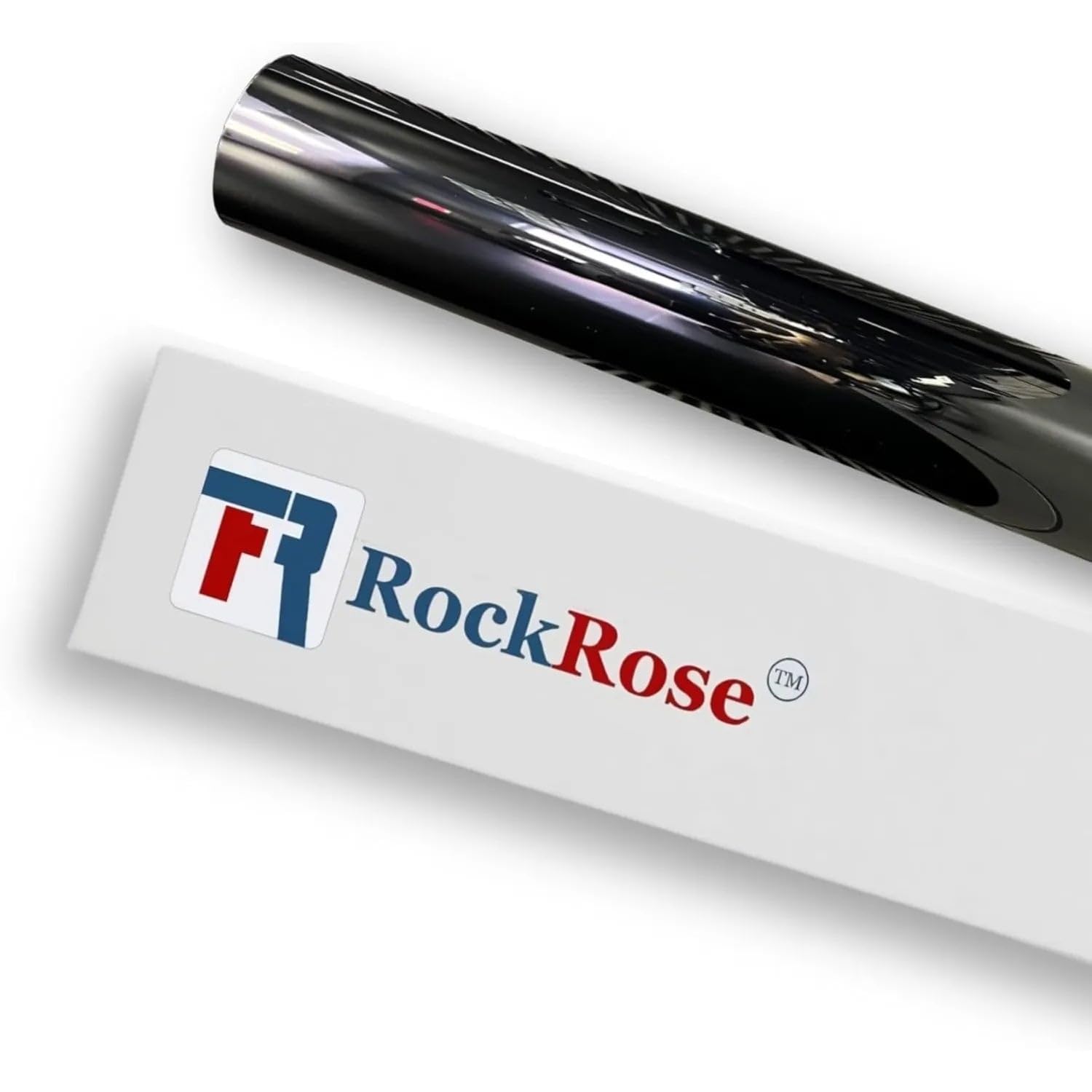
The RockRose carbon film at 5% VLT is the darkest option in this lineup, letting in only 5% of visible light — enough to see shapes and movement but nothing more. This is the film you choose for a home office or bedroom window where you want absolute daytime privacy and maximum glare elimination. The carbon construction isn’t true ceramic, so IR rejection sits at around 35% rather than the 95%+ of premium ceramic films, but it does block 99% of UV rays to protect interiors from fading.
This is a heat-shrink adhesive film, meaning it requires a heat gun to conform to the glass surface during installation — not a beginner-friendly process. The 36-inch by 100-foot roll gives you massive coverage (300 square feet) for the price, making it one of the most cost-effective options for tinting an entire home if you don’t mind the extremely dark appearance. The charcoal finish provides a sleek, non-reflective look that avoids the mirrored appearance of traditional reflective films.
The major caveat is that 5% VLT is very dark — rooms will feel like a dimly lit movie theater during the day, and you may need additional interior lighting to compensate. Some local building codes also restrict VLT below a certain percentage for egress windows. Additionally, the carbon film’s heat rejection comes primarily from absorption rather than reflection, meaning the glass itself can get hot — this is why carbon films are less effective than ceramic for actually lowering room temperature. For privacy at the deepest level, this works. For heat control, a lighter ceramic film is the better investment.
Why it’s great
- Near-total privacy with only 5% visible light transmission
- Massive 100-foot roll covers an entire home affordably
- Non-reflective charcoal finish avoids mirrored appearance
Good to know
- 5% VLT is extremely dark — rooms need additional artificial lighting
- Carbon film absorbs heat rather than reflecting it, so glass gets hot
- Heat-shrink installation requires a heat gun and experience
FAQ
Can I use ceramic window tint on double-pane windows?
Does ceramic window tint really lower room temperature or is it just marketing?
What’s the difference between ceramic tint and carbon tint for home windows?
Final Thoughts: The Verdict
For most users, the best ceramic tint for home windows winner is the Snapguard Solutions 75% VLT Nano Ceramic film because it delivers premium IR and UV rejection while remaining nearly invisible, preserving your natural light and view. If you need maximum heat rejection and have the patience for a demanding installation, the United 2PLY Nano Ceramic Pro film offers the highest IR-95 performance in a dual-layer construction. And for budget-conscious shoppers who still want ceramic-level performance, the Snapguard 70% VLT ceramic film provides the same UV protection at a fraction of the cost — ideal for renters or covering multiple windows at once.