
Our readers keep the lights on and my morning glass full of iced black tea. As an Amazon Associate, I earn from qualifying purchases.
Specs are compiled from manufacturer listings and verified buyer reviews and can change over time — please confirm the key details on the product page before buying.
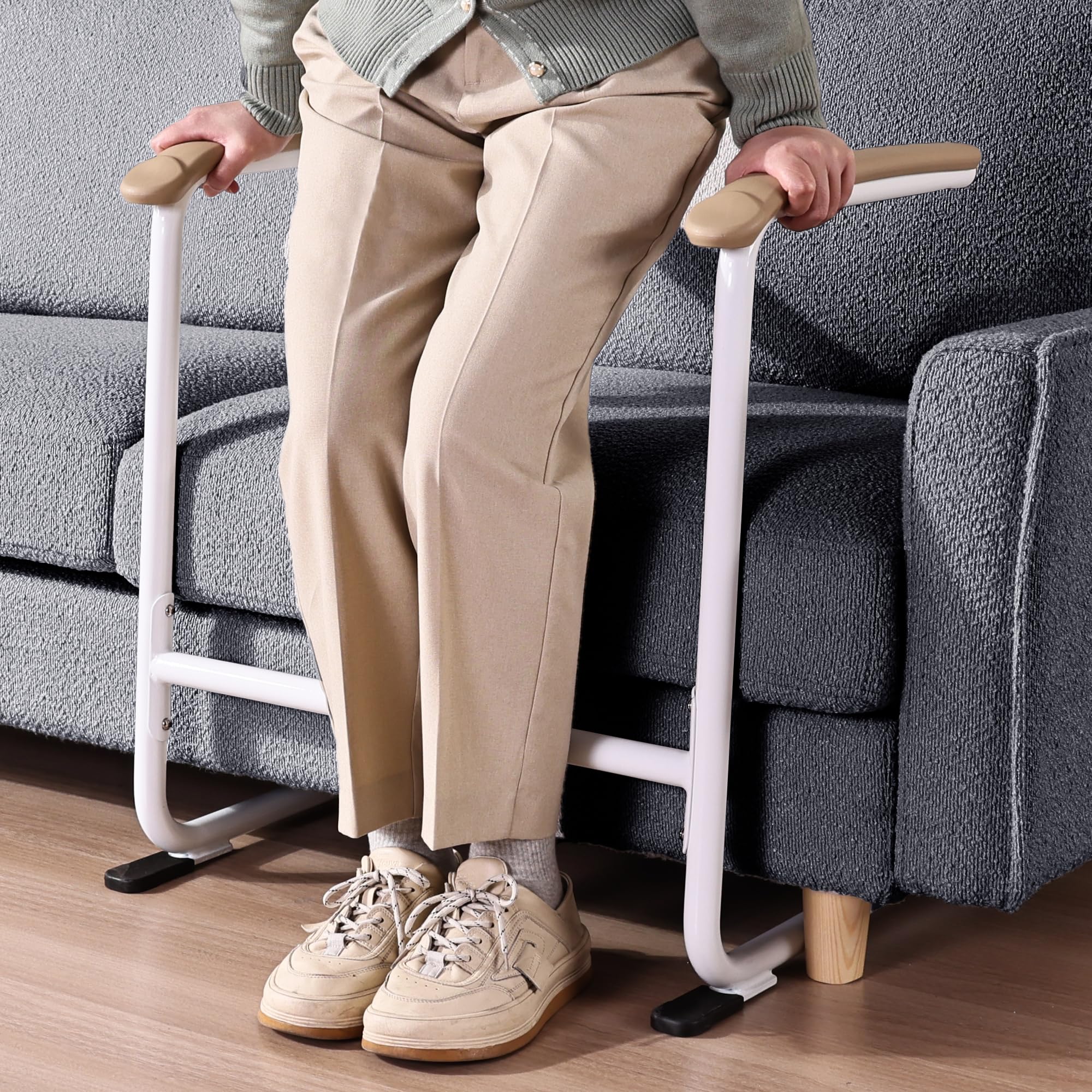
If getting up from your favorite chair has turned into a slow, careful negotiation, a good chair assist fixes the problem at its source — it gives you a solid handle to pull against so your legs do less of the work. This guide covers nine stand-assist devices built specifically to help you rise from a couch, recliner, or chair safely, plus the one truth most listings bury: fit matters more than features. Furniture height, seat width, and cushion type decide whether any of these actually works in your living room.
I’m Min — the founder and writer behind Gadgets Feed. This guide is built by comparing the manufacturers’ published specifications and the patterns across verified customer reviews, so you get each pick’s real strengths and trade-offs instead of marketing spin.
Some picks below are flexible matches rather than the exact model you searched, because the nearest same-type stand-assist serves the same purpose. What matters is the mechanical job each one does — lift, brace, or boost — and whether your couch will accept it. Every pick here is a genuine sit-to-stand helper, and the right shortlist for a chair assist for elderly starts with measuring your furniture before you buy.
Our Picks at a Glance


How To Choose The Best Chair Assist For Elderly
Start with the couch, not the product. Every stand assist in this guide works by giving you a rigid handle to pull against while your legs push — so the question that decides everything is whether the device physically fits your furniture. Grab a tape measure and check three numbers: seat height from the floor, seat depth, and the width between your chair’s legs or the gap under the base. A device that fits properly takes almost no effort to install and stays planted when you lean on it.
Match the device type to your furniture
Under-cushion frames slide between your cushion and the sofa base, which hides them but can create a lump if the bars land wrong. Freestanding rails sit on the floor and get trapped under the furniture legs, which stays put but usually needs four-legged furniture. Powered lifting cushions sit on top of the seat and push you upward. None of them is better across the board — they simply suit different furniture and different amounts of remaining leg strength.
Check the weight rating against the real user
Support ratings in this category run from around 220 pounds up to 500 pounds, and the rating describes the load the frame or cushion is built to bear, not just the user’s weight. If the person using it leans hard with both hands while pushing off, choose a frame with headroom above their body weight. A rail that flexes under load is worse than no rail, because it trains you to trust something that moves.
Think about who moves it and how often
A device that stays under one couch forever can be heavy and rock-solid. A device that travels between the living room and the bedroom needs to be light enough for one person to carry. Several picks here weigh between seven and a half and thirty pounds, and that spread is exactly the portability-versus-stability trade-off you are shopping inside. Decide which one your household actually needs before comparing anything else.
Quick Comparison
| Model | Best For | Weight Capacity | Handle Height | Unit Weight | Amazon |
|---|---|---|---|---|---|
| Stander EZ Stand-N-Go★ Best Overall | Cushioned couches and recliners | 300 lbs | 7–11 in above frame | 7.64 lbs | Amazon |
| 6-Level Adjustable Couch Stand AssistTop Performer | Deep sofas needing non-slip footing | 330 lbs | 27.6–31.5 in | 14.33 lbs | Amazon |
| Skuehod Couch Stand Assist AidMost Portable | Moving an assist between rooms | — | 25.5 in (fixed) | 9 lbs | Amazon |
| yeezoo Adjustable Couch Lift Assist | Four height settings for varied furniture | 300 lbs | 25.6–31.6 in | 17.5 lbs | Amazon |
| Carex Upeasy Seat Assist | Portable lift on hard chairs | 220 lbs | Built-in cushion lift | 9 lbs | Amazon |
| Coocure Couch Stand Assist Rail | Heavy-load freestanding support | 500 lbs | Five support bar positions | 28 lbs | Amazon |
| Able Life Universal Chair Cane | Wide four-legged chairs | 250 lbs | 32.5–36 in | 14.05 lbs | Amazon |
| Stander CouchCane | Long-term stability under couch legs | 250 lbs | 34–40 in | 19 lbs | Amazon |
| SeatBoost Electric Lifting Cushion v2 | Maximum powered lift on any seat | 240 lbs | Built-in power lift | 8.5 lbs | Amazon |
In‑Depth Reviews
1. Stander EZ Stand-N-Go, Chair Lift Assist for Elderly
Our pick — over 4★ from 800+ verified ratings; the strongest balance of quality and price.
The seven-and-a-half-pound frame that hides under your cushion and still holds 300 pounds.
This is the stand assist the rest of this list gets measured against, and the reason is simple: it does the job from inside the furniture instead of standing beside it. The frame slides around or under your cushion — the maker says it works with fixed, stitched, or removable cushion styles — and the two handles rise 7 to 11 inches above the horizontal frame so you get a grip at whatever height your wrists prefer. It carries up to 300 pounds, which covers the vast majority of users with real headroom.
What wins people over is utility: making it materially easier to sit down and get back up, which is exactly what you are buying. Assembly is the second thing owners talk about, and it earns the praise — most buyers are up and running without calling anyone for help, which matters when the person who needs it is not the person doing the installing. There is also a quiet advantage over a big lift chair: it builds arm strength because you are still doing part of the work yourself, rather than being floated to your feet.
The catch is furniture fit, and it is worth being precise about. Because the supports run under the cushion, one-piece slipcovers fight you, and some recliners simply will not accept the bars in the right position. Measure first: the maker lists compatibility for cushions sitting 12 to 21 inches above the floor, 19 to 26 inches wide, and 24 to 27 inches deep, and outside that window you are gambling. As buyers put it, “This not only gives me stability while sitting, but also gives me a good handle to hold while standing.”
Where it earns its keep
- 300-pound capacity with handles adjustable 7 to 11 inches above the frame
- Sits inside the furniture, so nothing sticks out into the walking path
- 7.64 pounds makes it the lightest under-cushion frame on this list
- Works with fixed, stitched, or removable cushions
Where it asks for your patience
- One-piece slipcovers make installation awkward
- Some recliner frames will not accept it at the right depth
- The bar under the cushion can feel like a lump if it lands badly
Reach for this if: you have a standard cushioned couch or recliner and want the assist to disappear into the furniture.
Look elsewhere if: you cannot measure before buying, or your sofa has a one-piece cover with no removable cushion.
2. 6-Level Height Adjustable Couch Stand Assist for Seniors
A carbon-steel frame with a crossbar and six height stops, built to take 330 pounds without wobbling.
Where the EZ Stand-N-Go hides inside the cushion, this one is a bolted carbon-steel structure you tune to your exact seat height. Six adjustment settings run from 27.6 inches to 31.5 inches, and the frame itself is 21.4 inches wide — wide enough to feel substantial, tight enough to suit most body types. The add-on crossbar stiffens the whole thing, and four rubber foot pads keep it from sliding while protecting your floor. Up top, it carries 330 pounds, the highest rating of any under-frame pick here.
The reason owners reach for this over a plain rail is the extra rigidity, and it shows in what they report: it does the job well for elderly parents and helps people get upright after knee replacement. A pin secures each height setting, so switching between the couch and a dining chair is a matter of pulling one pin rather than rebuilding anything. Five assembly steps is all the maker asks for, and the whole sequence is short enough that most people finish it before their tea goes cold.
There is real size to this thing — 14.33 pounds and a footprint measuring 28.74 by 14.93 by 3.94 inches, versus 1.99 by 12 by 19 inches for the EZ Stand-N-Go above. That bulk buys you stability, but it is not a device you tuck under one arm and carry between rooms. The compatibility window is also specific: sofas need to be over 24.4 inches wide, over 20 inches deep, and have more than 1.38 inches of clearance underneath. Petite users may find the frame wider than they want.
On build and footing: carbon steel plus a strengthening crossbar plus four rubber pads is a combination aimed squarely at eliminating the wobble that makes people distrust a stand assist.
The honest limit: it is the second-heaviest frame on this list, so treat it as a permanent fixture for one couch rather than a travel aid.
Best matched to: a heavier sofa where you want maximum rigidity and a height range that reaches tall seat cushions.
Think twice if: you need something portable, or your user is small enough that a 21.4-inch frame feels oversized.
3. Skuehod Couch Stand Assist Aid for Elderly
Two slender handles and a nine-pound alloy steel base you can actually move by yourself.
This Skuehod rail is built around the reality that a mobility aid is only useful if it lives where the person actually sits. At 9 pounds with a two-bar base, it is light enough for one hand to reposition, and the alloy steel frame carries a couple of slim vertical handles rather than a wide bar. The idea is arm-rail support that takes pressure off knees and hips as you rise, which suits anyone managing knee trouble or general weakness in the legs.
The standout promise here is the outcome for adult children setting this up for a parent. Users in their nineties have been lifted by it, and the pattern in the reviews is consistent: it makes a real difference for very elderly users who need something solid to grab. There is also a two-year manufacturer warranty attached, which is unusually explicit for this category and worth knowing if durability is your worry.
The one honest wrinkle is stability on furniture it was not designed for. This rail wants to slide under a standard couch base, and it struggles against a LazyBoy recliner or any sofa whose metal frame reaches the floor — it will only go back about half way, which leaves the front of the handle doing all the work. On a plain couch with a normal wooden or metal base, it plants properly and behaves. If you can slide it fully under, this is one of the easiest picks here to live with day to day.
Suits you when: the rails need to move between the couch and a chair, and nobody wants to wrestle a heavy frame.
skip it if: your seating is a recliner with a floor-level metal frame — it will not slide back far enough to lock in.
4. yeezoo Adjustable Couch Chair Sofa Lift Assist Bar Rail

Four height stops, an EVA-wrapped grip, and a light grey finish that reads as furniture, not hospital gear.
The yeezoo rail is a freestanding frame you trap under the couch legs or beside a chair, and the four height settings — 25.6, 27.6, 29.6, and 31.6 inches — are the reason it makes this list. That spread covers seat heights from a low armchair up to a tall sofa, so you tune it once and forget it. The frame is built from elliptic metal tubes rather than flat bar, and the grab handle is wrapped in high-density EVA foam, which is the soft, rubbery material you find on good tool grips. It holds up to 300 pounds.
Owners single out two things more than anything else: it does the job, and it feels sturdy — the kind of stiffness that lets you lean your whole weight onto the handle without the frame giving. People have set it up for a parent recovering from an arm fracture and found the height adjustment and over-armrest fit genuinely useful. It also slides easily between locations, so it is not chained to one seat. If you want an assist that stays put without being bolted down, this delivers.
The recurring snag is assembly hardware. The screw design is unconventional enough that some people find it confusing, and a small number have received kits with a screw missing. There is one durability note in the mix too: a reported screw failure after roughly 15 months of use on one unit. Treat the assembly as something to do carefully with the right tools on hand and check every fastener is snug before anyone puts weight on it.
What buyers keep coming back to
- Four distinct height stops from 25.6 to 31.6 inches
- Sturdy under load with a comfortable EVA grip
- 300-pound capacity and a light grey finish that blends in
- Slides between rooms without being fixed in place
What to watch on delivery
- Screw design confuses some buyers during assembly
- A few units have arrived with a screw missing
- At 17.5 pounds it is not meant to double as a walking cane
A strong fit for: households where two different chairs need two different handle heights from one device.
Less ideal if: you want zero assembly fuss — the hardware takes a bit of patience to seat correctly.
5. Carex Upeasy Seat Assist Portable Lifting Seat

A nine-pound cushion that pushes you up without a cord, a battery, or a socket in sight.
This is the odd one out on the list, and that is the point. Instead of a frame you grip, the Upeasy is a cushion you sit on. Inside is a hydro-pneumatic gas spring — a sealed piston that pushes back as you lean forward — and the maker says it delivers up to 70% lift support for users between 95 and 220 pounds. Nothing plugs in, nothing charges, and the nine-pound body with built-in carry handles moves from the armchair to the car without help. It is a genuinely different answer to the same problem.
What wins people over is that it works, and it works for one specific kind of user: someone light enough and stable enough to shift their weight fully back onto the cushion before standing. Post-surgery recoveries are the classic success story here, and the portability is the second theme — it travels easily, which matters when the user splits time between two homes. The polyurethane foam and 100% polyester cover wipe clean with a damp, soapy cloth, so it is not one of those aids you have to treat delicately.
Be honest with yourself about the fit, though. The device needs you to sit well back and center for the spring to have leverage, and users without the balance to reposition themselves will find it does nothing useful. Balance and stability draw the most conflicted feedback of any pick here, with reports of it tilting sideways on soft upholstered couches, sitting too high on dining chairs, and even pushing a user forward rather than lifting. The maker also excludes wheelchairs, cars, recliners, and any chair with wheels — respect that list.
The trade-off in one line: a nine-pound powered cushion that lifts about 70% of the way versus a bolted frame that gives you a fixed handle — one moves easily, the other stays put.
Who should pass: anyone who needs to be lifted rather than helped, or who uses a reclining or wheeled chair.
Worth it for: a mobile, relatively steady user on a firm upright chair who wants lift they can carry anywhere.
Not the right tool if: the user has poor balance or uses soft, deep upholstery where the cushion can shift under them.
6. Coocure Couch Chair Sofa Stand Assist Aid Bar Rail

A 28-pound cast ductile iron rail that carries 500 pounds and does not move when you pull.
If the worry keeping you up at night is whether a rail will hold, this is the answer. Cast ductile iron — a heavy, shock-resistant form of iron — makes up the frame, and the maker rates it to bear up to 500 pounds, far above anything else here. The base plate and grab bar are joined by six screws, which the maker credits for the absence of wobble. The bar itself is 32mm in diameter, a size that fits a hand properly, and the matte finish has three layers of powder coating with smoothed edges rather than sharp ones.
Owners describe it as a genuine lifeline, and it earns that reputation on one specific design choice: since the rail weighs 28 pounds on its own, it can be used freestanding without being trapped under furniture. That makes it usable in spots where a slide-under frame has nothing to grip, and it lets you move it between rooms. Five support-bar positions let you set both the height and the direction of the handle, which suits left- or right-handed use. The five included non-slip covers have a patterned surface and a hook-and-loop backing so they stay put.
The fit notes are worth naming up front. The most-discussed quality topic here is mixed, and assembly draws mixed feedback too — the instructions are not always clear, and a handful of buyers have opened the box to find the screws missing entirely. The weight is also a double-edged spec: 28 pounds stays planted, but it is heavy to wrestle. On a rug or thick pile, you may need something weighing down the base to stop the whole rail shifting.
Why people trust it
- 500-pound rating — the highest carrying capacity on this list
- 28 pounds of cast ductile iron means it stands on its own
- Five support bars set both height and handle direction
- 32mm grip diameter with a smooth powder-coated finish
What to prepare for
- Instructions and assembly divide opinion
- Some units ship without screws
- May need extra weight on the base over a rug
The pick for: a heavier user, or any setup where the rail must stand alone without furniture legs to trap it.
Handle with care if: you want a light device — the 28-pound body is precisely what makes it stable and what makes it a chore to move.
7. Able Life Universal Chair Cane Stand Assist Aid

The chair cane that adjusts in two directions at once, so odd-sized furniture still gets a fit.
Most rails here adjust in one plane. This one adjusts in two: the handle height moves from 32.5 to 36 inches, and the base spreads from 22 to 34.5 inches, which lets it straddle chair legs that are closer or further apart than the average couch. The base pads tuck under four-legged furniture on either side, which is how the rail stays steady — the maker is clear that it is not built for freestanding use. The padded grab bar holds up to 250 pounds.
The thing everyone raves about is the sturdiness, and it shows in how people use it. A user recovering from a broken collarbone or wearing a sling can stand from a chair one-armed by leaning on the cane with the working side, which is a real capability rather than a nicety. It assembles with the included hex wrenches, and owners buy a second one for the other side of the same chair — the clearest possible endorsement of how well it works when you want support on both arms. There is nothing to mount to the ceiling, which keeps installation simple.
The honest cost of that solidity is weight. At 14.05 pounds, it is too heavy to move to a different chair, and multiple owners note it is really not portable — you mount it where you want it and it stays. Spreading the base to fit chair legs means more adjustment, but it also means the rail only truly locks in when the pads sit flat and even. Get that right and it is rock solid; rush it and you will feel the difference.
The two-axis advantage: height from 32.5 to 36 inches and base from 22 to 34.5 inches means fewer furniture setups get left out.
The practical caveat: think of it as a permanent installation for one chair, not a device you carry room to room.
Ideal when: your chair legs fall outside standard spacing, or a one-armed user needs a rigid handle to haul themselves up.
Not for you if: the assist has to travel — 14 pounds stays put, and buying a second unit is the intended answer.
8. Stander CouchCane Standing Assistance Aid with Grab Bar

The couch cane that has been propping people up for years, with a handle that reaches 40 inches.
This is the veteran of the group, and the design shows it. The base traps under the feet of most four-legged chairs spaced 20 to 36 inches apart, and the handle rises from 34 to 40 inches off the floor — the tallest reach on this list, which suits taller users and deeply cushioned seats where your hands end up high. It carries 250 pounds. The reversible base means you can mount it on either side of the chair, and the included four-pocket pouch keeps a phone, glasses, and the TV remote within reach.
The reason people trust it over years, not weeks, is stability: the handle stays rigid because the chair’s own weight pins the base down. That design also eliminates a quiet problem — the seat sliding away as you push out of it, which is a genuine fall risk. Assembly takes minutes and often needs no tools, and it fits under couch legs without fuss. Its longevity is the headline: users report the same unit still doing its job after a decade of daily use, which is the strongest durability signal in this whole guide.
The fit note is the one to check carefully. This cane wants four-legged furniture with feet in the 20-to-36-inch range, and some recliners do not cooperate — the base will not seat properly under the mechanism. The low-profile look is a deliberate part of the appeal, since it matches home furniture rather than announcing itself as medical equipment. If your chair has proper legs at the right spacing, this is among the most solid long-term picks here.
Standout strengths
- Handle height adjusts from 34 to 40 inches off the floor
- Fits four-legged chairs with feet 20 to 36 inches apart
- Chair’s own weight holds the base steady and stops seat sliding
- Ships with a reversible base and a four-pocket organizer pouch
Before you commit
- Won’t seat properly under some recliners
- Requires four-legged furniture — no pedestal bases
- At 19 pounds it is not something you relocate casually
Buy this when: you want a tall-reaching, low-profile cane and the durability to keep it for years.
Measure first if: your recliner mechanism leaves no clear floor space under the feet — that is the one furniture type it may reject.
9. SeatBoost Premium Electric Lifting Cushion v2

The one pick here that does the standing for you, if you accept what it is not.
Every other device on this list helps you pull yourself up. This one pushes. The SeatBoost is an electric lifting cushion that sits on top of your seat, runs off a wall outlet through a 66-inch cord, and lifts up to 240 pounds using a powered motor. The maker is unusually blunt about its purpose: it is for getting you out of a chair, not for comfort, and the listing says outright not to buy it as a seat cushion. If your goal is maximum assistance with the least effort from the user, this is the only pick pitched that way.
Where it shines is the case where the user cannot contribute much effort at all — the maker lists arthritis, ALS, Parkinson’s disease, neuromuscular disorders, and post-surgery recovery as the situations it is built for. It lifts gently and only when needed, and it does not shove you forward the way some spring cushions do. At 8.5 pounds it moves between rooms or travels, which keeps some independence in the picture. For a caregiver lifting a family member repeatedly through the day, that mechanical assist is the whole point.
Here is the hard part, and it needs saying plainly. This pick has the lowest score on the list, and the reliability record is genuinely mixed — the most-discussed topic is whether the unit keeps working, with reports of failure after a few months of use and one account of a unit that struggled under a load lighter than its stated capacity. Comfort is also a split opinion: the memory foam pleases some users and draws complaints of being too hard and too small from others. Consider this the option with the widest spread of outcomes.
The reason to choose it anyway: it is the only pick that lifts rather than braces, which matters when the user has almost no push left in their legs.
The reason to hesitate: at 3.1 stars it is the least consistent pick here, so weigh that against the hands-free lift it offers.
The right call if: the user needs powered lift and you are willing to accept less predictable long-term reliability for hands-free assistance.
Rule it out if: you want a comfort cushion — the maker explicitly says this device is not one, and it will disappoint on that front.
Understanding the Specs
Weight Capacity
This is the load the frame, rail, or cushion is built to bear — a number that ranges from 220 pounds up to 500 pounds across these picks. Pick one with room above the user’s body weight, because people lean and push hard when standing, and a frame that flexes is worse than useless. A higher rating usually means heavier, more rigid construction, so the largest capacity here is also the heaviest device.
Handle Height and Adjustment
The handle is your leverage point, and its height has to match both the seat and the user. Under-cushion frames often describe handle height relative to the frame itself rather than the floor, while freestanding rails quote a floor-to-handle figure — the Stander CouchCane reaches 34 to 40 inches, for instance. Adjustable picks let one device suit several chairs, which matters if the user has favorites in more than one room.
Under-Cushion vs Freestanding vs Powered
Under-cushion frames hide inside your furniture and slide around or under the cushion, which works with fixed, stitched, or removable styles. Freestanding rails get trapped under the furniture legs or sit on the floor under their own weight, and some are heavy enough to stand alone without any furniture at all. Powered cushions sit on top of the seat and lift. All three solve the same problem from a different angle, and the right one depends on your furniture type.
Portability and Unit Weight
Device weights here run from 7.64 pounds up to 30 pounds, and that number tells you whether you will move it or mount it. A nine-pound rail can be carried between rooms by one hand; a 28-pound iron frame stays where you put it. Be honest about whether the assist needs to travel, since a perfectly good heavy rail that nobody wants to relocate becomes a piece of furniture in its own right.
FAQ
How do I measure my couch for a chair assist?
Will a chair assist work with a recliner?
How much weight can a stand assist typically hold?
Do chair assists need batteries or power?
Is a powered lifting cushion better than a grab-bar rail?
How long do these stand assists usually last?
Will a chair assist damage my floors or furniture?
Can the chair assist be moved between rooms or chairs?
Is it safe to use a chair assist with poor balance?
Does a stand assist replace the need for a caregiver?
Final Thoughts: The Verdict
For most people, the chair assist for elderly winner is the Stander EZ Stand-N-Go, because it hides inside the furniture, holds 300 pounds, and lets the user keep doing part of the standing work themselves. It is light enough to install without help and adjustable enough to suit most cushioned couches and recliners. If your priority is rigidity and a wider height range for a heavier sofa, the 6-Level Adjustable Couch Stand Assist delivers the stiffest frame here. And when someone needs to be lifted rather than helped, the SeatBoost Electric Lifting Cushion v2 is the only powered option on the list — just go in knowing its reliability record is the least consistent of the nine. Measure your furniture first, keep the weight rating above the user’s body weight, and this shortlist will hand you the right pick.
How We Picked
We do not accept paid placement. Every pick is matched to a real buyer and a real use-case; we do not hands-on test units.
Sources & Methodology
Specifications: manufacturer listings and product documentation. Review insights: verified customer reviews, as of September 2026. Pricing: not shown on this page (it changes often); check the current price via the retailer link.
As an Amazon Associate, Gadgets Feed earns from qualifying purchases. This does not affect which products we feature.