
A dental hygienist’s day is a brutal cycle of leaning, twisting, and craning over a patient’s mouth for hours on end. The wrong stool doesn’t just cause discomfort—it accelerates spinal degeneration, numbs your legs, and shortens your career. This guide isolates the specific lumbar support, seat height range, and saddle tilt mechanics that separate a clinical-grade chair from a backache waiting to happen.
I’m Min — the co-founder and writer behind Gadgets Feed. I’ve spent hundreds of hours dissecting foam density charts, hydraulic cylinder stroke lengths, and base stability specs, cross-referencing thousands of verified user reviews from actual dental professionals to filter out the marketing noise.
Ergonomic failure is not an option when your livelihood depends on precise, repetitive movements. That is why I have curated this list of options to help you find the absolute best chair for dental hygienist.
How To Choose The Best Chair For Dental Hygienist
Selecting a stool for clinical work is a biomechanical decision. The wrong seat geometry forces your hips into posterior tilt, collapsing your lumbar curve. Here are the three non-negotiable spec categories you must evaluate before clicking “add to cart.”
Seat Type: Saddle vs. Flat vs. Split
Saddle seats with a pronounced pommel encourage a 135-degree hip angle, naturally rotating the pelvis forward to maintain the spine’s S-curve. Flat seats promote a 90-degree hip angle that flattens the lumbar region. Split seats allow each thigh to move independently, which can help with adductor pressure but may compromise stability for side-leaning tasks like scaling.
Height Adjustment Range & Cylinder Quality
A hygienist’s stool must rise high enough to lean over a supine patient without hunching, and drop low enough to work on a seated patient without perching. Look for a seat height range spanning at least 21 to 29 inches. The gas lift cylinder should be a Class 3 or Class 4 unit to handle frequent adjustments across an eight-hour day without premature failure.
Lumbar Support and Backrest Articulation
A static backrest is useless in a dental operatory. You need a backrest that independently adjusts in height and tilt angle, allowing it to follow your spine as you shift from upper right to lower left quadrants. The lumbar pad should be padded enough to provide tactile feedback without restricting breathing or rotation.
Quick Comparison
On smaller screens, swipe sideways to see the full table.
| Model | Category | Best For | Key Spec | Amazon |
|---|---|---|---|---|
| R.Stolling Stool & Split Seats | Premium | Support & Armrests | 400 lbs, Rotatable Armrests | Amazon |
| M.D. Assistant Chair | Premium | Lumbar Support | 27.8″ Max, 360° Armrests | Amazon |
| P. Saddle Stool 507 | Mid-Range | Forward Tilt Saddle | 400 lbs, 15.8 lbs Weight | Amazon |
| P. Saddle Chair 510 | Mid-Range | Pelvic Alignment | 21″-26″ Seat Height | Amazon |
| Cadiario Saddle Stool | Mid-Range | Tall Seat Height | 30″ Max, 400 lbs | Amazon |
| Perch Single Lever Stool | Mid-Range | Stability | 300 lbs, 20.5″-28″ | Amazon |
| Vestil CPRO-800LP | Mid-Range | Portability | 220 lbs, Folds Flat | Amazon |
| Branch Ergo Chair Pro | Premium | Full Adjustment | 14 Points, 5D Armrests | Amazon |
| DIR Medical PAVO | Premium | Full Exam Chair | 4 Motors, 240° Swivel | Amazon |
In‑Depth Reviews
1. Round Rolling Stool & Split Seats with Footrest
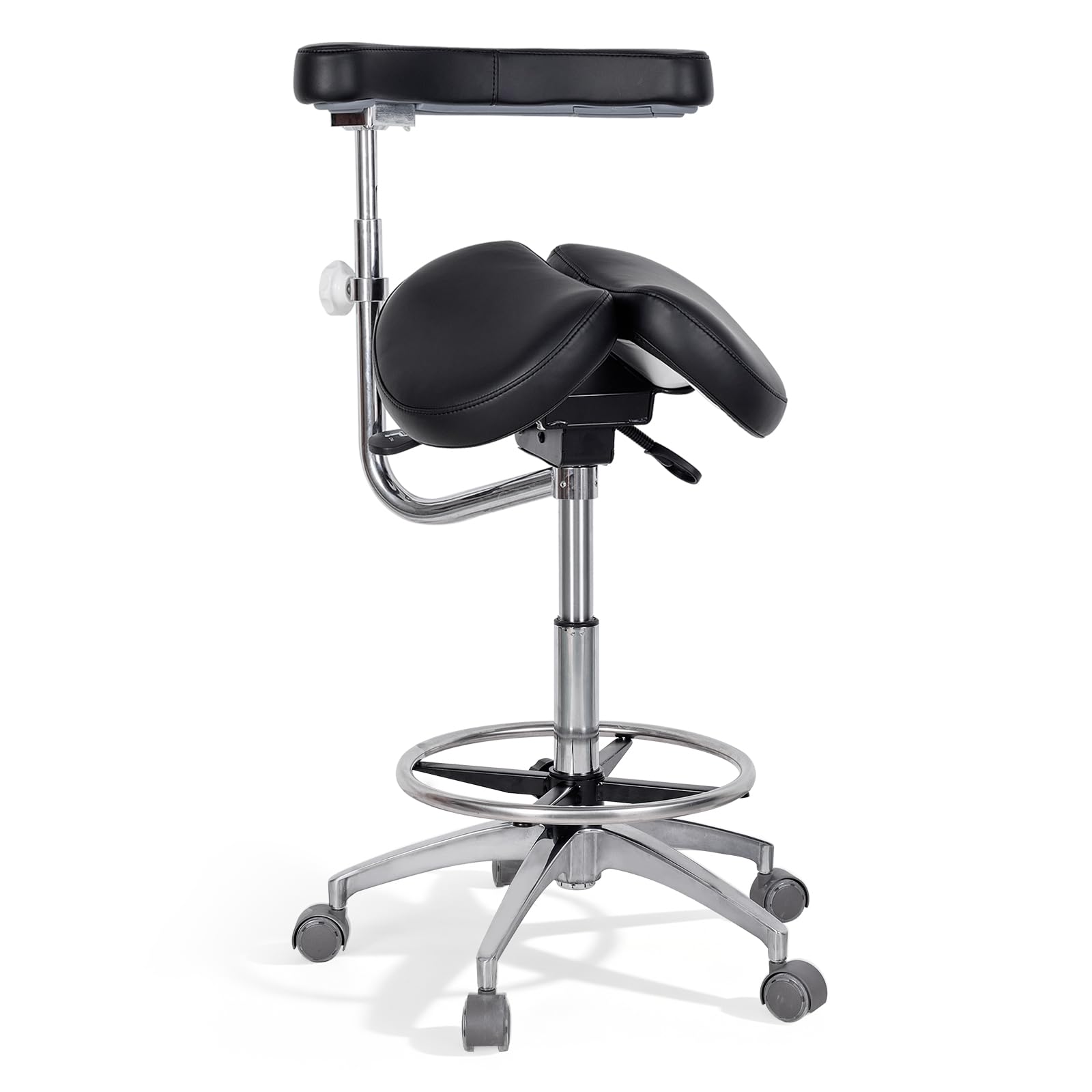
This premium stool checks every box for a busy operatory. The two-tone split seat design isn’t just aesthetic—it distributes pressure away from the tailbone and allows each thigh to find its own natural position during prolonged leaning. The rotatable armrests are a standout feature, letting you reposition your elbows as you shift from an upper quadrant to a lower quadrant without lifting your forearms off the support.
The gas lift cylinder provides a smooth, wobble-free height range suitable for both seated and semi-standing positions. High-density rebound foam inside the seat resists bottoming out even after two years of daily use, and the injection-molded plastic base adds stability without the weight of steel. The 22-pound chassis feels planted, and the smooth-rolling casters glide silently across dental tile.
Users note the armrest assembly requires careful attention to avoid wobble, but once correctly installed, the adjustment mechanism stays solid. The footrest is a welcome addition, providing a stable anchor point for your feet during forward-lean procedures. For a hygienist seeking a full-featured chair that reduces compressive load on the lower back, this is the benchmark.
Why it’s great
- Split seat reduces sacral pressure during extended forward leans
- Rotatable armrests adapt to changing clinical angles
- High-resilience foam maintains shape over years of use
Good to know
- Armrest assembly instructions need careful reading to avoid looseness
- Standard casters struggle on thick-pile carpet
2. Medical Dental Assistant Chair with Rotatable Armrest
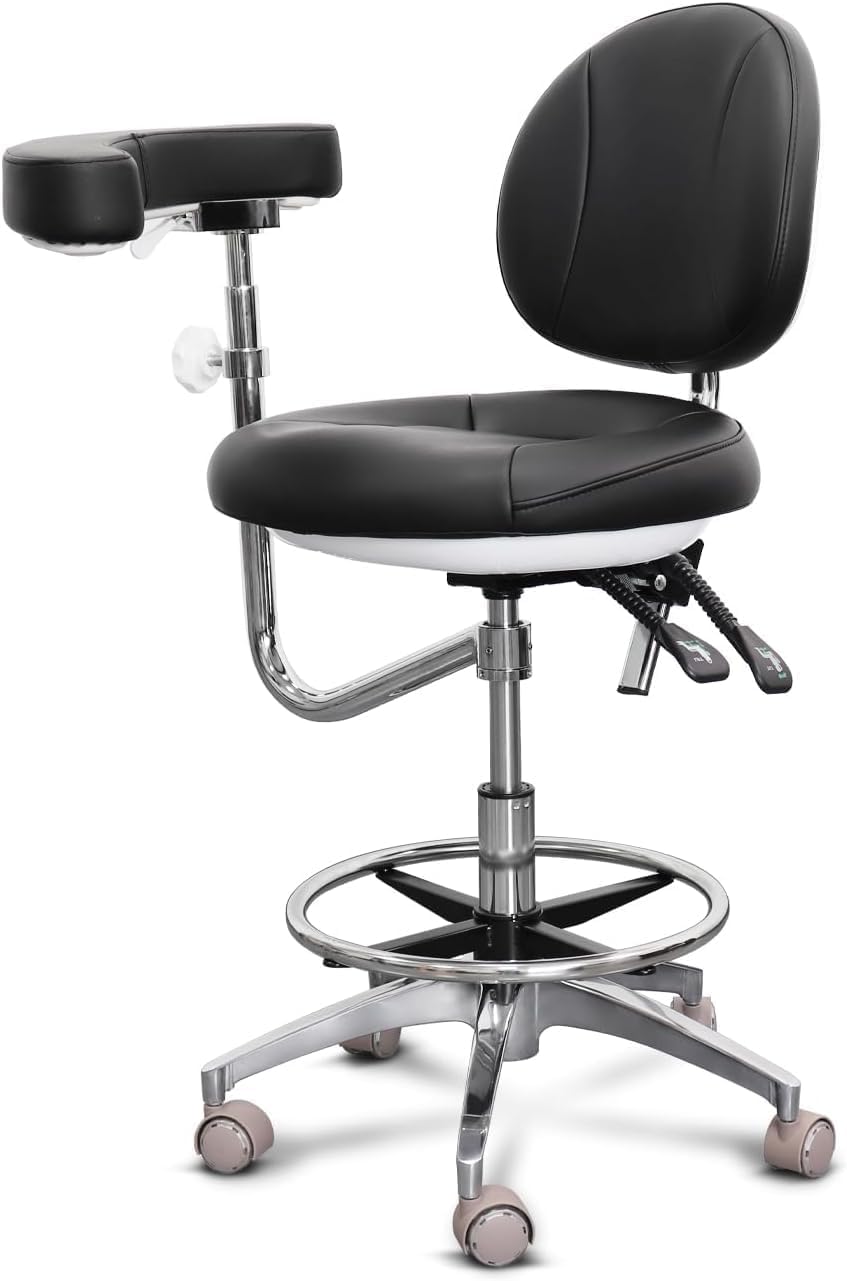
This dedicated clinical chair prioritizes spinal health with a contoured lumbar backrest that follows the natural curve. The “Free Stretch” position on the adjustment lever allows the backrest to pivot with you as you lean forward to work and rock back to evaluate—eliminating the constant micro-adjustments that waste time and break concentration. The seat height climbs to 27.8 inches, high enough for most hygienists to establish a 30-plus-inch working height.
The medical-grade ultra-leather upholstery resists staining from disinfectant sprays and wipes clean instantly. Underneath, high-resilience foam provides a balanced feel that is supportive without being plank-hard. The 360-degree ratchet armrest adjusts both vertically and horizontally, a critical feature when you need to support your forearms at a 15-degree inward tilt for scaling access.
The ABS shroud on the backrest creates a smooth surface that won’t trap hair or debris. At 31.9 pounds, it is heavier than most competitors, but that mass translates to exceptional stability when you lean lateral to the midline. Some users note the armrest assembly must have the grooved side facing down to prevent wobble—once aligned correctly, it stays tight through a full work week.
Why it’s great
- Contoured lumbar backrest moves with you during forward leans
- Medical-grade upholstery resists staining and disinfection wear
- Heavy base prevents tipping during lateral positioning
Good to know
- Heavier weight makes repositioning between rooms less convenient
- Armrest alignment requires a specific grooved-side-down installation
3. Premium Multifunctional Ergonomic Saddle Chair 507 INOA
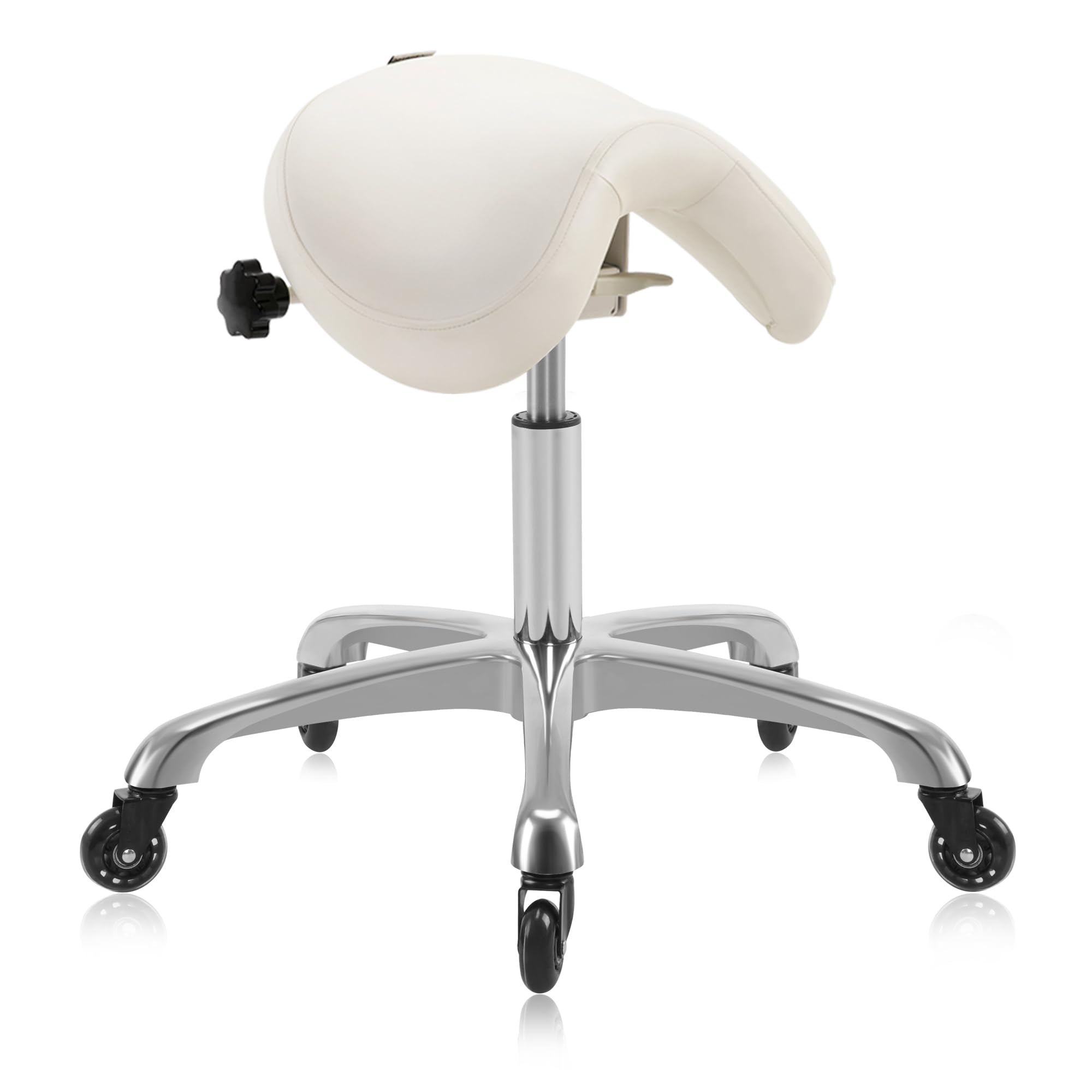
This saddle stool from DR.LOMILOMI uses a patented front-tip cut-off design that releases hamstring tension and allows the pelvis to tilt forward naturally. The result is a lumbar curve that maintains its shape even after six straight hours of prophylaxis. The memory foam top layer conforms to your ischial tuberosities while the molded base provides structural support—a combination that strikes a rare balance between plush and supportive.
At 15.8 pounds, this is one of the lightest high-capacity saddle chairs available, yet it supports up to 400 pounds thanks to its aluminum leg base and Class 4 gas lift cylinder. The polyurethane wheels roll quietly across both tile and hardwood, and the 20-to-26-inch seat height range fits most dental chair configurations. The forward-tilt capability lets you dial in a precise pelvic angle for different patient positions.
The vinyl upholstery is waterproof and flame-retardant, meeting clinical safety standards. The wide 16-inch seat may be too broad for petite users, and the 23-inch leg base is wide enough to cause tripping in a small operatory. One user reported a seat failure near the one-year mark under heavy use—the 1-year warranty covers replacement, but it is worth noting for full-time clinicians.
Why it’s great
- Memory foam top layer adapts to natural sitting posture
- Extremely lightweight for a saddle chair with a high weight capacity
- Forward-tilt mechanism enables precise pelvic angle adjustment
Good to know
- Wide seat may create thigh pressure for users with narrower frames
- Oversized base can be a tripping hazard in cramped operatories
4. Pneumatic Swivel Rolling Saddle Chair 510 KOA

Dental hygienists specifically reviewed this saddle chair and reported complete elimination of lower back and hip pain within two weeks of switching. The key is the seat geometry: a 15-inch width and a pronounced pommel that keeps the femurs angled downward, opening the hip angle to 135 degrees. This pelvic tilt prevents the posterior compression that causes disc bulging over time. The tiltable backrest provides lumbar support that follows your spine through a full range of motion.
The aluminum leg base and top-tier gas lift cylinder support up to 400 pounds, and the elastic polyurethane wheels are whisper-quiet on hard floors—no disruptive squeaking during sensitive procedures. The seat height range of 21 to 26 inches accommodates most patient chair heights, though some petite users found the minimum height still required tiptoeing on the floor. The matte tan finish is a welcome departure from clinical black and resists scuffing.
The seat cushion is intentionally firm, which provides consistent support over long shifts but may require a week-long break-in period. The lack of a ring footrest is a noted absence; a foot ring offers an anchor point that reduces pressure on the backs of the thighs. Despite this, the value proposition here is exceptional for a chair that addresses the specific biomechanical demands of clinical hygiene work.
Why it’s great
- Documented elimination of lumbar and hip pain in clinical use
- Pneumatic lift cylinder delivers smooth, reliable height changes
- Wide aluminum base provides stable support during lateral leans
Good to know
- Firm cushion requires a break-in period for some users
- No integrated foot ring for foot positioning
5. Cadiario Saddle Stool Rolling Chair with Backrest

This saddle stool stands out for its maximum seat height of 30 inches, making it the best option for taller hygienists who need to work high above a patient’s mouth. The saddle seat tilts backward to reduce strain on the lumbar region, and the backrest and foot ring both adjust independently, allowing fine-tuning for different body proportions. The aluminum frame keeps the total weight at 21 pounds, manageable for moving between operatories.
Aestheticians and dental hygienists alike praise the thick cushion for providing support during multi-hour shifts. The 400-pound weight capacity is overbuilt for the category, ensuring no wobble or instability even during aggressive lateral movements. The adjustable foot ring is a critical feature for tall users, giving them a stable leverage point that reduces the load on the lower spine.
The casters are the weakest link—multiple users reported failure within months of purchase. Replacing them with a set of high-quality polyurethane casters is a straightforward fix that solves the issue permanently. The 1-year warranty covers manufacturing defects but not wear items like wheels, so budget for a caster upgrade if you work on carpet or uneven floors.
Why it’s great
- 30-inch max seat height accommodates taller hygienists effectively
- Adjustable foot ring provides a stable platform for leverage
- High weight capacity ensures stability during dynamic work
Good to know
- Casters are prone to early failure and should be upgraded
- Seat does not adjust as low as some compact workstations require
6. Perch Stationary Single Lever Height Adjustable Swivel Stool
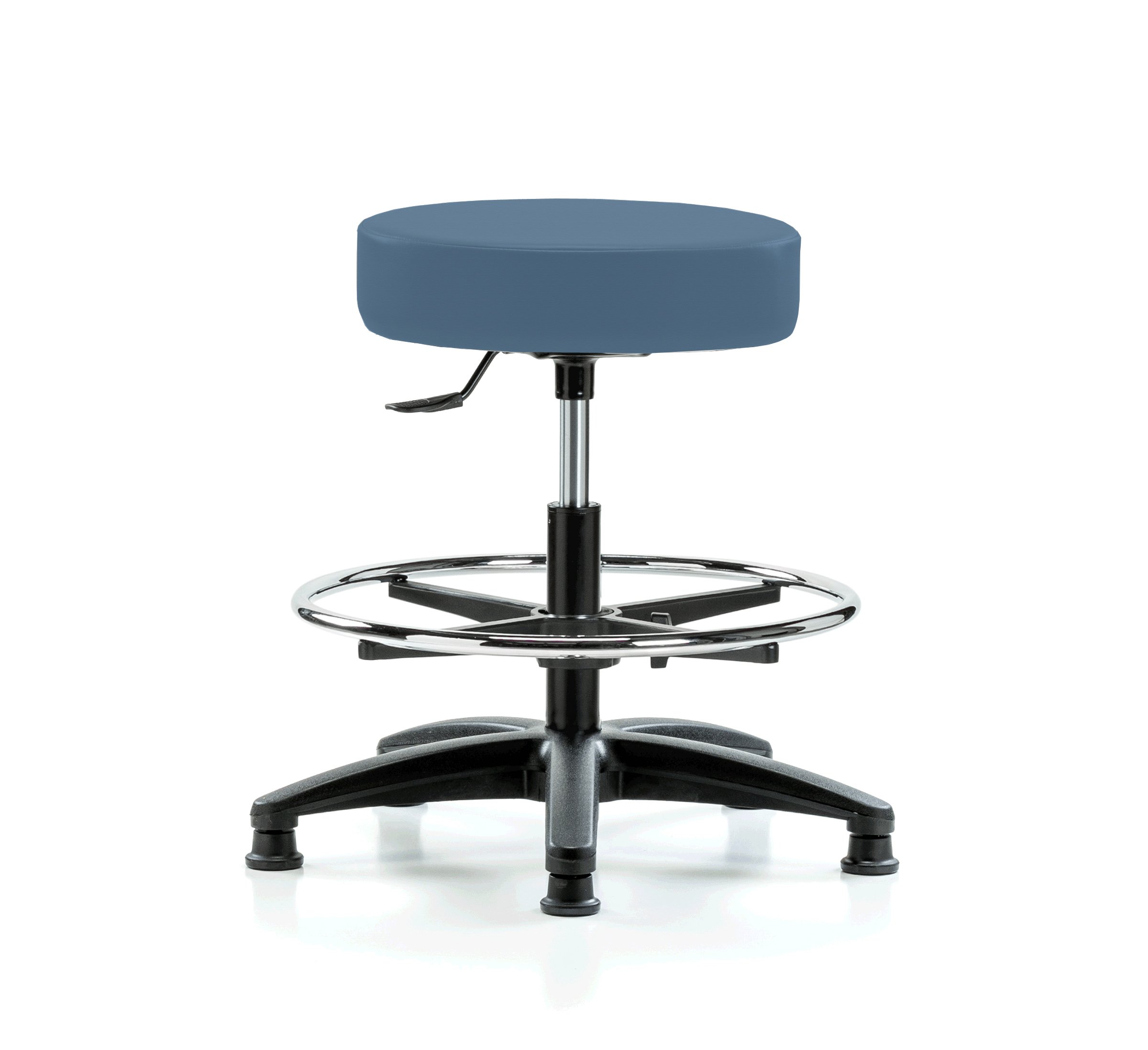
This mid-range stool from Perch is a well-engineered stationary stool that trades portability for rock-solid stability. The five-leg, 24-inch fiberglass-reinforced nylon base creates a wide footprint that feels planted even when you lean far forward to work on a patient’s lower arch. The single-lever pneumatic adjustment raises and lowers the seat between 20.5 and 28 inches—a range that works for most dental assistant and hygienist positions.
The 14.75-inch seat diameter is slightly larger than average, and the 3.5-inch thick foam cushion provides a firm yet forgiving sit that doesn’t bottom out. Users consistently note that the foam, which feels stiff at first, becomes surprisingly comfortable over multi-hour sessions. The adjustable 18-inch cast aluminum foot ring is polished chrome and adds a premium touch that resists corrosion from cleaning chemicals.
The stationary glides, not wheels, mean this stool stays put during procedures but requires lifting to reposition. That is a feature in a tight operatory where rolling stools can drift while you are reaching. There is no backrest, so it is best suited for hygienists who prefer a free-floating upper body or who use a separate lumbar support. The vinyl fabric is easy to wipe down between patients.
Why it’s great
- Wide base provides exceptional stability for forward-leaning work
- Thick foam cushion stays comfortable through long shifts
- Glides prevent unwanted drifting in small spaces
Good to know
- No casters means you must lift to reposition
- No backrest for users who require lumbar support
7. Vestil CPRO-800LP Steel Height Ergonomic Worker Chair
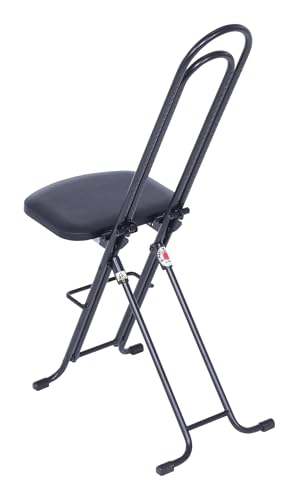
This foldable steel chair is a niche solution for hygienists who work in multi-location practices, travel between clinics, or need a backup chair for overflow operatories. The frame folds flat like an ironing board, packing down to roughly 45 by 13.5 inches for transport. The height adjusts from 18.5 to 35 inches via a friction-based tilt mechanism—no pneumatics to fail, which adds to its long-term reliability.
The alloy steel frame supports 220 pounds, and the foam cushion is adequate for procedures lasting up to an hour. The lower bar acts as a footrest, providing a stable anchor point that reduces lumbar load. Despite its lightweight, portable design, users report minimal wobble across the full height range—a direct result of the wide tripod leg structure that fits between patient chair legs.
The 9.75-inch seat depth is shallower than standard, which can be a limitation for users with longer femurs. The armless design allows free movement but offers no support during precise hand scaling. The powder-coated finish is durable but the seat rollers can develop indentations over time. This chair works best as a compact travel or backup seat, not as a primary eight-hour chair.
Why it’s great
- Folds flat for easy transport between clinic locations
- Friction-based height adjustment has no pneumatic failure point
- Narrow footprint fits between patient chair legs
Good to know
- Seat is shallow for users with longer legs
- Cushion is thin for all-day clinical sessions
8. Branch Ergonomic Chair Pro
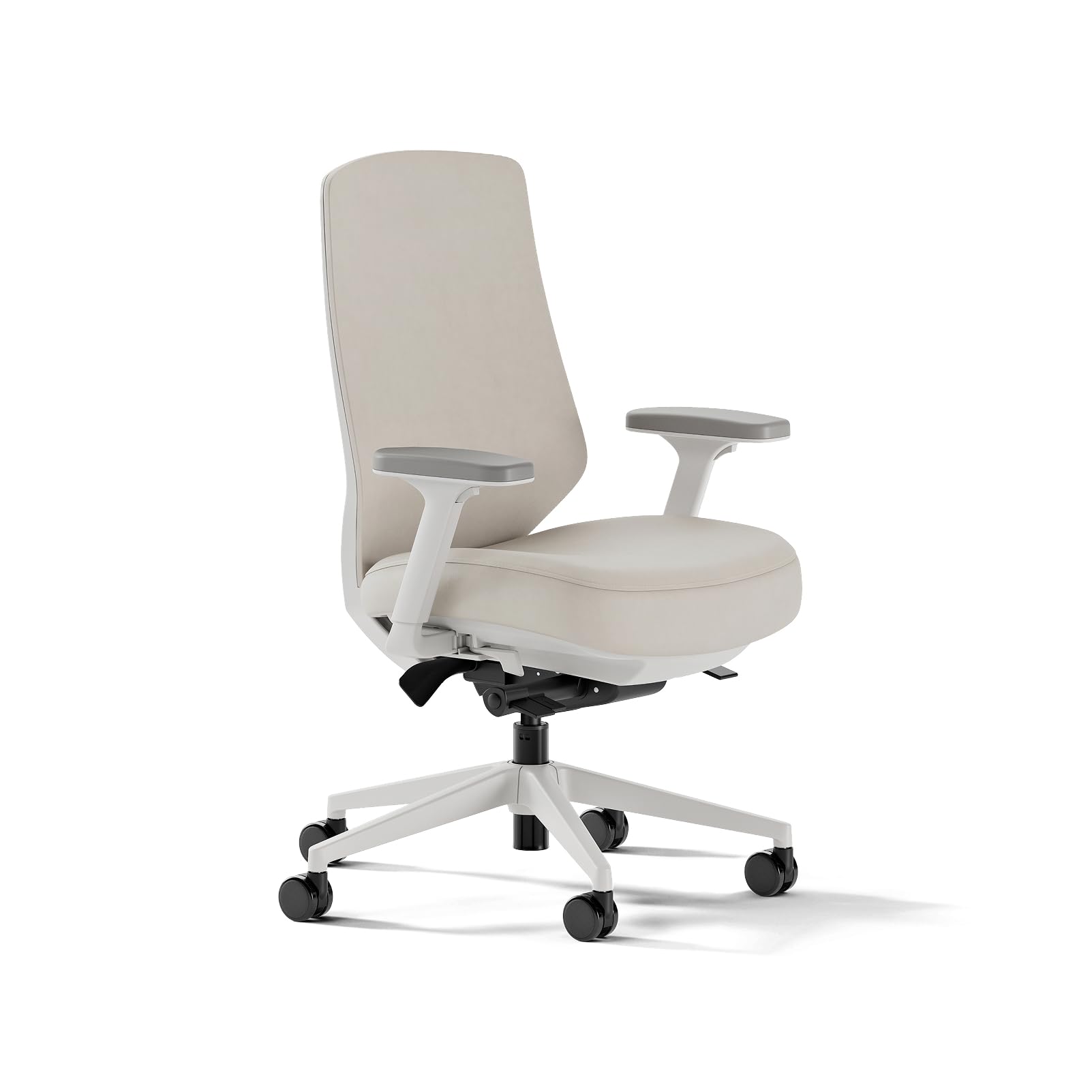
This office chair is not a dental stool, but it earns a place on this list for hygienists who split their time between clinical work and administrative tasks. The 14 points of adjustment—including seat depth, lumbar height and depth, forward tilt, and 5D armrests—allow an unprecedented level of individualized calibration. The forward tilt feature is especially relevant, enabling active sitting that keeps the pelvis from sliding into posterior tilt during charting or insurance coding.
The high-density foam cushion provides consistent support across 10-hour days, and the padded two-way lumbar cushion adjusts vertically to align precisely with your belt line. The mesh back prevents heat buildup during long sessions. The 5D armrests adjust in height, width, depth, pivot, and pad rotation—a level of adjustability normally reserved for chairs costing double the price.
This chair is not designed for the leaning and side-to-side motion required for direct patient access. The cylinder can sink slightly into the base over time, reducing maximum height by about half an inch. The headrest is sold separately, and the seat cushion may feel too firm for some users during the first week. If your role involves 50 percent or more desk work, however, this chair is unmatched in its adjustment range.
Why it’s great
- 14 adjustable parameters allow personalized fit for any body type
- Forward tilt seat supports active sitting during desk tasks
- 5D armrests offer unprecedented forearm positioning
Good to know
- Not designed for the lateral leaning required in direct patient care
- Gas lift cylinder may settle slightly over time
9. DIR Medical Spa Chair PAVO
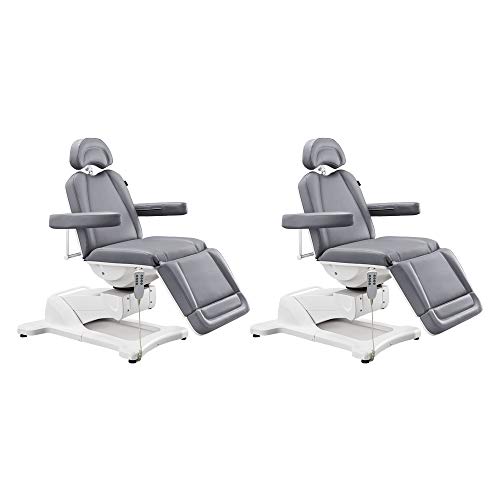
This full-sized multi-positional chair is an entirely different category from the stools above. It replaces the patient chair entirely, offering a complete exam platform with four independently controlled motors for height, backrest, leg rest, and tilt. For a dental hygienist operating her own practice, this chair allows precise positioning of the patient without asking them to shift or adjust, saving your spine from repeated awkward leans.
The 240-degree swivel range (120 degrees from center in each direction) gives you unrestricted access to all quadrants without having to reposition your own stool. The programmable memory function saves three custom patient positions, letting you switch between supine scaling and upright consultation with one button press. The unit weighs 245 pounds and arrives fully assembled—a blessing for setup but a challenge for existing floor layouts.
Medical-grade construction supports 400 pounds, and the dual headrest options (extendable and removable) accommodate both standard exams and facial procedures. The removable, reversible armrests allow close access for hygiene work. Users report excellent durability, with one practice running the same unit daily for three years with zero maintenance. This is a capital investment for practice owners, not a budget item for employees.
Why it’s great
- Multi-motor positioning eliminates patient shuffling during procedures
- Memory presets reduce time spent adjusting between different treatment modes
- Full 240-degree swivel access to all oral quadrants
Good to know
- High weight makes floor load-bearing a consideration
- Arrives fully assembled, which may require a large doorway or delivery assistance
FAQ
Why do dental hygienists prefer saddle-style chairs?
What is the ideal seat height range for clinical work?
Should I get armrests on my dental stool?
What caster type works best on dental clinic floors?
How often should I replace the gas lift cylinder on my stool?
Final Thoughts: The Verdict
For most users, the chair for dental hygienist winner is the Round Rolling Stool with Split Seats because the split-seat design relieves tailbone pressure during extended leans, and the rotatable armrests adapt to any clinical angle. If you want targeted lumbar support that follows your spine through each quadrant transition, grab the Medical Dental Assistant Chair. And for tall hygienists who need a maximum seat height of 30 inches to avoid shoulder hunching, nothing beats the Cadiario Saddle Stool.