
The wrong office chair doesn’t just leave you sore by noon — it actively aggravates the lumbar spine, forcing the pelvis into a posterior tilt that compresses discs and tightens the hip flexors over an eight-hour shift. A chair built for lower back pain reverses that mechanism, using targeted support to maintain the natural S-curve of your spine and offload pressure from the L4-L5 region.
I’m Min — the co-founder and writer behind Gadgets Feed. I’ve spent hundreds of hours analyzing pressure-mapping studies, lumbar support mechanisms, and adjustability metrics across dozens of ergonomic chairs to find the models that actually keep the lumbar curve intact during prolonged sitting.
This guide cuts through the marketing to identify the specific lumbar support systems, seat depth ranges, and recline mechanisms that matter most. Here is my data-backed breakdown of the best chair for lower back pain on Amazon right now.
How To Choose The Best Chair For Lower Back Pain
The difference between a chair that relieves pain and one that causes it comes down to three interconnected variables: how the lumbar support interacts with your specific spinal curve, how the seat pan distributes your weight, and whether the chair moves with you instead of against you. Beginners often focus only on “lumbar support” as a binary feature, but the engineering behind that support determines whether it actually works.
Lumbar Support Depth and Adjustability
Vertical height adjustment alone is insufficient. The lumbar pad must also move forward and backward to fill the gap between the chair back and your spine. A support that only moves up and down leaves a void — or pushes too aggressively — because everyone’s lumbar lordosis has a different radius. Look for a mechanism with at least 0.8 inches of depth adjustment. A fixed bump in the backrest is not lumbar support, it’s a guessing game against your anatomy.
Seat Depth for Pelvic Stability
When the seat pan is too long, it presses against the back of your knees, forcing you to slouch and rotate your pelvis backward — the exact position that compresses lumbar discs. Adjustable seat depth (at least 1.5 inches of travel) lets you sit with your thighs fully supported without pressure behind the knees. If your thighs dangle, the chair fails for lower back pain regardless of how fancy the backrest looks.
Tilt Tension and Lockable Recline
A chair that reclines but cannot lock into intermediate positions is a trap for lower back pain sufferers. When the backrest moves every time you lean forward, your core muscles must constantly engage to stabilize, increasing spinal fatigue. A tilt mechanism that locks at 90°, 105°, 120°, and 130° lets you shift postures throughout the day without losing lumbar contact. Tilt tension should also be adjustable to match your body weight.
Quick Comparison
On smaller screens, swipe sideways to see the full table.
| Model | Category | Best For | Key Spec | Amazon |
|---|---|---|---|---|
| Steelcase Leap | Premium | Total spinal customization | Lower back firmness dial + Natural Glide System | Amazon |
| FLEXISPOT ErgoX | Premium | Dynamic lumbar with footrest | 5-level adjustable back + 400 lb capacity | Amazon |
| Branch Ergonomic Chair | Mid-Range | Eight-point adjustability | Adjustable lumbar position + seat depth | Amazon |
| Newtral Ergonomic Chair | Mid-Range | Auto-following lumbar support | Automatic lumbar tracking + 96°–126° tilt | Amazon |
| GABRYLLY Ergonomic Chair | Mid-Range | 135° recline with footrest | 2-way lumbar (3″ vertical, 1.6″ horizontal) | Amazon |
| Tempur-Pedic TP9000 | Mid-Range | Memory foam seat comfort | TEMPUR material seat + Synchro tilt | Amazon |
| ProtoArc EC200 | Mid-Range | Adjustable seat depth for leg length | 2.36″ vertical + 0.8″ depth lumbar adjustment | Amazon |
| marrap Ergonomic Chair | Value | Budget-friendly with 3D armrests | Up/down + forward/backward lumbar system | Amazon |
| CASASIO Ergonomic Chair | Value | High weight capacity with flip-up armrests | 350 lb capacity + dual-direction adjustable lumbar | Amazon |
In‑Depth Reviews
1. Steelcase Leap Office Chair

The Steelcase Leap is the gold standard for lower back pain because of its Lower Back Firmness Dial, a mechanical adjustment that changes the tension of the lumbar support independently from the rest of the backrest. Most chairs force you to accept one lumbar curve; the Leap lets you dial in exactly how much push you want against the L4-L5 region. Combined with the Natural Glide System, the seat slides forward as you recline, preventing the shirt-pull effect that tilts the pelvis backward and flattens the lumbar curve.
The 3D LiveBack technology uses a flexible back that mimics the spine’s own multi-segment movement, so the chair adapts to micro-adjustments in posture rather than forcing your spine to fit a rigid shell. This matters because lower back pain sufferers shift positions roughly every 15 minutes subconsciously; a rigid backrest fights that instinct, while the Leap follows it. The 4D adjustable arms also reduce shoulder tension that can refer pain down to the lower back.
It arrives fully assembled, eliminating any guesswork. The seat cushion uses high-density foam with a waterfall front edge, reducing pressure behind the knees. For anyone with chronic lower back pain who sits full-time, the Leap’s adjustability depth is unmatched. The trade-off is the premium investment, but the engineering justifies it for those who need precise lumbar control.
Why it’s great
- Independent lower back firmness dial for precise lumbar tension
- Natural Glide System keeps seat aligned during recline
- 4D adjustable arms and no assembly required
Good to know
- Premium investment compared to mid-range options
- Some users report seat padding thins over extended years of use
2. FLEXISPOT ErgoX Premium Ergonomic Office Chair
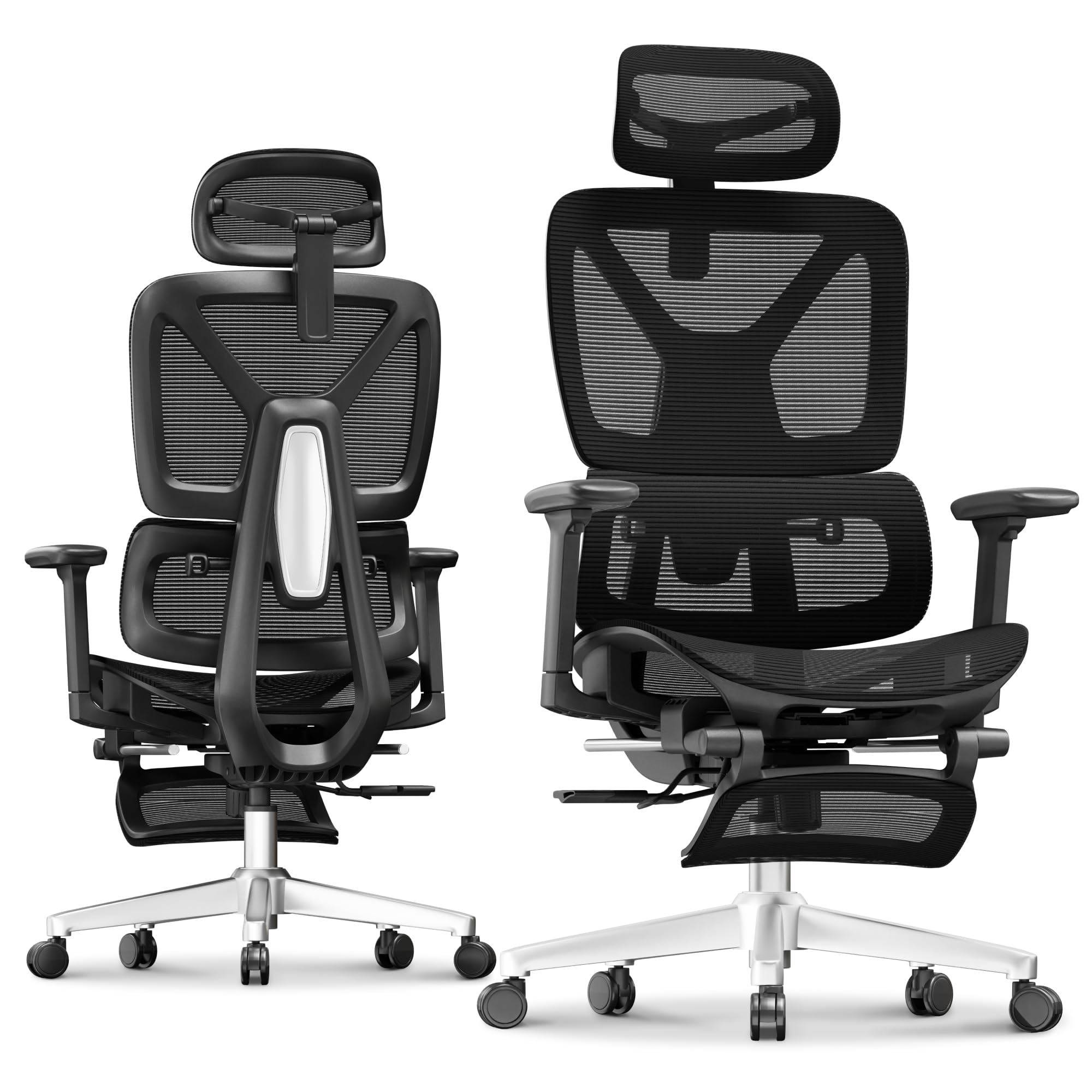
The FLEXISPOT ErgoX uses a dynamic lumbar support system that moves with your lower back rather than staying fixed in one position. This is critical for lower back pain because the lumbar spine changes curvature slightly when you shift from typing to leaning back; a fixed support loses contact and creates a gap. The ErgoX’s backrest has five height levels, letting you align the support point precisely to your lordotic curve, and the tilt mechanism locks into multiple recline angles so you can shift without losing lumbar contact.
The seat depth adjusts between 17 and 20 inches, accommodating users from 5’1″ to 6’2″. The mesh seat option promotes airflow to prevent sweat buildup, which reduces the fidgeting that aggravates lower back pain. The 3D headrest also tilts and extends to support the cervical spine, preventing forward-head posture that increases load on the lumbar region. The retractable footrest lets you stretch your legs during breaks, reducing hip flexor tightness.
Build quality is solid with a reinforced nylon frame and a 400-pound weight capacity. Assembly takes about 30 minutes and the included instructions are clear. The 3D armrests adjust in height, forward/back, and swivel angle, helping you keep shoulders relaxed — reducing upper body tension that can radiate to the lower back. For users who need a chair that actively follows their movement throughout the day, the ErgoX is a strong premium contender.
Why it’s great
- Dynamic lumbar moves with your spine during posture shifts
- 5-level adjustable backrest height for precise alignment
- Retractable footrest reduces hip flexor tightness
Good to know
- Armrest adjustability range is slightly limited for broader users
- Footrest may feel short for users over 6’0″
3. Branch Ergonomic Chair
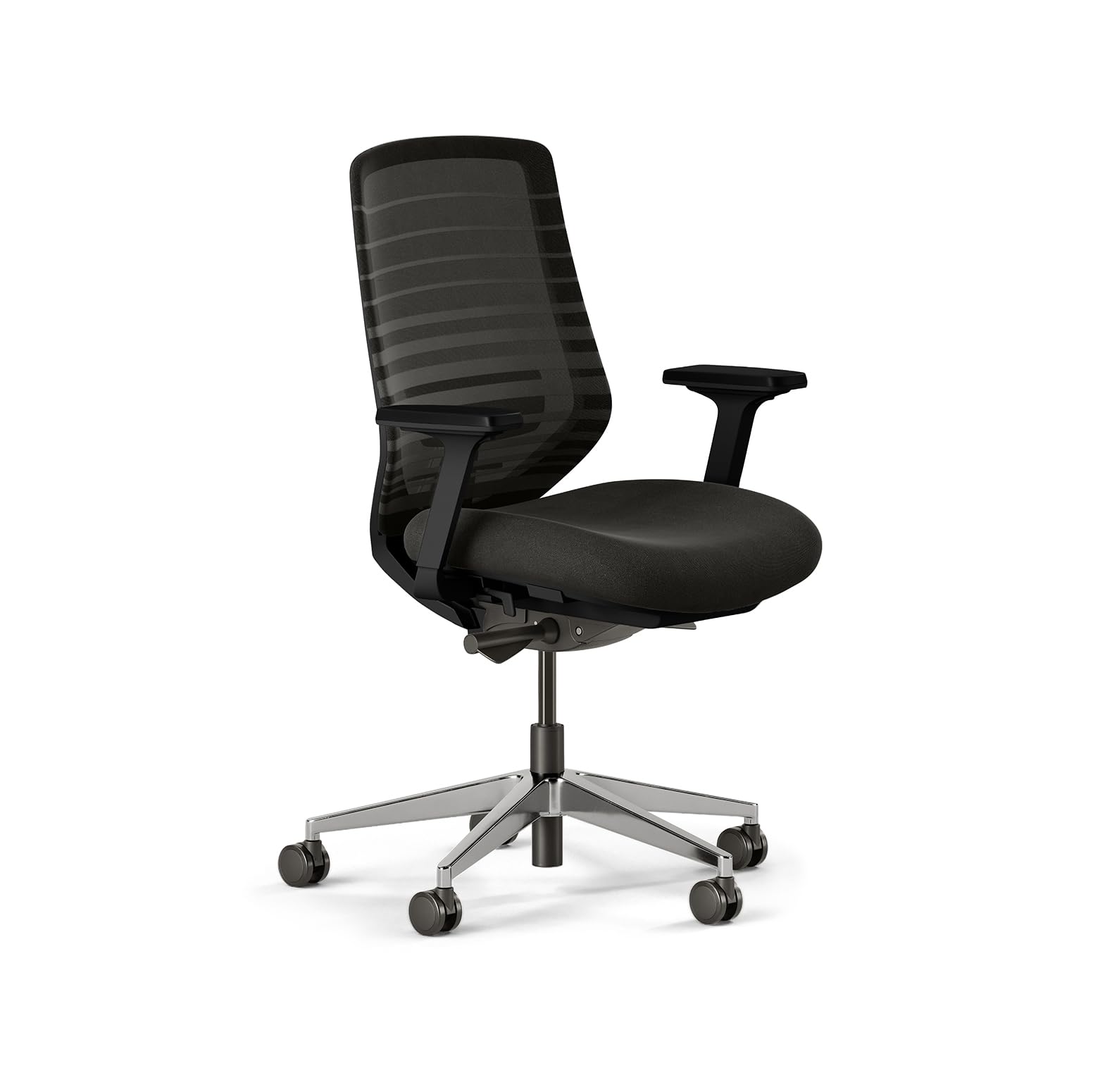
The Branch Ergonomic Chair delivers eight distinct adjustment points, making it one of the most configurable chairs in the mid-range bracket for lower back pain. The adjustable lumbar support moves both vertically and in depth, while the seat depth adjustment helps users with shorter thighs maintain full femoral support without pressure behind the knees. The breathable mesh backrest prevents heat buildup that can cause micro-shifts and posture breakdown over long sessions.
The aluminum frame keeps weight low at 27 pounds while the mesh backrest provides active tension that conforms to your spine’s natural curve. The tilt tension control lets you set the resistance to your body weight, so the chair moves when you want it to but stays stable when you don’t. The 4D armrests adjust in height, width, depth, and angle, which helps keep your shoulders aligned and reduces compensatory twisting in the lower back.
Users under 5’4″ particularly appreciate the low seat height range, which allows feet to rest flat without a footrest — a critical factor for pelvic stability. Assembly takes about 30 minutes with clear instructions. The wheels roll smoothly on both carpet and hard floors. For a chair that offers near-premium adjustability at a mid-range price point, the Branch is a well-engineered option for lower back relief.
Why it’s great
- Eight adjustment points including seat depth and lumbar depth
- Lightweight aluminum frame with smooth-rolling wheels
- Very low seat height accommodates petite users
Good to know
- Armrests may feel slightly loose if bolts are not fully tightened
- No forward seat tilt adjustment for desk work
4. Newtral Ergonomic Home Office Chair

The Newtral chair features what it calls “automatic lumbar tracking technology,” which uses a spring-loaded mechanism to keep the lumbar pad in constant contact with your lower back as you move through different recline angles. This is a standout feature for lower back pain because it eliminates the “gap problem” — when you lean back on a fixed lumbar support, your spine pulls away from the pad. The Newtral support follows you, maintaining consistent pressure on the lordotic curve.
The backrest also adjusts to three height positions, and the headrest moves in both height and angle for cervical alignment. The seat depth adjustment has 2 inches of travel, letting you dial in the right thigh support. The 3D armrests adjust in height, width, and depth, but some users note they do not lock as firmly as premium options. The high-density foam seat cushion uses a 7cm foam core that resists sagging over time.
Assembly takes roughly 20 minutes, and the instructions are clearly laid out. The KGS Class 4 gas lift is TÜV-tested and built for long-term durability. The mesh back is from Korea, offering good breathability without roughness against clothing. For users who find fixed lumbar supports ineffective, the Newtral’s auto-following mechanism provides a genuinely different approach to maintaining spinal curve throughout the day.
Why it’s great
- Auto-following lumbar tracks your spine in real-time
- Three backrest height positions for personalized alignment
- KGS Class 4 gas lift and high-density foam cushion
Good to know
- Armrests lack a firm lock and shift with pressure
- Back spring mechanism may knock into objects in tight spaces
5. GABRYLLY Ergonomic Office Chair with Footrest
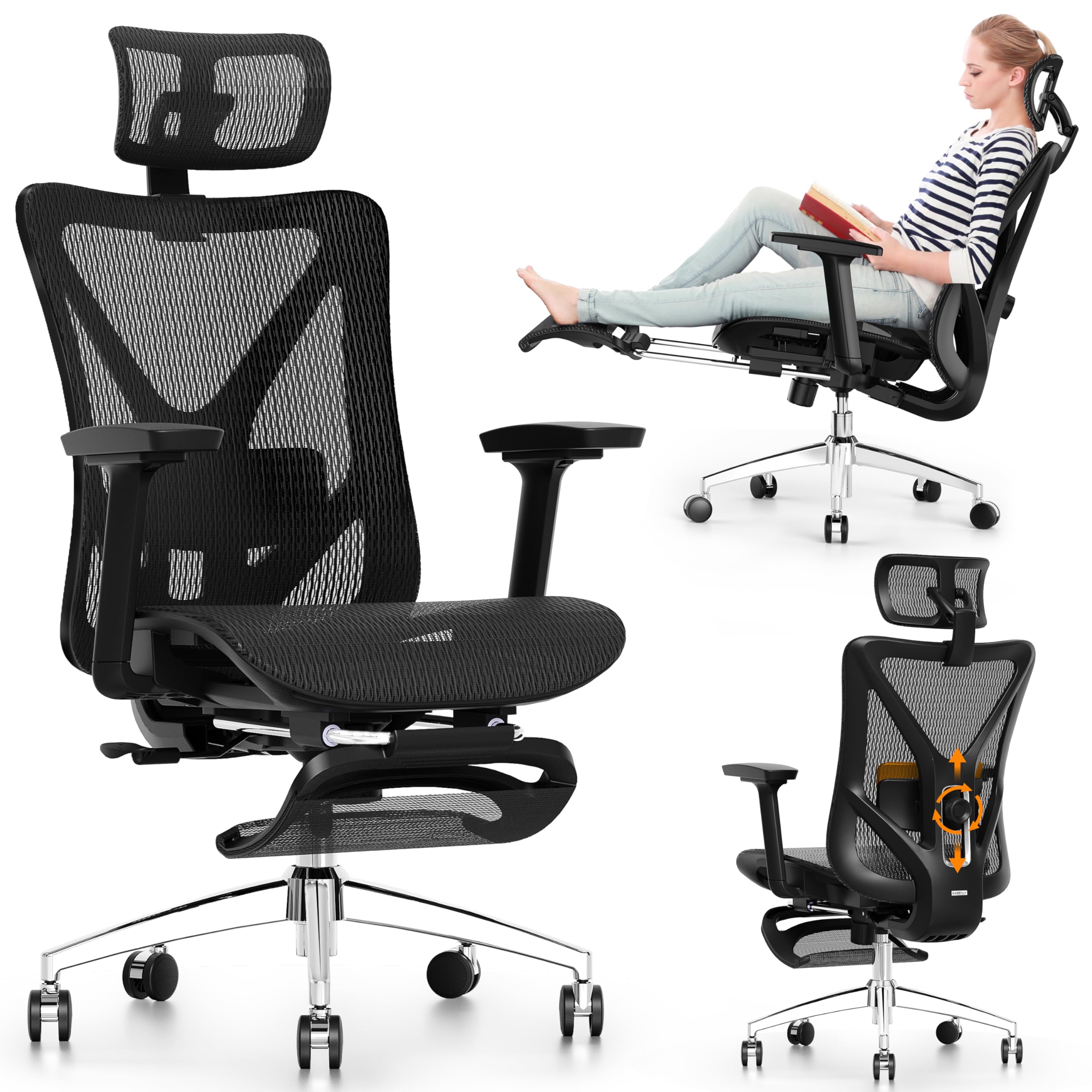
The GABRYLLY Ergonomic Chair provides 2-way adjustable lumbar support with 3 inches of vertical and 1.6 inches of horizontal travel. This dual-axis adjustment lets you both raise the support and push it deeper into the curve of your spine, which is rare at this price tier. The 135° recline locks into three positions, and the retractable steel footrest extends 18.1 inches, giving you a genuine napping option without leaving your desk.
The all-mesh back and seat keep airflow high, which reduces fidgeting from heat. The 3D armrests adjust in height, width, and angle, though some users report they shift unintentionally under pressure. The steel base spans 27.5 inches in diameter, providing extra stability during recline. The chair supports up to 300 pounds and has been SGS and BIFMA tested for durability. Assembly is straightforward and takes 15–25 minutes.
The large mesh headrest adjusts in height, angle, and bracket depth, supporting the cervical spine to prevent forward-head posture. For users who need both lumbar depth adjustability and a full recline with leg rest, the GABRYLLY delivers features typically found on chairs costing considerably more. The trade-off is the armrest stability, but the core lumbar support system is genuinely effective for lower back pain relief.
Why it’s great
- 2-way lumbar adjustment with 1.6″ depth travel
- Retractable steel footrest for full recline support
- SGS/BIFMA certified steel base holds 300 lbs
Good to know
- Armrests shift easily during use and lack a firm lock
- Mesh may feel tight for users with broader shoulders
6. Tempur-Pedic TP9000 Mesh Swivel Task Chair
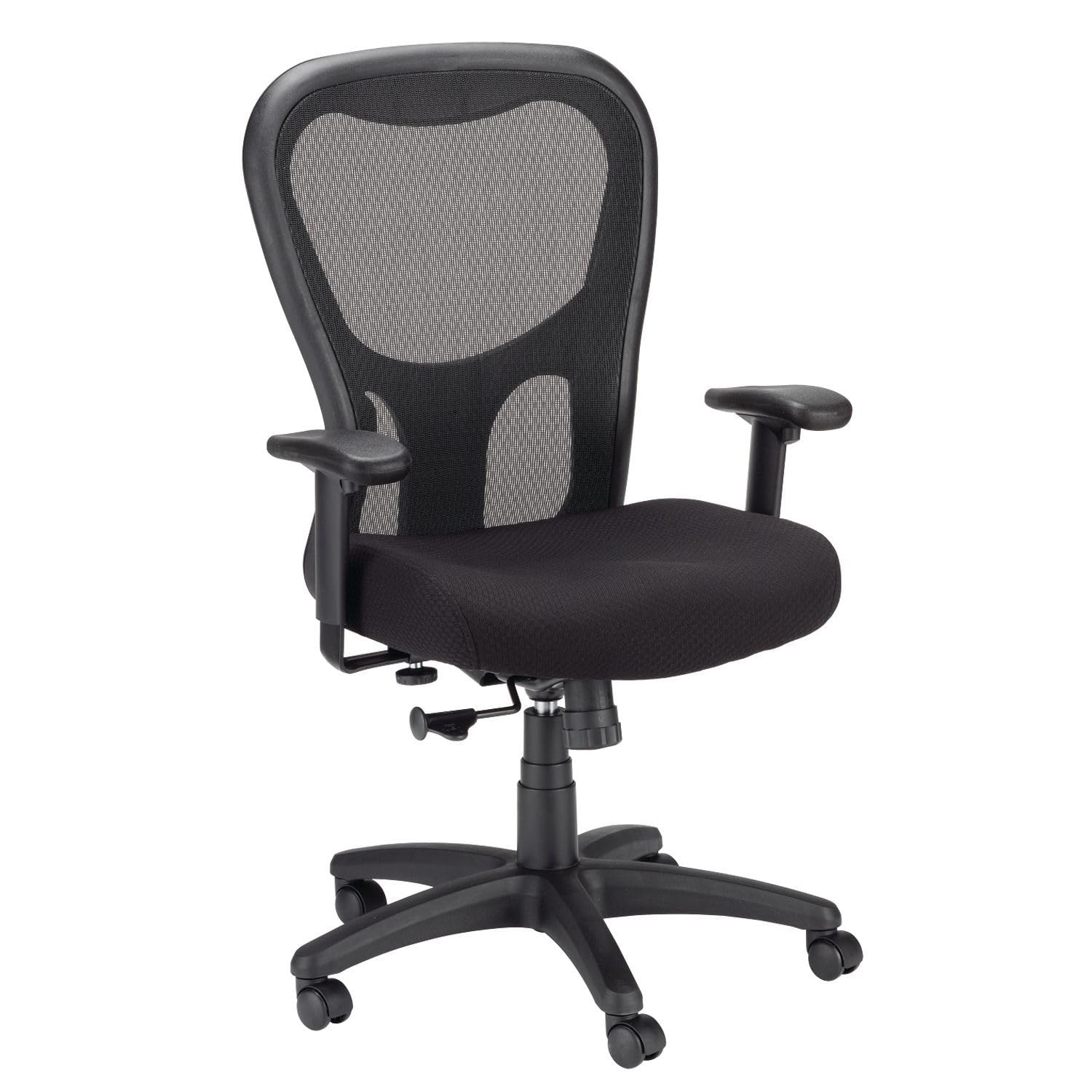
The Tempur-Pedic TP9000 leverages the brand’s proprietary TEMPUR material in the seat cushion, which conforms to your body shape and reduces pressure points that cause users to shift and twist — a common contributor to lower back pain. The responsive foam distributes weight evenly across the glutes and upper hamstrings, preventing the “numb bottom” sensation that leads to slouching. The breathable mesh back keeps your upper body cool.
The Synchro tilt mechanism allows the backrest and seat to move together during recline, maintaining a consistent relationship between your spine and the lumbar region. The tilt tension lever adjusts resistance, and the tilt lock mechanism lets you fix the recline angle. The arms adjust in both height and width, which helps reduce shoulder tension. One notable omission is the lack of an adjustable lumbar support system — the backrest relies on its curved shape rather than a mechanical pad.
For users whose lower back pain stems from pressure buildup in the seat rather than a missing lumbar pad, the TP9000’s TEMPUR foam directly addresses that root cause. Users with sciatica have reported significant relief. The five-star base supports up to 275 pounds. The chair is a mid-back design, so taller users may want to pair it with a separate headrest for cervical alignment.
Why it’s great
- TEMPUR material seat reduces pressure points that cause slouching
- Synchro tilt maintains spinal alignment during recline
- Easy assembly with straightforward instructions
Good to know
- No adjustable mechanical lumbar support
- Mid-back design may not suit taller users needing head support
7. ProtoArc EC200 Ergonomic Office Chair
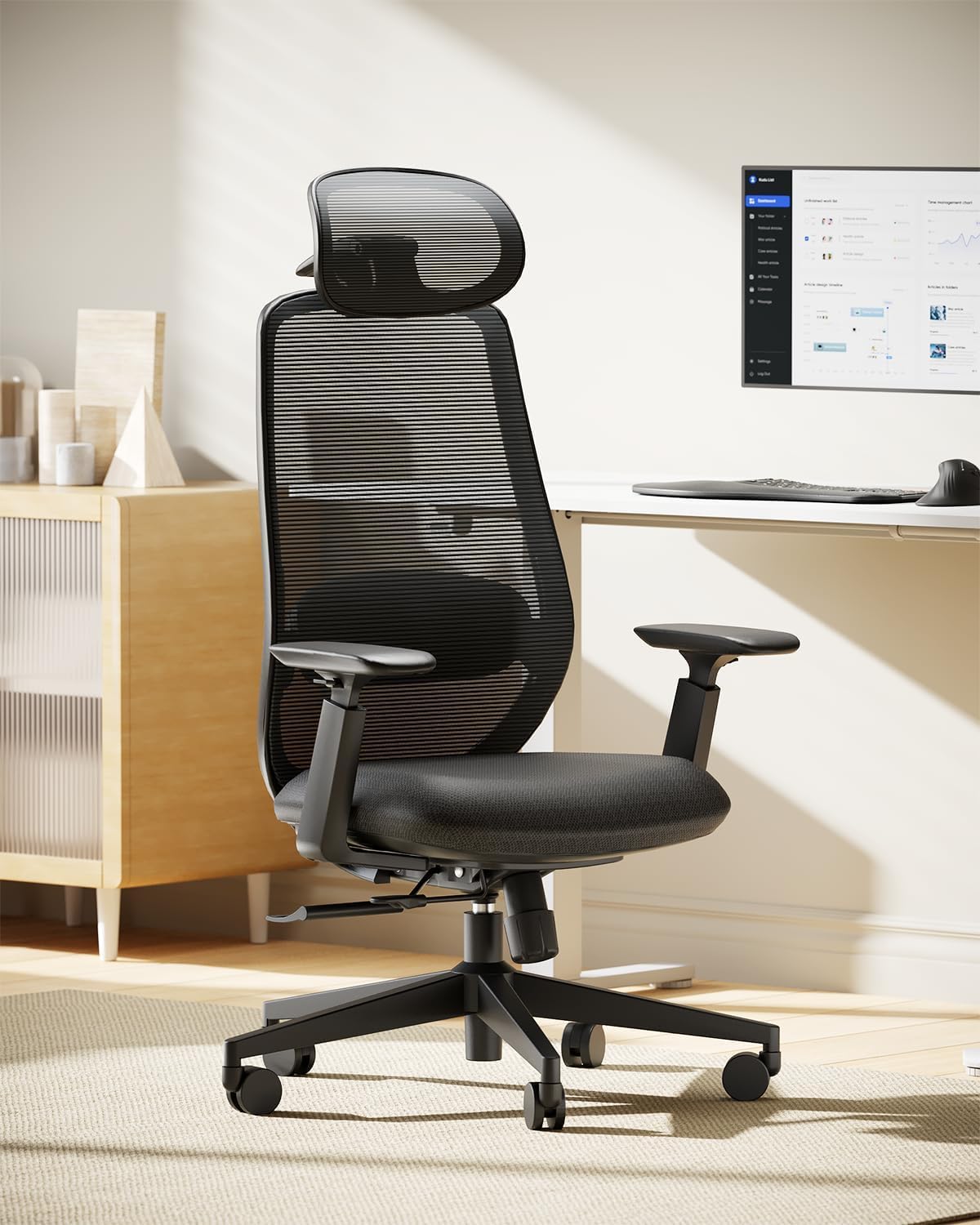
The ProtoArc EC200 distinguishes itself with a seat depth adjustment that has 5 positions and nearly 2 inches of travel — a feature typically reserved for chairs that cost significantly more. This is crucial for lower back pain because when the seat is the right depth, your pelvis stays neutral and prevents the posterior tilt that compresses lumbar discs. The lumbar support itself adjusts 2.36 inches vertically and 0.8 inches in depth, letting you fill the gap between your back and the mesh.
The chair uses a 3-point ergonomic support system that aligns the head, back, and lumbar region. The 3D headrest adjusts in height, depth, and angle with a 75° pivot and 35° rotation. The 4-stage recline locks at 90°, 105°, 120°, and 130°, so you can switch postures throughout the day without losing lumbar contact. The 55D high-density foam seat cushion resists collapse over time, maintaining consistent pelvic support.
Assembly is simplified with labeled parts and visual instructions, taking about 20 minutes. The frame is BIFMA and TÜV certified, and the Class 4 gas lift adds durability. Designed for users between 5’4″ and 6’0″, the EC200 offers a tailored fit. For buyers who prioritize seat depth adjustability alongside lumbar depth control, the ProtoArc delivers a level of customization rarely found in this segment.
Why it’s great
- 5-position seat depth adjustment with 2″ of travel
- Dual-axis lumbar with 2.36″ vertical and 0.8″ depth range
- 4-stage recline lock with tilt tension control
Good to know
- Best fit for users 5’4″ to 6’0″ — shorter or taller users may struggle
- Feet may occasionally hit wheel arms when fully scooted in
8. marrap Ergonomic Office Chair
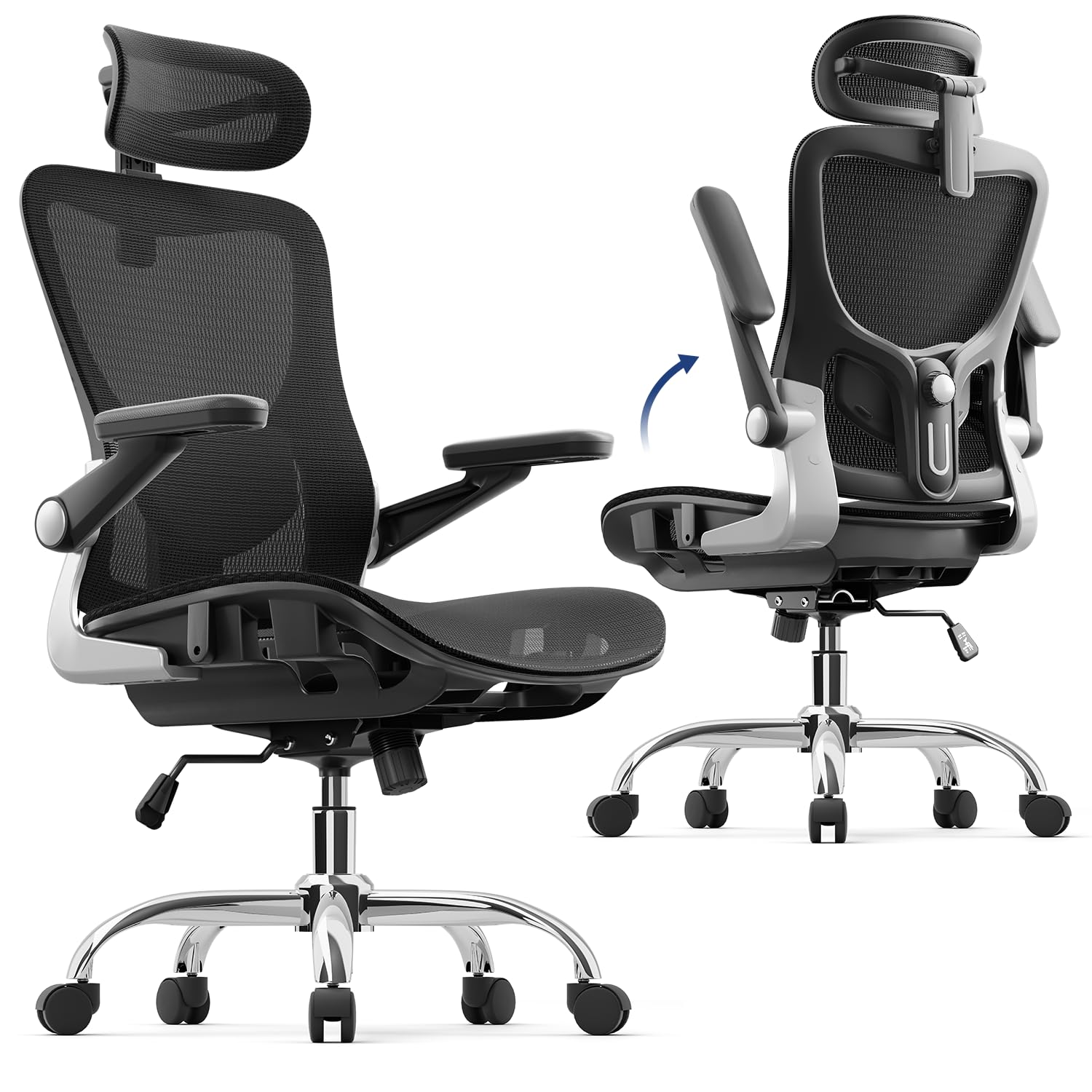
The marrap Ergonomic Office Chair provides an adjustable lumbar system that moves both up/down and forward/backward, offering two-axis control that is uncommon at this price point. The lumbar pad can be positioned to fill the lower back curve while the mesh back promotes airflow. The 3D armrests flip up, slide forward/back, and rotate 360°, giving you flexibility to find positions that keep shoulders relaxed — indirectly protecting the lower back from compensatory tension.
The chair rocks smoothly from 90° to 120° with adjustable tilt tension, letting you find the right resistance for your body weight. The breathable mesh seat and back prevent sweat buildup, reducing the urge to shift out of good posture. Assembly is straightforward and takes about 15 minutes with clear instructions. The metal frame provides stability, and the casters roll quietly on most surfaces.
Some users with wider hips note the seat is narrower than expected, and the front lip may press uncomfortably due to a plastic support piece underneath. For average to slim body types within standard height ranges, the marrap delivers functional lumbar support and arm adjustability that punches above its segment. It is a strong entry-level option for those starting their search for lower back pain relief.
Why it’s great
- Dual-axis adjustable lumbar — up/down and forward/backward
- 3D armrests with 360° rotation and flip-up feature
- Quick 15-minute assembly with clear instructions
Good to know
- Seat width is narrow and may not suit wider hips
- Front lip plastic piece can cause thigh pressure for some users
9. CASASIO Ergonomic Office Chair
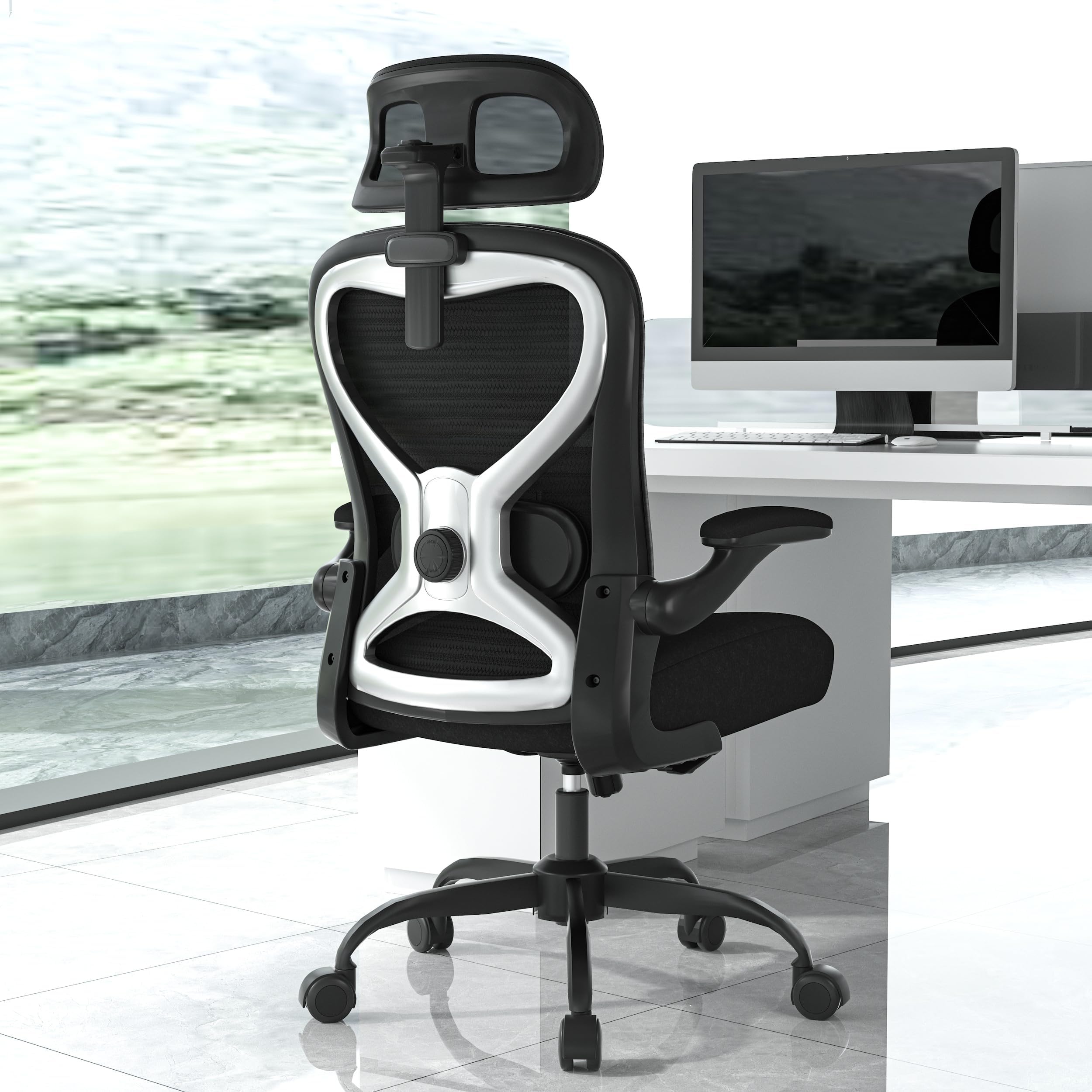
The CASASIO Ergonomic Chair stands out in the budget tier with a 350-pound weight capacity and a dual-direction adjustable lumbar cushion that moves vertically and in depth. The virgin foam seat cushion is 3.5 inches thick, using a high-density core that distributes weight evenly to reduce bottoming out — a common problem in entry-level chairs that leads to pelvic tilt and lower back strain. The contoured mesh backrest aligns with the spine’s natural curve.
The 3D adjustable headrest supports the cervical spine with height, depth, and angle adjustments, helping prevent forward-head posture. The flip-up armrests allow you to tuck the chair under a desk, saving space in small home offices. The Tilt & Rock feature provides gentle motion with adjustable tension, which helps relieve tension by encouraging micro-movement throughout the day. The reinforced metal base adds stability, especially when reclining.
Assembly is straightforward with labeled hardware and clear instructions. The mesh back provides good breathability, and the casters roll smoothly. For users on a tighter budget who still need adjustable lumbar depth and a high weight capacity, the CASASIO delivers core features without the premium price tag. The lumbar cushion is removable, which gives you the option to reposition it or replace it with a third-party pad if needed.
Why it’s great
- High 350 lb weight capacity with reinforced metal base
- Dual-direction adjustable lumbar with 3.5″ virgin foam seat
- Flip-up armrests for compact storage
Good to know
- Seat cushion may feel firm for users preferring plush padding
- Lumbar cushion may require frequent repositioning during use
FAQ
Should I choose mesh or foam for lower back pain relief?
How does seat depth adjustment help with lower back pain?
Why does lumbar support depth matter more than height?
Final Thoughts: The Verdict
For most users, the best chair for lower back pain winner is the Steelcase Leap because its independent lower back firmness dial and Natural Glide System provide the most granular lumbar control of any chair tested. If you want auto-following lumbar support that moves with you, grab the Newtral Ergonomic Chair. And for the best value with dual-axis lumbar depth adjustment and a retractable footrest, nothing beats the GABRYLLY Ergonomic Chair.