
Our readers keep the lights on and my morning glass full of iced black tea. As an Amazon Associate, I earn from qualifying purchases.
Specs are compiled from manufacturer listings and verified buyer reviews and can change over time — please confirm the key details on the product page before buying.
Your sewing machine is ready for the long haul. The real question is whether your lower back and hips are ready equally. After hours spent leaning over a project, steering fabric through the needle, and reaching for scissors or thread, a chair that works for a standard desk often turns sewing into an endurance test. This guide is built around the specific demands of sitting in one spot for hours at a time—keeping your spine aligned, your hips pressure-free, and your feet planted firmly on the pedals.
I’m Min — the founder and writer behind Gadgets Feed. This guide is built by comparing the manufacturers’ published specifications and the patterns across verified customer reviews, so you get each pick’s real strengths and trade-offs instead of marketing spin.
Whether you quilt, embroider, or run a production line, these are the strongest options for a chair for sewing long hours currently available—covering ergonomic mesh-backed workhorses, compact craft-room models with hidden storage, and the one premium option that feels tailor-made for the task.
Our Picks at a Glance


How To Choose The Best Chair For Sewing Long Hours
Sewing creates a very specific type of body stress. You sit still for long stretches while your shoulders lean forward and your feet work a pedal. The wrong chair turns this into back pain, hip numbness, and a sore neck. The right one keeps you comfortable enough to lose track of time in a project. Here are the features that separate them.
The seat cushion is your first line of defense
The biggest threat to a long sewing session is a seat that flattens after an hour or two. You need high-density foam that keeps its shape and distributes your weight across the hips and thighs. A 3-inch thickness is a good baseline, but several serious chairs push to 3.5 or even 4 inches of foam. Look for molded or virgin foam—those hold up longer than standard cut foam. Your hips will feel the difference by hour six.
Lumbar support that is adjustable—not just present
A static lumbar bump works temporarily. For all-day sewing you need lumbar support you can move up and down (to hit the right spot on your spine) and ideally in and out (to change how aggressively it pushes). That range covers different body heights and different sitting postures. A 4-way or 2-way adjustable lumbar system is a sign of a serious chair. It lets you tweak the pressure as your back fatigues through the day.
Height range and base design
Your sewing machine is not a standard desk. You need a chair that goes low enough to let your arms rest comfortably on the machine bed while keeping your feet flat on the pedal. A range like 18 to 22 inches covers most setups. The base matters too—smooth-rolling casters let you move across wood, tile, or carpet when you need to reach a different station, while glide bases (no wheels) keep you locked in place for pedal work. Neither is wrong, but one suits your room better.
Armrests: flip-up or armless
Fixed armrests push you too far from your machine. The ideal sewing chair either has flip-up armrests that swing completely out of the way, or no armrests at all. Flip-up arms add flexibility if you also use the chair for desk work between sewing sessions. Armless models are simpler and often cheaper, but you lose the option to rest your elbows during breaks.
Dedicated sewing storage
A few chairs in this list include a hidden compartment under the seat. It is a small bonus—pins, bobbins, thread scissors, seam rippers—but when the chair is built for sewing, it transforms convenience into workflow efficiency. That drawer keeps your most-used tools right under the cushion without cluttering your machine table. If you sew frequently, it is worth the premium.
Quick Comparison
| Model | Best For | Seat Cushion | Weight Capacity | Armrests | Amazon |
|---|---|---|---|---|---|
| CASASIO Ergonomic Chair★ Best Overall | All-day lumbar customization | 3.54″ high-density foam | 330 lbs | Flip-up | Amazon |
| Fizzin Ergonomic ChairTop Performer | Heavy-duty build, big frame | Thickened cushion | 400 lbs | 90° reversible | Amazon |
| Synorla Office ChairBest Value | Budget-friendly breathability | 3″ high-density foam | 330 lbs | Flip-up | Amazon |
| TRALT Ergonomic Chair | Wide seat, easy-clean leather | 3.5″ high-density sponge | 330 lbs | Flip-up | Amazon |
| QLTPLUS Desk Chair | Plush 4-inch molded foam | 4″ molded foam | 350 lbs | Flip-up | Amazon |
| CASASIO White/Gold Chair | Style plus 3D headrest | Virgin foam | 300 lbs | Flip-up | Amazon |
| SIHOO B100 Chair | Adaptive lumbar at scale | Widened mesh cushion | 300 lbs | Flip-up | Amazon |
| Lessmore Sewing Chair | Dedicated craft storage | Padded cushion | — | Armless | Amazon |
| Reliable SewErgo 200SE | Canadian-made, pedal stability | Full cushion | 250 lbs | Armless | Amazon |
| Pink Power Sewing Chair | Hydraulic pro with storage | High-resilience padded cushion | 300 lbs | Armless | Amazon |
| Arrow Sewing H8130 | Premium, instant assembly | Foam cushion | — | Armless | Amazon |
In‑Depth Reviews
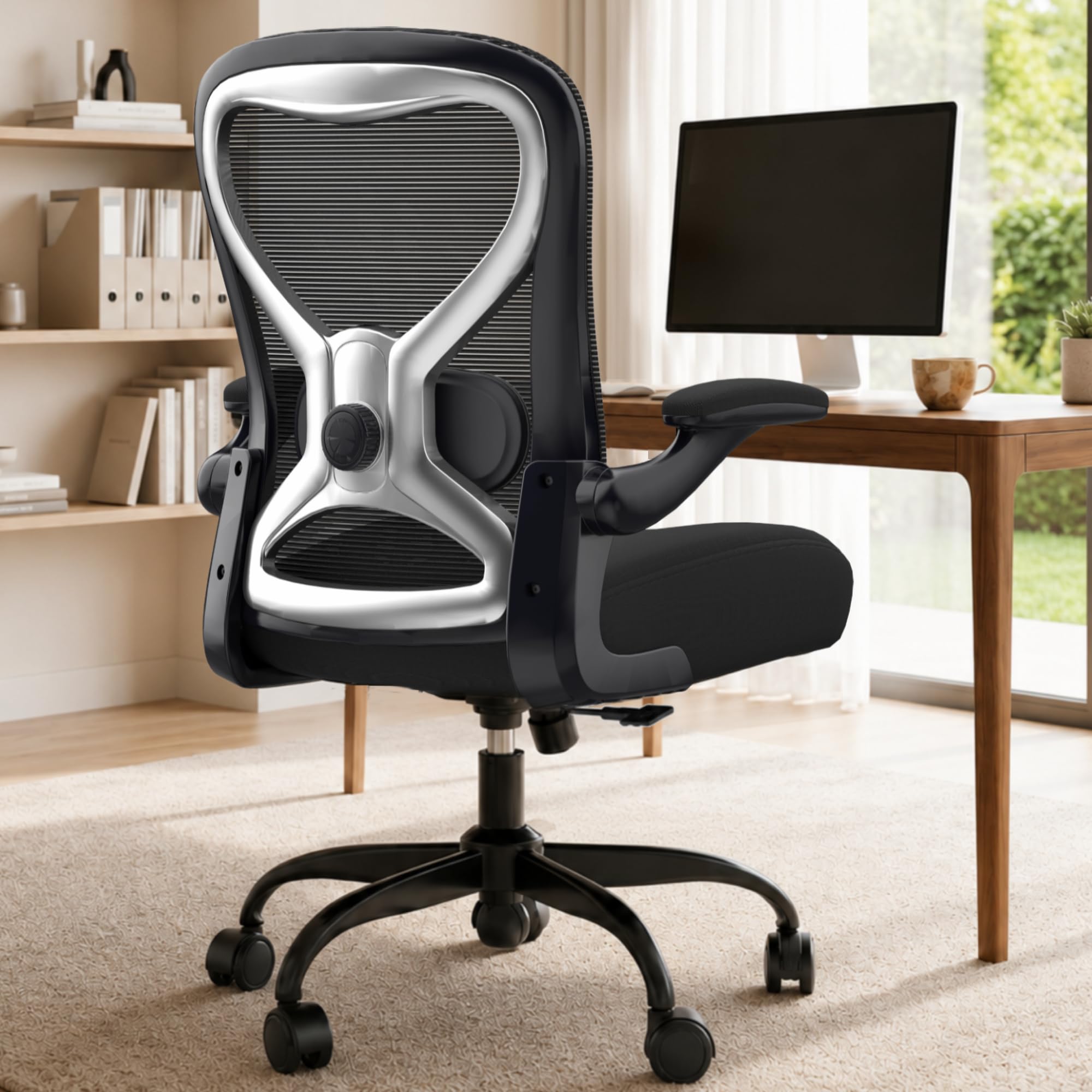
1. Ergonomic Home Office Chair – 4-Way Lumbar Support, CASASIO
Our pick — over 4.5★ from 400+ verified ratings; the strongest balance of quality and price.
Your lower back gets 4-direction lumbar adjustment no other chair in this price range matches.
This pick earned the top spot because it solves the single biggest problem for long sewing hours—a back that starts to ache by early afternoon—through genuinely usable adjustability. The lumbar support moves up and down by 1.8 inches and in and out by 1.06 inches, so you can dial in exactly where the support hits your spine and how firmly it presses. That is the difference between a generic chair and one tailored to your body. The seat cushion sits at 3.54 inches thick, which is 1 inch thicker than standard office chairs, using high-density foam that does not flatten out during an 8-hour workday.
The flip-up armrests clear the way completely with one motion, so the chair slides easily under a sewing table without forcing you to back out and reposition. The mesh back follows an hourglass shape that keeps air moving, which matters more than you expect when you are sitting still for hours. Owners consistently call out the thick padded seat and the ability to sit all day without stiffness. The chair supports up to 330 lbs with a reinforced 5-point nylon base, though buyers report the stock wheels are standard rather than rollerblade style.
What owners love
- 4-way lumbar adjustability (up/down 1.8″, in/out 1.06″) ensures a custom fit for different heights and sitting postures
- 3.54-inch extra-thick cushion stays supportive through full-day sits without flattening
- Flip-up armrests tuck completely out of the way around a sewing machine table
- Breathable hourglass mesh back keeps your spine cool during long work sessions
Worth noting
- A few units arrived with scratched silver trim on the base
- Standard casters work well on hard floors but are not the premium rollerblade type
Reach for this if: you want a fully adjustable seat that helps your lower back stay comfortable through extended sewing sessions and you prefer the flexibility of flip-up armrests.
Think twice if: you are under 5’2″ and may find the seat height range a bit tall for a low sewing table.
2. Fizzin Ergonomic Office Chair, 400 LBS
The sturdiest frame here—built for larger body types who need real support.
While the CASASIO above gives you the fine-tuned lumbar adjustment, the Fizzin brings a higher weight capacity (400 lbs, a 21% gap over the 330-lb CASASIO) and a more comprehensive ergonomic package. The headrest adjusts up and down by 3.9 inches and tilts to find your neck angle, while the lumbar support moves 1 inch forward and backward and 3.15 inches up and down. That is a wider vertical sweep than many chairs in this list, giving taller sewers (up to about 6’3″) a better chance at proper alignment. The 90-degree reversible armrests flip up when you need to scoot close to your machine, but owners point out they are not height-adjustable—a fair compromise for the price.
Buyers are emphatic that this chair lives up to its 400-lb claim, calling it “very sturdy” and noting the breathable mesh keeps you cool. The 125-degree tilt function and silent casters make switching between tasks smooth. The cushion draws mixed reactions—some find it well-cushioned, others wish it were thicker—so if a plush seat is your top priority, the 4-inch foam chairs below may suit you better.
Biggest strength: The 400-lb weight capacity with a heavy-duty base means this chair handles a wide range of body sizes without wobbling.
Trade-off: The armrests are not height-adjustable, and the seat cushion firmness splits buyer opinions.
Ideal if: you need the highest weight capacity in this list (400 lbs) and appreciate headrest and lumbar adjustments that suit taller users.
Look elsewhere if: a soft, thick seat cushion is non-negotiable—the mixed feedback suggests you should confirm your preference for firm foam.
3. Office Chair, Ergonomic Desk Chairs 330LBS, Synorla
A crowd favorite with over 900 ratings—comfort that has been tested by thousands.
This chair has earned a massive base of buyers (the largest review count in the list) and the consensus is clear: it is extremely comfortable and helps with back pain. The 3-inch thick high-density foam seat cushion and ventilated mesh back form the core of that experience. The lumbar support adjusts to three height levels, which is simpler than the 4-way systems above but still effective enough to reduce lower back fatigue. The backrest tilts up to 135 degrees, though it does not lock in a reclined position—it rocks and returns upright automatically. That is fine for stretching your spine between sewing bursts but not for a relaxed lean-back break.
The flip-up armrests are padded with high-density foam wrapped in breathable mesh, offering a soft feel during the hours you keep them down. Assembly is a mixed bag in reviews—some call it easy, others report stripped screws and misaligned holes. Budget for a possible 45-minute build. The chair suits people roughly 5’5″ to 6’2″ and rolls smoothly on tile, wood, and carpet.
Why it sells: Over 900 ratings with consistent praise for comfort, lumbar support, and value—this is the most-vetted chair on the list.
Common catch: Assembly can be frustrating for some, and the armrest padding feels firm to a few users over multi-hour sits.
Best for: the budget-conscious sewer who wants a heavily reviewed, comfortable chair with basic lumbar support and flip-up armrests.
Not ideal if: you need a lockable recline or a completely low-maintenance assembly experience.
4. TRALT Ergonomic Office Chair, White
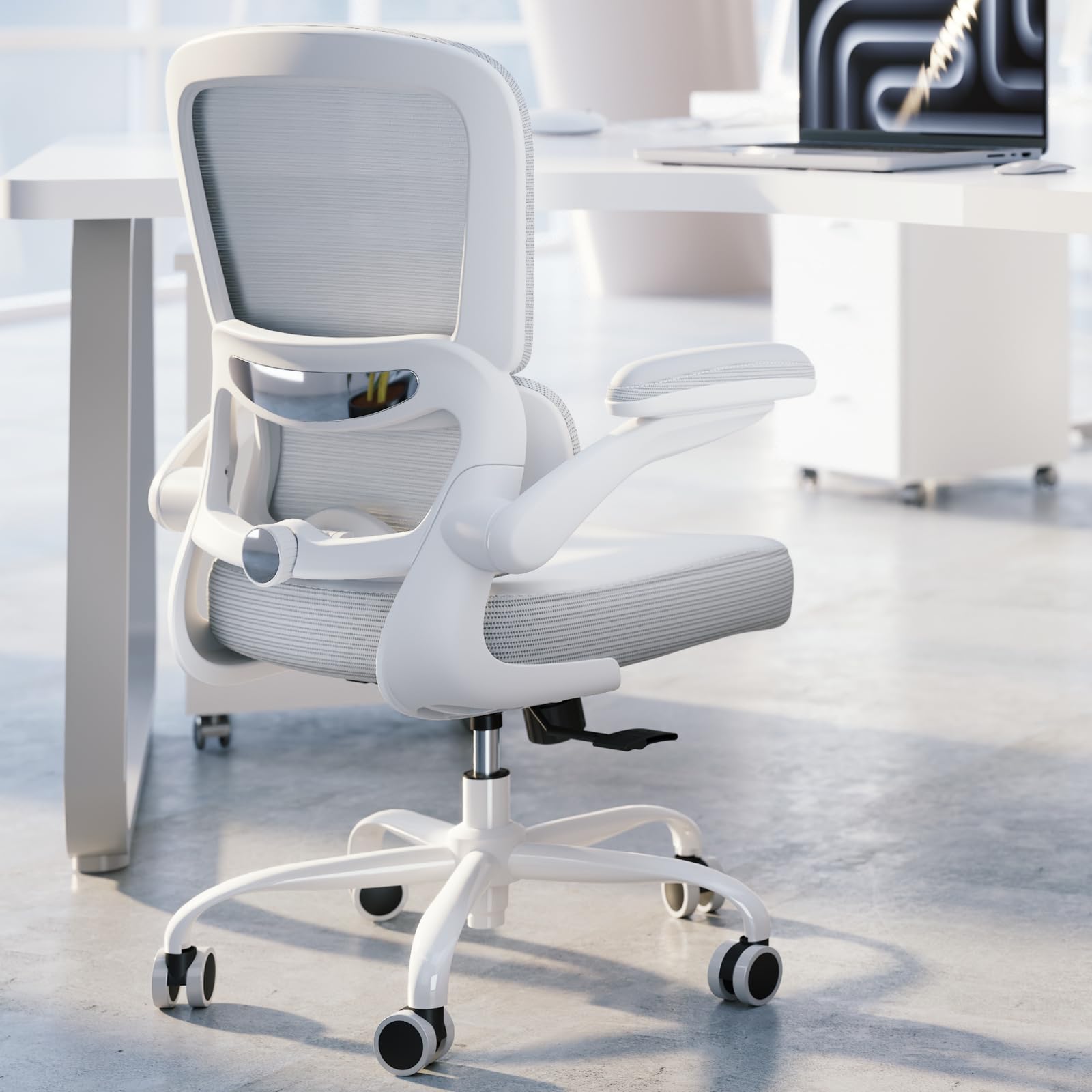
A leather-like seat that cleans up easily and cushions without sagging.
Sewing rooms collect dust, thread, and small fabric scraps. That is where the TRALT’s leather cushion becomes practical rather than just pretty—it wipes clean easily, unlike mesh or fabric that traps debris. The seat uses a 3.5-inch high-density sponge cushion, and buyers confirm it holds up without collapsing over long sits. The seat itself is wider than many competitors (20 inches by 17.3 inches), which helps distribute weight for broader body types. The chair supports up to 330 lbs and uses a Class-3 gas lift and metal base for stability.
The flip-up armrests free up desk space, and the breathable mesh back still keeps airflow moving so your back does not overheat. Owners consistently report being able to sit for 6 or more hours without discomfort. The adjustable lumbar support is present but simpler than the 4-way system on the top pick. Assembly runs about 25-30 minutes, and the 5-year warranty (with proof of purchase) adds confidence.
Standout spec: The 3.5-inch high-density sponge cushion balances softness and support, and the leather upholstery is easy to wipe clean.
Honest note: The armrests are a bit wide for smaller frames—a 5’3″ owner found them noticeably spread out.
Best for: sewers who want a cleanable surface, a wider seat, and a modern white look that fits a bright craft room.
skip it if: you have a narrow frame and prefer armrests that sit closer to your body.
5. Office Desk Chair for Long Hours, QLTPLUS
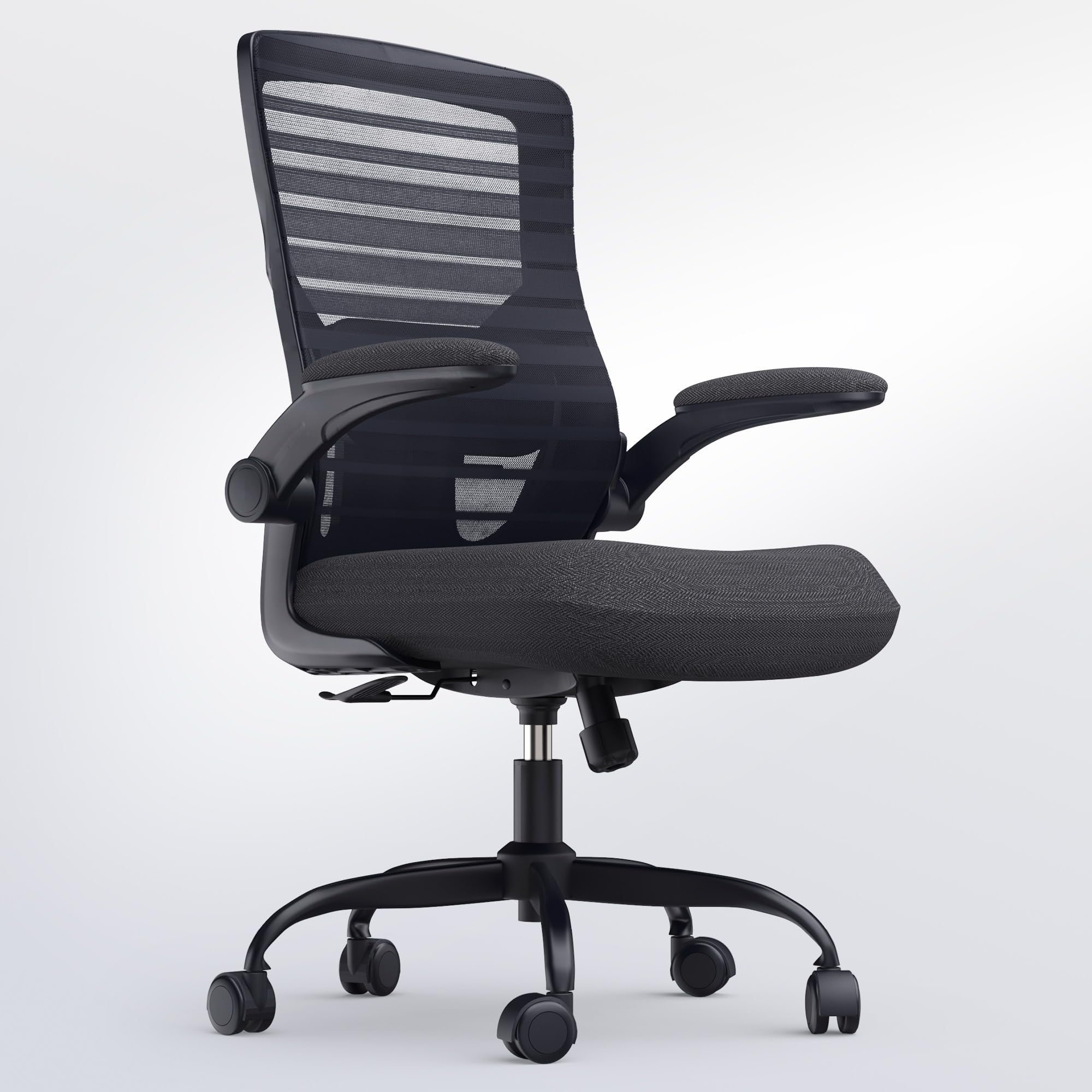
The thickest foam in the roundup—4 inches of molded comfort for your hips and thighs.
If hip and thigh soreness is what stops you after a few hours of sewing, this chair directly addresses that. The seat uses 4-inch molded foam (not just cut foam) that evenly distributes weight and resists flattening. “Your behind will thank you,” one satisfied buyer wrote. The contoured mesh back curves to follow your spine, and the adjustable lumbar cushion provides personalized lower back relief. The chair also tilts and rocks with adjustable tension, promoting circulation during long sessions—a feature that helps prevent the stiff-hip feeling after hours of sitting still.
The flip-up armrests are padded and lift out of the way for desk clearance. The reinforced metal base holds up to 350 lbs. Owners highlight the easy assembly with clear instructions, though a few note the armrests feel a bit skinny and the assembly took over an hour. The chair includes a 5-year warranty, which is the strongest coverage among the mid-range options here.
The defining spec: 4-inch molded foam cushion is the thickest in the entire list—designed to prevent pressure points during 8-hour sits.
Minor gripes: A couple of buyers mention the armrests feel less substantial than the rest of the chair, and the wheels do not glide as smoothly on thicker carpet.
Choose this if: cushion thickness is your top priority—the 4-inch foam plus the rock/tilt function make this a strong option for all-day hip comfort.
Consider another if: you need superior floor rolling or want a chair that takes under 30 minutes to build.
6. Ergonomic Office Chair White/Gold, CASASIO
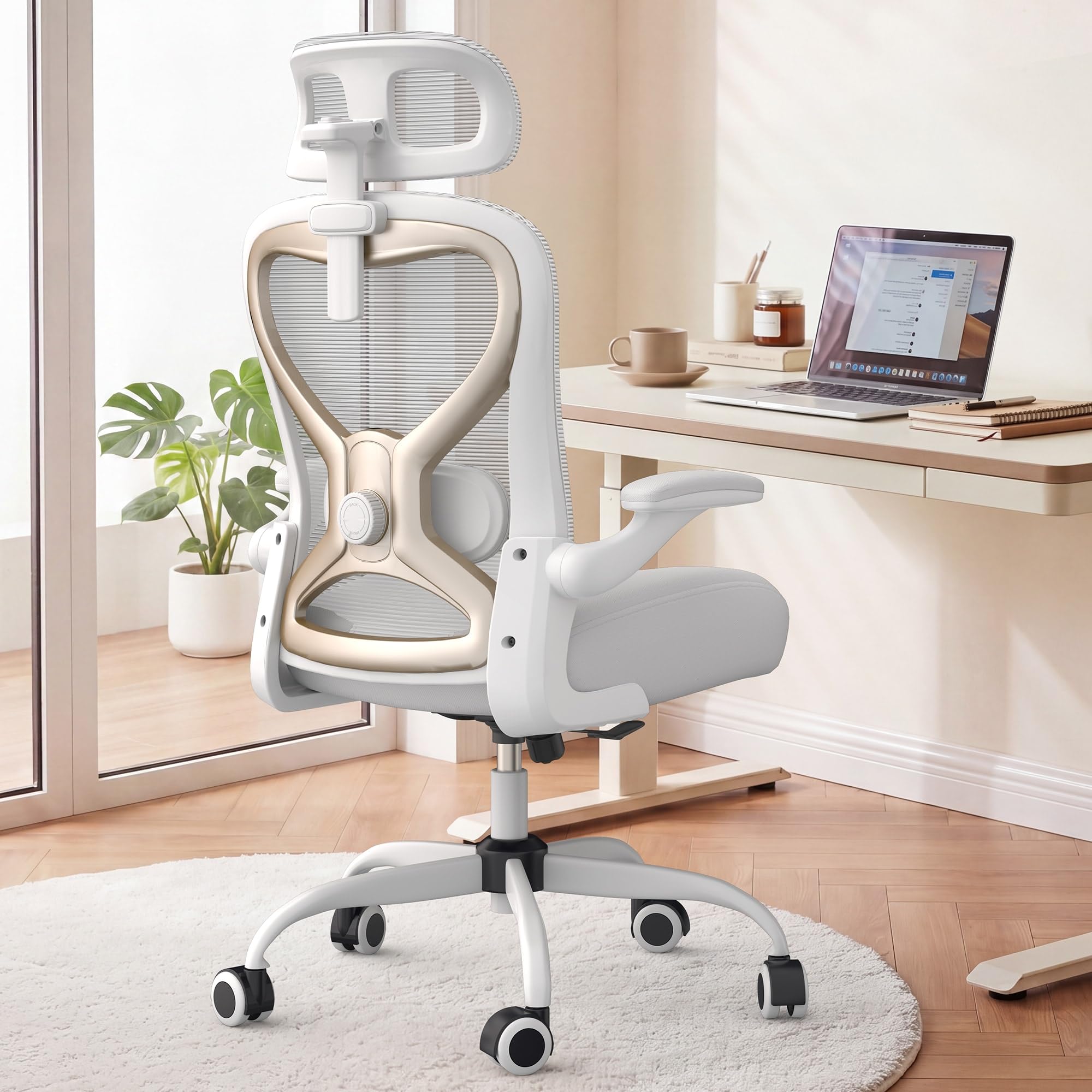
Virgin foam that keeps its resilience longer than standard cut foam.
The seat here is filled with virgin foam, which is a step above the recycled or blended foams found in budget chairs. It maintains its shape and bounce longer, meaning the cushion you sit on in month 12 feels close to the one you sat on in week one. The chair also includes a 3D adjustable headrest (you can adjust height, depth, and angle) which is rare in this category. For sewers who lean back to inspect a seam or take a phone break, that headrest cradles your neck properly—not just a generic bump.
The 2D lumbar support moves up and down as well as in and out, offering solid adjustability despite being one direction short of the 4-way system on the top CASASIO pick. Flip-up armrests, a tilt-and-rock function, and a reinforced metal base supporting 300 lbs round out the package. The white and gold finish is a deliberate design choice—it stands out in a craft room and owners mention it looks professional rather than cheap.
Why it stands out: Virgin foam seat and 3D adjustable headrest at this price point is unusual—both features that preserve long-term comfort.
One thing to know: The 300 lb weight capacity is lower than the 330 or 400 lb options above, so larger body types should size up.
Ideal for: the sewer who wants a stylish chair that still delivers serious ergonomic adjustments, especially neck support from the 3D headrest.
Better options exist if: you need a higher weight capacity or want the 4-way lumbar found on the top-ranked CASASIO model.
7. SIHOO B100 Office Chair, Grey
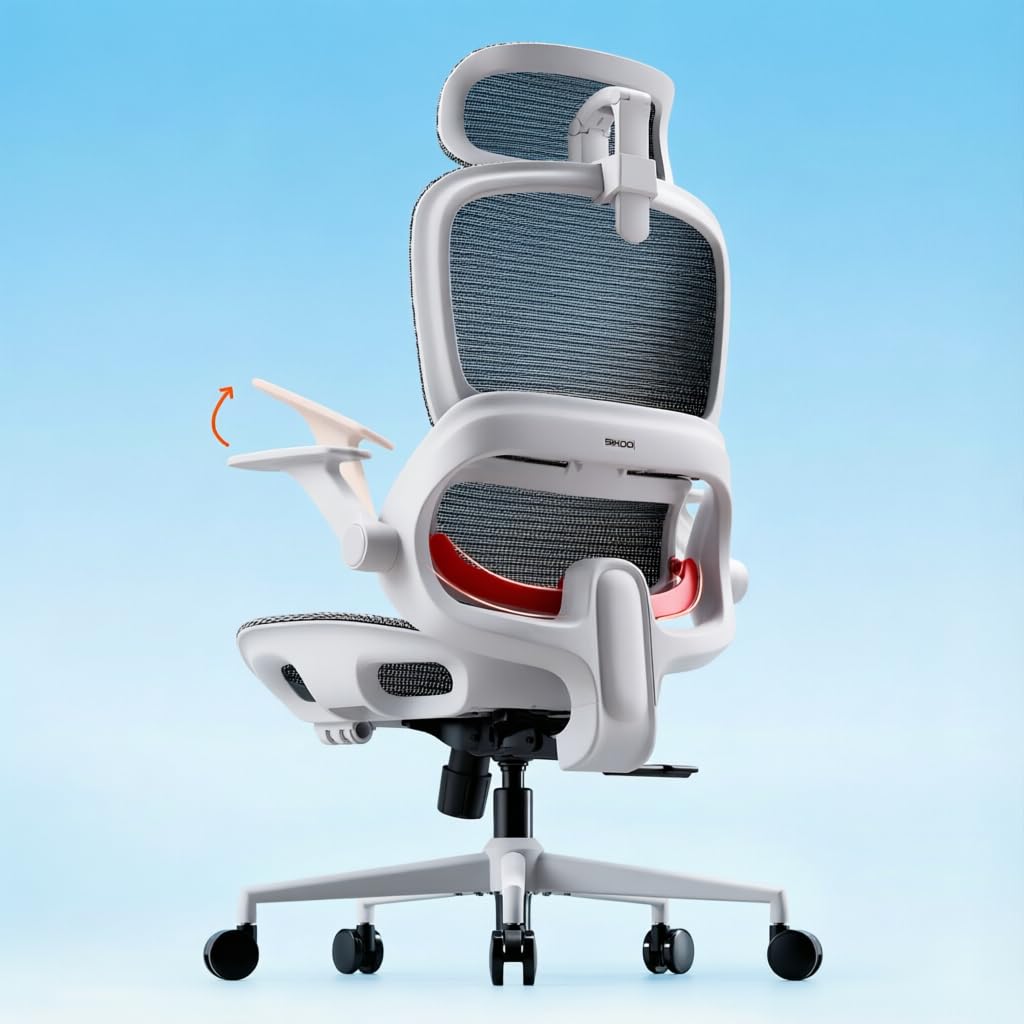
Dynamic lumbar that bends with you as you shift positions all day.
Most lumbar supports are static—you set them once and they stay put. The SIHOO B100 uses an adaptive lumbar system designed to move with your spine as you lean forward to thread a needle, sit upright to sew, or recline to inspect your work. That flexibility makes it a strong option for sewers who change posture frequently. The backrest offers three lockable recline angles (110°, 125°, and 135°), so you can lock a lean-back position rather than having the chair spring back upright. The headrest is wide and also adjustable.
The seat height adjusts from 18.3 to 21.9 inches, covering most sewing machine heights. The cushion is widened and uses a mesh surface to keep air moving, though it is firmer than the thick foam seats on the QLTPLUS or TRALT. SIHOO is among the most recognized names in budget-to-mid ergonomic chairs, and this model carries a 36-month warranty. The reinforced metal base and SGS-certified Class 4 gas lift support up to 300 lbs. Owners are overwhelmingly positive, though a small number report the chair leaning slightly to one side after extended use.
Key feature: Adaptive lumbar support that follows your spine’s movement, plus three lockable recline positions for changing postures throughout a sewing session.
Concern from owners: A minority of users say the chair develops a slight lean to the right over time—treat it as a batch issue rather than a certainty.
Best for: sewers who shift between forward-leaning, upright, and reclined positions and want a back that moves with them.
Worth a second thought if: you need a plush, soft cushion—the mesh seat is supportive but firmer than a thick foam cushion.
8. Lessmore Adjustable Height Sewing and Crafting Chair
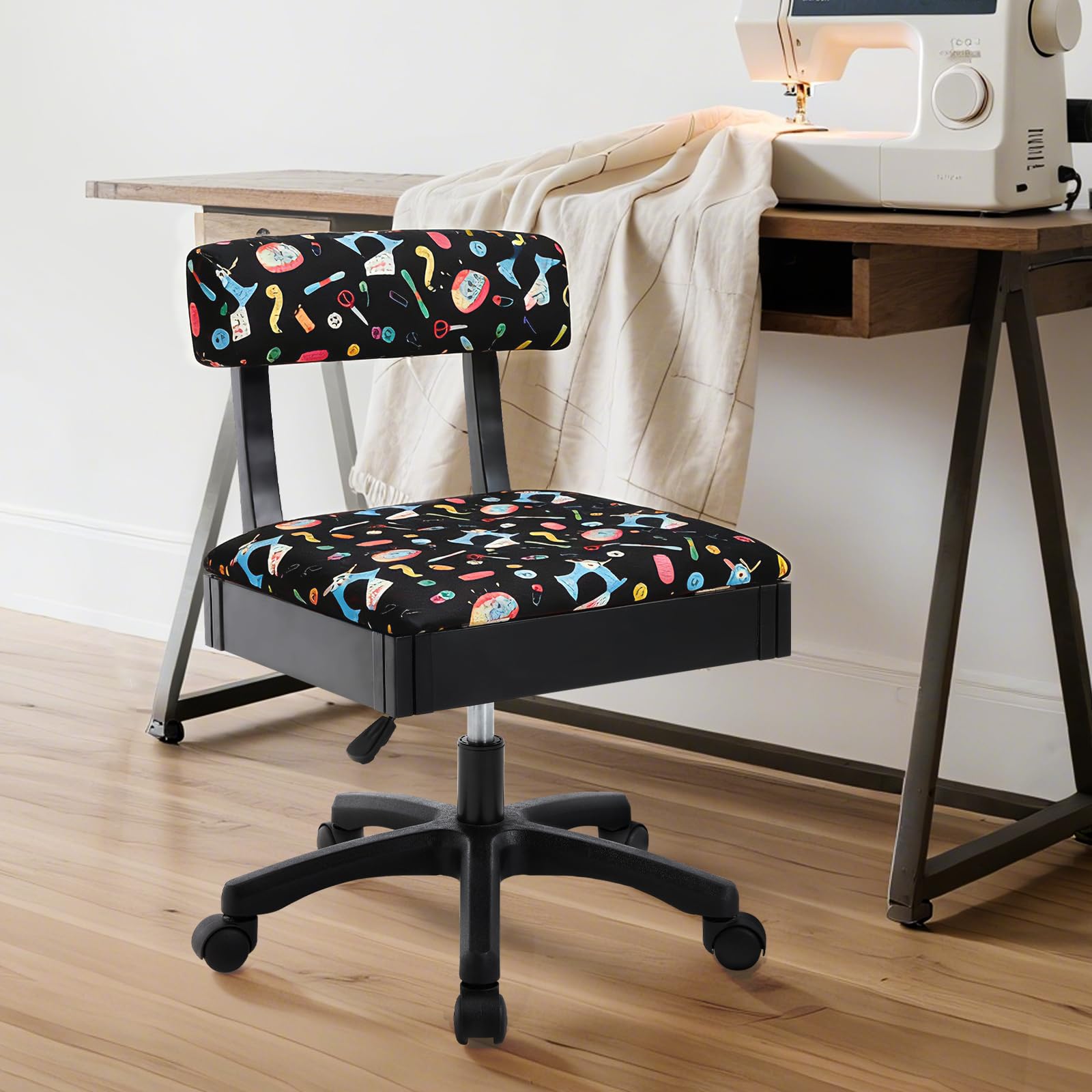
Finally—a chair that hides a bobbin drawer under your seat.
This is the first dedicated sewing-specific chair on the list, and the defining difference is the under-seat storage compartment. It is spacious enough for scissors, bobbins, thread spools, seam rippers, and small notions that normally clutter your machine table. The chair sits on smooth-rolling casters so you can glide between your machine and a cutting table. The upholstery uses a pattern-blue fabric that is designed to hide small thread and dust better than solid colors.
The height is adjustable, though the product page does not specify the exact range. It is an armless design, which is standard for sewing chairs because it removes any obstruction when you reach for fabric layers. Owners are consistent: “just what I wanted and needed,” “super comfy and the ideal sewing chair.” The build quality earns strong marks, and the chair is lightweight at 10 pounds. The trade-off is a smaller buyer base—26 ratings at the time of writing—so long-term durability is less proven than the mass-market office chairs above.
Defining feature: Hidden under-seat storage keeps your most-used sewing tools within arm’s reach without cluttering your work table.
Trade-off: The buyer pool is still small (26 ratings), so long-term durability data is light compared to the 900+ rating options in this list.
Ideal for: quilters and crafters who want a visually matching chair with built-in storage and the mobility of wheels.
Consider a more established option if: you want the reassurance of hundreds of reviews and years of owner experience.
9. Reliable SewErgo 200SE Ergonomic Task Chair

Canadian-made, arrives assembled, and uses glides instead of wheels for pedal stability.
This is the only chair in the list that comes fully assembled straight from the start—zero build time. The SewErgo 200SE is designed and manufactured in Canada, which makes it a distinct choice for buyers who prioritize local production. The key design decision here is the use of glides (plastic feet) instead of casters. That means the chair stays planted while your feet work the sewing pedal, which some sewers prefer because the chair does not drift backward as you apply pressure. A few owners swap in casters themselves for more mobility, but the stock configuration is explicitly pedal-stable.
The backrest is a full cloth-covered cushion, and the seat is firm and thick. Customers note that the adjustability (seat height and back angle) is smooth and precise, and that it reduces back pain during long quilting sessions. The weight capacity is 250 lbs—lower than most options here, so larger users should check the limit. The upholstery is polyester and cleans easily with a lint roller.
Unique angle: Arrives pre-assembled and uses glides (not casters) so the chair stays fixed when you press down on a sewing foot pedal.
Honest limitation: The 250-lb weight capacity is the lowest in this list, and the glides can be harder to move on laminate flooring without an aftermarket wheel swap.
Best for: sewers who want a zero-assembly, made-in-Canada chair with a firm, supportive cushion and stable glides for pedal work.
Skip this if: you need a higher weight capacity, want to roll between stations, or prefer a softer seat.
10. Pink Power Sewing Chair with Wheels

Heavy-duty frame with a hydraulic height adjustment that feels premium.
The Pink Power chair has a distinct focus on durability and professional-grade feel. The frame uses a metal base, a 300-lb capacity, and a hydraulic lift that owners describe as smooth and reliable. The backrest adjusts from 9 to 13 inches (height range), and the seat adjusts from 19 to 23 inches. The armless design is standard for sewing-specific chairs, and the high-resilience padded cushion is built to hold up over time without sagging. The 360-degree swivel base and heavy-duty casters roll smoothly on LVP and hardwood floors.
A major plus is the under-seat storage compartment—similar to the Lessmore chair but with a larger buyer base and more proven long-term reviews. Owners consistently praise the back support and the ability to sew for hours without pain. A senior quilter with sciatica reported that the lumbar pad made a significant difference to their comfort. The assembly is straightforward but the wheels require firm pressure to snap in. The chair is heavy and well-made, and customer support is responsive.
Strength: A 300-lb capacity, metal frame, and hydraulic lift that feels smoother than many chairs at this price—proven by 168 reviews.
Downside: The assembly instructions lack detailed how-to tips (mostly image-based), and the wheels take some force to install.
Best for: sewers who want a heavy-duty dedicated craft chair with under-seat storage and a smooth hydraulic lift that holds up to daily use.
Think twice if: you prefer simple push-in casters or a chair where the assembly instructions are step-by-step text rather than just diagrams.
11. Arrow Sewing H8130 Adjustable Height Sewing Chair

A decades-tested sewing chair that arrives fully assembled in a single box.
The Arrow Sewing H8130 is the premium choice in this guide because it is built specifically for sewing by a company that focuses on sewing furniture—not a general office chair adapted for the task. It arrives fully assembled from the start, which is rare for any chair. The height adjusts from 18 to 22 inches using a hydraulic mechanism. The seat cushion is foam and upholstered in durable fabric, with targeted lumbar support integrated into the backrest. Owners say the seat depth forces you to sit upright against that lumbar support, which is exactly what your back needs over a long session.
The under-seat storage is a generous hidden compartment—useful for keeping bobbins, needles, and small tools within reach. The 360-degree swivel base and heavy-duty casters roll smoothly without marking floors. There are 11 fabric color patterns available, so you can match your craft room decor. The chair is backed by a 1-year warranty. Buyers include a 76-year-old quilter who found it a “standout” for back and neck pain, and a 4’11” user who appreciated the adjustable height. The only recurring note is that shorter users (around 5’3″) may find the seat height a touch tall even at its lowest setting.
Why it commands the premium: Fully assembled from the start, purpose-built for sewing with integrated lumbar support, and available in 11 color patterns.
Worth checking: The seat at its lowest setting may be slightly high for shorter sewers (under 5’2″), so measure your preferred seat-to-floor height before purchasing.
Best for: serious sewers who want a dedicated, no-assembly-required craft chair with proven lumbar support and a color that matches their room.
Consider the less expensive options above if: you are on a tighter budget or need the lowest possible seat height for a very short sewing table.
Understanding the Specs
Lumbar Support Types
Not all lumbar support is the same. Basic chairs include a fixed lumbar bump in the backrest. Better chairs offer 2-way adjustment, meaning you can move the support up and down to match your spine’s curve. The best chairs in this guide use 4-way adjustment (up/down plus in/out), so you can also change how firmly the support presses into your lower back. For sewing, where you lean forward toward the machine, in/out adjustment is particularly helpful because you can bring the support closer to your body.
Seat Cushion Density and Thickness
Density matters more than thickness alone. High-density foam holds its shape for years, while lower-density foam develops a permanent dip after a few months. The chairs here range from 3 inches to 4 inches of foam. Molded foam (shaped in a single cast) tends to outlast cut foam because there are no glued layers to separate. Virgin foam, found in the CASASIO White/Gold chair, is the highest tier—it is made from entirely new foam rather than recycled material, which gives it better long-term resilience.
Weight Capacity
Weight capacity is determined by the gas lift cylinder, the base material, and the chair’s frame. Most chairs here fall between 300 and 400 lbs. The Fizzin chair is the highest at 400 lbs, while the Reliable SewErgo sits at 250 lbs. If you are close to the stated limit, choose a chair with a reinforced metal base and a Class 3 or Class 4 gas lift for stability. Chairs designed for sewing (like the Arrow and Pink Power) often list capacities between 250 and 300 lbs, which is sufficient for most users but worth checking if you need the higher end.
Flip-Up vs. Armless
Flip-up armrests let you use the chair for both sewing and desk work—lower them for typing, flip them up to slide under a sewing table. Armless chairs are simpler and lighter, and they never get in the way of fabric handling. The trade-off is that you lose the chance to rest your elbows between sewing bursts. For sewers who only use the chair for sewing, armless is often the right call. For anyone who also uses the same chair at a computer desk, flip-up arms are more versatile.
FAQ
Can I use a regular office chair for sewing?
What is the ideal seat height for a sewing chair?
Armrests: helpful or a hindrance for sewing?
How much weight do most sewing chairs support?
Are wheels or glides better for a sewing chair?
How long does a high-density foam seat cushion last?
What is the difference between 2-way and 4-way lumbar adjustment?
Can a chair for sewing help with hip and thigh numbness?
Is it worth paying extra for a dedicated sewing chair over an office chair?
How do I clean a mesh-back or fabric sewing chair?
Final Thoughts: The Verdict
For most buyers, the chair for sewing long hours winner is the CASASIO Ergonomic Office Chair because its 4-way lumbar adjustment and 3.54-inch extra-thick cushion attack the two biggest sources of sewing fatigue—lower back ache and hip pressure. If you want under-seat storage and zero assembly, grab the Arrow Sewing H8130. And for a heavy-duty option built for larger frames, the Fizzin Ergonomic Chair with its 400-lb capacity is the one to reach for.
How We Picked
We do not accept paid placement. Every pick is matched to a real buyer and a real use-case; we do not hands-on test units.
Sources & Methodology
Specifications: manufacturer listings and product documentation. Review insights: verified customer reviews, as of July 2026. Pricing: not shown on this page (it changes often); check the current price via the retailer link.
As an Amazon Associate, Gadgets Feed earns from qualifying purchases. This does not affect which products we feature.