
Your streaming stutters, your video calls freeze, and your smart bulbs seem to have a mind of their own. Before you blame your internet plan or call your provider to upgrade, look at the black box blinking in the corner. The router that came with your service is likely the bottleneck, and replacing it with a modern Wi-Fi 6 model is the single cheapest way to unlock the speed you are already paying for. The market is saturated with options under the premium tier, but separating a reliable workhorse from a plastic paperweight requires knowing exactly which specs matter.
I’m Min — the co-founder and writer behind Gadgets Feed. I have spent hundreds of hours combing through technical datasheets, customer compliance reports, and real-world speed tests to isolate the routers that deliver genuine Wi-Fi 6 performance without demanding a fortune for the privilege.
This guide cuts through the noise to deliver a curated list of the single best cheap router options that actually handle modern households without requiring a second mortgage.
How To Choose The Best Cheap Router
Every budget router promises value, but real-world performance depends on three interconnected pillars: the Wi-Fi generation, the hardware processor, and the antenna configuration. Most entry-level models cut corners on the processor, causing the whole network to choke when your family loads a 4K stream, a Zoom call, and a gaming session simultaneously. Knowing where to compromise and where to stand firm is the difference between a headache and a stable connection.
Prioritize Wi-Fi 6 Over Wi-Fi 5
Even on a tight budget, avoid older Wi-Fi 5 (802.11ac) routers. Wi-Fi 6 (802.11ax) introduces OFDMA and MU-MIMO, technologies that are mission-critical for modern homes with more than a handful of devices. OFDMA allows the router to talk to multiple devices on the same channel simultaneously rather than queuing them up. At the budget-friendly and mid-range tiers, this is the single feature that prevents your network from grinding to a halt during peak usage hours.
Check the Total Bandwidth Rating, But Don’t Overbuy
The AX number (AX1500, AX1800, AX3000) represents the theoretical maximum combined throughput of both bands. An AX1500 router splits into roughly 300 Mbps on 2.4 GHz and 1201 Mbps on 5 GHz — enough for internet plans up to 1 Gbps. An AX3000 router doubles the 5 GHz channel width for higher peak speeds. For most households on 200-500 Mbps plans, an AX1500 or AX1800 unit is the sweet spot. Spending more for an AX3000 only helps if your internet plan exceeds 1 Gbps or you frequently transfer large files internally.
Antenna Type and Placement Strategy
Budget-friendly routers typically use fixed external antennas or internal antennas. External, high-gain antennas (typically 4 to 5 dBi) can focus the signal directionally, which helps punch through walls. If your router will sit in a closet or basement, look for models with beamforming technology, which steers the signal toward connected devices rather than blasting it omnidirectionally. This spec is worth a premium in the mid-range category because it directly addresses dead spots without requiring a mesh system.
Quick Comparison
On smaller screens, swipe sideways to see the full table.
| Model | Category | Best For | Key Spec | Amazon |
|---|---|---|---|---|
| Netgear Nighthawk RAX36 | Premium | Large home, heavy streaming | AX3000 up to 3 Gbps / 2,000 sq. ft. | Amazon |
| Amazon eero 6 | Mid-Range | Mesh coverage for medium homes | Wi-Fi 6 / 1,500 sq. ft. / 75+ devices | Amazon |
| Netgear R6700AX | Mid-Range | Reliable single-unit coverage | AX1800 / 1,500 sq. ft. / 20 devices | Amazon |
| TP-Link Archer AX21 | Mid-Range | Strong signal, easy setup | AX1800 / 4 high-gain antennas | Amazon |
| Google Wifi (1-pack) | Mid-Range | Scalable mesh for any layout | AC1200 / 1,500 sq. ft. per node | Amazon |
| TP-Link Archer AX10 (Renewed) | Budget | Entry-level Wi-Fi 6 on a tight budget | AX1500 / 1.5 GHz triple-core CPU | Amazon |
| Cudy WR1500 | Budget | Ultra-low cost, decent range | AX1500 / 4× 5dBi antennas | Amazon |
In‑Depth Reviews
1. Netgear Nighthawk WiFi 6 Router (RAX36)

The Nighthawk RAX36 brings the highest bandwidth rating in this lineup, offering AX3000 speeds that can theoretically hit 3 Gbps across its dual bands. The 2,000 square foot coverage rating is the most generous here, and real-world reviews confirm it handles 4,000+ square foot homes with a single unit placed in a corner. Its internal antenna system paired with beamforming delivers consistent signal strength through multiple walls and even into backyards.
Setup is handled through the Nighthawk app, which guides you through the process in under ten minutes. Users report it handles 25+ devices including gaming consoles, 4K TVs, and smart home gear without any slowdowns. The built-in VPN support is a bonus for remote workers or privacy-conscious households, and the USB 3.0 port allows for basic network storage sharing.
It requires a separate modem — this is a router-only device. The price reaches the top of the budget-friendly spectrum, but the performance per dollar is exceptional for anyone who wants a single powerful unit rather than a mesh system. The four gigabit Ethernet ports provide plenty of wired connections for stationary consoles and PCs.
Why it’s great
- AX3000 bandwidth handles gigabit fiber and heavy internal transfers.
- Coverage reaches 2,000+ sq. ft. even with obstacles.
- App-based setup is fast and reliable.
Good to know
- Router only — requires a separate cable or fiber modem.
- Premium price compared to entry-level models.
2. Amazon eero 6 (1-pack)

The Amazon eero 6 is a mesh system that starts with a single node covering up to 1,500 square feet, and you can scale up by adding more units later. Its TrueMesh technology intelligently routes traffic to avoid dead spots, and it supports Wi-Fi speeds up to 900 Mbps, which is ideal for mid-range internet plans. It handles up to 75 connected devices without breaking a sweat, making it future-proof for growing smart homes.
One standout feature is the built-in Zigbee smart home hub. This eliminates the need for separate hubs for many Alexa-compatible devices, simplifying your setup and reducing power draw. The eero app manages your entire network, including setting up a guest network, pausing the internet for specific devices, and running speed tests. Reviews consistently highlight the setup as exceptionally simple, often taking less than 15 minutes from unboxing to full operation.
The unit is compact and unobtrusive, designed to sit on a shelf without dominating the room. It does lack USB ports and advanced QoS controls that power users might want, but for the vast majority of households looking for a reliable, expandable mesh network at a mid-range price, it delivers a compelling package. Internet speeds up to 900 Mbps are supported, but it will not maximize a 1 Gbps+ fiber plan.
Why it’s great
- TrueMesh provides seamless roaming without signal drops.
- Built-in Zigbee hub reduces clutter and extra purchases.
- Expandable by adding more nodes as needed.
Good to know
- No USB port for printer or storage sharing.
- Max Wi-Fi speed capped at 900 Mbps.
3. Netgear WiFi 6 Router (R6700AX)
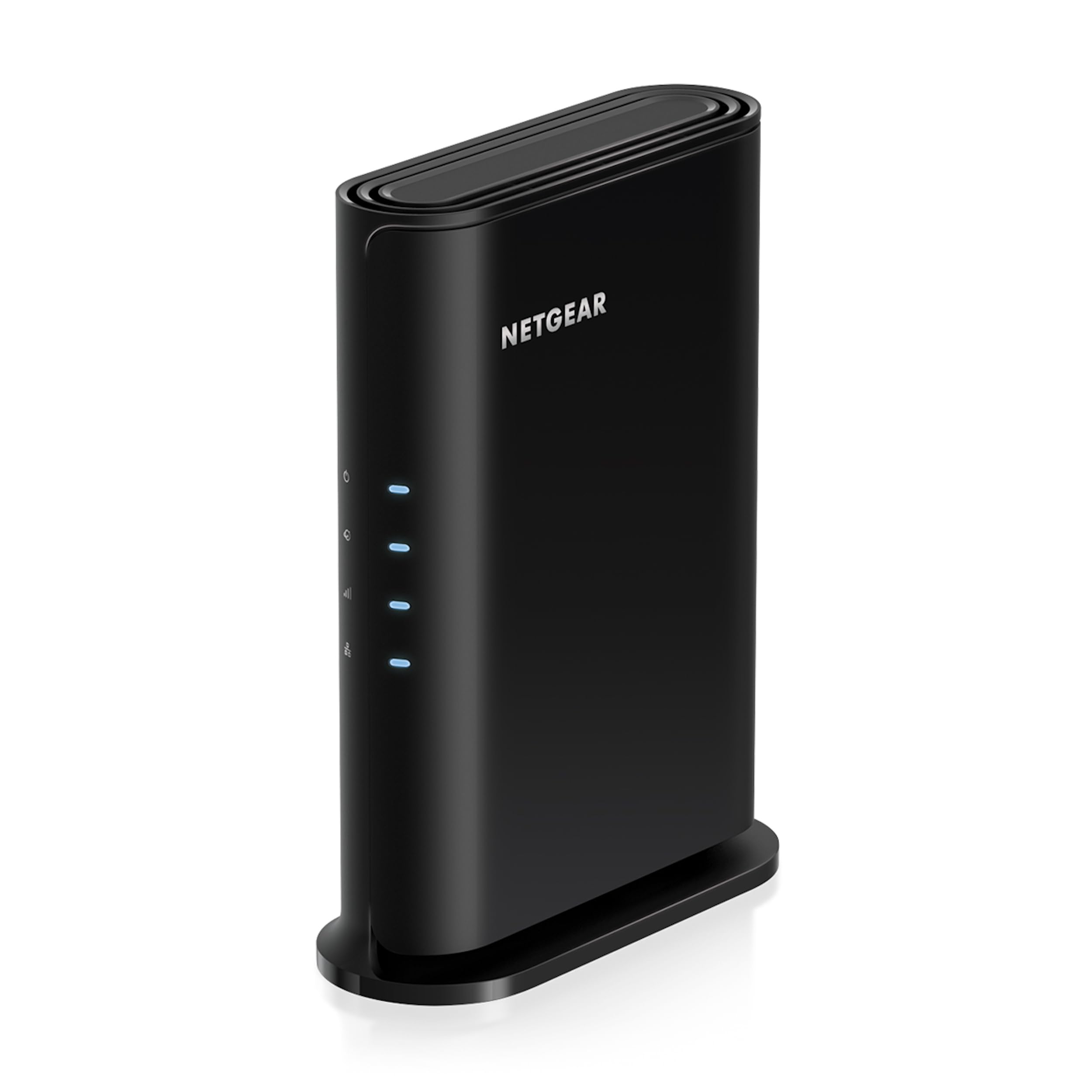
The Netgear R6700AX delivers AX1800 speeds, totaling up to 1.8 Gbps across the 2.4 GHz and 5 GHz bands. It covers up to 1,500 square feet and is designed for 20 connected devices — a solid fit for small to medium homes with moderate device counts. Its internal antennas and beamforming technology work together to focus the signal toward your devices, which helps maintain stability in homes with less favorable router placement.
Setup is straightforward via the Nighthawk app, which guides you through connecting to your existing modem and configuring your network. Users switching from ISP-provided routers often report immediate improvements in both speed and consistency. The four gigabit LAN ports provide wired connections for gaming consoles or desktop PCs, and the router supports WPA3 encryption for stronger security. The lack of a USB port is a minor omission for those who want to share a printer or external drive.
It lacks a built-in modem, so you will need to pair it with a separate cable, DSL, or fiber modem. The price point sits in the mid-range tier, representing a strong value proposition for anyone who wants a dependable Wi-Fi 6 upgrade without the complexity of a mesh system. Netgear offers free 24/7 support for troubleshooting, which adds peace of mind for less tech-savvy users.
Why it’s great
- AX1800 provides fast speeds for 20 devices simultaneously.
- App-based setup is quick and beginner-friendly.
- WPA3 encryption enhances network security.
Good to know
- No USB port for external storage or printers.
- Requires a separate modem for internet access.
4. TP-Link Archer AX21 (AX1800)

The TP-Link Archer AX21 V5 is a dual-band Wi-Fi 6 router offering AX1800 speeds, effectively splitting into 1200 Mbps on the 5 GHz band and 574 Mbps on the 2.4 GHz band. Its biggest advantage over competitors at a similar price is the presence of an advanced front-end module (FEM) chipset combined with four high-gain antennas, which extends coverage significantly for a mid-range device. Many users report strong signals throughout 1,500+ square foot homes and even into backyards.
Setup is handled through the TP-Link Tether app, which supports remote network management once an account is created. The router supports Easy Mesh, meaning it can be integrated with other compatible TP-Link units later if you need broader coverage. It also supports VPN server functionality (OpenVPN and PPTP), a feature usually reserved for more expensive models. A five-star review from a Spectrum user highlighted the ability to split 2.4 GHz and 5 GHz SSIDs, solving compatibility issues with older 2.4 GHz-only devices and smart home hubs.
The broad compatibility with ISPs including Comcast, AT&T, Verizon, and Spectrum makes it a safe buy for almost any home. The ABS plastic construction is not the most premium-feeling, but the internal hardware is robust. TP-Link is a signatory of the CISA Secure-by-Design pledge, adding a layer of trust regarding firmware updates and security.
Why it’s great
- FEM chipset and high-gain antennas provide exceptional range.
- VPN server support for remote network access.
- Easy Mesh compatible for future expansion.
Good to know
- Plastic build feels less durable than metal alternatives.
- Advanced QoS controls are basic compared to premium routers.
5. Google Wifi AC1200 (1-pack)

The Google Wifi puck is a mesh system that excels at simplicity. The single unit covers up to 1,500 square feet, and you can add more pucks to create a mesh network covering up to 4,500 square feet. It uses AC1200 Wi-Fi 5 technology, which is older than Wi-Fi 6, but the mesh architecture compensates for many of the raw speed limitations by providing consistent coverage without dead spots. It intelligently switches your devices between the 2.4 GHz and 5 GHz bands as needed.
Setup takes approximately 15 minutes via the Google Home app. Users who struggled with weak signals in basements or outdoor areas frequently report dramatic improvements after placing a second puck closer to the problem area. The app also provides basic parental controls, allowing you to pause Wi-Fi for specific devices or restrict certain content. For small to medium homes with internet plans under 200 Mbps, this system delivers excellent value and rock-solid stability.
The lack of Wi-Fi 6 means it cannot match the peak speeds or multi-device efficiency of AX models, but its mesh capabilities make it a stronger choice than many single-unit Wi-Fi 5 routers. It requires a separate modem and works with most ISPs. The design is minimalist and discreet, blending into most shelves. If your priority is eliminating dead zones rather than chasing maximum speed, this is a compelling entry-level option.
Why it’s great
- Mesh system provides seamless coverage across large areas.
- Setup is extremely fast via the Google Home app.
- Scalable and cross-compatible with Nest Wifi.
Good to know
- Wi-Fi 5 (AC1200) is slower than modern Wi-Fi 6 alternatives.
- Lacks advanced configuration options for power users.
6. TP-Link Archer AX10 (Renewed)

The TP-Link Archer AX10 brings Wi-Fi 6 to an incredibly low price point by offering it as a renewed unit. The AX1500 bandwidth provides up to 1201 Mbps on the 5 GHz band and 300 Mbps on the 2.4 GHz band. The secret to its performance lies in the 1.5 GHz tri-core processor, which handles packet routing efficiently even when multiple high-bandwidth devices are active. This CPU power prevents the router from becoming a bottleneck, a common problem with ultra-cheap routers.
It includes OFDMA and MU-MIMO, enabling it to communicate with multiple devices simultaneously, reducing lag during gaming or video calls. The beamforming technology focuses the signal toward connected devices, providing stronger coverage in the areas you actually use. Setup is handled through the TP-Link Tether app, and the renewed units tested by users arrived in good condition, often requiring only a factory reset and firmware update to reach peak performance.
This is a renewed product, meaning it was previously opened or returned, but it has been inspected and tested. The risk is lower than with random used gear, but the warranty may differ from a brand-new unit. Some users reported needing to set it up as an access point or perform a factory reset first. For anyone who wants Wi-Fi 6 features on the tightest possible budget and is comfortable with a refurbished purchase, this is the best value option available.
Why it’s great
- Tri-core CPU handles multiple devices without bufferbloat.
- Wi-Fi 6 features at a lower price point than any new model.
- Tether app provides easy setup and management.
Good to know
- Renewed unit may require initial troubleshooting or firmware update.
- No USB port for print or storage sharing.
7. Cudy AX1500 Wi-Fi 6 Router (WR1500)

The Cudy WR1500 is a surprisingly capable AX1500 router for its low price point. It offers the same Wi-Fi 6 fundamentals as the TP-Link AX10 — OFDMA, MU-MIMO, and beamforming — but with a twist: it comes with four fixed 5 dBi antennas. These high-gain antennas provide better coverage than the internal antennas found on some similarly priced competitors, with several users noting strong signals penetrating multiple floors and walls.
It operates as a 2-in-1 device, functioning as a standard router or a dedicated access point via a toggle in the settings. This flexibility is useful if you want to extend an existing wired network. It also supports multiple VPN protocols, offering a layer of privacy that is uncommon at this price. Customers report it handles 60+ devices without significant slowdowns, a testament to its efficient handling of Wi-Fi 6’s multi-device capabilities.
The build quality is where corners are cut — the casing is lightweight plastic that feels less substantial than more expensive models. The gigabit ports are standard but there is no USB port for storage. Setup is straightforward, and the router provides a solid, no-frills Wi-Fi 6 experience for the absolute lowest price. If your budget cannot stretch further, this is the fallback option that still provides Wi-Fi 6.
Why it’s great
- Four high-gain 5 dBi antennas provide excellent range.
- Multi-VPN support for added privacy and security.
- AX1500 Wi-Fi 6 speeds at an entry-level price.
Good to know
- Plastic build feels cheap and lightweight.
- No USB port for sharing external drives or printers.
FAQ
Can a cheap Wi-Fi 6 router handle gigabit internet speeds?
Should I buy a single powerful router or a mesh system for a 1500 sq ft home?
What is the difference between a renewed router and a new one?
Is it worth paying more for an AX3000 router over an AX1500?
Final Thoughts: The Verdict
For most users, the cheap router winner is the TP-Link Archer AX21 because it combines AX1800 speeds, an advanced FEM chipset for extended range, and essential features like VPN server support at a mid-range price point. If you need the absolute best performance for a large home with many devices, grab the Netgear Nighthawk RAX36 for its AX3000 speeds and 2,000 sq. ft. coverage. And for the tightest budget where every dollar counts, the renewed TP-Link Archer AX10 brings genuine Wi-Fi 6 to an entry-level price.