
Our readers keep the lights on and my morning glass full of iced black tea. As an Amazon Associate, I earn from qualifying purchases.
Specs are compiled from manufacturer listings and verified buyer reviews and can change over time — please confirm the key details on the product page before buying.
You want the purest sound your system can deliver, and that means the amp’s transistors never turn off. A Class A amplifier runs its output devices at full current all the time — it never shuts off — which gives you the most linear sound with the least distortion. But that constant flow creates heavy heat and low power. A real Class A design might put out only 7 to 12 watts per channel, yet the manufacturer claims those watts sound bigger than any hundred-watt receiver you have heard. That magic only works when your speakers match the amp’s personality — low power demands efficient speakers.
I’m Min — the founder and writer behind Gadgets Feed. This guide is built by comparing the manufacturers’ published specifications and the patterns across verified customer reviews, so you get each pick’s real strengths and trade-offs instead of marketing spin.
Bridge that one simple idea — low power, huge sound, speaker-dependent — and you will decide quickly which class a amplifier belongs in your system without wasting money on the wrong match.
Our Picks at a Glance
How To Choose The Best Class A Amplifier
Picking a Class A amplifier is backwards compared to buying any other audio gear. You do not start with the amplifier spec sheet. You start with your speakers. A Class A amp puts out very few watts — anywhere from around 7 to 48 watts — and to get satisfying volume you need speakers with high sensitivity. Sensitivity is measured in decibels (dB), and it tells you how loud the speaker gets from one watt of power. Anything above 89 dB is where Class A starts to sing. Below that, you will turn the volume knob to its end and still feel the sound is thin. So write down your speaker’s sensitivity rating first, then read the amplifier stats.
Power Output and Your Speaker Match
The single most important number is the output power in watts, but do not compare it to a typical AV receiver. A well-designed 8-watt Class A amplifier drives a 91 dB speaker to satisfying room-filling levels for critical listening. A 12-watt amp gives you a usable headroom buffer for dynamic peaks. A 48-watt amp, like the R800i, can drive less sensitive speakers but still falls short of a typical Class A/B 100-watt receiver. If your speakers dip below 86 dB sensitivity, a Class A amp will frustrate you — no matter the price.
Tube Type and Sound Character
Class A tube amplifiers typically use one of two power tubes: the EL34 or the 300B. The EL34 is a pentode tube that delivers a punchy, dynamic sound with good bass control — it is the workhorse of British-style amps. The 300B is a triode tube famous for its midrange magic, especially on vocals and acoustic instruments. A 300B amp (like the A50 MKIII) puts out less power — typically around 7 to 8 watts — but the sound is more refined and airy. The EL34 amp gives you more usable power (12 watts and up) with a fuller bottom end. Neither is better — it is a taste choice between vocal sweetness and dynamic punch.
Build Quality and Output Transformer
The output transformer is the heart of a Class A tube amplifier. Cheap transformers limit bass extension and muddy the sound. Look for specs like Z11 core silicon steel, core thickness measurements (such as 60mm or 86-50), and hand-wound construction. A larger transformer core generally means deeper, tighter bass and better thermal stability. Point-to-point hand wiring (as used in the R800i and A10) is preferred by enthusiasts because it uses fewer circuit board traces and shorter signal paths, which can reduce noise and distortion.
Quick Comparison
| Model | Best For | Output Power | Weight | Dimensions | Amazon |
|---|---|---|---|---|---|
| A10 EL34★ Best Overall | Entry-level EL34 with tube covers | 12 Watts | 12 Kilograms | 12.2 x 10.55 x 6.5 inches | $419.58Amazon |
| R800i 300B 805 | High-power Class A with balanced XLR | 48 Watts | 48 Kilograms | 17.32 x 16.14 x 10.83 inches | $2,869.73Amazon |
| REISONG A50 MKIII 300B | 300B tube magic with tube cage | 7.6 Watts | 18 Kilograms | 14.76 x 11.42 x 7.09 inches | $849.68Amazon |
| BOYUURANGE A20 KT88 | VU Meter aesthetics and KT88 sound | 8 Watts + 8 Watts | 18 Kilograms | 14.41 x 11.81 x 7.28 inches | $649.76Amazon |
In‑Depth Reviews
1. A10 EL34 Hi-Fi Audio Stereo Tube Amplifier Single-end Class – A Amp
Our pick — over 4.5★ from 300+ verified ratings; the strongest balance of quality and price.
The A10 gives you 12 honest Class A watts from EL34 tubes at a price that keeps the door open for new tube buyers.
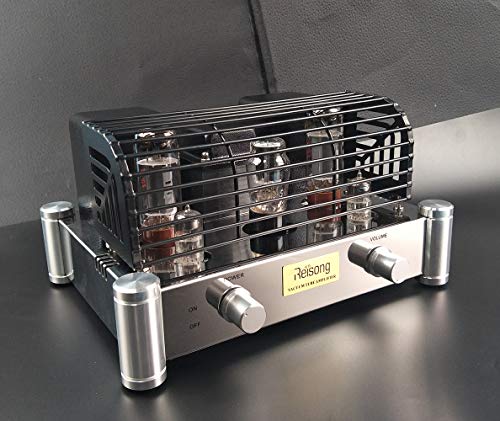
This A10 by Reisong is the most honest entry point into Class A tube amplification. Its 12 watts from a pair of EL34 pentodes (with 6N2J driver tubes and a 5Z4PJ rectifier) give you noticeably more usable power than the A50 MKIII’s 7.6 watts, which means it works with a slightly broader range of bookshelf speakers. But the manufacturer warns directly in the listing: “please confirm that your speaker is a bookshelf speakers with a sensitivity 89db or more.” Do not ignore that. A floorstanding speaker or anything below 89 dB will leave you underwhelmed.
The build is point-to-point hand welding — the same enthusiast-preferred construction method used in the premium R800i. The output transformer is upgraded to the 76×40 higher-end model, which gives better bass extension than earlier A10 versions. At 12 kilograms, it is the lightest amp here (one-quarter the weight of the R800i) and the smallest at 12.2 x 10.55 x 6.5 inches — roughly 42% more compact than the R800i’s dimensions. The stainless steel and aluminum construction keeps weight manageable without feeling cheap. It comes with tube protective covers and a circuit diagram for troubleshooting.
One reviewer noted that after a few minutes of warm-up, the sound opens up nicely with good detail and a smooth top end. The A10 runs hot as expected from Class A, but the open chassis design helps airflow. Note that if no sound comes out, you might need to press the black circle button on the back to switch between AUX and CD input modes — a common first-use hiccup.
What You Get at This Price
- 12 watts of genuine EL34 Class A sound — enough headroom for bookshelf speakers
- Point-to-point hand wiring for cleaner signal path
- Upgraded 76×40 output transformer for better bass performance
Where It Falls Short
- Limited to bookshelf speakers with 89 dB+ sensitivity — not for floorstanders
- Only one pair of inputs (AUX/CD) with a manual switch
- Runs hot like all Class A designs; needs ventilation space
Best suited for: the first-time tube buyer with a pair of efficient bookshelf speakers who wants real Class A sound without spending more than necessary — the 12 watts give you a meaningful power advantage over 300B designs.
Not ideal if: your speakers are floorstanders, dip below 89 dB sensitivity, or you need multiple input sources.
2. R800i 300B 805 Tube Single-Ended Class A Integrated Amp & Power Amplifier with Balanced XLR Input
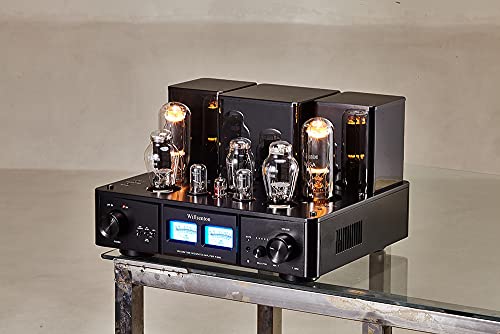
This heavyweight gives you 48 Class A watts with balanced XLR inputs, so you can drive a wider range of speakers without the strain that smaller amps cause.
Where every other Class A amp here asks you to pair it with ultra-efficient speakers, this Willsenton R800i gives you real headroom — 48 watts of single-ended Class A power. That is 6.3 times more power than the REISONG A50 MKIII’s 7.6 watts, which means you can drive a wider range of speakers without feeling starved for volume. It also functions as a pure power amplifier through its group pre-amp input, giving you flexibility to upgrade your preamp later.
The build is massive at 48 kilograms (that is 4x the weight of the 12 kg A10 EL34) and 17.32 x 16.14 x 10.83 inches. Willsenton used a Z11 iron core for the output transformers and separate high-voltage and low-voltage power transformers, each with Z11 cores and special materials. The Export version adds piano lacquer transformer covers and tailor-made tube sockets for the 805 tubes. It includes both a level meter and bias meter switching — a rare feature that lets you monitor tube health visually.
Buyers report that the sound is incredibly sweet across the midrange and bass, with the 300B driver stage feeding the 805 output tube for a presentation that feels both powerful and refined. The catch is the operating temperature of 40 degrees Celsius — this amp runs hot, so you need proper ventilation. At this price point, it demands a serious audio rack and speakers that can handle its weight.
What Makes It Special
- 48 Watts of genuine single-ended Class A — enough to drive moderately efficient speakers
- Balanced XLR input for clean signal transmission over long cable runs
- Z11 core output transformers and dual power transformers for deep, controlled bass
Real-World Trade-offs
- 48 kg weight requires a dedicated, sturdy audio stand
- Generates substantial heat at 40°C operating temperature
- Premium pricing reflects the luxury build and Export-spec components
Your best match if: you own speakers in the 88-92 dB range and want Class A power that can actually fill a medium to large room without strain — plus you appreciate balanced XLR inputs and dual-meter monitoring.
Think twice if: your speakers dip below 86 dB sensitivity or you do not have a heavy-duty rack; also skip this if you prefer a compact, easy-to-move amplifier.
3. REISONG A50 MKIII 300B HiFi Intergrated Tube Amplifier Single-end Class A Valve Amp with Tube Cage
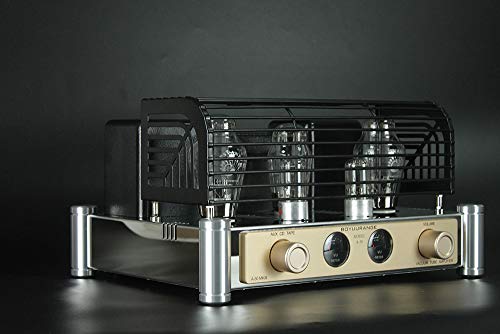
The 300B tube’s vocal magic comes through clearly here, but you need speakers rated at 89 dB or higher to get any real volume.
If you chase that vocal presence and acoustic instrument texture that only a 300B triode delivers, this A50 MKIII is your entry point at under half the price of the R800i. It outputs 7.6 watts from a pair of PSVANE 300B tubes — less than one-sixth the power of the R800i — so your speakers absolutely need a sensitivity rating of 89 dB or higher to get satisfying volume. The trade-off for that low power is a level of midrange purity and air that EL34-based amps struggle to match.
The MKIII revision adds an inductance transformer (a choke) and a bipolar filter circuit to clean up the power supply noise. Owners mention that the midrange is open and natural, with a surprising amount of bass control for a 7.6-watt amp. The factory uses new imported 0.35 core silicon steel for both the power transformer (stack thickness 60mm, 114-60) and the output transformer core (86-50). It comes with a tube cage and VU meters, which protect the expensive 300B tubes while adding visual appeal. At 18 kilograms, it is the same weight as the A20 KT88 but significantly heavier than the A10 EL34.
Customers note that the A50 MKIII excels with jazz, vocals, and acoustic music where you do not need high SPLs. It runs notably cooler than the R800i, though it still gets warm. The included tube cage is a genuine safety bonus if you have kids or pets near the system.
Why This Stands Out
- Genuine 300B triode sound — the benchmark for vocal and acoustic reproduction
- Includes tube cage and VU meters for safety and style
- MKIII circuit improvements (inductance transformer, bipolar filter) for cleaner sound
The One Limitation
- Only 7.6 watts — demands speakers with 89 dB or higher sensitivity
- Bass is controlled but not as punchy as EL34 or KT88 designs
- Operates warm but not as hot as the R800i; still needs ventilation
Reach for this if: your priority is vocal clarity, acoustic instrument texture, and you already own high-sensitivity speakers (89 dB+) — this is the most accessible 300B amp that does not cut corners on the output transformer.
Look elsewhere if: you listen to bass-heavy genres at high volume or your speakers are under 89 dB — you will run out of headroom quickly.
4. BOYUURANGE A20 Hi-Fi Intergrated Amplifier KT88 Tube Single-end Class A 4ND VU Meter
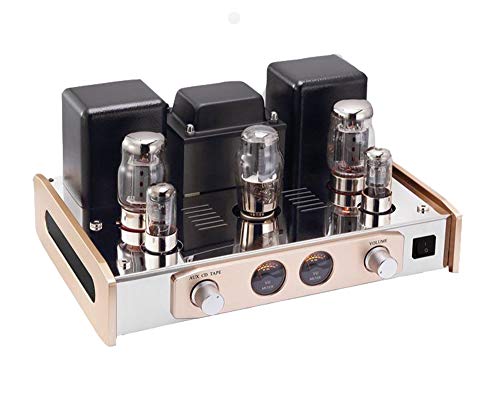
The A20’s KT88 tubes and 4-inch VU meters make it a visual centerpiece, but its 8 watts per channel demand very efficient speakers.
The BOYUURANGE A20 uses KT88 tubes — a powerful pentode similar to the EL34 but with a reputation for richer harmonic content and better bass control. It delivers a maximum output of 8 watts per channel (8W+8W) using no big loop feedback technology, which the manufacturer states ensures “high sound reduction, powerful.” In plain terms, less global feedback means the amplifier preserves more of the tube’s natural distortion profile — the kind of harmonic richness that makes Class A sound so engaging.
The pre-voltage amplification stage uses a 6J8P-J tube, which adds another gain stage before the KT88s. The power amplifier section uses a 0.35 core transformer for stable power supply. At 18 kilograms and 14.41 x 11.81 x 7.28 inches, it is the same weight as the A50 MKIII but noticeably larger than the A10 EL34. The 4-inch VU meters on the front panel are the star visual feature — they bounce to the music and give the amp a classic studio-monitor look. The FTC specification compliance is listed, though the exact testing details are not specified.
Buyers with efficient speakers (89 dB and above) report a warm, liquid midrange with surprisingly tight low-end punch for a single-ended design. The low power (8 watts per channel) means this is strictly for nearfield listening or small rooms. One owner noted that the VU meters are mesmerizing but the amp needs about 15 minutes to warm up before the sound stabilizes.
The Visual Appeal
- 4-inch VU meters add classic studio-monitor aesthetics
- KT88 tubes deliver rich harmonics with good bass authority
- No big loop feedback for natural, unprocessed tube sound
The Practical Limit
- Only 8 watts per channel — among the lowest power in this roundup
- Limited to very efficient speakers (89 dB+) in small rooms
- Relatively low review count (only 21 ratings) means less user feedback to learn from
Buy it for: the visual experience — VU meters, warm KT88 sound, and a compact footprint — if you prioritize aesthetics alongside audio quality.
Consider something else if: you need even the moderate headroom of 12 watts, or you plan to drive speakers in a medium-to-large room.
Understanding the Specs
Output Power (Watts)
This is the most misleading spec in Class A amplifiers. A typical audiophile receiver puts out 100-200 watts per channel. A Class A single-ended tube amp puts out between 7 and 48 watts. You cannot compare them directly. The 7.6-watt A50 MKIII will sound louder on a 91 dB speaker than a 100-watt AV receiver on an 86 dB speaker — because Class A delivers peak current continuously with minimal distortion. The real question is not “how many watts” but “do my speakers have enough sensitivity (dB) to turn those watts into satisfying volume?” Aim for speakers rated at 89 dB or higher for any of these amplifiers. The R800i’s 48 watts is the only one that can stretch down to around 86 dB speakers if you do not listen at extreme volumes.
Weight and Transformer Quality
Weight is a direct clue to build quality in a Class A tube amplifier. The output transformer is the heaviest component — it handles the full current of the amplifier and directly affects bass depth, distortion, and frequency extension. A heavier amp usually means a larger, higher-quality output transformer with better core material (like Z11 silicon steel). The R800i weighs 48 kg, the A50 MKIII and A20 both weigh 18 kg, and the A10 weighs 12 kg. These weight differences are not random — they track exactly with transformer size and power output. The R800i’s massive Z11-core transformers are a big reason it can deliver 48 watts with the same distortion profile as a 7.6-watt amp.
FAQ
Can I use a Class A amplifier with any speaker?
What does single-ended mean in a Class A amplifier?
What is the difference between an EL34 and a 300B tube?
Why do Class A amplifiers run so hot?
What is point-to-point hand wiring and why does it matter?
How do I choose between 7.6 watts and 48 watts?
What does a VU meter do on a tube amplifier?
Is a higher price always better for a Class A amplifier?
How long do Class A amplifier tubes last?
Do I need a separate preamp with these integrated amplifiers?
Final Thoughts: The Verdict
If you want one dependable pick, the class a amplifier winner is the REISONG A50 MKIII 300B because it delivers the legendary 300B midrange magic at a price that does not require a dedicated listening room — and the included tube cage and VU meters make it practical for daily use. If you want the highest power and the flexibility of balanced XLR inputs, grab the Willsenton R800i. And for the best entry point into real Class A tube sound without overspending, choose the A10 EL34.
How We Picked
We do not accept paid placement. Every pick is matched to a real buyer and a real use-case; we do not hands-on test units.
Sources & Methodology
Specifications: manufacturer listings and product documentation. Review insights: verified customer reviews, as of July 2026. Pricing: not shown on this page (it changes often); check the current price via the retailer link.
As an Amazon Associate, Gadgets Feed earns from qualifying purchases. This does not affect which products we feature.
Related Guides
Product prices and availability are accurate as of the date/time indicated and are subject to change. Any price and availability information displayed on Amazon at the time of purchase will apply to the purchase of this product. As an Amazon Associate I earn from qualifying purchases.
CERTAIN CONTENT THAT APPEARS ON THIS SITE COMES FROM AMAZON. THIS CONTENT IS PROVIDED "AS IS" AND IS SUBJECT TO CHANGE OR REMOVAL AT ANY TIME.
Amazon and the Amazon logo are trademarks of Amazon.com, Inc. or its affiliates.