
Choosing the wrong surface for raw proteins leads to three distinct frustrations: your chef’s knife loses its edge weeks ahead of schedule, bacteria-laden juices spread across the counter, and the board itself warps or cracks after a few washes. A proper meat board solves all three with specific material science — end-grain construction that self-heals, deep juice channels that contain runoff, and a non-porous density that resists deep scoring. This isn’t the universal vegetable chopping block sitting on your counter; it’s a purpose-built station for heavy-duty protein prep.
I’m Min — the co-founder and writer behind Gadgets Feed. I’ve spent hundreds of hours analyzing wood hardness scales (Janka ratings), plastic density specs, and groove geometry across dozens of meat-dedicated boards to separate the ones that protect your blade and stay flat from the ones that split or slide.
From the self-healing end-grain of a walnut butcher block to the HACCP-compliant black poly board that hides knife scars, every option here earns its spot as one of the best cutting boards for meat available right now.
How To Choose The Best Cutting Boards For Meat
Not every flat surface is fit for raw protein. Meat prep demands a board that can handle heavy cleaver work, contain messy juices, and resist bacterial absorption. Here are the three specs that define a true meat-grade board.
Grain Structure: End-Grain vs. Edge-Grain vs. Plastic
End-grain wood — where the board is made of small blocks glued together with the wood fibers pointing up — is the gold standard for meat because the fibers absorb knife impact without dulling the edge. The blades essentially slide between the fibers rather than cutting across them. Edge-grain is cheaper but will show more scarring over time. High-density polypropylene (HDPP) boards are non-porous and dishwasher-safe but will dull your knife faster than any wood option.
Juice Groove Geometry
A meat board’s juice groove is not a decorative touch. The best designs position the channel 0.5 to 1 inch from the edge to maximize the flat cutting area while still catching the runoff from a resting roast or a freshly sliced brisket. Narrow grooves trap liquid but are hard to scrub; wide, rounded grooves are easier to clean and less likely to overflow when you slice a medium-rare steak.
Thickness and Stability
Boards thinner than 1 inch will bow or warp under the repeated force of chopping through bone-in cuts and heavy vegetables. The sweet spot for a dedicated meat board is 1.5 inches or thicker — this mass also prevents the board from sliding across the counter. Plastic boards need extra thickness (0.75 inches or more) to match the weight stability of wood.
Quick Comparison
On smaller screens, swipe sideways to see the full table.
| Model | Category | Best For | Key Spec | Amazon |
|---|---|---|---|---|
| Yes4All Teak End Grain | Premium | End-grain knife safety | 1.5″ thickness / 11.2 lb | Amazon |
| BABILONIA Walnut | Premium | Ultra-thick end grain | 1.7″ thickness / end grain | Amazon |
| Socisen Bamboo 24×18 | Premium | Large surface + non-slip | 24″ x 18″ / rubber feet | Amazon |
| Fashionwu Acacia 24×18 | Mid-Range | Oversized protein prep | 24″ x 18″ x 1.2″ | Amazon |
| Socisen Teak 20×14 | Mid-Range | FSC-certified teak value | 20″ x 14″ / non-slip feet | Amazon |
| FANICHI Acacia 17×13 | Mid-Range | Reversible wood + groove | 1.5″ thickness / reversible | Amazon |
| Thirteen Chefs Poly 18×12 | Budget | HACCP-compliant poly | 0.75″ thick / HDPP | Amazon |
In‑Depth Reviews
1. Yes4All Large Teak Cutting Board

This 20×15-inch teak end-grain butcher block weighs over 11 pounds and sits at 1.5 inches thick — enough mass to stay planted while you cleave through a bone-in rib roast. The end-grain construction means the wood fibers absorb the blade impact rather than resisting it, which keeps your edge sharp for weeks longer than any edge-grain or poly board. Every block is handcrafted, so the grain pattern is unique.
The deep juice groove runs the perimeter and effectively channels liquid away from the cutting area, preventing cross-contamination from pooling around your meat. Built-in handles on both sides make it easy to lift this heavy slab for rinsing or transporting to the grill. Early users report the board lies perfectly flat out of the box with no wobble or teetering.
Teak’s natural oil content gives it superior moisture resistance compared to acacia or maple, but you should still apply mineral oil or board butter every two to three weeks. The only minor trade-off is that the tight-grain surface can trap fine food particles slightly more than poly, but a quick scrub with warm water clears it easily.
Why it’s great
- End-grain teak is extremely gentle on knife edges
- Deep groove contains up to 4 oz of liquid without overflow
- Heavy 11.2-lb mass prevents sliding during heavy work
Good to know
- Requires regular oiling every 2–3 weeks
- Food particles can cling to the end-grain surface
2. BABILONIA American Black Walnut Cutting Board
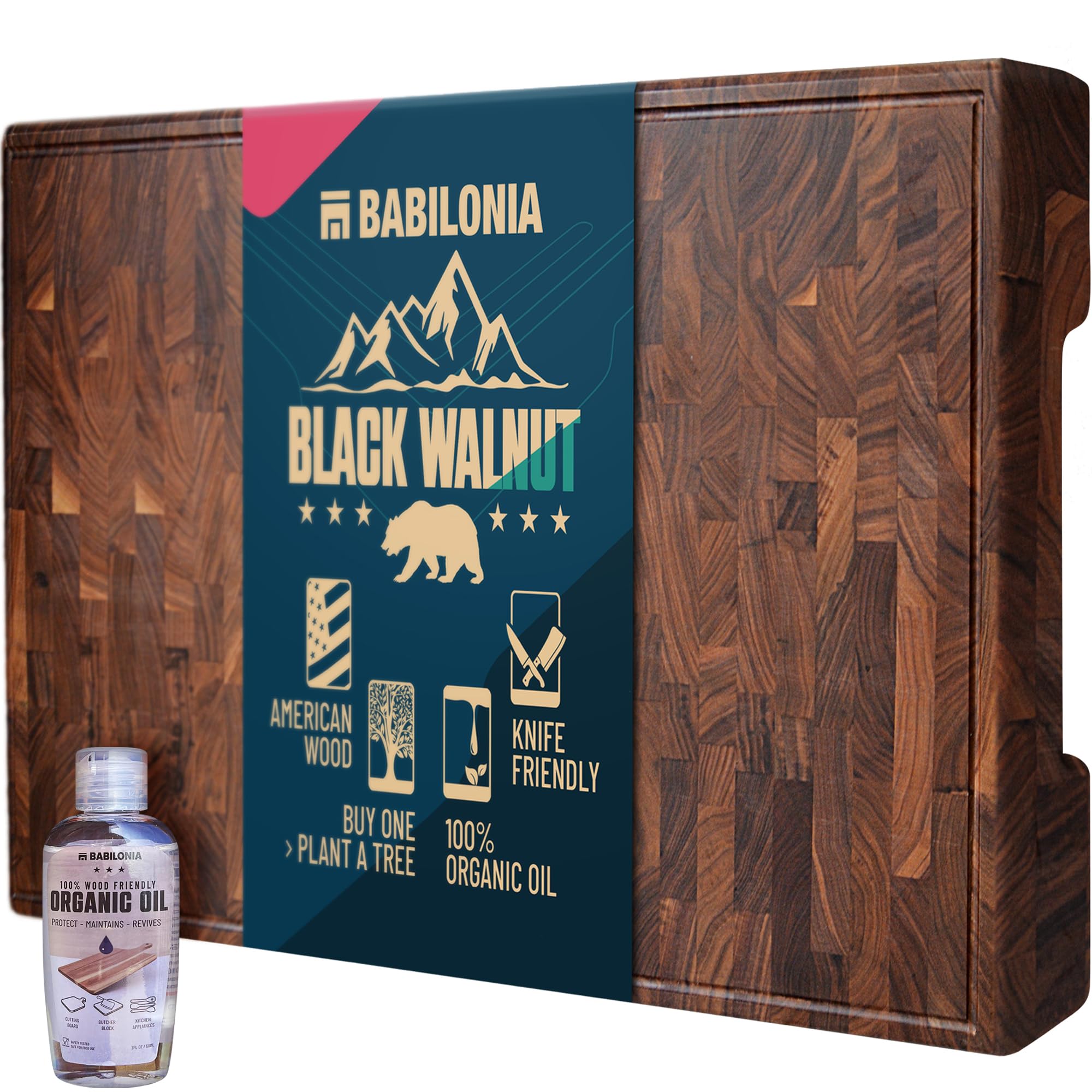
At 1.7 inches thick, this is the densest board on the list — it feels almost like a butcher’s block you’d find in a professional kitchen. The 100% sustainable American black walnut end-grain construction offers the best self-healing properties of any wood type, meaning deep cleaver marks close up after a wash and re-oil. The board measures 19.7 x 12.2 inches, which is long enough for a full turkey or a large brisket flat.
What sets this board apart is the integrated notch and plate system: a removable stainless steel plate sits in a cutout at the edge, allowing you to slide chopped onions, garlic, or diced meat directly into a bowl without lifting the board. The reversible design lets you use the other side as a serving platter for charcuterie. Hidden rubber feet on the bottom prevent any slipping on granite or quartz counters.
It ships pre-oiled with an included bottle of organic mineral oil, so it’s ready to use immediately. Some owners report that the board can develop a crack if exposed to drastic humidity swings, but the manufacturer backs it with a two-year warranty and responsive customer service that replaces faulty units quickly.
Why it’s great
- Ultra-thick end grain self-heals from deep knife marks
- Integrated plate notch allows easy food transfer
- Comes pre-oiled with free organic oil bottle
Good to know
- Walnut can be sensitive to humidity changes
- Not dishwasher safe — hand wash only
3. Socisen Extra Large Bamboo Cutting Board
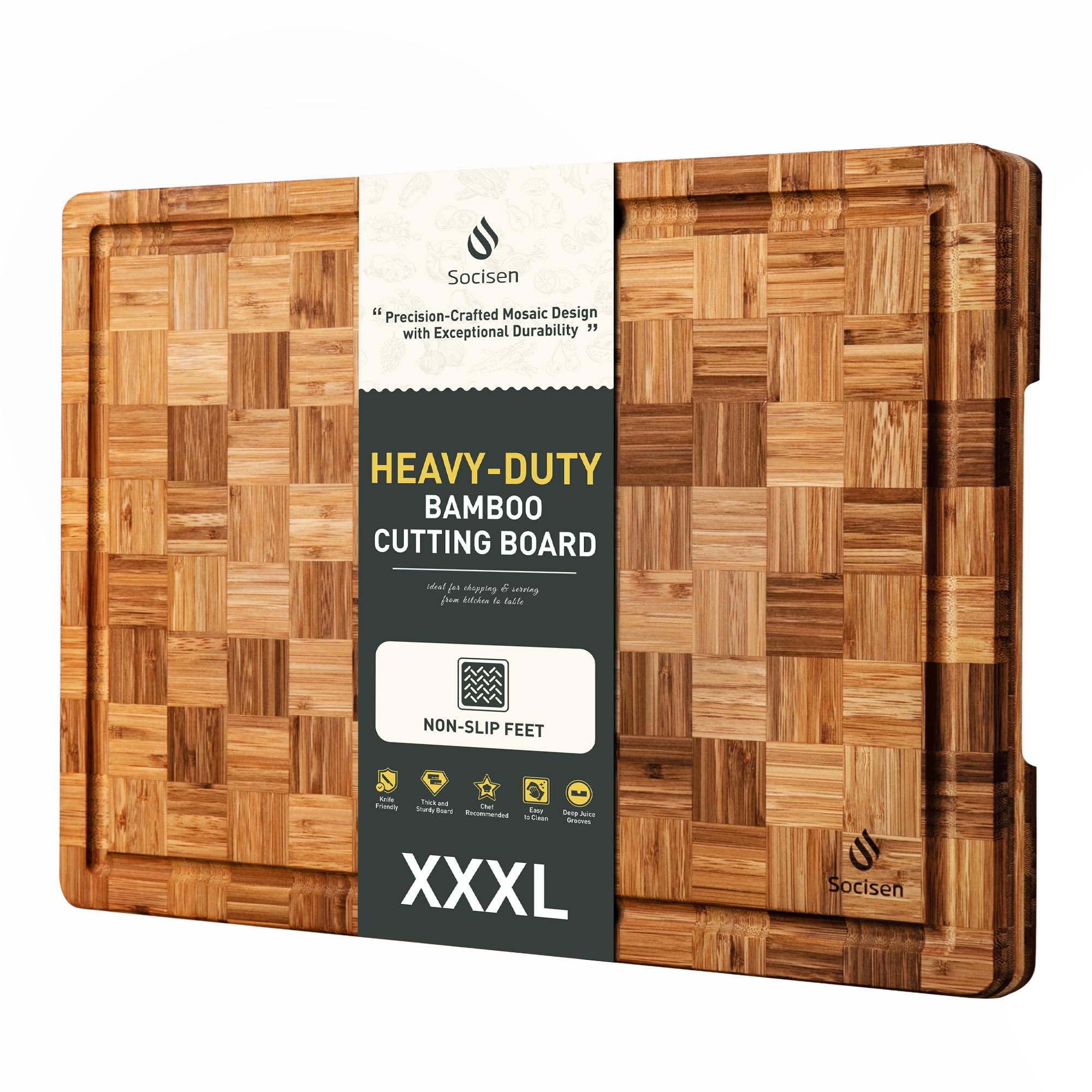
This 24×18-inch bamboo board provides a massive cutting surface at a mid-range price point. The 5-layer thickened construction uses bamboo splicing to resist cracks and warping that thin boards suffer when hitting bone or frozen meat. The surface is hand-sanded to a smooth, splinter-free finish and pre-treated with food-grade mineral oil, making it ready for raw proteins out of the box.
Four non-slip rubber feet on the underside lock the board firmly onto any countertop, so you won’t chase it around while chopping. The juice groove is wide and positioned near the edge, leaving the full center open for large cuts. The bamboo grain is dense enough to be knife-friendly — it won’t dull your blade as fast as poly, though it’s not as forgiving as end-grain teak.
At 1 inch thick, this board is lighter than the premium teak options, which makes it easier to move around or store in a cabinet. The only drawback is that the juice groove can overflow when you rest a very juicy roast right after slicing, so allow the meat to rest on a separate surface first.
Why it’s great
- Very large 24×18 surface handles whole turkeys
- Rubber feet prevent sliding on wet counters
- 5-layer bamboo resists warping and cracks
Good to know
- Juice groove may overflow with very wet meat
- Bamboo is harder than teak, less forgiving on blades
4. Fashionwu Extra Large Acacia Wood Cutting Board

Matching the same footprint as the bamboo board above (24 x 18 inches), this acacia version offers a slightly softer cutting surface that is easier on knives. The deep juice groove is routed close to the edge, maximizing the 24×18 zone for carving large portions like bone-in pork shoulders or whole chickens. Owners frequently mention that this board handles brisket trims and rib racks without crowding.
Acacia wood has a naturally high oil content, giving it good resistance to moisture absorption and bacterial growth compared to maple or birch. The reversible surface lets you designate one side for raw meat and the other for vegetables, reducing cross-contamination risk. The board arrives pre-oiled and smooth, though some units may show a straight glue line down the center where planks were joined.
The only functional limitation is the board’s thickness — at 1.2 inches, it’s thinner than the premium end-grain options and may develop a slight bow over time if you regularly soak it during cleaning. Hand wash only, store upright, and re-oil monthly to keep it flat.
Why it’s great
- Giant surface fits whole briskets and rib racks
- Deep juice groove placed near edge for max work area
- Acacia wood is naturally moisture-resistant
Good to know
- May have visible glue joints from plank assembly
- 1.2-inch thickness may bow if not dried upright
5. Socisen Extra Large Teak Wood Cutting Board
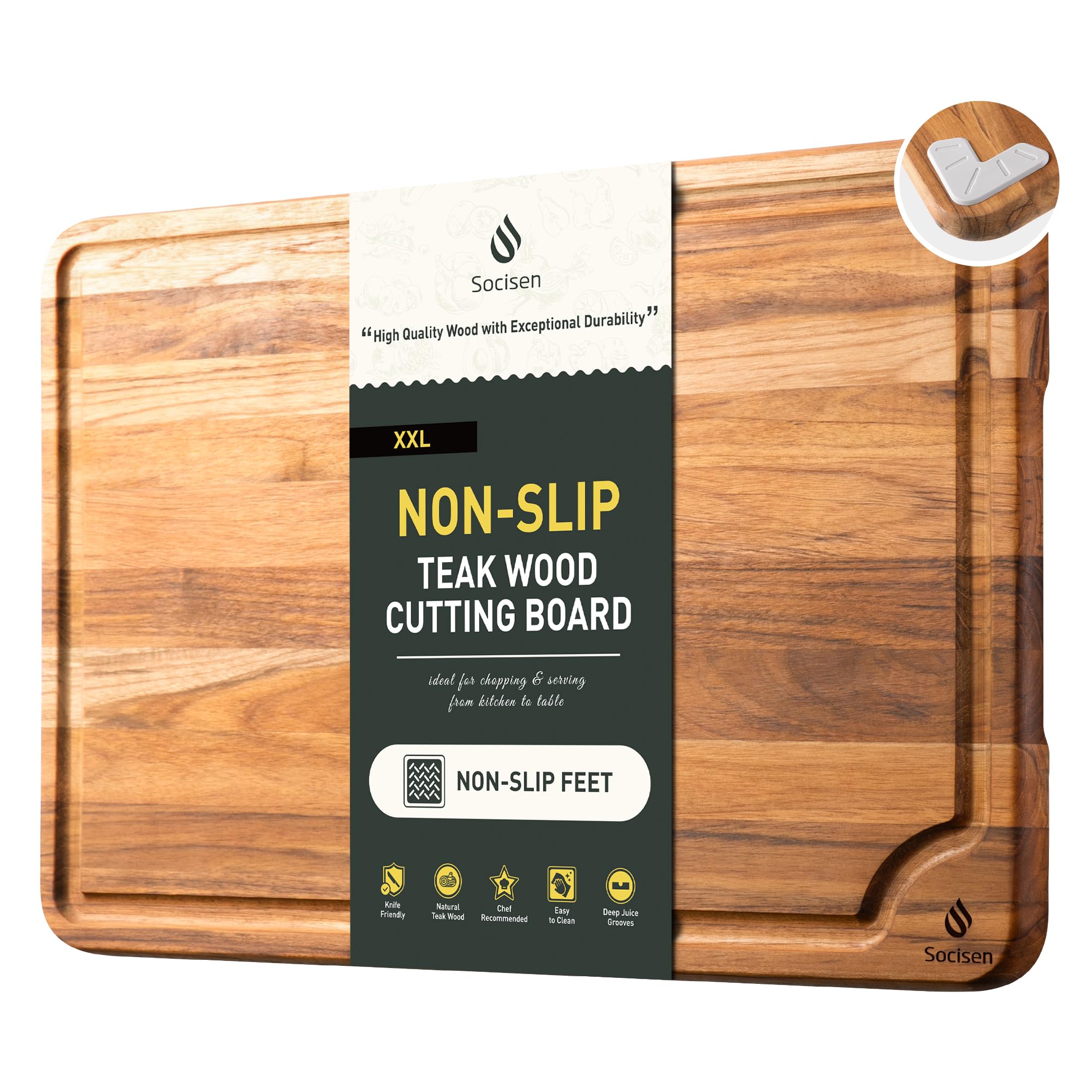
This FSC-certified teak board measures 20 x 14 inches at 0.8 inches thick — a size that fits comfortably in a standard kitchen sink for cleaning. The rubber non-slip feet on the base keep it stable on any counter surface, and multiple owners confirm it doesn’t slide even when wet. Teak’s natural oils make it highly resistant to mold and bacterial growth, which is critical for a board that sees raw poultry or pork.
The juice groove is present but narrow, effectively capturing the liquid from a single resting steak or small roast. For larger jobs, you may need to wipe the channel mid-prep. The rounded edges feel comfortable in hand, and hidden side cutouts allow for easy lifting. The board’s smooth surface is gentle on knives, though the 0.8-inch thickness means it’s lighter than the 1.5-inch wood options.
Owners praise the packaging and the quality-to-price ratio. The board requires occasional mineral oil care, but teak’s natural oil content means less frequent conditioning than acacia or bamboo. The FSC certification adds an ethical layer — you know the wood came from responsibly managed forests.
Why it’s great
- FSC-certified teak with natural mold resistance
- Hidden handles and rubber feet for stable use
- Fits in standard sink for easy cleaning
Good to know
- 0.8-inch thickness lacks weight of premium blocks
- Narrow juice groove fills quickly with large cuts
6. FANICHI Acacia Wood Cutting Board
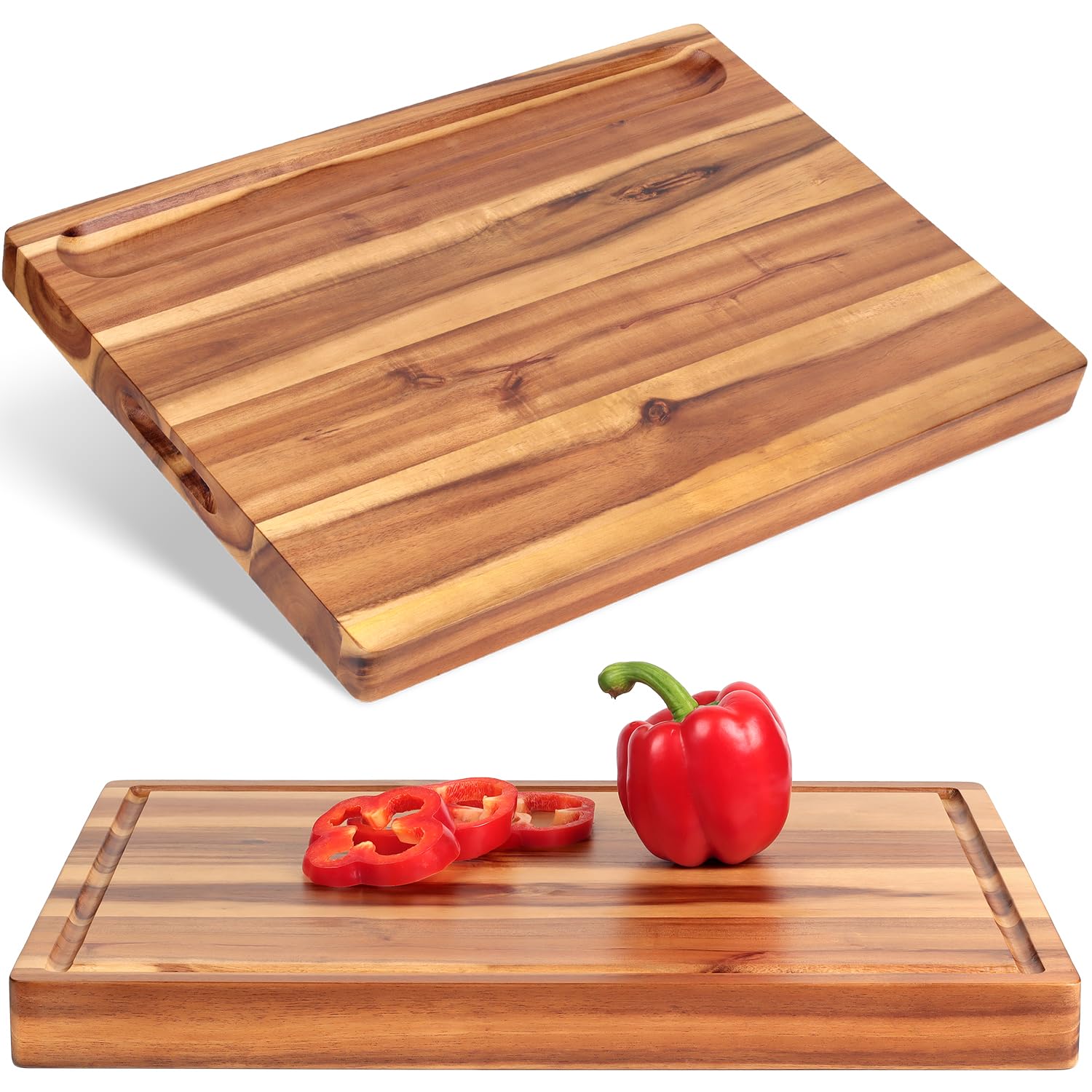
At 17 x 13 x 1.5 inches, this acacia board hits a sweet spot between work surface and storage convenience. The reversible design is its standout feature: one side has a deep juice groove to catch meat runoff, and the other side features a recessed cracker or bread holder — perfect for charcuterie use. The 1.5-inch thickness gives it the heft to stay stable during heavy chopping without feeling too heavy to move.
The natural acacia wood grain varies from board to board, so each piece looks distinct. The wood arrived pre-oiled and ready to use. Owners note that the board shows cut marks quickly due to acacia’s relative softness, but that’s a sign it’s protecting your knife edge. The juice groove is deep enough to contain the liquid from a medium roast, but if you’re carving a very juicy prime rib, you may want to pat the meat dry first.
A key requirement: do not put this board in the dishwasher. The manufacturer explicitly warns against it, and several users confirm that the high heat will cause the wood to crack. Hand wash, dry immediately, and re-oil every month to maintain the rich color.
Why it’s great
- Reversible with juice groove on one side, cracker holder on the other
- 1.5-inch thickness prevents warping and sliding
- Natural acacia grain gives a unique rustic look
Good to know
- Shows knife marks quickly (protects blade edge)
- Not dishwasher safe — hand wash only
7. Thirteen Chefs Large Poly Cutting Board

This 18×12-inch board is built from high-density polypropylene (HDPP), which is denser and more heat-tolerant than standard polyethylene cutting boards. The 0.75-inch thickness gives it a 5-pound weight that resists slipping and keeps it stable for everyday use. The black color is HACCP-recommended for cooked meats, and it does an excellent job of hiding knife scars and meat juice stains that would ruin a lighter board’s appearance.
It’s fully dishwasher safe up to 200°F, making sanitation after raw chicken or pork effortless — just drop it in the top rack after a rinse. The textured surface reduces food sticking, though some users find the texture can also grab the knife tip when scooping. Unlike wood boards, there is zero maintenance: no oiling, no conditioning, no hand-drying.
The biggest compromise is knife wear. Poly boards are harder on edges than any wood option, so if you use premium Japanese knives, stick to a wood board for primary slicing. The poly board works best for heavy-duty tasks like cleaving through bones, tenderizing, or breaking down whole chickens where knife-edge preservation is less critical.
Why it’s great
- Dishwasher safe up to 200°F for easy sanitation
- Black color hides meat stains and knife scars
- Warp-resistant HDPP withstands commercial use
Good to know
- Dulls knives faster than any wood surface
- Textured surface can catch knife tip while scooping
FAQ
Is end-grain wood actually better for meat than edge-grain?
Can I use a bamboo cutting board for raw meat?
How do I deep-clean a wood board after cutting raw chicken?
Should I use the same cutting board for meat and vegetables?
Final Thoughts: The Verdict
For most users, the best cutting boards for meat winner is the Yes4All Large Teak Cutting Board because the end-grain teak construction maximizes knife longevity, the 1.5-inch thickness eliminates warping, and the deep juice groove contains meat runoff effectively. If you want the ultimate thick slab with a built-in food transfer system, grab the BABILONIA American Black Walnut Board. And for a budget-friendly dishwasher-safe option that requires zero maintenance, nothing beats the Thirteen Chefs Poly Cutting Board.