
Our readers keep the lights on and my morning glass full of iced black tea. As an Amazon Associate, I earn from qualifying purchases.
Specs are compiled from manufacturer listings and verified buyer reviews and can change over time — please confirm the key details on the product page before buying.
You want a drawing tablet that feels natural, not frustrating, so you need to match the tech to how you actually work—whether that is a standalone pad for sketching on the bus or a pro display with near-zero lag (almost no delay between your stroke and the line appearing) for finishing client work. The difference between a smooth, responsive experience and a sluggish, disconnected one depends on a few key specs you need to know.
I’m Min — the founder and writer behind Gadgets Feed. This guide is built by comparing the manufacturers’ published specifications and the patterns across verified customer reviews, so you get each pick’s real strengths and trade-offs instead of marketing spin.
Below you’ll find seven carefully selected models that make up our list of the best drawing tablet options on the market right now, from budget-friendly entry-level pads to premium professional displays.
Quick Picks
- XP-Pen Artist Pro 19 Gen2 — Top Performer
- Wacom Cintiq Pro 22 — Industry Standard
- Wacom Cintiq 16 — Compact Pro
- HUION Kamvas 13 (Gen 3) — Best Value
- XPPen Magic Drawing Pad — Standalone Power
- Frunsi T8 — Student Starter
- HUION Inspiroy 2 Medium — Budget Pen Tablet
How To Choose The Best Drawing Tablet
Picking the right drawing tablet is about matching the hardware to your daily workflow, not just chasing the highest numbers. Here is a breakdown of the key features that actually matter.
Pen Tablet vs. Pen Display vs. Standalone Tablet
The first big choice is if you need a screen built in. A pen tablet, like the HUION Inspiroy 2, has no display—you draw on a blank surface while looking at your computer monitor. A pen display, like the Wacom Cintiq 16, lets you draw directly on the screen. A standalone tablet, such as the Frunsi T8 or XPPen Magic Drawing Pad, runs its own operating system (like Android) so you do not need a computer at all.
Pressure Sensitivity and Pen Technology
Measured in levels, higher numbers mean the tablet can detect finer gradations of force from your hand. Entry-level models often offer 2048 or 8192 levels, while premium options like the XPPen Artist Pro 19 Gen2 boast a very high 16,384 levels. What matters more than the raw count is the pen’s initial activation force—how hard you have to push to register a mark—and whether the pen feels balanced and responsive in your hand.
Screen Quality and Color Accuracy
If you choose a pen display, look at the resolution, color gamut (such as sRGB or Adobe RGB), and brightness. A higher resolution, like the 3840×2160 4K display on the XP-Pen Artist Pro 19 Gen2, lets you see more detail. A wider color gamut, such as the 99% sRGB coverage on the HUION Kamvas 13, ensures the colors you choose match what you see on other calibrated monitors.
Operating System and Compatibility
Most pen tablets and displays work with Windows, Mac, and some Linux systems. Standalone tablets run on Android, which limits you to Android drawing apps but also means you can take them anywhere without a laptop. Check that your computer has the right video output (like DisplayPort Alt Mode over USB-C or an HDMI port) before buying a pen display.
Quick Comparison
On smaller screens, swipe sideways to see the full table.
| Model | Best For | Screen Size | Pressure Levels | Connection | Amazon |
|---|---|---|---|---|---|
| XP-Pen Artist Pro 19 Gen2 | Professional color work | 18.4″ 4K | 16,384 | 3-in-1 Cable, USB-C | $719.99$899.99Amazon |
| Wacom Cintiq Pro 22 | Industry-standard pro use | 21.5″ 4K | 8,192 | USB-C, HDMI, Mini DP | $2,999.95Amazon |
| Wacom Cintiq 16 | Reliable mid-range pen display | 16″ 2.5K | 8,192 | USB-C | $699.95Amazon |
| HUION Kamvas 13 (Gen 3) | Portable pen display | 13.3″ 1080p | 16,384 | 3-in-1 Cable, USB-C | $209.00$269.00Limited time dealAmazon |
| XPPen Magic Drawing Pad | Standalone drawing on the go | 12.2″ 2160×1440 | 16,384 | Wi-Fi, Bluetooth 5.1 | $449.99$499.99Amazon |
| Frunsi T8 | Budget standalone beginner pad | 8″ 1200×800 | 2,048 | Wi-Fi | $169.99Amazon |
| HUION Inspiroy 2 Medium | Budget pen tablet with shortcuts | No screen | — | USB-C | $67.19$79.99Limited time dealAmazon |
In‑Depth Reviews
1. XP-Pen Artist Pro 19 Gen2

A massive color-accurate 4K canvas that handles professional color grading without needing a separate monitor.
The 18.4-inch screen on this model delivers 4K UHD (3840×2160) resolution, so you get a crisp view of your work and can zoom in without losing clarity. This display is Calman-verified with a delta E of less than 1.5, which means the colors you pick are true to what you will print or publish. It covers 99.8% sRGB, 96% Adobe RGB, and 98% Display P3, making it a strong match for photographers and film colorists who need accurate hues.
You get two pens in the box. The X3 Pro Roller Stylus and the X3 Pro Slim Stylus both offer a very high 16,384 pressure levels with a 3-gram initial activation force, so light feathering strokes register just as easily as heavy shading. The included ACK05 wireless shortcut keyboard, which won the Good Design Award 2023, has a physical dial and ten customizable keys that you can set up via Bluetooth 5.0. Buyers report this tablet doubles as a monitor for a MacBook Air and works smoothly for photo editing and 3D printing apps, though they also point out it is heavy and not comfortable to use on your lap.
Why it stands out
- 4K UHD 3840×2160 display on an 18.4-inch screen provides a massive workspace
- 99.8% sRGB and 96% Adobe RGB coverage keeps colors accurate for print-ready work
- Dual stylus set (roller and slim) gives you flexibility for different drawing styles
- Includes a wireless shortcut remote with a dial and ten customizable keys
Things to consider
- Heavy build makes it a desk-only device, not travel-friendly
- No touchscreen support, so you rely solely on the pen and keys
- Requires a computer to function; not a standalone tablet
Best match for: Graphic designers, illustrators, and photographers who need a large, color-accurate pen display and want two stylus options and a wireless shortcut keyboard included.
One real limitation: At 19 inches wide and 14 inches deep, this tablet takes up serious desk space and you will not want to move it around much.
2. Wacom Cintiq Pro 22

A 21.5-inch touchscreen pen display with a 120Hz refresh rate that feels fluid and immediate for professional work.
The Wacom Cintiq Pro 22 gives you a large 21.5-inch Ultra HD 4K display with a refresh rate of 120Hz, which means almost no visible lag as you draw. The screen supports 10-point multi-touch, so you can zoom and pan with your fingers and switch to the pen for drawing without changing tools. Its Pro Pen 3 offers 8,192 levels of pressure sensitivity with customizable pen grips and adjustable weight and center of balance, so you can tailor the feel of the pen to your hand.
You get eight ExpressKeys (programmable shortcut buttons) on the display that you can set for your most-used commands, along with adjustable on-screen menus. The Cintiq Pro 22 connects via USB-C (DP Alt Mode—a video signal over USB-C), a separate USB-C, a USB-A, an HDMI, and a Mini DisplayPort, so it works with most modern computers. Reviewers consistently report that the drawing feel is class-leading, calling it the best pen display they have ever used, with smooth, fluid, and unparalleled line quality. One reviewer notes that the touch is usable only for zooming and panning and that you will need to disable it during actual drawing to avoid accidental marks.
Professional-level features
- 21.5-inch 4K display with a 120Hz refresh rate for near-zero latency
- 10-point multi-touch lets you zoom and pan with gestures
- Pro Pen 3 with adjustable weight, center of balance, and 8,192 pressure levels
- Eight programmable ExpressKeys and a variety of connection ports for multiple setups
Drawbacks to know
- Very expensive compared to other 4K pen displays
- Does not include a stand; the Easy Stand is sold separately and reviewers call it wobbly
- Weighs 11 pounds, so it is not portable for travel
Tailored for: Creative professionals and studios that rely on industry-standard tools and need a large, high-refresh-rate display with multi-touch support.
Keep in mind: The premium price is not fully justified for basic use; you are paying for the top-end color, build quality, and ergonomics that serious daily work demands.
3. Wacom Cintiq 16
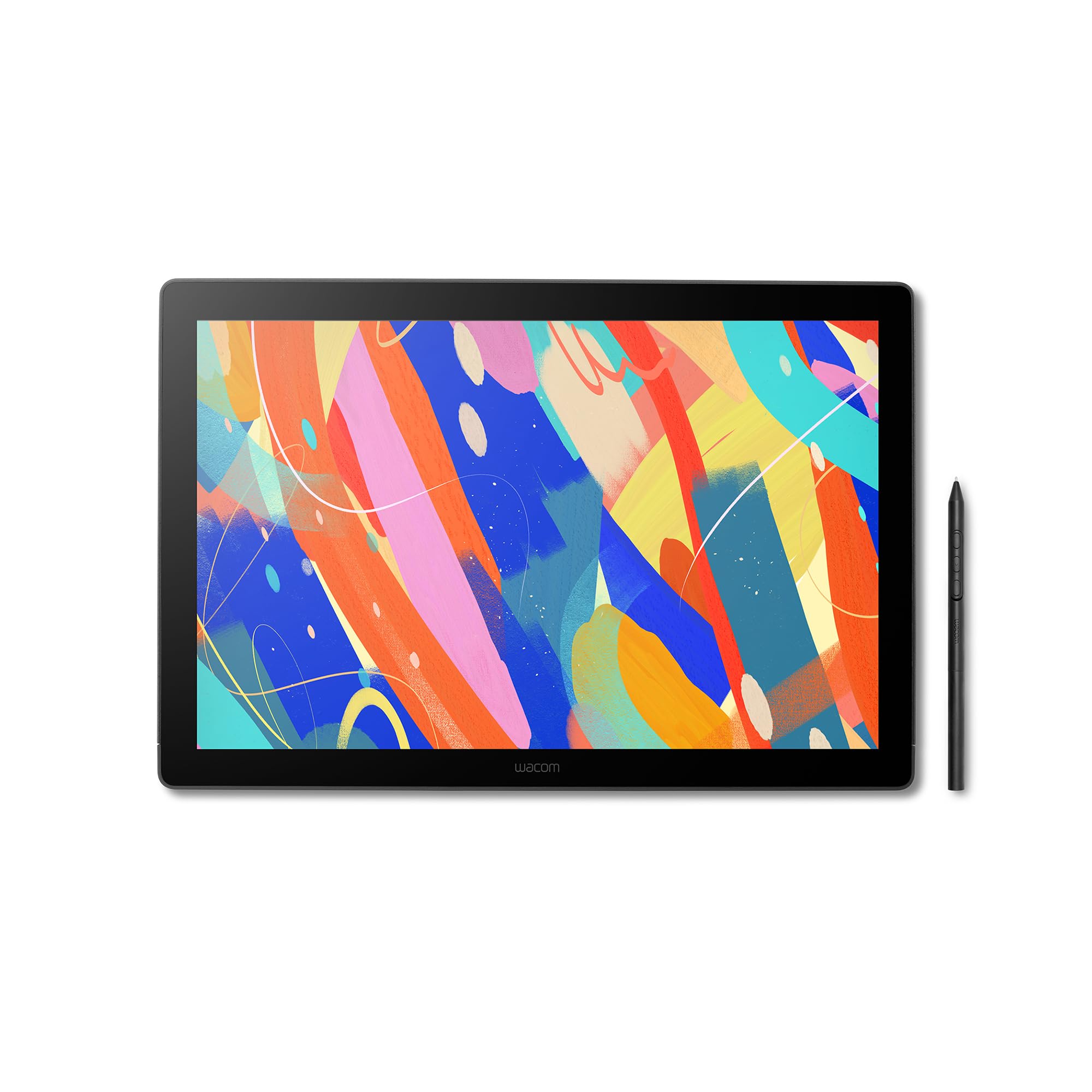
A well-balanced 16-inch display that gives you Wacom’s best pen tech at a price far below the Pro line.
The Wacom Cintiq 16 features a 16-inch IPS display with a 2.5K WQXGA resolution (2560 x 1600), which keeps your lines sharp without the GPU demands of a 4K display. It covers 99% DCI-P3 and 100% sRGB with 8-bit color depth, so colors look rich and accurate enough for professional design and animation work. The anti-glare glass cuts down on reflections from overhead lights or windows, making it easier to see your art in a bright room.
The battery-free Pro Pen 3 provides 8,192 pressure levels with tilt support and three customizable shortcut keys located on the pen itself. Built-in fold-out legs give you a 20-degree working angle, which is a solid starting point, though you will need an adjustable stand for more ergonomic options. Owners mention that the pen input is accurate with no lag or missed positions, and the display feels responsive. One reviewer points out the anti-glare is excellent with no rainbow sparkle effect, which can be an issue on other matte screens.
What works well
- 2.5K WQXGA resolution gives you more detail than a standard 1080p display
- 99% DCI-P3 and 100% sRGB coverage for professional color work
- Battery-free Pro Pen 3 with 8,192 pressure levels and three side keys
- Built-in fold-out legs for a simple 20-degree tilt
What is missing
- No stand included; you must buy one separately for ergonomic adjustments
- No customizable shortcut buttons on the tablet body itself
- Some computers need an additional mini-HDMI cable (not included) to connect
Right for: Artists and designers who want a quality pen display from a trusted brand without stepping up to the Pro-level price tag.
Worth noting: If you need programmable shortcut keys on the tablet body, you will be better served by the HUION Kamvas 13 (Gen 3), which has five press keys and two dials.
4. HUION Kamvas 13 (Gen 3)

A portable 13.3-inch pen display that packs high-end features like 16,384 pressure levels and dual dials.
The HUION Kamvas 13 (Gen 3) uses a fully laminated 13.3-inch screen with an anti-sparkle Canvas Glass 2.0 finish that cuts glare while keeping the display bright and clear. Its PenTech 4.0 technology delivers a very high 16,384 levels of pressure sensitivity with a 2-gram initial activation force, so your lightest brush strokes register faithfully. The factory color calibration report keeps the display accurate at an average delta E of less than 1.5, with 99% sRGB and Rec.709 coverage for consistent color across your projects.
You get five programmable shortcut keys and two dial buttons on the tablet, which you can customize for zoom, rotate, brush size, and other common actions. The included ST300 adjustable stand lets you tilt the screen to a comfortable drawing angle. Customers note this tablet has no diagonal jitter, thin parallax (the gap between the pen tip and the cursor), and a high pressure sensitivity that feels smooth. They note it gets warm on the port side after about three hours of use and that the screen brightness is around 200 nits, which is fine indoors but can struggle in a very bright room.
Highlights for the price
- Very high 16,384 pressure levels with a 2-gram initial activation force for fine control
- Five shortcut keys and two physical dials on the tablet improve workflow
- Factory color calibration ensures accurate color right from the start
- Includes an adjustable stand for comfortable use at different angles
Limitations
- Screen brightness is only 200 nits, making it harder to see in very bright rooms
- Gets warm on the port side after extended use
- Requires a computer to function and uses a 3-in-1 cable, which some reviewers find inconvenient for tight desk setups
Ideal for: Artists on a budget who want a high-pressure-sensitivity pen display with physical controls and decent color accuracy, in a portable size.
A note on brightness: The 200-nit screen works well in darker environments, but if you often work near a window, you might want a brighter display like the XP-Pen Artist Pro 19.
5. XPPen Magic Drawing Pad

A dedicated drawing tablet that runs Android 14 natively, so you never need a laptop to start creating.
The XPPen Magic Drawing Pad is a standalone device with a 12.2-inch screen that runs Android 14. You can download drawing apps like Clip Studio Paint and ibis Paint X directly from Google Play, and the purchase includes a three-month membership for both. Its 2160×1440 resolution screen with a 3:2 aspect ratio uses AG-etched glass to give you a paper-like texture and covers a wide color gamut of 115% sRGB while showing 16.77 million colors.
The X3 Pro Slim stylus offers a very high 16,384 pressure levels with 60-degree tilt recognition and requires no charging or pairing. The tablet packs 8GB of RAM and 256GB of storage, expandable up to 1TB with a microSD card. Its 8000mAh battery delivers up to 13 hours of continuous drawing. Reviewers point out the screen is vibrant and responsive, with no pen lag, and that the matte finish is excellent at resisting fingerprints. They also note that the tilt implementation is not as refined as on a Wacom and that finding a truly great drawing app on Android (like an alternative to ProCreate) is still a challenge.
What makes it unique
- Runs Android 14 natively, so you can download drawing apps and work without a computer
- Very high 16,384 pressure levels with a battery-free, pairing-free stylus
- 8GB RAM and 256GB storage (expandable to 1TB) for running demanding apps
- 8000mAh battery gives you up to 13 hours of use on a single charge
Where it falls short
- No headphone jack (a common complaint from reviewers)
- Tilt implementation is not as refined as competing brands
- Android tablet app selection for drawing is still limited compared to iPad or desktop
Perfect for: Artists who want a portable standalone tablet with long battery life and a paper-like screen, and who prefer the Android ecosystem.
Worth considering: If you are already invested in ProCreate on iPad, you will need to switch to apps like Clip Studio Paint or Concepts on Android, which have different interfaces and features.
6. Frunsi T8
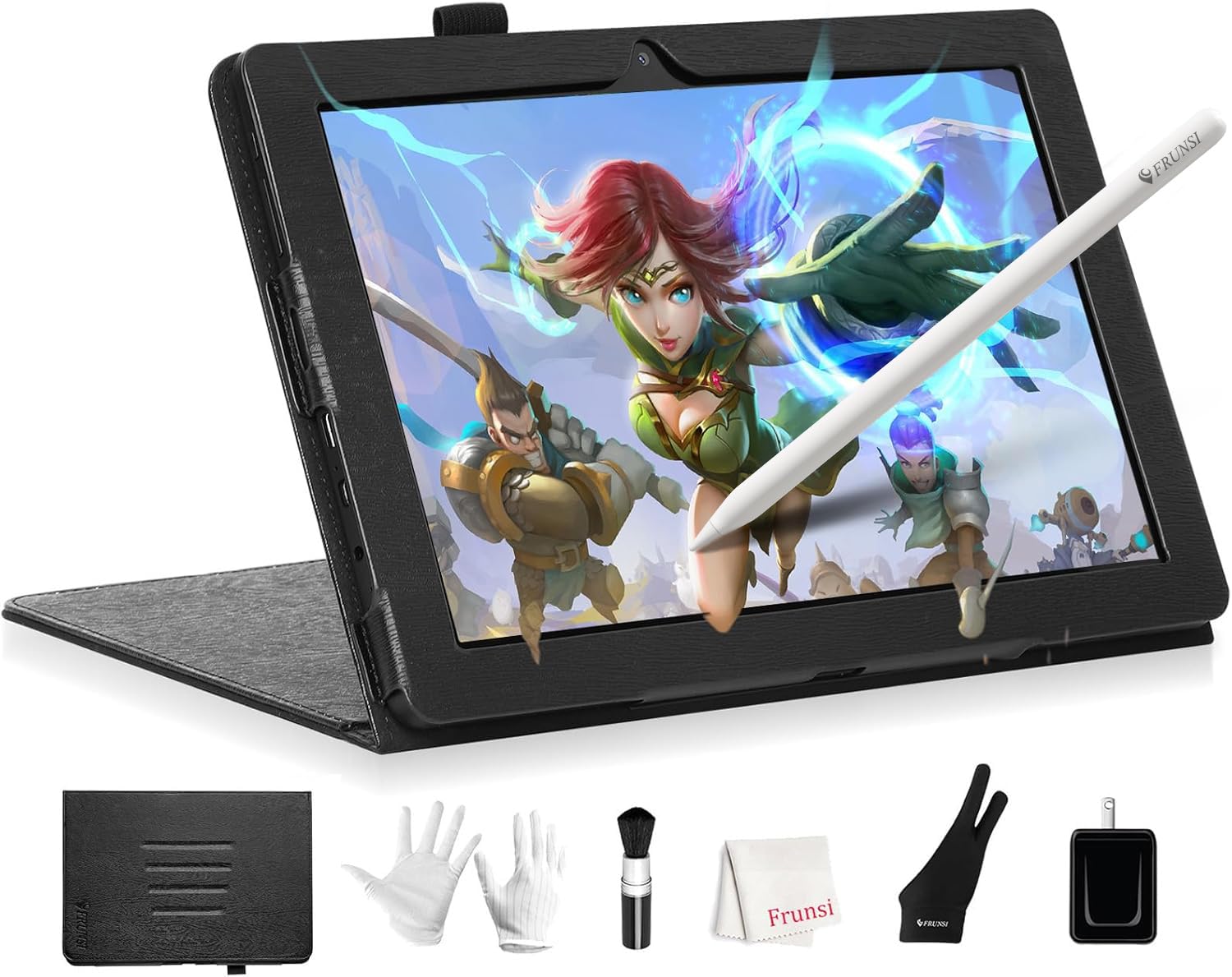
An affordable standalone tablet that introduces beginners to digital art without requiring a computer or complex setup.
The Frunsi T8 runs on Android 13 with a quad-core CPU, 4GB of RAM, and 64GB of internal storage that you can expand up to 256GB. Its 8-inch screen has a 1200×800 resolution, and the included stylus offers 2,048 levels of pressure sensitivity. This is a standalone device, so you can install apps like SketchBook, ArtFlow, and ibis Paint X directly from the Google Play store and start drawing immediately. The 4000mAh battery is rated for up to 20 hours of use, though reviewers report getting around 3.5 hours of actual drawing time in Sketchbook.
Shoppers say the Frunsi T8 runs Clip Studio Paint with little lag, has decent battery life, and offers good pressure sensitivity for the price point. They note there is no palm rejection, which means you will need to wear the included glove to avoid accidental marks, and there is no pressure sensitivity control app to fine-tune the pen response. The T8 comes with a detachable keyboard, a stylus pen, a screen protector, and a cleaning cloth, making it a complete starter kit.
Entry-level advantages
- Standalone tablet that runs Android 13, so you do not need a computer
- Includes a detachable keyboard, stylus, and screen protector right in the box
- Expandable storage up to 256GB gives you room for artwork and apps
- Good pressure sensitivity for beginners learning digital drawing
Where corners were cut
- No palm rejection feature makes it hard to rest your hand while drawing
- Short battery life compared to the rated 20 hours—around 3.5 hours in real sketching use
- Slight drawing delay, especially when the battery is low
Geared toward: Beginners, students, and young artists who want an affordable device to learn digital drawing without investing in a separate computer.
The trade-off: You get a fully standalone Android tablet at a very low entry price, but the battery life and palm rejection limitations mean it works best for short, casual sessions rather than full-day work.
7. HUION Inspiroy 2 Medium

A no-screen pen tablet that gives you plenty of drawing space and programmable controls for a low price.
The HUION Inspiroy 2 Medium gives you an active surface area of 8.7 by 5.4 inches on a tablet body listed at 5 by 9 inches, so it offers a substantial drawing space for a pen tablet without taking up too much desk room. It uses PenTech 3.0, which HUION claims delivers amazing precision and control over every line with no noticeable lag (delay) or wobble (jitter). The PW110 stylus has a slimmer body and a soft silicone grip with accessible side buttons, and it does not need a battery.
You get a scroll wheel and eight programmable press keys plus three group keys, so you can set shortcuts for brush size, undo, zoom, and other common actions. The tablet is compatible with Windows 7 or later, Mac OS 10.12 or later, Linux (Ubuntu), Android 6.0 or later, and ChromeOS 88 or later. Buyers report this is a fantastic entry-level pen tablet with great value, a large drawing area, a scroll wheel, and felt nibs included. They note the HUION app lacks a 180-degree rotation display option and that button changes may require a restart for UWP apps.
What you get for the price
- Large 8.7 x 5.4 inch active drawing area in a compact 5 x 9 inch body
- Scroll wheel and eight programmable keys plus three group keys for workflow shortcuts
- Battery-free pen with 60-degree tilt support and a soft silicone grip
- Works with Windows, Mac, Linux, Android, and ChromeOS
Limitations
- No screen, so you must look at your computer monitor while you draw
- Nib wears down faster than expected, according to some reviewers
- The scroll wheel can be hard to push, requiring more effort than you might like
Ideal for: Beginners and mobile artists who need a lightweight, affordable pen tablet with programmable controls and a large drawing area that fits on a laptop keyboard.
Not for you if: You need a screen to draw on directly—this is a pen tablet only, so you are drawing on a surface while watching your monitor.
Understanding the Specs
Pressure Sensitivity Levels
Measured in levels (2,048, 8,192, or 16,384), this spec tells you how many different degrees of force the tablet can detect from your stylus. A higher number means the tablet can pick up very subtle differences in pressure—from a faint, light tickle of a line to a heavy, solid shade. For detailed illustration and painting, 8,192 levels or more gives you fine control, while 2,048 levels is perfectly fine for beginners and casual sketching. The pen’s actual feel, tip resistance, and initial activation force matter just as much as the raw level count.
Pen Display vs. Pen Tablet vs. Standalone
A pen display (like the Wacom Cintiq 16 or HUION Kamvas 13) has a screen you draw directly on, which feels more natural but costs more and requires a connection to a computer. A pen tablet (like the HUION Inspiroy 2) has no screen—you draw on a flat surface while looking at your monitor—making it cheaper and more portable. A standalone tablet (like the Frunsi T8 or XPPen Magic Drawing Pad) runs its own operating system (usually Android), so you can draw anywhere without a computer, but you are limited to the apps available on that platform.
FAQ
Do I need a drawing tablet with a screen or without?
What are pressure sensitivity levels and do higher numbers really matter?
Can I use a drawing tablet with Android phones or tablets?
What is the difference between a 3-in-1 cable and USB-C connection on a drawing tablet?
How long does a drawing tablet stylus last?
What color accuracy specs should I look for in a pen display?
Is a standalone drawing tablet better than an iPad for digital art?
Can I use a drawing tablet with Linux?
What does “full-lamination” mean on a drawing tablet screen?
How much storage and RAM do I need in a standalone drawing tablet?
Final Thoughts: The Verdict
If you want one dependable pick, the best drawing tablet overall is the XP-Pen Artist Pro 19 Gen2 because it combines a large 4K (3840×2160) color-accurate display, dual styluses, and a wireless shortcut keyboard at a price that undercuts the competition. If you want a portable standalone tablet for drawing on the go, grab the XPPen Magic Drawing Pad. And for the best value pen display with top-tier pressure sensitivity, the HUION Kamvas 13 (Gen 3) is a strong contender.
How We Picked
We do not accept paid placement, and we did not hands-on test every unit. Instead, we match each pick to a real buyer and use-case by comparing the manufacturers’ published specifications against the patterns in verified customer reviews — so you get each pick’s real strengths and trade-offs instead of marketing copy.
Sources & Methodology
Specifications: manufacturer listings and product documentation. Review insights: verified customer reviews, as of July 2026. Pricing: not shown on this page (it changes often); check the current price via the retailer link.
As an Amazon Associate, Gadgets Feed earns from qualifying purchases. This does not affect which products we feature.
Product prices and availability are accurate as of the date/time indicated and are subject to change. Any price and availability information displayed on Amazon at the time of purchase will apply to the purchase of this product. As an Amazon Associate I earn from qualifying purchases.
CERTAIN CONTENT THAT APPEARS ON THIS SITE COMES FROM AMAZON. THIS CONTENT IS PROVIDED "AS IS" AND IS SUBJECT TO CHANGE OR REMOVAL AT ANY TIME.
Amazon and the Amazon logo are trademarks of Amazon.com, Inc. or its affiliates.