
Our readers keep the lights on and my morning glass full of iced black tea. As an Amazon Associate, I earn from qualifying purchases.
Specs are compiled from manufacturer listings and verified buyer reviews and can change over time — please confirm the key details on the product page before buying.
The perfect family game hinges on one thing above all: how often it actually makes it back to the table. The shortlist below is built around that exact idea, so you can scan the standout candidates for your next family night without drowning in marketing fluff.
I’m Min — the founder and writer behind Gadgets Feed. This guide is built by comparing the manufacturers’ published specifications and the patterns across verified customer reviews, so you get each pick’s real strengths and trade-offs instead of marketing spin.
From cooperative monster hunts to word-association showdowns, these are the family games our research shows earn repeat plays. It’s a curated list of the best family games available right now, ready for your next gathering.
Our Picks at a Glance


How To Choose The Best Family Games
You want a game that everyone—from kids to grandparents—will actually sit down and play. That depends on three things: how long a round takes, how players interact, and how quickly you can learn the rules. Match those to your group’s ages and attention spans, and the right box becomes clear.
Match the Playtime to Your Night
A game that takes 30 minutes fits a school night, while a 60-minute adventure is better for a lazy weekend afternoon. Quick rounds also let you reset the table if the kids want a rematch or if a game falls flat.
Co-op vs Competition
Cooperative games turn everyone against the board itself, which means no one gets ganged up on. Competitive games reward clever plays, but they can frustrate younger kids if the skill gap is too wide.
Consider the Age Range
Look for the listed age range on the box to ensure everyone can participate. A game rated for 10+ might challenge an 8-year-old, so consider the actual reading and strategy levels of the people playing.
Quick Comparison
| Model | Best For | Players | Playtime | Mechanics | Amazon |
|---|---|---|---|---|---|
| Harmonies★ Best Overall | Creative strategists | 1-4 | 30 min | Tile placement | Amazon |
| CodenamesParty Classic | Word-lovers & groups | 2-8+ | 15 min | Word association | Amazon |
| Runs in The FamilyBest Value | Conversation starters | 3+ | 15 min | Trivia & matching | Amazon |
| Horrified: Greek Monsters | Co-op monster hunting | 1-5 | 60 min | Cooperative | Amazon |
| Telestrations | Parties & laughter | 4-8 | 20 min | Drawing & guessing | Amazon |
| Castle Panic | Tower defense teamwork | 1-6 | 45 min | Cooperative | Amazon |
| 5-Minute Dungeon | Fast-paced chaos | 2-5 | 5 min | Real-time card | Amazon |
| Ticket to Ride | Classic strategy | 2-5 | 60 min | Route building | Amazon |
| Pandemic | Serious co-op | 2-4 | 45 min | Cooperative | Amazon |
In-Depth Reviews
1. Asmodee Harmonies Board Game
Our pick — over 4.5★ from 850+ verified ratings; the strongest balance of quality and price.
Build dreamlike 3D landscapes in a thinky puzzle that families replay all week.
Harmonies earns the top spot by turning simple rules into deep tactical decisions. You collect tokens to build habitats and score points, but the twist is the gorgeous 3D landscapes you stack — a feature owners say makes the board look fantastic.
The game offers three difficulty levels, so a 6-year-old can grasp the basics while adults still find a challenge. With 120 wooden tokens and 42 beautifully illustrated cards, the production quality shines.
Families report it’s a favorite of 200+ game collections, and some households have “played 10+ times first week.” It plays solo up to 4 players, with 30-minute rounds that leave players wanting more.
Cozy Genius: The whole experience feels calming rather than cutthroat, a mix of strategy and luck that keeps everyone engaged without arguments.
Minor Note: It’s largely a “multiplayer solitaire” — minimal interaction between players — which some groups may miss.
The crowd favorite: Owning this one means you are the family with the beautiful, clever game everyone wants to play.
Reach for it if: your group enjoys puzzle-y tile games like Cascadia or Azul; look elsewhere if you want highly interactive play.
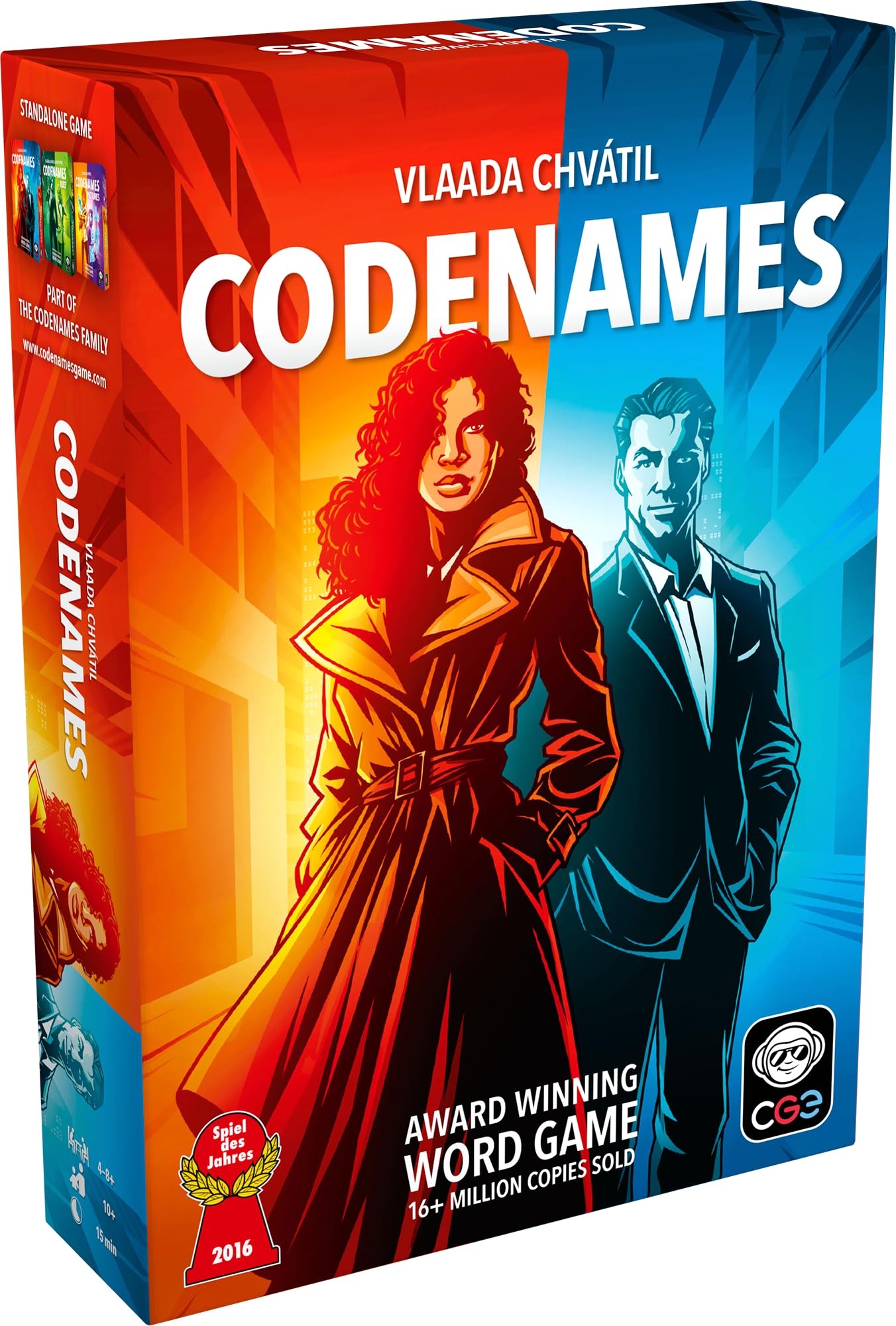
2. CGE Codenames Board Game (2nd Edition)
A word-association duel where spymasters give one-word clues to link hidden agents.
Codenames thrives on the “did they mean that?” moment — as a spymaster, you say one word and a number, hoping your team connects it to the right cards on the 5×5 grid. Guessing the assassin ends the game instantly, adding a high-stakes tension you don’t often find in party games.
You can be playing within minutes: one report notes it “takes 5-7 min to learn from experienced player; instructions clear.” Each round uses a different one of the 25-card setups, so the game stays fresh—many couples who play it end up buying copies for friends.
Rounds run about 15-20 minutes, and the trailing team always stays competitive — perfect for a mixed-level group where some folks are word wizards and others aren’t.
Why It Wins Tables
- Zero downtime; everyone is engaged guessing clues.
- Scales for large groups, not just a single family unit.
What to Know
- Ages 10+ only works if teams are evenly matched.
- Requires creative thinking, so it flops with groups who won’t commit to the clue.
Best for: game nights with friends or extended family where the player count gets big.
skip it if: you’re looking for a tactile, board-heavy experience rather than a pure word game.
3. Runs in The Family
Draw a topic, sync answers with your family, and bond over what runs in your blood.
If your goal is conversation and laughter rather than deep strategy, Runs in The Family nails it. You draw a topic card and score points each time your answer matches another player’s — the twist being you have to predict what your own family would say. Over 200 topics keep it fresh, and ages 8 and up can join in.
Buyers report the fun factor is the main draw: one family says they play a round every night after dinner. Another notes it works for ages 69 to 9, so it suits multi-generational gatherings. At 8.8 ounces, it’s light enough to toss in a bag for holiday dinners or vacations.
The main caveat is the mixed take on price — some call it a must-have, others find it overpriced for what’s in the box. But the memory-making potential during screen-free time often outweighs that concern.
Memory Maker: It’s less about winning and more about learning something new about each other, which is a rare quality in a tabletop game.
Grab it for: families who want a light, fast, conversation-starting game—especially for holidays.
Think twice if: your group prefers deep strategy over social deduction.
4. Ravensburger Horrified: Greek Monsters
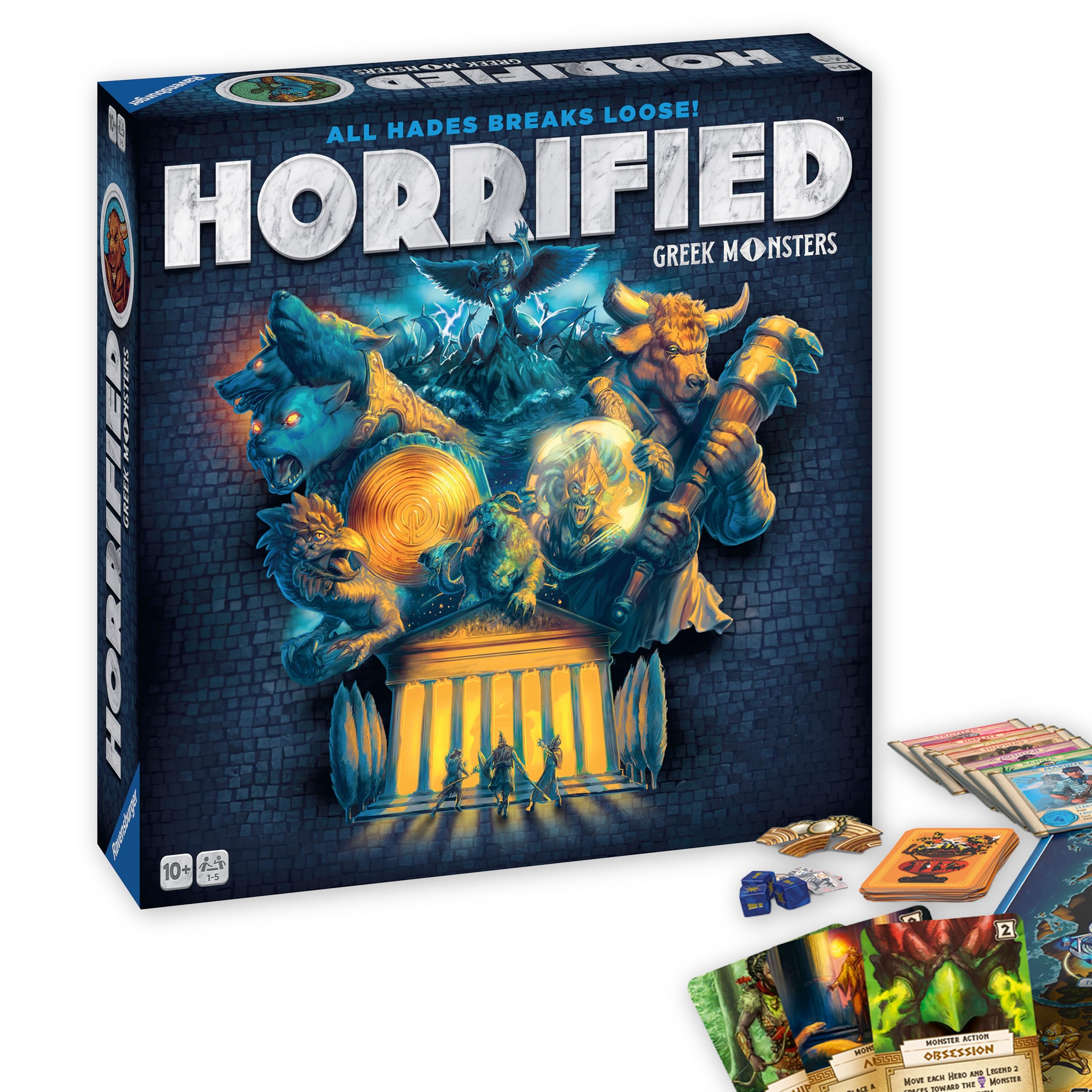
Team up to banish Medusa, Cerberus, and the Chimera in a 60-minute mythological siege.
Horrified: Greek Monsters asks you to defend Elysium against six mythical monsters, each with a unique challenge that changes the game every session. The cooperative design means players strategize together, and it’s a great middle ground for groups that can’t agree on a game style. One owner notes it’s perfect for “those that don’t usually enjoy” role-playing-heavy games.
The game comes with an impressive array of components, including 6 monster figures, 7 hero tiles, 3 dice, and a rulebook. The teamwork focus is clear: owners mention it reduces arguing among siblings, with the “steep learning curve” being the biggest hurdle for kids ages 10-12.
Of the three versions, some fans note it’s “the last Horrified with thicker cardboard,” so you’re getting strong physical quality. If your family enjoys Greek mythology or puzzle-solving, this is an engaging way to learn and play together.
Team Builder: The cooperative feel is strong — you win or lose together, so the family bond stays intact even in defeat.
Pick this for: families with older kids (10+) who want a thematic, challenging co-op that takes a full hour to play.
Consider the fit: the unique “Favor of the Gods” abilities are fun, but some prove weaker than others in solo play.
5. Telestrations 8-Player Party Game
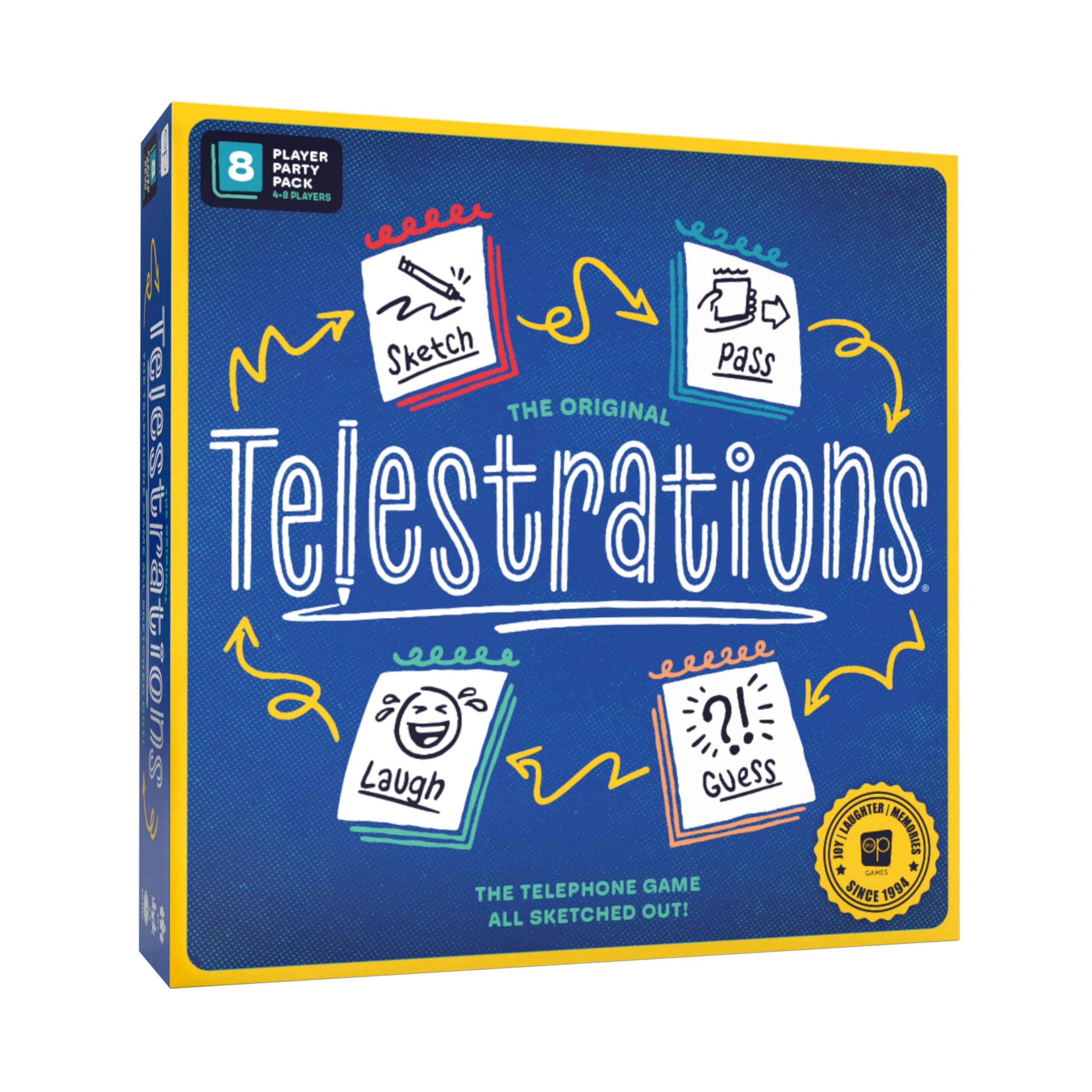
The worse your drawing, the funnier the game—no artistic skill required, just pure chaos.
Telestrations is essentially the telephone game with markers and sketchbooks. With 2,000+ card prompts, you draw a word, pass the book, guess what you saw, and watch the interpretation spiral hilariously. It’s the rare game where being a bad artist is an advantage, making it a hit across all skill levels — reviews report laughter so hard “we cry.”
The new look keeps the same classic fun, with 130 cards and 8 reusable sketchbooks included. It’s simple to teach, and owners note that the “ease of use” and “humor” are the biggest draws. One player sums it up perfectly: “we laugh so hard we cry and it’s an easy no stress game.”
If you’re hosting a bigger group, this shines with 6-8 players. It’s billed as family-friendly, but the box does carry a choking hazard warning, so it’s best for the older crowd around 10+.
The High Notes
- No scoring, no stress—just pure, unpredictable fun.
- Every round is different, with a huge prompt variety.
Before You Buy
- Needs enough players (balance is 6-8) to be truly hilarious.
- Younger kids might struggle with reading the prompts.
Best for parties: when you have a full table of friends or extended family ready to laugh.
Who it isn’t for: quieter families looking for a cerebral strategy title.
6. Fireside Games Castle Panic 2nd Edition

Work together to keep Castle Bravehold standing as monsters attack from every side.
Castle Panic drops your family into a tense, cooperative tower defense where you trade cards and coordinate plans to keep at least one tower standing. It’s a classic gateway co-op game; the 45-minute experience includes plagues and boss monsters that force tough strategic choices.
The biggest praise from owners is how it “turns the family into a medieval tactical squad,” with one family playing 15 times a month. The game’s simplicity makes it accessible to younger kids, and reviews note the escalating difficulty keeps even veterans engaged, though some say it lacks real depth for seasoned players.
It comes with four distinct modes — Co-op, Solo, Master Slayer, and Overlord — adding solid replayability. Thick tokens and quality components are consistently praised, making this a strong pick for mixed-experience groups eager to protect their castle together.
Family Favorite: The arc of escalation is perfect — easy to learn, but it throws challenges at you that demand real teamwork and planning.
Reach for this if: you want an easy-to-learn, family-friendly co-op that feels notable without being overly complicated.
Look elsewhere if: the artwork doesn’t appeal or you’re after a more serious war-game experience.
7. Wiggles 3D 5-Minute Dungeon

A frantic, real-time card game where you defeat a dungeon in just five minutes.
If your family has a short attention span or you want a fast warm-up, 5-Minute Dungeon delivers pure, breathless fun. You match cards to symbols in the dungeon deck, racing against a timer app to defeat all 6 bosses. It’s cooperative, so every player has a role, and unique character abilities let everyone shine.
The updated version includes 25 more cards and a tougher “Dungeon Master: Final Form” boss for seasoned players. Owners rave about the ease of teaching, saying “your grandparents could play.” The free timer app adds a nice touch with six different themed narrators to guide your chaos.
The one recurring mention is the frantic pace — it can be “a bit stressful” for some families, but that’s the point of a real-time game. If you’re okay with controlled chaos, it’s a fantastic change of pace at 2.2 pounds.
Perfect Palate Cleanser: This game is ideal for fitting a high-energy experience into a tiny window, though it involves a lot of shuffling.
Pick it if: you like high-octane games that test reaction speed and teamwork in quick bursts.
pass on it if: anyone in the group gets overwhelmed by a ticking clock.
8. Asmodee Ticket to Ride (2025 Refresh)
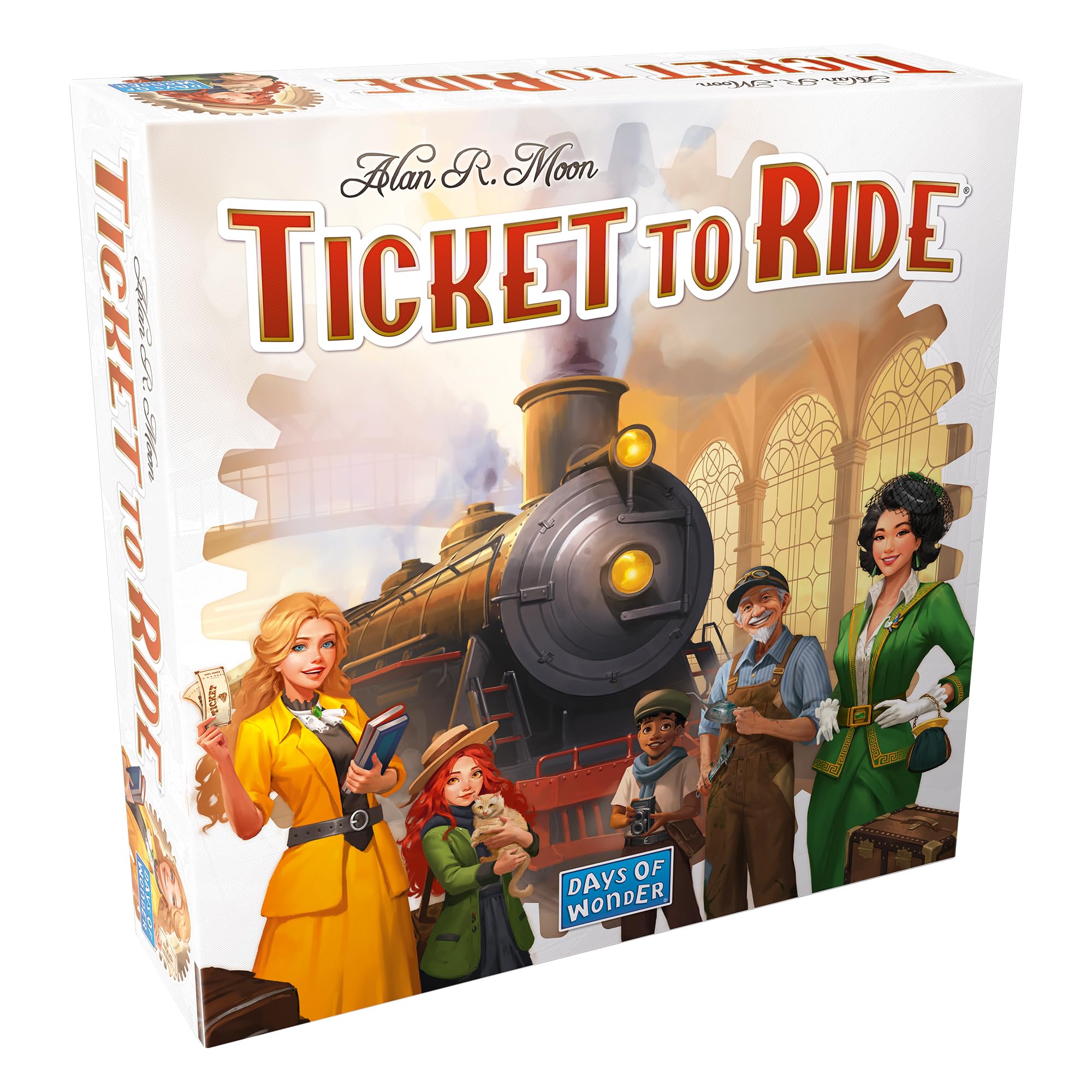
Claim cross-country train routes across North America to connect cities and score big.
Ticket to Ride is a modern classic for a reason. You collect train cards of matching colors to claim railway routes across a giant illustrated map of North America, competing to complete your destination tickets. The rules are deceptively simple, making it a great choice for families transitioning from party games to pure strategy.
This 2025 Refresh includes 225 plastic trains and 110 train cards for hours of play. Owners praise it as a “great family game” that teaches geography, and they appreciate that the board is picture-based, requiring no reading — making it accessible to younger kids and non-English speakers alike.
As a strategy game, it moves slower for beginners because you’re planning routes around opponents. It’s fantastic for “casual but strategic” evenings, though some 8-year-olds struggle with the patience it demands.
easy Entry: It’s the ideal first “gamer’s game” — the visual appeal of the board and trains hooks people instantly, and the strategy reveals itself over time.
Grab this if: you seek a timeless, competitive strategy title with broad family appeal and a 60-minute runtime.
Nudge the young ones: it’s best for ages 10+, so factor that in for family nights.
9. Pandemic Cooperative Strategy Board Game

Team up as specialists to contain four global outbreaks and race for a cure.
Pandemic is the title that defined modern cooperative gaming. Each player takes a distinct role — Medic, Scientist, Researcher — and combines their unique abilities to treat diseases and discover cures before outbreaks spiral out of control. It’s you and your family against the board, not each other.
The tension is constant, and the teamwork requirement is strong. The sheer volume of owners who call it “the greatest cooperative game ever” speaks to its staying power, and some report sessions that stretched to 5 hours of replayability. You can lose quickly if cards don’t fall your way, which fuels that “one more game” drive.
It’s a “serious” pick in the sense that it needs a strategic mindset. Opinions split on the difficulty — some find it easy to learn, while others find the rule nuance tricky to master — showing it’s a game that rewards commitment.
Benchmark Co-op: It sets the standard for the genre due to its perfect balance of teamwork, planning, and heart-pumping decision-making.
Best for: older kids (Ages 8+) and adults craving a tense, strategic co-op challenge where every decision matters.
Not the entry point: if the family is new to board games, the skill gap can feel punishing — start with a lighter co-op.
Understanding the Specs
Player Count
This tells you how many people can sit at the table. If you usually have a tight group of four, games requiring 4-8 players might not fit. Conversely, if you have a big extended family, a game capping at 4 players will leave someone out.
Estimated Playing Time
This spec is crucial for matching a game to your available time. A 15-minute game is great for filler rounds after dinner, while a 60-minute title is an event itself. Quick rounds also mean faster rematches when you lose.
Genre & Mechanics
This describes how the game is played—whether you’re cooperating (Co-op), competing directly, or guessing words. Matching the mechanics to your family’s tastes is the biggest factor in whether a game returns to the table.
Age Rating
The box lists a minimum age for a reason. A game rated 10+ contains complex reading or strategy that younger kids may struggle with. Ignoring this spec can lead to frustration over rules and fairness.
FAQ
What is the best cooperative family board game for mixed ages?
How do I know which game fits our family’s skill level?
Which game is best for a large group of 6 to 8 people?
Is a 15-minute game as fun as a 60-minute board game?
What is the difference between cooperative and competitive family games?
Are there family games suitable for kids under 10 years old?
Which game offers the best replayability?
What should I look for in a strategy game for a beginner family?
Final Thoughts: The Verdict
For most buyers, the family games winner is the Asmodee Harmonies because its blend of gorgeous components, accessible depth, and solo-to-four-player flexibility makes it the most reliable crowd-pleaser on this list. If you want a classic word game for bigger groups, grab the CGE Codenames. And for a cooperative challenge your family will bond over, the Pandemic is the one to reach for.
How We Picked
We do not accept paid placement. Every pick is matched to a real buyer and a real use-case; we do not hands-on test units.
Sources & Methodology
Specifications: manufacturer listings and product documentation. Review insights: verified customer reviews, as of September 2026. Pricing: not shown on this page (it changes often); check the current price via the retailer link.
As an Amazon Associate, Gadgets Feed earns from qualifying purchases. This does not affect which products we feature.