
Choosing the right fiberglass batt insulation means matching R-value to your specific climate zone and cavity depth, not just picking the thickest roll on the shelf. A single mismatch between facing type, width, and intended use (walls versus attic versus ductwork) can waste hundreds on energy bills and leave your home drafty.
I’m Min — the co-founder and writer behind Gadgets Feed. I’ve spent countless hours analyzing fiberglass insulation data sheets, cross-referencing R-value charts with real-world cavity dimensions, and studying the chemical composition differences between faced and unfaced batts to ensure this guide is built on actual spec-level research, not marketing claims.
This guide breaks down the top options across different R-values, facing styles, and coverage needs to help you confidently choose the best fiberglass batt insulation for your specific project without overpaying or underspecifying.
How To Choose The Best Fiberglass Batt Insulation
Selecting the right batt involves more than just grabbing a roll. You need to consider the specific R-value required by your local building code, the depth of your wall cavity or attic space, and whether a vapor retarder facing is appropriate for your climate and installation location. An incorrect choice can lead to moisture trapping, reduced thermal performance, or even mold growth inside your walls.
R-Value and Cavity Depth
R-value measures thermal resistance — the higher the number, the better the insulation. Standard 2×4 wall cavities (roughly 3.5 inches deep) typically require R-13 or R-15 batts. Deeper 2×6 walls (5.5 inches) need R-19 or R-21. Attic applications often demand R-30 to R-60 depending on your climate zone, which translates to batts 10 to 12 inches thick. Always check your local energy code before buying, as under-specifying can fail inspection.
Facing Type: Kraft-Faced vs. Unfaced
Kraft-faced batts include a paper vapor retarder that must face the warm-in-winter side of the wall (typically toward the interior). This prevents moisture-laden indoor air from penetrating the wall cavity and condensing inside the insulation. Unfaced batts lack this paper layer and are used when a separate vapor barrier is already installed, or in ceiling applications where moisture flow direction is upward. Using faced batts on exterior walls without proper orientation can trap moisture and degrade performance.
Width and Cut Precision
Batts come in two standard widths: 15 inches for 16-inch on-center stud spacing, and 23 or 24 inches for 24-inch on-center spacing. Choosing the wrong width leaves gaps that bypass the insulation’s effectiveness. Premium batts often have a slight friction-fit oversize (like 15.5 inches) to hold snugly without sagging. Look for batts that are easy to cut cleanly with a utility knife and a straightedge, especially for irregular bays around electrical boxes and plumbing.
Quick Comparison
On smaller screens, swipe sideways to see the full table.
| Model | Category | Best For | Key Spec | Amazon |
|---|---|---|---|---|
| Owens Corning R-38 Unfaced | Premium Attic | Deep attic insulation (2×12 joists) | R-38, 12-inch thick, 512 sqft coverage | Amazon |
| SmartSHIELD R15 Foam Core | Premium Radiant | Radiant barrier + insulation combo | R-15, 5mm thick, 400 sqft roll | Amazon |
| RecPro RV Fiberglass 2.25″ | Mid-Range RV | RV wall and roof insulation | R-7, 2.25-inch thick, 83.75 sqft roll | Amazon |
| EcoFoil Single Bubble | Premium Radiant | Metal buildings and pole barns | Reflects 96% radiant heat, 500 sqft roll | Amazon |
| R-13 EcoRoll Kraft Faced | Mid-Range Walls | 2×4 wall cavities with vapor retarder | R-13, 3.5-inch thick, 40 sqft roll | Amazon |
| Johns Manville Duct Insulation | Mid-Range Duct | HVAC duct thermal wrapping | 1.5-inch thick, 48-inch wide, 25ft roll | Amazon |
| AES Commercial Grade Radiant Barrier | Budget Radiant | Large-scale attic radiant barriers | 8 mils thick, 1000 sqft coverage | Amazon |
In‑Depth Reviews
1. Owens Corning R-38 Unfaced 24×48 Batt (512 sqft)
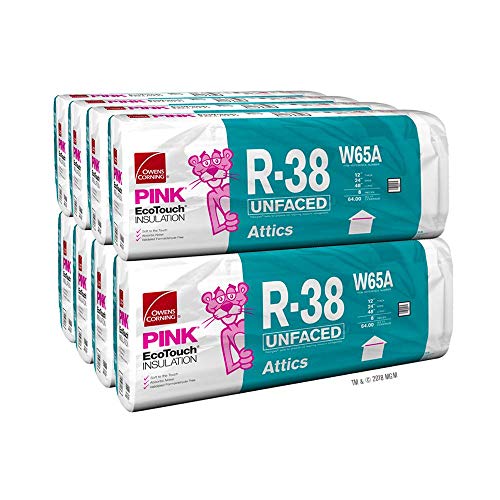
The Owens Corning R-38 unfaced batt is the gold standard for deep attic insulation when you need maximum thermal resistance. Each batt measures 24 inches wide by 48 inches long with a full 12-inch thickness, designed specifically for 2×12 attic joist bays. You get 512 square feet of coverage across eight bags, which is enough to handle a 2,000-square-foot attic at R-38 depth with proper ventilation spacing.
The unfaced construction means there is no paper vapor retarder, so you must ensure at least 2 inches of vented air space above the insulation to prevent moisture accumulation. This product works well for interior walls, floors, and ceilings where a separate vapor barrier is already installed. The fiberglass is consistent in density and cuts cleanly with a sharp utility knife, though the thick batts require some compression to fit tightly between trusses.
Delivery coordination is required because of the bulk quantity — the seller will call to arrange a drop-off window. Customer reviews highlight the noticeable temperature reduction in summer and the courteous delivery service. For homeowners tackling a major attic retrofit, this is the most cost-effective way to achieve code-compliant R-38 coverage without mixing multiple smaller rolls.
Why it’s great
- Massive 512 sqft coverage at R-38 rating
- 12-inch thickness fits 2×12 joist bays exactly
- Unfaced design allows proper attic ventilation
Good to know
- Requires delivery coordination with phone number
- Not suitable for exterior walls
- Heavy and bulky to move up attic stairs
2. SmartSHIELD 5mm Reflective Foam Core R15
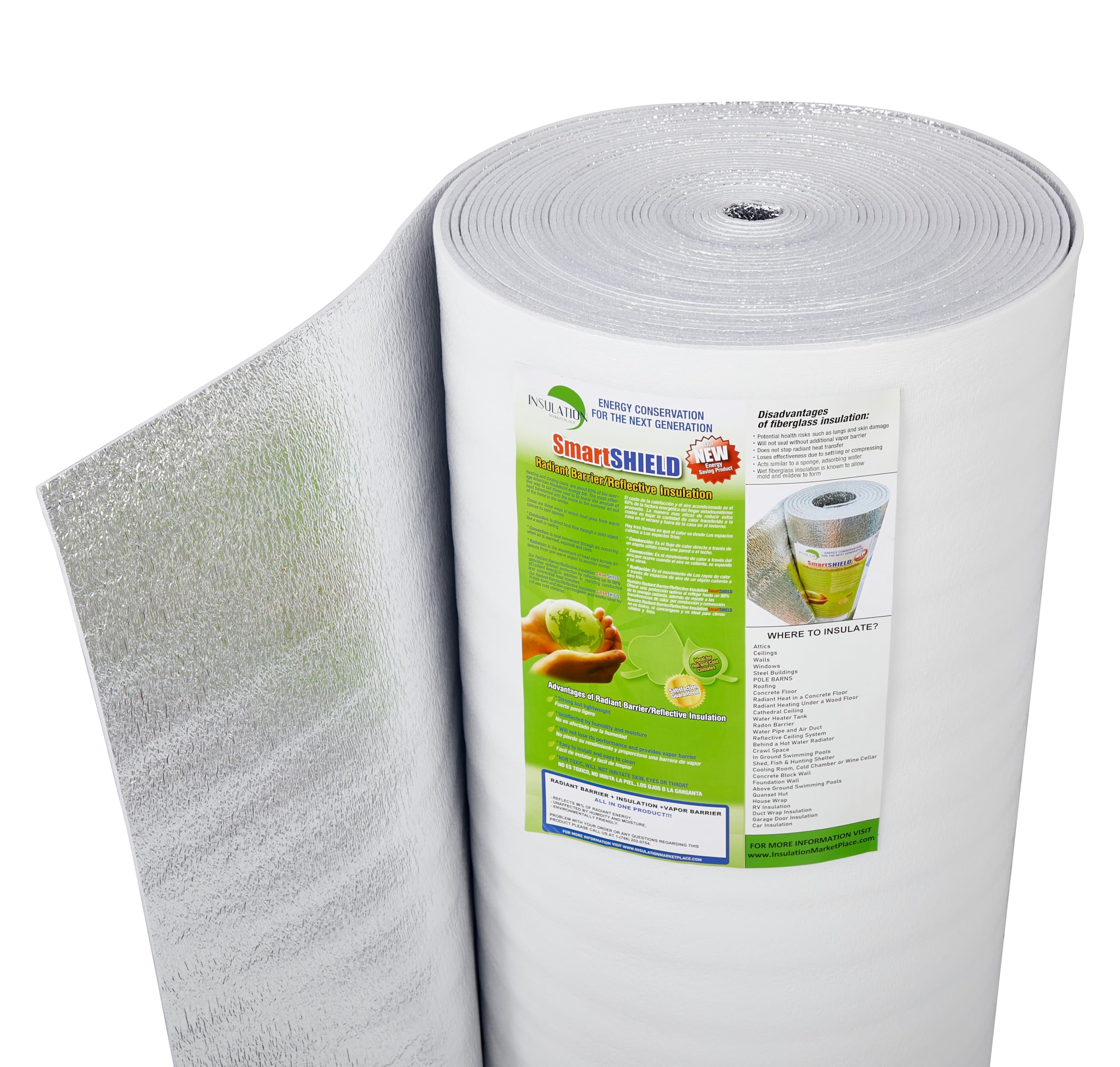
The SmartSHIELD R15 reflective foam core insulation is a multifunctional product that combines a radiant barrier, vapor barrier, and sound barrier in one 5mm thick roll. It reflects 95% of radiant energy while providing an R-15 thermal rating, making it suitable for attics, walls, steel buildings, pole barns, concrete floors, and even crawl spaces. The roll is 48 inches wide by 100 feet long, offering substantial coverage for large projects.
The construction uses a 5mm closed-cell polyethylene foam core laminated with highly reflective engineered foil on one side and a white polyethylene film on the other. This white side gives a clean finished look that requires no painting. The Class 1 / Class A fire rating means it will not support combustion, and the non-toxic material will not irritate skin or eyes during installation.
Real-world testing shows dramatic temperature drops — one user in Las Vegas reported a 15-degree Fahrenheit drop on west-facing windows and a 50% reduction in AC runtime. However, some batches have arrived cut short or with slices through the roll, so inspect immediately upon delivery. The flexibility of the foam makes it easy to cut with scissors for curved surfaces like garage doors or plexiglass windows.
Why it’s great
- Reflects 95% radiant heat with R-15 rating
- Class 1 fire rated and non-toxic
- Clean white finish requires no painting
Good to know
- Some batches reported cut short or damaged
- Higher price point per square foot
- Foil side must face air gap for radiant benefit
3. EcoFoil Single Bubble 48″ x 125′ Roll
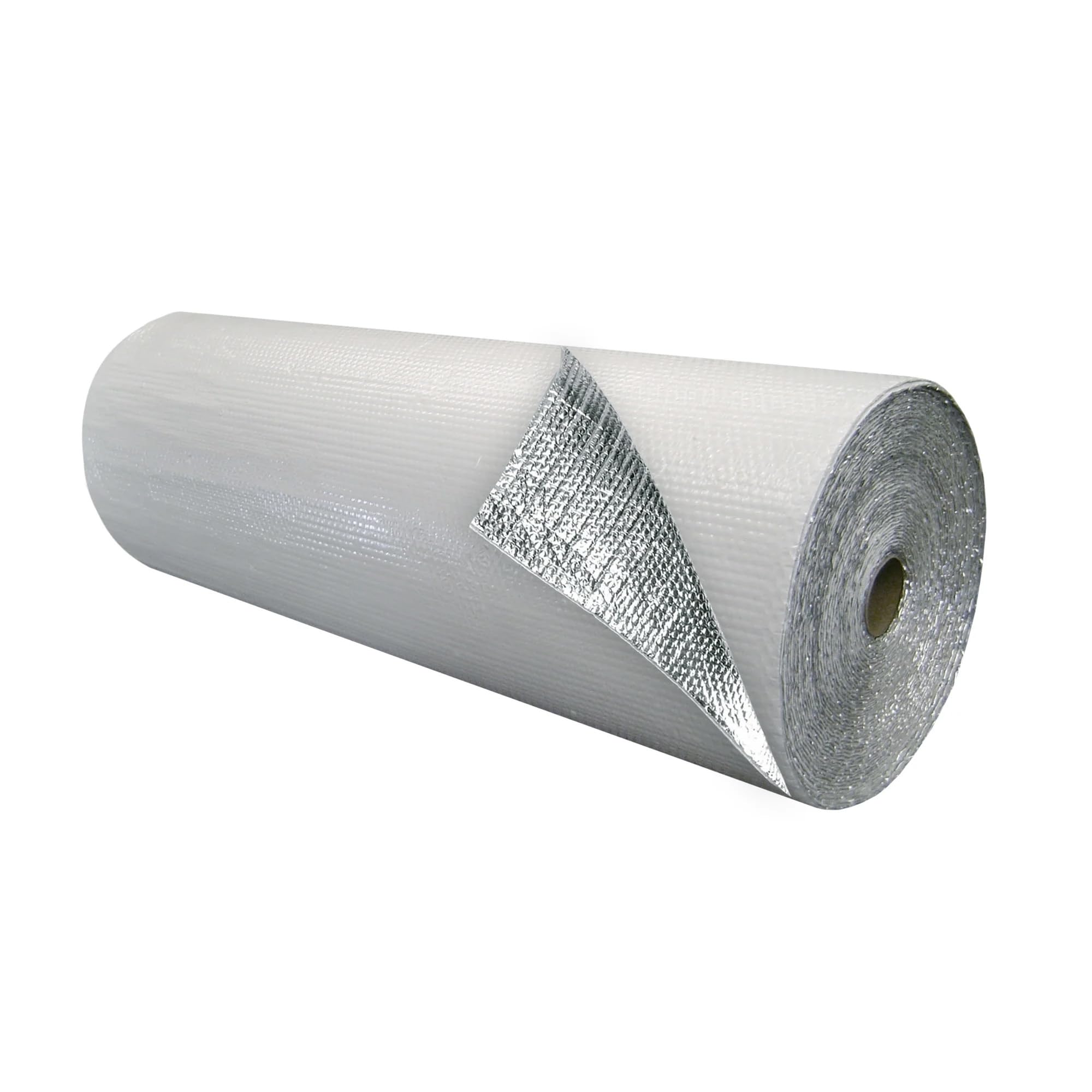
The EcoFoil Single Bubble reflective insulation is a lightweight radiant barrier designed specifically for metal buildings, pole barns, basements, and crawl spaces. With a 48-inch width and 125-foot length covering 500 square feet, this roll is ideal for large open structures. The approximately 1/8-inch thickness encloses a single layer of polyethylene bubbles between two layers of reflective foil, blocking 96% of radiant heat transfer.
The Class 1 / Class A fire rating means it meets the strictest building code requirements for flame spread and smoke development. The material is non-toxic, non-carcinogenic, and fiber-free, which eliminates the skin irritation common with traditional fiberglass batts. Installation is straightforward — cut with scissors or a sharp knife, and staple or tape it in place. The vapor barrier function requires proper taping at all seams to prevent moisture passage.
Users report noticeable temperature stabilization in sheds and campers, though the insulating value is primarily radiant-focused rather than conductive. For colder climates with snow and ice, this product is less effective than thick fiberglass batts because the single bubble provides minimal conductive resistance. But in warmer regions where radiant heat gain is the primary concern, the EcoFoil delivers a measurable temperature drop with minimal installation effort.
Why it’s great
- Reflects 96% of radiant heat
- Class A fire rated and fiber-free
- Lightweight and easy to cut with scissors
Good to know
- Minimal conductive R-value for cold climates
- Requires air gap on one side to work effectively
- Pricey compared to traditional fiberglass batts
4. RecPro RV Fiberglass Insulation 2.25″ x 15″ x 67′

The RecPro RV fiberglass insulation is a purpose-built unfaced batt designed specifically for recreational vehicle walls and roofs. Measuring 2.25 inches thick by 15 inches wide in a 67-foot roll, it provides 83.75 square feet of coverage at an R-7 rating — ideal for RVs used in milder temperature ranges where moderate insulation is sufficient. The 15-inch width matches standard RV wall cavity spacing.
This is unbacked insulation, meaning there is no kraft paper or foil facing, which is appropriate for RV applications where a separate vapor barrier or sheathing handles moisture control. The fiberglass is clean and uniform in density, cutting easily with a utility knife for fitting around RV window frames, wheel wells, and electrical outlets. Customers consistently rate it thick and easy to work with.
The main downside is the price per square foot, which runs higher than standard residential batts because of the specialized RV market. If you are insulating a standard home, you will find better value in wider residential rolls. But for RV owners looking to improve temperature stability and reduce noise from road travel, the RecPro batts fit the bill without requiring modification to standard RV cavity depths.
Why it’s great
- Perfect width for standard RV wall cavities
- Clean fiberglass cuts easily for custom fits
- Unfaced design works with existing vapor barriers
Good to know
- Higher cost per square foot than residential batts
- R-7 rating is only for mild climates
- Limited to 15-inch width spacing
5. R-13 EcoRoll Kraft Faced 3.5″ x 15″ x 32′

The R-13 EcoRoll from Eagle Electronics is a kraft-faced fiberglass insulation roll with a notable eco-friendly construction. It uses a naturally brown binder made from corn, sand, and recycled glass instead of synthetic dyes, and it contains a high degree of post-consumer recycled content. The product is GREENGUARD Gold certified and free of Red List chemicals and formaldehyde, making it a safer choice for indoor air quality.
At 3.5 inches thick by 15 inches wide and 32 feet long, each roll covers 40 square feet — sufficient for standard 2×4 wall cavities on 16-inch centers. The kraft facing provides a superior vapor retarder for high-moisture control applications, reducing the risk of condensation within wall assemblies. Users note the insulation is softer to the touch than traditional batts and easier to cut, split, and install without excessive itchiness.
Some customers observed a dramatically darker color compared to existing insulation from the same manufacturer, which may be a cosmetic concern if visible through openings. The price is competitive with big-box store options, though a few buyers found a lower cost at local home centers. For environmentally conscious homeowners prioritizing low-VOC materials and formaldehyde-free construction, the EcoRoll is a compelling option.
Why it’s great
- GREENGUARD Gold certified and formaldehyde-free
- Eco-friendly binder from corn and recycled glass
- Softer texture for easier cutting and handling
Good to know
- Some users report darker color than expected
- 40 sqft coverage means many rolls for a full house
- Price may be higher than local hardware stores
6. Johns Manville Duct Insulation 1.5″ x 48″ x 25ft
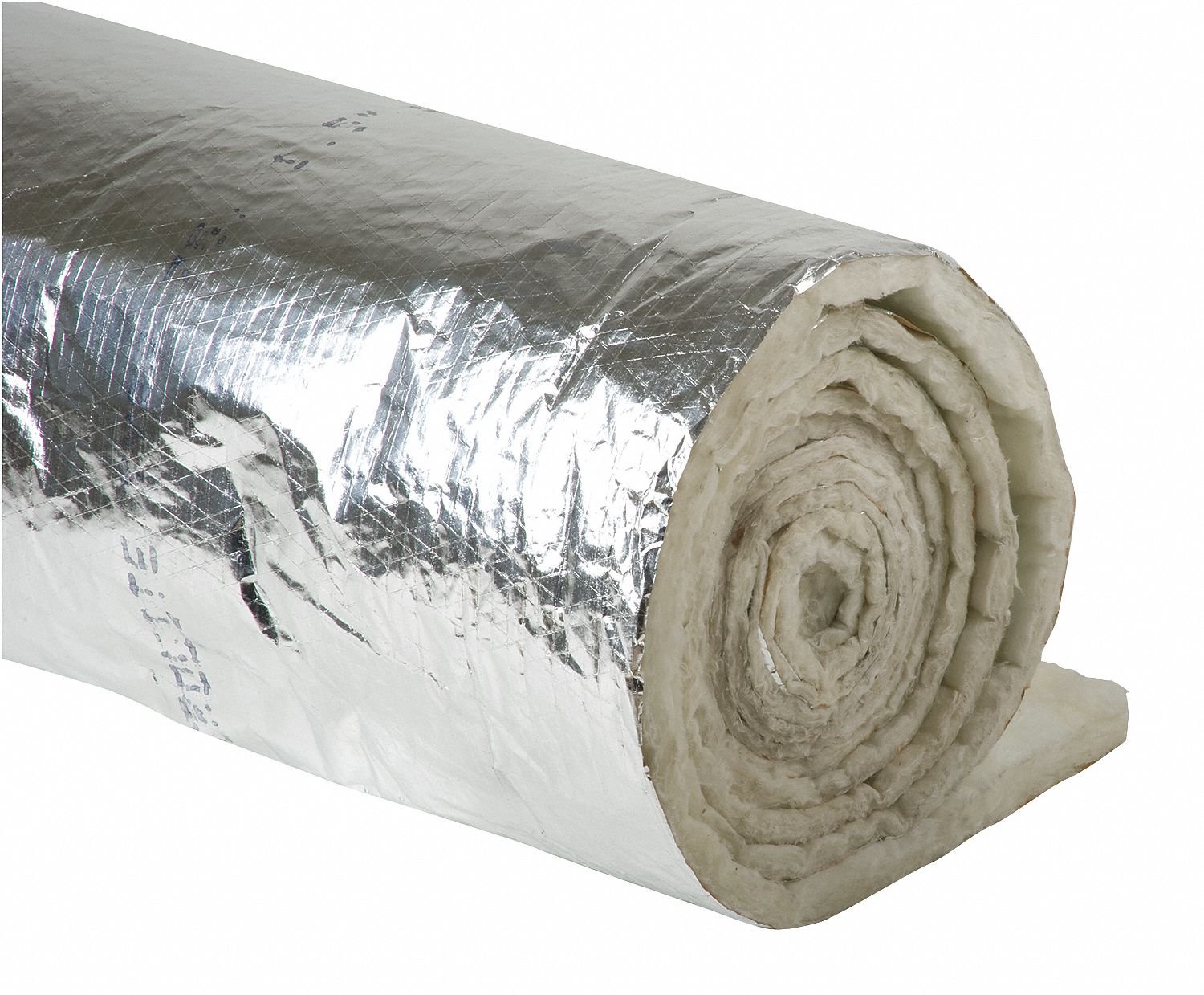
The Johns Manville duct insulation is specifically designed for thermal wrapping of HVAC ductwork, not for wall or attic cavities. At 1.5 inches thick and 48 inches wide in a 25-foot roll, this product provides a substantial 1,200 square feet of double-layered coverage — though the 25-foot length contradicts the stated coverage, so measure carefully upon arrival. The foil backing is heavy enough to handle stapling without tearing.
The 48-inch width is particularly useful for retrofitting crawlspace ducts where maneuvering room is tight, as the wide roll covers large duct sections in fewer pieces. The fiberglass layer provides thermal resistance to prevent heat loss from supply ducts and condensation on cold return ducts in humid climates. Installation involves wrapping the duct, securing with staples or tape, and sealing seams with foil tape.
Customer feedback is mixed on dimensional accuracy — while most reports confirm the stated dimensions, one buyer noted the roll measured shorter than advertised. The product performs as expected for its intended use, but verify the actual length before starting a large project. For standard wall or attic insulation, choose a thicker batt with higher R-value rather than this duct-specific product.
Why it’s great
- 48-inch width speeds up large duct coverage
- Foil backing resists tearing when stapling
- Intended for thermal and condensation control
Good to know
- Some rolls reported shorter than 25 feet
- 1.5-inch thickness is thin for wall insulation
- Not suitable for general wall or attic cavities
7. AES Commercial Grade Radiant Barrier 4ft x 250ft

The AES Commercial Grade radiant barrier is a non-perforated solid white foil scrim designed for reflection and vapor barrier applications in attics, sheds, warehouses, and house wrapping. At 8 mils thick with a 4-foot width and 250-foot length, each roll provides 1,000 square feet of coverage — making it the most cost-effective option for large-scale radiant barrier projects. The material resists puncturing and tears when handled, unlike thin plastic sheeting.
This is not fiberglass batt insulation in the traditional sense — it is a reflective radiant barrier that works best when installed with an air gap on at least one side. Users report a 20 to 25-degree Fahrenheit drop from bare metal to a single layer, and up to 39 degrees when combined with an insulated R-15 ceiling. The foil tape adheres well to the surface for sealing seams, and the material is easy to cut and staple.
For vertical wall installations on 24-inch centers, the 48-inch width runs slightly short, so horizontal orientation works better. The product is ideal as a vapor barrier over foam board in crawl spaces or as a radiant barrier under metal roofing. If your primary need is conductive thermal insulation with an R-value rating, this product alone will not replace fiberglass batts — but for radiant heat reflection at a budget-friendly price, it is unmatched in coverage per roll.
Why it’s great
- Massive 1,000 sqft coverage per roll
- 8 mils thick resists punctures and tears
- Effective temperature drop of 20-39°F
Good to know
- Requires air gap for radiant reflection performance
- Not a substitute for conductive R-value insulation
- Slightly short for vertical 24-inch stud spacing
FAQ
What R-value do I need for a 2×4 wall cavity?
Can I install faced insulation over existing unfaced insulation?
What is the difference between R-13 and R-19 for 2×4 walls?
Final Thoughts: The Verdict
For most users, the best fiberglass batt insulation winner is the Owens Corning R-38 Unfaced 512 sqft bundle because it delivers the highest R-value per dollar for deep attic applications and covers a massive area in one purchase. If you need a radiant barrier for a metal building or pole barn, grab the EcoFoil Single Bubble 500 sqft roll. And for RV-specific projects, nothing beats the RecPro 2.25-inch unfaced batt for its precise fit in standard RV wall cavities.