
Our readers keep the lights on and my morning glass full of iced black tea. As an Amazon Associate, I earn from qualifying purchases.
Specs are compiled from manufacturer listings and verified buyer reviews and can change over time — please confirm the key details on the product page before buying.
If you are prying up stubborn baseboards, ripping out old carpet tack strips, or pulling nails that refuse to budge, you know the frustration of a bar that bends or slips. A good flat steel pry bar gets under the work, gives you the leverage you need, and survives the abuse. This guide breaks down six models that handle the real jobs.
I’m Min — the founder and writer behind Gadgets Feed. This guide is built by comparing the manufacturers’ published specifications and the patterns across verified customer reviews, so you get each pick’s real strengths and trade-offs instead of marketing spin.
For this roundup, I focused entirely on flat steel pry bars that are designed for prying, pulling, and scraping — no curved wrecking bars or multi-tools that compromise on leverage.
Quick Picks
- Crescent 15″ Flat Pry Bar with Grip – FB15-06 — Premium Pick
- DEWALT Flat Bar, Spring Steel, 13-Inch (DWHT55518) — Top Performer
- STEELHEAD 15″ Heavy-Duty Flat Pry Bar, Integrated Nail Puller (SH-PB-B1-15-1) — Best Value
- KSEIBI 285150 Hand Wonder Crow Bar Tool, 15 Inch — Versatile All-Rounder
- Stanley FMHT55009 FatMax Molding Bar, 10″ — Compact Specialist
- Tile Removal Tool / Wood Trim Removal Multi-Tool — Budget Champion
How To Choose The Best Flat Steel Pry Bar
To get a flat steel pry bar that works for you, focus on three things: the steel it is made from, the shape of its working ends, and whether you can hang onto it when you apply force. Here is what to examine before you buy.
Steel Type and Heat Treatment
This is everything. A bar made from spring steel or heat-treated carbon steel will spring back under heavy load instead of permanently bending. Some budget bars use softer steel that folds over on a stubborn nail, leaving you with a useless piece of metal. Look for terms like “forged” or “heat-treated” in the description — that is your best sign the bar can take punishment.
Working Ends: Nail Slots and Chisel Tips
A flat pry bar lives and dies by its tips. The nail pulling slots should be beveled so they slide under a nail head without slipping off. The chisel end needs to be thin and wide enough to get under trim or tiles without gouging the wall. Some bars have multiple slots at different angles to reach nails in tight corners.
Length and Grip
Longer bars give you more leverage, but you trade control. A 15-inch bar is the balance for most demolition and trim work. Shorter bars around 10 inches are better for cramped spots inside cabinets or behind toilets. A rubber or textured grip keeps your hands from sliding when you are really leaning on it, especially if your hands get sweaty or dusty.
Quick Comparison
On smaller screens, swipe sideways to see the full table.
| Model | Best For | Length | Weight | Material | Amazon |
|---|---|---|---|---|---|
| Crescent FB15-06 | Premium all-around prying | 15 Inches | — | Alloy Steel | $12.59Amazon |
| DEWALT DWHT55518 | Heavy load, extra leverage | 13 Inches | 1.2 Pounds | Spring Steel | $12.61$17.99Amazon |
| STEELHEAD SH-PB-B1-15-1 | Heavy-duty demolition | 15 Inches | 0.7 Kilograms | Heat-Treated Carbon Steel | $12.59$13.99Amazon |
| KSEIBI 285150 | Versatile prying and scraping | 15 Inch (380mm) | 1.09 pounds | Spring-Tempered Carbon Steel | $13.98Amazon |
| Stanley FMHT55009 | Precision trim work | 10 Inches | 12.3 ounces | High-Carbon Spring Steel | $16.11$16.89Amazon |
| Tile Removal Multi-Tool | Budget starter kit | 9.96 x 1.93 x 1.89 in | 10.6 ounces | Hardened Steel | $13.97Amazon |
In‑Depth Reviews
1. Crescent 15″ Flat Pry Bar with Grip – FB15-06
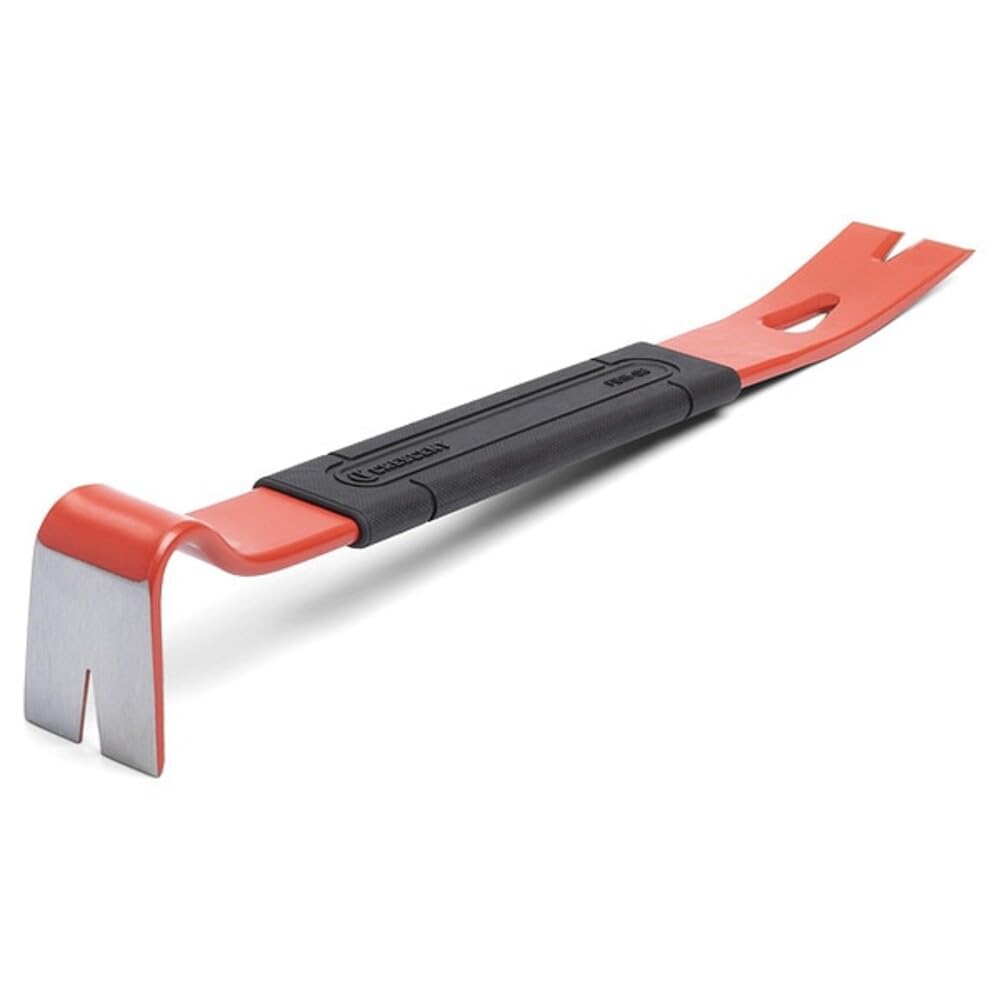
The Crescent delivers thick alloy steel and an over-molded grip that keeps you in control.
This 15-inch bar uses precision ground ends and edges, which means you can slide it under trim without gouging the surrounding drywall or flooring. It has 3 beveled nail slots that let you get at nails from tough angles without the bar slipping off the head.
Buyers report it is a “quality pry bar from Crescent; thick, good steel” and that the rubber grip provides a secure hold during prying or hammering. One owner did note the rubber slides around on the bar, so they pulled it off entirely — worth knowing if you prefer a bare-metal feel. The high-viz corrosion resistant finish adds durability on the job.
Grip reduces hand fatigue: Precision-ground ends for damage-free work, backed by a thick alloy steel build that feels solid in hand.
Heavier than steel bars: Some users find the rubber grip shifts under heavy force; it may need to be removed or secured with tape.
heavy prying: DIYers and pros who want a durable, comfortable bar for general prying and trim removal.
light trim work: If you hate a shifting grip, be ready to modify it — or choose a bar with a fixed handle.
2. DEWALT Flat Bar, Spring Steel, 13-Inch (DWHT55518)

Spring steel construction that refuses to flex under the heaviest loads you can throw at it.
This 13-inch bar is made from spring steel, a material that is built to flex and snap back instead of taking a permanent bend. One buyer specifically confirmed that “this bar did not flex under a heavy load.” The extra wide prying end gives you more surface contact for leverage, and the pointed beveled end makes nail pulling precise.
At 1.2 pounds, it is 0.11 pounds heavier than the KSEIBI bar, which gives it a denser feel that experienced users appreciate for breaking stuck joints. The bright DEWALT yellow finish makes it easy to spot on a dark roof or in debris — several reviewers mention this as a big plus on roofing jobs.
Spring steel flexes: Spring steel that resists permanent bending, for heavy demolition work without replacement.
Shorter reach limits leverage: At 13 inches, it is slightly shorter than the 15-inch options, which means a bit less leverage on very tight fasteners.
tight spaces: Roofers and contractors who need a durable bar that they can lean on without bending it.
long prying: You need the extra reach of a 15-inch bar for prying deep-set nails.
3. STEELHEAD 15″ Heavy-Duty Flat Pry Bar, Integrated Nail Puller (SH-PB-B1-15-1)

Forged heat-treated carbon steel that delivers premium heft without the premium price tag.
This 15-inch bar is forged from heat-treated carbon steel with a rust and corrosion resistant enamel finish. It has three nail removal slots at different angles plus thin chisel tips designed to get into tight cracks — a “Shepherd’s crook” shape that increases prying power. One reviewer described it as a “heavy-duty prybar [that] exceeded expectations in kitchen demo; handled all tasks easily despite low price.”
The bright orange finish keeps it visible on messy job sites. The weight sits at 0.7 kilograms, which gives it a solid feel without being overly heavy, and the limited lifetime warranty backed by US-based support in Atlanta adds confidence for the price.
Nail puller integrated: Forged and heat-treated carbon steel construction, rare at this price point.
Bulky handle: The smooth grip type means your hand can slip when pulling hard — some users add tape for better purchase.
nail pulling: Homeowners and DIYers who want a heavy-duty bar that can handle a kitchen teardown without spending a lot.
precision work: If you need a rubber grip for comfort, this one lacks it — the bare forged steel can be tough on hands over long sessions.
4. KSEIBI 285150 Hand Wonder Crow Bar Tool, 15 Inch

A spring-tempered carbon steel bar that weighs just 1.09 pounds, built for prying and scraping alike.
The KSEIBI 285150 is a 15-inch bar with a black powder-coated finish and three beveled nail puller slots. Its spring-tempered carbon steel construction keeps it stiff without adding bulk. At 1.09 pounds, it is 0.11 pounds lighter than the DEWALT, making it easier to carry up a ladder or swing for extended periods. One reviewer noted they “had to get on my roof and pull some shingles” and the bar handled the job without issue, even on frozen bricks in winter.
Its 17.04-inch package length (the bar itself is 15 inches) gives you good reach for pulling paint lids or scraping old adhesive. The black finish hides scuffs and rust better than bare steel.
Lightweight hand tool: Light enough for one-handed use, strong enough for heavy prying — a rare combination in a 15-inch bar.
Less durable for heavy use: The black finish can chip over time with heavy hammer strikes, exposing raw steel underneath.
light prying: Homeowners who need one bar for roof repairs, brick prying, and general demo without carrying a heavy load.
demolition: You need a warranty — this bar lacks the lifetime support of some competitors.
5. Stanley FMHT55009 FatMax Molding Bar, 10″
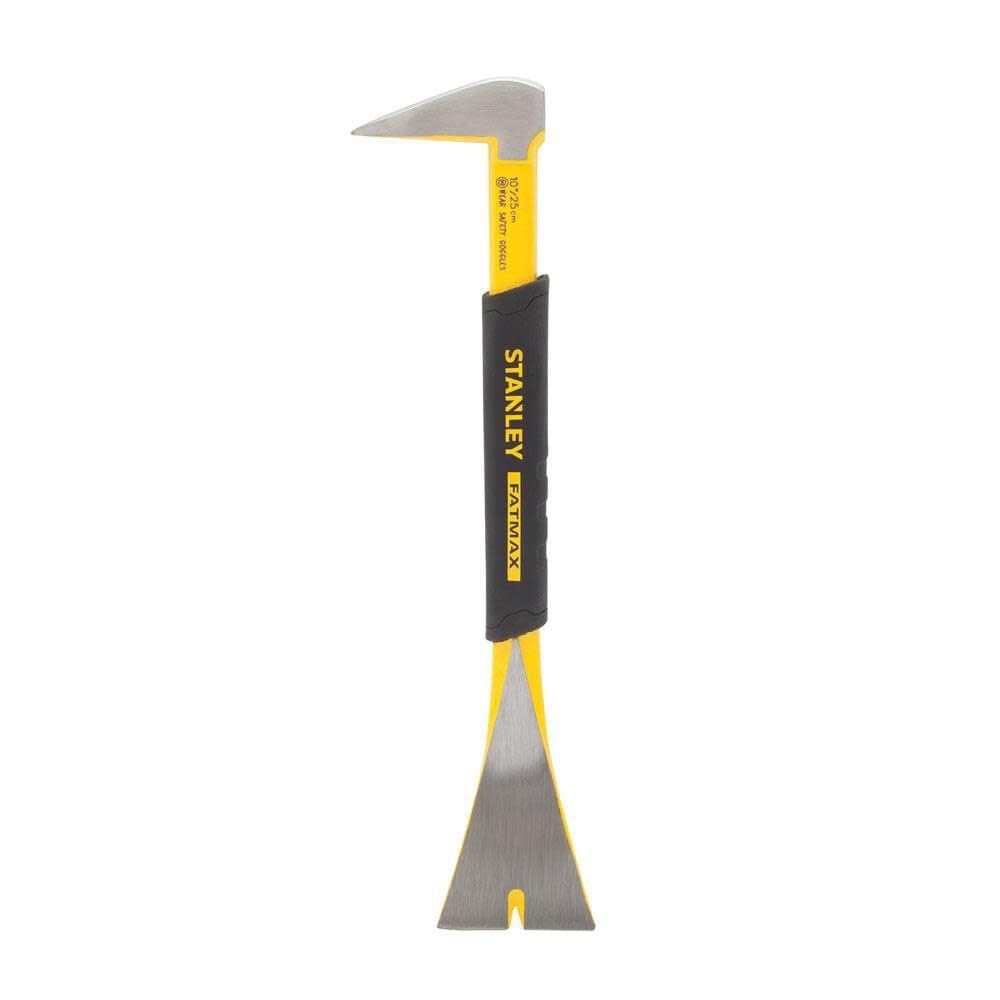
A 10-inch molding bar forged from high-carbon spring steel for tight, precise trim work.
The Stanley FatMax is built specifically for trim removal — its 10-inch length lets you work in the cramped spaces behind baseboards, door frames, and cabinets where a 15-inch bar simply will not fit. It is made from forged high-carbon spring steel, heat-treated for durability and tempered for safety. A flat striking face lets you drive the claw under deeply embedded nails without damaging the surrounding material.
Owners mention it is “effective for dismantling pallets” and that the polished flat surface and beveled claws help it slide under nail heads cleanly. One buyer mentioned it has a thick lip that can damage trim if you are not careful, so it is better suited for removal than delicate salvage work.
Curved tip for molding: High-carbon spring steel in a compact 10-inch package that fits into tight spaces other bars cannot reach.
Narrow application: The thick lip makes it less ideal for prying without marring the surface — better for demolition than fine finish work.
trim removal: Trim carpenters and pallet dismantlers who work in confined spaces and need a compact, durable bar.
general prying: You need a longer bar for general prying — this one is all about reaching tight spots, not heavy leverage.
6. Tile Removal Tool / Wood Trim Removal Multi-Tool

A hardened steel bar with a non-slip rubber handle, made for tile and baseboard removal.
This tool is designed with a larger, flatter contact area to reduce damage to walls and floors while prying. The non-slip rubber handle makes it comfortable to hold during long sessions. It weighs only 10.6 ounces, so it is easy to maneuver one-handed, and the black polish coating resists corrosion. One owner reported they “used this tool to remove carpet from my basement stairs” and found it comfortable for pulling and prying.
At 9.96 inches in package length, it is slightly shorter than the Stanley FatMax, but the rubber grip gives it a different feel entirely. It is best suited for lighter demolition work like pulling tack strips and lifting tiles, not for heavy framing or concrete forming.
Multi-purpose removal: Rubber over-molded handle for comfort during extended prying, plus a wide flat head that protects the surface behind it.
Not for heavy prying: Hardened steel at this price point may not withstand repeated heavy hammer blows without developing a bend over time.
tile work: Budget-conscious DIYers tackling tile removal, carpet pull-up, or baseboard trim for the first time.
framing: You are doing daily heavy demolition on a worksite — invest in a forged steel bar instead.
Understanding the Specs
Spring Steel vs Heat-Treated Carbon Steel
Spring steel is a specific alloy that can flex and return to its original shape without taking a permanent set, which is why the DEWALT and Stanley bars use it. Heat-treated carbon steel is hardened in a furnace, gaining extra stiffness but less ability to flex — it will snap before it bends. Both are good, but spring steel is generally more forgiving for heavy prying where the bar is twisted and leveraged.
Nail Puller Slots
The number of slots (usually 3) and their angle matter. More slots mean you can approach a nail from different directions without repositioning the work. Look for “beveled” slots — they have a ground edge that helps the slot bite under the nail head rather than riding over it. A “Shepherd’s crook” shape on the end also increases leverage by shifting the pivot point.
FAQ
Will a flat steel pry bar damage my wall or baseboard?
How long does a flat steel pry bar last?
Can I use a flat steel pry bar for nail pulling?
Is a rubber grip better than a bare metal handle?
How do I choose between a 10-inch and a 15-inch pry bar?
What is the difference between a flat pry bar and a crowbar?
Can I hammer on a flat steel pry bar?
Will these bars rust over time?
How much does a good flat steel pry bar weigh?
Final Thoughts: The Verdict
Across the board, the strongest flat steel pry bar winner is the DEWALT DWHT55518 because its spring steel refuses to bend under heavy loads, and it is a proven name that contractors trust. If you want a longer bar with forged durability, grab the STEELHEAD SH-PB-B1-15-1 for its heat-treated carbon steel and lifetime warranty. And for precision trim removal in tight spots, the Stanley FatMax FMHT55009 is the compact specialist that gets into spaces no 15-inch bar can reach.
How We Picked
We do not accept paid placement, and we did not hands-on test every unit. Instead, we match each pick to a real buyer and use-case by comparing the manufacturers’ published specifications against the patterns in verified customer reviews — so you get each pick’s real strengths and trade-offs instead of marketing copy.
Sources & Methodology
Specifications: manufacturer listings and product documentation. Review insights: verified customer reviews, as of July 2026. Pricing: not shown on this page (it changes often); check the current price via the retailer link.
As an Amazon Associate, Gadgets Feed earns from qualifying purchases. This does not affect which products we feature.
Product prices and availability are accurate as of the date/time indicated and are subject to change. Any price and availability information displayed on Amazon at the time of purchase will apply to the purchase of this product. As an Amazon Associate I earn from qualifying purchases.
CERTAIN CONTENT THAT APPEARS ON THIS SITE COMES FROM AMAZON. THIS CONTENT IS PROVIDED "AS IS" AND IS SUBJECT TO CHANGE OR REMOVAL AT ANY TIME.
Amazon and the Amazon logo are trademarks of Amazon.com, Inc. or its affiliates.